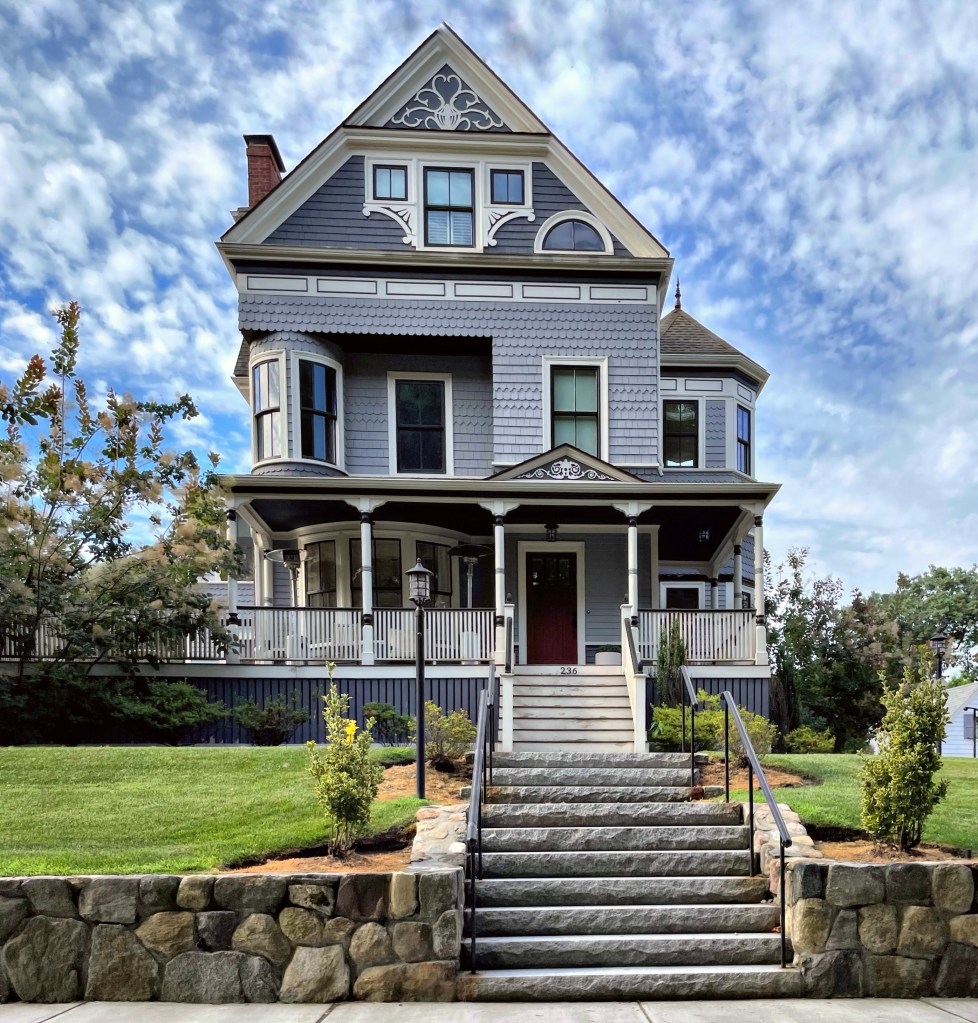
In 1895, when the Queen Anne style was no longer in vogue among architects and builders in the Boston area, the Allston Real Estate Company took a gamble and built this house in a scarcely developed section of Waban Village in Newton on spec, hoping to find a buyer. They found one in Oscar Raymond Rice and his wife Maud Lois Sargent Rice. Oscar worked as a salesman, and Maud volunteered locally with various causes. The family home is a great example of Queen Anne Victorian architecture with varied siding styles, asymmetry, a tower, rounded bay window, porch with turned posts, and applied decoration in the gables. The house underwent a large renovation about five years ago and it still looks great! The listing from 2017 gives me serious house envy.
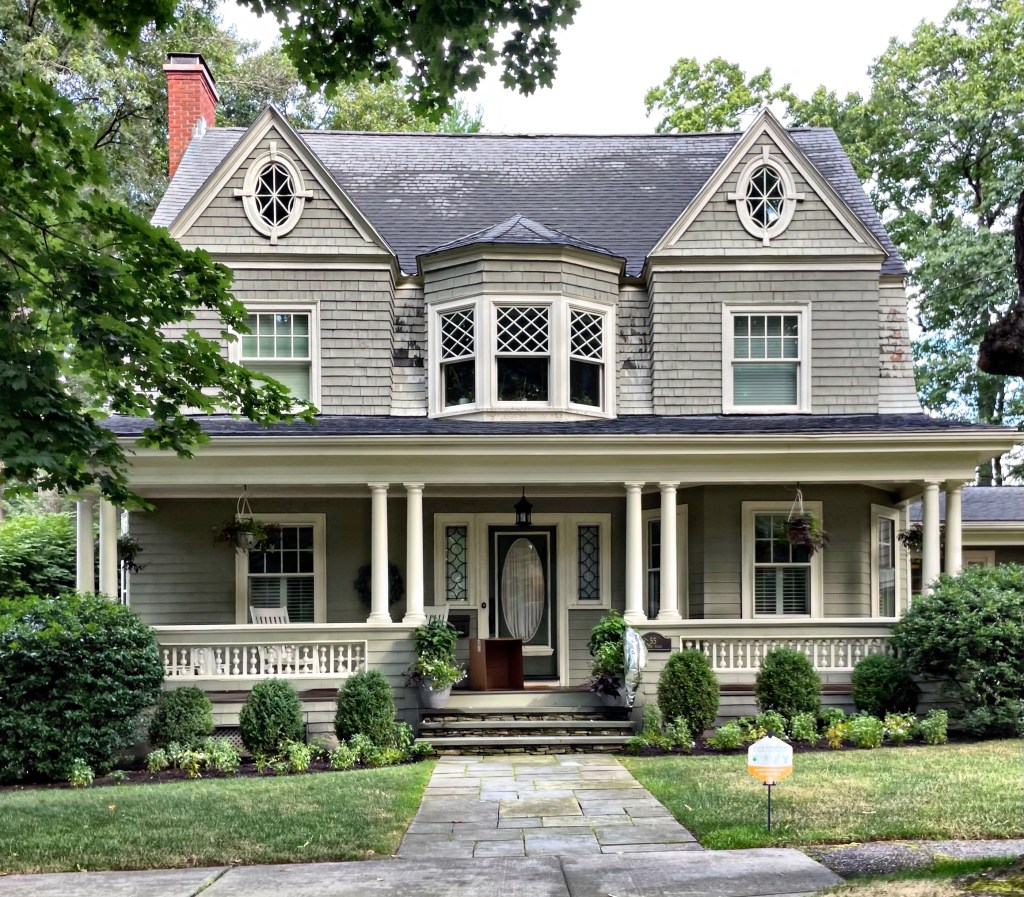
In 1907, William F. Lamont and his family moved into this beautiful turn-of-the-century home in the rapidly developing Waban Village in Newton, Massachusetts. The extension of the circuit railroad connected this part of Newton (which had previously been farmland) to Downtown Boston, opening up the area to development for middle-income families who sought land and fresh air in the suburbs. The first house on Alban Road in Waban was built for the Lamont Family, and it perfectly blends multiple architectural styles under a gambrel roof.
Another eclectic house in Waban is this beauty, a blending of Queen Anne and Colonial Revival styles under an impressive gambrel roof. The home was occupied by Ernest L. Zeiss, a salesman. Waban, which was once a neighborhood within the reach of the middle-class, has since become one of the most desirable neighborhoods in one of the most exclusive towns in the Boston metro. It is safe to say an ordinary 9-5 salesman would not be able to afford a house like this today!
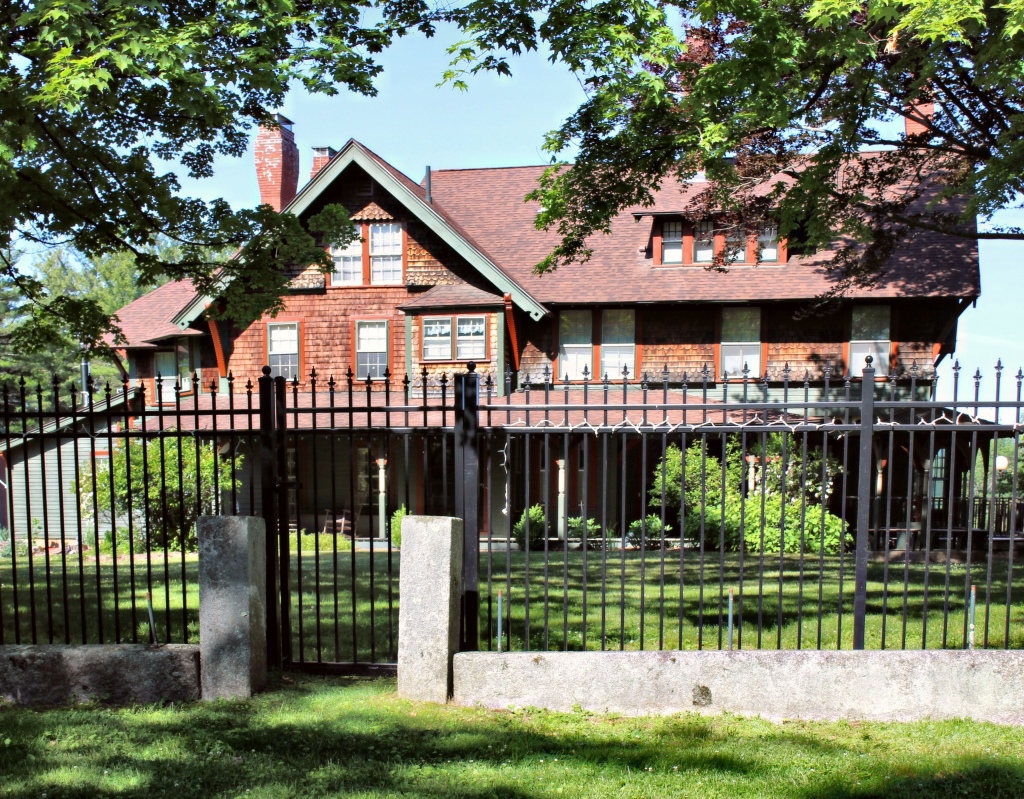
Eclectic homes that can not be pigeonholed to a single architectural style are among my favorite as they blend features elegantly into a single, unique composition. This house on Windsor Road in the Waban village of Newton, Massachusetts is an example of an “eclectic” late 19th century home. This old house exhibits elements of the Queen Anne and Tudor Revival styles. The house was built in 1897 for Daniel and Ida Baker. After their death, the home was purchased by a James H. Mason, who got it for an estimated $25,000 in 1909. A listing at the time mentions the property included a 14-room house and large stable, the latter still stands at the rear of the lot (since converted to a car garage).
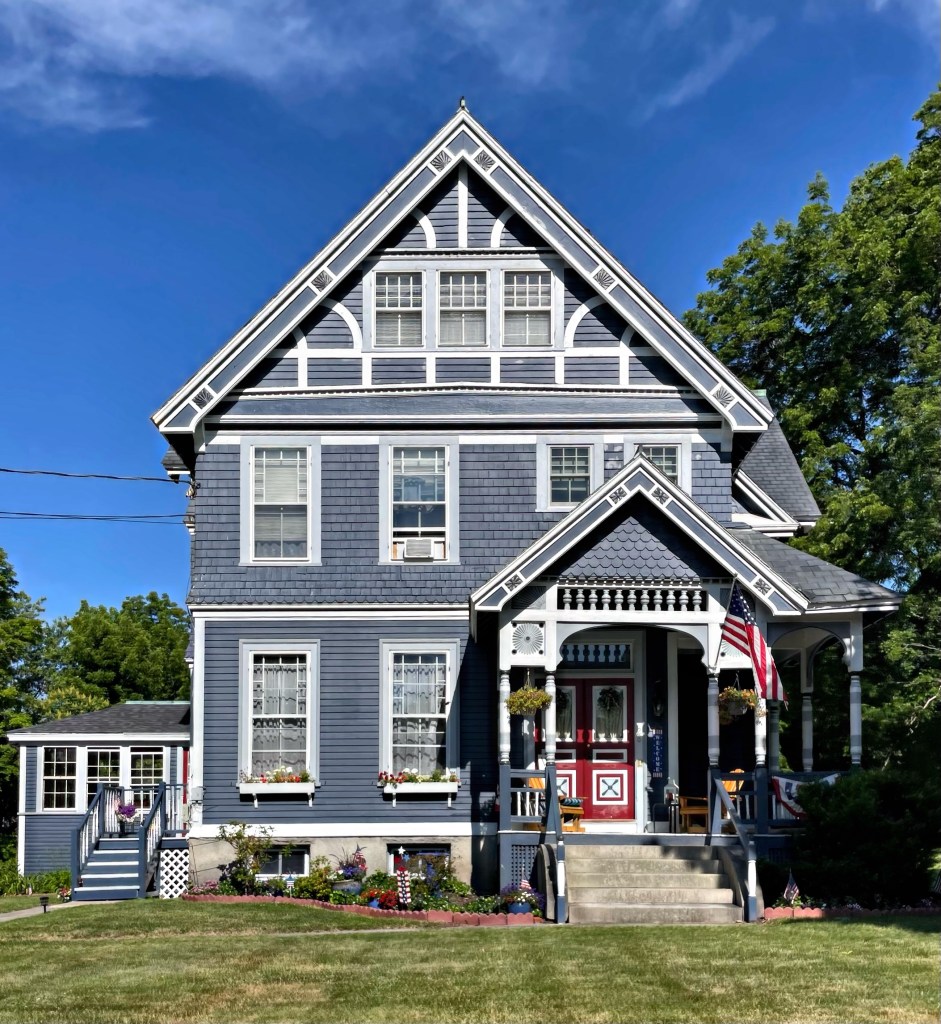
Marblehead is known for its Colonial-era architecture, so its always fun to find a stellar Queen Anne house in town! In 1884, Jacob M. Cropley, a shoe manufacturer, built one of Marblehead’s finest victorian residences on a hill overlooking the harbor. Cropley ran shoe and leather mills in Massachusetts and Wolfeboro, NH, making great money. The house was located on a prominent site on Pleasant Street, and was purchased by the U.S. Government in 1904 about the time that Cropley and his family moved to Boston. The house was purchased by David Lefevour, a grocer, who moved it back on the lot, saving the house from the wrecking ball. On the former house site, a post office was built by the U.S. Government.
The earliest of Wilton New Hampshire’s summer “cottages” is Moors Manor Cottage, a turn-of-the-century mansion set on former farmland with views of the mountains in the distance! While Wilton never compared to Newport or Bar Harbor as the major summer resort towns for the wealthy, the upper-middle class would sometimes build summer homes in their familial towns where they would escape the hustle-and-bustle of city life. Luckily, this home has been very well-preserved inside and out (but I wish that big fence was gone it really obscures the beauty of the house).
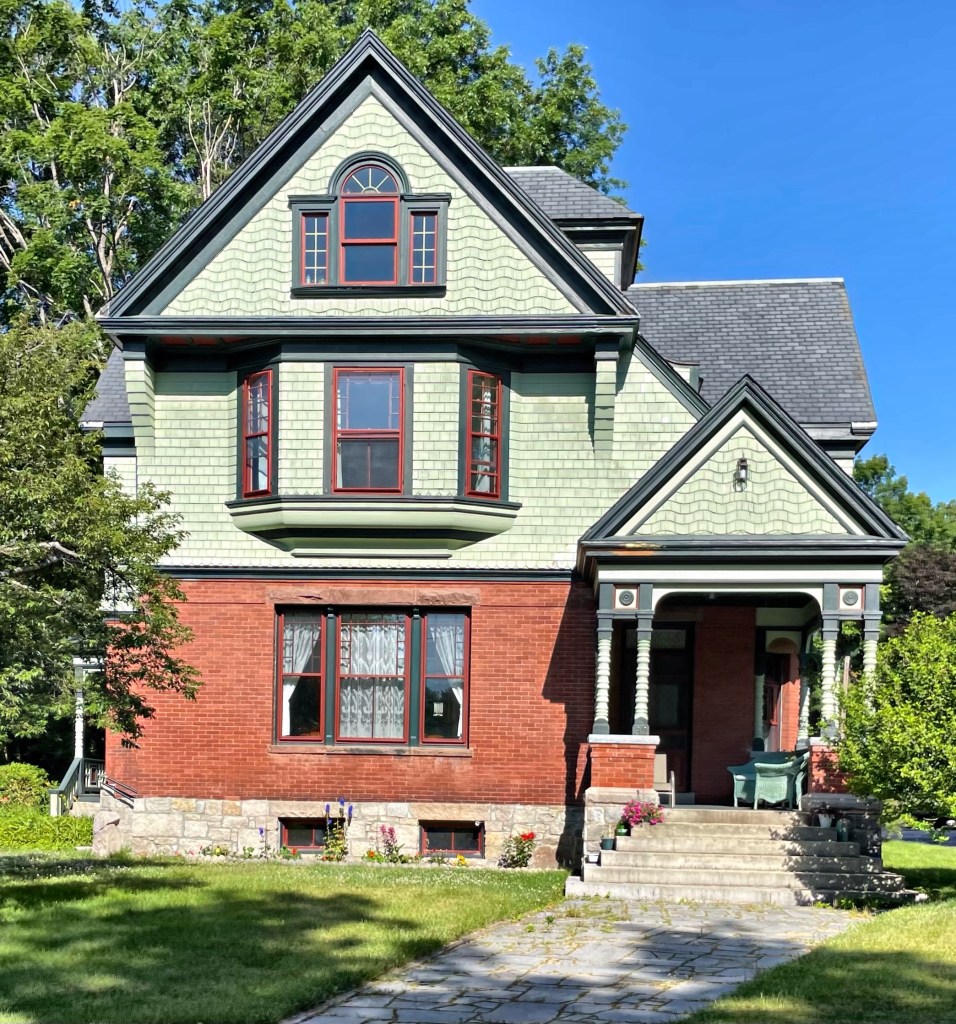
When you look up Queen Anne architecture on Google, this house in Wilton, NH should pop up! The Frederick Colony House was built around 1885 for the mill-owner who built a large cotton mill (last post) in town at the same time. Frederick Colony (1850-1925) was from a prominent textile and cotton mill-owning family based in Massachusetts and Keene, New Hampshire. Colony purchased land along the Souhegan River and built a new mill, there to make his own fortune, and that he did! The Frederick Colony House remains as one of the best-preserved homes in Wilton, and recently sold. Those interiors!
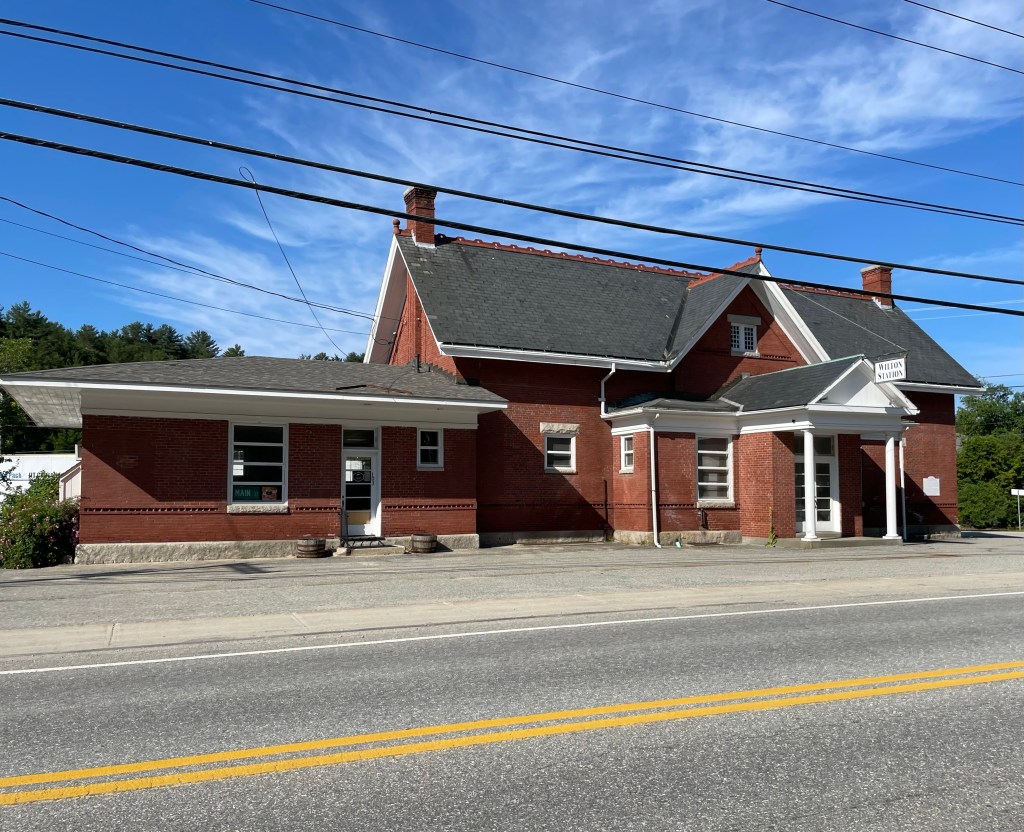
The coming of the railroad to Wilton, New Hampshire was largely due to the rapid increase in the number of mills and factories built in and around the East Village along the river beginning in the early 19th century. This increase was the impetus to Wilton business leaders of the time to petition the state for a charter to form the Wilton Railroad Company which was granted in 1844. The first official run of a wood-burning steam engine from Nashua City Station to the newly constructed Wilton Station occurred on Dec. 1, 1851. The small, wood-frame station was deemed obsolete, and replaced by 1860 with a more substantial structure. In this time, the town prospered, and the local mills cranked out everything from worsted yarn to wooden boxes and furniture. After thirty years of use, however, this second station began to show its age; the tin roof was rusting and it leaked. In 1888, a derrick on a wrecker train caught the side of the building and heavily damaged it, requiring the demolition of the station. By 1892, it was replaced by this new brick station. Between the World Wars, automobile use dominated the American transportation landscape, shifting demands from rail to road. In the late 40’s, a restaurant opened in part of the building, operating until the early-to-mid 50’s. The station was closed when passenger service finally ended and the building, undergoing “adaptive re-use”, into a medical center. It operated for some time as a scenic, heritage railroad stop from 2003-2006.
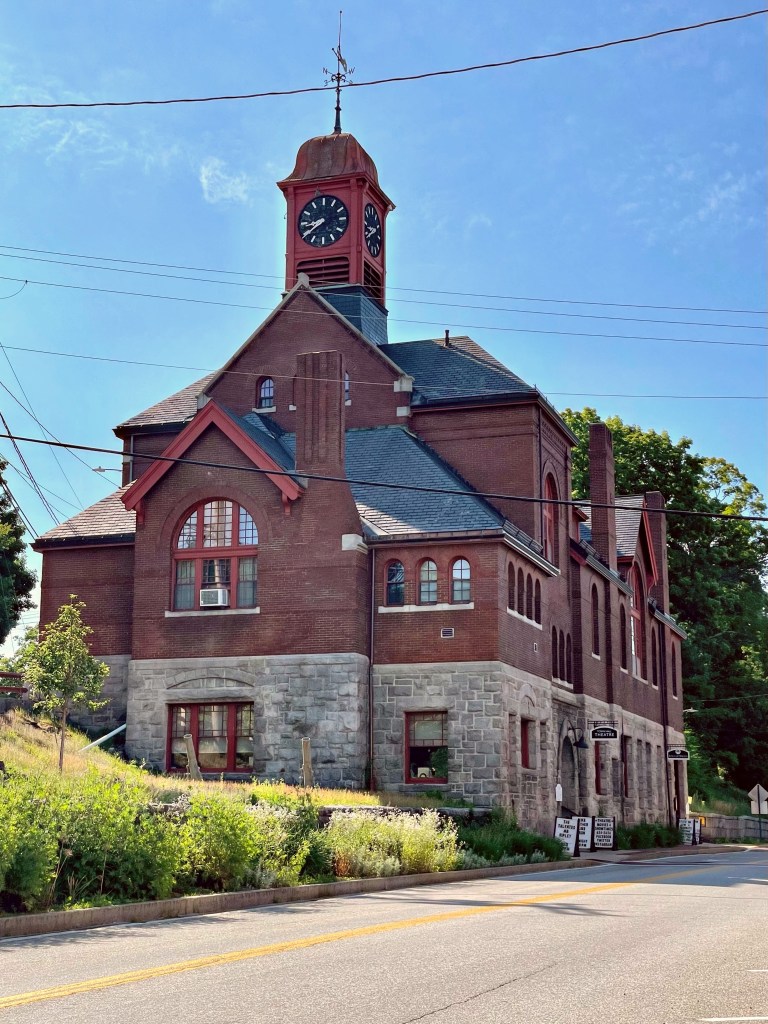
Welcome to Wilton, New Hampshire! With a population less than 4,000, the tiny New England town sure packs a lot of old buildings into its borders. The town was first part of a township chartered as “Salem-Canada” in 1735, by Colonial Governor Jonathan Belcher of Massachusetts, which then claimed this area. The land here was granted to soldiers from Salem, Massachusetts, who had served in 1690 under Sir William Phips in the war against Canada. “Salem-Canada” was one of the towns on the state’s border intended to provide protection against attack from native tribes. In 1762, residents of the town petitioned New Hampshire Governor Benning Wentworth to incorporate the town as Wilton, likely named after Wilton, England. The town prospered as a sleepy farming town, largely concentrated around Wilton Center. By the 1860s, the village of East Wilton developed around the Souhegan River, with mills and businesses centered there. The town decided to relocate their town hall “closer to the action”. Land was acquired on a triangular piece of land in the center of the village, which was recently cleared by the destruction of Whiting House, a hotel that formerly occupied the site. The architectural firm of Merrill & Cutler of Lowell, MA, were hired to design the building, which blends Richardsonian Romanesque and Queen Anne styles perfectly on the difficult site, opening in 1885. Silent movies were first shown in the auditorium in 1912 and by the 1930s, the auditorium was used most often as a movie theater. A large part of the building has since been occupied as a theater for the community.


 Buildings of New England