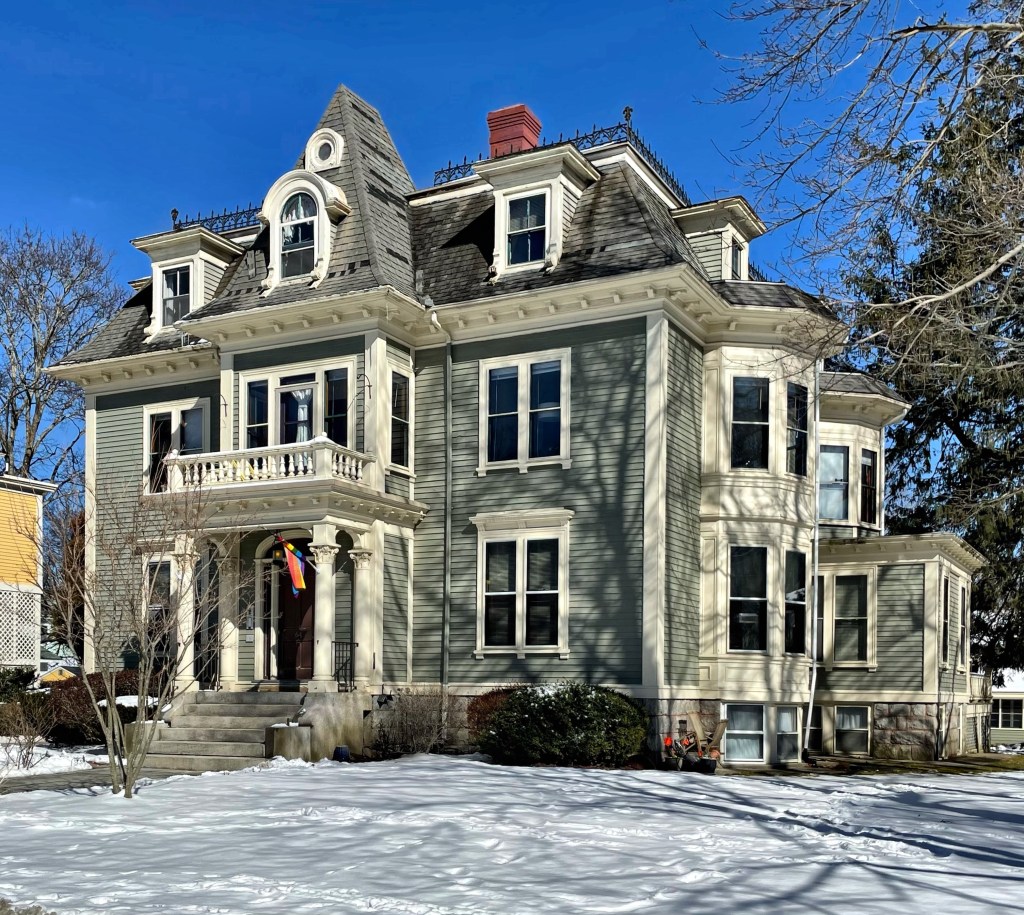
Jones & Wetherbee Houses // 1873

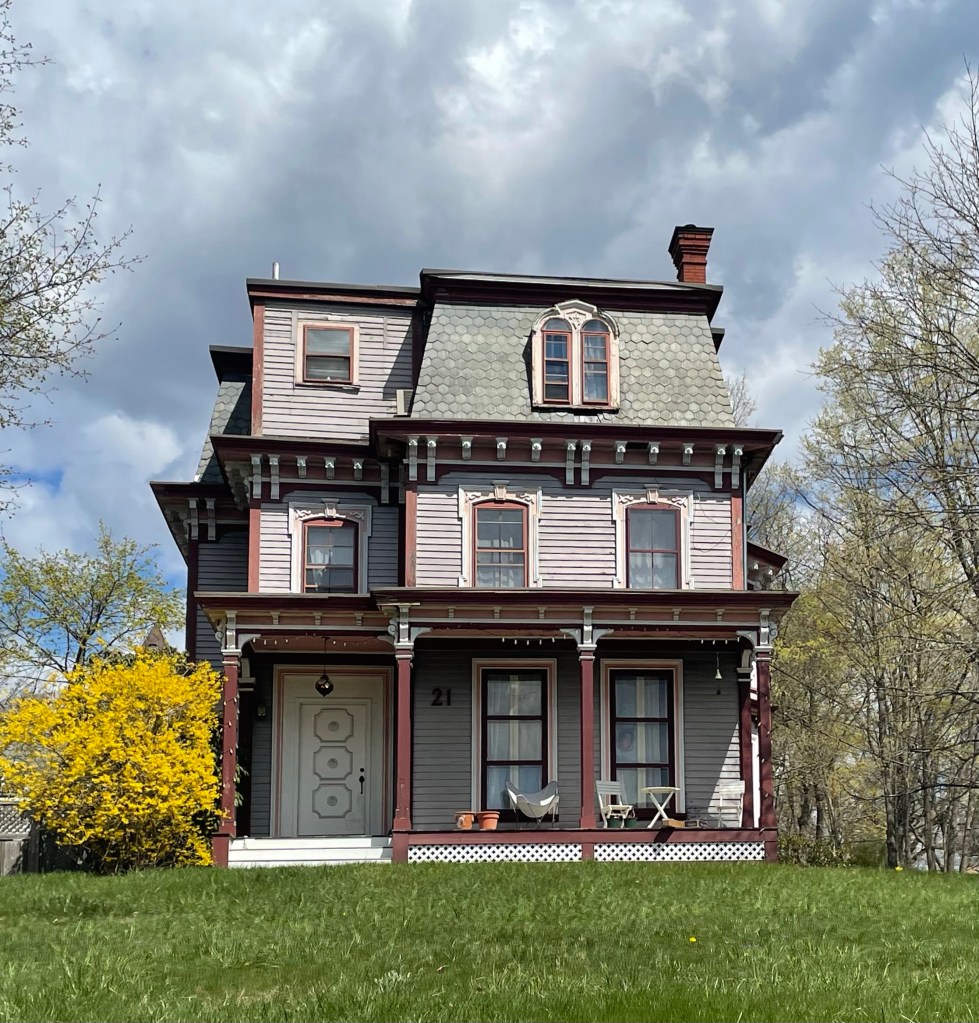
In 1873 Elnathan Jones, Jr.(1829-1904) purchased house plans from a friend in Groton, adapted the plans, and built these two houses, in Acton. One home for himself, and one for his business partner Jonathan Wetherbee (1832 1926). Also near these two houses is the Tuttle House (featured last), in a different style. All three of these men were family by marriage, and ran businesses in the village of South Acton. The Jones and Wetherbee houses were built as sister houses, identical; but over the years, the Jones House has seen some unsympathetic alterations which diminish its architectural significance. The Wetherbee House (yellow) retains its original detailing and corner, towered mansard roof.

Hooper Mansion // 1860

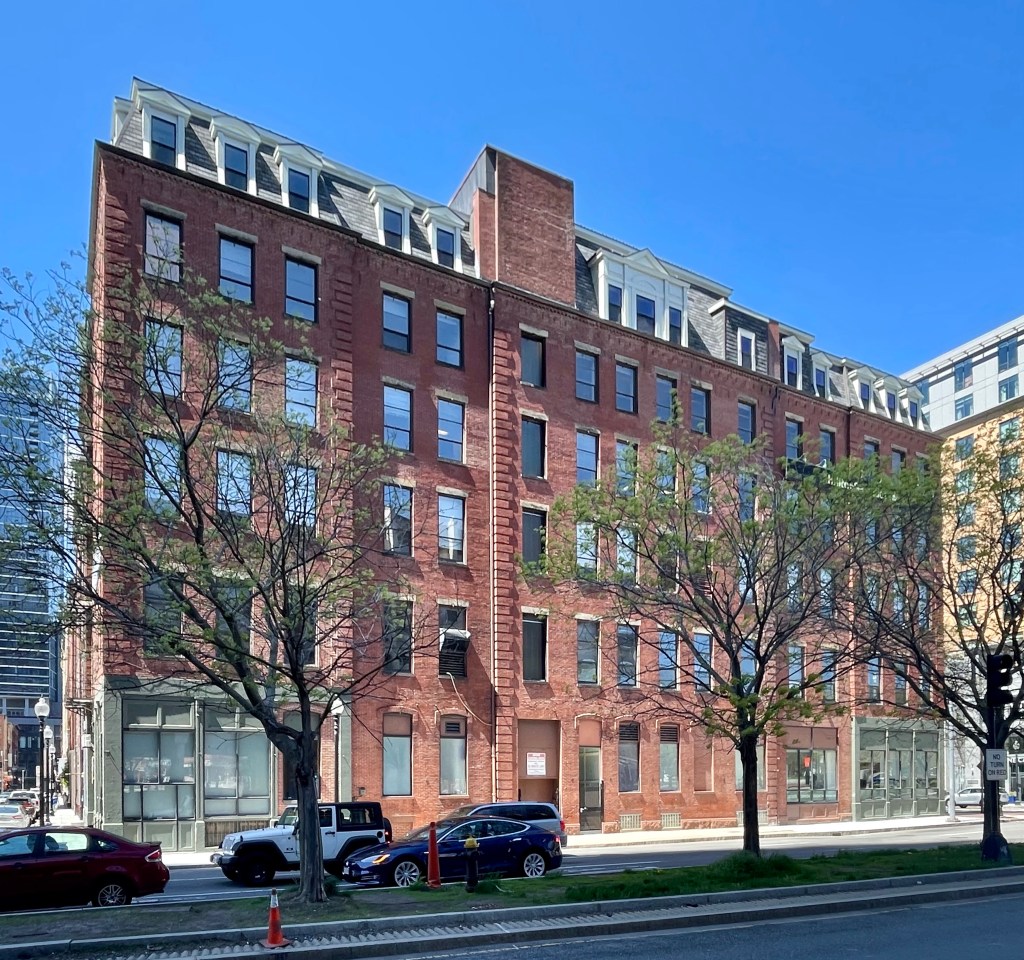
Located on Commonwealth Avenue in Boston’s Back Bay neighborhood, the Hooper Mansion represents one of the most elegant examples of Second Empire architecture style in the city. This home was actually constructed as a double-house for Samuel Hooper and his wife Anne, with a separate, semi-detached home for his son and his own family. The double-mansion was designed by esteemed architect Arthur Gilman, who used pressed brick contrasted with the tan sandstone on the home. Additionally, he designed the dentillated cornice, lavish door and window surrounds, and octagonal bays, all capped with a mansard roof with many windows laid inset to the roof, a stunning feature. The house was designed symmetrically, with entrances on each side elevation. In the early 1890s, later owners extended the eastern half of the façade so that it would be on the same plane as the western half, with an entrance at street level (seen in the right of this photo). Today, the double house is broken up into four large condominium units. When the conversion was approved, the developer wrote into the deed that the open space at the corner, used as a garden, would remain open space in perpetuity.

John Brown Herreshoff House // c.1870

John Brown Herreshoff, a fully-blind ship-builder, and later Founder and President of the Herreshoff Manufacturing Company in Bristol, built this house at the head of Burnside Street, overlooking his boat works (no pun intended). The home sits next to the stunning Codman Place mansion, featured previously, and takes architectural cues from its neighbor. The home is reported to have been built by J.B. Herreshoff, who despite being completely blind, developed his other senses to a high degree to overcome the handicap of sightlessness, and became renowned for his design skills in his ships. The home has a mansard roof with a central projecting entrance bay, capped with a steeply pitched roof, and a barrel-vaulted dormer and ocular window inset. While the house is now condo units, it retains its architectural integrity at the exterior.

Codman Place // 1870

In 1870, unmarried sisters of the esteemed and respected Codman Family of Boston, Catherine Elizabeth and Maria Potter, commissioned this house from the Newport Rhode Island architect George Champlin Mason. Like many who built in Bristol after the Civil War, the sisters seemed to view the location as a kind of suburb of fashionable Newport. In 1875 they were joined by their brother Henry Codman, who was given a large tower addition to dwell in, preserving the architectural significance to the Second Empire style home. Henry died in 1879, only four years after his tower was constructed, Catherine died in 1898, and Maria died in 1902 and the house was sold soon after her death. The home was converted to seven condominium units in the 1980s, yet retains its architectural grandeur from the delicate iron cresting at the roofs, down to the historic 2-over-2 windows.

Seth Paull House // 1880

Seth Paull (1840-1906), a lumber merchant whose warehouse and business were located at the foot of State Street downtown, began construction of this house in 1879. It is evident that he sought to showcase his lumber’s quality in his own home, as a testament to his business. This elaborate 2-1/2-story, hip-roofed, Second Empire house has a three-bay facade with a projecting central pavilion capped by an ogee gable roof. A two-story tower on the right corner, topped by conical roof with a copper finial, has elaborate brackets, diamond panels in wood, and a saw-tooth frieze. The home is well-preserved and sits on a large lot, set back from the street behind a row of trees. The lot was once larger, but was subdivided for housing to the north. The former Paull barn was repurposed as a separate home.

Harriet Tubman House // c.1874

Adjacent to the Susie King Taylor House on Holyoke Street in the South End neighborhood of Boston, the Harriet Tubman House has long served the Black community of Boston. The Harriet Tubman Crusaders, an African American branch of the Women’s Christian Temperance Union in Boston, created the first Harriet Tubman House in 1904 as a residence Black females who had recently migrated from the South. The Harriet Tubman House took in young female boarders, providing them with food, clothing, shelter, and friendship while they adjusted to their new environment. It later adapted to provide housing for Black female students who were not allowed to live in the traditional student dormitories at some Boston-area colleges. The Crusaders rented a home on Holyoke Street until 1909 when member Julia O. Henson donated her own townhouse at 25 Holyoke Street as a permanent headquarters for the organization’s expanding programs. Harriet Tubman visited Boston several times in the late nineteenth and early twentieth centuries, often staying with Julia Henson at this home. In 1960, the Harriet Tubman House merged with other settlement houses in the area to form the United South End Settlements (USES) and in 1976 USES erected a modern building at the corner of Columbus and Massachusetts Avenues, which was designed by Black architect Donald Stull. The 1976 building was recently demolished, despite massive outcry, for a luxury condo development… Shocker.

Susie King Taylor House // c.1874

The rowhouse at 23 Holyoke Street in the South End neighborhood of Boston is an excellent architectural specimen, but is best known for one of its residents, Susie King Taylor. Susie King Taylor (1848-1912) was born into slavery near Savannah, Georgia; and despite Georgia’s harsh laws against the formal education the enslaved, she attended two secret schools taught by black women. She became free at the age of 14 when she escaped onto a Union-owned boat off the coast of the then Confederate occupied Fort Pulaski on the islands off the coast of South Carolina. She soon attached herself to the First South Carolina Volunteers, the first black regiment in the US Army. She served under the Union Army in various capacities: officially as a “laundress” but in reality a nurse, caretaker, educator, and showcased such strength and courage as a young woman. Eventually, Taylor married Sergeant Edward King in 1862, and together they remained with the unit until it was mustered out of service in 1866. It is likely at that time that she met Harriet Tubman, who served as a nurse, scout, and spy for the 1st South Carolina Volunteers. Postwar, the Kings moved to Savannah, Georgia. She hoped to continue her teaching career and opened a private school for the children of freedmen. Unfortunately, her husband died the same year, and a public school opening caused her private school to fail. By 1868, Taylor was forced to find work as a domestic servant. She moved to Boston in 1872 where she married Russell Taylor in 1879. She devoted much of the rest of her life to work with the Woman’s Relief Corps, a national organization for female Civil War veterans. She lived at this home on Holyoke for much of her time in Boston, likely re-connecting with her old friend Harriet Tubman when she lived on the street.

Boston Academy of Musical Arts // c.1874

These paired rowhouses at 1-3 Claremont Park in the South End were built by 1874 as speculative housing. Between 1922 and 1928, 3 Claremont Park was purchased by a twenty-something year old Anna Bobbitt Gardner, and she opened a studio in the home, teaching Bostonians how to play the piano. In 1932, Anna Bobbitt Gardner (1901-97) became the first African American women to be awarded a bachelor’s degree from the New England Conservatory of Music. Her studio, Pianoforte Studio bloomed in popularity among Black and White Bostonians, and she rebranded the school as the Boston Academy of Musical Arts, adding four more studios in the area. She would later acquire the adjacent house at 1 Claremont Park and expanded the school. She went on to manage ‘Colored American Nights’, featuring African American musicians at Boston Symphony Hall, and produced local radio and television programs to boost the African American audience in classical music. After her death in 1997, the New England Conservatory has annually granted a musician the Anna Bobbitt Gardner Lifetime Achievement Award, showing her impact on the arts in Boston.

Wally’s Cafe Jazz Club // 1947

Historically, the South End neighborhood of Boston was populated by middle- to upper-class white residents until the late 19th century, when financial crises paired with new, modern housing (constructed in the Back Bay West and Allston areas) shifted that population elsewhere. West Indian immigrants and Black Bostonians moved to the relatively new neighborhood and many formerly single-family homes were converted to tenements or multi-family uses. From this, a vibrant Black community flourished, bringing black-owned businesses like restaurants, banks and jazz clubs. The area’s famous jazz clubs boomed during the forties and fifties, yet, many have disappeared over the years with the gentrification and development in the neighborhood. Wally’s Cafe Jazz Club on Massachusetts Avenue, was founded by Joseph L. Walcott. Mr. Walcott “Wally” was a Barbadian who immigrated to America in 1910, eventually settling in Boston. He worked many jobs and eventually saved up enough by 1947, purchasing an old rowhome and converting the space into a club. Wally was believed to be the first African American to own a nightclub in New England. He brought famed jazz musicians to Boston, and they played at this iconic venue for decades until 1979, when the venue shifted across the street to this building. With the jazz movement waning in popularity, Wally maintained his commitment to the music by featuring young musicians who were attending prominent academic institutions such as Berklee College of Music and the New England Conservatory of Music. Mr. Walcott cleverly decided to hire these young music students and mixed them with seasoned professionals who were veterans of the Big Band era. This mix of talent was special, and the format enabled Mr. Walcott to continue to serve the jazz loving audiences of New England. After Wally’s death in 1998 at age 101, his three children took over the bar, and today Wally’s Cafe is still owned and managed by his family, though presently closed due to COVID-19 restrictions.

Frederick W. Lewis Mansion // 1876

The Frederick W. Lewis Mansion in Newport, New Hampshire is a unique, late-Second Empire home constructed of brick. The home was built in 1876 for Frederick W. Lewis, a merchant who climbed the ranks as a young man, eventually purchasing the store he worked at as a 14-year-old. In 1862, he became cashier of the Sugar River Bank, and held the position until 1865, when the bank was re-organized as a national bank, taking the name of “The First National Bank of Newport.” He then leveraged his position to get into local politics, and took an active role in the development of the town, even incentivizing the railroad to build a stop in town. From this wealth and position, he built this large home. After his death, the home went to his son. By the 1940s, a group of over 30 residents of town purchased the home as a Veteran’s Home. By the end of the 20th century, the home was occupied by the Newport Earth Institute, a school created by esoteric historian and researcher Reverend Vincent Bridges, who died in 2014. The property appears to be vacant now and the home is in much need of some TLC.