Located north of downtown Oak Bluffs, this oceanfront summer estate exemplifies the grandeur of Martha’s Vineyard at the end of the 18th century. This home was built in 1890 for Frank A. Ferris, a Manhattan meat dealer who processed and shipped his product to wealthy customers, markets, luxury hotels and restaurants all over the east coast. His processing plant on Mott Street in Manhattan remains an excellent example of Romanesque Revival architecture in the city. He lived at 5 Russell Terrace in Montclair, NJ, and in summers, stayed in this waterfront mansion overlooking the Atlantic. His summer home is a great blending of the Queen Anne and Shingle styles, both very common at the time.
Perched atop a seaside cliff on a neck jutting into the Atlantic ocean, this large summer cottage exhibits the rugged, yet enchanting character of the Maine coast. The house is part of the Cape Arundel Summer Colony and is one of the last built as part of the original period of development. The home was designed by Henry Paston Clark, a Boston architect who previously built a home on Cape Arundel and had summered there for years. His most notable design here is St. Ann’s Church, built for the summer residents of the area. The Bayberry Cove Cottage was built in 1915 for James Harrison and his wife and employed the use of cedar shingles, stone, and slate, to blend in with the rugged plot of land.
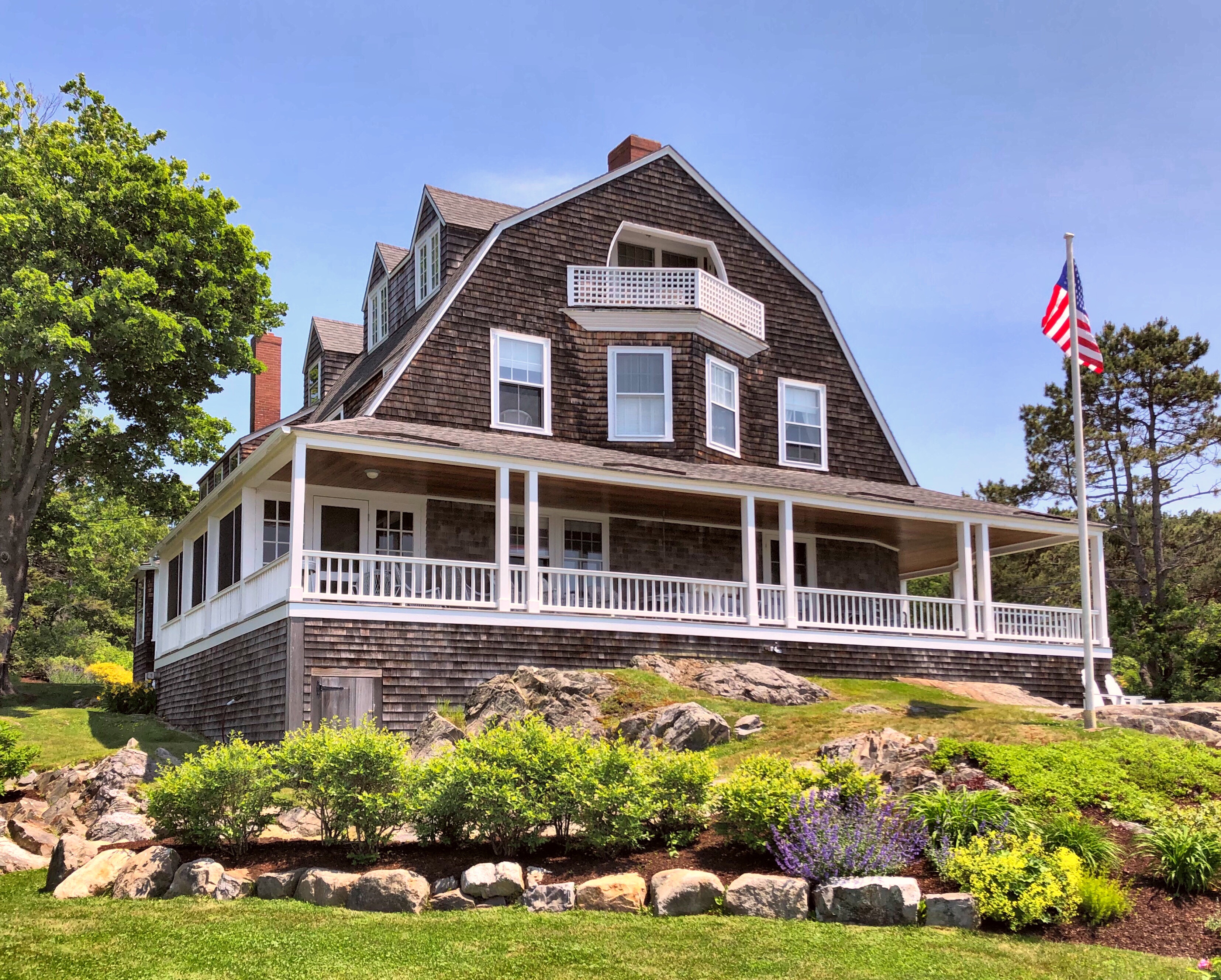
One of the larger Shingle style homes in Kennebunkport, Inglesea Cottage, was designed in 1889, possibly by Henry Paston Clark, who designed or worked on many homes and buildings in the summer colony. The original owner, Dr. George Frederick Brooks, a doctor based out of New York, who spent his childhood on the coast of Maine, and decided to spend his elderly summers there. By 1903, the home was purchased by Ms. Lucy Fay (1864-1937) of Fitchburg, MA, who hired Henry P. Clark, to add the cross gambrel addition to enlarge the home. Lucy Fay was the daughter of the the wealthy industrialist George Flagg Fay and his wife, Emily Upton, and upon their deaths, inherited their fortune (her sister died at just seven years old, making her an only child). The home remains in impeccable shape and is a head-turner everytime I drive down the coast.
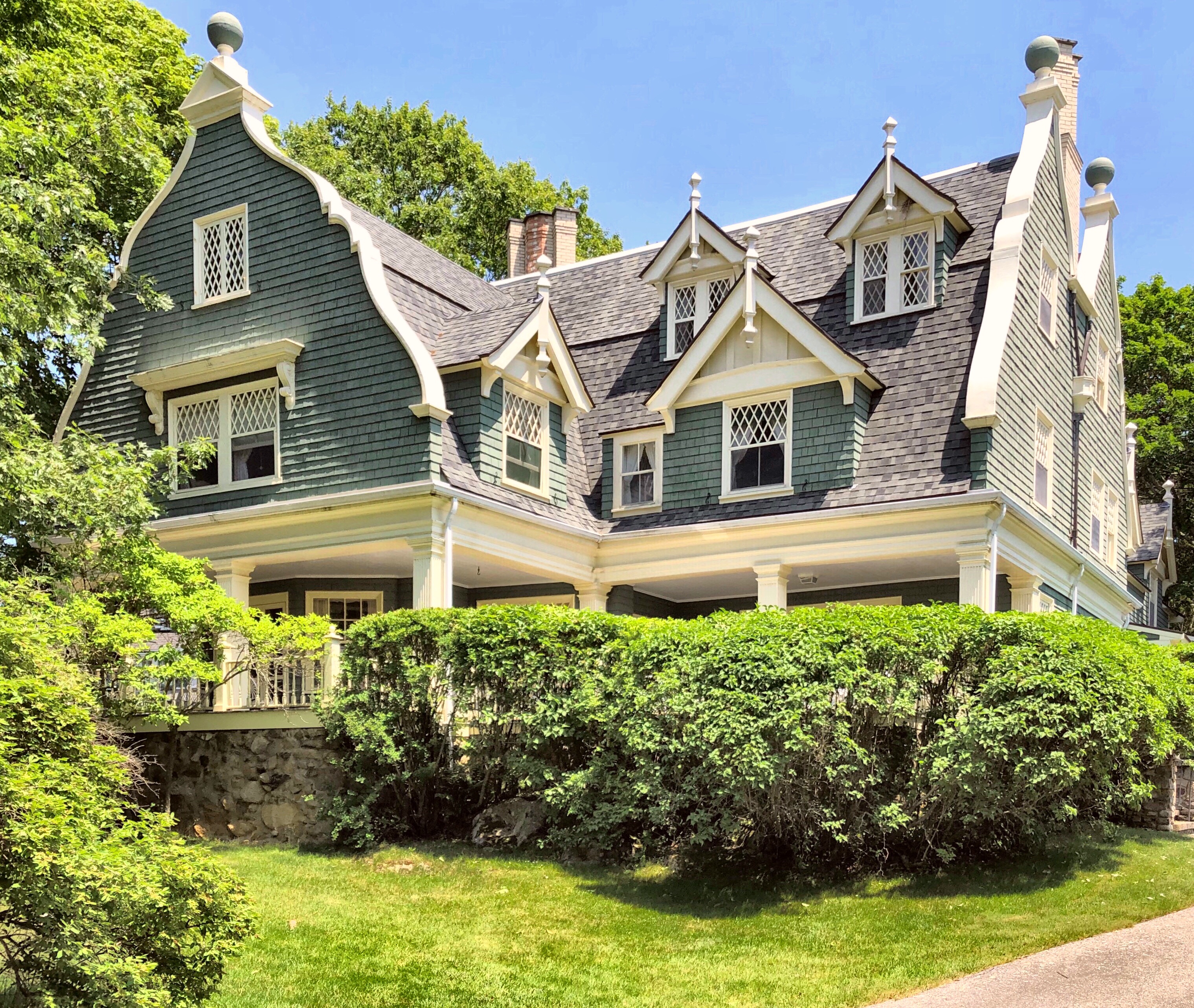
One of the more unique summer cottages in Kennebunkport is the Talbot Cottage, a ca.1890 eclectic Shingle style home. The home features curvilinear Flemish gables crowned with ball finials, diamond paned windows, gabled dormers with finials and pendants, and a wrap-around Colonial Revival porch with fluted columns. The stunning home was built for Julian Talbot, of the Talbot Family who ran a mill in Lowell, MA. The home was soon after sold to George Hubbard Clapp, a Pittsburgh pioneer in the American aluminum industry, who summered in Kennebunkport.
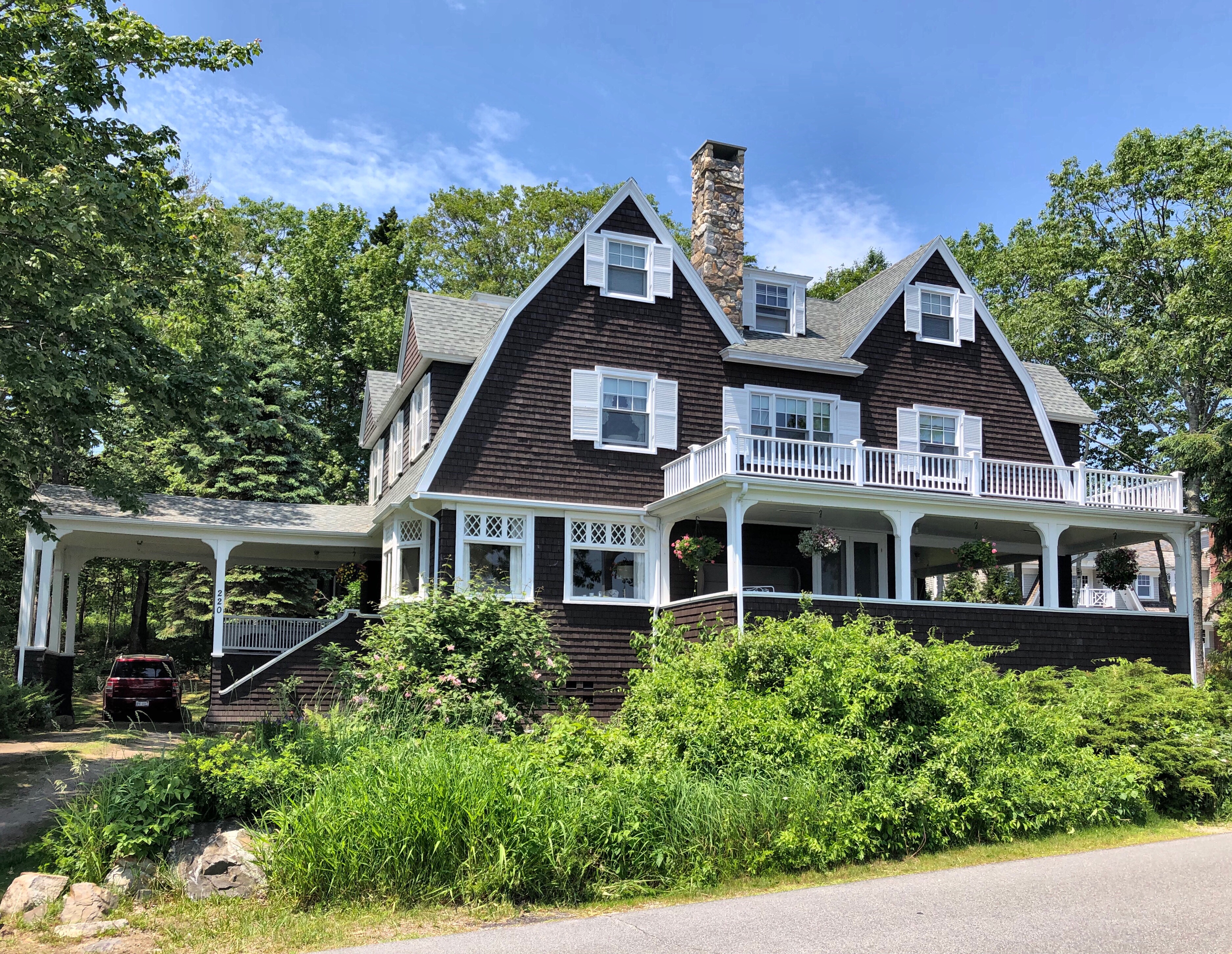
This shingled cottage was built in 1900 for Dr. Francis B. Harrington, a surgeon who worked at Mass. General Hospital in Boston. The stunning cottage was designed with double gambrel gables, a large piazza/porch overlooking the ocean, and a porte-cochere, which was likely added after the home was completed. The home was designed by architect Henry Paston Clark (1853-1927), a Boston area architect who was briefly associated with Henry Vaughan, a leading Boston architect who executed several significant institutional and ecclesiastical works in the Boston area. Clark would later become best-known for his Shingle-style and Colonial Revival works throughout New England and spent his final years in Kennebunkport, where he died.
One of the jewels of the Cape Arundel summer cottages in Kennebunkport is the Rock Ledge Cottage, sited prominently on a hill overlooking the Atlantic. Rock Ledge was a cottage built in 1887 for Elon Dunbar Lockwood (1836-1891) of Philadelphia. Lockwood was a merchant who started a dry goods business with his brother, forming W. E. & E. W. Lockwood. Elon became a highly respected businessman in Philadelphia and later became a member of the Committee of Fifty, a group formed to devise measures for the 1876 Centennial Exposition in Philadelphia which would showcase the city for the first ever World’s Exposition in the United States. Elon’s wife Elizabeth died in 1884, and a couple years later, he had this summer cottage built, where he would apparently entertain, giving him the designation as a womanizer until his death in 1891 at the age of 54. The cottage was designed by William Ralph Emerson, one of the busiest architects in New England at the time, with commissions all over the region, including many summer cottages in Maine.
A happy blending of Mission, Colonial Revival and Shingle Styles for the Maine coastal community of Kennebunkport, the St. Martha’s Catholic Church exemplifies the charm of this town. The church is sited on a corner lot with a belfry at its corner. The nave features a central entry with Colonial pilasters and pediment above the second floor windows. The roofline is shaped with Mission style parapet walls and arched openings at the tower, showcasing the Spanish influence in the design. The entire building is wrapped with cedar shingles, as a nod to the coastal summer resort it resides. The church operated here until the mid-late 20th century when it was converted to an art gallery, and now is home to condos.
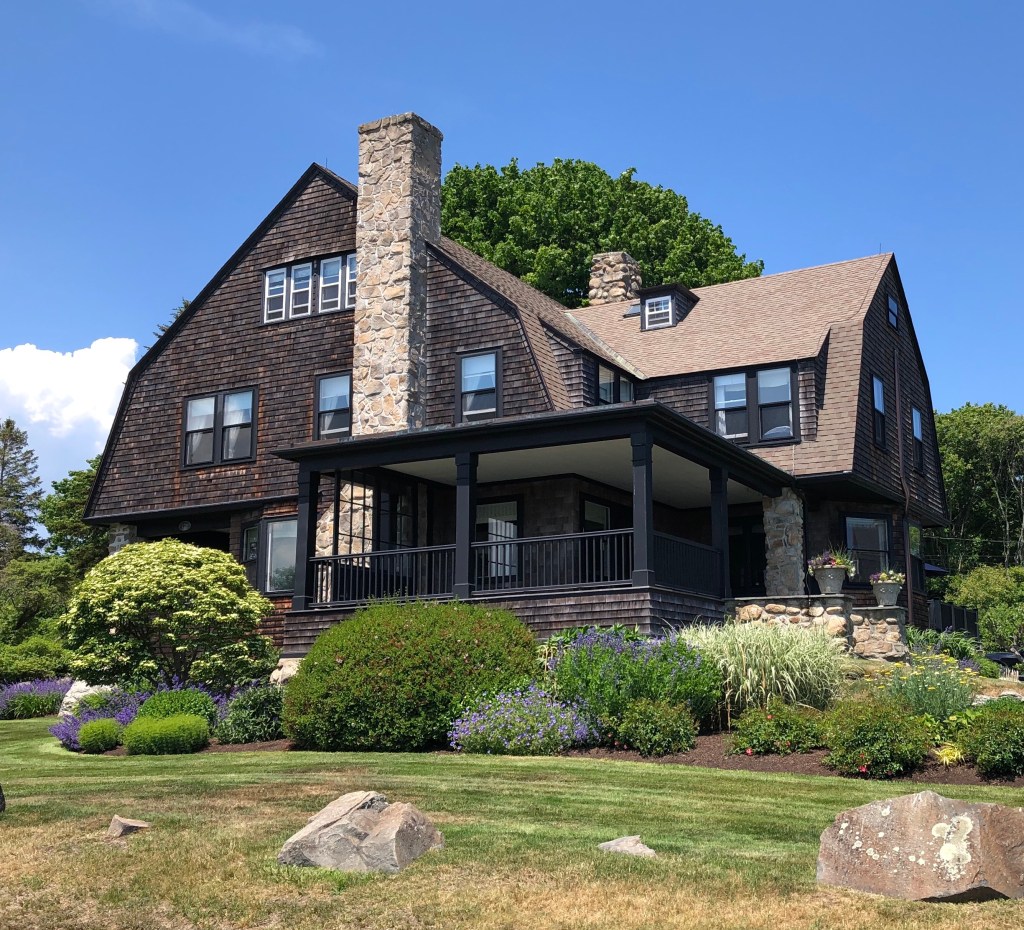
Located in the Cape Arundel Summer colony in Kennebunkport, this Shingle style cottage, built in 1887 sits perched on a hill with views of the Atlantic Ocean. Built for John Bach McMaster, a historian who was also a professor at the University of Pennsylvania, the house was the first of two he owned in Kennebunkport, where he summered. The son of a former Mississippi plantation owner, McMaster grew up in New York City and worked his way through the City College of New York. Although he obtained a degree in civil engineering in 1873, he was deeply interested in American history. He worked briefly as a civil engineer in Virginia and Chicago in 1873, but he returned to New York the following year and earned a meagre living by tutoring.
McMaster was appointed assistant professor of civil engineering at Princeton University in 1877. Meanwhile, he planned to write a broad-scale history of the United States. In the summer of 1878 he led an expedition to the American West, an experience that impressed on him the pioneers’ efforts and the need for a social history of the West. His inspiration materialized in 1881 with the completion of the first chapter of A History of the People of the United States from the Revolution to the Civil War. The earnings from the series gave him substantial wealth and he then bought a summer residence up in Maine seen here.
If anyone knows the architect of this house, please share!




 Buildings of New England