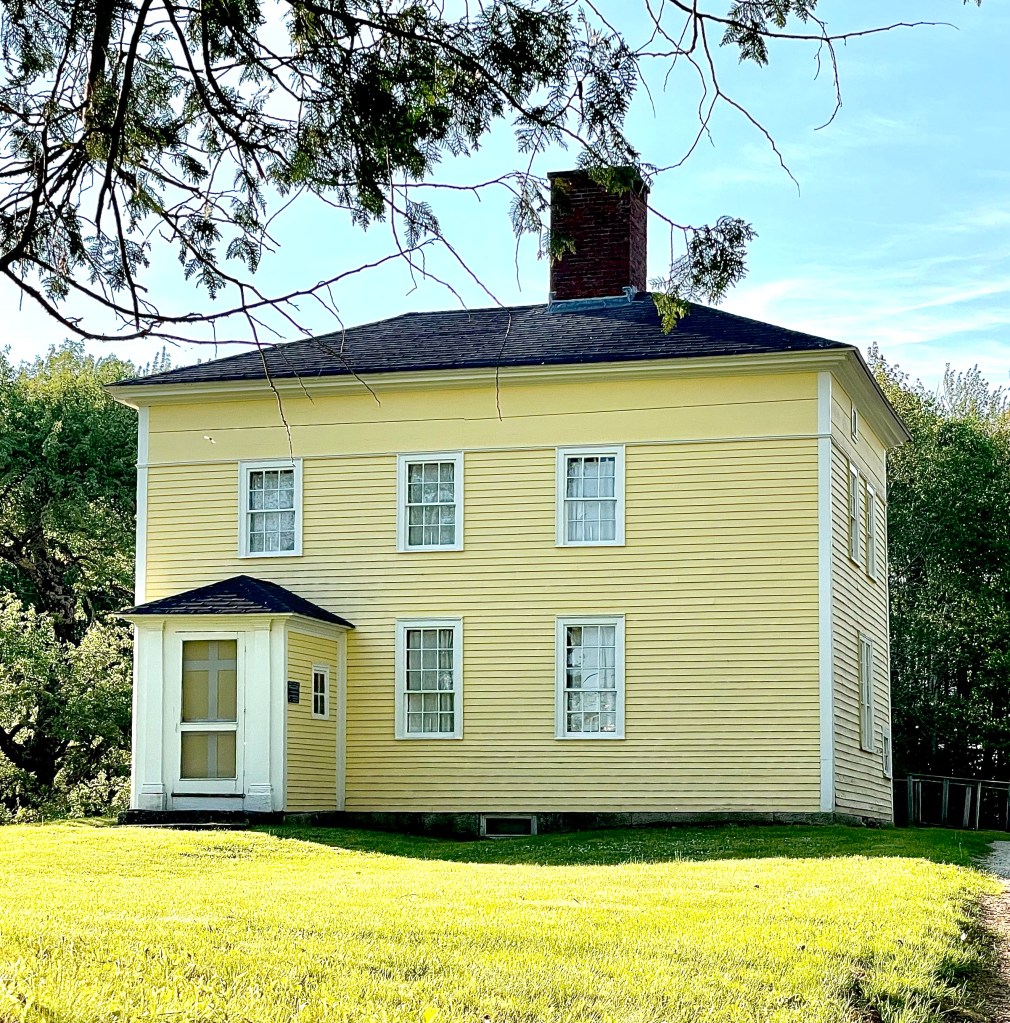
Jonathan Fisher House // 1796

Jonathan Fisher (1768-1847) was born in New Braintree, Massachusetts, and educated at Harvard College Divinity School. In the record of Plantation No. 5, (now Blue Hill), the selectmen voted to invite the Rev. Mr. Fisher to preach for four months in the summer of 1795. After his four month stint, the committee approached him, asking if he would stay and make the town his home, he accepted. He first built a primitive house which was outgrown by the time he had three children growing up in it! He had the current home built in 1814, attaching the original home as a rear ell (addition). Reverend Fisher died in 1847. His wife Dolly, died in 1853. At the end of the nineteenth century, Jonathan Fisher’s grandchildren decided to renovate the house. In 1896, they tore down the original house of 1796 and replaced it with a two-story addition to their grandfather’s 1814, giving it the current configuration. When the Fisher grandchildren who had been living there left Blue Hill, a number of local citizens concerned for the future of the building made arrangements that eventually led to the transfer of ownership of the house to a local non-profit foundation, the Jonathan Fisher Memorial, and made it possible for the house to be opened to the public. The Fisher House is open for tours in the summer.
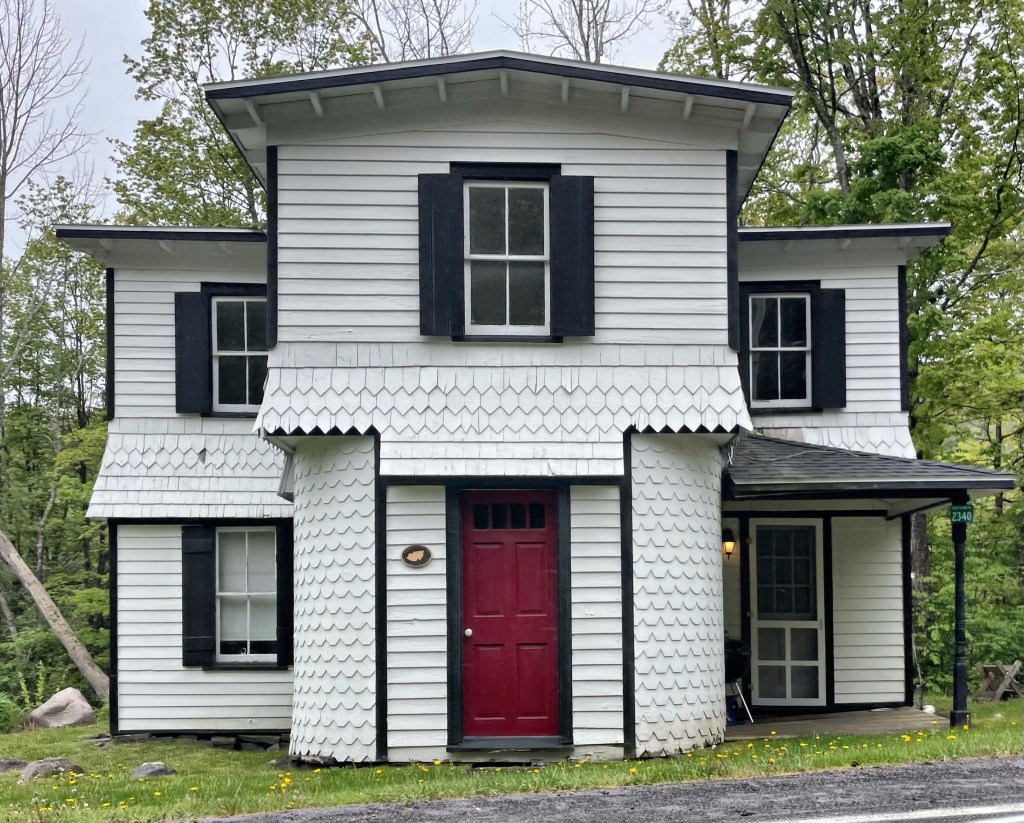
Old Platte Clove Post Office // c.1885

Believe it or not, but I occasionally venture out of New England, and a favorite place of mine to explore is Upstate New York. On a recent trip, I ended up driving through the tiny town of Hunter, New York, located in the middle of the Catskills. This charming little building was constructed c.1885 as the Platte Clove Post Office. The building was constructed to serve a rural portion of the town and was built as an early mixed-use building with the post office at the ground floor and small residence upstairs for the postmaster to live. The exterior cladding features both shingle and clapboard siding with overhanging eaves. The post office here ceased by 1911 and the use reverted solely to residential.

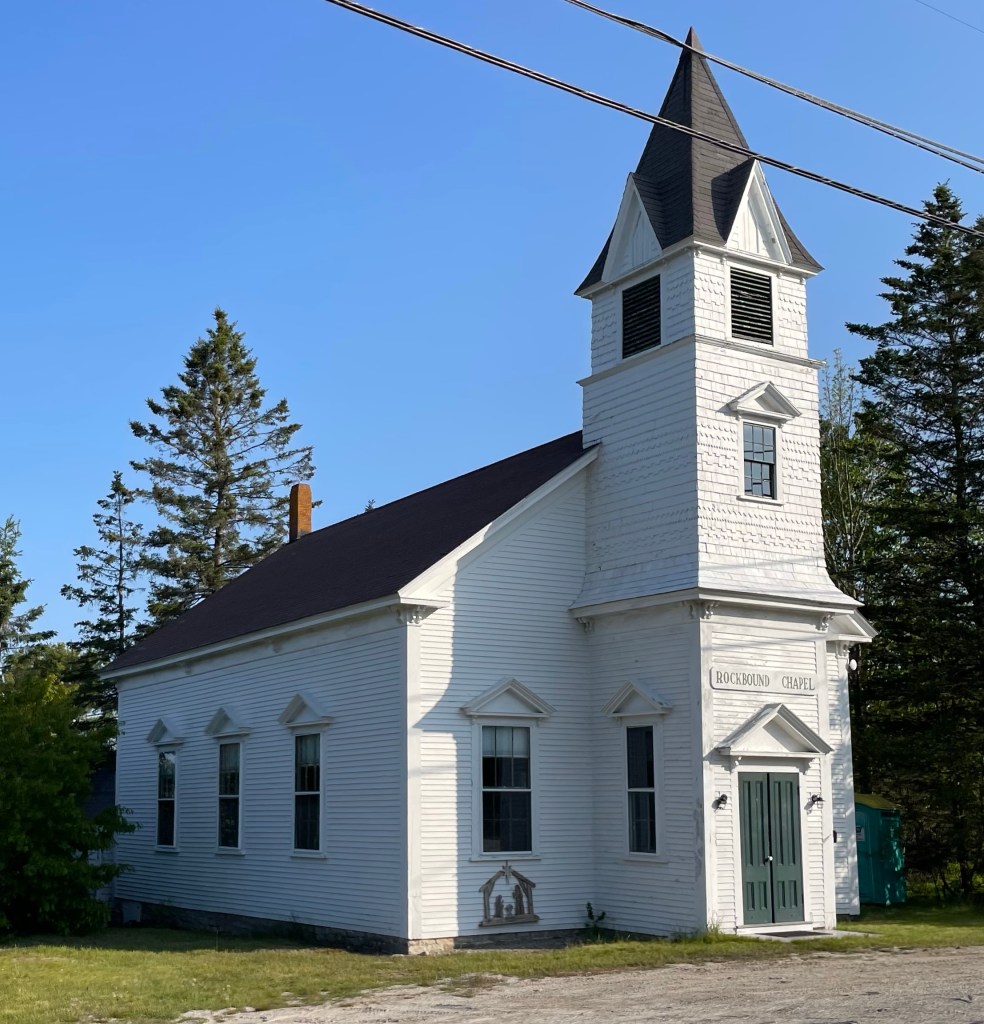
Rockbound Chapel // 1900

Wrapping up our “tour” of Brooklin, Maine, I wanted to conclude with a feature on Rockbound Chapel, one of the village churches in the small coastal town. The chapel (like the Beth Eden Chapel) was constructed at the turn of the 20th century as a village church which saw increased use when the town’s population surged (relatively) in the summer months. The vernacular church building has pedimented lintels over the windows and door, and a steeple covered in decorative shingles which flare toward the base. There is something just so enchanting about these small rural chapels!

Beth Eden Chapel // 1900

Almost at the southern, most remote tip of the Blue Hill Peninsula in Brooklin, Maine, I was stunned to come across this enchanting chapel. Completed in 1900, the Beth Eden Chapel is a small wooden frame building that appears to have been the first religious facility erected in the Naskeag area of Brooklin. Although it was erected by the Methodist Episcopal Church of Brooklin, the building was dedicated to the use of all Christian sects who wished to worship in the more remote section of town. Interestingly, the vernacular church employs some late 19th-century detail including the shingled flared siding and triangular motif. The chapel appears to remain open for summer months.

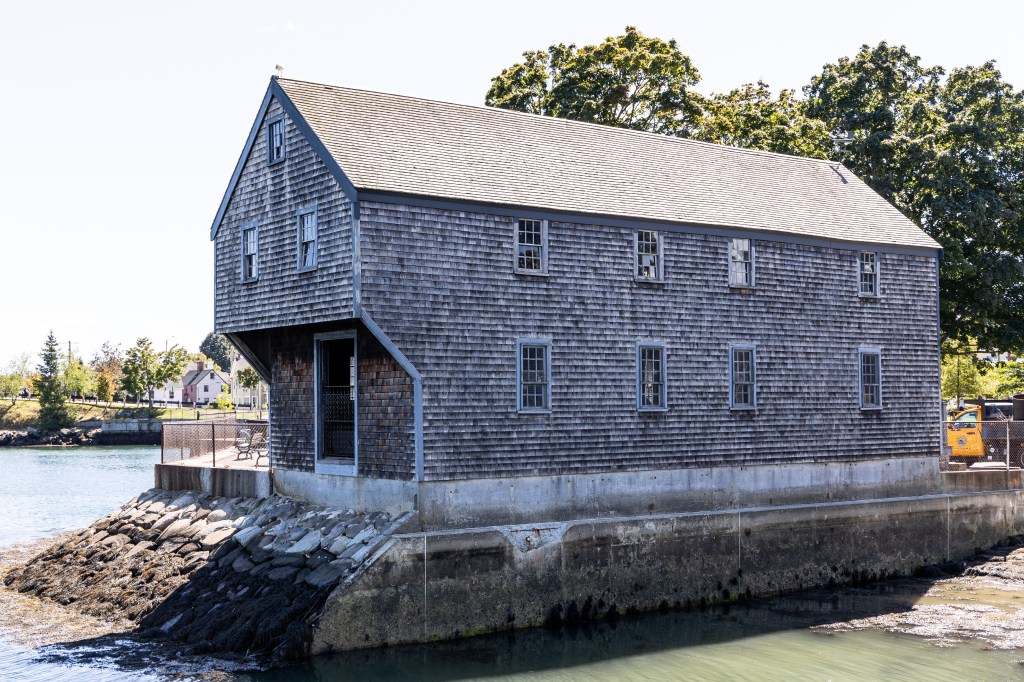
Sheafe Warehouse // c.1740

The Sheafe Warehouse in Prescott Park in Portsmouth, New Hampshire was constructed in the first half of the 18th century in a spot ideally situated on the Piscataqua River to receive incoming ships. The design of the building is unique with a garrison (second story overhang) which enabled cargo to be unloaded directly from ships arriving in the port. The structure was apparently built (and named after) Jacob Sheafe (1715-1791) a prominent and prosperous merchant who followed in his father’s footsteps engaged in trade with the West Indies. The building was used as storage for centuries until the 1930s when the owner sold the warehouse to two Portsmouth sisters, Mary E. and Josie F. Prescott, the founders of Prescott Park. Interested in preserving the history of their native city, the sisters had the building moved to its current location and restored. The building (and the adjacent Shaw Warehouse) was listed on the State Register of Historic Places.

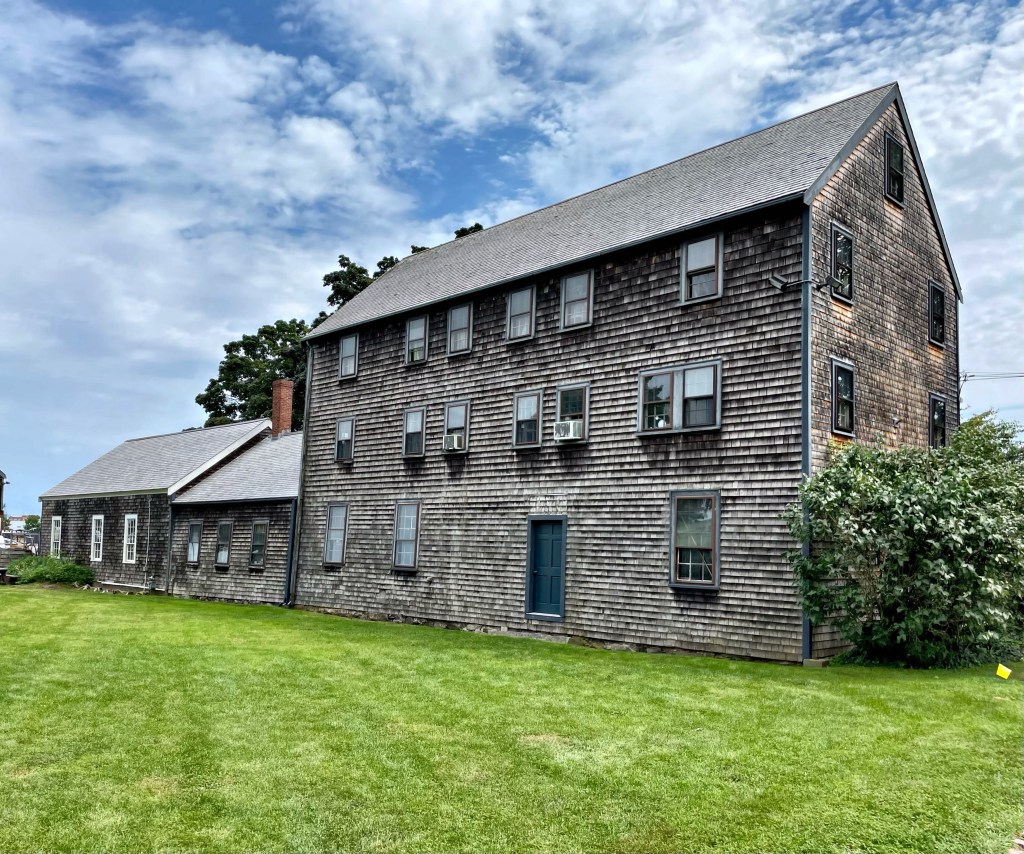
Shaw Warehouse // 1806

The Shaw Warehouse located inside Prescott Park in Portsmouth, New Hampshire, was constructed between 1806 and 1813 and is significant as a rare example of a vernacular warehouse building from the early 19th century. It is very vernacular, unadorned with a very functional use, but these types of buildings (like barns and stables) are some of the most charming and provide a link to working-class history from the past. The building is the only of its kind remaining in its original location in Portsmouth, and as a result, was listed in 2011 on the New Hampshire State Register of Historic Places. It now houses offices for the nearby park.

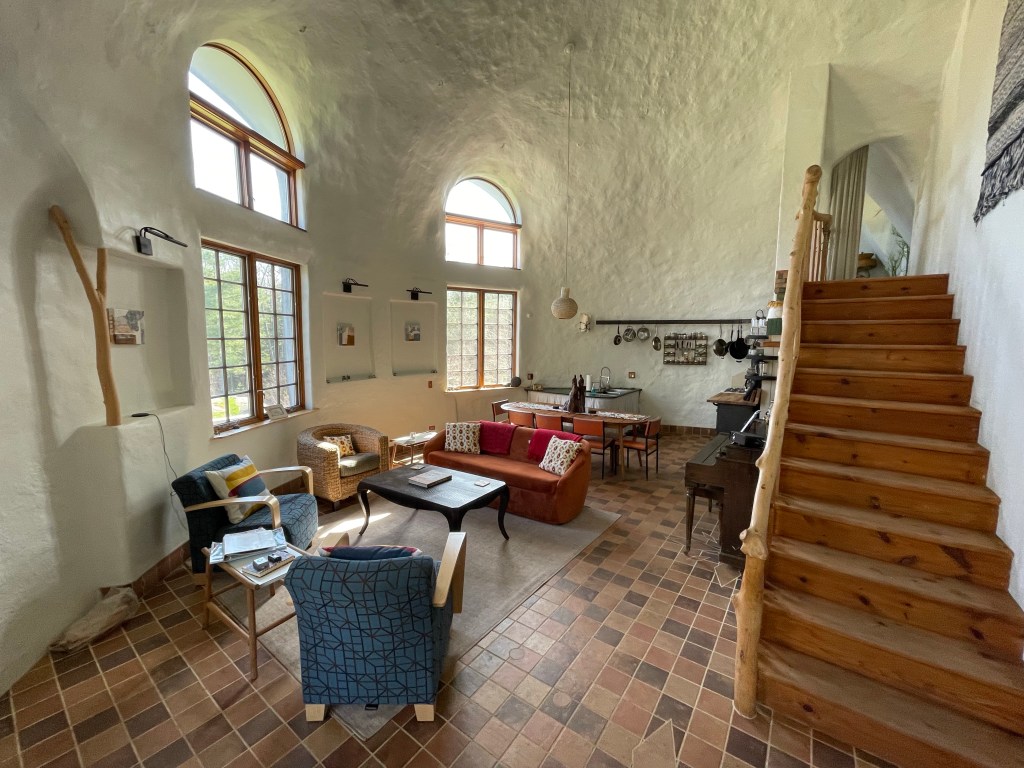
The Dome Home // 2003

This past weekend, I was lucky enough to stay at one of the most unique Airbnb’s in New England, the Dome Home in idyllic Kennebunkport, Maine! The house itself was hand-built in 2003 by trained architect and sculptor Daphne Pulsifer with her husband Daniel Bates, on 43-acres of forest just miles from the iconic Maine beaches. Inside, the house features numerous custom touches designed and built by the original owners, including light fixtures, floor tiling, hand-built oak doors, wall tiling, woodwork — much of it claimed from the property itself. The Dome Home is completely sustainable with solar panels providing all the power needed, making the property completely off-the-grid. The original owners sold the property in 2022 to the new owners who have lovingly updated the spaces, keeping the charm and unique qualities of the Dome. If you are ever in Kennebunkport and are looking for a unique, off-the-grid stay with all of the amenities of modern living, definitely check out the Dome!

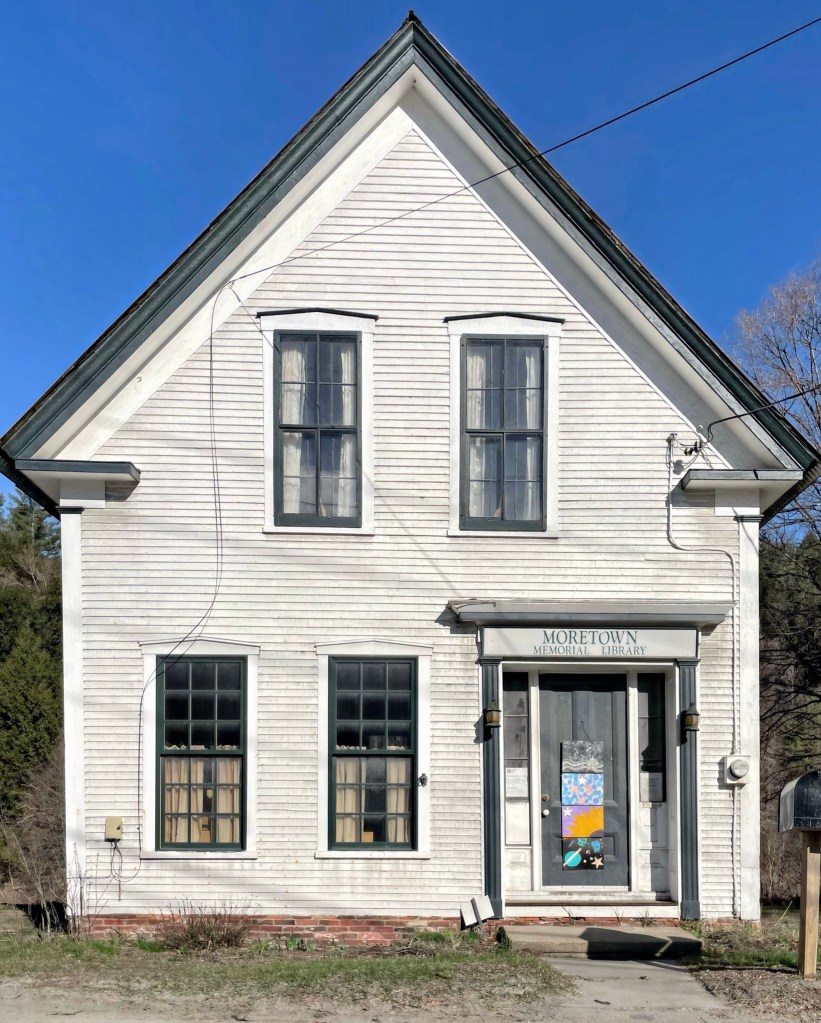
Moretown Public Library // c.1845

This 1840s Greek Revival home turned library, sits on the main street in the charming rural town of Moretown, Vermont. The quaint village never had a public library, but that changed starting in 1904, when residents and the town established a fund for purchasing books for the town’s citizens. In 1923, the library trustees purchased this residence which would serve as a stand-alone library for the village. Resident Lilla Haylett was instrumental in the accession and conversion of the home for use as a library from the estate of Ellen J. Palmer, who lived there until her death in 1923. The opening and celebration was short-lived however, as in 1927, elevated levels of the Mad River flooded much of the town. Water levels were well over the first floor of the building and nearly all books were lost. The Moretown Memorial Library was nearly lost, but the town rebuilt over years. The library remains today as a testament to the desire for learning and it serves as a landmark for the charming rural village.

Belding Homestead // c.1820

David Belding (1785-1860) was born in Swanzey, NH and at 25 years old, moved to Moretown, Vermont in 1810, marrying an eighteen-year-old Florinda Freeman a year later. The couple built a farmhouse on the outskirts of town near a brook. David worked as a farmer and would later officiate as a justice of the peace, the town lister, selectman, and represented the town in the State Legislature for two terms. From his enhanced wealth, David appears to have expanded his farmhouse in the 1820s or 30s with this vernacular Federal and Greek Revival style residence. The Belding Homestead would remain in the family for decades and eventually became the Belding House Bed & Breakfast.

Moretown Town Hall // 1835

The township of Moretown, Vermont was chartered on June 7, 1763 by Governor Benning Wentworth of New Hampshire. The original charter contained approximately 23,040 acres of land to be divided into about 65 shares of proprietors. Active settlement did not occur until after the Revolutionary War with early buildings constructed on the Winooski River (the northern boundary of the town) and subsequent development along the Mad River (which cuts through the middle of town). Saw and grist mills were built and the town developed as a rural farming and industrial community on the rivers. The Moretown Town Hall was erected in 1835 in the Greek Revival style. It has a pedimented portico with Doric columns that support a large pedimented gable peak in imitation of a Greek temple. Like most buildings in the Mad River Valley, the building is unapologetically Vernacular which means it relies on local materials, local builders, and not on architect-designed finishes. This is an aspect of Vermont architecture that makes the state so charming.