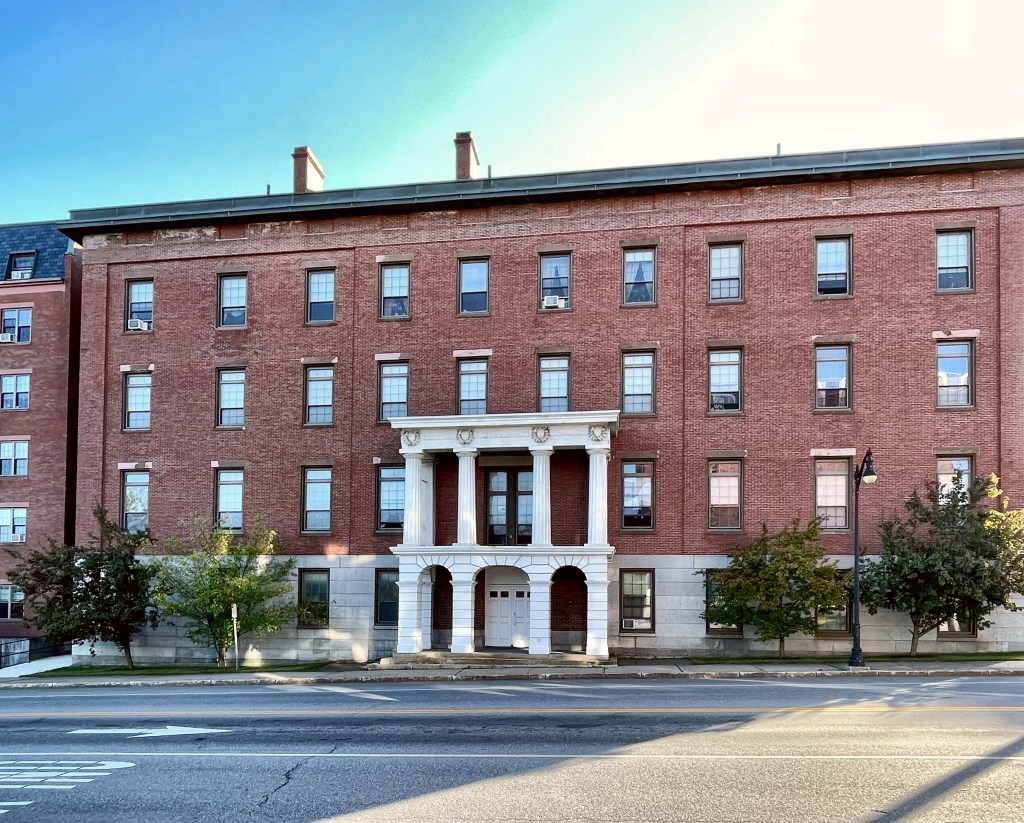
Bangor House // 1832

In the first couple decades of the 1800s, Bangor, Maine, became the capital of the timberlands of the state, as thousands of acres of untouched forests were sold for lumber harvesting and shipping to other developing parts of the region. The massive cedar trees were shipped by rail and boat to cities like Boston, which lacked such large lumber. At the time, a group of wealthy lumbermen in Bangor wanted a hotel which would impress investors and visitors to the frontier town. Inspired by The Tremont House in Boston, an 1829 hotel that was then regarded as one of the pinnacles of luxury accommodation. The investors hired architect Isaiah Rogers, the same architect who designed the Tremont House years earlier, to design the Bangor House. The two hotels are strikingly similar in design. The hotel expanded numerous times over the decades, until the 20th century, when the town’s prosperity began to falter. Many of the additions have since been torn down as part of the building’s conversion to apartments, replaced by modern residential wings which are much lesser quality of design and construction. Thankfully, the historic core of Bangor House remains very well preserved and as it did nearly 200 years ago!
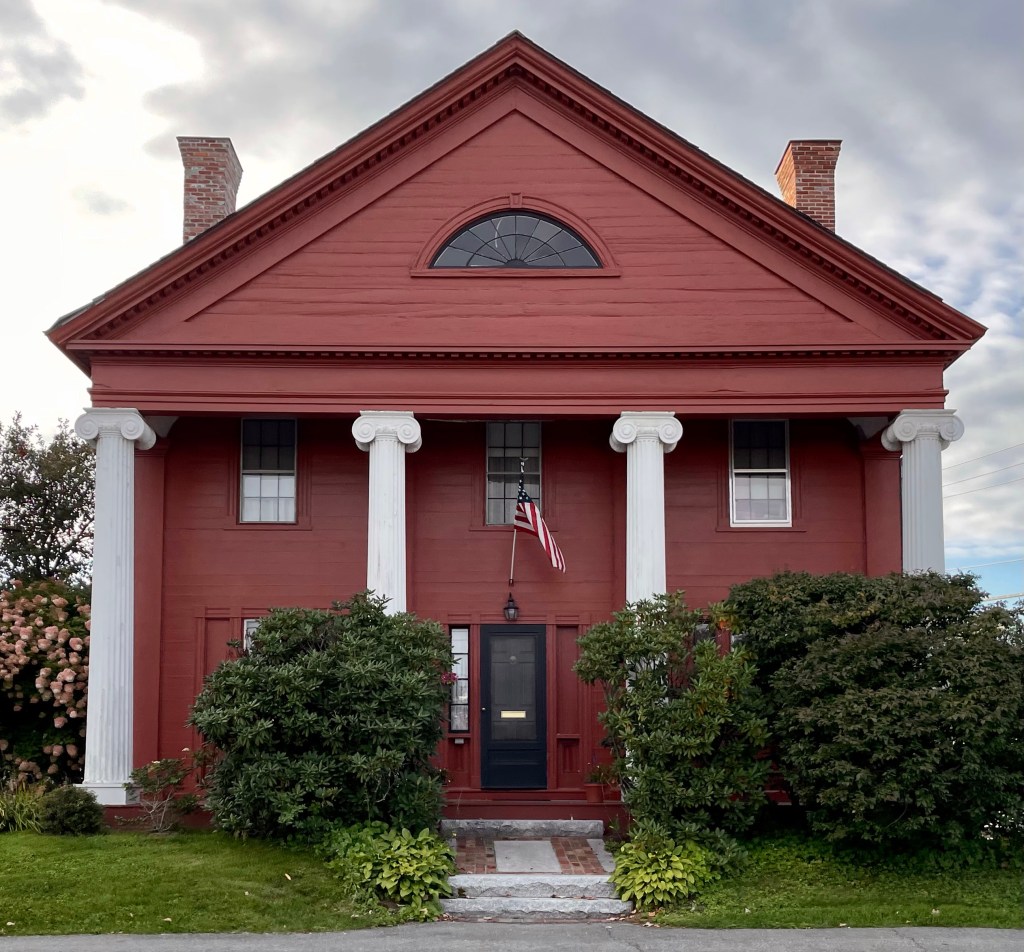
Zebulon Smith House // 1832

The Zebulon Smith House in Bangor is one of the earliest temple-front Greek Revival homes built in the state of Maine. The house was constructed in 1832 for Zebulon Smith, a businessman who moved to the Maine frontier in the early 19th century, likely to get involved with a lumberyard as this section of the state shipped timber all over the region. The substantial home was built just south of downtown Bangor, and has survived fire and urban renewal. It sits alone in a sea of parking lots and industrial buildings in what was once likely a lovely neighborhood.

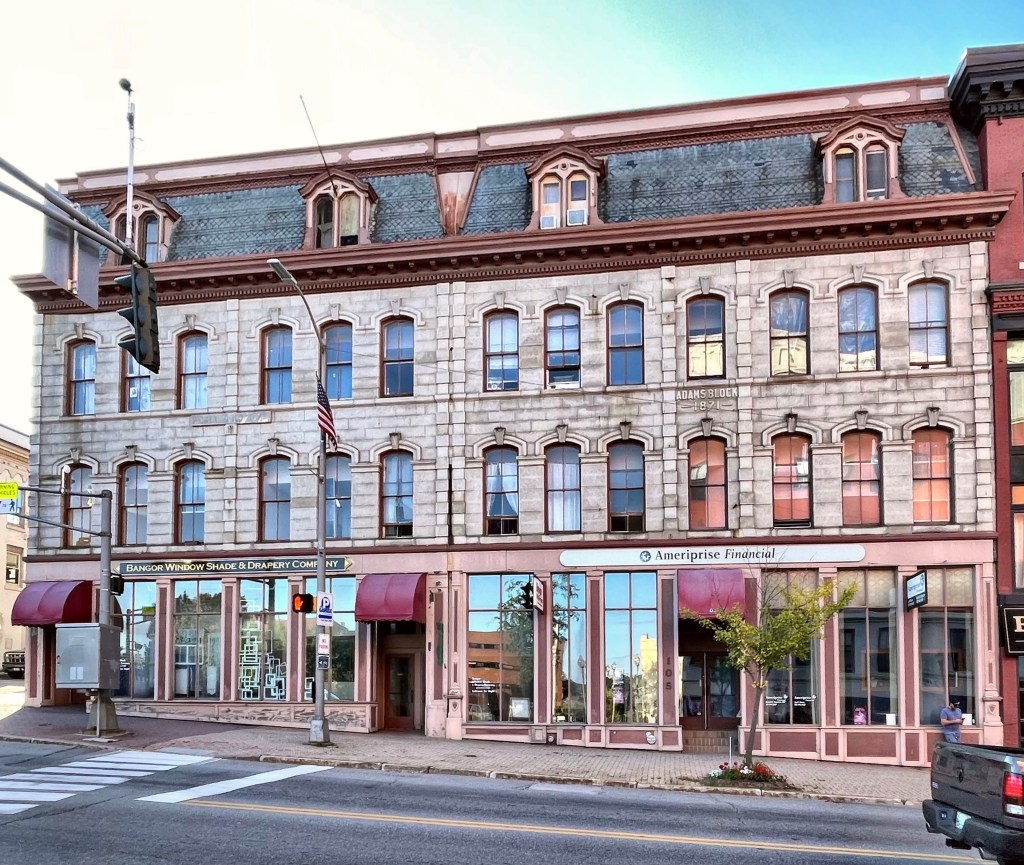
Adams-Pickering Block // 1871

Main Street USA! I just love historic Main Streets and Downtowns in New England, so many are full of old buildings and were designed for pedestrians, not cars (though some towns and villages have definitely caved to the automobile). Erected in 1871, the Adams-Pickering Block building was one of several grand, mansard roofed commercial structures which local architect George W. Orff designed for Bangor’s business district in the 1870’s. With its first-story cast iron front and its granite facade, from stone quarried nearby in Hallowell, Maine, the Adams-Pickering Block and its similar contemporaries were the most sophisticated Victorian commercial buildings in Eastern Maine. The Bangor Fire of 1911 and subsequent urban change, especially urban renewal in 1968, destroyed most of the city’s nineteenth century business district. The Adams-Pickering Block is a rare survivor and shows us how old buildings at a human scale can create vibrant, people-centric places.

Isaac Farrar Mansion // 1836

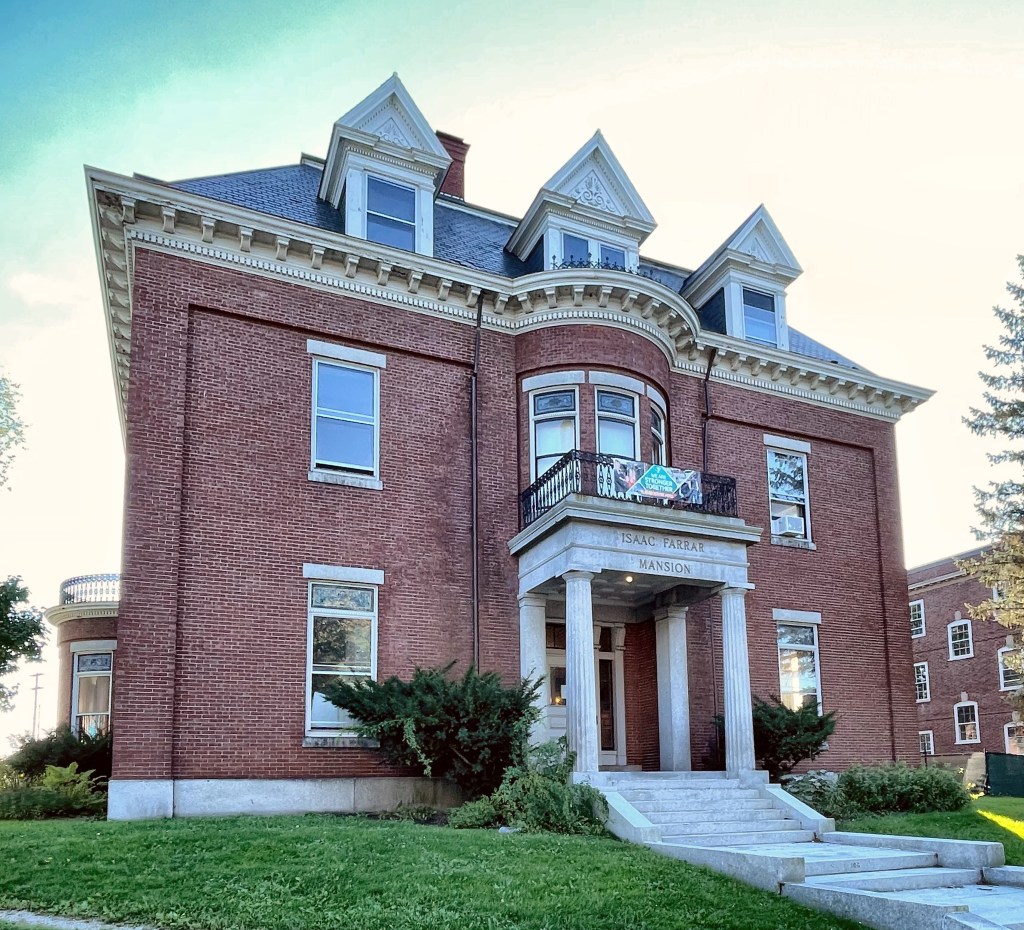
The Isaac Farrar Mansion in Bangor, Maine not only looks gorgeous, it is significant as the one of the first known works of architect, Richard Upjohn. It is important because it shows that English-born Upjohn, who is best-known for launching the popularity of the Gothic Revival style in the United States, began his career by building in the Greek Revival style, the traditional style of the time. This mansion was designed for Isaac Farrar, a lumberman and merchant, and later, President of the Maritime Bank of Bangor. Charles B. Sanford, who lived in the house from 1865-1878, was proprietor of the Sanford Steamship Lines. The home had a few more subsequent owners until 1911, when it was acquired by the University of Maine Law School, which used it as a residency until 1929. It was soon after purchased the Bangor Symphony Orchestra, who renamed it “Symphony House”, and operated the Northern Conservatory of Music on the premises, also hosting the music branch of the Bangor Public Library. In 1972 the school closed, and the symphony sold the building the following year to the local YMCA, which now uses it as an exhibit and reception space. While some aspects of the house look to be from the early 20th century, it retains much of the Greek Revival design by Upjohn. Talk about a full history!

Joseph Low Mansion // 1857

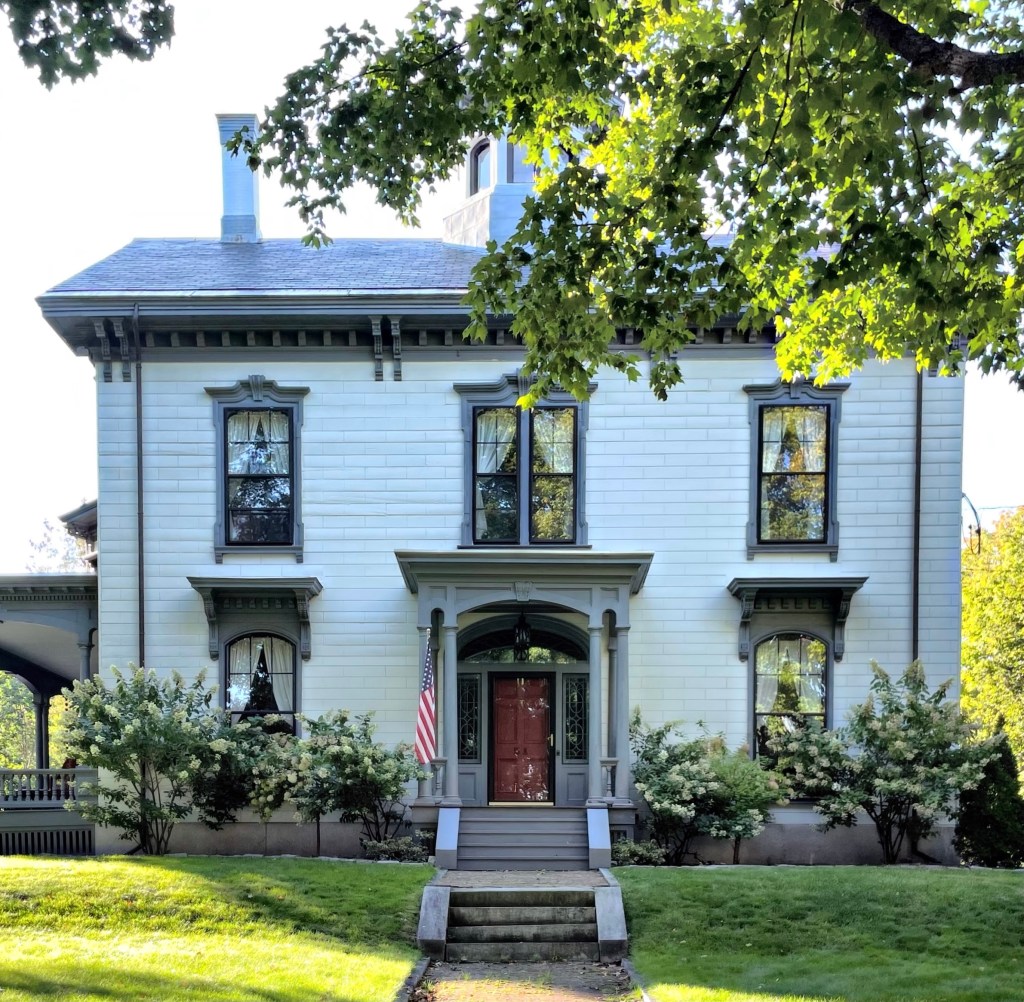
The neighbor to the iconic Thomas Hill Standpipe (last post), this pre-Civil War Italianate mansion predates the water tower and has long been one of the most grand homes in Bangor, Maine. The house was constructed in 1857 for Joseph W. Low, a businessman and trustee of the Bangor Savings Bank. The house he had built is one of eastern Maine’s outstanding Italianate residences, designed by Boston architect Harvey Graves, who was born in Maine. Soon after the Civil War, Graves moved west to California, likely seeking additional wealth from the spurned from the success of the Gold Rush. He appears to have lived out the remainder of his life out west, giving his family in Maine this home. The house exhibits flushboard siding with scored wood to resemble ashlar masonry, gorgeous window hoods and mouldings, and a large belvedere at the roof, which would have provided sweeping views of the Maine frontier when built, atop one of the highest hills in Bangor.

Thomas Hill Standpipe // 1897

Built in 1897, the Thomas Hill Standpipe is the oldest standpipe in town and has been in constant use since its construction. In 1895, it was discovered that the city pumping station contained faulty equipment, risking the possibility of a city water shortage, so the city councilmen pushed for a new standpipe on one of the highest points in the city to provide a back-up plan. Its purpose is the same today as when it was built; to help regulate Bangor’s water pressure in the downtown area and to provide water storage for emergencies. The New Jersey Steel and Iron Co. assembled the 50-foot high and 75-foot diameter steel tank atop Thomas Hill, with architect Ashley B. Tower of Holyoke, Massachusetts, designing and overseeing construction of the Shingle style wooden structure to cover the metal structure. Originally, the exterior was painted dark gray with the pillars and lattice work painted white. During World War II, the standpipe was painted olive for camouflage purposes, because of its proximity to Dow Army Airfield, and concerns it would be a target when the Germans ultimately crossed the Atlantic. The tower was completely painted white in 1949.

As Stephen King is synonymous with Maine, Bangor specifically, he used the Thomas Hill Standpipe as the inspiration for the Standpipe in the fictional town of Derry, where Stan first encounters Pennywise (It).

Frederick Parkhust House // c.1890

Frederick Parkhurst (1864-1921) was born in the small Maine town of Unity and attended local schools. He moved to New York to attend Columbia Law School, receiving his degree in 1887. Soon after, he was admitted to the Maine bar. Frederick moved back to Maine and joined his father in a leather goods business in Bangor, of which he later became president. He served on the Bangor City Council and later in the Maine House and State Senate. With his wealth and connections, he purchased a large house lot on West Broadway, then the most exclusive street in town, and hired local architect Wilfred Mansur, to design a Shingle style home for his family. During World War I he led the Liberty Loan effort and in 1920, was elected Governor with the largest margin in Maine history, moving to the State Capitol, Augusta soon after. Parkhurst served less than a month when he died on January 31, 1921.

Smith-Miller House // 1893

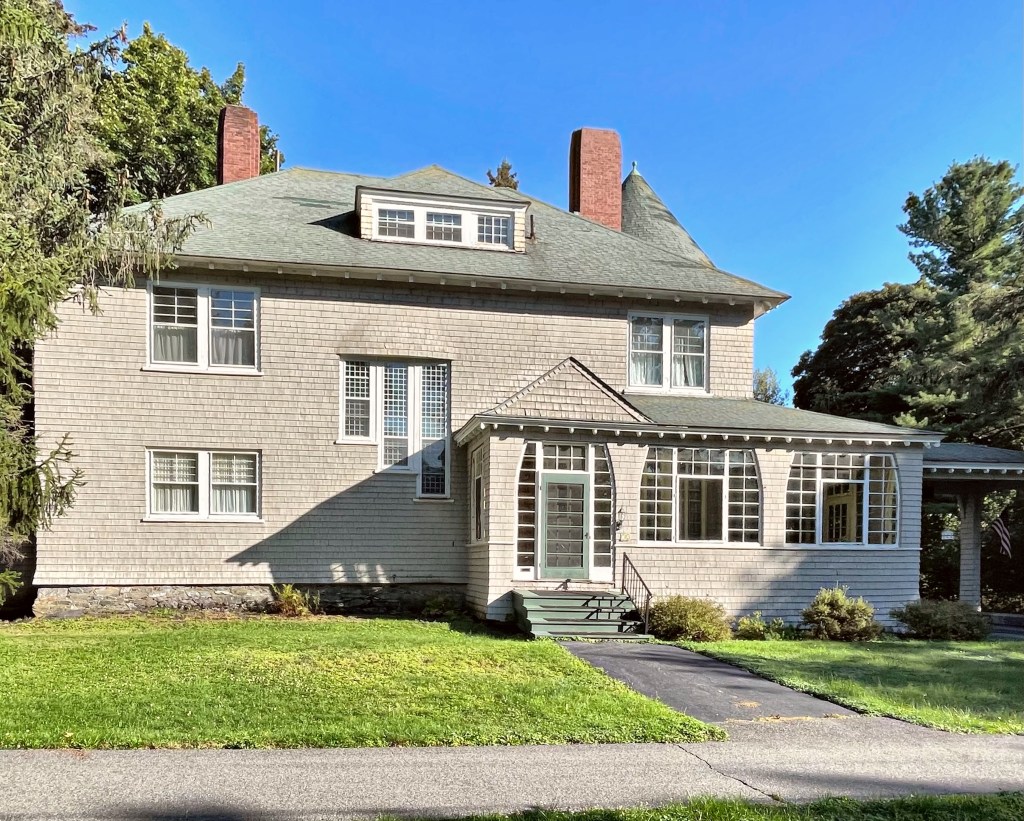
Located on stunning West Broadway in Bangor, Maine, the Smith-Miller House stands out as a beautiful blending of the Shingle and Queen Anne styles. Built in 1893 from the designs of Connecticut architectural firm Cook, Hapgood, and Company, the home was featured in The American Architect and Building News journal for its design success. The home is clad with continuous cedar shingle siding, with a prominent corner tower, wrap-around porch, and porte-cochere, all together provide complexity and intrigue on the street of large homes. What do you think of this home?

Charles P. Brown Mansion // c.1872

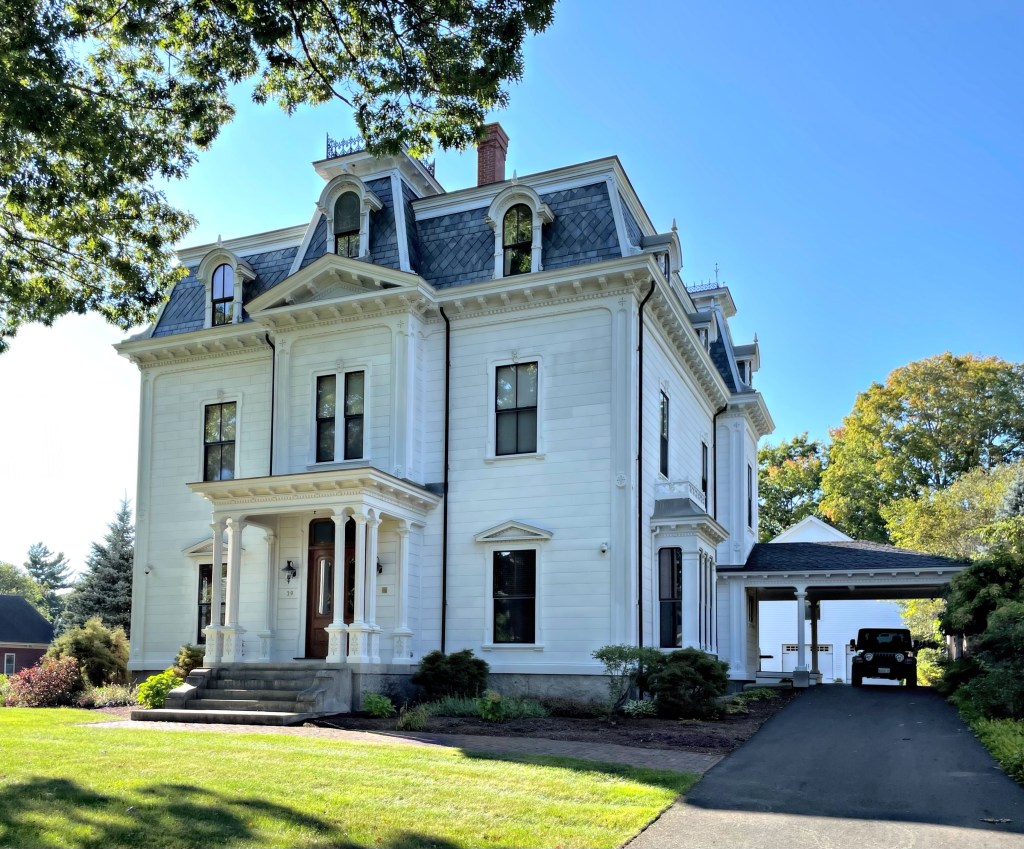
Located next to the famed Stephen King House in Bangor (last post), this stunning Second Empire house was purchased by Stephen and Tabitha King in 2004, creating a small historic house campus in one of the nicest neighborhoods of the city. The Brown Mansion was constructed in the early 1870s for Charles P. Brown, an attorney who became involved in land speculation in the west. During and immediately following the Civil War, Brown purchased large land holdings in the “western frontier” in Minnesota and farther west, and re-sold the land years later at a huge profit when development began. He was thought to be one of the richest men in Maine upon his death in 1892, but it was discovered that many land holdings possibly vanished (or he lied about having much more land to his family), leaving his executors of his will very upset. The man who was estimated of having a net-worth of over $1,000,000 in 1892 (more than $31,000,000 in dollars today), left just $16,000, split between his two daughters, leaving nothing to his sister, whom he had been living with for the final two years in his life.

Joseph C. White House // 1866

Located a short walk from the Stephen King House in Bangor, this stunning Second Empire style house shines just as bright! This house was built in 1866 for Joseph C. White, a dry goods merchant in town. Just years after it was completed, he sold the mansion, possibly due to upkeep. The two-story mansard-roof house is clad in wood siding, scored to resemble stone rustication, a method to make the home appear more expensive. The corner entrance with later enclosed second-floor porch, massive brackets, and scrolled dormers add a lot of Victorian flair to the home. Would you move in here?