Grace Church // 1835-1966

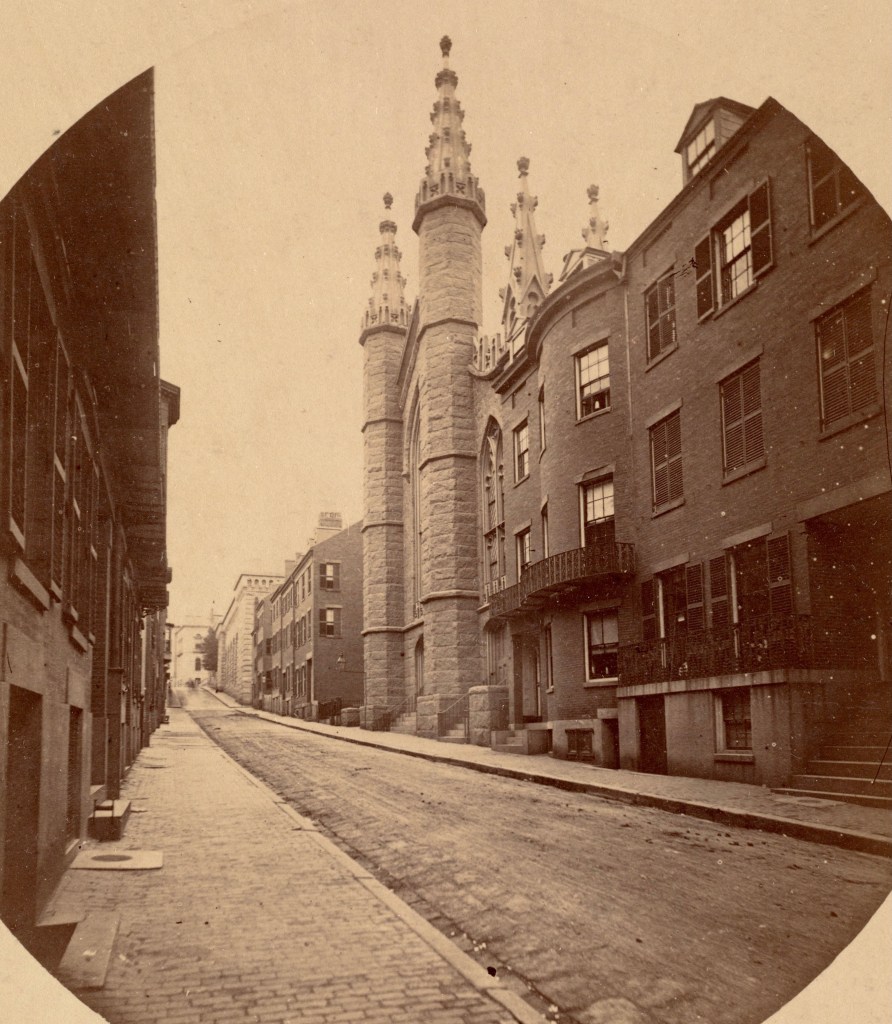
Grace Church was built in 1835 for a growing congregation in Beacon Hill. The absolutely stunning Gothic style church was designed by William Washburn (1808–1890), an architect and city councilor in Boston. The church was constructed of granite and had massive stained glass windows and soaring towers with decorative embellishments. Inside, a massive central window flooded the interior with natural light, and illuminated paintings from Mario Bragaldi, a Milan artist. In 1865, the building was sold to the Methodist Episcopal Society. 1873, it merged with Hanover Street, and took the name First Methodist. The church was variously referred to as First, Grace, or Temple Street, sometimes all at once! This church was occupied until 1962, when it merged with Copley to form First-Copley, which appears to have then occupied the Old West Church. The building was soon after acquired by Boston University and demolished for the building on the site today, a true loss to one of Boston’s most beautiful buildings.
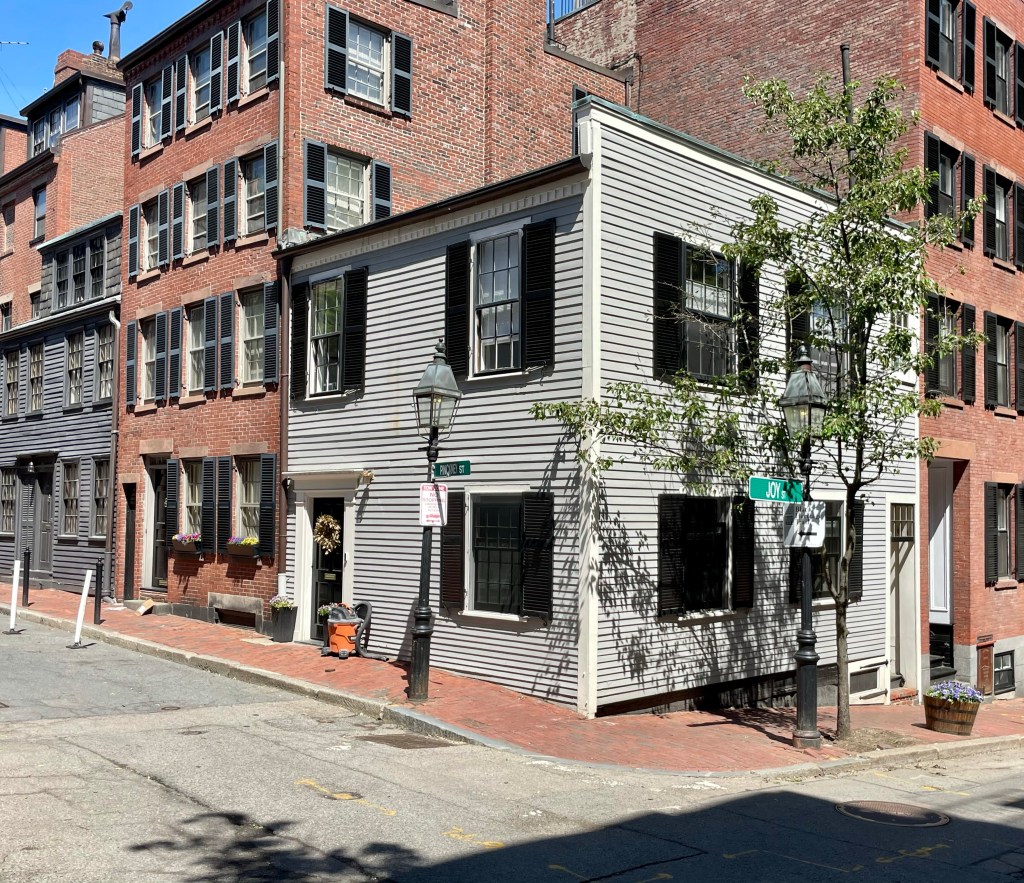
Glapion-Middleton House Ell // c.1800

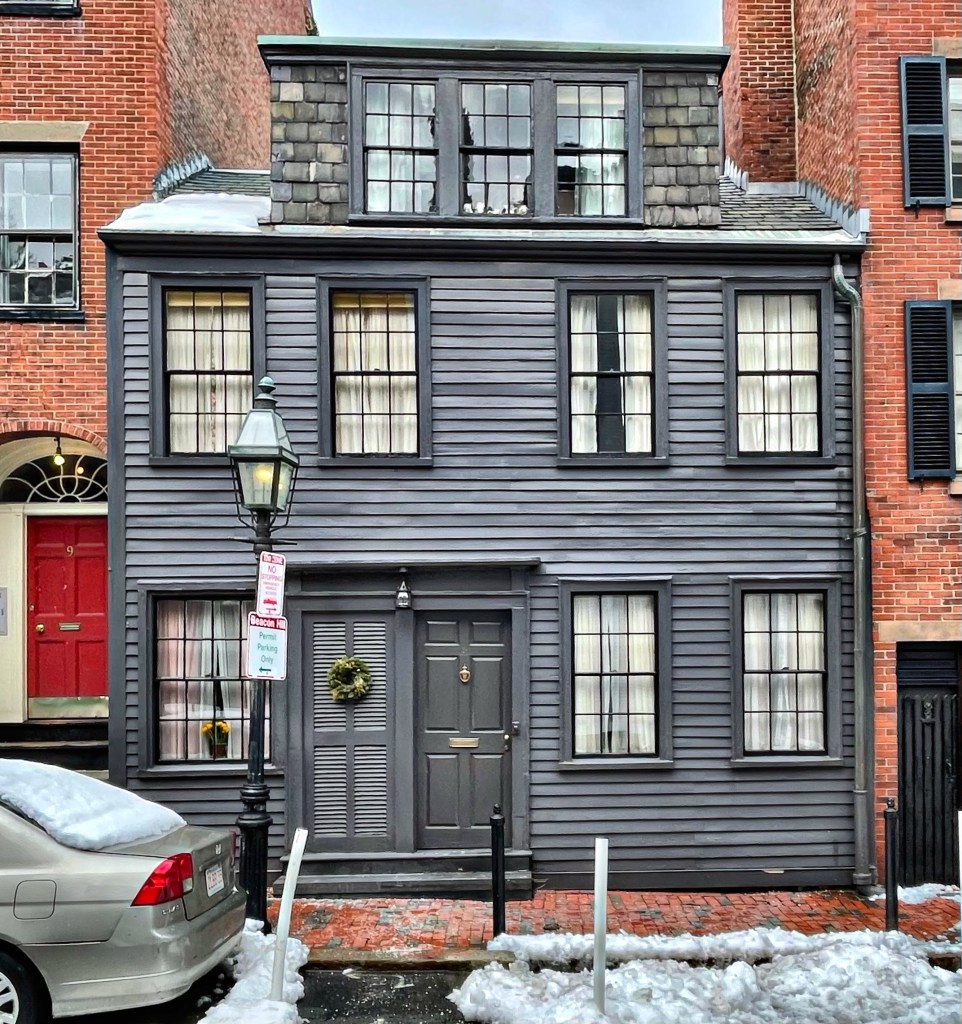
Less than a dozen wood-frame buildings exist on Beacon Hill in Boston, and this curious building is one of them, and also happens to be one of the oldest structures in the neighborhood! Built by 1800, this structure was constructed as an ell/addition to the Glapion-Middleton House at 5 Pinckney Street in Boston. The Glapion-Middleton House (previously featured) was constructed in 1787 after two Black men, George Middleton and Louis Glapion and their wives, built a small double house in the abolitionist center of Boston, Beacon Hill. In recent years, some have speculated that due to this living arrangement and other accounts, that Glapion and Middleton were in-fact gay men, but this is unsubstantiated. After the home was constructed, a two-story, five-bay ell was constructed which connected the home to Joy Street at the corner. The ell served as additional space for the two families and they appear to have had a workshop or store in part of the building. In 1855, owners demolished the center bay of the ell and erected a brick townhouse, similar to others in the neighborhood. The ell in this building was occupied as a store for the majority of its life and became an Italian restaurant and soon after a “Boyer’s Creamery Luncheon”. The property has since been converted to a residence.

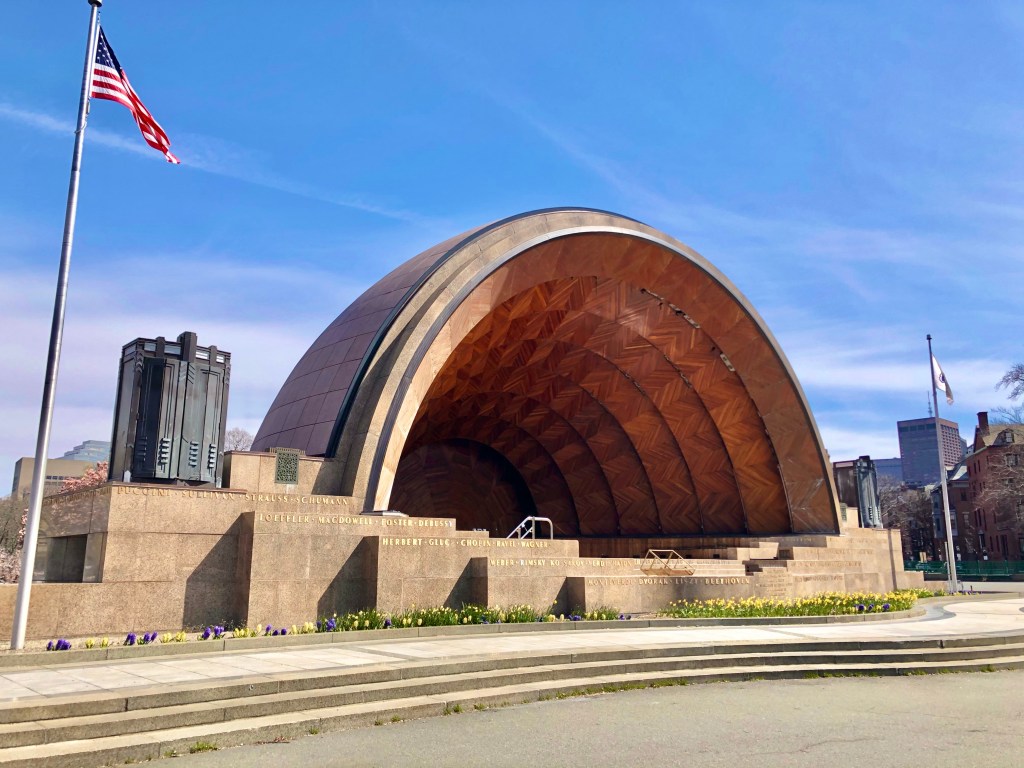
Hatch Memorial Shell // 1940

Located at the Charles River Esplanade in Boston, the Hatch Memorial Shell has long been an iconic landmark and meeting place for Bostonians and tourists alike. Built in 1940, this outdoor amphitheater structure replaced an earlier 1920s shell, envisioned by Arthur Fiedler, the first permanent conductor of the Boston Symphony Orchestra. Construction began on the first shell in 1928 and Arthur Fiedler conducted the first Boston Pops concert there on July 4, 1929, followed by a month of concerts during that first summer, a tradition that has continued to this day. A second temporary shell was constructed of metal in 1934, which was unsatisfactory for the famous orchestra. In 1940, the construction of the new music shell took place, donated by benefactor Maria Hatch, to build a memorial for her late brother, Edward, who it is named after to this day. The permanent shell was designed by Richard J. Shaw, a Boston architect known for designing churches. The Art Deco design, with intricate woodwork adorning the interior and a terrazzo tile roof, was dedicated on July 2, 1940, just in time for Independence Day celebrations.

Beacon Hill Reservoir // 1849-1883

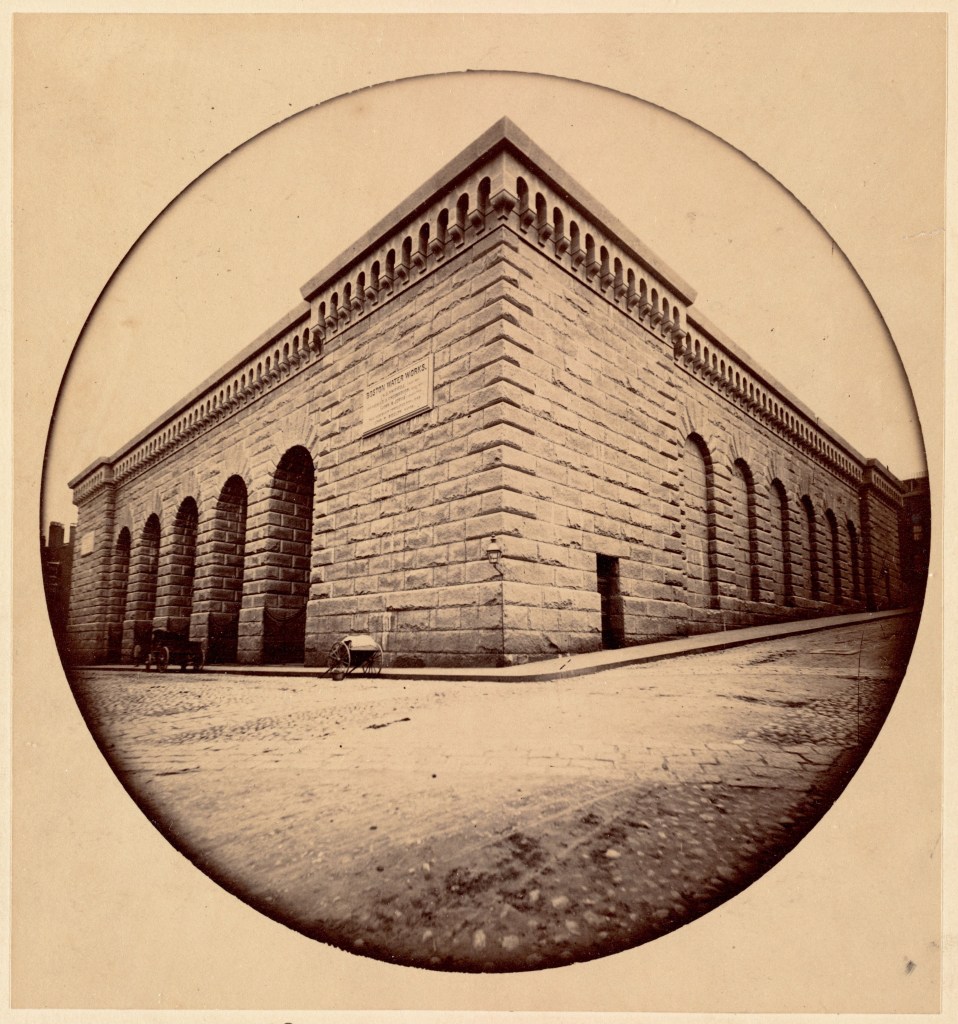
Did you know there was once a massive granite reservoir in Beacon Hill?

Long before the Wachusett and Quabbin Reservoirs that now supply water to Boston, the city’s original municipal water supply was Lake Cochituate, a reservoir in Metro-west. Due to Beacon Hill’s high elevation, the city selected the site behind the recently completed Massachusetts State House, to store and distribute water to the city. The site was too steep, so it had to be graded. Therefore, the top of Beacon Hill, where the beacon had long been standing, needed to be lowered to accommodate the reservoir. The soil was dug by hand and hauled by cart down to fill the old Mill Dam in the Bulfinch Triangle area. The reservoir, which opened in 1849, was unique in its approach. The design of the structure needed to minimize its footprint and reflect well on its surroundings in the prestigious location. In lieu of earthen bermed walls, as was the convention in most period distribution reservoirs, the design chose to create a watertight tank within a masonry structure. This made the structure the first elevated storage tank constructed in New England. Sheet lead was used to make the reservoir watertight (which likely led to a lot of health issues (hindsight is 20/20). By 1870, the poor water pressure made the Boston Waterworks build the Roxbury Standpipe, which relegated the Beacon Hill Reservoir to being an emergency water source for use only in case of fire or accident to the pumping-mains. In 1883, Boston Water Works sold the structure to the Commonwealth, who demolished it for the addition to the State House.

Lewis and Harriet Hayden House // 1833

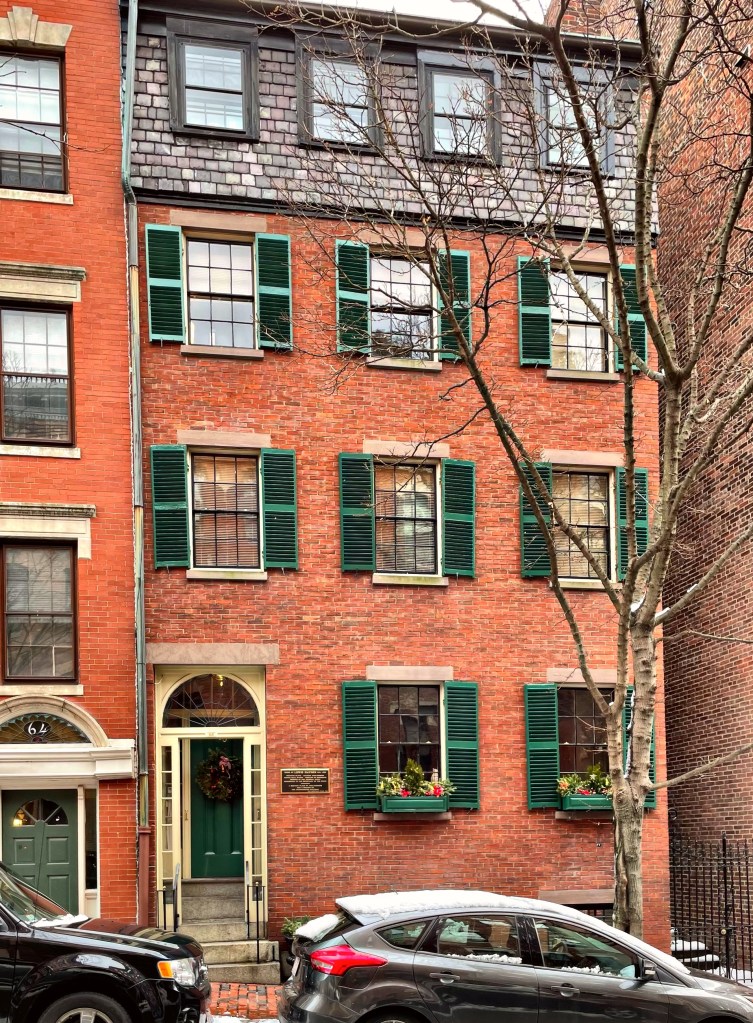
Lewis Hayden was born into slavery in Lexington, Kentucky, in 1811, as one of a family of 25. Hayden was first owned by a Presbyterian minister, Rev. Adam Rankin. He sold off Lewis’ brothers and sisters in preparation for moving to Pennsylvania, and he traded 10-year-old Hayden for two carriage horses to a man who traveled the state selling clocks. In the mid-1830s, Hayden married Esther Harvey, also a slave. She and their son were sold to U.S. Senator Henry Clay, who sold them both to the Deep South, and Hayden never saw them again. By 1842, Hayden married a second time, to Harriet Bell, who was also enslaved, and he cared for her son Joseph as his stepson. After this marriage, Hayden began making plans to escape to the North, as he feared his second family might be split up like the first. In 1844, he and his family escaped with assistance of abolitionists all the way to Canada. From Canada, the Haydens moved in 1845 to Detroit in the free state of Michigan, and the next year, they moved to Boston, at the center of anti-slavery activity with the city’s strong abolitionist base. In Boston, Hayden became a lecturer and ran a clothing shop, acquiring enough money to live in this large home in Beacon Hill. The Haydens routinely cared for fugitive slaves at their home, which served as a boarding house. Guests included Ellen and William Craft, who escaped from slavery in 1848. Hayden prevented slave catchers from taking the Crafts by threatening to blow up his home with gunpowder if they tried to reclaim the pair. Hayden died in 1889, outliving the abolishment of slavery. Harriet died in 1894 and left $5,000, the entirety of their estate, to the Harvard University for scholarships for African American medical students. It was believed to have been the first, and perhaps only, endowment to a university by a former slave. Their former home remains a stop on Boston’s Black Heritage Trail.

Glapion-Middleton House // 1787

George Middleton and Louis Glapion built this two-family residence in Boston’s Beacon Hill neighborhood in 1787, which is now the oldest extant home on Beacon Hill. This wood structure is a typical example of late 18th century Boston homes built by African Americans. Louis Glapion worked as a hairdresser and may have been from the French West Indies. Glapion lived and ran his business out of 5 Pinckney Street until his death in 1813. His wife Lucy continued to live there until 1832. George Middleton was a “horse breaker” (horse trainer) by trade and was adored in the diverse community of Beacon Hill. Middleton was one of 5,000 African Americans to serve in the military on the Patriot side of the Revolutionary War, leading an all-Black militia called the Bucks of America. The group is believed to have guarded the property of Boston merchants during the Revolution. After the war, he became the third Grand Master of the African Lodge, later known as the Prince Hall Masons. In 1796, Middleton founded the African Benevolent Society, which helped orphans and widows through job placement and financial relief. He died in 1815, outliving his wife and apparently left no children when he died in 1815.

Hampshire House // 1911

Built in 1911 as a single-family home for Bayard and Ruth Thayer, this building on Beacon Street is one of the most visited in the city (I will get to that later). The four-story home replaced two large townhomes across from the Public Garden and was designed by New York based architect, Ogden Codman, Jr., who was born in Boston into the esteemed Codman family. Bayard Thayer died within five years of the completion of the house, and his widow, Ruth, and their children continued to occupy the massive residence into the 1930s. By 1944, the home was being used as a lodging house, a violation, and it was sold two years later to a realty company who operated apartment houses. From this time the house functioned as a residential hotel known as the Hampshire House. In 1969, Thomas Kershaw acquired the property and kept its name, which it retains today. In the same year they opened the Bull & Finch Pub in the basement, which in 1982 became famous world-wide as the locale for the bar in the television sitcom Cheers, one of the most-watched programs in television history. Pictures of the exterior of the building were used in the show’s credits and scene changes, and the interior was faithfully replicated in a set used in Hollywood. The building is now habitually swarmed by locals trying to get to drink in a piece of cultural history.