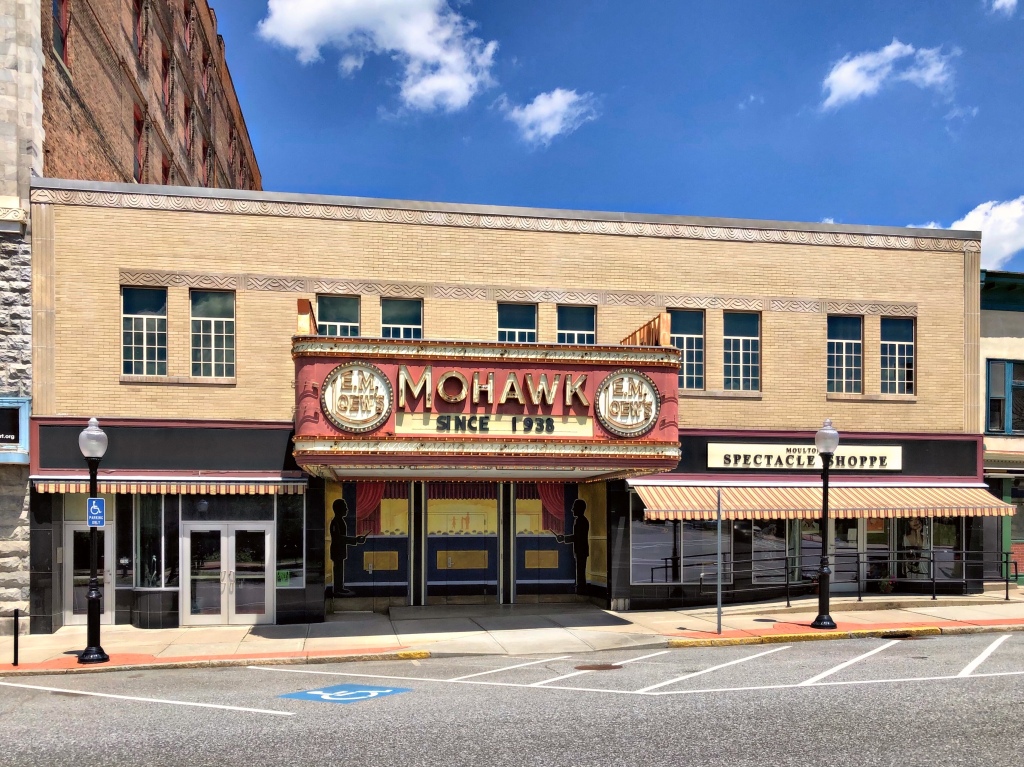
Mohawk Theater // 1938

Local theaters once dominated the urban landscape, providing flashing neon lights and marquees on Main Street USA. After WWII, many downtowns saw populations move to the suburbs and through the advancement in technology, many of these historic movie houses were demolished. Large cineplexes with 10+ screens were built, and the death of the small movie theater coincided with the death of many Main Streets in the mid and late 20th century. Fast forward to today, we see many Main Streets thriving (before the COVID crisis) thanks to women and minority-owned businesses investing in their communities.

The Mohawk Theater in North Adams was built in 1938 and is an excellent example of Art Deco architecture in Western Massachusetts. Loews Cinemas hired the Boston architectural firm of Mowl & Rand to design the 1,200 seat theater which also featured a Native American motif at the lobby. The theater was sold in 1987 to a private investor, who opened the theater for occasional concerts and films, but efforts to maintain the Mohawk were short lived. In 1991, its doors were closed for good.
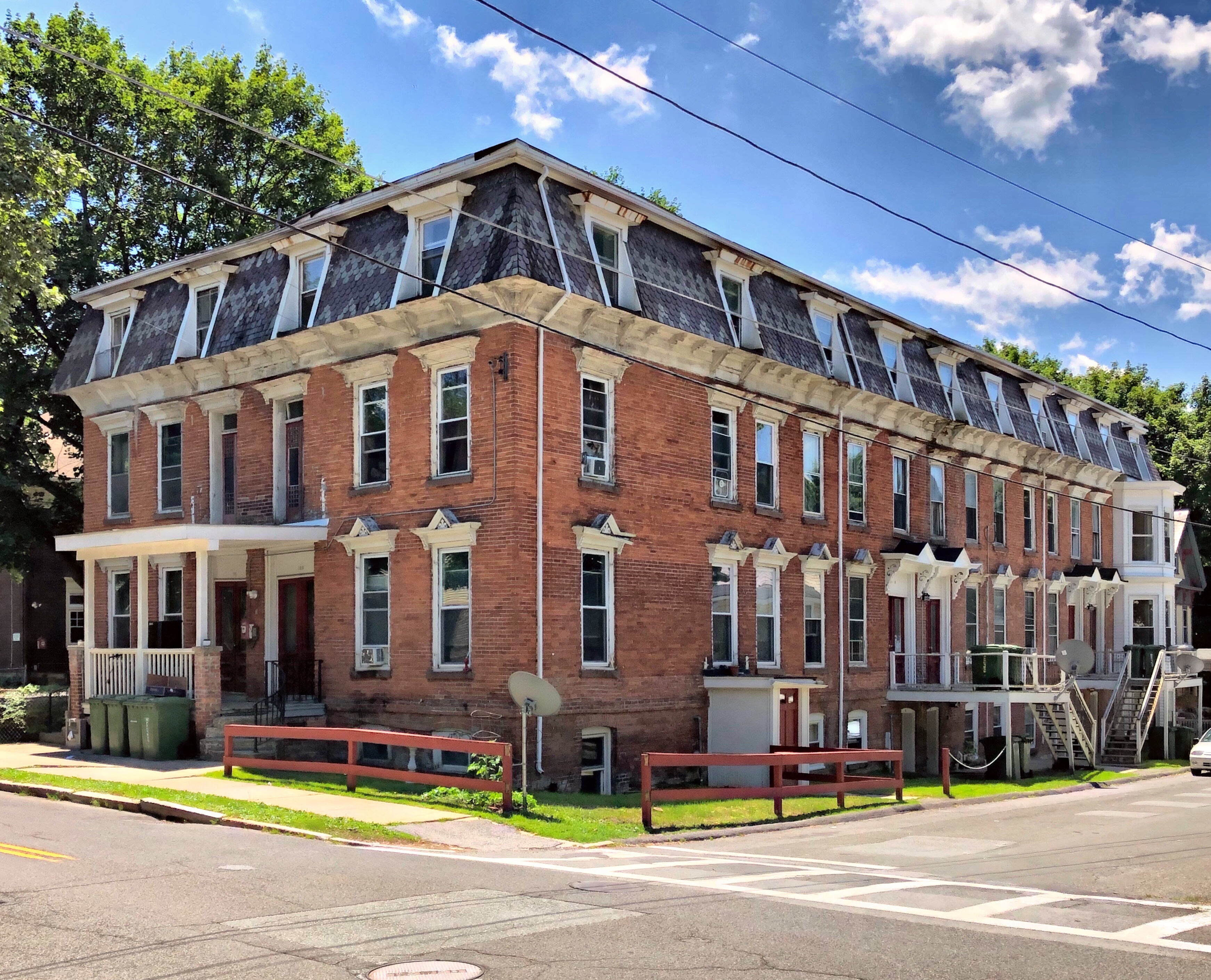
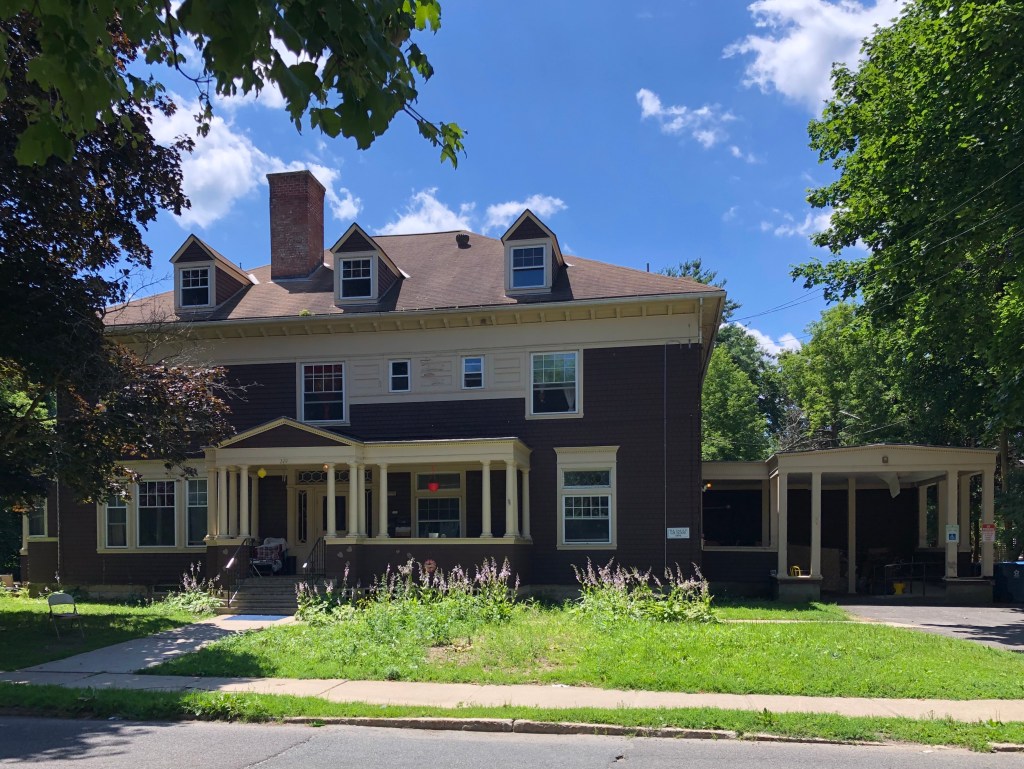
Church Street Tenements // 1872

Industrial cities and towns all over New England drew in thousands of European immigrants looking for work. Due to the massive influx of workers and families, many towns and companies constructed tenement housing and other worker’s housing to provide living spaces close to factories and mills. This six-unit tenement house was built in 1872 and is a high-style Second Empire example of worker’s housing in North Adams. The use of brick, mansard roof, and window hoods was likely a concerted choice by the developers as they were located on a street lined by mill owners houses and the who’s who of North Adams.

Gallup House // 1894

William A. Gallup was born October 28, 1851, in North Adams. He worked primarily for the Arnold Print Works beginning in 1870 before becoming a charter member, elected clerk, and director of the company. He went on to work for and own a few more mills in North Adams by the end of the 19th century. Gallup hired H. Neill Wilson, a Western MA based architect to design a mansion for his family on Church Street, near his father in-law and business partners (A.C. Houghton) house.

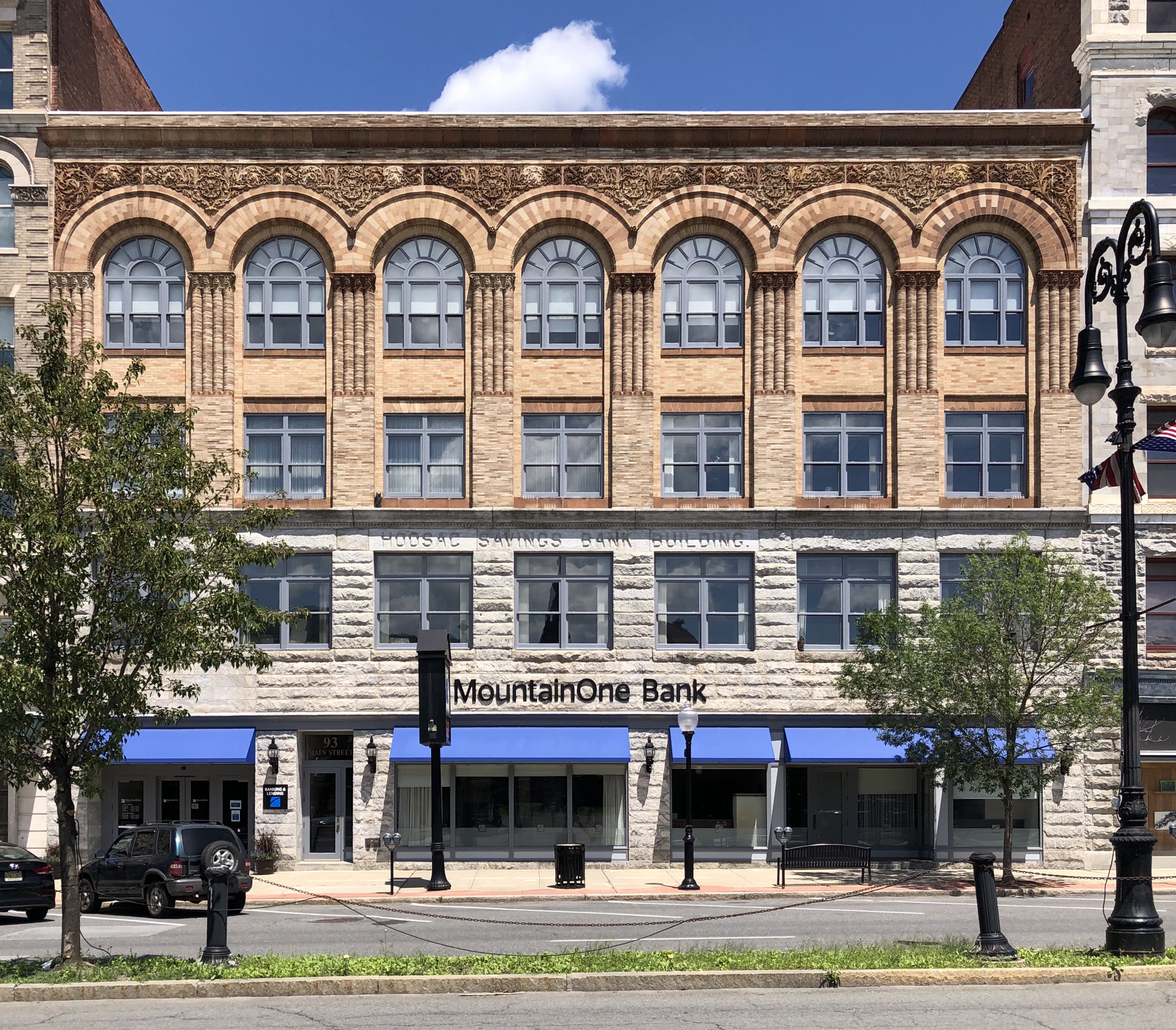
Hoosac Savings Bank // 1893

Located in Downtown North Adams, this beautiful Romanesque Revival commercial block is one of the better designed buildings in the region. Designed by architect H. Neill Wilson of Pittsfield, the Romanesque headquarters with fine terra cotta decorations cost $60,000 to build. When built in 1893, the stone over the storefronts were carved to display the bank’s name. The two venerable institutions merged into the North Adams Hoosac Savings Bank in 1962. In 2013, the bank merged with MountainOne Bank.

Charles Cutting House // 1881

This stunning Stick style house in North Adams was built for Charles Cutting (1850-1940), founder of the C. H. Cutting Company, a prosperous clothing company in town. The company started as a partnership between 20-year old Cutting and a Mr. Silsby, who retired just a year after co-founding the company. Cutting used his business connections to help establish other local clothing companies including the Bay State Clothing Company in Adams, the Orange Clothing Company in Orange, MA, and the Athol Clothing Company in (you guessed it) Athol. With his wealth, he had this amazing Victorian home built on East Main Street where he lived until his death in 1940.

North Adams Post Office // 1911

North Adams in Western Massachusetts was incorporated as a city in 1895, separating from Adams, MA in 1873. The town was flourishing as an industrial center due to it’s location on the confluence of the Hoosic River’s two branches here. Thanks to the Arnold Print Works (now Mass MoCA), the town’s population doubled in twenty years after incorporation. Due to this, the United States Post Office and Treasury Department decided to build a large post office, a size that would allow the growing city to fill into. The Georgian Revival post office building is credited to James A. Wetmore, who was actually not an architect, but an attorney and Executive Officer of the Office of the Supervising Architect, within the Treasury Department (what a title). He later became the Supervising Architect without any known education in design. As Supervising Architect, he managed a staff of nearly 1700 architects and draftsmen who designed at least 2000 federal government buildings, including courthouses and post offices. The North Adams Post Office, remains a landmark of a city which has sadly seen a declining population every decade since 1940.

Captain Benjamin Smith House // 1790

The Captain Benjamin Smith House at 34 South Summer Street in Edgartown was constructed around 1790. The building sits on land that was once owned by the Coffin family who owned a broad sweep of land from Edgartown Harbor back to Pease’s Point Way. Many of the oldest houses in town were constructed by members of this family who had first settled in Newbury. Smith, a military captain who commanded a company of militia on Martha’s Vineyard during the Revolutionary War, was married to a member of the Coffin family and the family owned the home for over one hundred years. After successive ownership, in 1939, the Vineyard Gazette took over the building. The Gazette was the first newspaper to be published in Dukes County, and remains in the building to this day.

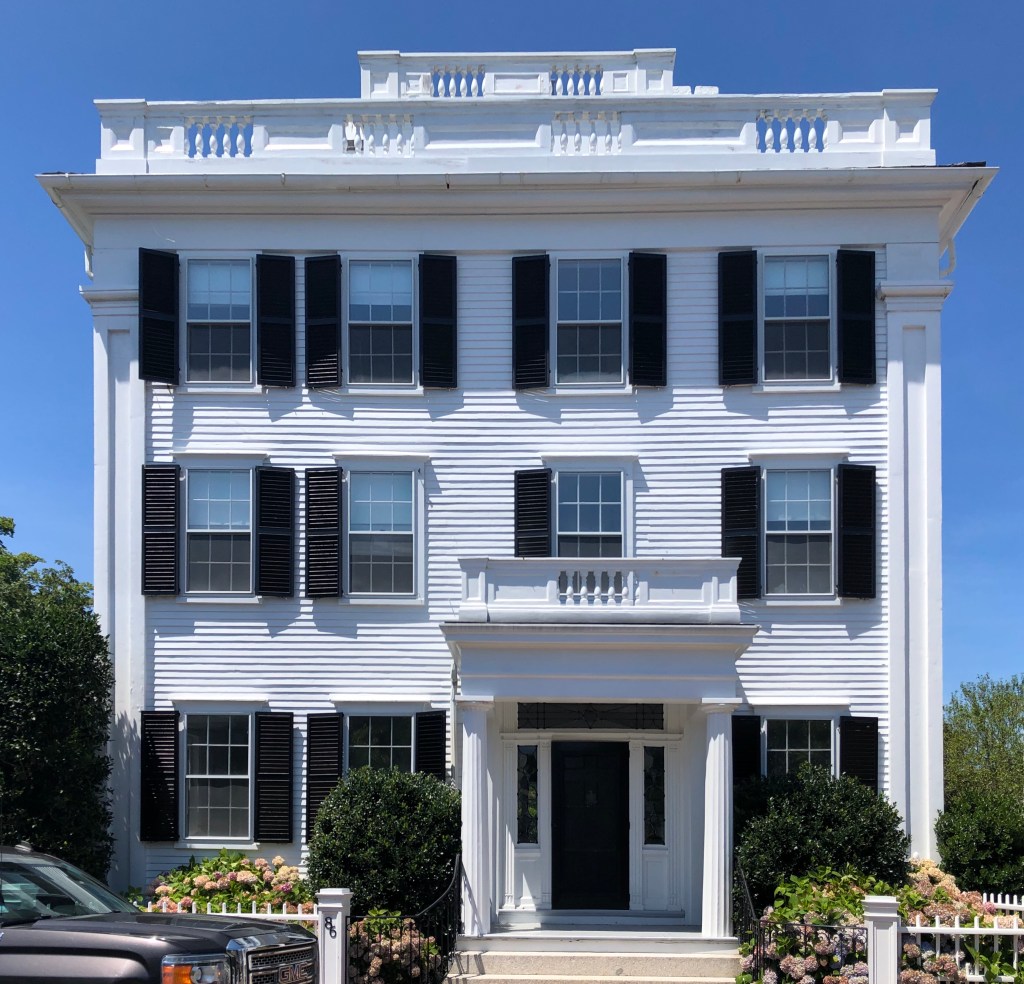
Fisher-Bliss House // 1832

Maybe the most grand Greek Revival home in Edgartown, the Fisher-Bliss House has stood proud overlooking the harbor as ships come and go for nearly 200 years. Thomas M. Coffin, who built many whaling captains homes in town, constructed this iconic residence in 1832 for Captain George Lawrence, who had returned to town with over $90,000 worth of whale oil from a three year trip to New Zealand. Before the house was built for him, the home was sold to Captain Jared Fisher. The home was apparently to be a two-story gable roof home, but Fisher decided to square off the roof and have a widow’s walk added. Captain Fisher’s granddaughter owned the house and lived there with her husband Mr. Leonard Bliss, a merchant.

Edgartown Customs House // c.1825

Edgartown in the early 19th century was booming as one of the major whaling towns in America. As goods were imported and exported in and out of the burgeoning town, a Customs House was required to essentially tax the goods. Until around 1825, the Customs House in Edgartown was located in private homes until the demand grew for a stand-alone structure on Main Street. This Federal style building was constructed to house a Customs office upstairs with two commercial spaces on the ground floor.

Captain Holley House // c.1848

This stunning Gothic Revival house in Edgartown was built around 1848 for Captain Joseph Holley and his wife Lucy. Captain Holley was a whaler who embarked on at least four long excursions of multiple years at a time, with a break between 1847-1852, at that time, he likely had this home built. Gothic Revival homes are rare in New England, especially in Edgartown where there is a matching house across the street. The home features a large dormer with a steep pitch with lancet window and appropriate shutters.