Boston Young Men’s Christian Union Building // 1875

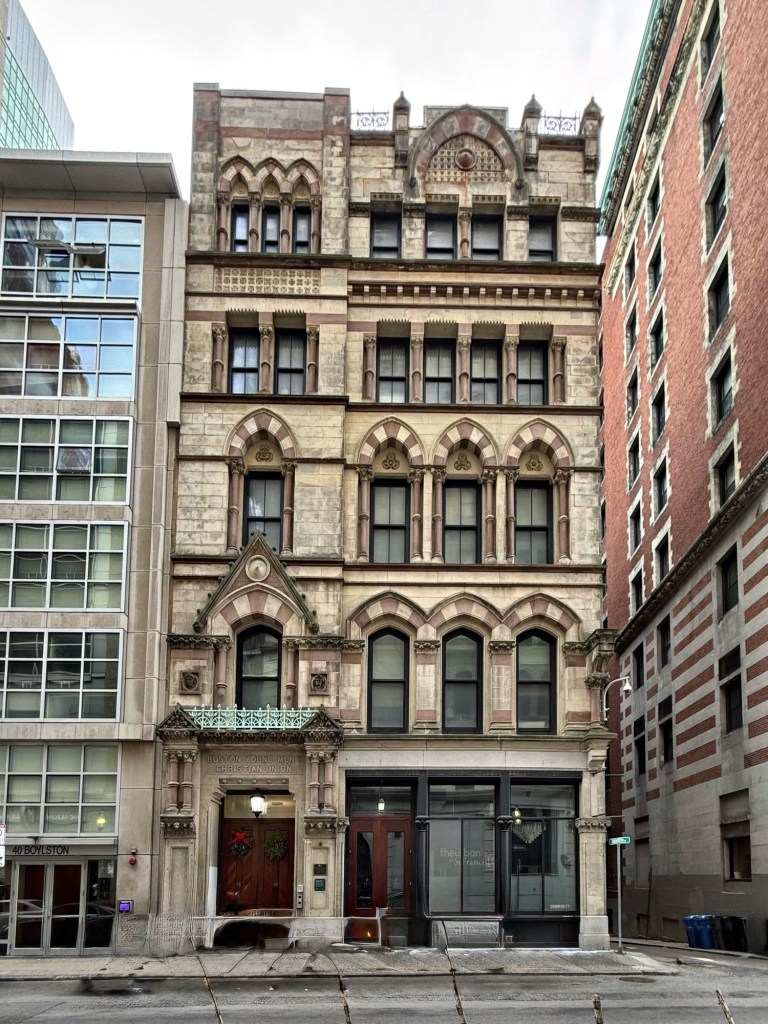
The Boston Young Men’s Christian Union was founded in 1851 by a group of Harvard students as a biblical and christian literature discussion group, which incorporated the following year. First located on School Street, the organization’s activities were to provide a focal point for the intellectual, religious, and social life of primarily middle-class, well-educated Christians. The organization grew to the point that a new building was needed, and in 1873, a site on Boylston Street was acquired as a perfect central location for the group. Architect Nathaniel J. Bradlee of Bradlee and Winslow was hired to design the structure, principally because Mr. Bradlee by then a prominent architect and public figure, was also a life member of the Union and the brother of one of its founders. The building was completed in 1875 and included ground floor retail with an auditorium, gymnasium, library, social and game rooms, and offices for the Union above and behind. Designed in the High Victorian/Ruskinian Gothic style, derived from a mixture of English, Italian, French, and some German Gothic precedents, the style emphasized complicated, asymmetrical massing, polychromy, ornate details, and lancet or Gothic arched openings, in this building a sandstone facade was used. The building became a City of Boston Landmark in 1977. In 2016, the building was converted to an affordable housing development by The Architectural Team Inc., and called “The Union”. The development provides 46 units of affordable housing, including 25 targeted to those who have experienced homelessness. What a great rebirth of the building. Historic Preservation and Affordable Housing can work together and create great projects.
George Robert White Health Unit No. 2 // 1923

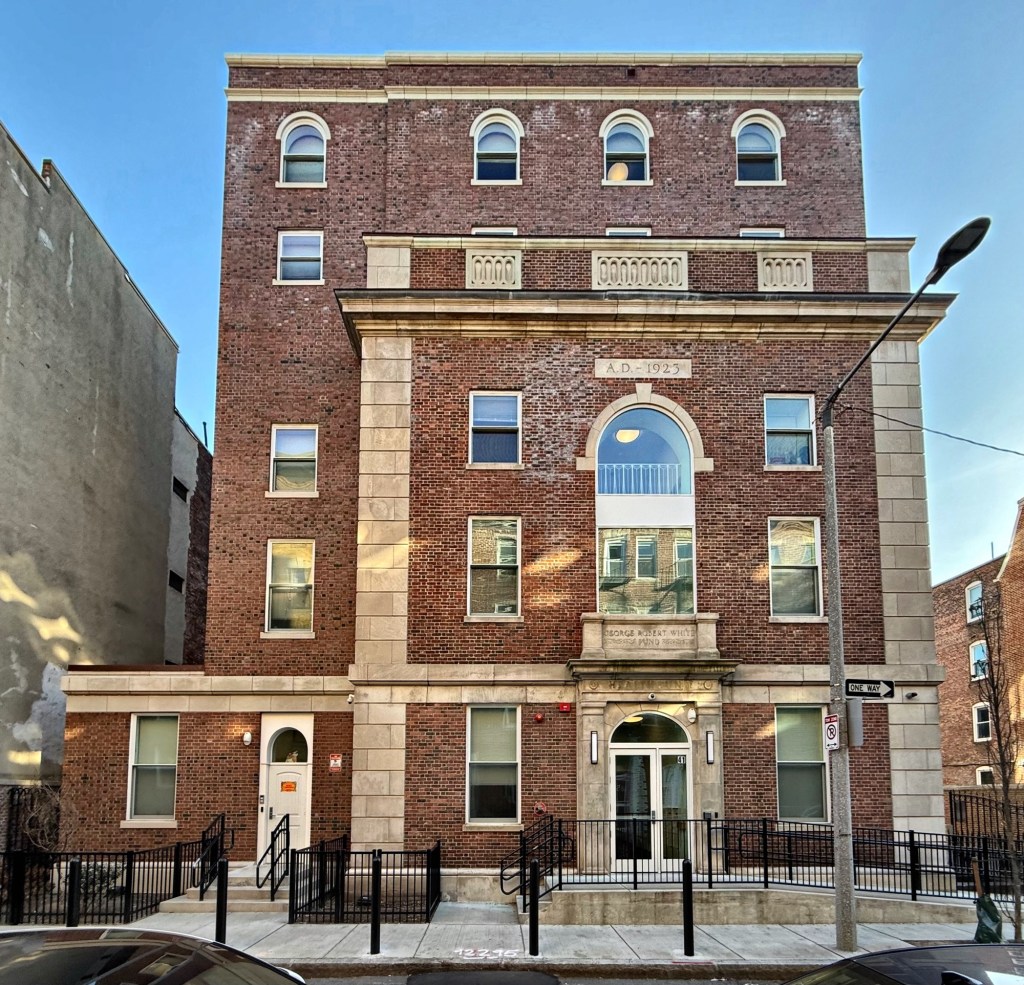
Originally known as the George Robert White Health Unit Number 2, this Colonial Revival style building is located on North Margin Street in the North End of Boston, and is significant as an early health center providing health and education services for some of Boston’s most underserved residents. The building was constructed in 1923 as one of the neighborhood-based health centers built in Boston in the 1920s and early 1930s from funding by the George Robert White charitable trust. George Robert White (1847-1922), a longtime resident of Boston, worked in the office of the Potter Drug and Chemical Company as a boy, eventually becoming president and an owner of the corporation. He was an investor in real estate and reportedly was known for many years as the largest individual taxpayer in Boston. Upon his death, his will specified that his bequest to the city, about $5 million in 1922 (approximately $93 Million valued today), would be held in a permanent charitable fund “to be used for creating public utility and beauty and for the use and enjoyment of the inhabitants of Boston.” The North End Health Unit was the second built (the first was in the West End), and designed in the Colonial Revival style from plans by Coolidge and Shattuck, later known as Coolidge, Shepley, Bulfinch & Abbott. Since the 1970s, the building was occupied by the Knights of Columbus, a fraternal organization, until 2020, when the building was renovated and converted into housing with 23 units for elderly residents.

Langham Court // 1991

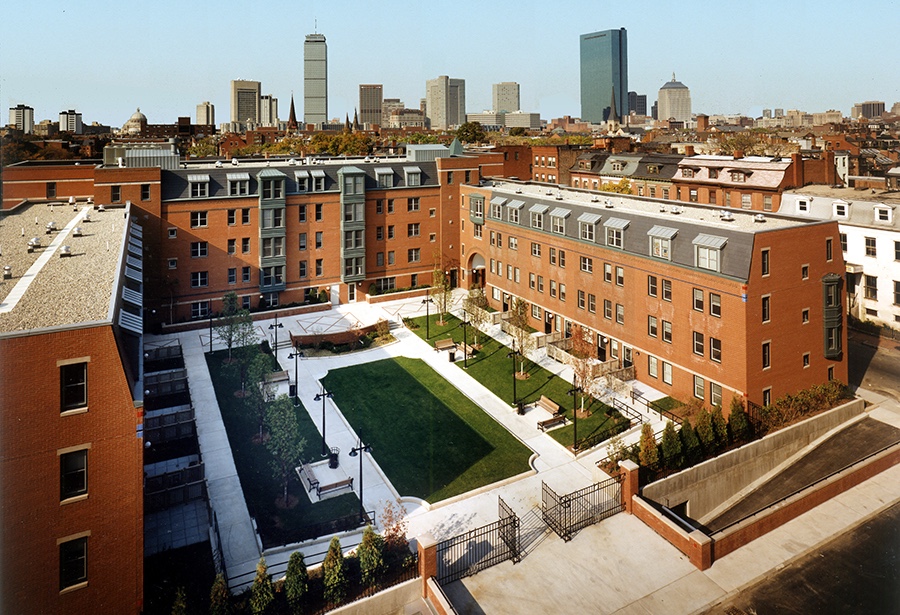
Image courtesy of Goody/Clancy

Appropriate infill construction can be a very difficult thing to accomplish, with some developments hitting the mark and others adversely impacting the historic neighborhoods where they were built. Boston is home to many examples of both occurrences, but I wanted to share a very successful infill project in the South End neighborhood, Langham Court. As the South End resurfaced as a desirable neighborhood, long-time residents were priced out, which led to the Boston Redevelopment Authority to fund projects to provide much-needed housing for the local community. This site which once housed over 20 townhouses, was razed by the 1960s in a period of urban renewal where existing housing was deemed unsafe and inadequate. The local design firm of Goody/Clancy was hired, and they masterfully designed a U-shaped complex of 84 mixed-income units that fits well within its surroundings. The design exhibits dormers, bays, arched and vaulted entries, a combination of mansard and flat roofs, stringer courses and textured brickwork, and a palette of well chosen materials all at a scale that blends in the 1990s building to its surroundings which came nearly 150 years prior. The complex remains as a testament to good-quality design even for affordable housing, which notoriously gets the short end of the stick design-wise.

One Greenway // 2015

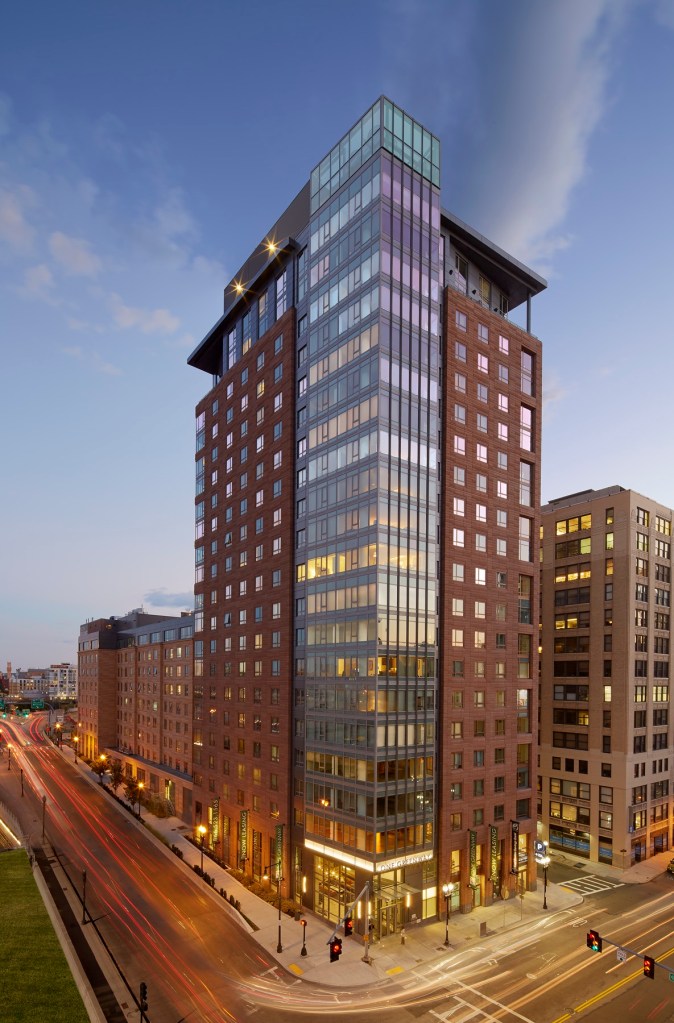
Replacing a vacant lot bordering I-93 at Kneeland Street, the One Greenway development provides much needed housing and design as one of the gateways into the Chinatown neighborhood of Boston. A result of community engagement, One Greenway is one of the largest new affordable housing projects in recent memory. The project restores the urban fabric that was lost half a century ago to the construction of major highways, which cut through the community and provides much-needed affordable housing in one of the nation’s oldest and largest immigrant communities. When the elevated highway was moved underground and the Rose Kennedy Greenway was laid out, parcels adjacent were available for reuse, and this was one of the last to be redeveloped. The building mixes 217 market-rate apartments and 95 affordable apartments, to create a mixed-income development, hopefully the future, as to not segregate affordable housing to less-desirable parts of cities. Designed by the firm Stantec, the building creates a solid street wall at the corner, and provides amazing open space at the rear in the form of a well-designed park designed by Crosby, Schlessinger, and Smallridge. The use of beige terracotta panels makes the large building more inviting, compared to the cold and sterile new apartment buildings going up all over the city and region.