Gardiner Public Library // 1881

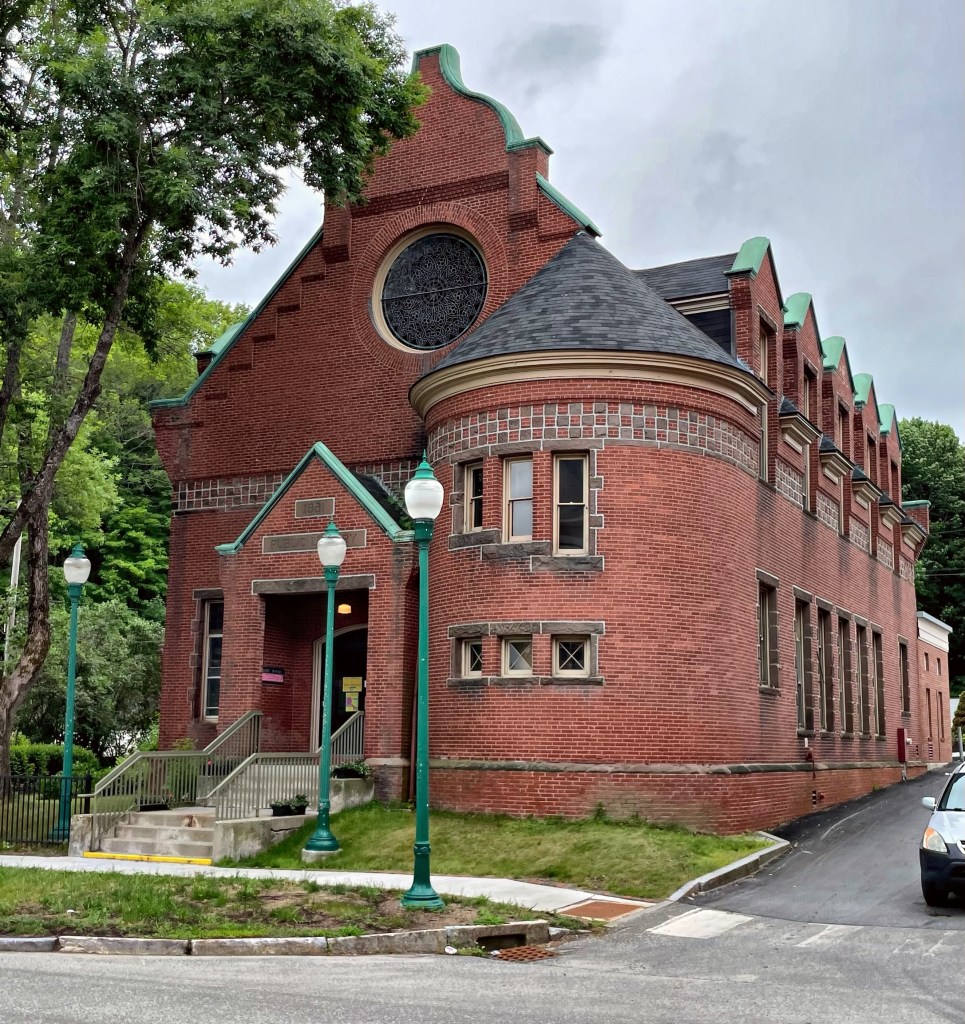
Possibly my favorite building type, the local town library buildings of New England, always amaze me with their small scale, yet architectural variety and intrigue. The library in Gardiner, Maine is no exception! This library building was constructed in 1881 from plans by Henry Richards, who was actually born in town in 1848. Henry graduated from Harvard in 1869, and soon after, took a post-graduate course in architecture at MIT. After completing schooling, he was a draftsman with Ware and Van Brunt. Soon after, he was a draftsman with Peabody and Stearns from 1872 to 1876, and then practiced architecture briefly on his own in Boston. During this time he married Laura Elizabeth Howe, daughter of Samuel Gridley and Julia Ward Howe. They moved to Gardiner, Maine and settled in a Federal house (featured previously), to learn more about Laura Richards and their house, check out the last post. Henry lived to be 100 years old! The library building is Queen Anne and Romanesque in style with a round corner tower with conical roof, brownstone and brick construction, and a stained glass ocular window with ogee parapet at the gable end roof. The small local library was added onto numerous times to hold a growing collection which includes works from Laura E. Richards, and Edwin Arlington Robinson, both Pulitzer Prize winning authors who lived in town.

Tucker Octagon House // 1856

The Octagon form of architecture was conceived in 1848 in the prolific mind of Orson Squire Fowler, phrenologist and author of books on sex, family relations, and many other subjects. His book A Home for All, or, the Gravel Wall and Octagon Mode of Building struck the fancy of a certain few, and Octagon homes were built across the country, for just about a decade until they fell out of favor almost overnight. This home in West Gardiner, Maine, was built by Jesse Tucker in 1856 on land his father had cleared, replacing a more standard structure. The new octagon house was being constructed as a gift to Jesse’s soon-to-be wife, but tragically fell from the roof of the barn when building, and died. The home was completed, and it was seemingly acquired by Jesse’s twin brother David. The home remained in the Tucker family until the 1950s.

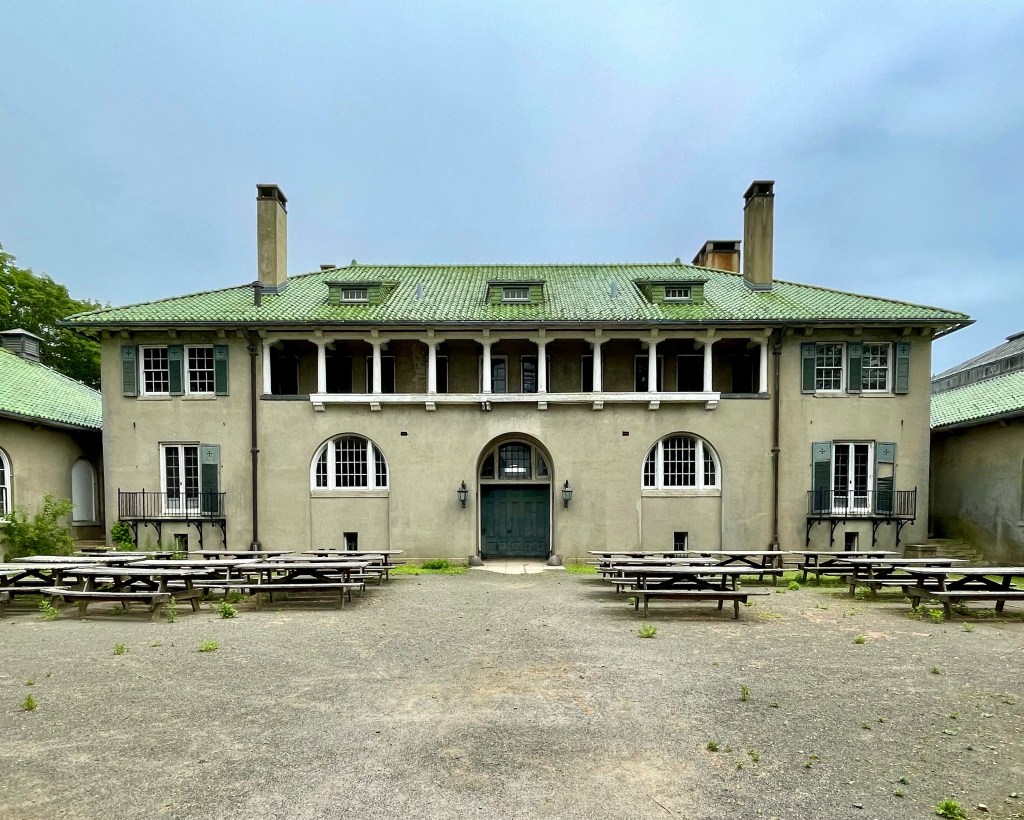
Harkness Estate – Carriage House // 1908

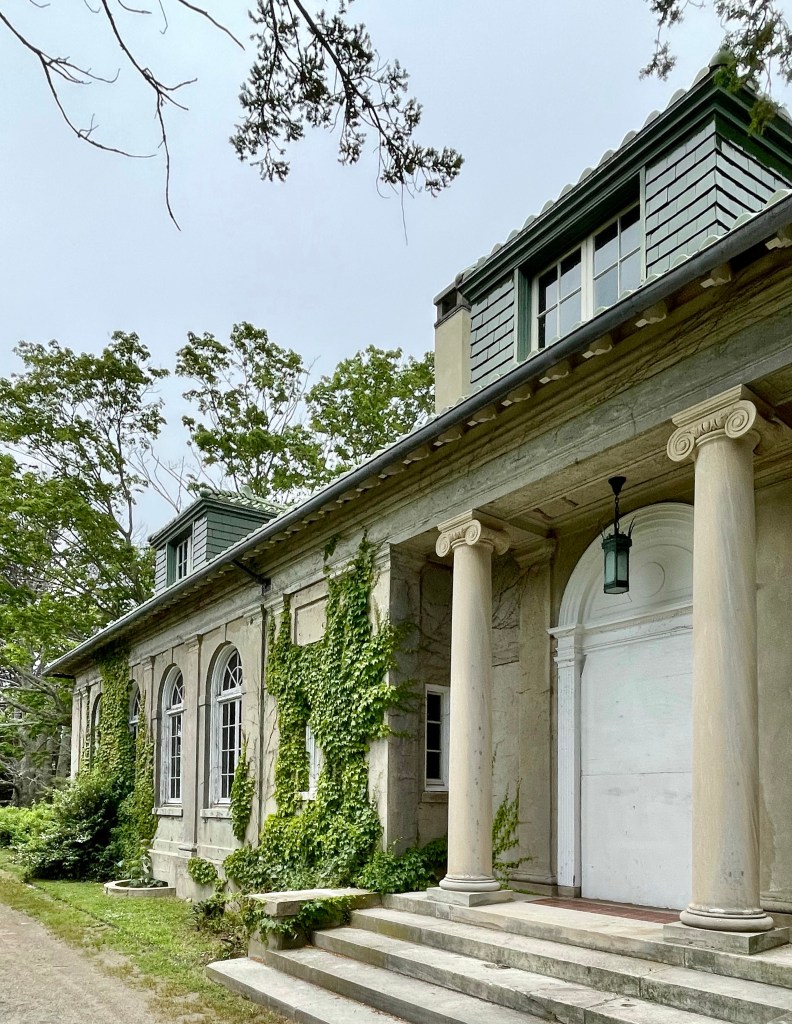
Another of the stunning buildings on the Harkness Estate is this massive all-purpose building that served a variety of functions, but I will call it the Carriage House. The building was constructed in 1908 and designed by James Gamble Rogers, mimicking the Renaissance Revival grandeur of the main home, Eolia. As previously mentioned, the large, U-shaped building was a multi-use support compound for the Harkness Family and their farm. The South Wing (right) of the building served as a clubhouse for Edward Harkness and his friends, with a billiards room, squash court, and two bowling lanes. This wing has large windows looking out towards the ocean and the large gardens on the property. The central block contained a garage with a turntable to facilitate the parking of limousines, a gas pump and a car wash for Mr. Harkness and his growing automobile collection. The North Wing (left) contained the horse stables, carriage area, tack room, smithy, and even a space dedicated to dog grooming. Upon close inspection you can see small rounded stones near the portals to allow the wheels to hit them rather than damage the building. Perhaps most importantly, the Carriage House was the location for the furnace room with its huge steam boiler. This boiler heated the Carriage House as well as the Mansion via an underground steam line. Apparently the building will soon be undergoing a restoration. Fingers crossed!

New London Ledge Lighthouse // 1909

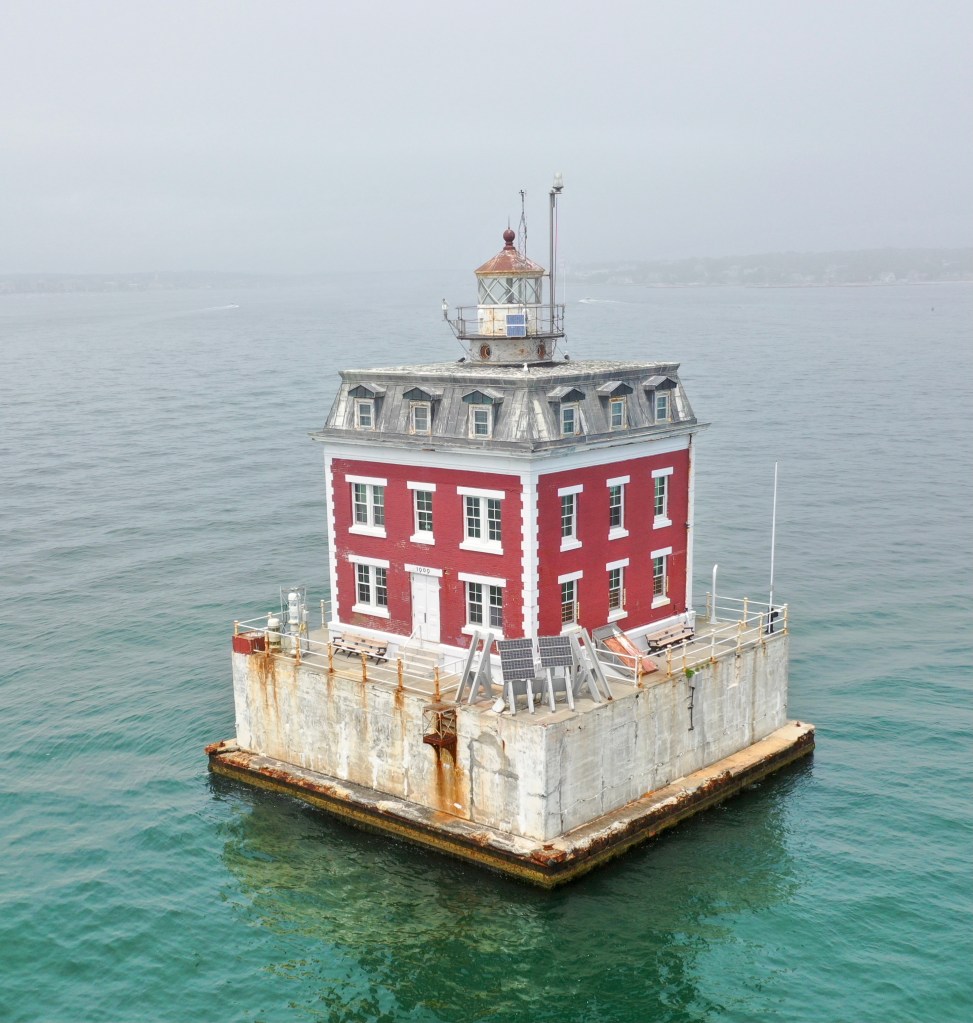
Set way off the coast of Connecticut at the eastern end of Long Island Sound, sits this stunning lighthouse which appears more as a Second Empire style home than a lighthouse! By the early 1900s, New London, with its protected harbor at the mouth of the Thames River, had made the transition from whaling center to industrial city. New London Ledge Light was built because New London Harbor Light wasn’t sufficient to direct vessels around the dangerous ledges at the entrance to the harbor. The New London Ledge Lighthouse was completed in 1909, built by the Hamilton R. Douglas Company of New London and is an architectural antique as its Second Empire style is about 50 years past the time the style was popular in American architecture. The lighthouse reportedly owes its distinctive French Second Empire style to the influence of the wealthy home owners on the local coast, who wanted a structure in keeping with the elegance of their own homes. Sadly, many of the large homes near the shore in the area were destroyed in the Great Hurricane of September 21, 1938. Coast Guard crews lived at the light until it was fully automated in 1987. The lighthouse today is owned and operated as a museum by the New London Maritime Society.

Mary English Cottage // 1911

This shingled beach cottage on the southern tip of New London, Connecticut sits in the Neptune Park community, which was laid out by real estate speculators as summer homes, primarily for local families. The Post Hill Improvement Company made up of professionals, purchased the beach and the surrounding land for $25,000 and began selling off the land adjacent to the beach. Then, once developable lots were sold and many cottages were built, they sold the beach alone back to the City for the same sum of $25,000. Like many such developments, deed restrictions were placed on properties, and ensured that only a dwelling house, with a minimum value of $2,500 if not waterfront and $3,000 if waterfront, could be constructed on the lots. This formerly Colonial Revival cottage was built in 1911 for Mary R. English, and would have cost at least $3,000. The shingled home was later given the tower and other details, but retains much of its charm.

Simeon Wetherbee Farmhouse // c.1800

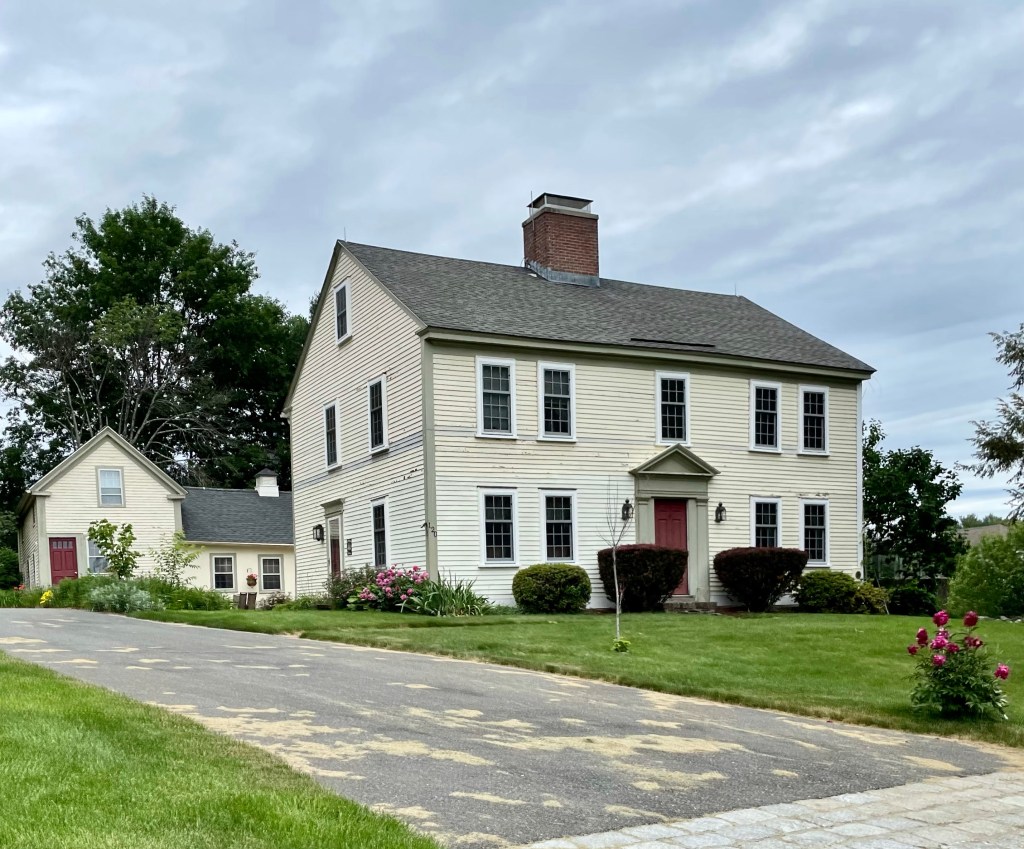
This late-Georgian farmhouse in Boxborough, Mass showcases how architectural integrity and historical context matter in historic preservation. Architectural integrity means the degree to which a building’s original design and physical composition is evident and intact. Historic contexts are the patterns, themes, or trends in history by which a specific property or site is understood and its meaning (or significance) within history is made clear. In this example, the old farmhouse retains much of its architectural integrity as it physically appears much as it would have upon its time of construction. However, the former farmland was sold off and developed as a residential subdivision, which completely obscures the historical context of the building in relation to its original use. The Simeon Wetherbee Farm remained in the Wetherbee family until the 1965, when the land was likely soon after subdivided and sold off for housing lots. A majority of the homes built surrounding this old farmhouse are classified as “Neo-Traditional” a modern take on Colonial architecture, but with cheaper materials and odd proportions. They are not a favorite among architects and historians.

Daniel Campbell House // 1762

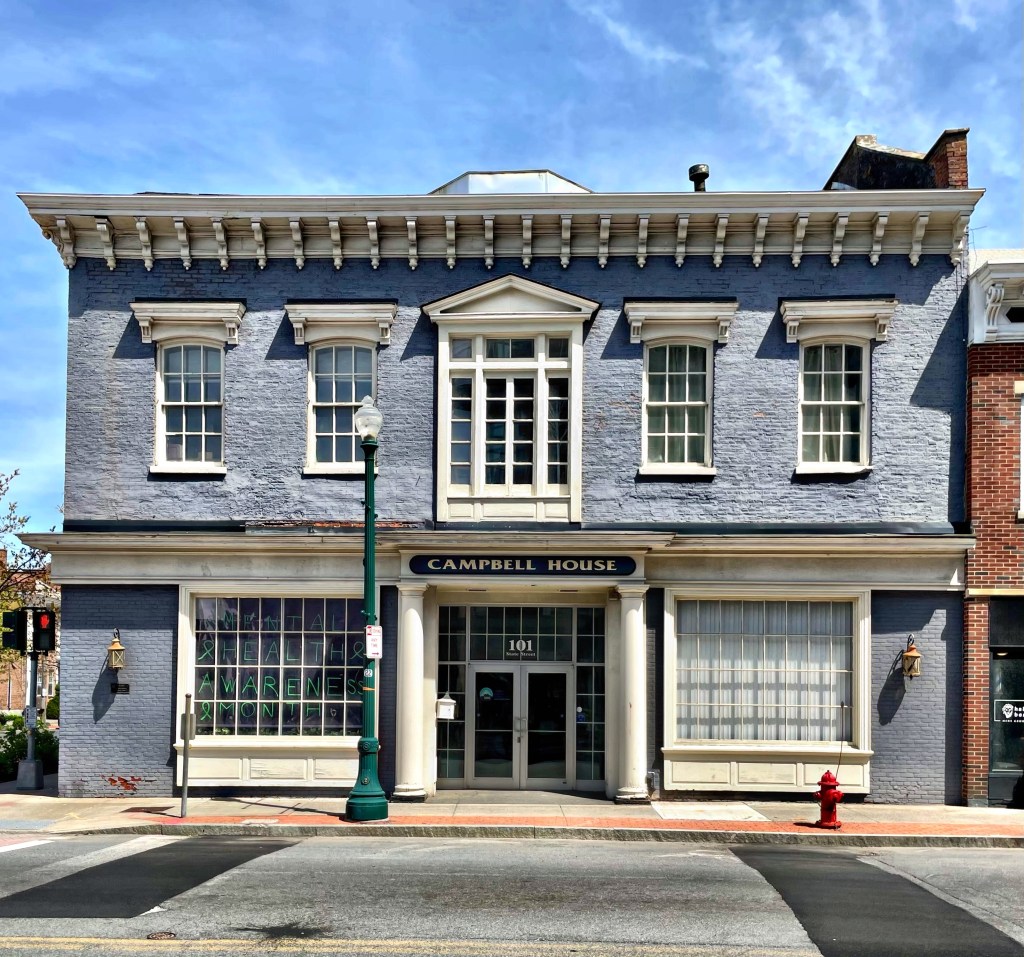
Daniel Campbell (1730-1802) emigrated to Schenectady, New York from Ireland, in 1754 at just 24. When he arrived to New York, he became involved in the fur trade, buying furs of animals from native people in the undeveloped lands of upstate, and selling the furs back to Europe. He began to purchase valuable land in the river town of Schenectady and nearby Albany, solidifying his position in those cities. In 1760, he married Engeltie Bradt, daughter of the Schenectady branch of a prominent New-Netherland era family. Soon after his marriage, he hired architect Samuel Fuller to design a spacious new Georgian mansion. The couple split their time between Schenectady and Albany until Daniel’s death in 1802. His widow resided at this home until her death ten years later. As State Street (where this mansion sits) turned more industrial, this home was modified with storefronts and later alterations in the mid 19th century.

Mount Hope Cemetery Chapel // 1908

Mount Hope Cemetery in Acton was laid out in 1848 as the third municipal burying ground for the town. Before that, there was a need for a cemetery between the West and South Acton villages, closer to the developing parts of town, without a cemetery of their own. The cemetery was laid out with paths following a grid pattern, with land tapering off towards the rear. The cemetery, used by many prominent families of Acton, was without a chapel for over 50 years until funds were donated by George C. Wright a wealthy resident who lived nearby (featured in the last post). Town officials proceeded to build a small building that was apparently was quite different from the vision that Mr. Wright had for the building, but Mr. Wright generously agreed to accept what had been done and presented it to the town. At the 1909 annual town meeting, the town formally acknowledged the gift. It saw some use as a chapel in the early days, but has since been used for storage and an office for groundskeeping.

Henry Tuttle House // 1873

This large Italianate house in Acton was built in 1873 for Henry Waldo Tuttle (1847-1916), who ran a grocery store business in town with his father, James Tuttle. The business did quite well as Henry built this massive home around his 26th birthday, likely around the time of his marriage. The exuberant Italianate home features a wide central gable and a projecting central entrance porch accessed by double entrance doors. The home has a detached stable to the left of the home too!

Acton Memorial Library // 1889

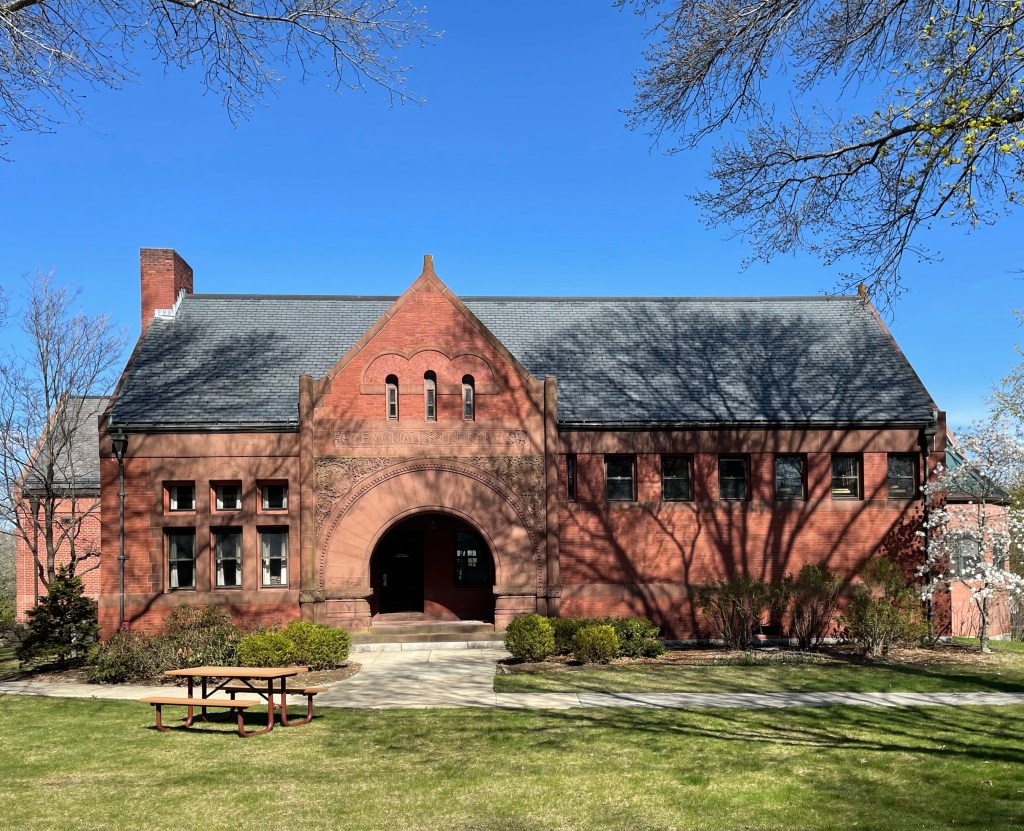
In 1888, William Allan Wilde, a Boston publisher who grew up in Acton, purchased land on Main Street to be used as the site for a new memorial library, in “memory of those brave and patriotic men of Acton who so freely gave Time, Strength and Health, and many of them their Lives in the war of the Rebellion, 1861-65.” The former Fletcher Homestead which was located here, was moved to a nearby street. The Richardsonian Romanesque building was designed by the Boston architectural firm of Hartwell and Richardson. The building displays traditional Romanesque materials with its brick wall surfaces, brownstone and terra cotta trim and detailing, and slate roof. The large Syrian arched entry is a hallmark in the Richardsonian Romanesque style, which works extremely well with this design.