Reading Vermont’s public library building was built in 1899, by local resident Gilbert A. Davis (1835-1919). The building’s funds were furnished by Mr. Davis in his life, likely inspired by Andrew Carnegie’s fund which had libraries built in towns all over the United States. Gilbert Davis worked as a lawyer in Woodstock before moving back to Reading, Vermont to run his own practice. The library he funded is Neo-Classical in design in the form of a Greek Cross with intersecting gable roofs and with a monumental portico in the Ionic Order on the front facade. The charming library building is well-preseved and an excellent example of Vermonts beautiful small-town libraries.
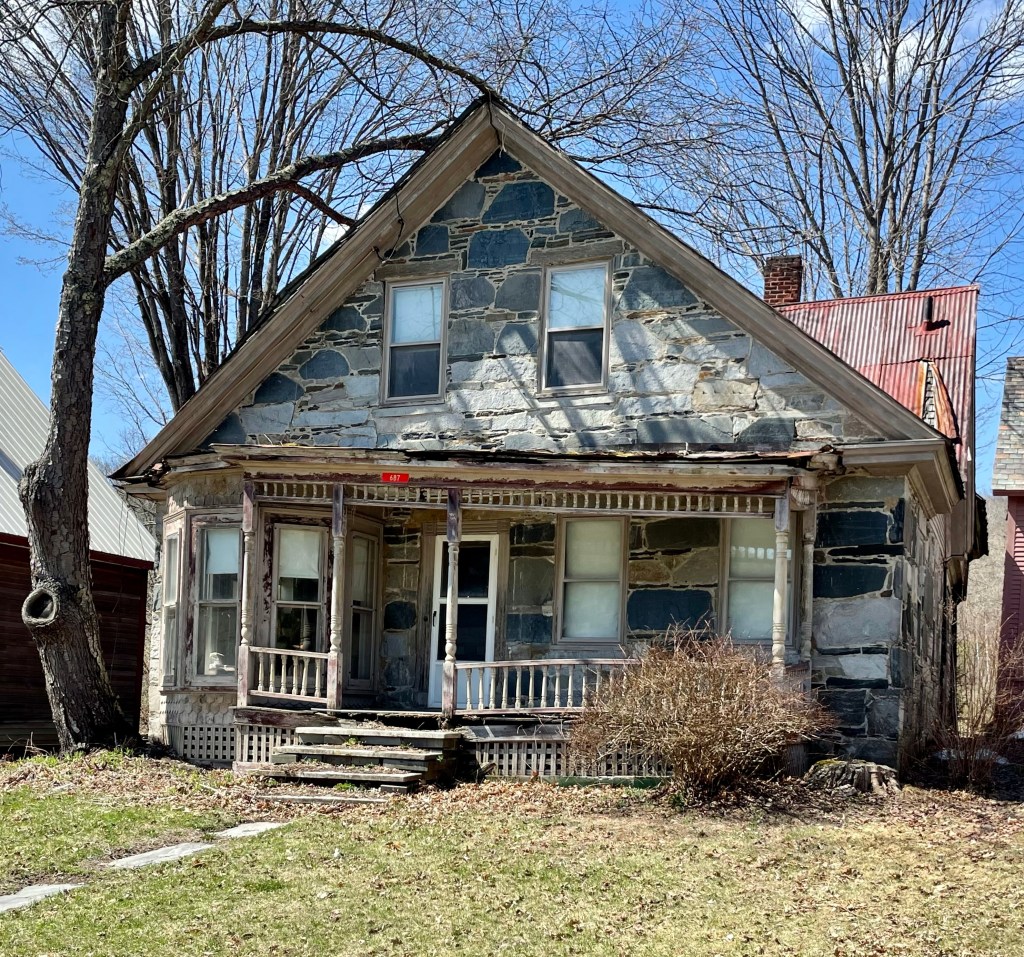
In the early 1830s, skilled masons from Scotland and Ireland came to central Vermont to work on building projects. A number of these workers, mainly from the Aberdeen area, and specialized in a specific building style in which plates of stone are affixed to a rubblestone wall. This method of bonding stonework is so prevalent in Scotland and Ireland it has been referred to in some journals as ‘Celtic Bond’, but in Vermont, it is known as “snecked ashlar”. The mixture of stone sizes and colors produces a strong bond and an attractive finish. This home is a rare example in the state, which is estimated to have about 50 of these homes left. I could not locate any information on the owners of the home, but the house has seen better days, with the wooden front porch shifting away from the main house. Also, if you look closely, you can see the original wood shingle roofing breathing under the sheet metal roof!
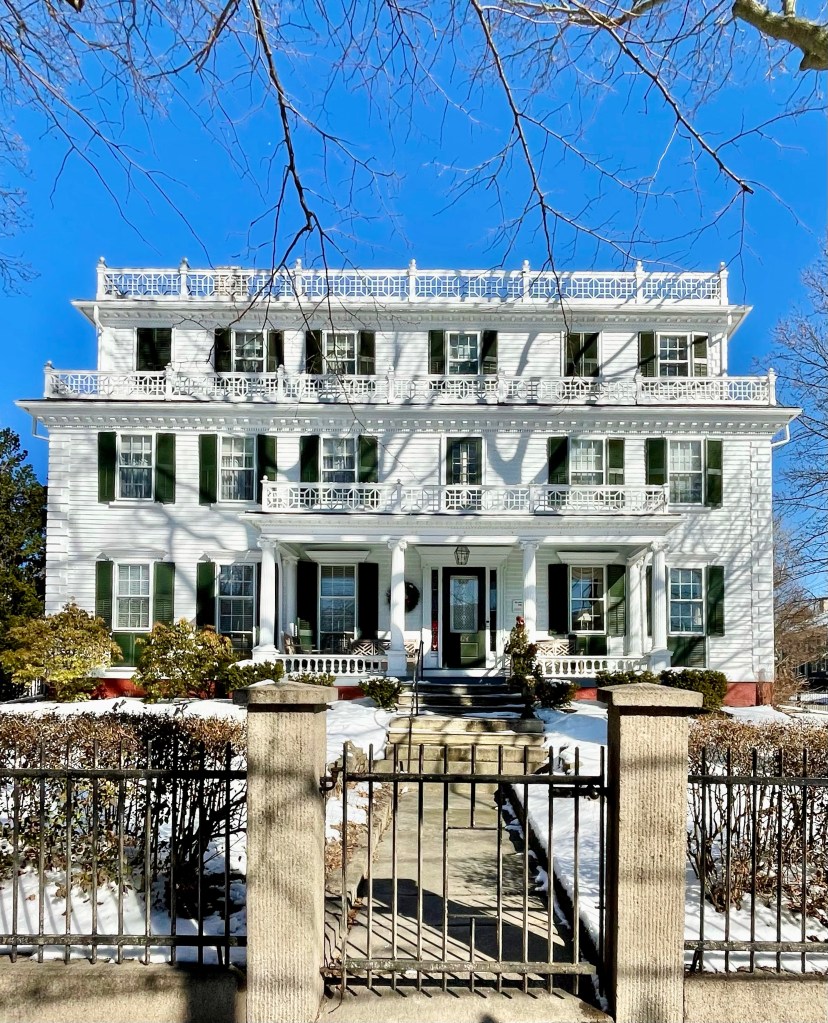
William Bradford (1729-1808), who would become Deputy Governor of Rhode Island from 1775 to 1778, came to Bristol to practice medicine by 1758. When he arrived, he rented Mount Hope Farm (featured before), before building a home in town. When the British Navy bombarded Bristol on October 7, 1775, his home was among the buildings destroyed. He afterward went aboard ship to negotiate a cease fire, saving what was left of the town. In 1792, he built a 2 1/2-story Federal style, boxy house on this lot, close to the street. The home was willed to his son Hersey, who resided there until the 1840s, when he mortgaged the house to Francis Dimond, who resided in a Greek Revival temple front home (also featured on here previously). He gifted the modest Federal home to his daughter, Isabella, possibly as a wedding gift upon her marriage to Samuel Norris, a sugar refiner. Mr. Norris and Isabella hired architect Russell Warren, who designed her father’s home nearby, to renovate the house in the spring of 1845, moving the house away from Hope Street. The house was given its third floor and additional bay, along with the ornate design which characterizes it to this day, including the Ionic porch and Chinese Chippendale balustrade. The house remained in the Norris family until 1942 and is now a B&B.
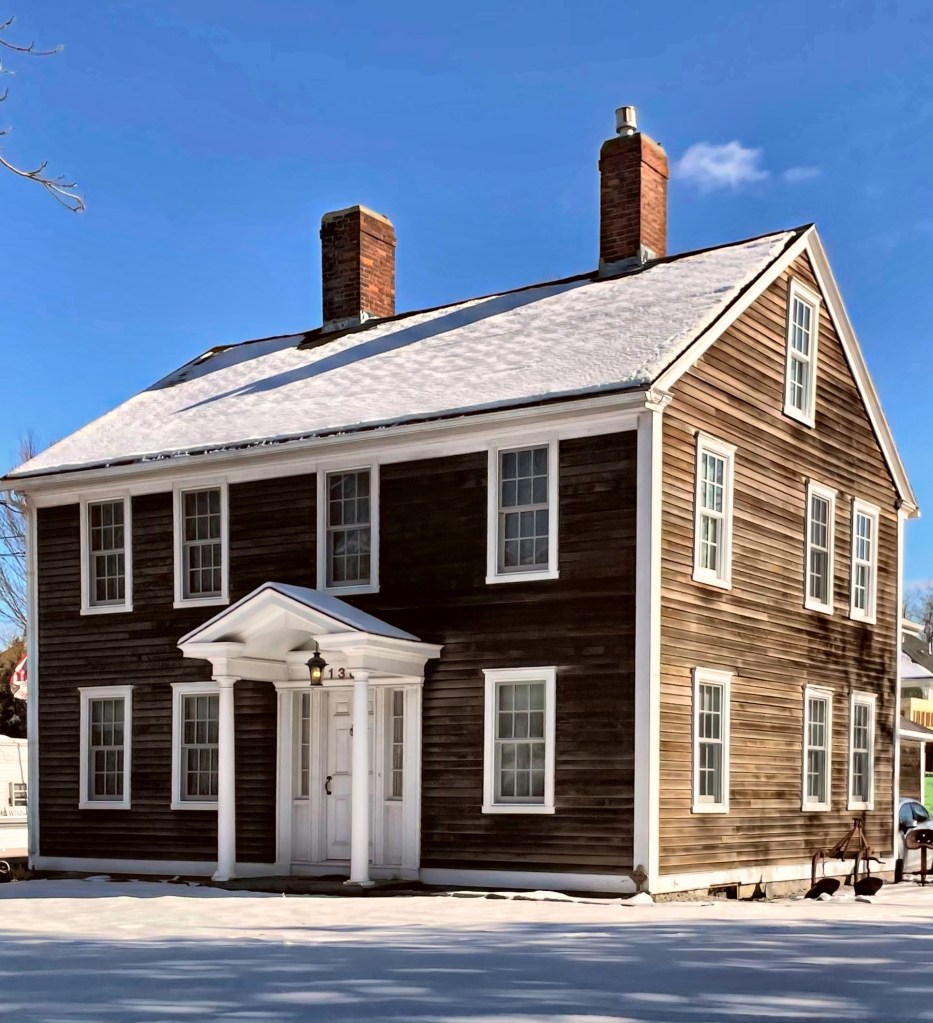
In 1687, William Throope 1637-1704, who migrated to Bristol from Barnstable, Massachusetts by way of England, purchased land in Bristol, Rhode Island. On it, he constructed a small, one-room deep, two-story house. Throope’s grandson, Thomas, Jr. (1710-1771), enlarged the house about 1760, when he constructed this four-bay Georgian home, adding the old 1687 Throope house to the rear. Interestingly, house moves were very common in America to the early 20th century, as materials such as glass, nails, and brick were more expensive while labor was much cheaper, making the reuse of original structures and materials common. The farm eventually passed to Isaiah Drown Simmons (1810-1882), a dairy farmer, in 1830, and remained in the Simmons family until 1922. Records show that the original 1687 house that was moved to the rear of the 1760 house was replaced in the 1830s by Simmons. The home remained in the Simmons Family until after the death of their only daughter Elizabeth, who died in 1914. It appears that the existing front portico was added after that time, which appears more Colonial Revival.
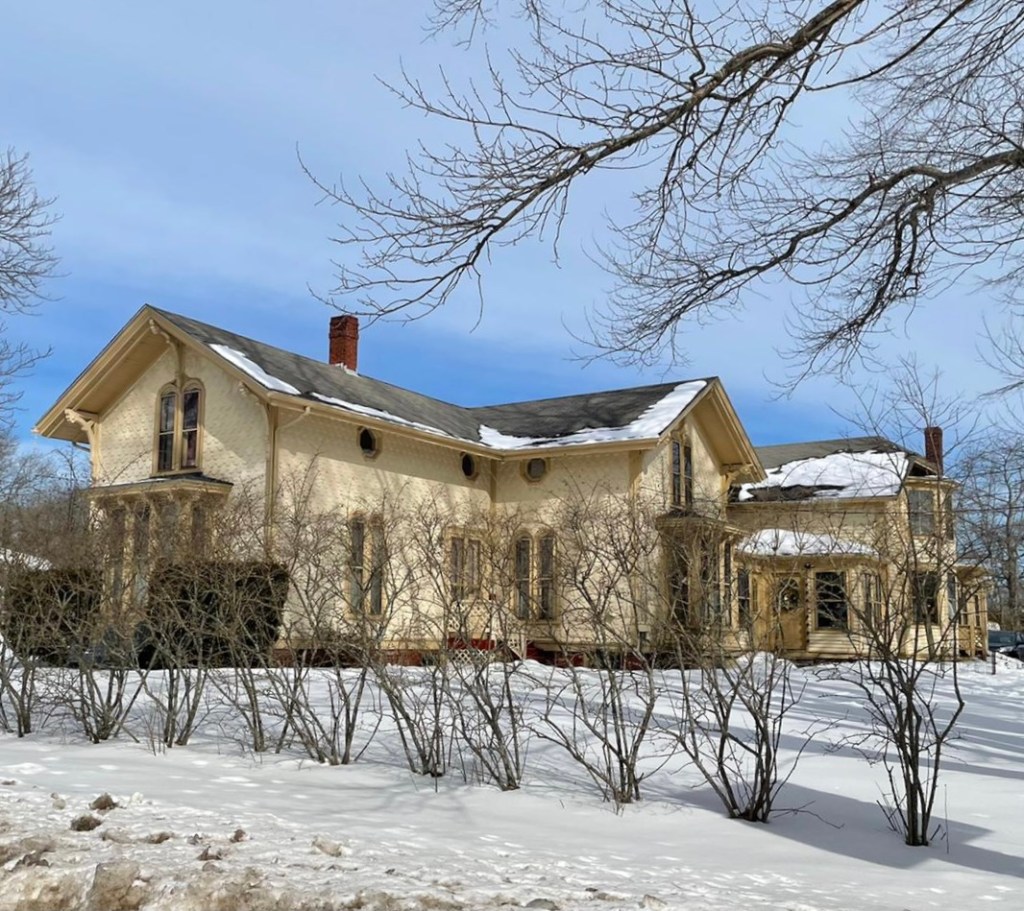
This charming home in Cape Elizabeth, Maine looks to have been built after the American Civil War, as an interesting Italianate cottage. The home is clad with scalloped shingle siding which works well with the paired round headed windows facing the street. The deep overhanging eaves are supported by brackets. Running under the eaves on the sides are octagonal windows, a very unique detail. The home is located at the center of town, away from the summer cottages which sprouted up along the rocky coastline in town starting around this time. It was converted into condominium units sometime in the late 20th century.
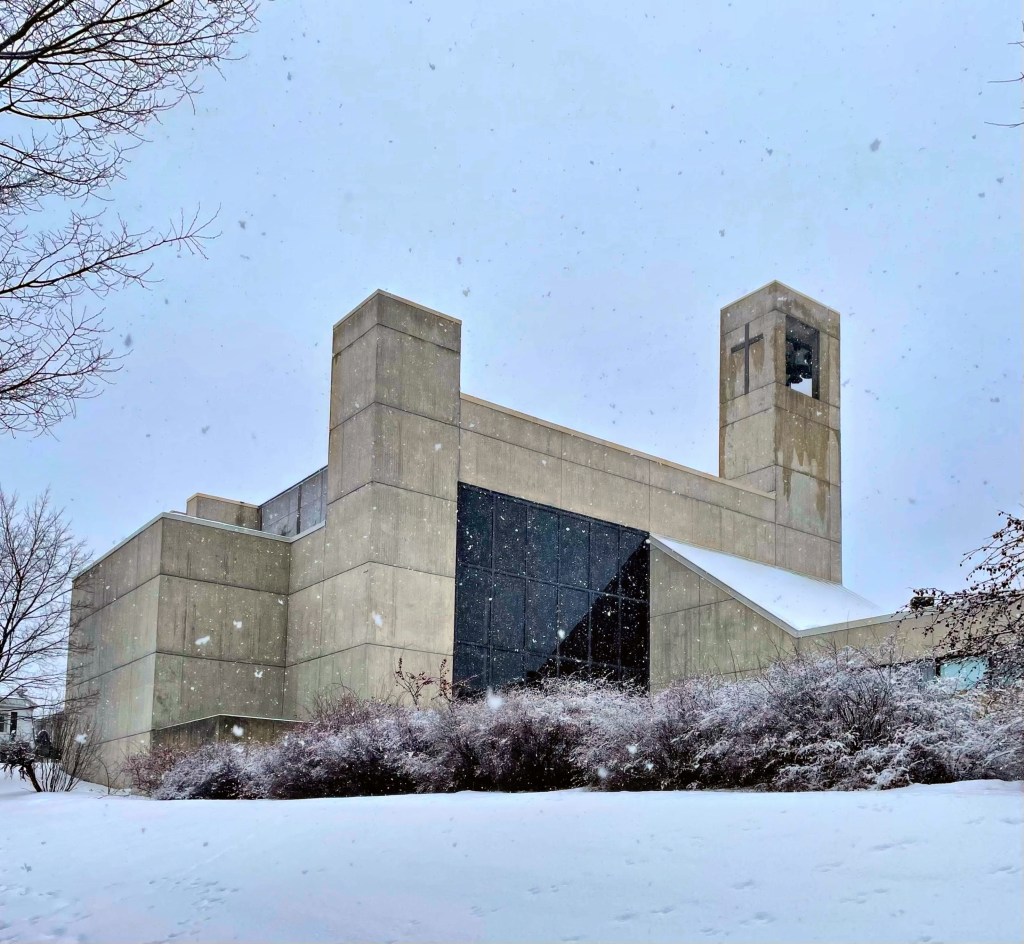
St. Paul’s Church in Burlington, Vermont, was organized in 1830, when Burlington’s population was about 3,500. About 55 Episcopalians met at a local hotel and laid the groundwork for the parish. In 1832, the fledgling parish dedicated its new building, a neo-Gothic limestone structure, which was enlarged multiple times as the congregation grew as the city did. In 1965, the Diocesan Convention voted that St. Paul’s Church be designated a Cathedral Church of the Diocese (one of two in the state). Just six years later, it was destroyed by fire, sparked by an electrical malfunction in the basement, leading to a new evolution of the church. At the time of the fire, the City of Burlington was engaged in massive urban renewal projects. As a part of this program, the City offered to swap the land on which Old St. Paul’s had stood for a spacious new tract overlooking Lake Champlain and the Adirondacks. Although the decision to change locations was a contentious one, the parish did accept the offer. When discussing designs for a new cathedral, there was a strong desire to make a new statement in architecture, diverging from the traditional Gothic or Colonial designs seen all over the country. An international competition was held to determine the architect of the new Cathedral. The winner was the local firm Burlington Associates, now Truex, Cullins & Partners. Completed in 1973, the Cathedral is made of stressed concrete. The structure stands strong and firm, yet is welcoming. Windows provide sweeping views of Lake Champlain and the distant Adirondacks.
On July 14, 1873, Mrs. Mary L. Fletcher and her daughter, Miss Mary M. Fletcher, gave the city of Burlington, VT, $20,000 for the founding of the Fletcher Free Library. Half of this sum was to be spent on books; the other half was used to start an endowment for the library. By 1901, the library had outgrown its location in the old City Hall building. In the same year, Andrew Carnegie made a gift of $50,000 for the construction of a new library. In 1902, an architectural competition was created with entries from Boston, New York, Buffalo, Montpelier, Vermont, and Lowell, Massachusetts, but a young Burlington architect, Walter R. B. Willcox won the commission. Willcox designed the new ornate library that year and in August, 1904, the new library was dedicated and opened for business. In the early to mid-1970’s there was some pressure from the citizenry to demolish the Carnegie building and rebuild on the site, which coincided with Burlington’s large urban renewal policies in the downtown area. In response, a group of Burlington residents formed The Committee to Save the Fletcher Free Library Building. A petition was circulated, and as a result, the building was added to the National Register of Historic Places in 1974. In 1977, a grant of $234,000 made possible the stabilization and external repair of the building, and later an addition was constructed, to allow the historic library to meet the needs of the much larger city.
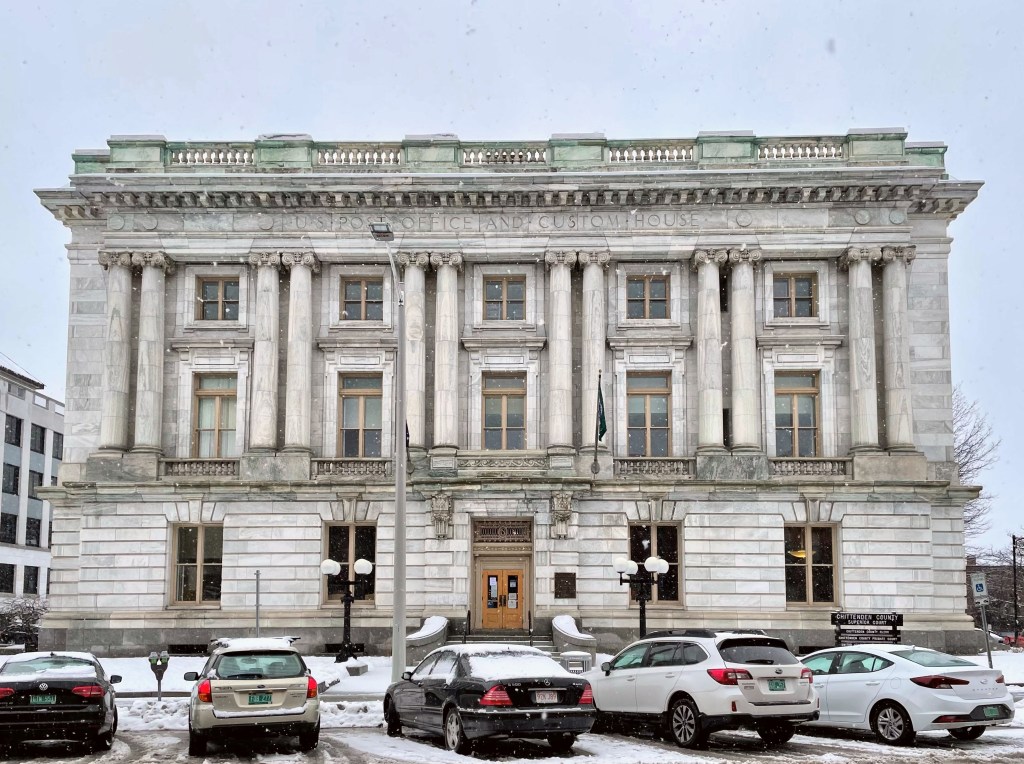
The Chittenden County Superior Courthouse in Burlington, Vermont was built in 1906 and is one of the most bold architectural designs in the city. The building was actually constructed as the U.S. Post Office and Custom House for Burlington, but changed use in the 1980s after the Old County Courthouse was destroyed by fire. The building was the work of U.S. Treasury architect James Knox Taylor. Taylor designed, many major eastern federal buildings during the late 19th and early 20th centuries. He provided plans for this Beaux Arts structure with a well-appointed exterior finished in marble and dressed granite. Beaux-Arts architecture depended on sculptural decoration along conservative modern lines, blossoming in the United States in the early 20th century after many American architects studied at the École des Beaux-Arts in Paris, particularly from the 1830s to the end of the 19th century.
Located in Boston’s Back Bay neighborhood, this home was actually constructed as two attached homes for Ralph Blake Williams and his sister, Ruth (Williams) Sears, the wife of Dr. George Gray Sears. In 1905, Ralph B. Williams hired architect Julius A. Schweinfurth, who trained in the architectural firm of Peabody and Stearns, to design a double-townhouse, for him and his sister. After completion, Williams lived in the larger side (right three bays) with his widowed mother, and Ruth lived in the smaller home (left two bays) with her husband. After successive ownership, the buildings were and turned into a lodging house, soon after purchased together in 1955 and turned into a school, the Chandler School for Women. The homes remained separate until 1959, when the school demolished the interior party wall, effectively combining the two properties into one, this is likely when the Sears’ front door was filled in, leaving one front door in the center bay. In 1971, the New England College of Optometry purchased the building and occupies it to this day for classrooms and offices.
One of the most grand apartment hotels in Boston, The Charlesgate, serves as one of many architectural anchors for the Back Bay neighborhood from Kenmore Square. The apartment hotel was constructed in 1891 and so named after the Charlesgate Park which was created by landscape architect Frederick Law Olmsted as part of the glorious Emerald Necklace park system. The Back Bay Fens was the first park designed by Olmsted for the City of Boston. Creating the Back Bay Fens was as much a sanitary as an aesthetic project, because the water was heavily polluted and often stagnant; Olmsted envisioned Charlesgate as the meeting point of the Back Bay Fens with the Charles River. The apartment hotel was actually designed and was financed by the architect, John Pickering Putnam, and members of his family. The basement and first story are constructed of Indiana limestone with the remainder of brick, with limestone trimmings. A picturesque effect is obtained by grouping the bays in pairs, and surmounting each pair with gables in the Queen Anne style, and by relieving these features against a high roof of green slate. The building originally featured 30 apartments and has since been reconfigured into over 50. The architectural landmark is one of the best statement-pieces in the neighborhood, and shows that apartment design can be done very very well!
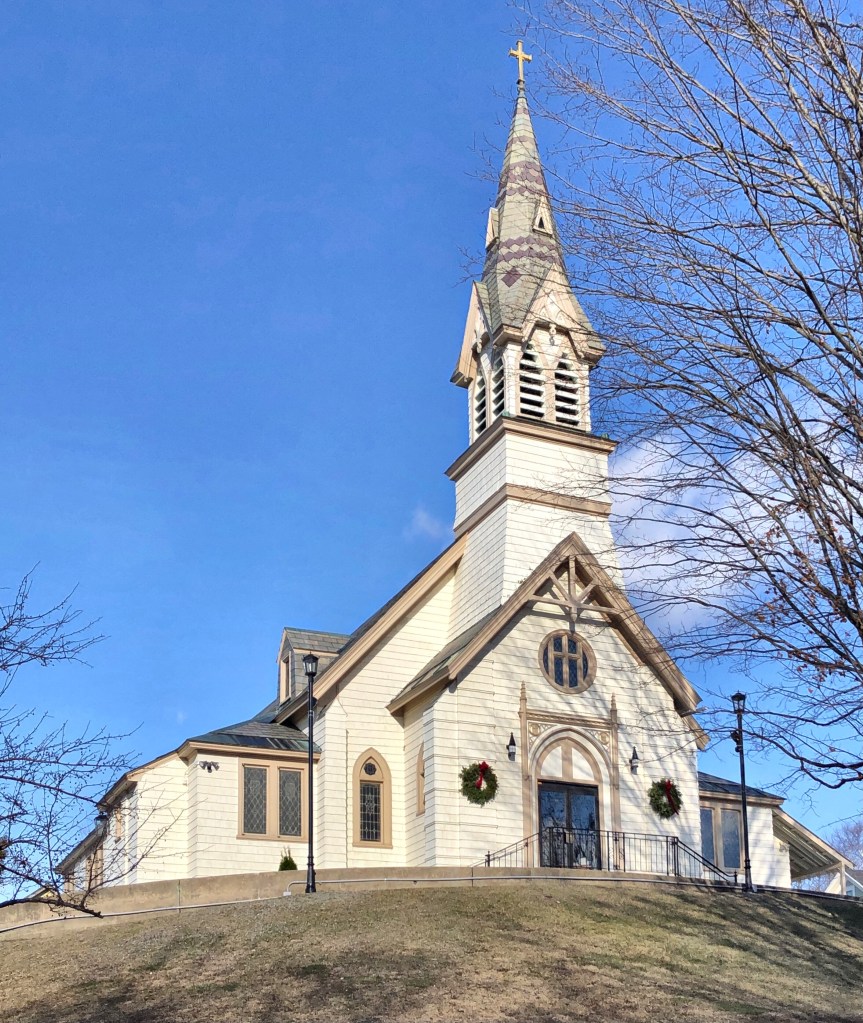
Perched high on a hill in central Newport, NH, St. Patrick’s Church has served the community in its stunning building for nearly 150 years. The town of Newport began seeing Irish immigrants moving into town looking for work at the mills as early as 1835. The large working-class population created a need for a Catholic church in the growing town. That same year, the Catholic population of the state of New Hampshire was listed at just 720 people. Over the following decades of meeting in homes and small buildings around town, the Catholic population in town, along with the newly established Archdiocese of Manchester, NH, came up with funds for a church in the mill town of Newport. The congregation hired Hira Ransom Beckwith, a carpenter, builder and architect from nearby Claremont to design and construct the new place of worship. Interestingly, Beckwith had only a high school education, so his training as an architect and builder was through apprenticeships. The church is a blend of Gothic Revival and Stick styles, with the lancet windows and tracery paired with the elaborate stick-work in the gable.
In December 1824, a law was passed by the New Hampshire Legislature removing the of the Supreme Court of Judicature from Charlestown, New Hampshire to Newport, which was located at the convergence of multiple stagecoach lines along the Sugar River. Soon after, Sullivan County was formed from the northern part of Cheshire County. At a meeting held January 13, 1825 the town of Newport voted to raise $2,000.00 to assist in building a courthouse and town hall, in the center of town. The building was erected in 1826 with the Newport Town Hall on the first floor and County Courthouse on the second. The building continued to be used as a court as well as social purposes until 1872, when it was deeded to the Town of Newport. Since then, the structure was used as a school and grange hall, and it now is home to a restaurant, appropriately called “The Old Courthouse”. The 1826 building is an excellent example of vernacular Federal style architecture.
Austin Corbin (1827-1896) was a 19th century railroad man known for consolidating what we know today as the Long Island Railroad. He was born in Newport, New Hampshire and eventually graduated from Harvard Law School in 1849. He eventually moved to New York, and founded the Corbin Banking Company, which he leveraged into a successful banking firm, which funded his diversifying into resorts and railroads. In 1873, while following doctors advice of ocean air for his ill son on Coney Island, Corbin recognized the area as an untapped natural location for a summer resort, and proceeded to purchase 500 acres, opening a large hotel and a new railway system to deliver New Yorkers to the resort in 1878. He is infamous for strong-arming the Montaukett tribe on Long Island out of nearly 10,000 acres they occupied around Montauk. The tribe is still seeking compensation for this tactic. In 1880, he built this summer estate in his hometown of Newport, NH as a castle for his greed, also acquiring over 100 acres for the estate. He soon after bought out over 25,000 acres of land for an ultra-private members-only hunting club. Corbin died on the estate in 1896 and the property was eventually purchased by William Ruger. The home was vacant for decades following WWII until Ruger, who co-founded Sturm, Ruger & Co. purchased the estate, likely utilizing the hunting reserve next door. The property and another owned by the Ruger Family were sold separately at auction in 2019.
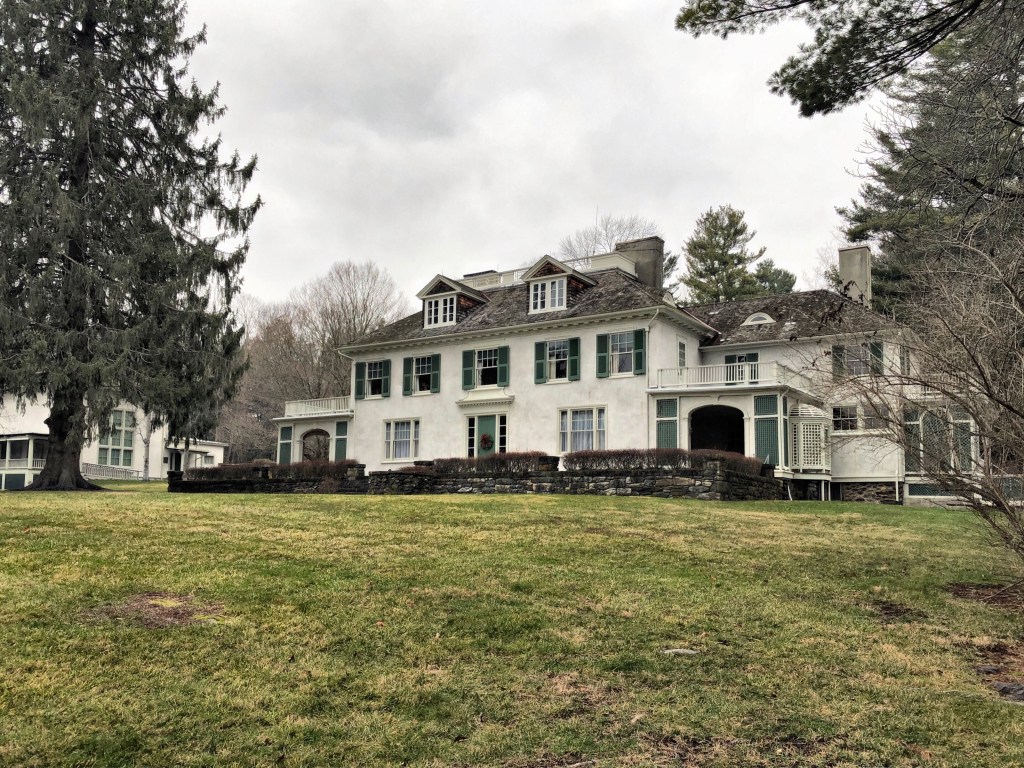
Chesterwood is the former summer home, studio and gardens of American sculptor Daniel Chester French (1850–1931), who is best known for creating two of our nation’s most powerful symbols: the Minute Man(1871–75) at the Old North Bridge in Concord, Massachusetts, John Harvard in Harvard Yard, and Abraham Lincoln (1911–22) for the Lincoln Memorial in Washington, D.C. Daniel Chester French was one of the most successful artists of the late 19th and early 20th centuries, producing more than 100 works of public sculpture. In the fall of 1895, he and his wife drove by horse and buggy and discovered the resort town of Stockbridge. They returned the next summer and purchased the Marshall Warner farm from the family who had purchased the land from Mohican Native Americans. The French family and two maids moved into the white clapboard farmhouse the next summer. To ensure that his summer would be productive as well as restful, he improvised a studio in the barn. He asked his friend and colleague, architect Henry Bacon, to design a studio for him (Bacon would later work with French on the Lincoln Memorial). Soon, in spite of renovation, the original farmhouse was deemed inadequate and French commissioned Bacon to design a residence, completed in 1901. The family owned the home for decades, even after Daniel Chester French’s death. Much of the credit for Chesterwood’s preservation and metamorphosis from summer retreat to public site belongs to Margaret French Cresson (1889–1973), the sculptor’s daughter. After her parents’ death, she maintained the property and began to use it year-round, assembled the work of her father, and established the estate as a historic site of the National Trust for Historic Preservation.
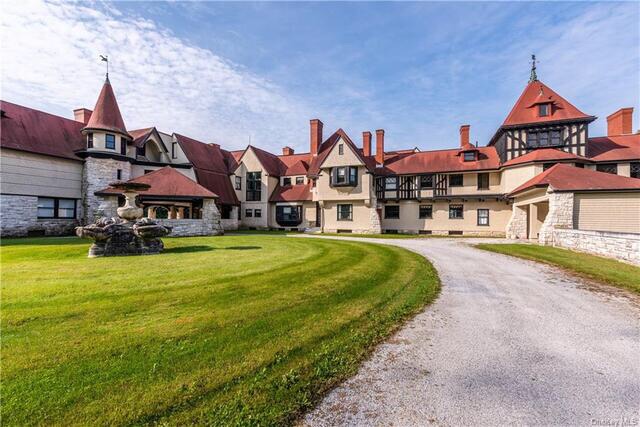
At 55,000 square feet and 106 rooms, the Elm Court mansion retains the title of the largest American Shingle Style home in the United States. The structure was built for William Douglas Sloane and Emily Thorn Vanderbilt (granddaughter of Cornelius Vanderbilt) as their summer “cottage” in the Berkshires. The home straddles the towns of Stockbridge and Lenox and sits on a massive parcel of land, giving the owners space to breathe the clean countryside air. Emily’s brother, George, built The Biltmore in Asheville, North Carolina and her sister, Eliza (Lila), constructed Shelburne Farms in Shelburne, Vermont. The home was constructed in 1886 from plans by the great Peabody & Stearns architects. Shortly after the turn of the century, ca. 1901, the couple commissioned Peabody and Stearns again, to vastly enlarge their original house. The additions used both Shingle Style and Tudor Revival motifs, and the result is a structure highly reminiscent of an English country house. William Sloane died in 1915, and Emily Vanderbilt continued to use the summer cottage, and in 1921, she married a summertime neighbor, Henry White, a career diplomat. While Henry White died in 1927, Emily retained the house and kept the grounds running until her death in 1946. The property’s use evolved into an inn in the late 1940s. During the 1950s, it embraced the public for dinners, overnight accommodations and events. Eventually Elm Court’s doors closed, and for approximately 50 years the mansion succumbed to significant theft and vandalism. The property has been listed for sale numerous times in the past decades, after a renovation by the last owners in the Sloane family. It is now listed for $12,500,000!





 Buildings of New England
