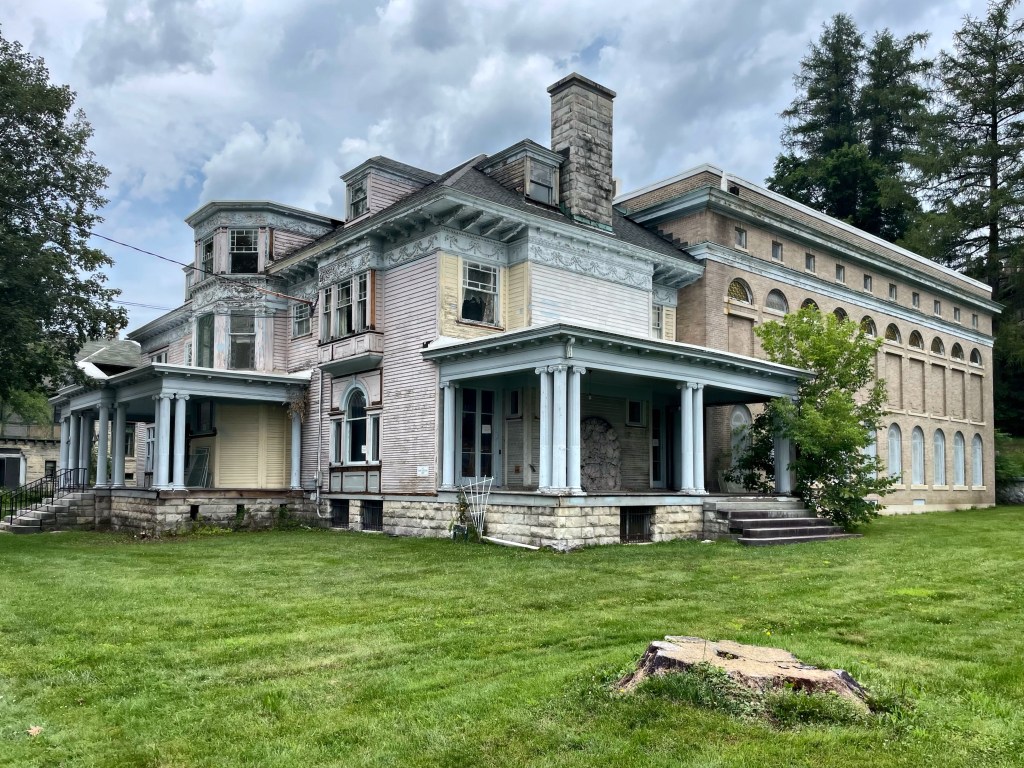
A. C. Houghton Mansion // 1897

The first mayor of North Adams, Albert Charles “A. C.” Houghton (1844-1914), built this house on Church Street in 1897. Albert was born in Stamford, Vermont and would become president and principal owner of Arnold Print Works (now Mass MoCA campus) and the Beaver Mill in town. He did well for himself and had this large mansion built from plans by Berkshires architect Henry Neill Wilson. Tragically, on August 1, 1914, A. C. Houghton was being driven in town by his driver with his daughter Mary and her husband in the car. They crashed and both Mary and her husband died, with seventy-year-old Albert succumbing to his wounds over a week later in his home. His driver soon thereafter shot himself. The Houghton mansion was inherited by Albert’s wife Cordelia, who passed away in 1918. Their daughter Florence Gallup next inherited the mansion but was living in the Boston area, and she decided to sell the family home to the local Masonic Lodge in 1927. They likely added the brick addition at the rear for meetings and events soon after. It is not clear to me what the mansion is used for today, any locals have more information?
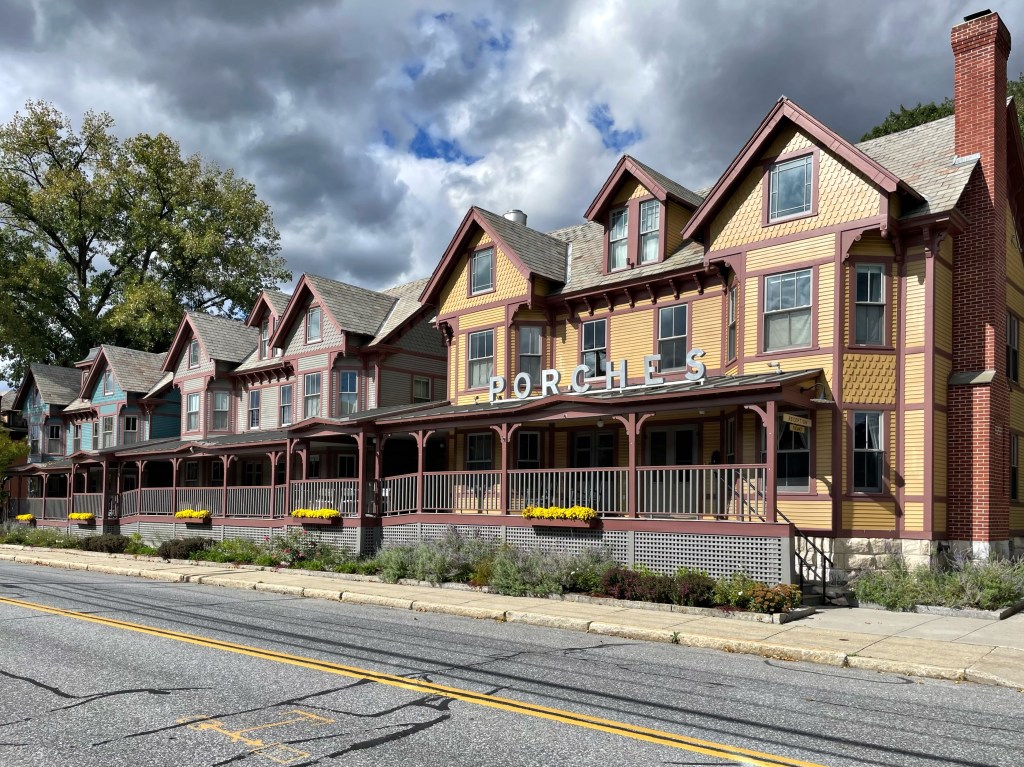
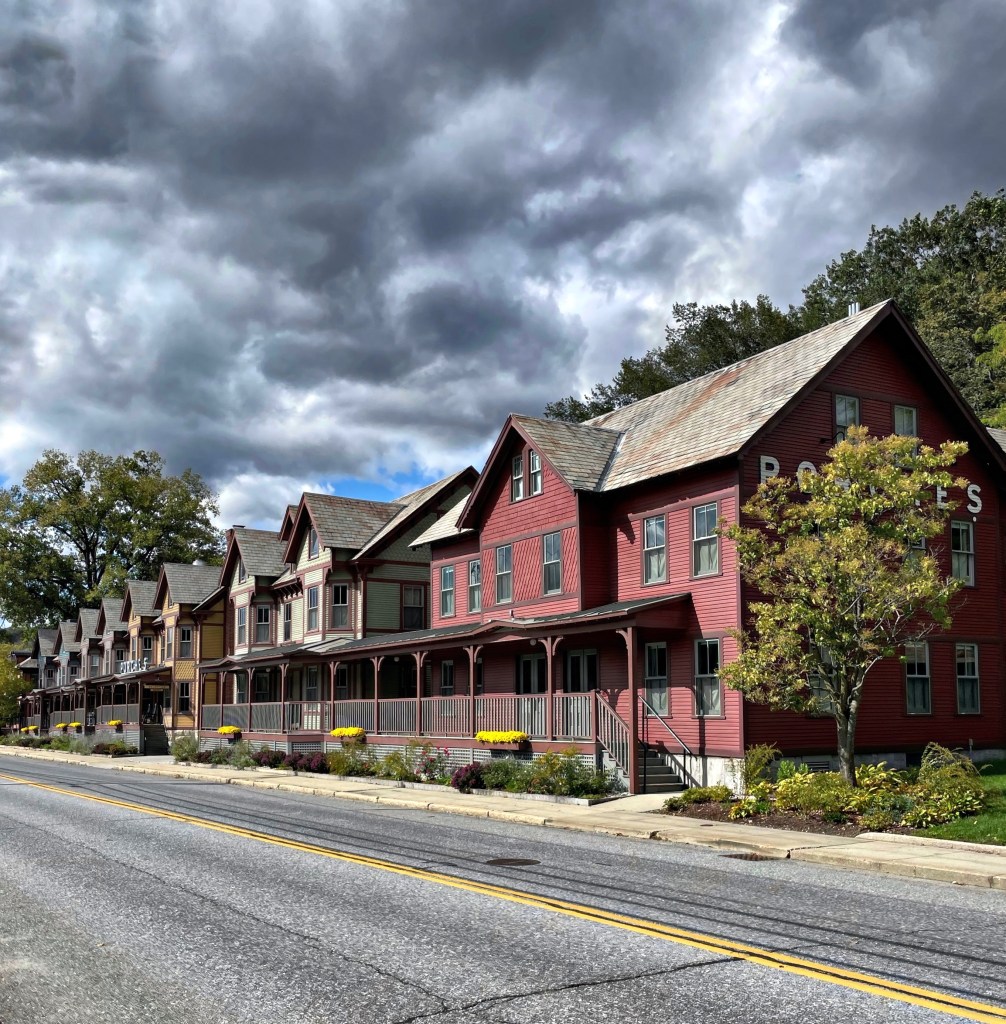
The Porches Inn // 1895

Prior to a few decades ago, there were not many reasons one would visit or stay a weekend in North Adams, Massachusetts. The former industrial city, like many others in the region, saw a sharp decline in population, services, and quality of life when many of the local factories closed in the second half of the 20th century. The major draw of tourists today is Mass MoCA, a museum in a converted factory building complex that is now one of the largest centers for contemporary visual art and performing arts in the United States! The new museum has created a huge demand for restaurants, housing, and hotels of all types in the formerly decaying river city. This is a story of perseverance and rebirth! In the early 2000s, Jack Wadsworth, an alumnus of nearby Williams College, wished to revitalize a block of vacant 19th-century workers houses across from the growing attraction of MASS MoCA. He worked with Burr and McCallum Architects of Williamstown to convert the decaying workers cottages into a boutique hotel. The span of Queen Anne and Colonial Revival cottages were joined via a long porch lined with rocking chairs, and the space between the buildings is bridged with skylights, giving the complex its appropriate name, Porches Inn.

Ashe House // 1898

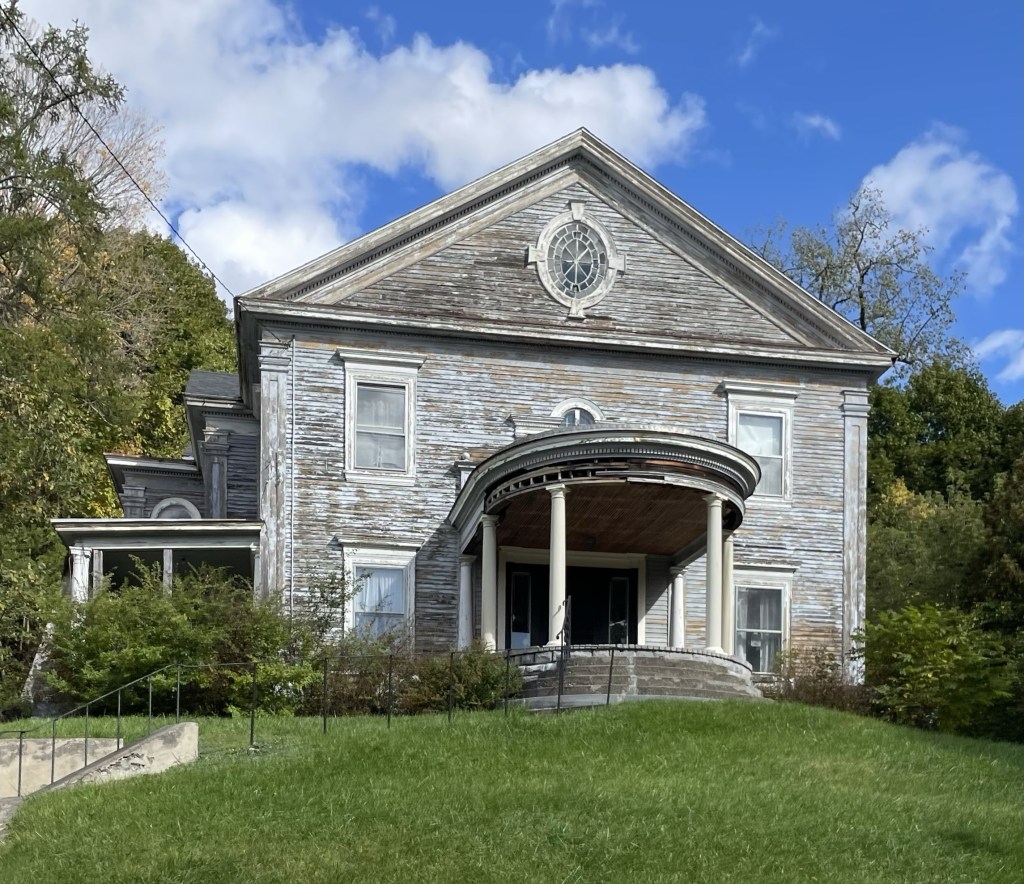
North Adams, like many formerly industrial towns and cities in New England has some amazing old Victorian and Colonial Revival houses built before the factories closed. Luckily for us, this town still has many unaltered residences, with some needing more love than others. This is the Ashe House, built in 1897-8 for Patrick J. Ashe and wife Katherine O’Brien. Classical details from many different styles make this house unique. An oval window dominates the traditional Greek facade which includes a pediment and side pilasters. A palladian window sits over the elliptical porch which is supported by columns. This one has so much potential!!

Vadner House // 1874

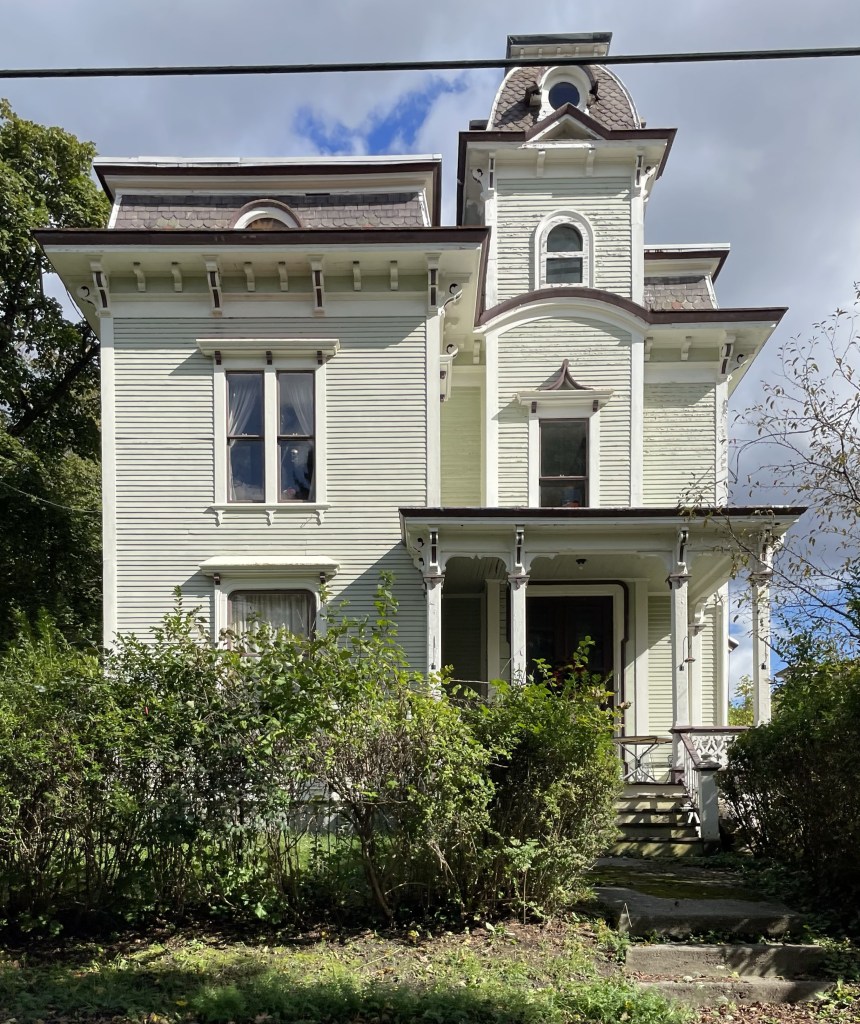
This elegant estate which stands on the corner of E. Quincy and Pleasant streets in North Adams, Massachusetts was originally built for Samuel Vadner in 1874, by architect Frank Davis the architect. Samuel Vadner established his carriage repository in town in 1870, which saw immediate success. His company manufactured carriages, sleighs, wagons, harnesses, and more, during a period of wealth for the industrial city. The high-style Second Empire style house features a bellcast style mansard roof with broad overhanging eaves, a small entry portico, and a three-tier entry tower that is capped by a convex mansard roof.

R.J. Walden House // c.1872

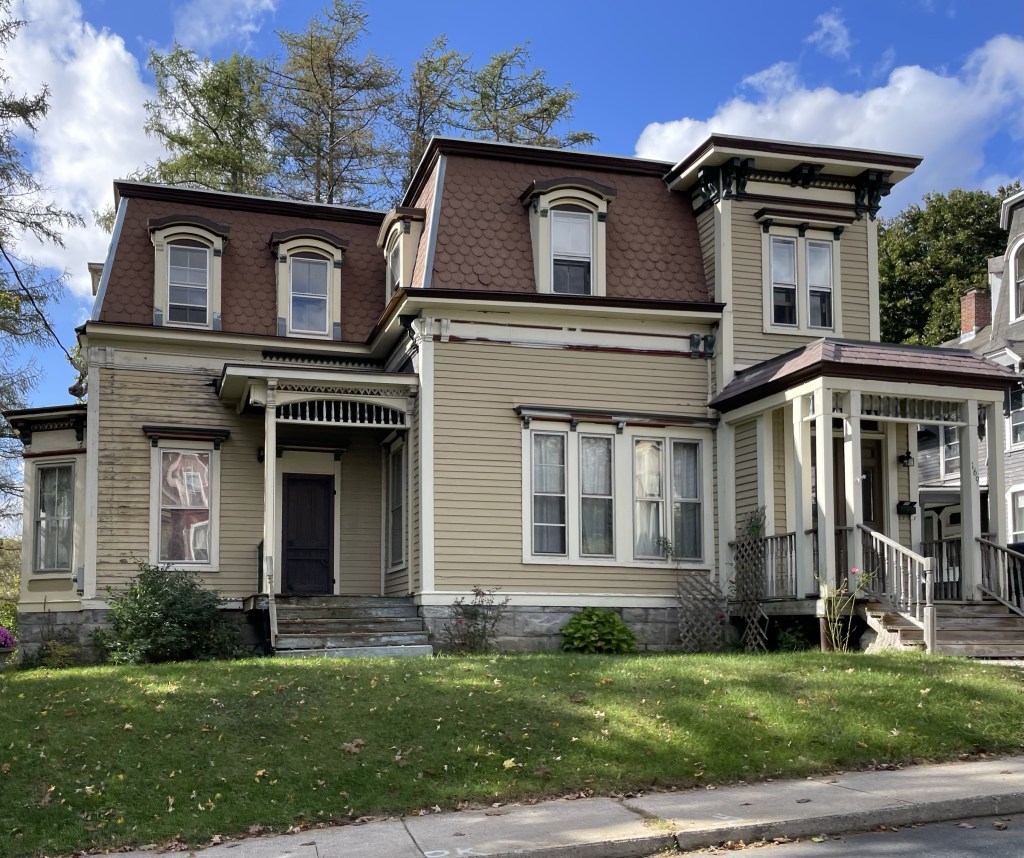
Located on the appropriately named Pleasant Street in North Adams, Massachusetts, this charming Second Empire style house is one of the finest in town. The house was built sometime between 1869-1875 for an R.J. Walden, who was listed in directories as a Deputy Sheriff for Berkshire County, an auctioneer, and real estate agent. Interestingly, the mansard roof is broken by a truncated corner tower with a flat roof. This is a unique one!

Former Notre Dame Parochial School // 1898

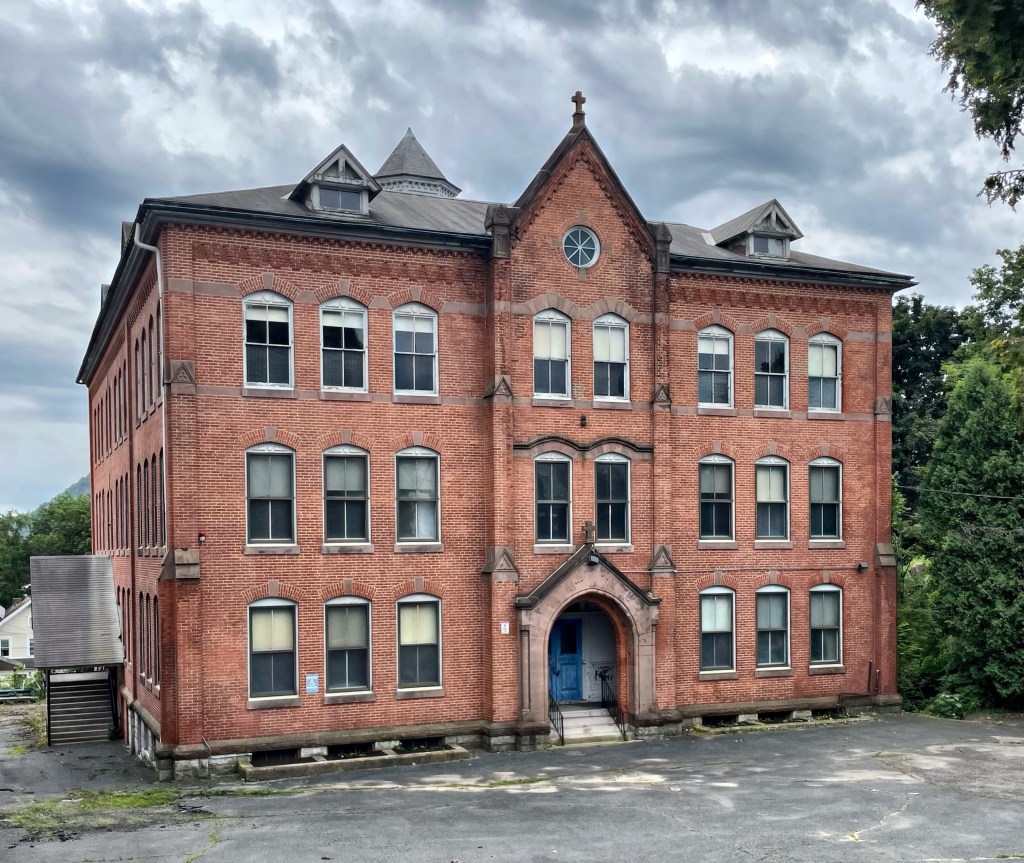
Located next door to the former Notre Dame Roman Catholic Church in North Adams, Massachusetts, this stunning former school building stopped me in my tracks. The sad fact is that the former school is seemingly vacant makes me really sad and concerned for the future of the building. This beauty was constructed in 1898 to serve as a school associated with the Notre Dame Roman Catholic Church located to its east. Local architect Edwin Thayer Barlow, who formerly worked with Carrere and Hastings, designed the building in the Queen Anne and Romanesque Revival styles, both popular at the time. The school remained in operation until the 1968-1969 school year, after several years of declining enrollment. The City of North Adams leased the school beginning in the 1969-1970 school year to relieve overcrowding at the public schools. In 2008, the City of North Adams purchased the school and church properties from the Springfield Roman Catholic Church Diocese after the church closed in 2005, but no plans have yet materialized to restore the beauties. What would you like to see this building converted into?

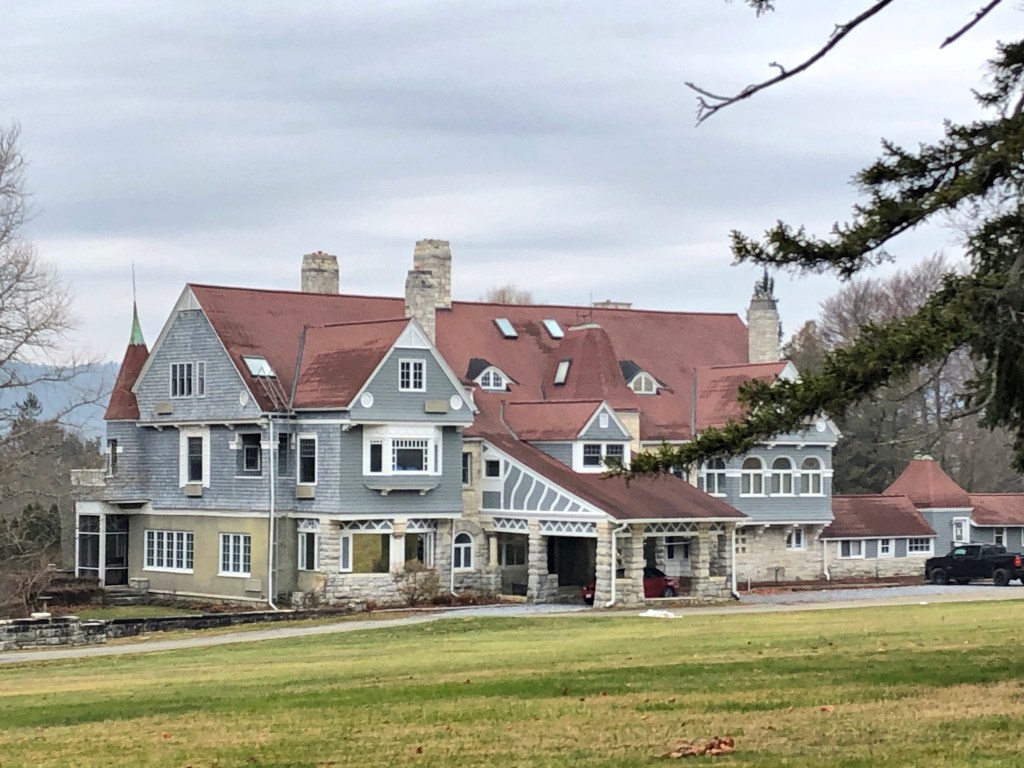
“Oronoque” // c1886

One of the most stunning and unique summer “cottages” in Stockbridge, Massachusetts has to be “Oronoque”, an eclectic Shingle-style home constructed of course ashlar blocks and shingle siding. The home was constructed around 1886 for Birdseye Blakeman, who lived in Stratford, CT. The home’s name is somewhat a mystery, but was possibly the name of his ancestral home in Connecticut. Just a few years after the homes completion, Blakeman died, and his widow continued to summer at the home until her death in 1912. The home was purchased by Norman H. Davis, a U.S. diplomat who later served as President Wilson‘s chief financial advisor at the Paris Peace Conference after WWI. Davis also served as Chairman of the American Red Cross, under three presidents. Under his direction, the Red Cross greatly expanded by thousands of volunteers and blood banks were established. The home was later owned by Boston University, who used it as lodging for students visiting the Tanglewood Festivals. It was later sold to a developer who appears to have converted it to a multi-family property.