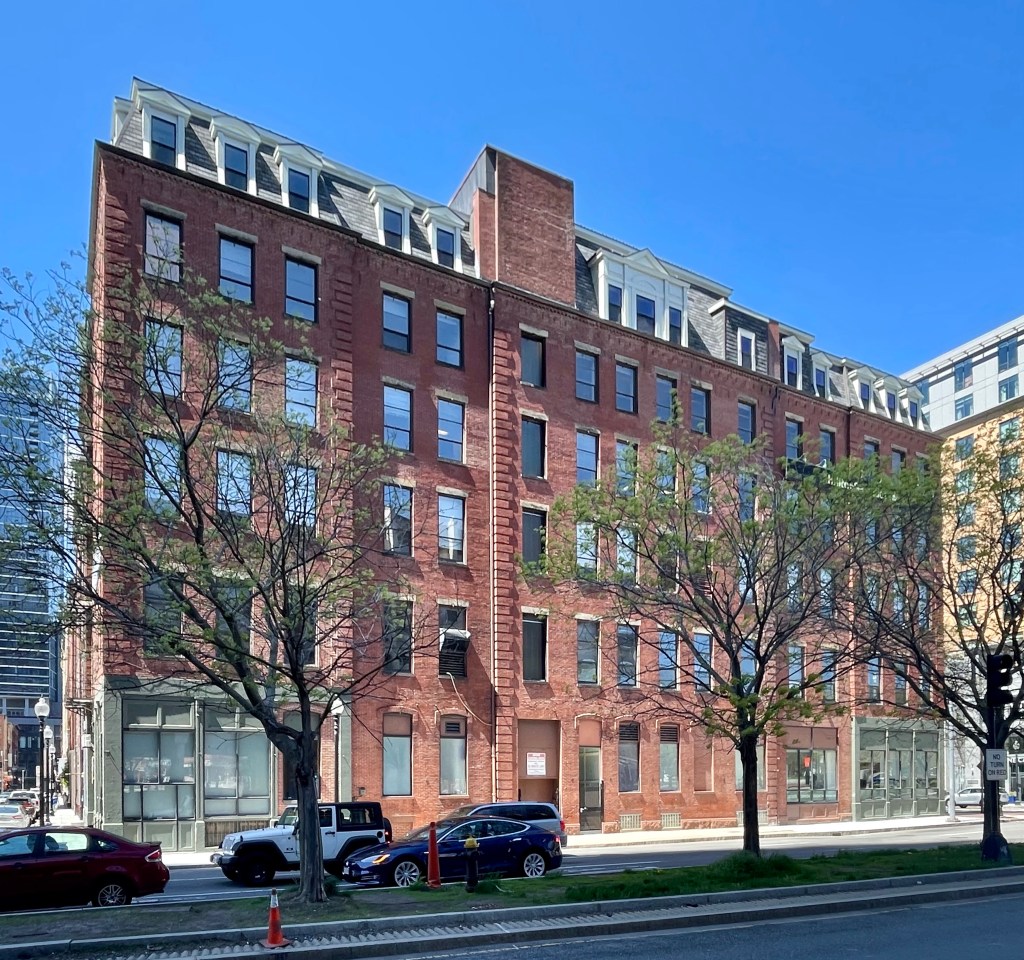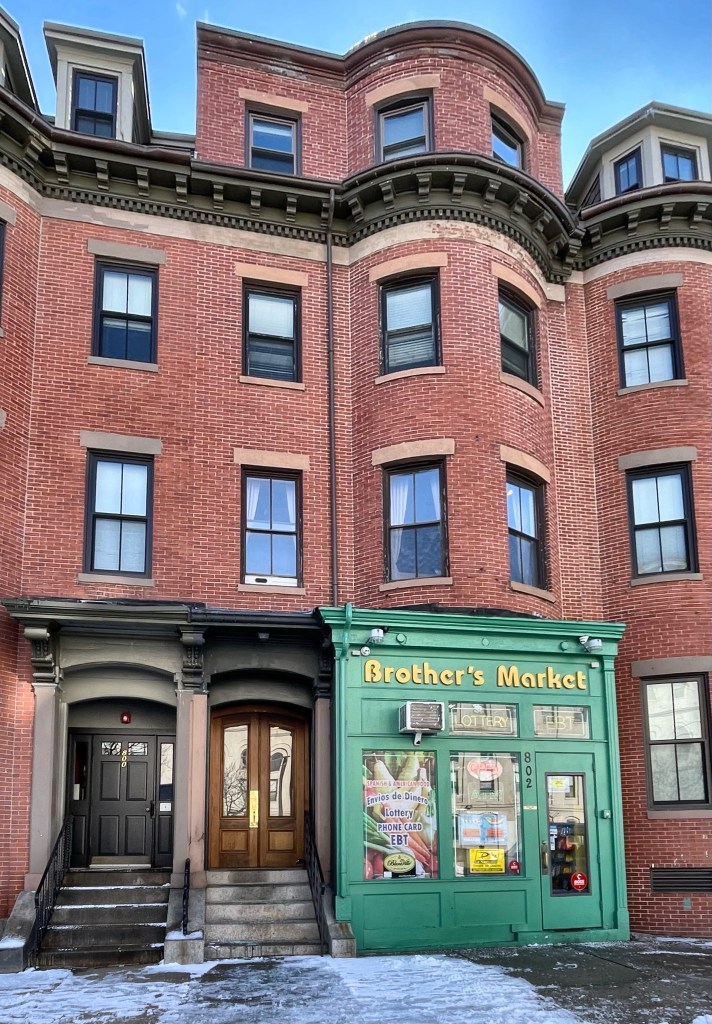
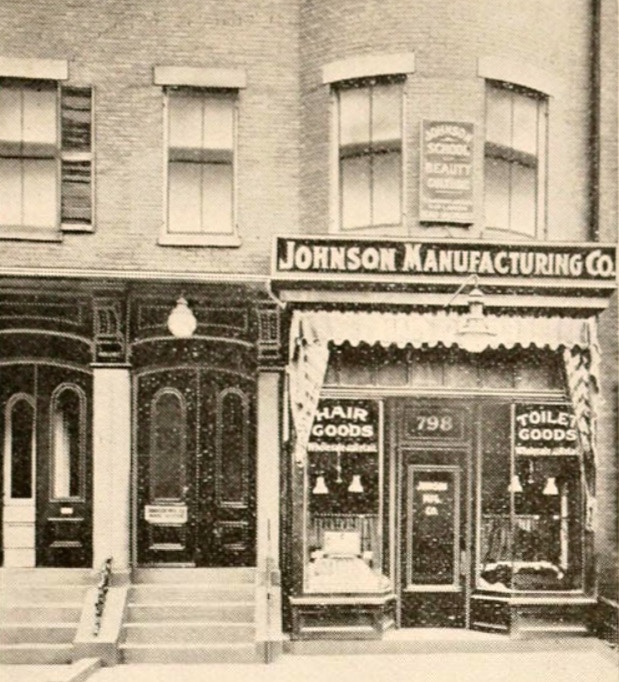
Johnson’s School of Beauty Culture // c.1865

Boston’s South End neighborhood has so much history that NEEDS to be showcased. From the repetitive architecture of beautiful brick and stone bowfronts, to the history of African American activism, enterprise, and stories, the neighborhood is a gem of Boston. This building was constructed around 1865 for Thomas H. Snow (1833-1908) as his home. Snow was a wine and spirit merchant who had a store in Faneuil Hall Square. While that is interesting, Mr. Snow is not the highlight of this building, that comes later in 1899, when the building was rented to Madame Mary L. Johnson, a wig maker, scientific scalp specialist, and hair culturist. Mary Johnson and her husband, Dr. W. Alexander Johnson, were Black and ran one of just 200 Black-owned businesses in the city of Boston by the beginning of the 20th century. At their storefront, they sold hair goods at Johnson’s Hair Store. Sold all over the United States since 1900, their famous “Johnson Hair Food” was “the most scientific pomade yet discovered for growing, beautifying and softening the hair,” they claimed. In connection with their hair product outfit, Madame Johnson operated Johnson’s School of Beauty Culture, where a variety of services including manicuring, shampooing, scalp massage, facial massage, hairdressing, and scalp treatment were offered. The school provided young Black women in Boston technical training and skills, which there were limited options at the time. Mr. Johnson also was President of the Boston Negro Business League, which helped bolster Black businesses at the turn of the century.
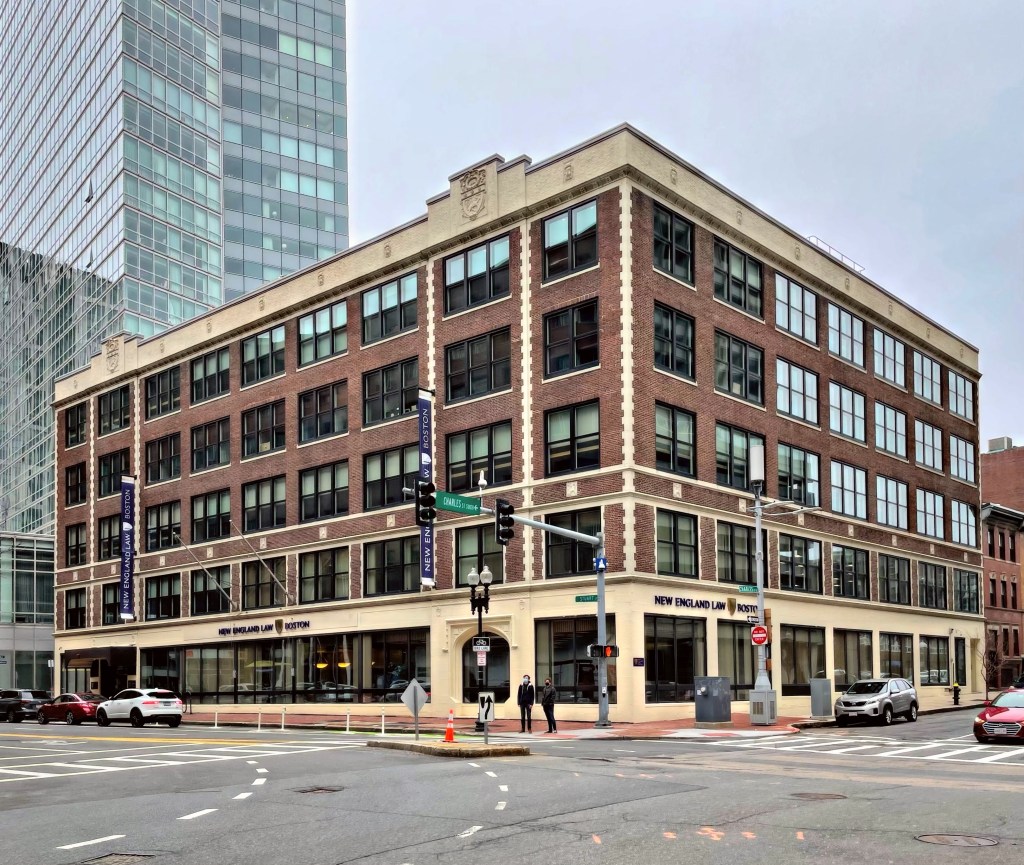
Burdett Building // 1928

In 1921, Stuart Street was widened and extended between Boston’s Back Bay and Bay Village neighborhoods, which necessitated razing of all buildings along the route. From this, new lots were platted along the street where once thriving businesses were. Some relocated and others rebuilt. In 1927, the Park Square Corporation purchased seven contiguous lots at the corner of Stuart and Charles Streets and began construction of a large office building with storefronts on the ground floor. The Burdett Building opened in 1928. The building was built for Burdett College, which was founded in 1879 and focused on business and shorthand courses for students as a junior college. Architect Thomas H. James wanted the building to be like the new buildings at Princeton and Yale. The design featured Gothic inspired entrances and stone carvings of books and lions. Burdett College occupied the building until the 1950s and it was subsequently sold. By 1980, the building was acquired by the New England School of Law, who occupy it to this day as a place of learning.

Chapin-Bodge House // 1829

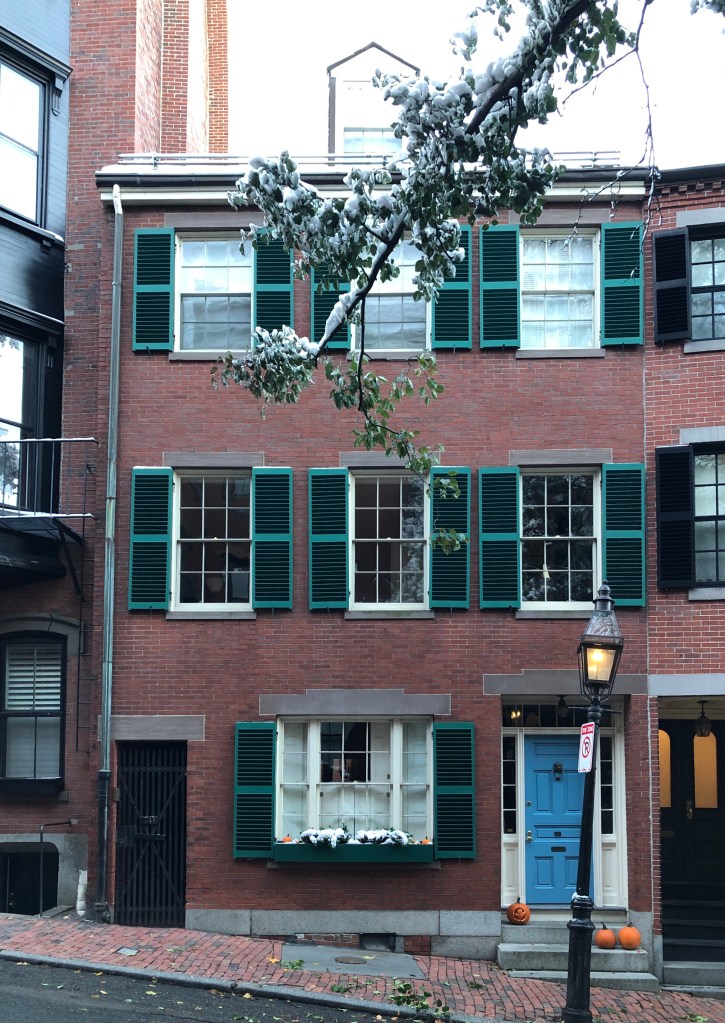
One of my favorite houses in Boston is this absolutely perfect townhouse on Pinckney Street in Beacon Hill. This house was built on speculation in 1829-1830 for Hollis Chapin by architect John Kutts. Kutts was active as a Boston architect between 1828 and 1838, but he is much less well-known compared to his peers today. I hope someone who is a better researcher than me stumbles upon this article because I would love to learn more about this architect! Kutts (possibly also Kutz) is a unique name for Boston, so it is likely he was a German immigrant who settled in Pennsylvania before moving up here. Back to the house. It was finished and sold in 1830 to Ebenezer T. Pope for four thousand dollars. The home was quickly bought and sold a couple more times as the values on Beacon Hill continued to grow. The property was purchased in the 1870s by Noah Bodge, as a rental property and it remained in the family through the 1920s. The home retains all the original details and provides a needed pop of color with the door and shutters.

Robert Gould Shaw Memorial // 1897

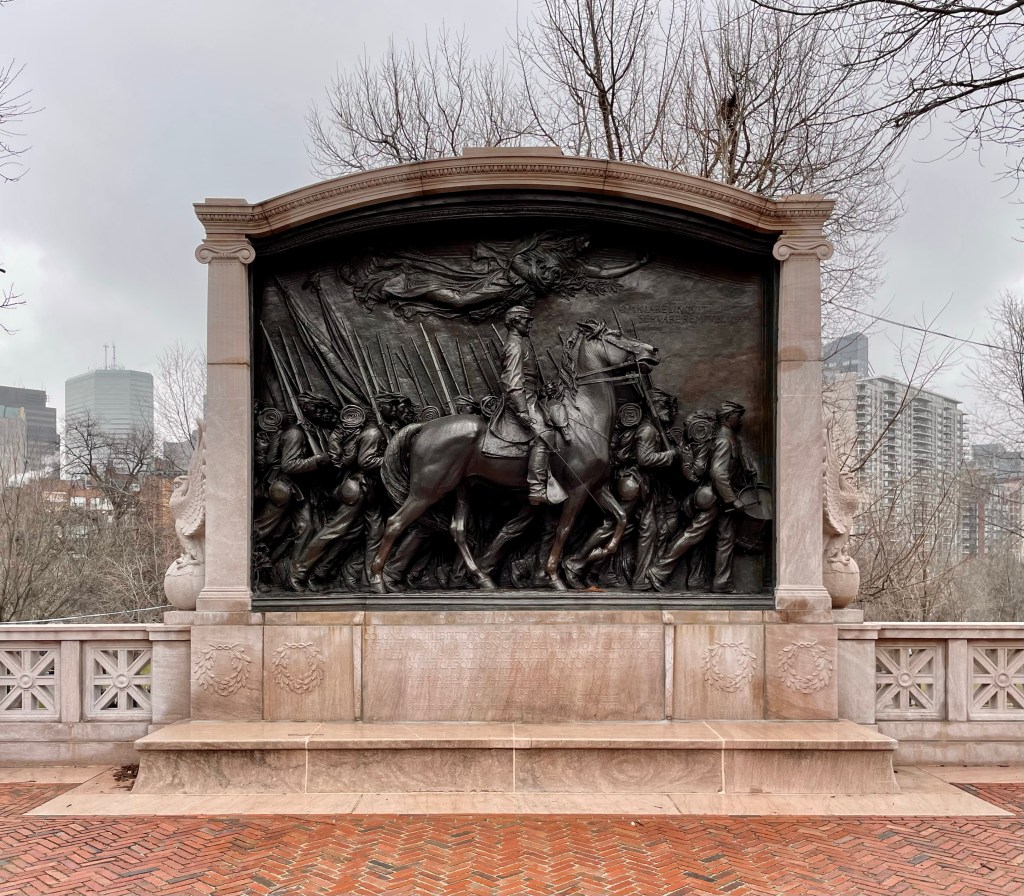
Commissioned from the celebrated American sculptor Augustus Saint-Gaudens in the early 1880s and dedicated in 1897, The Shaw 54th Regiment Memorial (aka the Robert Gould Shaw Memorial) has been acclaimed as the greatest American sculpture of the 19th century. The memorial was designed by famed artist Augustus Saint-Gaudens, and it is a stop on the Boston Black Heritage Trail, commemorating the valiant efforts of Colonel Robert Gould Shaw and the men of the 54th Massachusetts, one of the first Civil War regiments of African Americans enlisted in the North. In July 1863, the regiment was sent to South Carolina where an assault was planned on Fort Wagner guarding Charleston harbor. Shaw had asked to have 54th Regiment lead the attack. Of the 600 men in the attack that day, there were 285 casualties, and Col. Shaw was killed, but the men never wavered in the battle and demonstrated great courage and determination. Following this display of valor, other black regiments were formed, and by the end of the war, 10% of the union army was made up of African American soldiers.

The monument in Boston shows the 25-year-old Shaw seated on his horse, with his regiment as it marched down Beacon Street on May 28, 1863 to depart the city to fight in the South. The concept of Shaw on horseback with marching soldiers was inspired, at least in part, from a painting Saint-Gaudens saw in France, Campagne de France 1814, by Jean-Louis Ernest Meissonier, which depicts Napoleon on horseback with rows of infantry in the background.While Shaw is the centerpiece of the monument, the significance of the monument is the Shaw Memorial is the first civic monument to pay homage to the heroism of African American soldiers in the U.S.

Boston Police Department Headquarters – Loews Boston // 1925

I love historic hotels, so when I decided that I was overdue for a “stay-cation” in Boston, spending time unwinding in an old building was mandatory. When walking around the Back Bay, I always loved the old Boston Police Department Headquarters building and used this as an opportunity to learn more about its history! The Boston Police Department Headquarters building on Berkeley Street was built in 1925, and was designed by the architectural firm of Ritchie, Parsons & Taylor, a firm that specialized in civic and institutional buildings. Prior to this building, the Boston Police Department was based out of an old townhouse in Pemberton Square. By the 1920s, such an out-dated and small building was not a good symbol for one of America’s premier police forces, so the City of Boston purchased a lot in the Back Bay and funded the new modern building. The structure is a late example of Italian Renaissance Revival architecture in the city, and is classically refined. The brick building is clad with limestone, which is rusticated on the ground two floors. The building housed police department offices for over 70 years until 1997, when they built a new, Modern building in Roxbury. This building was boarded up for years until it was sold to an Irish hotel chain, who added two additional floors at the roof. They quickly went out of business and sold the hotel. The hotel today is operated by Loews, and they do a great job of highlighting the history of the building, from the meeting rooms named after significant police department employees of the past, the appropriately named Precinct Bar, to the Police-blue lanterns flanking the main entrance.

Atkins-Chandler Houses // 1860

These two townhouses were built in 1860 and were once part of a row of four matching homes constructed for wealthy Bostonians. The end units feature stronger detailing with the center two homes being slightly recessed and less ornate, all four constructed of brick with brownstone facades. The original owners wanted to ensure that their new homes would be harmonious in design, both with each other and with the other houses being built nearby.The property already was subject to restrictions contained in the deeds from the Commonwealth of Massachusetts, who sold much of the land in the Back Bay for development, but the owners added further stipulations. Among them that “the front of said houses shall be of free stone and the height not less than three stories” and “the cornice and roof of all the houses shall be uniform, and shall conform to a plan to be hereinafter agreed upon.” The right house seen here was occupied by Henry Atkins, a grocer and importer of wines and spirits. The left home was occupied by John Chandler, a dry goods merchant and his wife. They both died at a young age in 1875 and 1876 respectively, and the home was sold off by their children’s guardian to Charles Porter, a physician and surgeon. He served as a doctor of anatomy at Harvard Medical School under Dr. Oliver Wendell Holmes, and worked as Chief Surgeon at Mass. General Hospital. His wife, Margaret Cochran Dewar, who also was a physician and was resident surgeon at Sheffield Hospital in England. She had graduated from the University of Glasgow in 1894, among the first women in Scotland to receive a university degree and the first to receive a university medical qualification. In 1925, the two homes here were purchased and combined to one multi-family apartment building and remodelled the structure with ugly brick additions. By 1996, a developer purchased the building and restored them by installing a new façade and fenestration more consistent with the historical nature of the building, making their heights identical once again.

Blanchard Building // c.1855

Image courtesy of Boston Archives.

Did you know that Boston once had it’s own Hogwarts? While we didn’t have wizards and witches in the streets, we did have young magicians learning the tricks of the trade! The Boston School of Magic was founded in the 1880s by William Davis LeRoy (1862-1919), a professional magician who also served as President of the Conjuror’s Club of Boston. Upon opening its doors, the Boston School of Magic was one of a handful of such schools in the country. For $75, you could learn how to escape from a pair of handcuffs from a professional instructor at W.D. Leroy’s “School of Magic”, and even buy some magic items for shows from his large catalogue. Mr. LeRoy was also friends with the famous Harry Houdini, who purchased items from his store and consulted with him on new acts. Houdini was extremely popular in Boston and held many acts and feats of strength here. The Boston School of Magic was located in the second floor of the Blanchard Building at 103 Court Street, a brick commercial building with stone facade constructed in the middle of the 19th century. The building was demolished in the 1920s and replaced with a two-story structure, which too was razed for Government Center.

Glapion-Middleton House Ell // c.1800

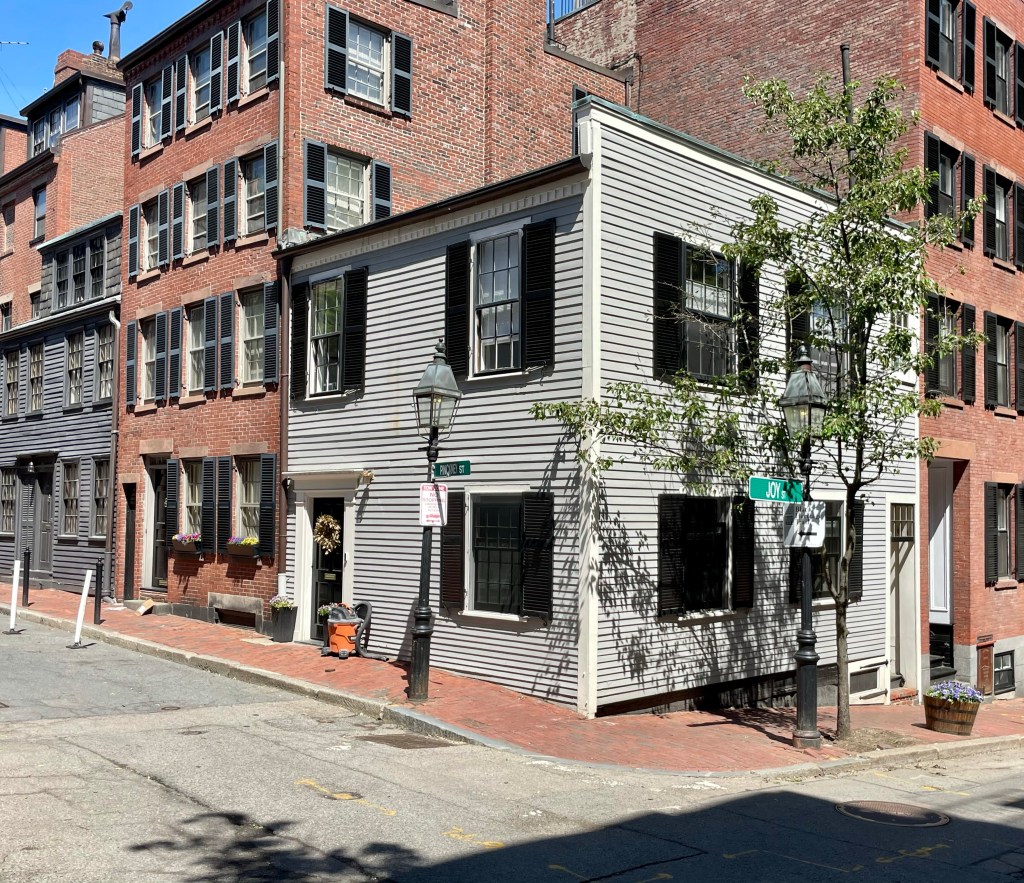
Less than a dozen wood-frame buildings exist on Beacon Hill in Boston, and this curious building is one of them, and also happens to be one of the oldest structures in the neighborhood! Built by 1800, this structure was constructed as an ell/addition to the Glapion-Middleton House at 5 Pinckney Street in Boston. The Glapion-Middleton House (previously featured) was constructed in 1787 after two Black men, George Middleton and Louis Glapion and their wives, built a small double house in the abolitionist center of Boston, Beacon Hill. In recent years, some have speculated that due to this living arrangement and other accounts, that Glapion and Middleton were in-fact gay men, but this is unsubstantiated. After the home was constructed, a two-story, five-bay ell was constructed which connected the home to Joy Street at the corner. The ell served as additional space for the two families and they appear to have had a workshop or store in part of the building. In 1855, owners demolished the center bay of the ell and erected a brick townhouse, similar to others in the neighborhood. The ell in this building was occupied as a store for the majority of its life and became an Italian restaurant and soon after a “Boyer’s Creamery Luncheon”. The property has since been converted to a residence.

Brattle Street Church // 1772-1872

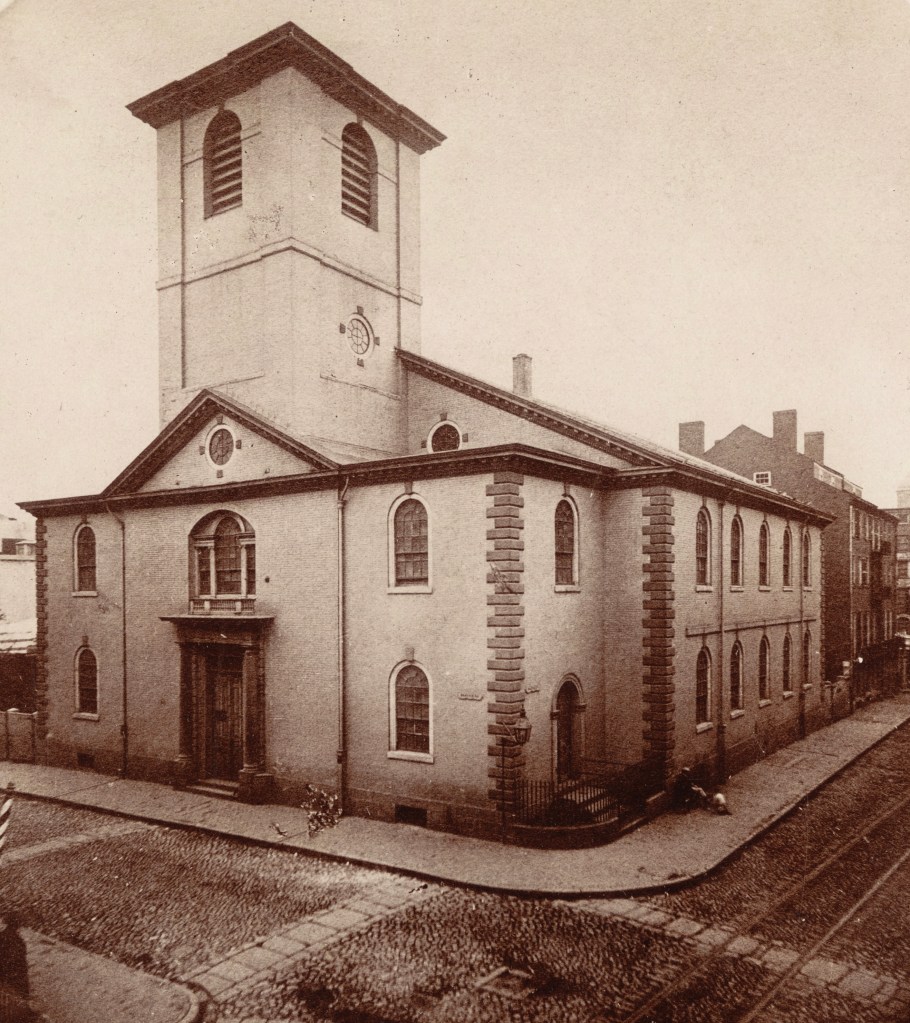
Boston’s constant churning of development has given us amazing architectural landmarks, and incredibly unfathomable architectural loss. One of such cases of loss is the former Brattle Street Church which was located on Brattle Street, roughly where the main entrance to Boston City Hall is located today. Demolition of significant architecture in Boston began way before the period of Urban Renewal in the mid-20th century, and the loss of the Brattle Street Church in Downtown Boston showcases this. The Brattle Street Church had been founded in the 1690s by a group of merchants seeking an alternative to the authority exercised by Increase and Cotton Mather in Boston’s existing congregations. Despite these beginnings, the church remained Congregational through the 18th century. At the time of the Revolution, Brattle Street counted such figures as John Hancock, Samuel Adams, Joseph Warren, and John and Abigail Adams among its parishioners. The original wooden church was replaced in 1772 by this stunning brick building, designed by Thomas Dawes. Just years after the doors opened, the American Revolution upended life in Boston. This building was a survivor, and was apparently hit by cannon-fire by the American batteries at the siege of Boston. A cannonball can be seen lodged into the building at the second floor, to the right of the Palladian window. After the American Civil War, development of the Back Bay led to a shifting population away from the downtown core, and a new church was erected for the congregation, the Brattle Square Church, designed by Henry Hobson Richardson. This church was demolished in 1872, just 100 years after it opened its doors and took a cannon for America.

Paine Furniture Building // 1914

Located on Arlington Street between St. James and Stuart streets in Boston’s Back Bay, this gorgeous masonry commercial block stands as a testament to the amazing architecture built in Boston in the early 20th century. The Paine Furniture Building was constructed in 1914 to house the extensive showroom, offices, and manufacturing operations of the Paine Furniture Company. Founded in 1835, the company was at one time the largest furniture manufacturer and dealer in New England and had a nationwide business. The company was founded by Leonard Baker Shearer, who was joined in business in 1845 by John S. Paine. Upon the death of Shearer in 1864, the name of the firm was changed to Paine’s Furniture Company, a name which stuck until the company closed in 2000. The architects for the building, Densmore & LeClear, were very busy in the early decades of the 20th century and designed many iconic buildings nearby and in towns surrounding Boston through the 1940s.