Curtis House – Boston University Children’s Center // 1904

Built in 1904 as one of the finest Tudor Revival style residences in the Boston area, this residence in the Cottage Farm neighborhood of Brookline showcases all of the important elements of the iconic architectural style. The residence was built for Harry and Carrie Curtis, with Mr. Curtis being a partner with Curtis & Sederquist, bankers and brokers, with offices on Congress Street in Boston and in New York City. The couple hired architects Howard B. Prescott and William Sidebottom of the firm, Prescott & Sidebottom, to design the house. Rectangular in plan with massing enlivened by numerous cross gables and dormers, the house is decorated with exterior walls covered with wood shiplap at first story and half-timbered stucco at second story. The property was sold to Helen and Edward Mills by 1913. Mr. Mills was president and treasurer of the Edward C. Mills Leather Company. By 1931, the residence was owned by Erland F. Fish (1883-1942), a prominent lawyer and politician as well as the son of Frederick Fish, who owned the house across the street. Boston University purchased the property in 1964 as part of their institutional expansion into this neighborhood. Originally used as an alumni house, it later became the location for the Department of African American Studies. After an extensive expansion and restoration by Studio MLA (now Ashley McGraw Architects) and Kaplan Construction, the Tudor mansion is now a children’s daycare for Boston University faculty, staff, and graduate students.
Frederick Sears Cottage // 1851

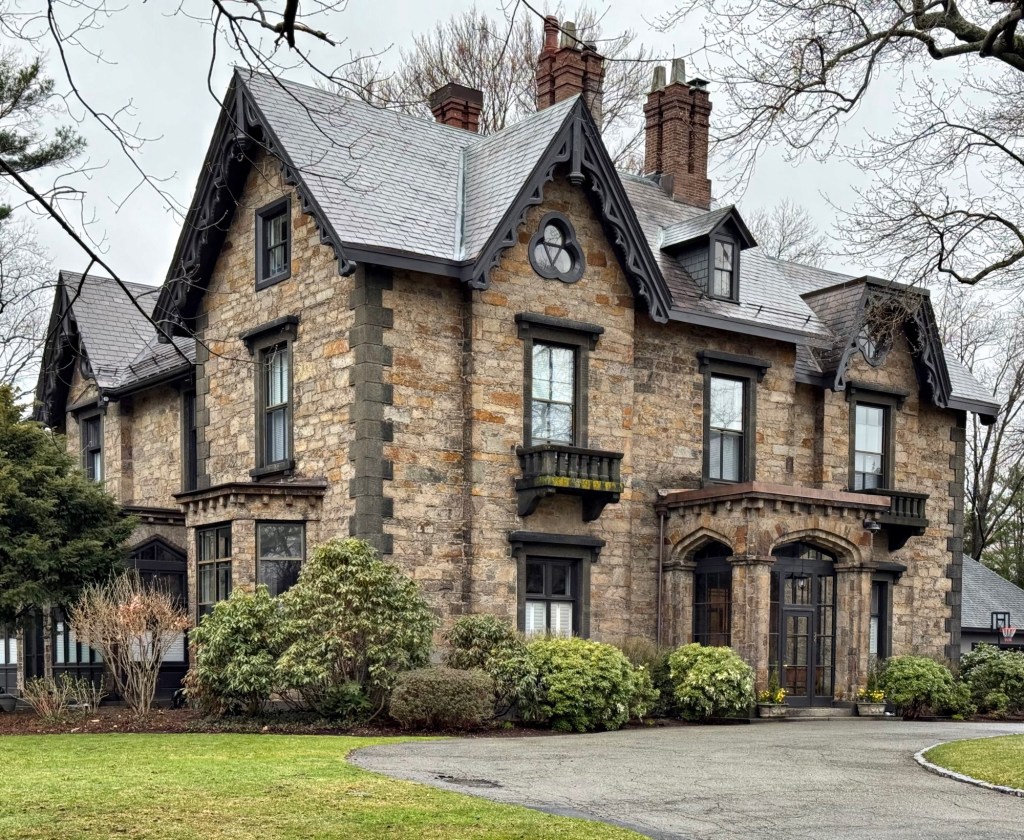
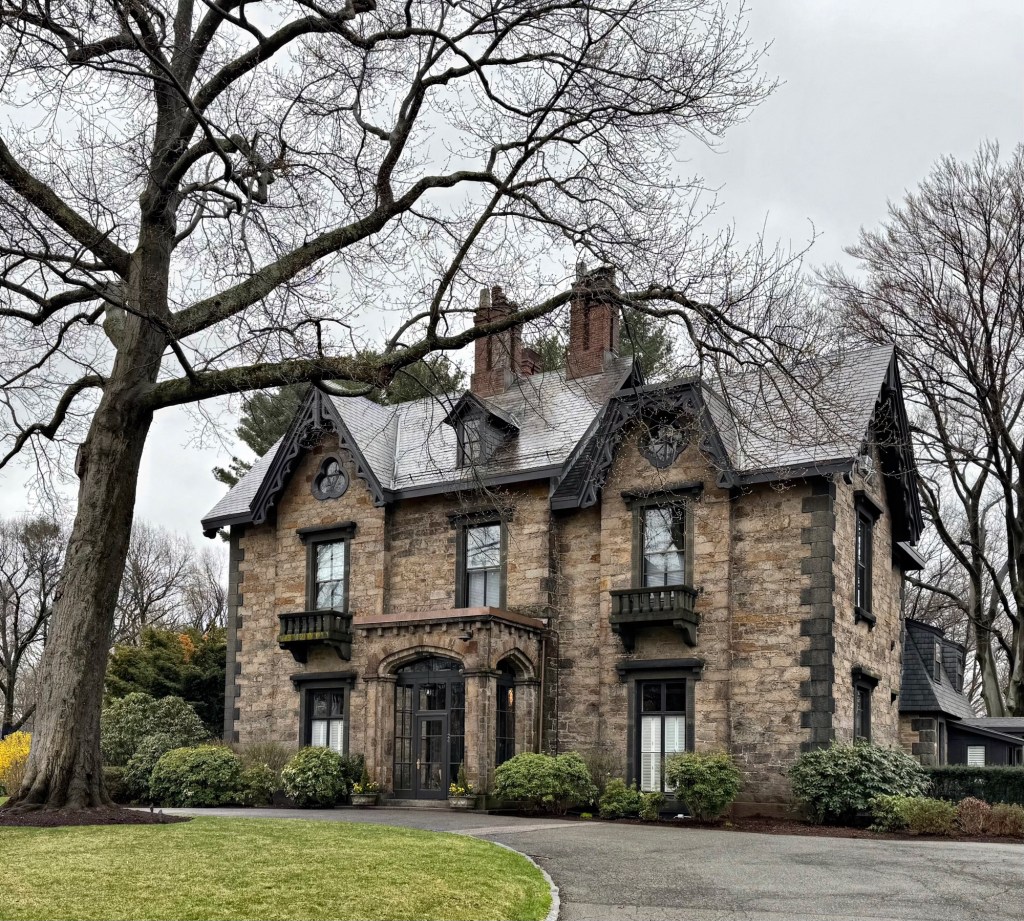
The Frederick Sears Cottage in the Cottage Farm neighborhood of Brookline, Massachusetts, is significant as one of the major surviving examples of Gothic Revival domestic architecture in the Boston area. In 1849, wealthy Bostonian, David Sears (1787-1871) laid out parks and squares in the Cottage Farm neighborhood, and built houses for himself and his children. His own house, erected in 1843, was the oldest, soon followed by houses for his four daughters, Ellen d’Hautville, Harriet Crowninshield, Anna Amory, Grace Rives, and son, Frederick. The Frederick Sears Cottage is the only surviving Sears residence in the Cottage Farm neighborhood. Frederick Sears‘ cottage was built in 1851, though he did not occupy the house long, as just three years after he and his wife married in 1852 to move into this home, Marian died. The house was inherited by Frederick Sears Jr. , and was acquired by Boston University in 1960, who began to expand into this neighborhood. They maintain the significant property very well. The Sears Cottage is an excellent example of the Gothic Revival style in stone with scalloped vergeboards, quatrefoil motifs, corner quoins, and projecting entry. The house is constructed of Roxbury Puddingstone and is said to have been designed by George Minot Dexter.

Bates Cottage // 1853

This Gothic Revival brick cottage is of several houses built by Amos A. Lawrence for his Cottage Farm neighborhood in Brookline, Massachusetts. After he built his own stone residence at the center of the estate, Lawrence erected a series of cottages in the vicinity which were rented or sold to family and friends. This house was listed as the “Bates House” in Amos Lawrence’s papers, likely referring to the renter of the property soon after the cottage was completed by 1853. After Amos Lawrence died in 1886, the estate was inherited by his daughter, Hetty S. Cunningham. The “Bates Cottage” was later acquired by Boston University, who in 1964, received town approval to convert the residence into offices for the Center for the Study of Liberal Arts Education. The cottage was expanded at the rear and is today home to the Boston University African American & Black Diaspora Studies Program.