Located adjacent to the Entrance Gate at Forest Hills Cemetery in Boston, the Administration Building and Chapel perfectly compliments the Gothic Revival collection of structures welcoming all visitors to the cemetery. Designed by the firm of Van Brunt & Howe, the building was completed in 1884, when the cemetery’s popularity with visitors (alive and deceased) was at a high. The building is in the Gothic Revival style and is constructed of Roxbury puddingstone, with sandstone trim on the original parts of the building and yellow freestone trim on the 1921 addition. The building remains as a perfect partner to the entrance gate, serving as a physical portal between metaphorical life and death.
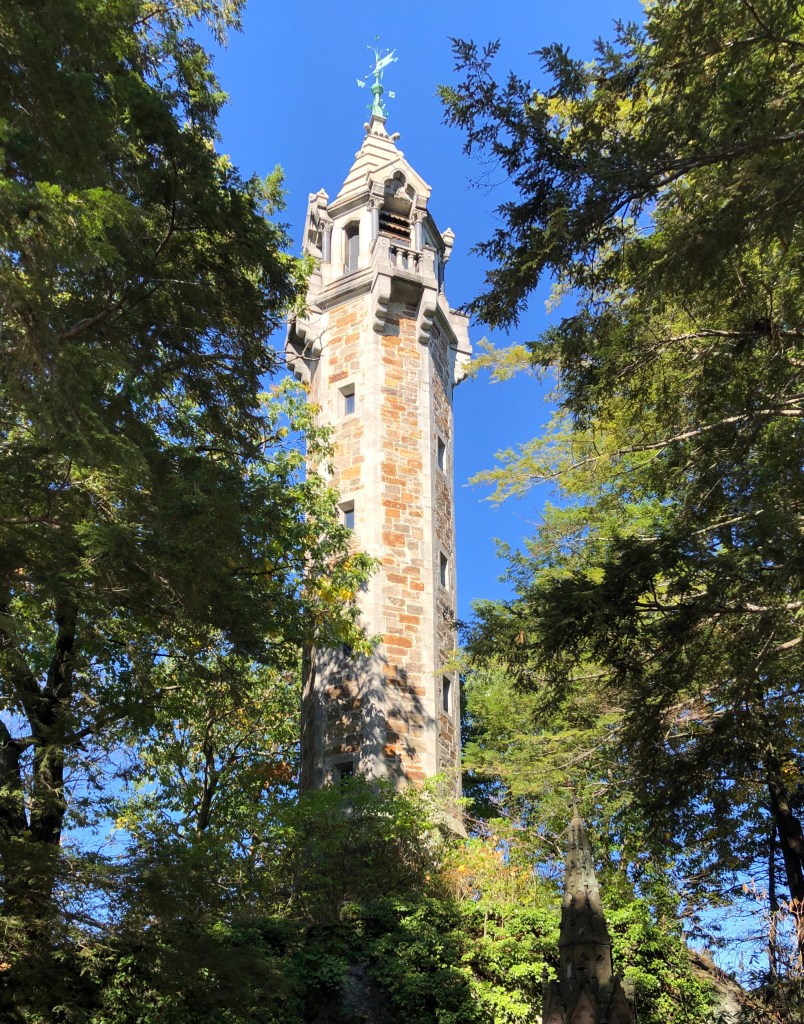
The bell tower at Forest Hills Cemetery is an octagonal Gothic revival structure located on Snowflake Hill just past the entrance gate and administration building and was completed in 1876. The 100-foot tower is constructed of Roxbury puddingstone and trimmed with granite. The roof is clad with granite tiles and topped with an ornate copper weathervane. Originally its swinging bell tolled, but it has since been replaced with an electronic carillon. The bell tower rises dramatically from massive outcrop of Roxbury puddingstone known as Snowflake Hill which is offset by smooth lawns and Victorian planting beds. While the large trees surrounding partly obscure the tower, it truly is a stunning building.
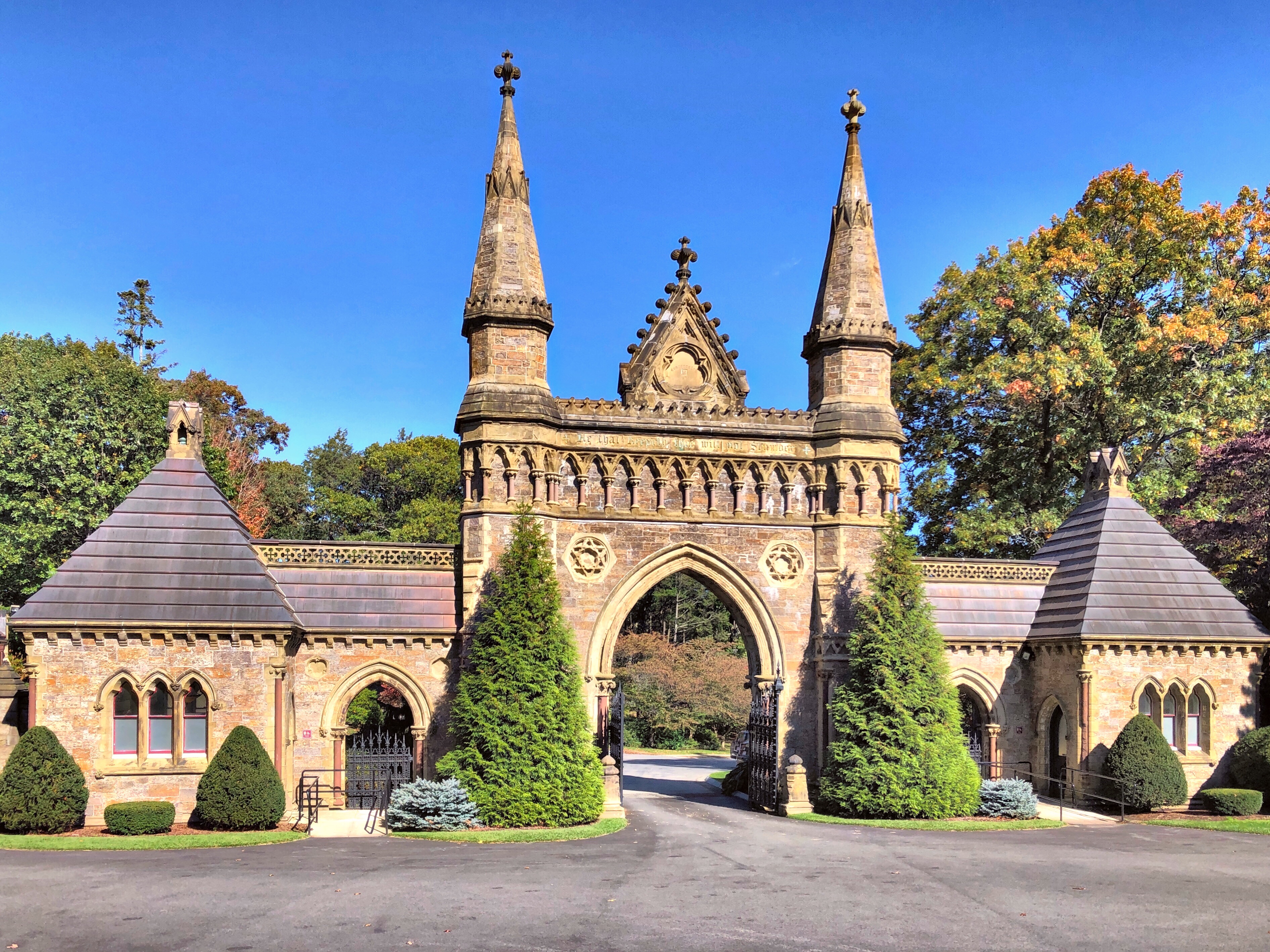
Forest Hills Cemetery was founded in 1848 by Henry A. S. Dearborn, then mayor of Roxbury. He designed this magnificent cemetery to offer the citizens of his community a place to bury and remember friends and family in a tranquil and lovely setting. Forest Hills embodies the ideals of the rural cemetery movement, which begun at nearby Mount Auburn Cemetery, in Cambridge in 1831, which was co-founded by Dearborn. Many rural cemeteries have elaborate entrance gates, possibly serving as a dramatic transition from the secular world to the spiritual realm of the cemetery, and perhaps as a metaphor for the journey from life to death. This entrance gate was built in 1865, replacing an earlier Egyptian Revival gate constructed in 1848. Designed by Charles Panter, the gate is constructed of local Roxbury puddingstone, with three arched openings with ornate iron gates surmounted by decorative scrolled ironwork. The central gateway is framed by two conical spires and a central stone pediment, all topped with stone crosses.
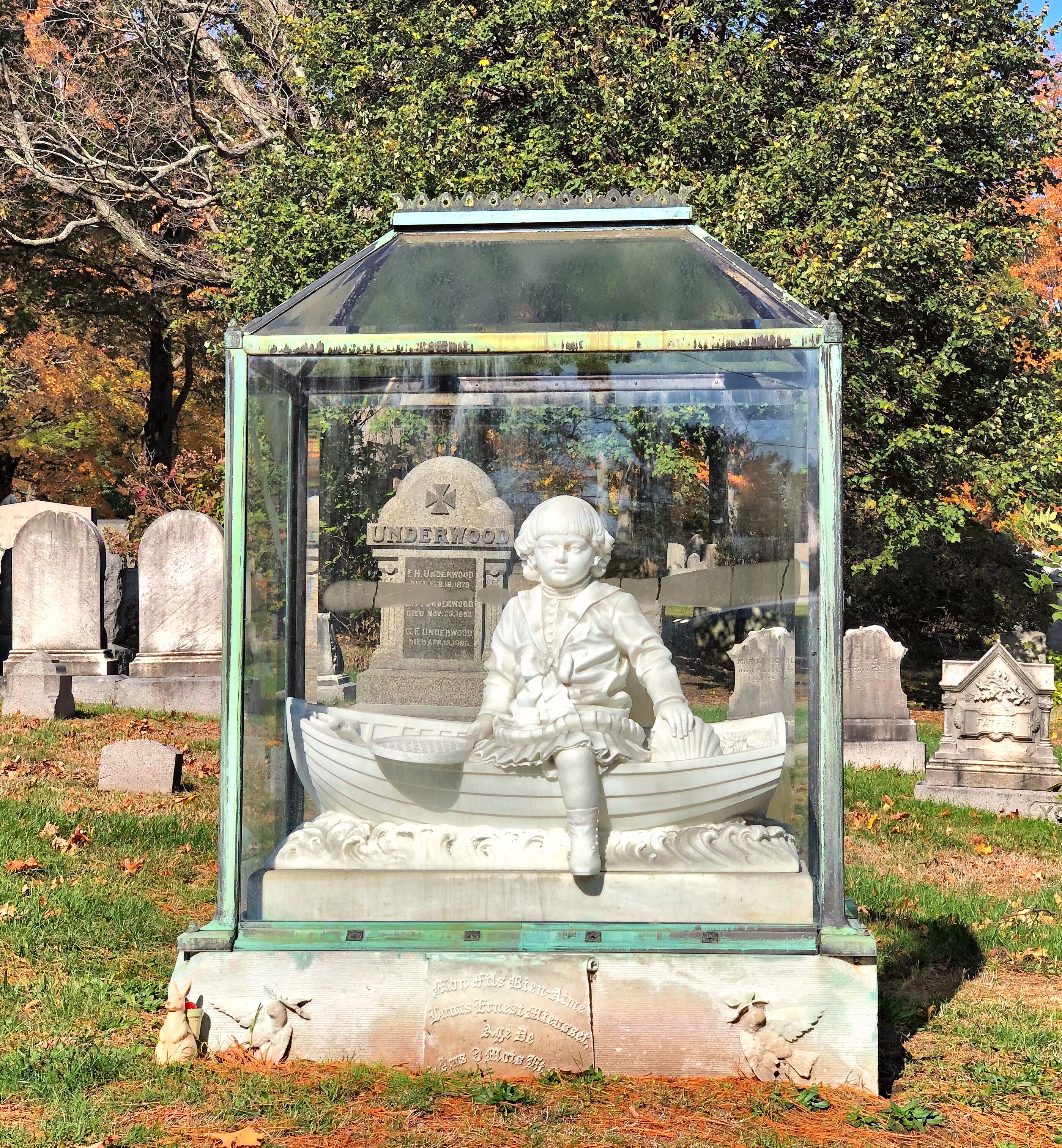
While this funerary sculpture is not a building, I couldn’t help but share one of the most captivating graves in New England for Halloween, “The Boy in a Boat”. Louis Ernest Mieusset (1881-1886), just four years old, died of Nephritis, a kidney inflammation and Scarlet Fever. His mother, Madame Louise Mieusset, took every penny she had saved for the boy’s education and put it towards a commission of a funerary sculpture, depicting her late son’s playful spirit. Madame Mieusset worked as a hat-maker in Boston, barely scraping by until her death in the 1930s. She died penniless, and wished to be buried near her beloved son, but she did not have enough money set aside to be interred in the cemetery and was set to be buried in a pauper’s lot, until (legend says) Boston Mayor James Curley paid her burial expenses, allowing for her eternal rest with her late son Louis. The sculpture is carved of white marble and depicts Louis playing in a boat with a tennis racket in one hand and a shell in another. The funerary sculpture is enclosed in a bronze and glass vitrine to protect it as the marble was believed to be too soft to stand up to weathering, the artist is unknown.
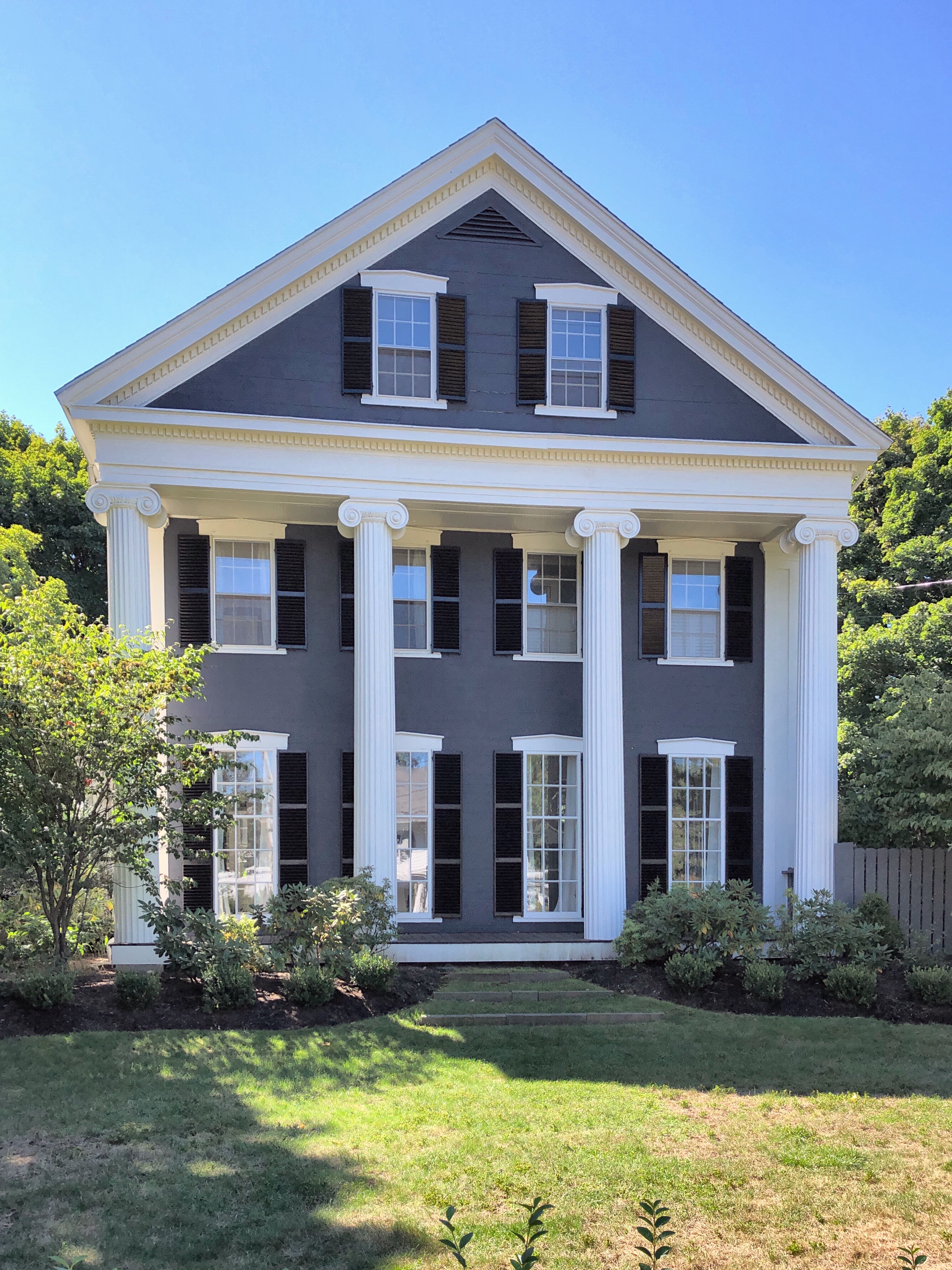
This house was built in 1847 by Frederick A. Collins on land owned by his father, Mathias Collins III. Frederick Collins (1818-1892) had this house built just after his marriage the same year to Amelia M. Revere, purportedly a grandniece of Paul Revere. Prior to his marriage, Frederick A. Collins lived in Newton Upper Falls and started a glue factory with his brother, which by 1855, had grown to three three factories and which folded upon the death of his brother Edward Collins in 1879. Collins was active in local affairs, serving in later life on the City Council. The home remains a significant monumental temple-front Greek Revival house in the Boston area. It was designated as a Newton Landmark, meaning it will be preserved for future generations to appreciate.
William C. Strong purchased the old Wyman Farm in present day Waban Village in 1875, consisting of 93 acres of open land and rolling hills. He subdivided some of the land after the completion of the Waban Station, later developing the Strong’s Block, the premier commercial block in the village. To kick off the development along Windsor Road, he hired architect Herbert Langford Warren, the Dean of Harvard’s Architecture School (who also owned a historic farmhouse nearby) to design a couple homes for sale. This stunning house is notable for the prominent gable end gambrel roof, shingle siding, and porte-cochere.
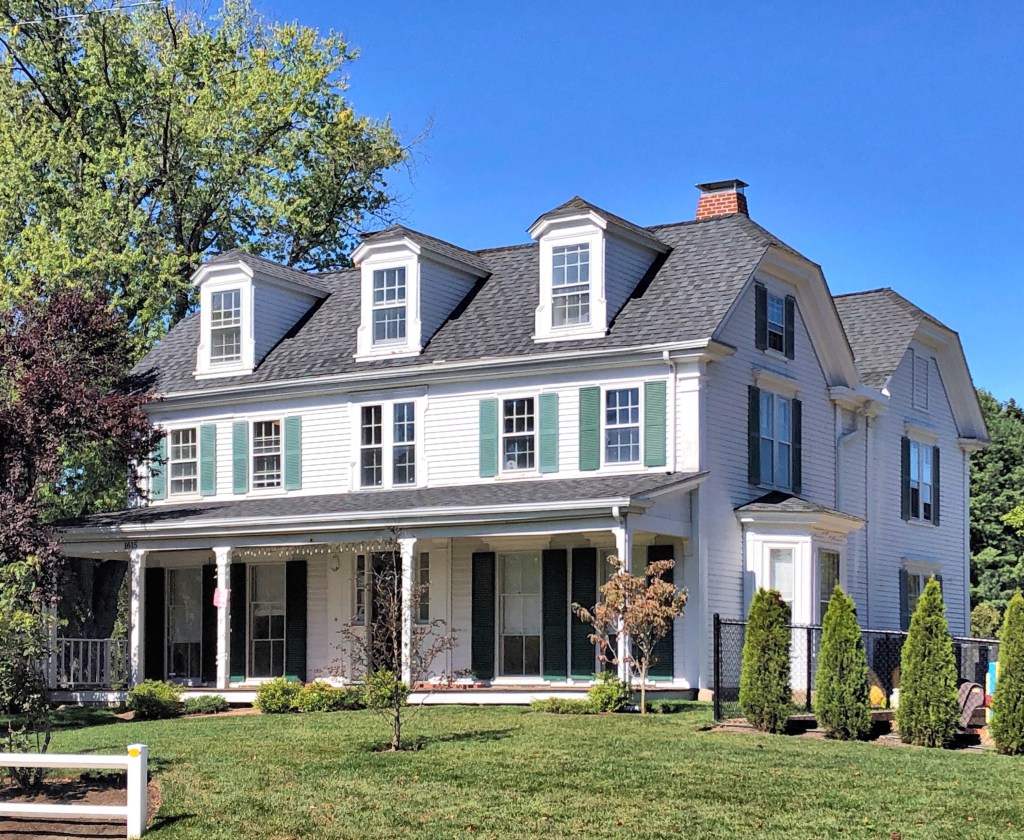
In 1688, John Staples, settled in the untouched landscape seven miles west of Boston, now known as Waban Village in the town of Newton. John was a weaver by trade but he ended up as the first public school teacher, the town clerk, a policeman, and an alderman. John married and lived in a modest farmhouse for decades here, witnessing the birth of a new nation nearby. The couple had no children of their own but raised some of Mary’s relatives including Moses Crafts, who would eventually take over the home. Craft rebuilt the house on the original foundation around 1750, constructing a colonial farmhouse two and a half stories high with five windows and two rooms across, one room wide.
Joseph Crafts died in 1821 at the age of 85, leaving no will and considerable debts owed. The Judge of Probate ordered the property to be auctioned, and Joseph’s son, Moses Crafts II, made the winning bid of $5.50 for the house, barn, and a large tract of land! In 1824, Moses Craft II sold the property to his cousin William Wiswall, who gave the house a Federal period remodeling.
By the late 19th century, the home and ample farm land were acquired by William Strong and his wife Mary. William, President of the Massachusetts Horticultural Society, used the property for some time as a nursery, with apple orchards and rose gardens. After his petitioning for a train station in Waban, he parceled up the farmland into large house lots for sale, seeing the neighborhood shifting to a suburban village. He soon after built the Strong Block, the first commercial building here.
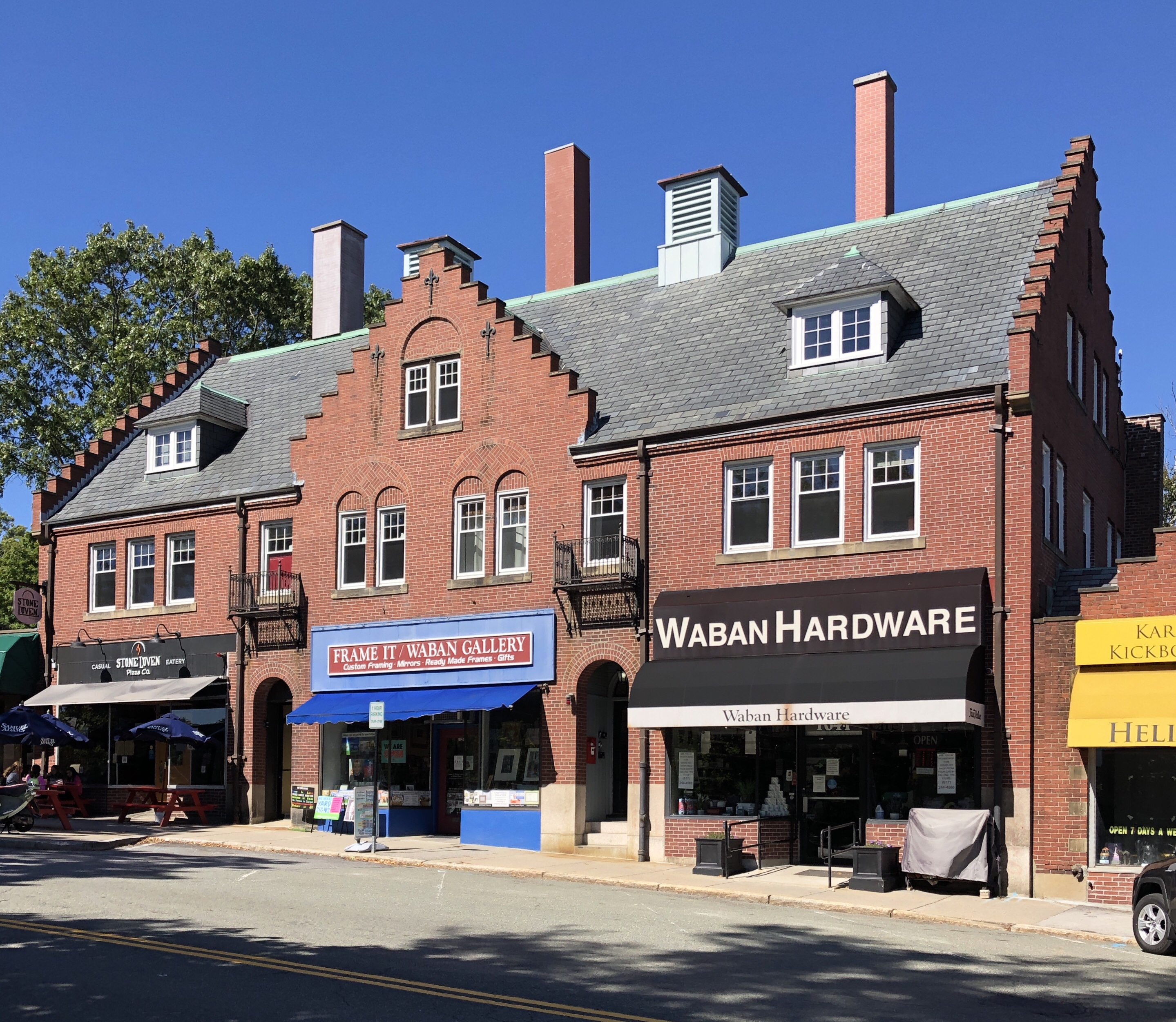
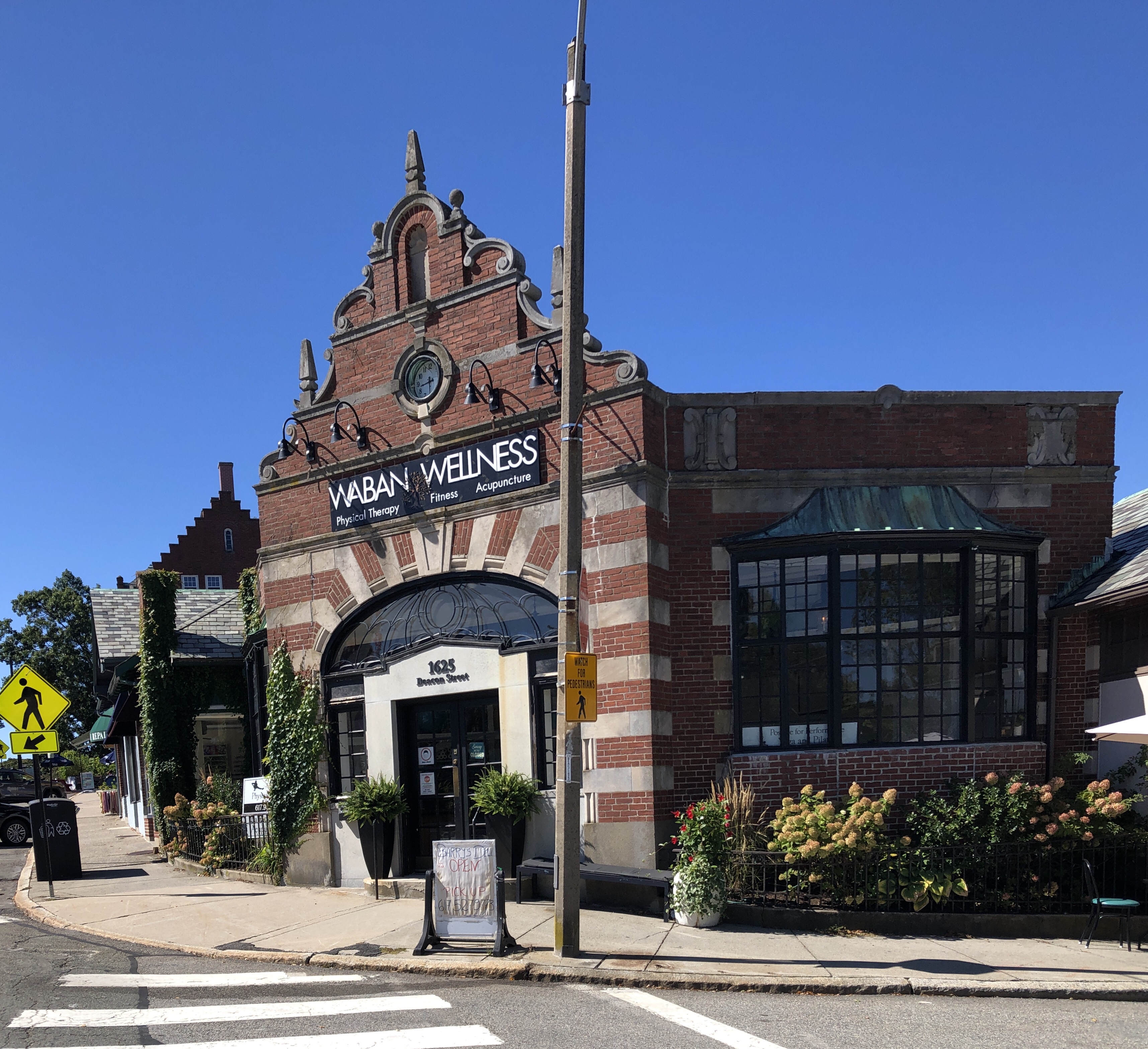
William C. Strong, a prominent local citizen who resided nearby, had this stylish commercial block built to serve the expanding population of the village which eventually became known as Waban. After the completion of the Waban Train Station, the demand for neighborhood retail became apparent and William Strong was an early developer to realize this. He hired Lewis Bacon, an architect who resided nearby, to design the commercial block. The result is a stunning Dutch Revival building with gables showcasing stepped parapets. The upper stories were apparently used as apartments when completed. Notwithstanding Strong’s efforts, the Waban commercial district developed rather slowly. It was not until 1924 that the row of one-story shops was added to its right. The addition was designed by Edward B. Stratton, who followed suit with Tudor and Jacobean motifs, to compliment the Dutch Revival block.
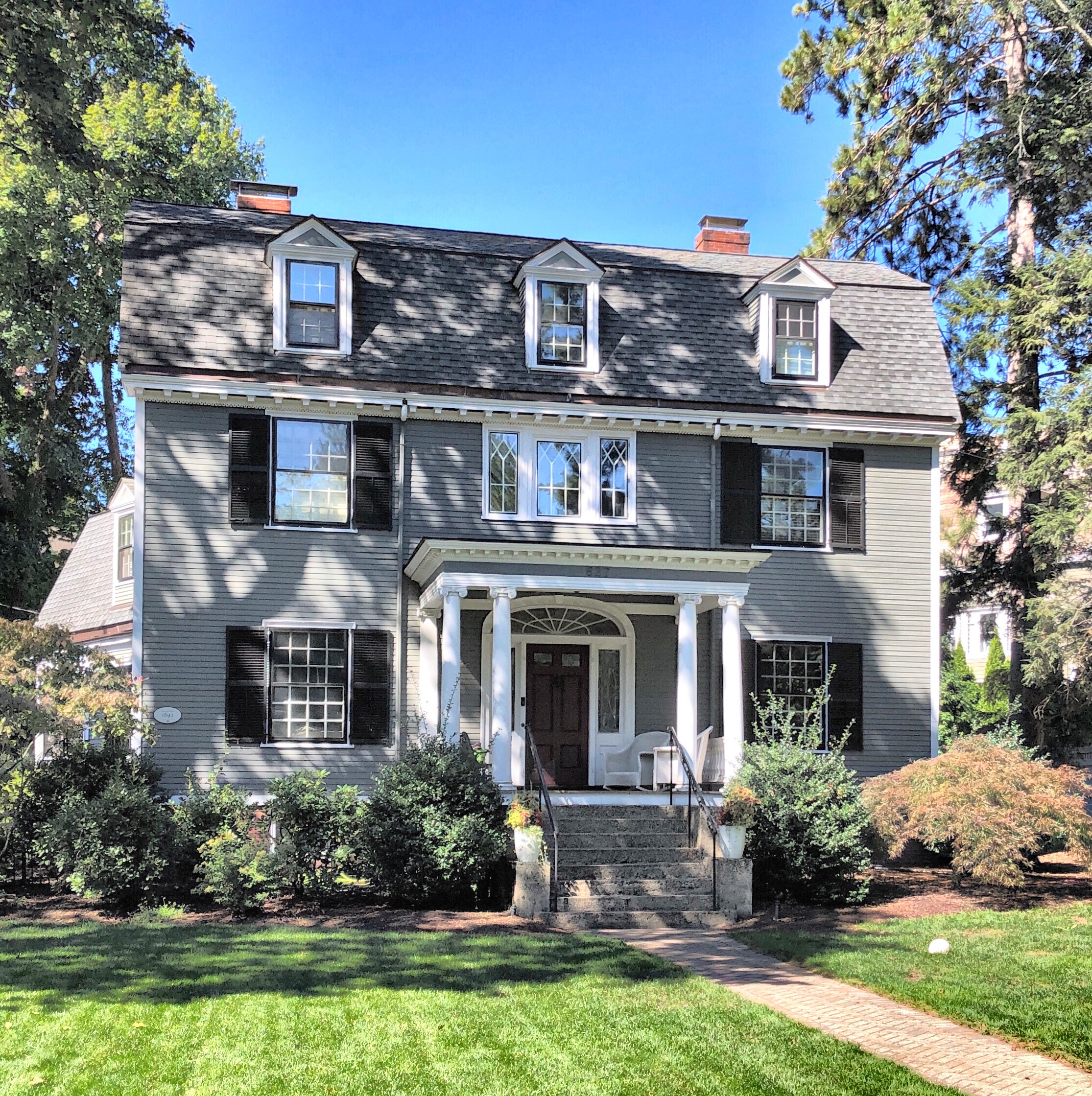
Another architect-designed home for their own use in Waban Village in Newton, is this house on Chestnut Street. Built in 1892, the Colonial Revival home is set far off the street with a commanding presence and symmetrical facade. The home was designed and occupied by Lewis Howard Bacon (1857-1941), a former chairman of the Newton board of appeals and a member of the school committee and the board of aldermen in Newton, also a practicing architect. He studied architecture in the office of Samuel Lane, architect of Cleveland, 1877-80, when he moved to Boston as a draughtsman and supervisor of construction for the firm of Sturgis & Brigham, 1880-1886. For four years he was a member of the firm of Morrison & Bacon (1888-1892), before embarking on his own practice in an office in Downtown Boston. He resided in this home until his health failed and he moved to a nursing home where he died.
For the small population living in the farming village of Waban in Newton, MA, every Sunday, they had to take a horse and carriage or walk to church in a nearby village. The Waban Christian Union was the first religious organization to be established in Waban, 1894-1895 after seeing a suburbanization of the village. The church was to be for services of the Protestant Episcopal Faith, though the group claimed no allegiance to the Diocese, nor was it organized according to the laws of the church. It was independently owned by a corporation that felt the need for a religious association in the community. This church structure was constructed in the summer of 1896 at a cost of $5000 with William F. Goodwin, a charter member of the group (and resident nearby), donating his services as the architect. The organization leased the space to a pastor for $200 a year, later selling it to the congregation, known now as the Church of the Good Shepherd.



 Buildings of New England