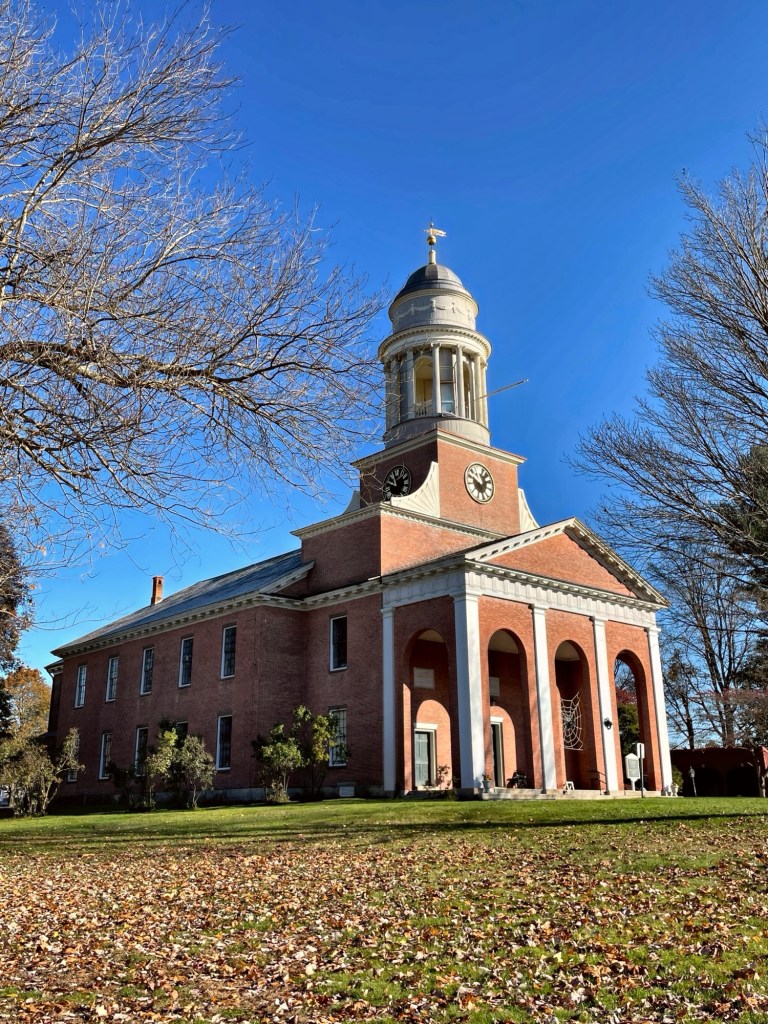
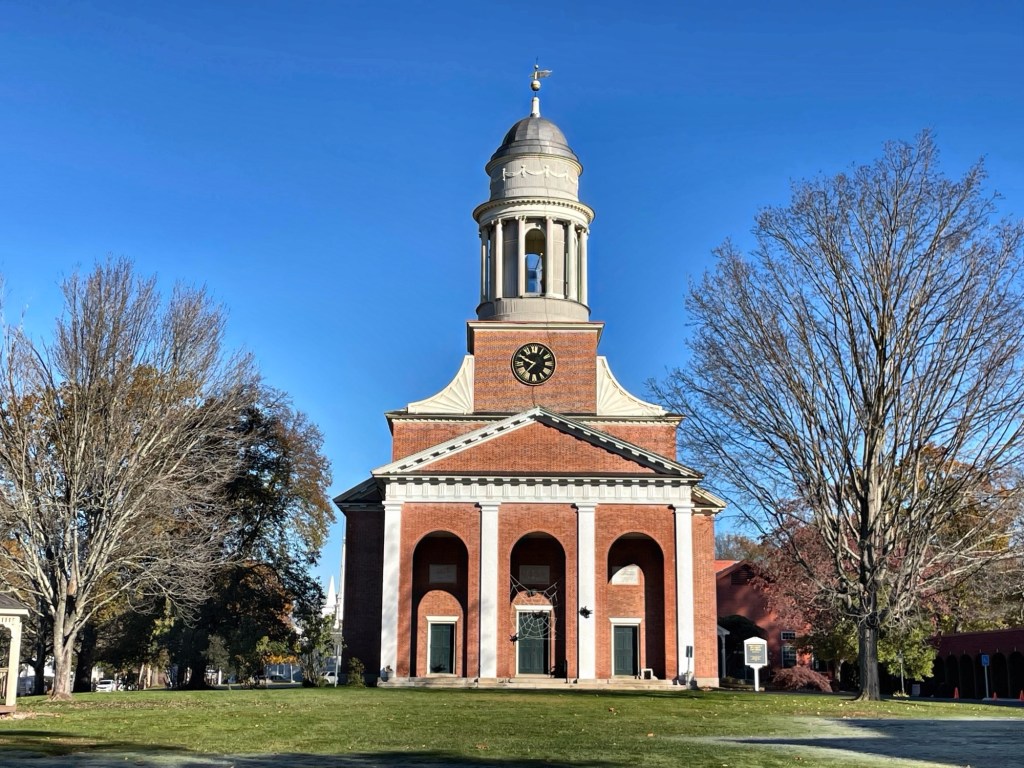
First Church of Lancaster // 1816

Built in 1816, the First Church of Lancaster is one of just two extant church buildings designed by famed American architect, Charles Bulfinch, and is said to be one of the finest churches in the Federal style in the United States. The fifth meetinghouse of the Unitarian First Church of Christ in Lancaster, this building was constructed of local brick, slate, and lumber from master-builder, Thomas Hearsey. Hearsey is said to have modified Bulfinch’s design, which had proposed one tall center arch flanked by two lower arches to reflect the unequal heights of the three vestibule doors behind them; instead going with three, identical arches. Other than this change, the church remains substantially as originally built, even without artificial lighting or central heat inside. Besides the iconic arched portico, the two- stage brick tower topped by a beautifully proportioned wood cupola surrounded by Roman Ionic columns, and fronted by a giant arcuated portico, is especially noteworthy. The congregation, which dates back to 1653 as a Puritan congregation was the first parish established in Central Massachusetts and remains active to this day.
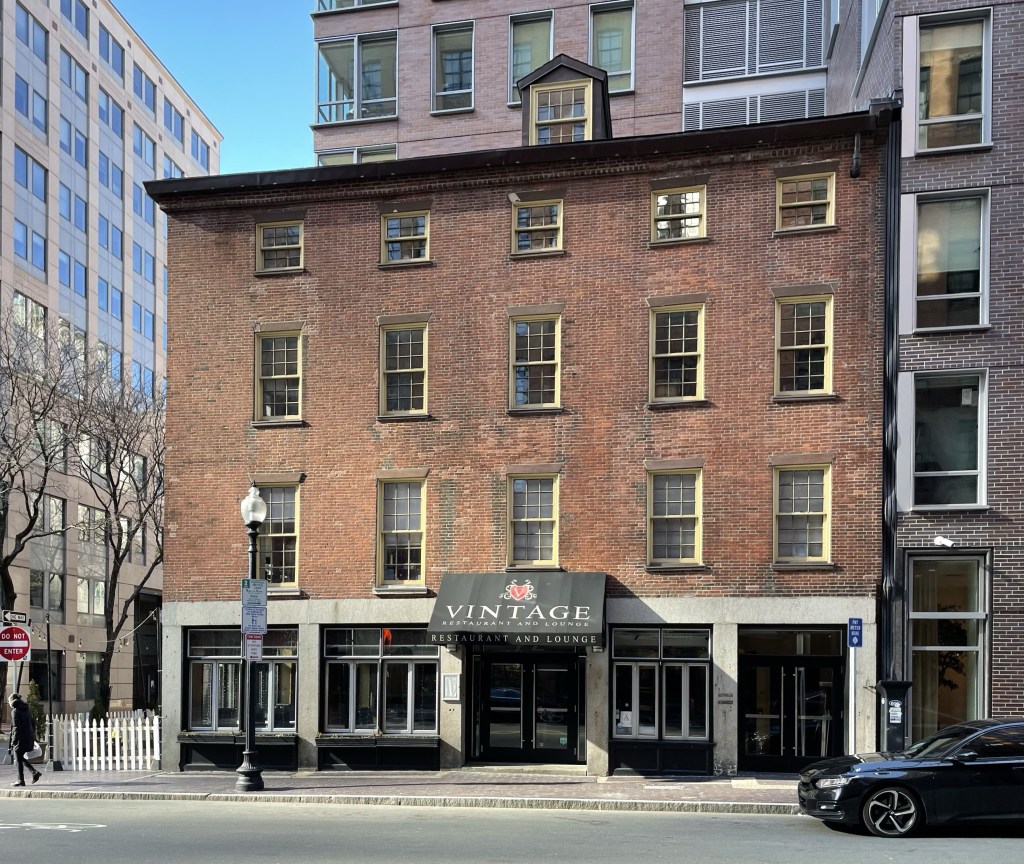
Broad Street Association Building // 1805

One of the few remaining Federal period buildings in Downtown Boston is this survivor located on Broad Street, one of the best streets in the city! The building was constructed for the Broad Street Association, which was made up of members: Uriah Cotting, Harrison Gray Otis, Francis Cabot Lowell and other prominent Boston entrepreneurs with the goal to upgrade Boston’s waterfront south of Long Wharf which comprised of an outdated system of individual wharves. The organization hired the esteemed Boston architect, Charles Bulfinch to furnish plans for the building, of which they paid him $100. While this modest example of the Federal style is not Bulfinch’s best work, is is notable as he was largely responsible for changing the architectural face of Boston, not only through own designs, but also through influence on other architects and builders of the time. This building was long owned by Francis Cabot Lowell and was rented out to commercial ventures, including some of the later decades of the 1800s when it was occupied by C. D. Brooks, a maker of pickles and preserves. The building was restored by CBT Architects in 2005 as part of a larger redevelopment of the block which includes a mid-rise apartment building, Folio.