Church of All Nations // 1975

One building in Boston that has always perplexed me is this round church building. It echoes Eero Saarinen’s MIT Chapel in Cambridge, but is much heavier and plain. After over an hour of researching, I finally found out some history behind it! The church was constructed in the South Cove Redevelopment area, an urban renewal program run by the Boston Redevelopment Authority (now BPDA) as a sort of “slum” clearance near Chinatown. The Church of All Nations was founded in the South End in 1917, housed in a Gothic Revival chapel that was seized by eminent domain for the Massachusetts Turnpike Extension and demolished in 1963. The congregation met in temporary quarters on Arlington Street until the new church was constructed in 1975. Records show that the congregation hired famed Modernist architect Bertram Goldberg as early as 1967 to design a new chapel, set in a new public park. The original plans called for a square building with a massive “steeple” incorporated as the entire roof. For some reason (possibly funding and changing demands for the church), the final design was a little more mundane. The cylindrical church is clad in dark glazed brick with a cross raised in the brickwork. The church suffered from a dwindling congregation in its location, and now appear to rent out the building. One of my favorite local architecture firms Touloukian Touloukian, Inc., re-imagined the site as a new residential tower. It would be one of the few beautiful new buildings in Boston in the past decade or two. Can we please make this happen?!
North Wilmot Church // 1829

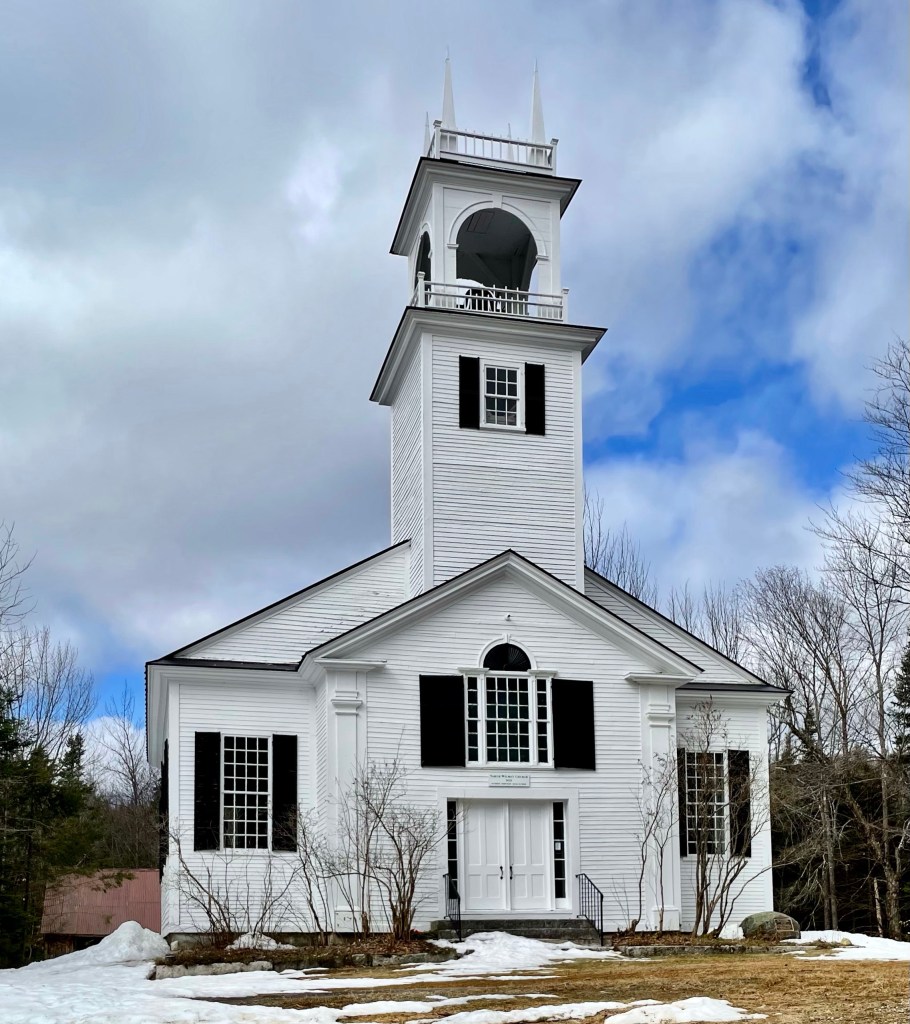
Off the beaten path (like much of the town of Wilmot, NH, you can find this stunning old New England meeting house. Erected in 1829, the North Wilmot Church stands as the oldest extant church in the small town. Five denominations—Congregational, Christian Baptist, Freewill Baptist, Universalist, and Methodist, together collaborated to build this structure then known as the North Union Meeting House. Each denomination held services at the church, as they were all too small separately to warrant their own buildings. Decades after it was built, it was determined that the church should be moved down the hill. In 1846, the church was lifted and placed on rollers (logs), and with the help of oxen, rolled down the hill. It is said that the builder of the church, Josiah Stearns, rode in the belfry. The Different congregations later built churches elsewhere and the building was under-utilized, and it was converted to a meeting space, but allowed a congregation to use the structure. In 1983, with the agreement of remaining North Wilmot Congregational Church members, the North Wilmot Union Meeting House Society was established to maintain the structure and arrange for services in July and August.


St. Michael’s Episcopal Church // 1860

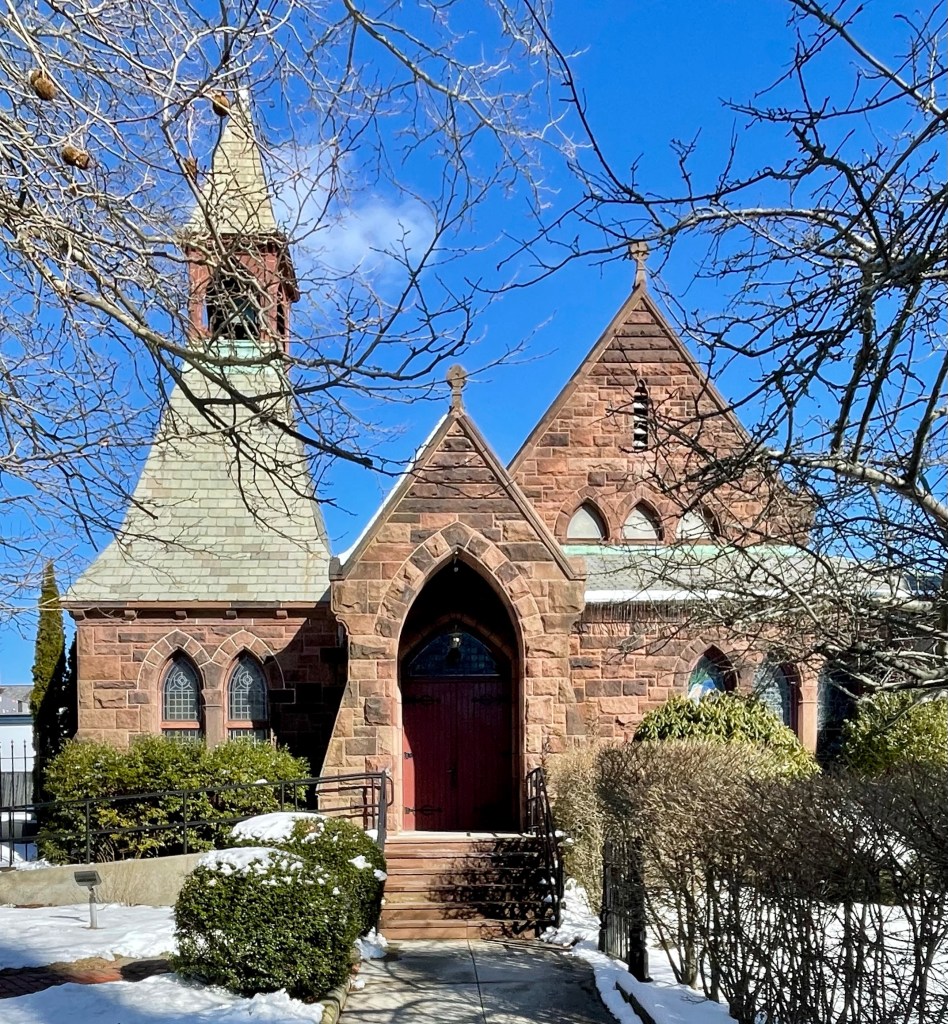
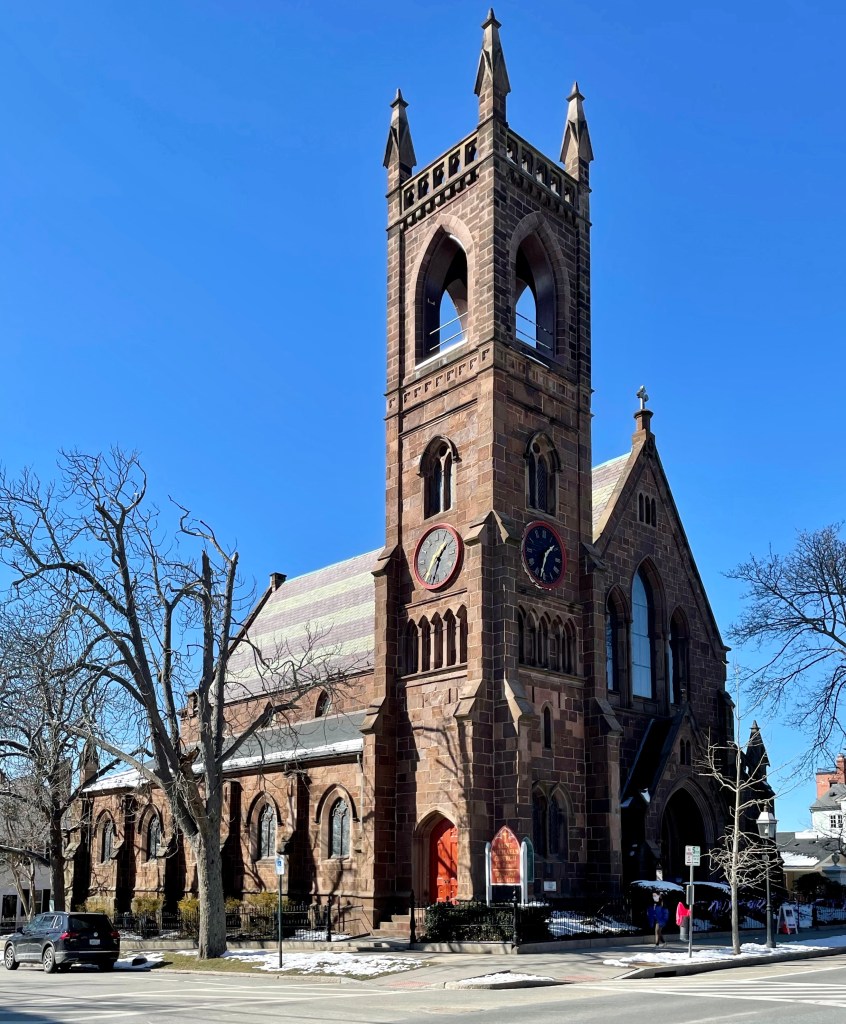
While I love the quintessential white, wood-frame New England churches that proliferate the region, the stone, Gothic churches always make me stop in my tracks; and this example in Bristol is no exception! St. Michael’s parish was founded in 1718 as one of the Rhode Island’s four colonial churches, funded and overseen from London. The first church, built in 1720, was ironically later burned during a British raid in 1778. It was replaced in 1785 by a plain wooden meetinghouse with funds from local residents and partitioners. In 1833, it was replaced by a wood-frame Gothic church which burned in 1858. Undeterred, the church hired New York City architects Alexander Saeltzer and Lawrence B. Valk, who designed the present brownstone Gothic Revival church. Just over a decade later, the church hired Worcester architect Stephen C. Earle, to design a chapel and parish house, across the street. The chapel building follows the Gothic Revival style, but with more Victorian flair, and is also constructed of brownstone to compliment the church. Together, the two structures transport you to the English countryside with their design and presence on the main street in town. What do you think of them?

St. Mary’s Catholic Church // 1911

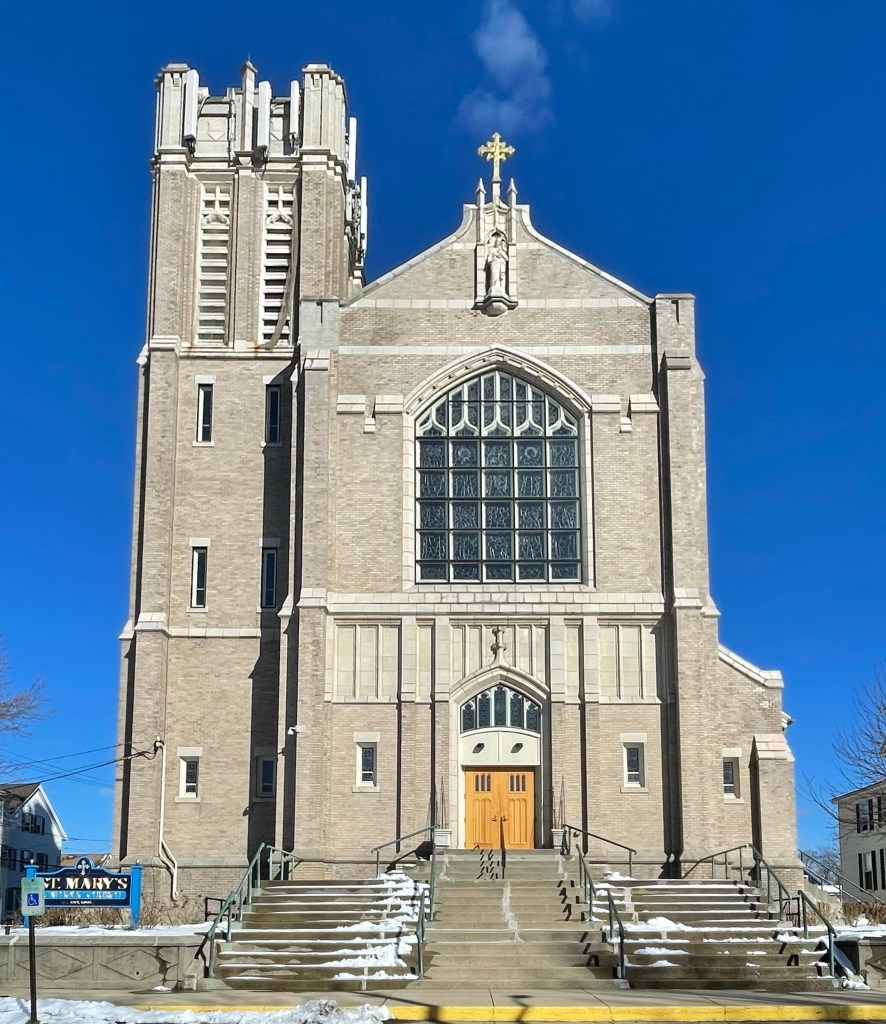
This 2-story Neo-Gothic Revival church constructed of buff brick and limestone, is dominated by an off-center, 4-level tower and showcases how even smaller towns in New England have some of the finest 20th century churches. In 1849 St. Mary’s parish, in nearby Warren, Rhode Island, was founded to serve residents there as well as Irish and French Canadian immigrants in Bristol, which began arriving en masse. Just years later, in 1855, the first St. Mary’s Church in Bristol, was constructed as a plain wooden structure, and operated as a mission of the Warren church. In 1874 the Bristol church became an independent parish and saw large increases to membership with more Irish families settling here. Over the next decades, the space became more cramped and a building campaign was started to get a new place of worship. The present St. Mary’s Catholic Church was built in 1911, from plans by the Providence-based architectural firm of Murphy, Hindle & Wright, who together (and separately) designed many ecclesiastical buildings, in Rhode Island and Massachusetts. The interior is even more stunning than the exterior detailing, and remains very well-preserved.

Ebenezer Baptist Church // 1860

On September 15, 1847, a ship carrying 66 men and women and children docked at Long Wharf in Boston. This group of ex-slaves, led by Rev. Peter Randolph, emancipated by their former slave master Carter H. Edlow from the Brandon Plantation in Prince Georges County, Virginia. Members of the Boston Anti-Slavery Society, led by William Lloyd Garrison met the newcomers and made them welcome by securing lodging and work for self-support.  The group settled in the South End on Ottaway Court not far from the Holy Cross Cathedral. The group first joined the Twelfth Baptist Church of Boston before establishing their own congregation. They eventually occupied this church in 1887, the building was designed by architect Nathaniel Bradlee in 1860, which was built for what was then the Third Presbyterian Church of Boston. The church has remained here for nearly 150 years, seeing the rapid change in the neighborhood. The church building accommodated meetings including the Professional Black Women’s Business Club, which bolstered Black women in business, many members owned stores in the South End. Many members left the area amid growing gentrification in the 1980s and 1990s, and from that, the aging population remaining made keeping the doors open difficult. Sadly, the church relocated out of the building in 2020 and appears to have sold the building, leaving its future uncertain.

Unitarian Church, Burlington // 1816

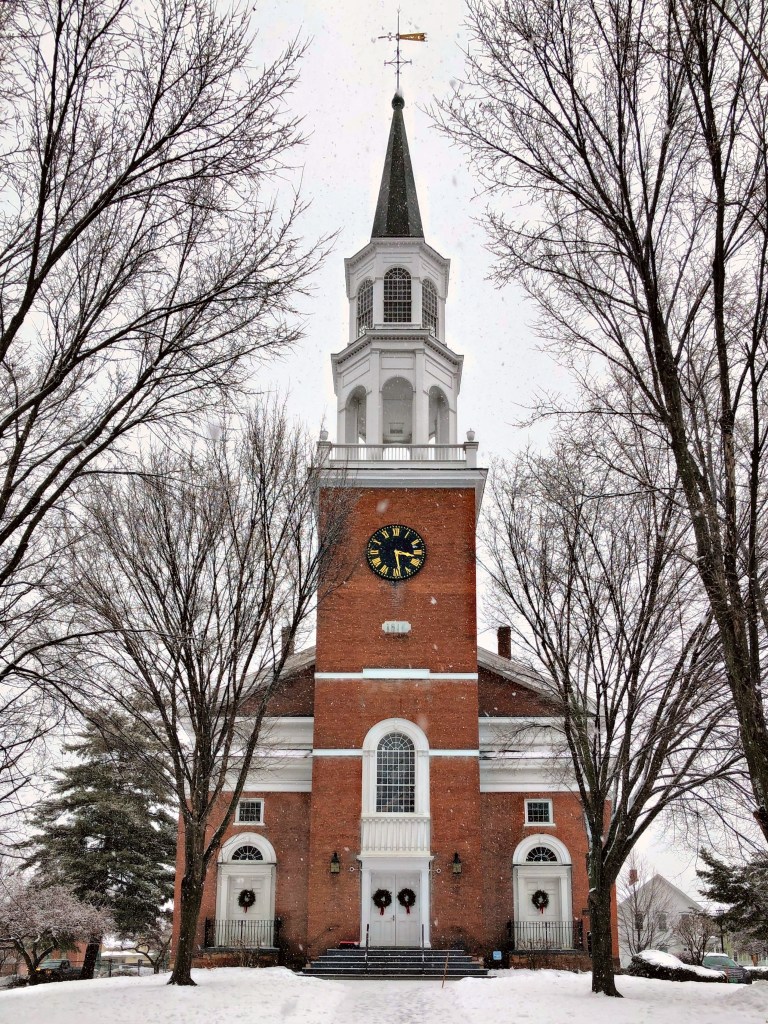
The building that gives Burlington’s iconic Church Street its name is this, the Unitarian Church of Burlington. One of the most stunning Federal style churches in New England, the church is the oldest surviving place of worship in Burlington, built in 1816. The church was designed by English architect Peter Banner (possibly with assistance of Charles Bulfinch), years after his crowning achievement, the Park Street Church in Boston was completed. From the head of Church Street, the church oversaw the growth of Burlington from a small lakefront town to the largest city in the state. In August 1954, the church steeple was struck by lightning, causing it to shift over two feet in a matter of months, unknown to the congregation and public. It was decided that due to concerns the steeple may collapse through the building, it was selectively demolished and reconstructed. The church remains an active part in the city and architectural landmark for Burlington.

St. Paul’s Cathedral, Burlington // 1973

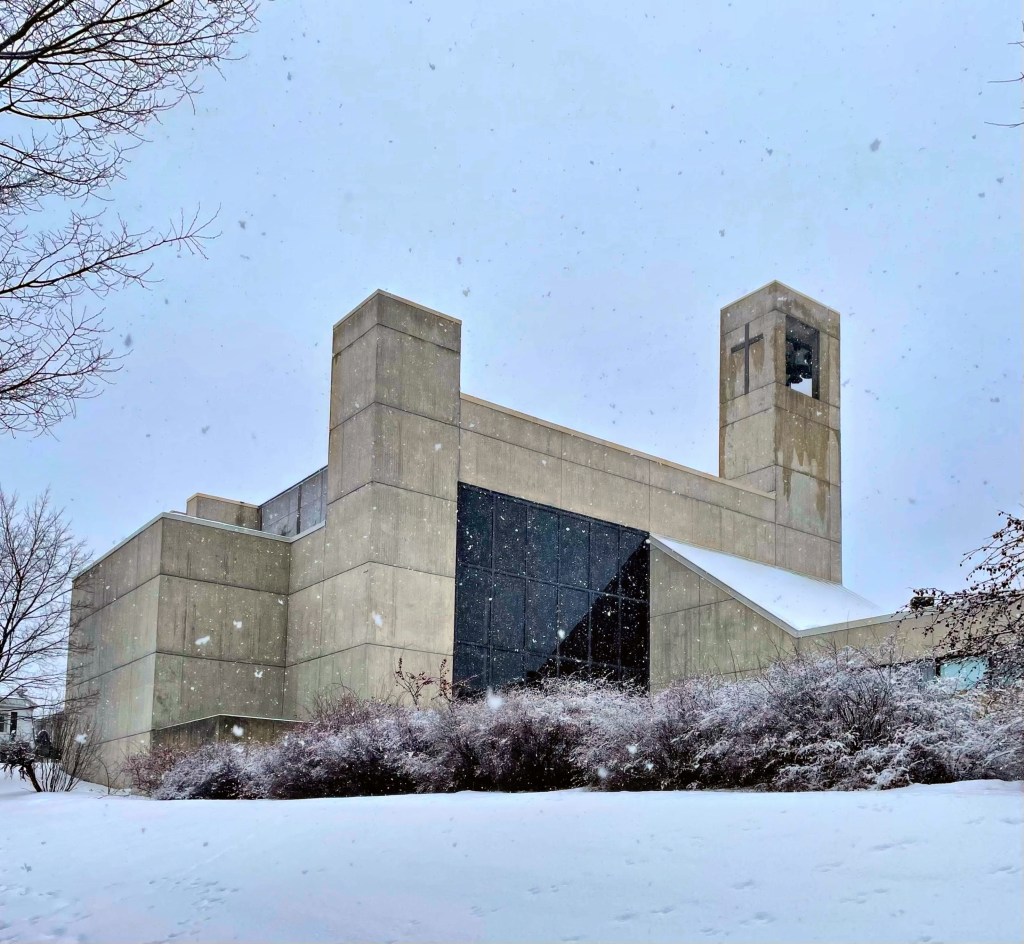
St. Paul’s Church in Burlington, Vermont, was organized in 1830, when Burlington’s population was about 3,500. About 55 Episcopalians met at a local hotel and laid the groundwork for the parish. In 1832, the fledgling parish dedicated its new building, a neo-Gothic limestone structure, which was enlarged multiple times as the congregation grew as the city did. In 1965, the Diocesan Convention voted that St. Paul’s Church be designated a Cathedral Church of the Diocese (one of two in the state). Just six years later, it was destroyed by fire, sparked by an electrical malfunction in the basement, leading to a new evolution of the church. At the time of the fire, the City of Burlington was engaged in massive urban renewal projects. As a part of this program, the City offered to swap the land on which Old St. Paul’s had stood for a spacious new tract overlooking Lake Champlain and the Adirondacks. Although the decision to change locations was a contentious one, the parish did accept the offer. When discussing designs for a new cathedral, there was a strong desire to make a new statement in architecture, diverging from the traditional Gothic or Colonial designs seen all over the country. An international competition was held to determine the architect of the new Cathedral. The winner was the local firm Burlington Associates, now Truex, Cullins & Partners. Completed in 1973, the Cathedral is made of stressed concrete. The structure stands strong and firm, yet is welcoming. Windows provide sweeping views of Lake Champlain and the distant Adirondacks.

First Methodist Church, Burlington // 1869

This beautifully designed Romanesque Revival church consists of a large rectangular block with a steeply pitched gable roof and a square tower surmounted by a spire. The church is constructed of Willard’s Ledge stone (a locally quarried purplish limestone) with trimmings of Isle La Motte grey sandstone from quarries north of Burlington. This church is the only Romanesque Revival style church in the city and just one of four pre-1880 churches in Burlington. Architect Alexander R. Esty (1826-1881) designed the building and was a noted New England architect working during the late nineteenth century. He was trained in Boston and opened his own office in 1850 in Framingham, Massachusetts. The congregation remains active and welcoming.

Seventh-Day Adventist Church // 1842

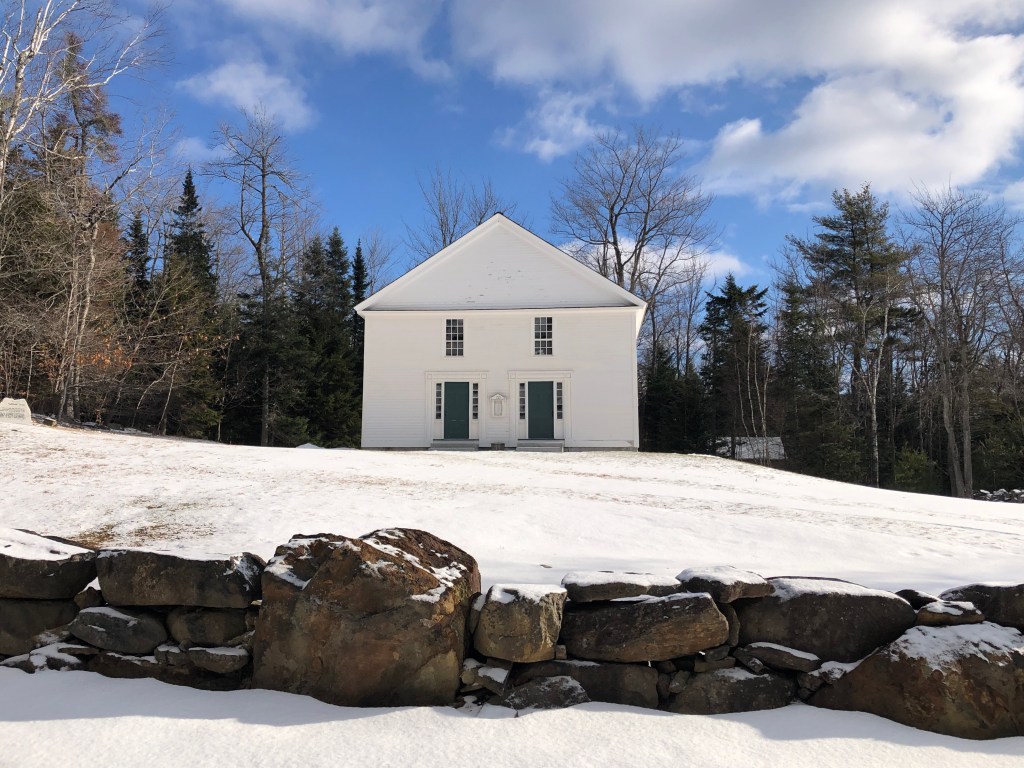
In the township of Washington, New Hampshire, about three miles from the Washington Town Green, stands a rural church building, a white wooden structure complimenting freshly fallen snow. This church is honored as the mother church of the first Seventh-Day Adventists. Its story started in 1842 by a local group of farmers calling themselves Christian Brethren, who dissented sharply from the strict Congregationalism of the Church in Washington Center. Many of the Christian Brethren became Adventists about the time this building was first used, and thereafter some of them began worshiping on the Seventh Day; and eventually the majority did so. In 1862 the official Seventh-day Adventist denomination was born at this place. Today, the building is a regular point of pilgrimage for members of the massive, international congregation.

East Washington Baptist Church // 1877

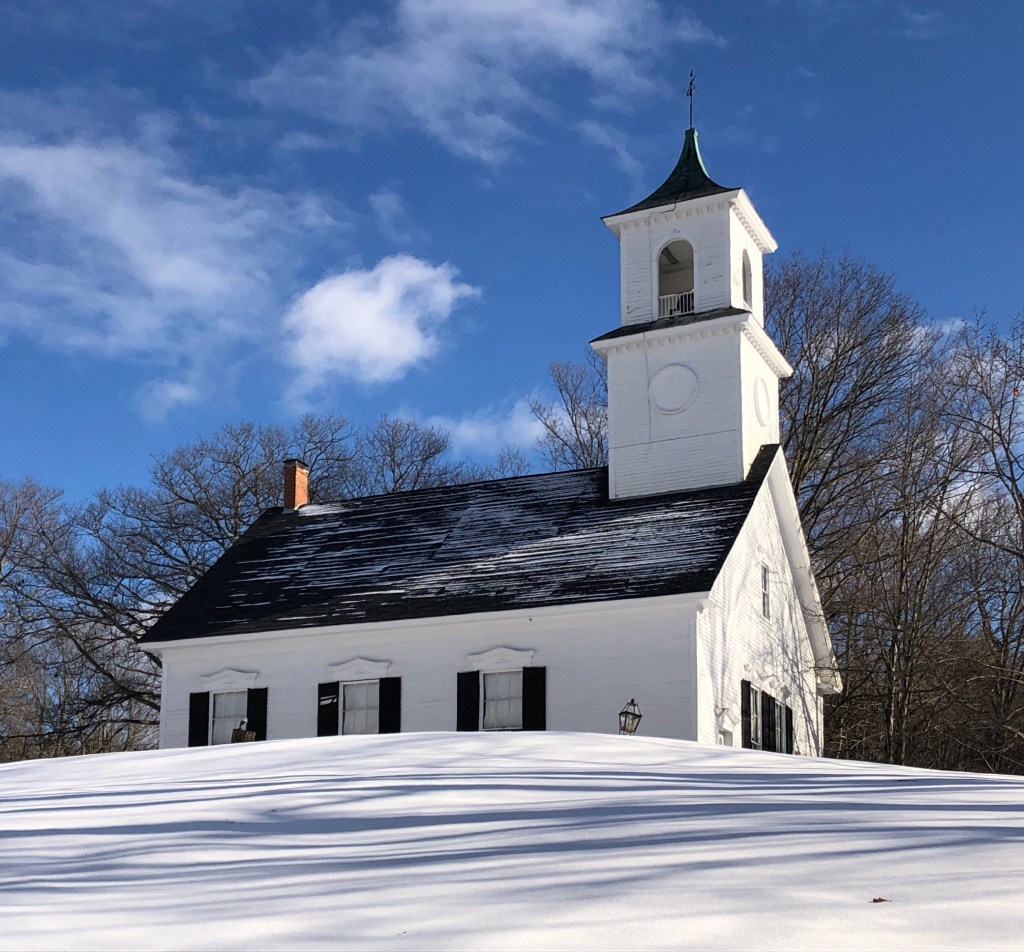
Residents in the eastern portion of the rural town of Washington, NH found it very inconvenient to attend church at the center of town. In 1800, a group of residents on the east side of town banded together to create a new congregation, building a church perched on a low hill soon by 1826. The church was used for decades until it burned in 1844, it was replaced a year later, but that burned as well. Undeterred, the small congregation had yet another church built in 1877. The church remains in great condition, and is still active.