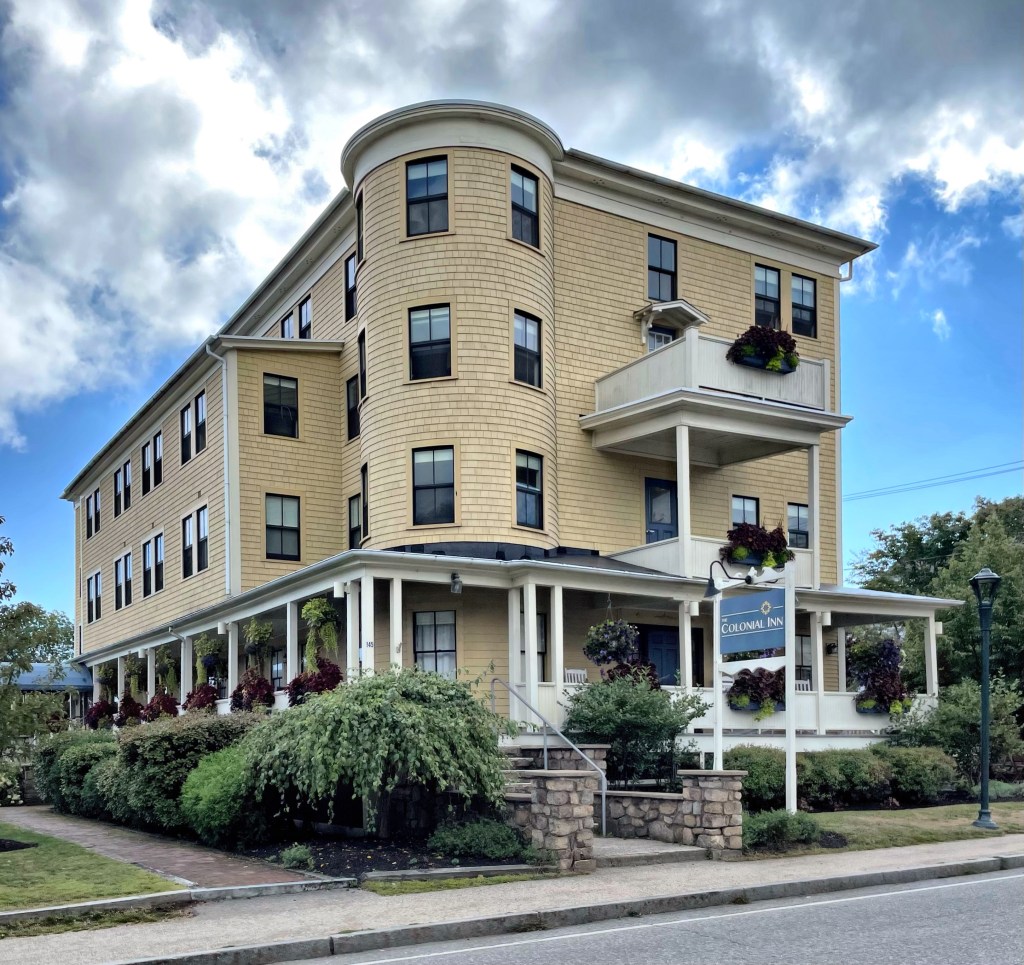
Colonial Inn, Ogunquit // 1897

As Ogunquit surged in popularity as a coastal summer retreat in the late 19th century, the flocks of city-dwellers needed a places to rest their head after splashing in the crisp Maine ocean. The original structure began with a mid-19th century house, likely in the Greek Revival style. It was expanded in the 1880s when it opened as a hotel for tourists, equipped with a mansard roof. The hotel consistently sold out of rooms in the summer months and the proprietors decided to expand in about 1897 with a sizeable Queen Anne style addition. A fire in 1951 destroyed the rear wing of the building and the conical tower roofs were removed, resulting in the final form seen today. The hotel is historically significant because it is the only surviving 19th-century hotel in Ogunquit that still serves as a hotel and largely retains its historic appearance, enhanced following a 2013 restoration by the owners who worked with David Lloyd of Archetype Architects. Other hotels of the period have either been converted to condominiums or been engulfed by modern alterations. The hotel was thus placed on the National Register of Historic Places, a large, and worthy addition!
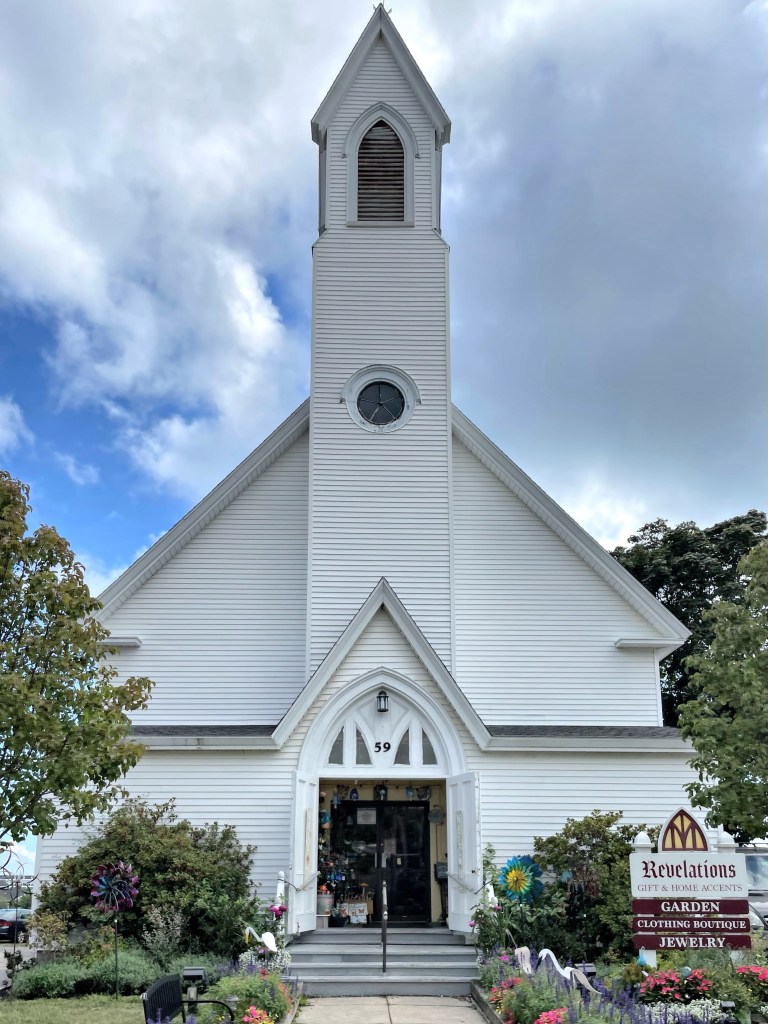
Old Ogunquit Methodist Church // c.1880

Ogunquit, which means “beautiful place by the sea” in the indigenous Abenaki language, was first a village within Wells, which was settled in 1641. Ogunquit grew as a fishing village with shipbuilding on quiet tidal waters protected within smaller alcoves. By the late 19th and early 20th centuries, the village was discovered by artists, who flocked to the area for the natural scenery and bucolic coastal scenes perfect for painting. At this time, summer residents came to the sleepy village en masse, facilitating the construction of summer resort hotels and commercial buildings. Ogunquit seceded from Wells in 1980, and has been one of the most visited villages in Maine. Ogunquit has been a destination for LGBT tourists and businesses, adding to the rich culture there. This church building, shows the history of the town well. It was constructed as the village’s Methodist Church after 1872 in a vernacular Gothic style with lancet windows and entry. The church merged with the nearby Wells Methodist Church in the 1970s and later moved to a new church building between the two towns. The former Ogunquit Methodist church was purchased and converted to a gift shop, frequented by locals and tourists alike.

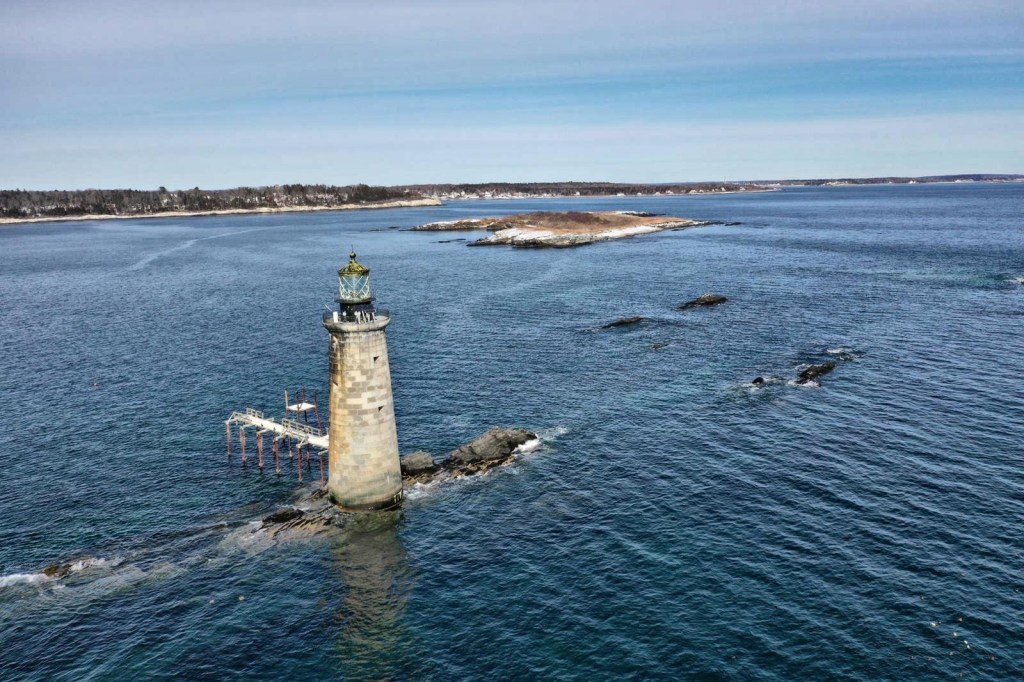
Ram Island Ledge Lighthouse // 1905

Ram Island, about a mile offshore from Portland Head near the entrance to Portland Harbor in Maine, is surrounded by dangerous ledges. For as long as ships have been navigating Portland Harbor, they have crashed into the rocky shore, losing supplies and lives. Because of this, a Congressional act on June 28, 1902, authorized the construction of a lighthouse and fog signal on Ram Island Ledge, to work together with the Portland Head Light to guide ships through the treacherous channel. The next year, the federal government purchased Ram Ledge from two Cape Elizabeth families for $500, to erect a new lighthouse. Before the lighthouse could be constructed, at least two ships, the Glenrosa and the Cora & Lillian schooner sunk in the bay. As the ledge was underwater for much of the year, a stone tower was required. Granite from Vinalhaven was shipped in and a crew of 25 men built the tower which was complete in 1905. The iconic double flash of light has guided sailors ever since. The lighthouse was manned by multiple keepers until the late 1958, when an underwater power cable was laid between Portland Head and Ram Island Ledge, allowing the ledge lighthouse to be automated. In 2008, the structure was deemed “excess to the needs of the United States Coast Guard” and auctioned off. After a bidding war, a local doctor from Maine purchased it for an estimated $190,000.

Clock Farm // ca.1850

Away from the busy coast of Kennebunkport, Clock Farm, a mid-19th century farmhouse with an odd clock-tower caught my eye while driving by. Clock Farm is a rambling extended farm complex that remains a landmark in the more rural section of town. According to historians, the oldest part of the complex was a home that was later converted to one of the ells, was built in 1773 by a Peter Johnson. By the 1850s, the 1 1/2-story Greek Revival home and barn were built. In the late 19th century, the property was purchased as a summer residence by Thomas Lemmons, factory owner in Lawrence, MA. The story associated with the clock is that originally was mounted on his factory, but kept such bad time that his employees complained. In the early 20th century Emmons had the tower specially built to house the clock, which was transported here from Lawrence.