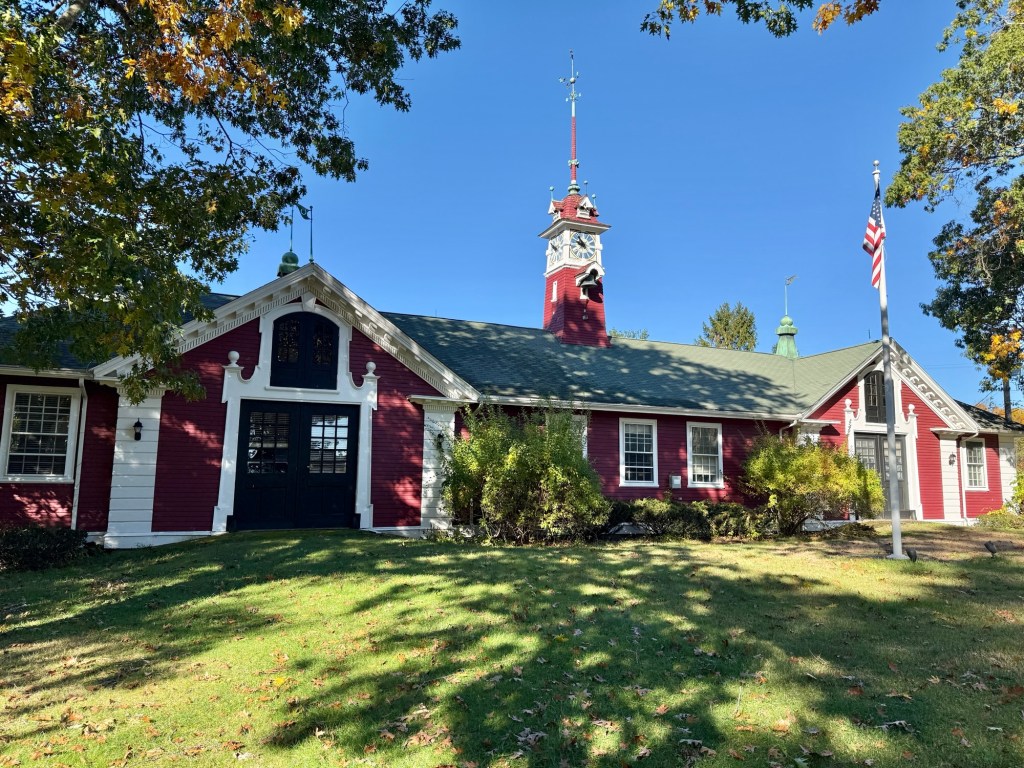
The 60-acre Clock Farm, named for its unique four-faced striking steeple clock, once consisted of stables, carriage houses, and training fields for the former farm of Frederick Lothrop Ames Jr. (1876-1921) in North Easton, Massachusetts. In 1905, Ames had his grand estate, Stone House Hill, built, and just three years later, he hired the Boston architectural firm of Coolidge & Carlson, to design a stable and carriage house for his property. Frederick Ames Jr. was a sort of gentleman farmer, where he hired help to maintain farmland near his estate, and breed his award-winning Guernsey cattle. The carriage house and stable, pictured here, housed Ames’ Arabian horses, which were also bred on the grounds of his estate. Much of the estate, including the mansion, were donated to the newly formed Stonehill College, with the Clock Farm becoming the Facilities Management offices and workshop for the college. The building, and its E. Howard Steeple Clock, of which only 3,000 exist in the United States, have been preserved and restored by the college.


