First Congregational Church of Canterbury // 1964

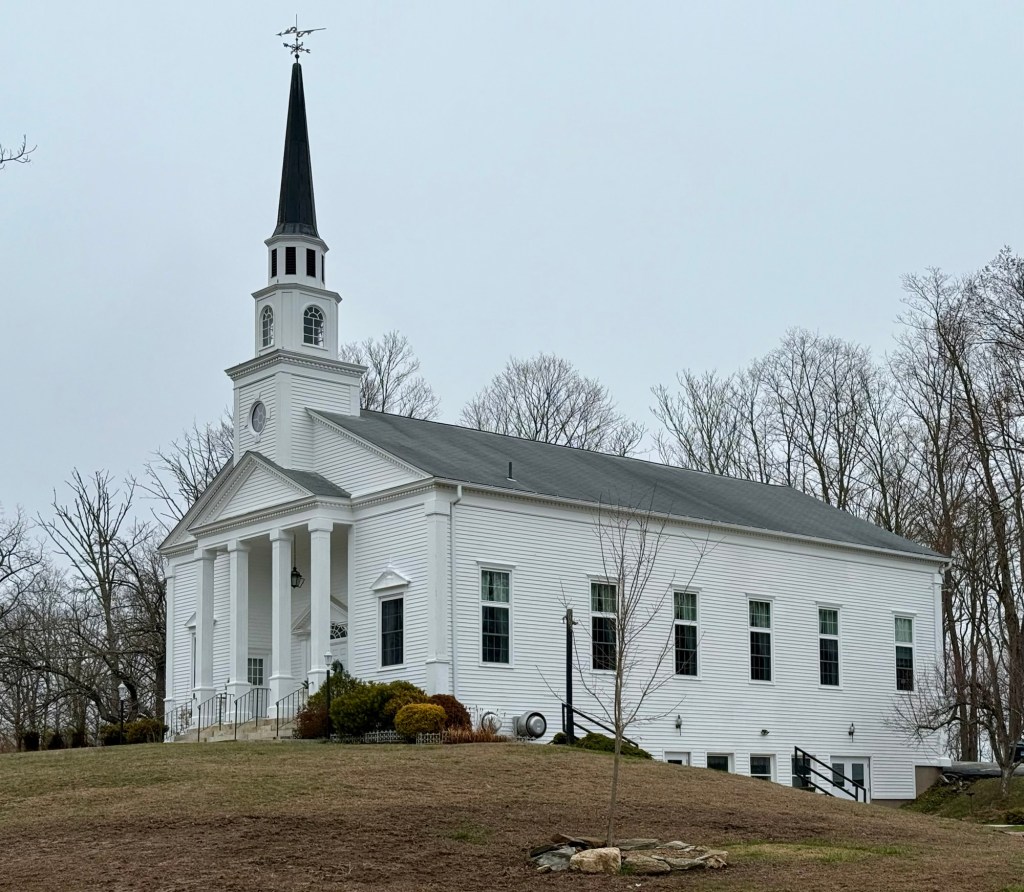
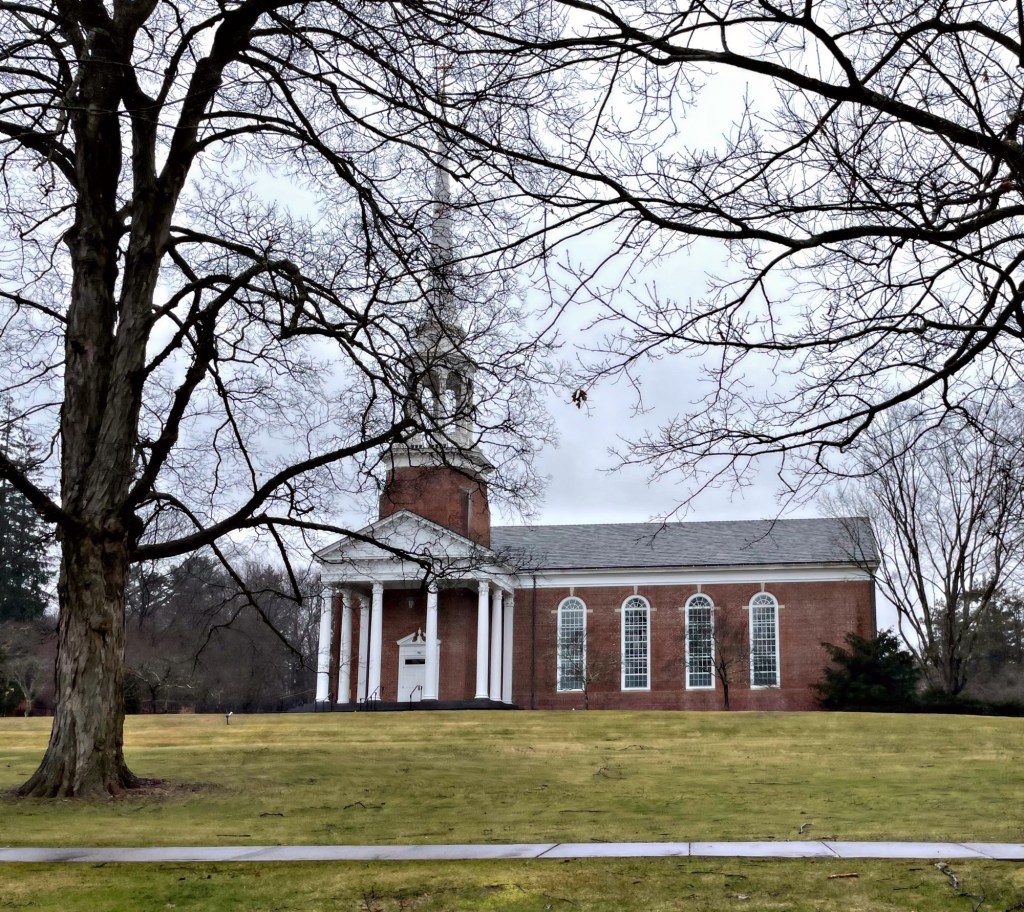
The Canterbury Green has been home to four congregational churches in its history. Originally established in 1711, a modest frame church was built here and in 1736, a new meetinghouse was constructed as a more permanent building. The rustic structure was deemed insufficient for a wealthy rural community, so in 1805, a stately, Federal style edifice was built. Designed by Thomas Gibbs, a local architect/builder who also designed other nearby high-style Federal homes, the building was destroyed by fire in December, 1963. Within a year, this church was constructed on the ground of its 1805 building. While designed and constructed during the mid-20th century, the town clearly wanted its new church to contribute to the village’s Colonial character, having this Colonial Revival style church serve as the new anchor to the green.

Tabernacle Congregational Church of Salem // 1923

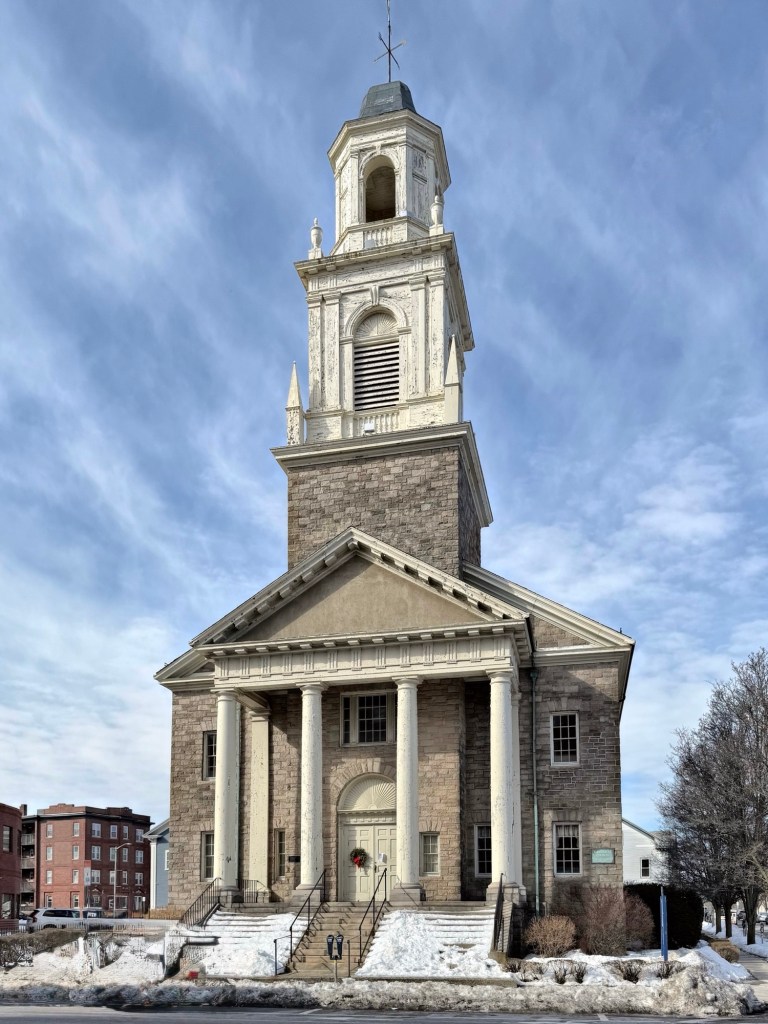
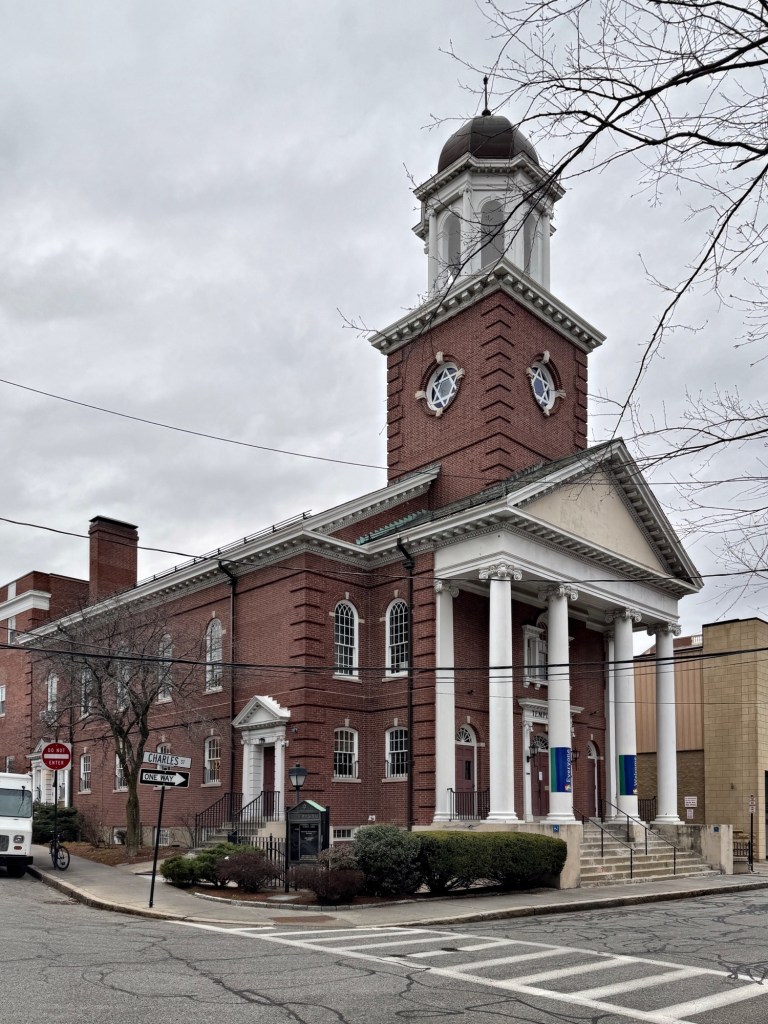
The Tabernacle Congregational Church at Washington and Federal streets in Salem, Massachusetts, was built in 1923 for one of the oldest congregations in the Commonwealth. The Tabernacle Church’s congregation traces its origins to the founding of the First Church of Salem in 1629. The church was originally located a few blocks away until a fire destroyed the wooden building in 1774. The congregation built a new wooden church on this site by 1777, and have remained on the site ever since the United States was established. The present, stone church building, was constructed from designs by the Boston firm of Philip Horton Smith and Edgar Walker in 1922. This dignified and graceful Colonial Revival church building (with attached parish house) is the third ecclesiastical structure to stand on this site. It replaced a large wooden Italianate church which the parish occupied from 1854 until it was torn down in 1922. Its predecessor, which stood from 1776 to 1854, possessed an elegant three-stage tower which Samuel McIntire added in 1805. The Tabernacle Church is a stone-veneered masonry building with a prominent engaged tower which contains a large arched entry, and a giant order porch consisting of four Tuscan columns and associated pilasters of the same type, which supports a pedimented roof that shelters the entrance. The tower is surmounted by a square, wood-frame belltower with pilastered corners above which is an open octagonal cupola with bell-cast roof. What a great Colonial Revival style church!

Fourth Byfield Parish Church // 1931

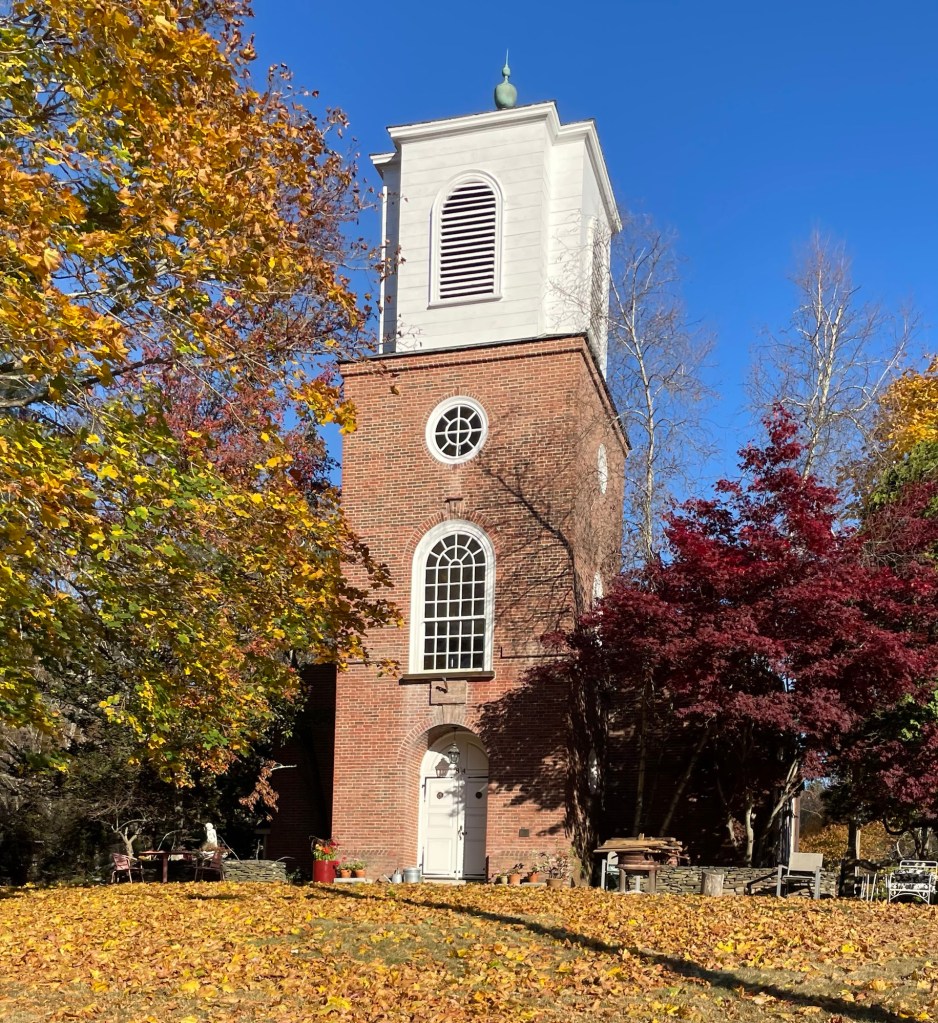
The Byfield Parish Church at 84 Warren Street in Georgetown, Massachusetts, was built in 1931 and is the fourth meetinghouse to occupy the site. The congregation dates to 1701, when sixteen families in this section of Rowley (now Georgetown) near Newbury were set off separate from the Rowley First Parish. Travel for religious services became too arduous, so the local residents petitioned to create their own parish, Byfield. Some accounts state that the first meetinghouse was built in 1702 and it is said to have been razed by 1746 to make way for a new wood frame church with a steeple, a spire, and a weathervane. This church burned in 1833, and it was replaced by a new meetinghouse soon after. The 1833 church was used for almost a century until, in March 1930, it was struck by lightning and burned to the ground. The congregation banded together and had this brick church built, its fourth. Completed in 1931, the Colonial Revival style building was designed by architect, George M. Champney, partner in the Boston office of Derby, Barnes & Champney. The church is sited within a historic cemetery containing the remains of many of the churches members, dating back to 1670. The Byfield Parish Church moved to a new building (its fifth) nearby in 1987, and in 1993, sold this church building to a private owner (retaining and maintaining the cemetery themselves) with the 1931 church converted to a single-family dwelling. How cool!

Jesse Lee Memorial Church // 1965

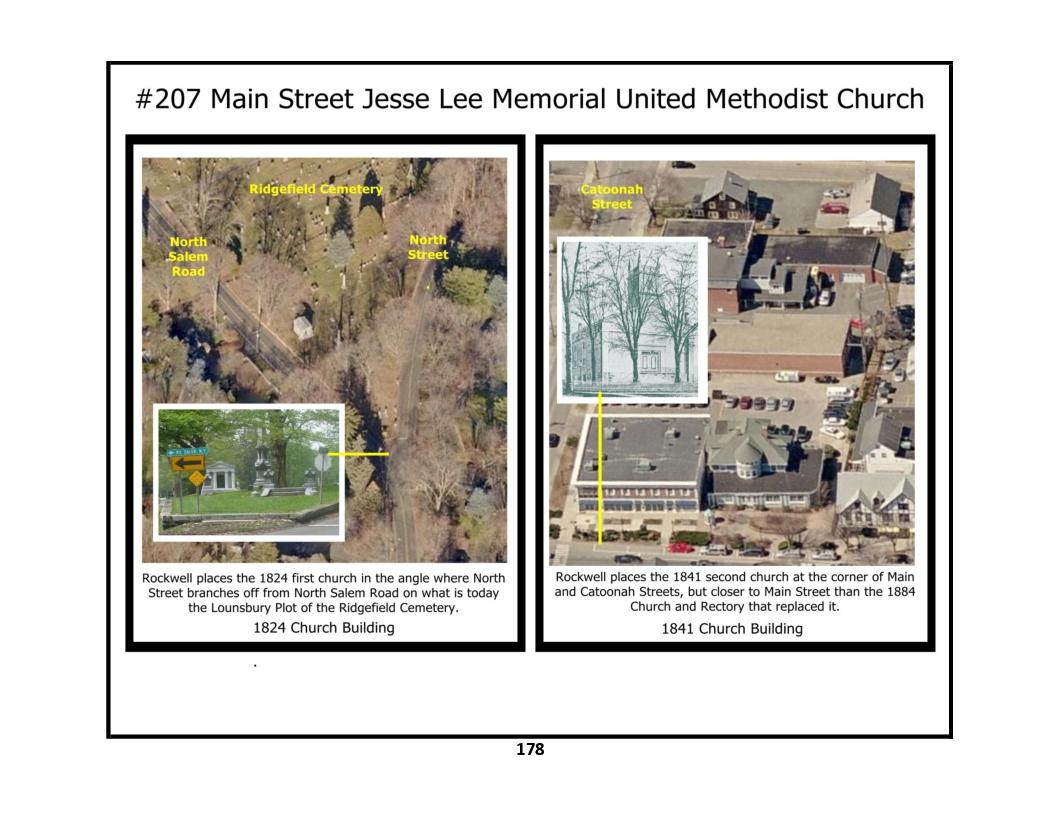
Believe it or not, this church in Ridgefield Center was built in 1965! To know its full history, we have to go back to 1787, when the Methodist Episcopal Church had its beginnings in Ridgefield, the third in New England. Its first meeting was held – just 21 years after Methodism had been introduced into the U.S. from England. In 1789 Jesse Lee, a native of Virginia, was sent north as a circuit rider. His third sermon in Connecticut was preached at the Independent Schoolhouse on Main Street in Ridgefield. In the 1840s, a second meetinghouse in town was built, and the congregation grew. A third church and rectory were built on Main Street in 1884. When a large Main Street estate was available for a new, stately building, the congregation jumped at the opportunity, and hired ecclesiastical architect Harold Wagoner to design a refined, Colonial Revival style church, which was built in 1965. Executed in brick, the church has great verticality, created by the colossal columns supporting its pedimented portico and the spire that rises over an open belfry to a height of 149 feet. Set back from the street, the church still has a commanding presence.

Greenfield Hill Congregational Church // 1855

Local residents of northern Fairfield successfully petitioned the General Assembly to establish a Congregational church in 1725 as a new Northwest Parish, a distinct group from the Fairfield Congregational Church. Their first meeting house was erected just years later in 1727. A larger, more substantial meetinghouse was built in 1760. The area of Greenfield Hill has always been remote and more suburban, but became important in the late 18th century when Timothy Dwight became minister of the Greenfield Hill Congregational Church in 1783. Dwight would go on to become the eighth president of Yale College (1795–1817). With increased funds and affluent members, another church was built in 1850 from plans by esteemed architect Richard Upjohn, in the Gothic style. Sadly, just years after it was completed, a fire from a furnace inside destroyed the church. So again, they rebuilt in 1855 with the building we see today, sort of. Architect Alfred Nash furnished plans for the building which was more Italianate in design. The church would be modernized in the 1940s in the Colonial Revival style, from plans by local architect Cameron Clark, likely inspired by the collection of Colonial-era homes nearby, including his own home in Greenfield Hill. The church remains a visual anchor for the affluent neighborhood.

United Church of Ware // 1926

The East Congregational Church in Ware was established in 1826, spurred by the industrial growth and subsequent immigrant population boom in the village of Ware, Massachusetts. The Ware Manufacturing Company, a major player in town, contributed $3,000 to towards the construction of a new congregational church in the village, which was matched by residents. The original church was built in 1826, following plans prepared by Isaac Damon, a noted church architect from Northampton, in the Federal style, popular at the time. In 1925, just a year before its centennial, the church burned to the ground. Plans to rebuild the church formulated immediately. Due to changes to the neighborhood since 1826 (notably the construction of tenement housing adjacent to the church), the decision was made to locate the new church setback from the street. Plans were drawn by Frohman, Robb and Little of Boston for the new building, which was to be Federal Revival, a nod to the former church building. The grounds in front were landscaped by the prominent landscape architect Arthur A. Shurtleff. After WWII, population decline and dwindling membership of some churches in town required a few congregations to consolidate, creating a union or united church here. The United Church of Ware came into being in 1969 when the East Congregational Church, United Church of Christ and the Ware Methodist Church, United Methodist Church joined together and became one federated church with ties to two denominations.

Waterford Congregational Church // 1928

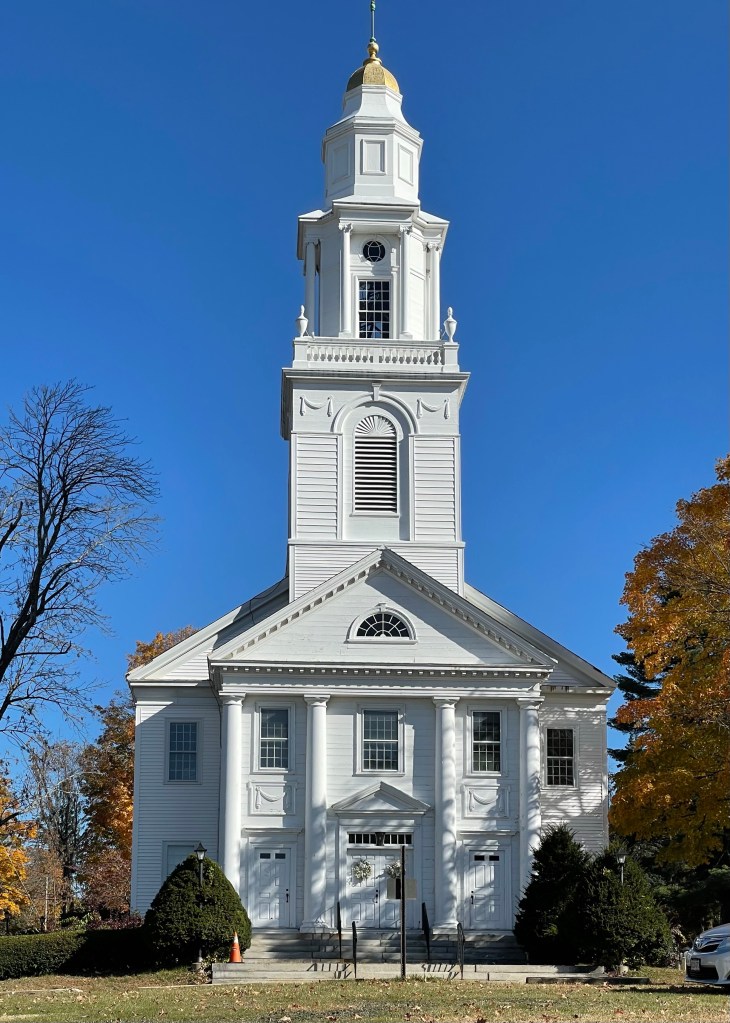
Upon first glance, this transitional Federal and Greek Revival style church building in Waterford, Maine, appears to date to the early-mid 19th century, but things are not always as they appear! The Waterford Congregational Church we see today was actually built in 1928, after a fire that year destroyed the previous building, constructed in 1837. The congregation hired Maine architect John Calvin Stevens, who designed over 1,000 buildings in his career. The church was “masterfully recreated in almost every detail” from the 1837 building, down to the 1,200-pound bell cast from the historic Revere foundry bell.

Tewksbury Congregational Church // 1922

Located across the Town Green from the Tewksbury Town Hall (1920), this Colonial Revival style church with Classical elements, perfectly compliments the design motif seen here. The Tewksbury Congregational Church was established in 1734 by some 34 resident families who, after leaving the church in Billerica, established the new town of Tewksbury. Their first church was erected in 1736, and was replaced in 1824. The second church edifice (and much of the town center) suffered a catastrophic fire in 1918, destroying both structures, and resulting in a rebuilding campaign. Architect Curtis W. Bixby of Watertown, furnished designs for the church, which stands boldly beyond a large front lawn.

Hollis Congregational Church // 1925

The present Congregational Church in Hollis, NH is the fourth to be located on this site and was constructed in 1925, replacing an earlier 1804 building destroyed by fire in 1923.  The church is oriented with its porticoed facade facing Monument Square and perfectly blends in with the Colonial era homes and buildings around the green to retain the integrity of one of the best town centers in Southern NH. The present church building was designed by Boston architect Oscar Thayer.

St. Joseph’s Church // 1952

The congregation’s second sanctuary, this Colonial Revival church building was constructed in 1952 for the large Polish population in town. In the 1890s, Polish immigrants settled in rural Suffield in large numbers, many working on tobacco farms. The St. Joseph’s Polish Society was formed in 1905, with increasing demand for a sanctuary to worship. The lot at 140 S. Main Street was purchased in 1916 and the stable was converted to a church, with the home converted to the rectory. After WWII, the stable was clearly insufficient, and the site was cleared for a larger sanctuary which we see today.