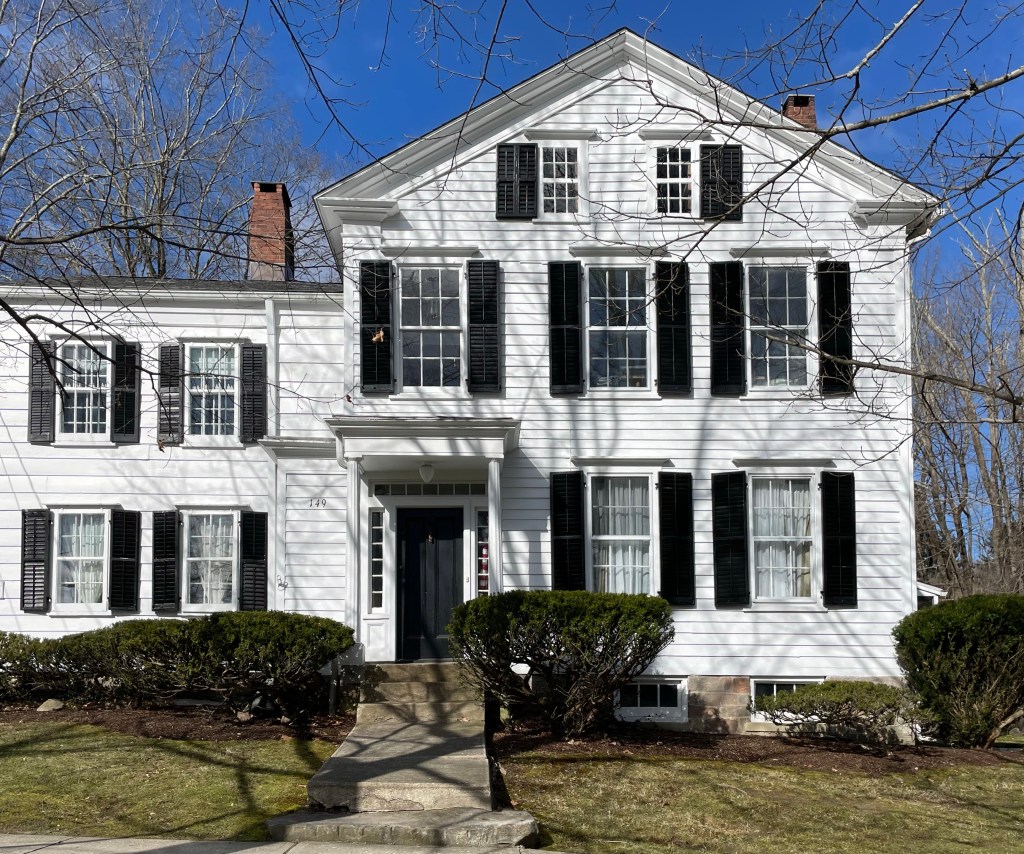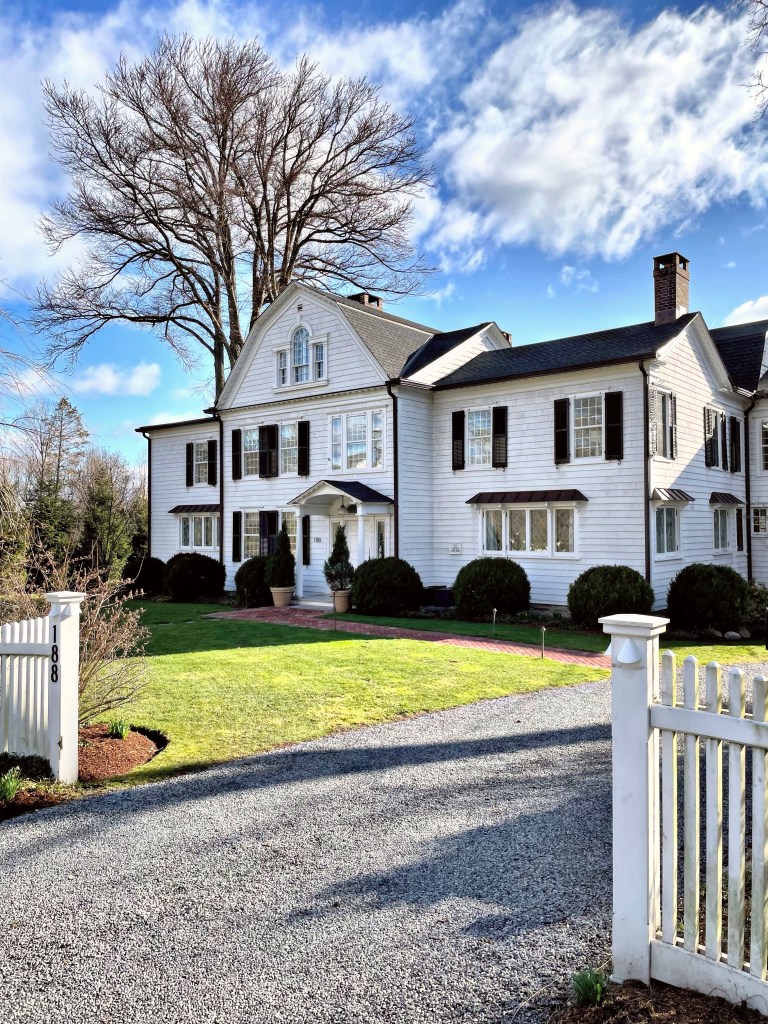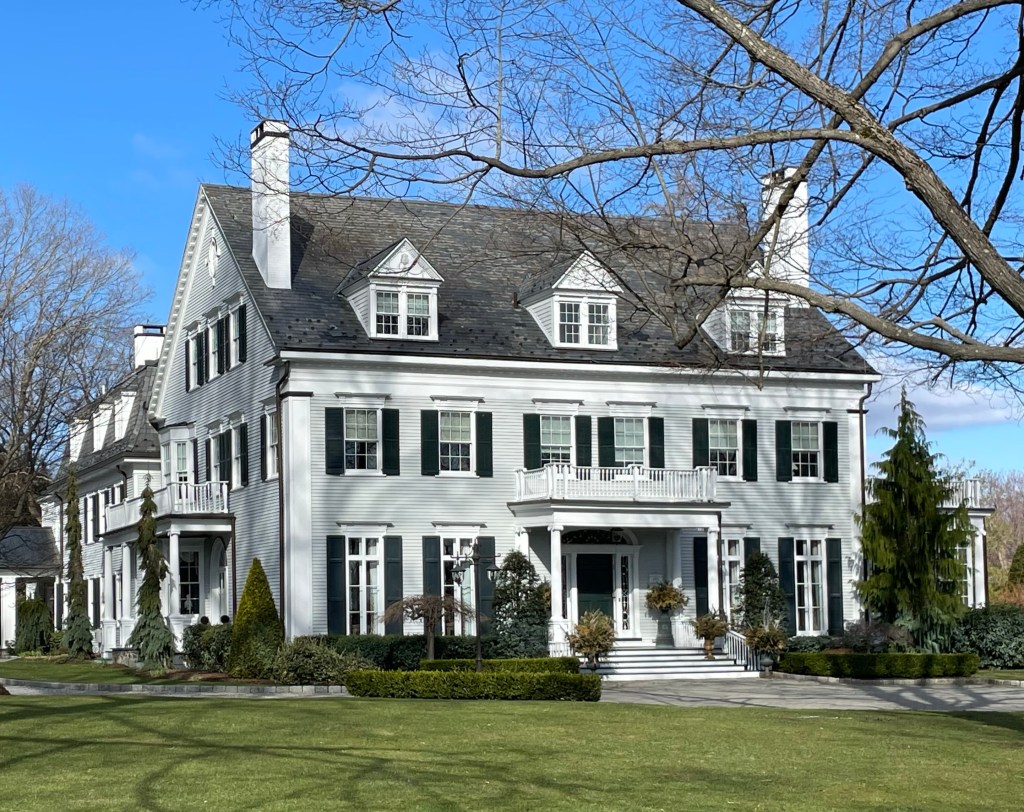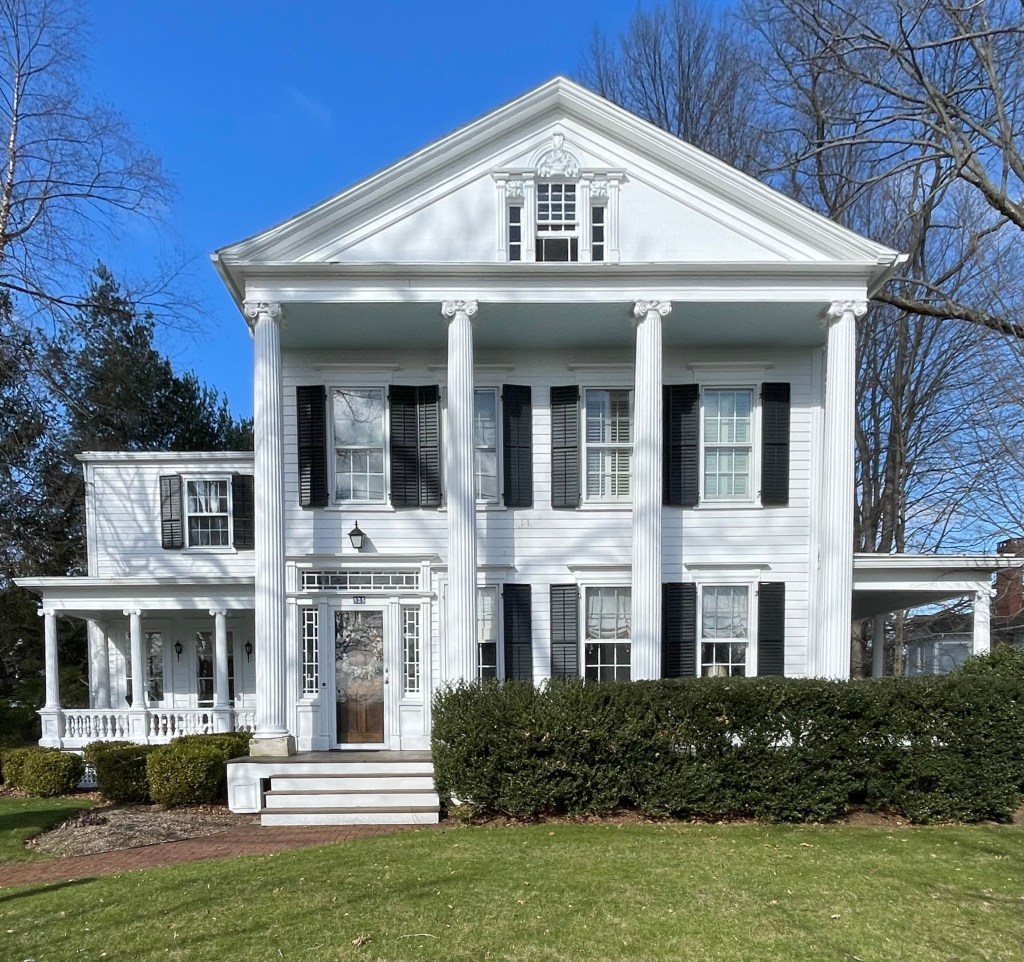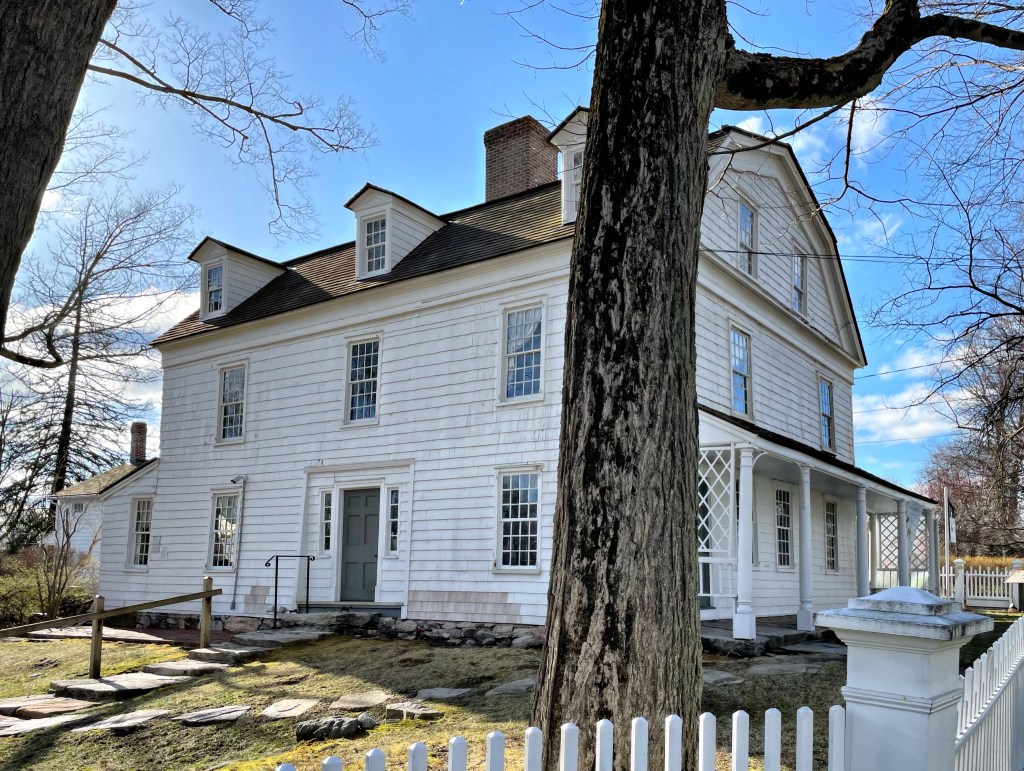
Rev. Samuel Nott House // 1784

Reverend Samuel Nott (1754-1852) was born in Saybrook, Connecticut and did not have an easy beginning. When he was young, the family home burned, destroying all family possessions. Some years later on a business trip, he was beaten and robbed. At twelve years old, he began working for his father, later becoming a blacksmith by 16. For a while, young Nott lived with a Rev. Dr. Welsh of Mansfield. The older man had a profound religious influence on the young lad. At age 23, Nott entered Yale, but the college closed when British troops entered New Haven. In 1782, he married Lucretia Taylor and passed his examination for the ministry. A year before his marriage, he was invited to serve a parish in West Farms, now Franklin. He was apparently anxious to accept the position at the rural village, as the farmers attending the congregational church had fired their previous two pastors, he accepted the call regardless. During his tenure, he prepared more than 40 young men for college and schooled as many as 300 boys and girls in his home, some as boarding students. He was regarded as one of the most successful educators of the day. Education ran in his family as Samuel’s brother, Eliphalet Nott, would become President of Union College in Schenectady, NY for 62 years, from 1804-1866. Towards the end of Samuel’s life, in his 70s, his wife Lucretia, became an invalid, requiring care and finally passed in 1834. Three of his children also died. Nott passed away at 98 years old in this house, as a result of burns sustained from his own fireplace.

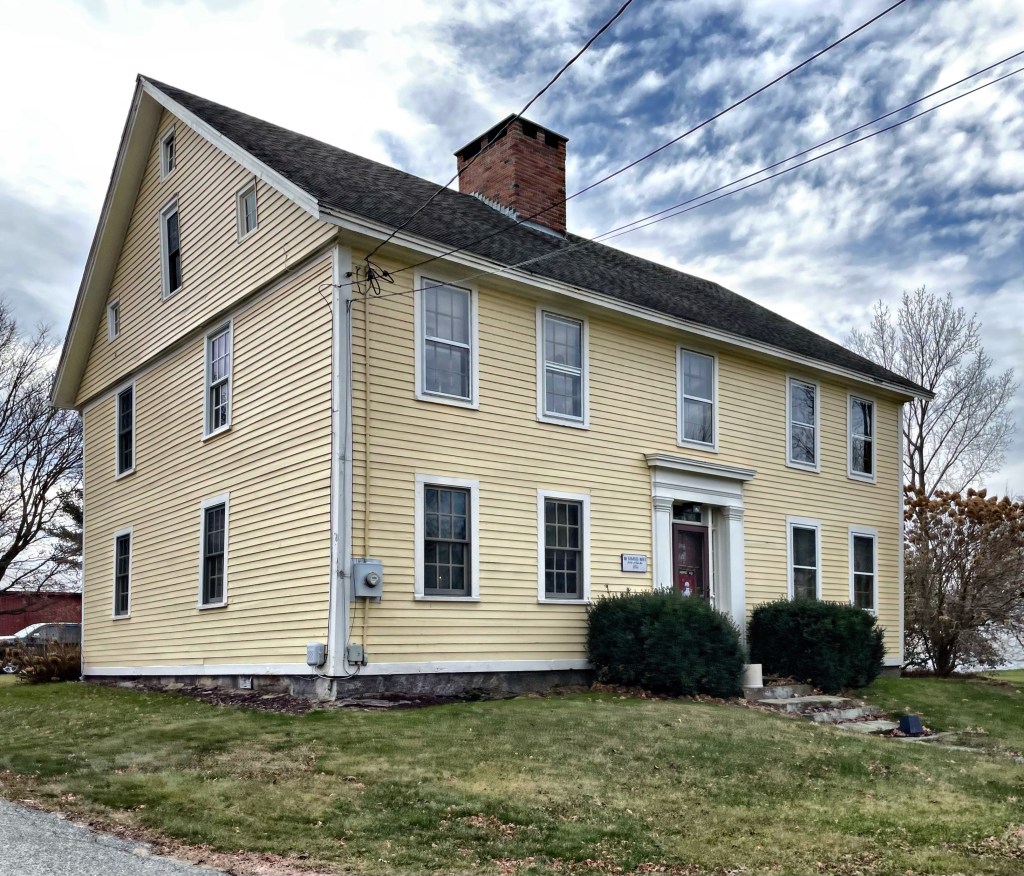
Dr. Stephen Sweet House // c.1845

Connecticut has some of the most stately early 19th century homes in New England, from the larger cities to rural towns like this beauty in little Franklin, Connecticut. This dwelling was built in the 1840s for Dr. Stephen Sweet (1798-1874) a physician near the town green. It was built after his second marriage, after his first wife’s death. His second wife, Matilda, died in the home during childbirth at age 44, along with their son just days later. The house is an excellent example of the Greek Revival style, with a gable roof running parallel to the main street, central entrance and corners framed with pilasters and frieze band at the cornice. At the side of the house, which also fronts a street, the stately home commands the corner with a second entry (maybe for in-patients), and a pair of quarter-round windows in the pediment.

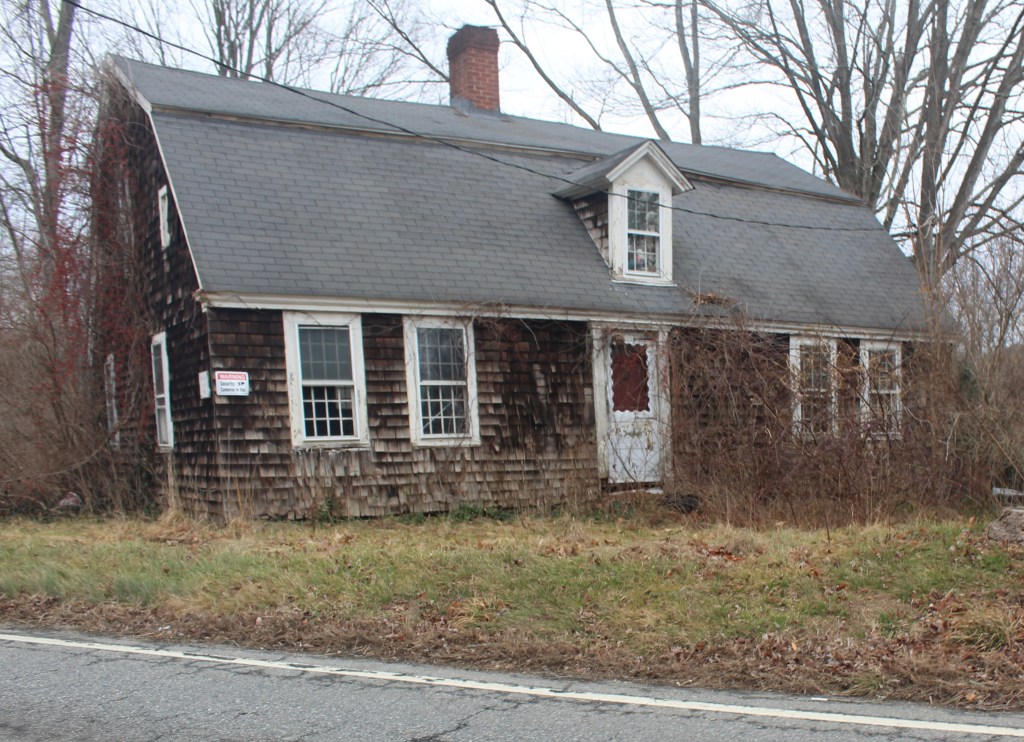
Nathaniel Backus House // c.1702

Welcome to Franklin, Connecticut, which frankly (pun intended) I had never heard of before driving through it not long ago! The town is located in New London County and was originally a part of Norwich, Connecticut and was called West Farms village. The town incorporated in 1786, creating its own town at that time, and the citizens decided to name their new town after Benjamin Franklin. I wonder if there are more place names in the United States after Benjamin Franklin or George Washington…

This is one of the oldest houses in the sleepy town of Franklin, and it was built around 1702 by Nathaniel Backus, about the same time he was married to his wife, Elizabeth. The Georgian Cape house features a large gambrel roof and a small gabled dormer. The house is representative of many of the earliest homes which once existed in this landscape in the early 18th century. The home appears to have been vacant for some time, and in 2022, was auctioned off. Its future is unclear at this time sadly.

Seymour House // 1760

While this house appears to have been built in the mid-1800s as a Greek Revival home, it was actually built nearly a century earlier as one of the oldest extant properties on Main Street in Ridgefield, CT! Located on proprietors lot #20, the original building lots laid out for the new town of Ridgefield, this house appears to have been constructed in 1760 for Matthew Seymour (Seamore) and consisted of what is now the ell of the home (left side). Seymour operated one of the trade posts in town that engaged in trade with a nearby native Ramapo Tribe. The home was likely re-oriented and added onto with a more formal Greek Revival wing with its gable roof facing the street before the Civil War, a configuration it retains to this day.

Czar Jones House // c.1787

Czar Jones (1789-1869), a woodworker and a justice of the peace, served in the War of 1812 and later was a partner in the local carriage manufacturing company in Ridgefield, CT. Jones bought a circa 1787 house on Main Street in 1818 and modernized it to serve as his family’s residence. The modest late-Georgian house was updated in the Federal style. Not long after Czar’s death (his only wife died 1851) the home was then purchased by New York City publisher, Albert H. Storer and his wife Sophie, the latter was the founder and first president of the local Ridgefield Garden Club. The couple divorced in 1915, and Sophie moved to Europe before remarrying and settling in California. The home that was intended as a summer getaway for the family, became Mr. Storer’s primary residence as he remained in Ridgefield with his son Francis, daughter-in-law, and grandchildren, until his death in 1933.

Rockwell House // c.1850

Built in 1850, likely as a late-Greek Revival or Italianate style home, this property on Main Street in Ridgefield was completely “modernized” in the 1880s in the Queen Anne style popular at the time. The home was originally built for Francis Asbury Rockwell (1818-1881), a tin-smith, wine-maker and inventor who married Mary Lee Everest, who also had deep roots in the community and was a daughter of a local Revolutionary War captain. The couple built a home on Main Street and raised their children there until Francis and Mary died in 1881 and 1883 respectively. The family home was inherited by their eldest son, Charles Lee Rockwell, who became the director of the First National Bank in town. Charles updated the house to give it the Queen Anne Victorian flair we see today.

Lounsbury House // 1896

One of the (many) stately homes on Ridgefield’s Main Street, this massive Neo-Classical mansion is also among the most visited in Fairfield County. Lounsbury House was built in 1896 by former Connecticut Governor Phineas C. Lounsbury. While attending the 1893 Chicago World’s Fair, Governor Lounsbury was so taken by the Connecticut State Building that he built a replica to serve as his family home. The Connecticut State Building was designed by Waterbury-based architect, Warren R. Briggs at a cost of $112,000! Gov. Lounsbury loved this house, which he named “Grovelawn” until his death in 1925. After his death, his heirs were unable to maintain the massive home, and it started to decay. The Town of Ridgefield did not want to see the mansion demolished, and in an early example of historic preservation, the town purchased Lounsbury House in 1945. A school was built behind and nearly ten years later, the home was leased to the The Ridgefield Veterans’ Memorial Community Association. The home is now managed by a board and rented for weddings and community events.

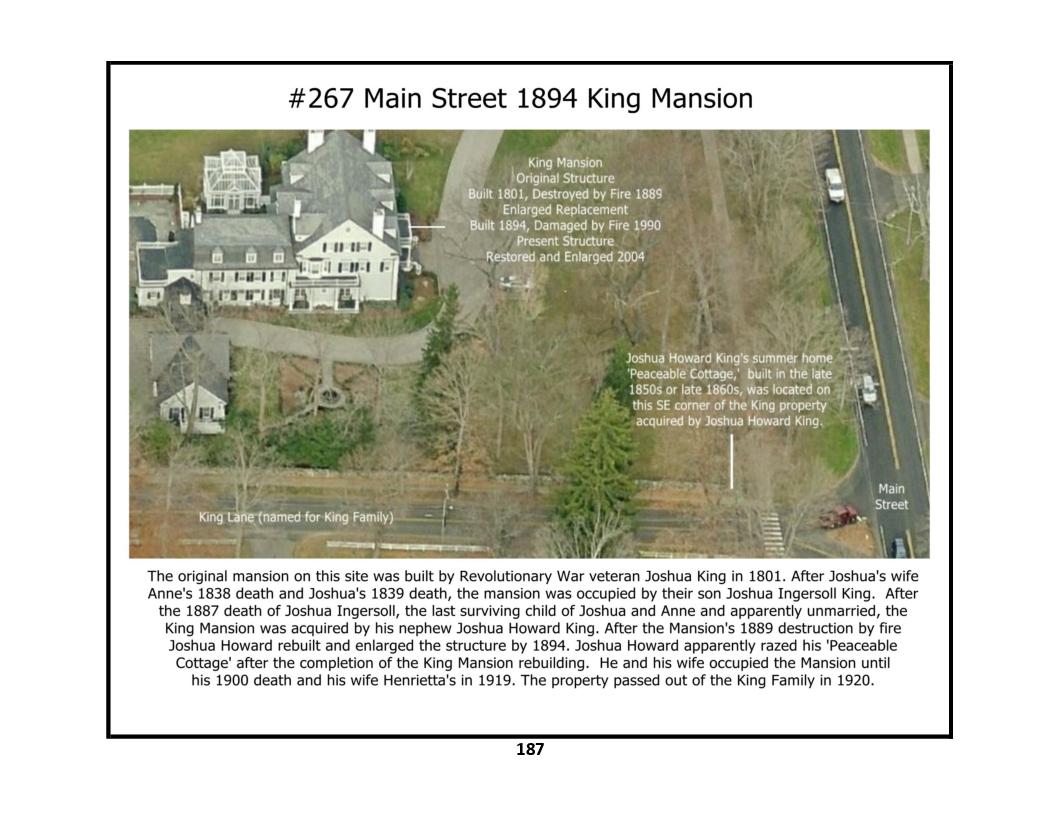
King Mansion // 1894

After the American Revolution, Lt. Joshua King settled in Ridgefield and built the King Mansion in 1801, a Federal style home that commanded the Main Street lot. King was born in Bridgewater, Massachusetts and fought in the Revolutionary War near the border of Connecticut and New York. After the war, he settled in Ridgefield and married one of the most eligible bachelorettes in town Anne Ingersoll. Anne was the daughter of the Rev. Jonathan Ingersoll, pastor of the Congregational Church of Ridgefield. After a long life running a store and raising a family, Joshua died in 1839, a year after his wife. The mansion was inherited by their son Joshua Jr. until his death in 1887. In 1889, a fire destroyed much of the house. When it burned down, The New York Times described it as “the grandest old mansion in the village.” It was quickly replaced by the current house, modeled after the original but larger, which was placed much farther back from the road in the Colonial Revival style. Fire damaged the house again in the 1990s, and the present structure was restored and enlarged from 2002-2004, its HUGE!

Henry Smith House // c.1845

This stunning temple-front Greek Revival home on Main Street in Ridgefield, Connecticut is an absolute dream! The home was built in the mid-19th century for Henry Smith, who operated a shirt factory in town with his father. The house’s gable roof facing the street completes a pediment, which is supported by a projecting portico of four colossal Ionic columns. In the pediment, a gorgeous Palladian window adds so much character to the facade. I love a good temple-front classical home!

Keeler Tavern // 1713

Around the year 1713, Benjamin Hoyt built a home for himself and his family on Lot 2 of the laid out building lots along Main Street of Ridgefield CT. The building was originally a one room dwelling with a stone fireplace and no basement and was located next to the David Hoyt mansion (aka The Fountain Inn). After several years, he expanded the property by building around and above the structure, to give it the gambrel roof and size we see today. More than 50 years later, in 1769, the property was purchased by Hoyt’s son-in-law, Timothy Keeler. Timothy Keeler and his wife converted the building into an inn in 1772, just prior to the beginning of the American Revolutionary War. Keeler sided with the American revolutionaries and was active in the local militia. After the Battle of Ridgefield, British forces fired on the Keeler Tavern, because Keeler was an enemy. One of the cannons used to pummel the tavern is still lodged in a corner post of the house to this day. After later owners in the Keeler Family, the property was purchased by world-renowned architect Cass Gilbert, who turned it into his family’s summer home in 1907. In doing so, he made various improvements and additions to the building, in particular he designed a Garden House and added a sunken around the year 1910. Gilbert would also design a fountain as a gift to the town, which sits almost opposite his family’s summer residence. The property was purchased in the 1960s and has since been a historical museum.