Built in 1826 as the Eagle Hotel, this stunning federal structure is representative of the transition from the 18th century tavern, with its domestic scale and features, to a larger-scale 19th century hotel. The town of Newport was situated at the convergence of two stagecoach turnpikes, which transported people through the town regularly. Due to this, James Breck and Josiah Forsaith built the Eagle Hotel to meet that demand. By 1856, additional hotels were built and then owner, S.H. Edes converted the building into a business block. The upper floors were later occupied as apartments and porches were added to the front facade on each floor (since removed). The building is now home to Salt Hill Pub.
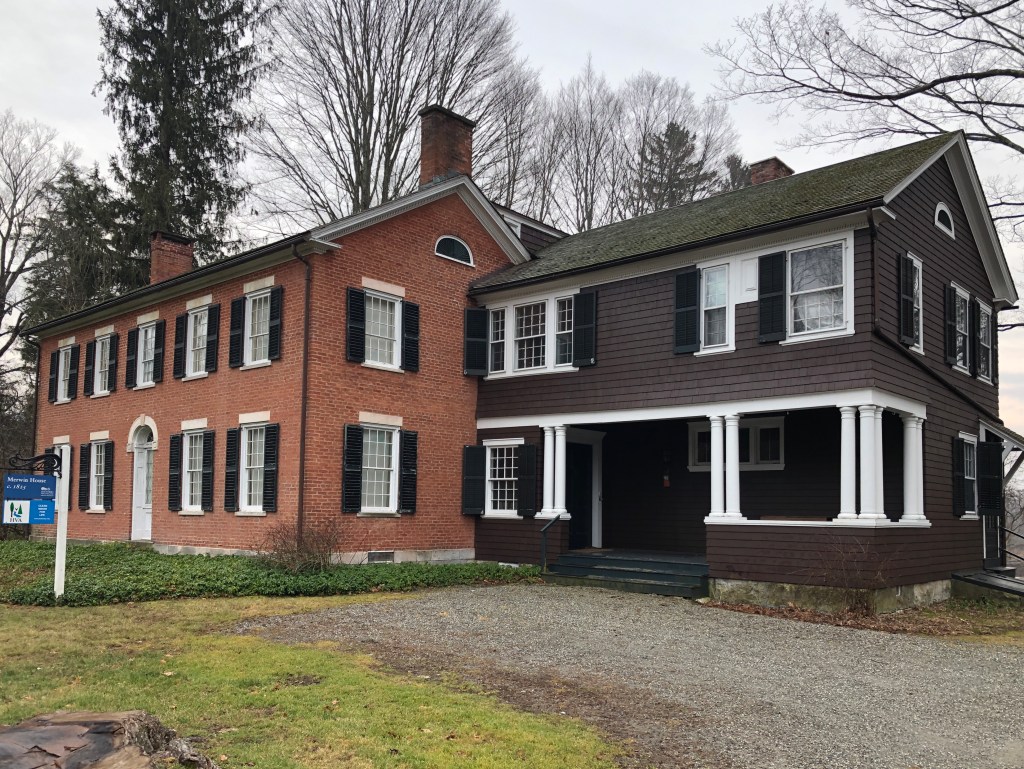
In about 1825, Francis and Clarissa Dresser built this charming brick Federal house in the rural town of Stockbridge, MA. Just 25 years later, the railroad arrived to town, connecting it to Connecticut and New York to the south, opening the town up as a leisure destination for wealthy city dwellers looking to escape the noise and congestion of the city. The period following the Civil War through World War I saw the Gilded Age reach the Berkshires. With artists, writers, financiers, and industrialists flocking to the rural hills of western Massachusetts for seasonal escapes. In 1875, William and Elizabeth Doane, wealthy New Yorkers, purchased Merwin House from the Dresser family to use as a summer retreat. As the Doane family grew to include two young daughters, Vipont and Elizabeth, they added a Shingle Style side addition to the original brick structure. The home became known as “Tranquility”, even after the home was willed to daughter Vipont. After a couple marriages, Vipont married Edward Payson Merwin, a New York stockbroker. Historic New England acquired Merwin House in 1966, shortly after the death of Marie Vipont deRiviere Doane Merwin, known as Vipont. It was her desire to leave Merwin House as a museum, as her will states, “as an example of an American culture which is fast becoming extinct.” The space is occasionally open for tours and is partially occupied by the Housatonic Valley Association.
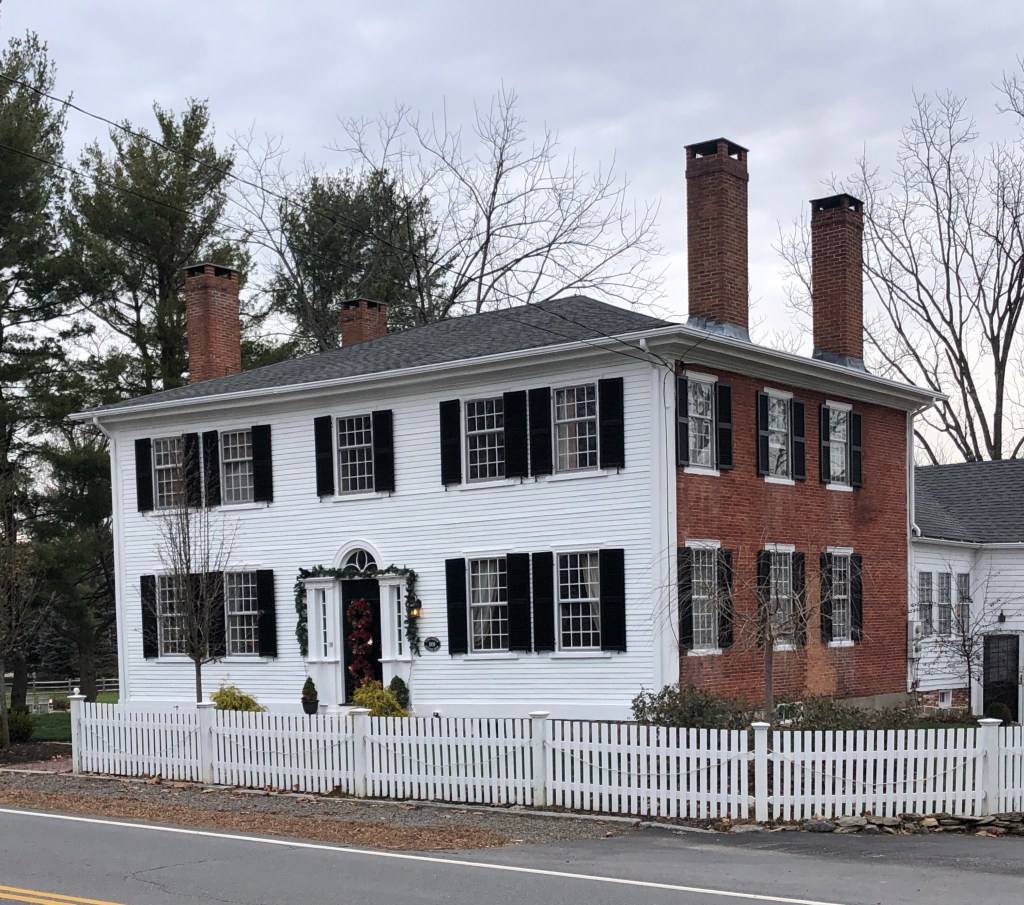
All I want for Christmas is a brick Federal house! This home in Stockbridge, Massachusetts was constructed in 1830 by Thomas Carter (1777-1863) and his wife Anna. The couple farmed the property and had eleven children (plus two who died in childbirth). According to a family history, the lime for the mortar on the home was burned in a kiln on the property by Thomas. The ancestral home remained in the family for generations, including by John Calvin Calhoun Carter, a town selectman, who added a full-length porch on the home in the mid-late 19th century (since removed). The home’s rural charm remains even-though it sits on a busy road in the Berkshires.
Stockbridge, Massachusetts was settled by English missionaries in 1734, who established it as a praying town (an effort to convert the local Native American tribes to Christianity), for the Mohican tribe known as the Stockbridge Indians. The township was set aside for the tribe by English colonists as a reward for their assistance against the French in the French and Indian Wars. From this, a Yale-educated missionary, John Sergeant began converting native people to Christianity, essentially stripping them of their own religious culture and practices. Although Massachusetts General Court had assured the Stockbridge Indians that their land would never be sold, the agreement was rescinded. Despite the aid by the tribe during the Revolutionary War, the state forced their relocation to the west, to New York and then to Wisconsin. The village was then taken over by British-American settlers who created the township.
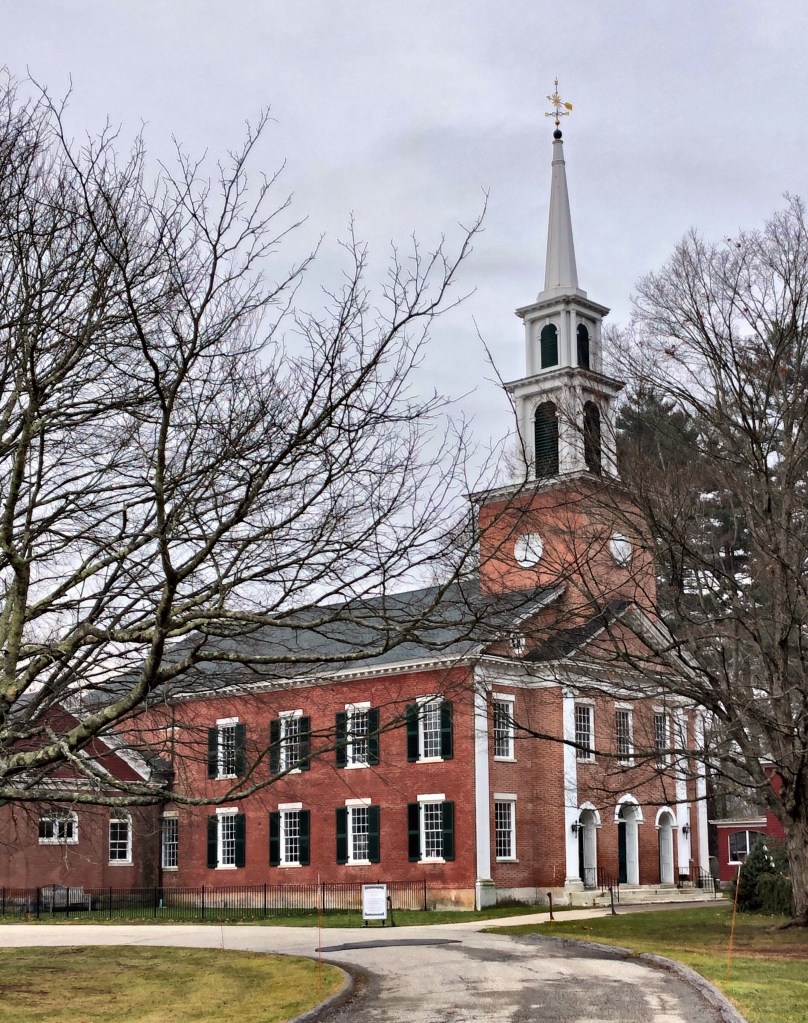
The first congregational church here was formed by Sergeant in 1734, and later succeeded by Jonathan Edwards, another minister. During his time in Stockbridge, Edwards wrote his masterpiece, Freedom of the Will, which remains one of the most studied works in American theology. Edwards later left the church to become the President of The College of New Jersey, now known as a little school by the name of Princeton. The first church was built in 1739, later replaced by a second church building that stood from 1785 to 1824. The present brick building was built in 1824 in the Federal Style. The space was occupied for town functions until the 1840s, when an official town hall was erected next door, demarcating the separation of church and state. The stunning church marks the immense influence religion had in the early colonial days of New England and the impact it had on native peoples (for better or worse).
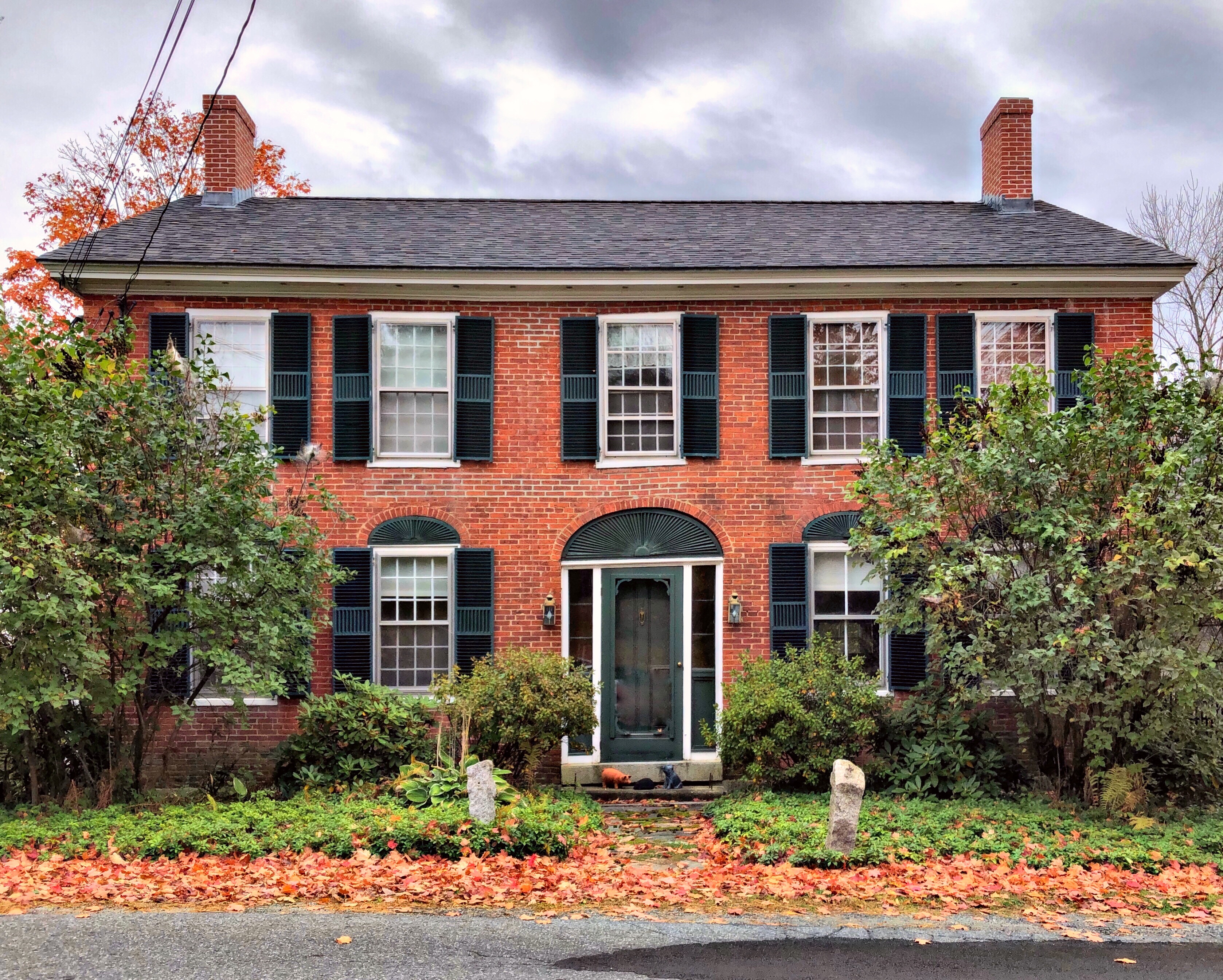
This stunning Federal home in Hollis, NH was built around 1800 for Josiah Conant, likely as a wedding gift to his new wife, Lucy. Conant was a cabinetmaker by trade and his shop was located across the street, and according to local sources, he used his woodworking skills on the inside and out of his home, with intricate details including mantels, wainscoting and exterior cornice. Half of the second floor was originally a dance hall and was later used for a reading or writing school school run by Lucy. The brick-end Federal home features a Palladianesque entry with sidelights and an arched transom with historic windows!
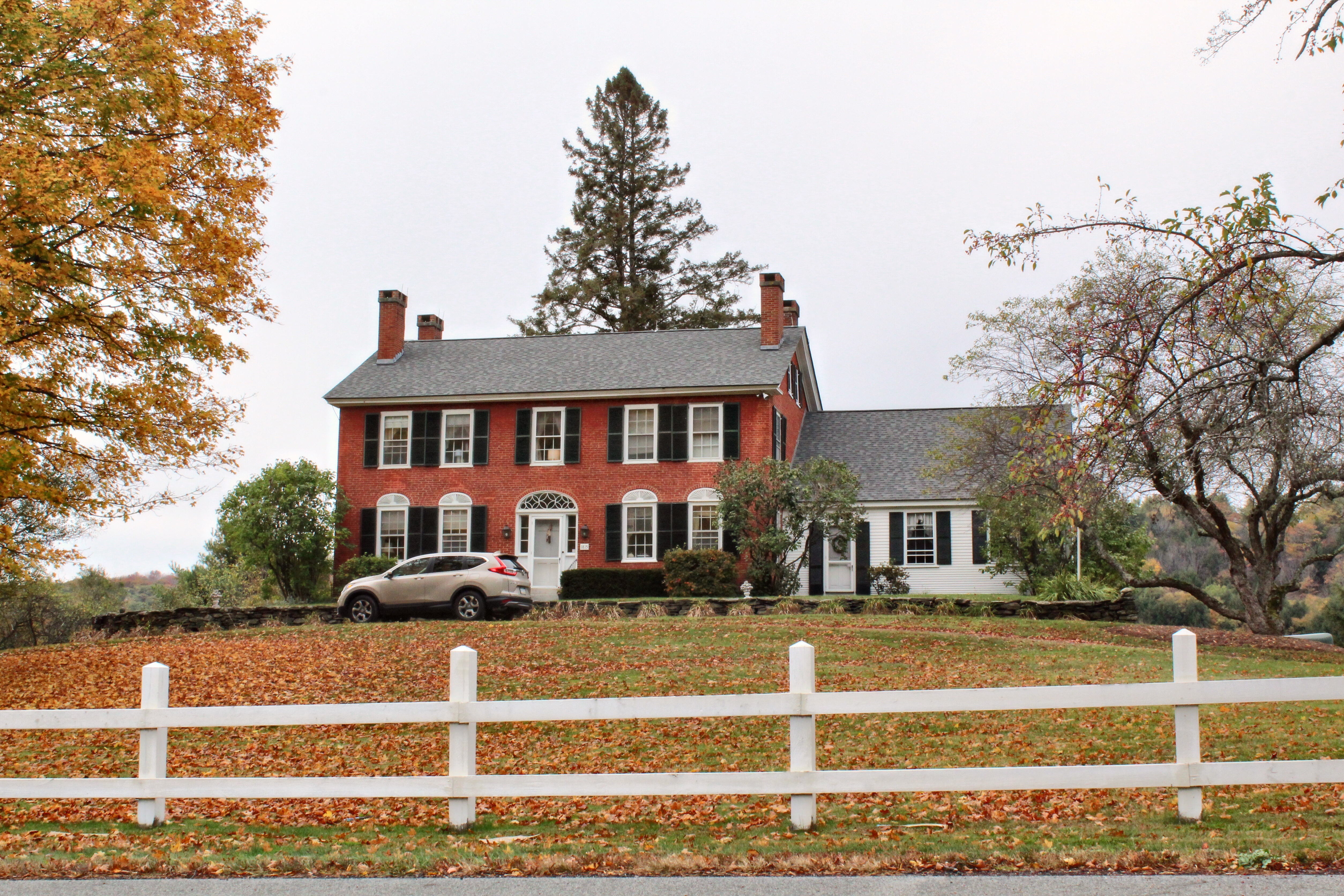
Hezekiah Porter (1783-1851) built this house in 1822 for him and his family, right in Thetford Center, Vermont. Porter was born in 1783 in Hebron, Connecticut, where he presumably learned the clothier trade, before moving to Thetford in 1806. Porter later operated a brickyard, serving as contractor to the Thetford Center Methodist Church, Town Hall and several other brick homes in town dating from the 1820s and 1830s. Porter lived on this large property with his wife and ten children until his death. The property was later occupied by Hezekiah’s son, Amos P. Porter. In 1888, Amos farmed about 200 acres and had 7 cows, 50 Merino sheep and 18 Jersey cattle!
In New England, brick houses are more scarce for the simple fact trees are everywhere, brickyards were not. As towns and cities developed all across the region, some towns found they had a lot of clay in their soil, perfect for the manufacturing of brick. In Thetford, a man named Hezekiah Porter was the first to start a brickyard, manufacturing bricks for construction projects around the area. By the 1820s, a couple brick houses were built in the Thetford Hill area of town including the Hosford House, one of the earliest. Thomas Turner, a builder constructed the Hosford House and this home nearby for his own use, both utilizing Porter’s bricks. This fine Federal home was likely a great advertisement for Turner’s building skills.
Is there anything better than a brick Federal style house?
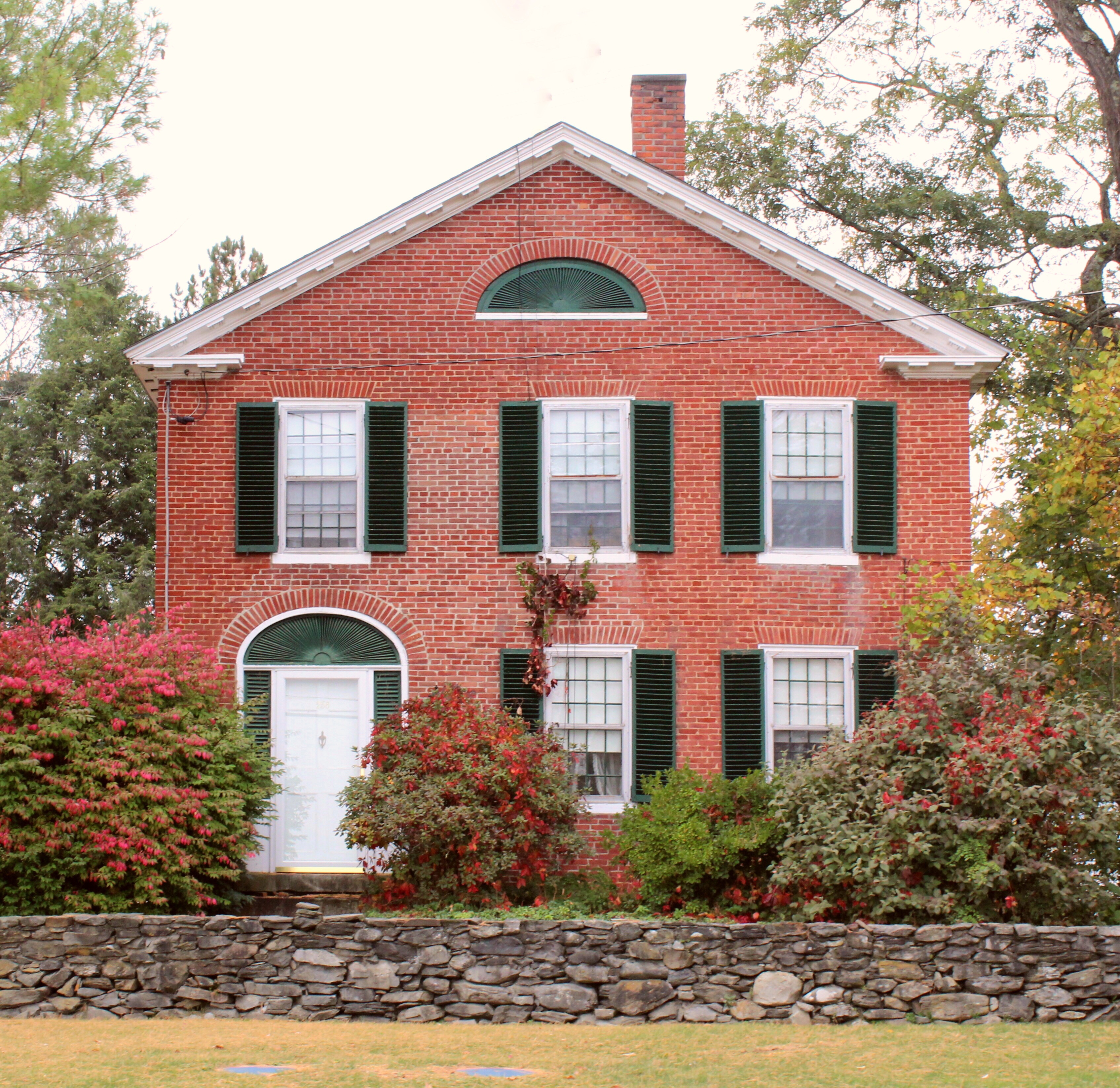
This house in Thetford, Vermont was built for Heman Hosford in 1821 from bricks produced by Hezekiah Porter, who established the earliest known brickyard in Thetford. Hosford sold the house to Enoch Slade in 1837 and it remained in the Slade Family for over seven generations. He became a prominent citizen of Thetford, was a surveyor and for many years justice of the peace, and in the latter part of his life was generally known by the title of “Squire Slade.” He was a supporter and trustee of Thetford Academy, in which his children and grandchildren were educated. He was a member of the Congregational church and an earnest supporter of the principles of the Republican party. The brick gable front home features a louvered sidelights and fan over the front door and in the gable.
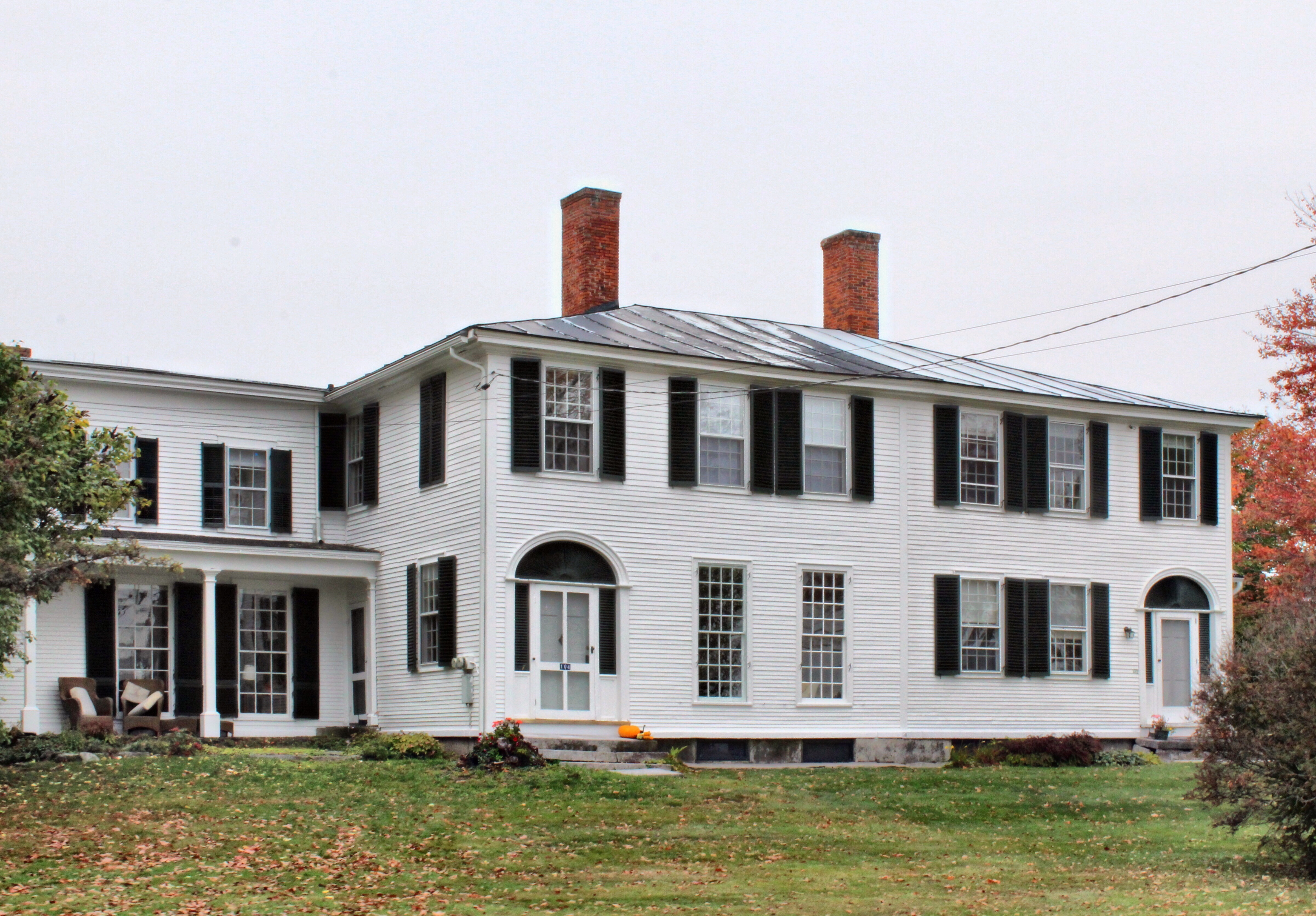
This unique double-house was constructed in 1817 for Capt. William Harris Latham and Dr. Thomas Kendrick, brothers-in-law, merchants and partners in a store which stood until it was destroyed by fire about 1845. Latham served as a Captain in the War of 1812, and later was an important benefactor of the nearby Thetford Academy, donating money and building materials for the original construction. Wallpaper from this house depicting the City of Leon was donated by a previous owner, Mrs. Charles Vaughan, to the Currier Gallery in Manchester, NH. The homes are an excellent example of the Federal style with a vertical board at the center of the main house facade demarcating the property line. Blind fan transoms and multi-light double-hung windows add a lot of charm to the historic homes.
In 1795, Ebenezer King bought 26 acres of land on Main Street in Suffield, Connecticut for the development of his own house. He at the time was in the height of his prosperity and was estimated of having a net worth of $100,000. He eventually sold his property in 1811 to William Gay, who was a leading lawyer in Hartford County, and the postmaster of Suffield, actually running the town’s post office out of this home for over 30 years. The home is currently owned by Suffield Academy as the headmaster’s home. It is an excellent example of Federal style architecture and features two Palladian windows!



 Buildings of New England