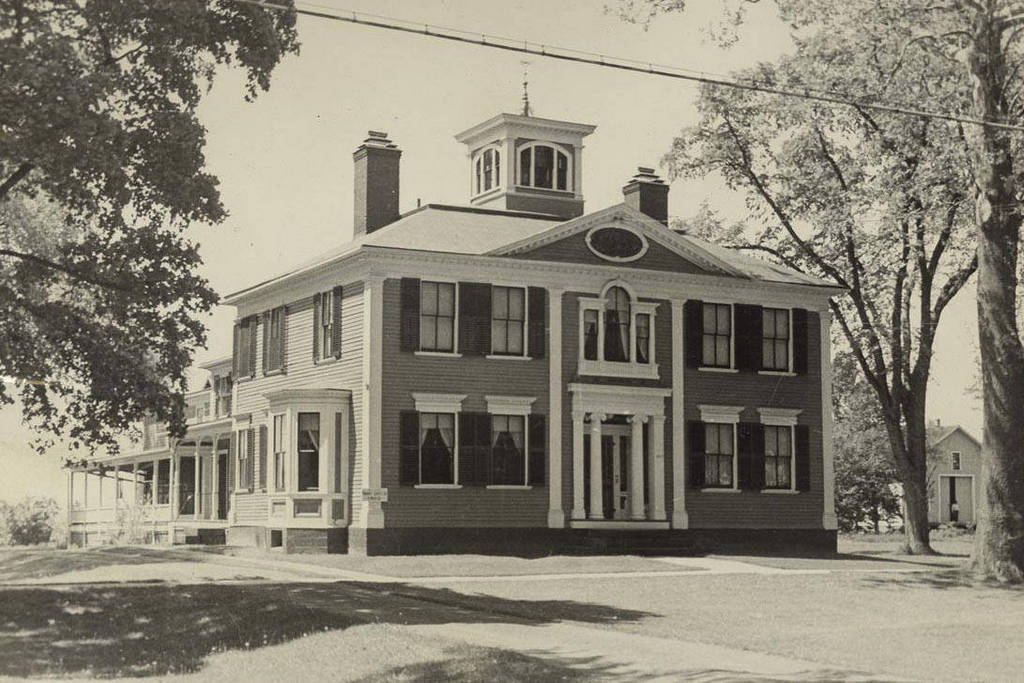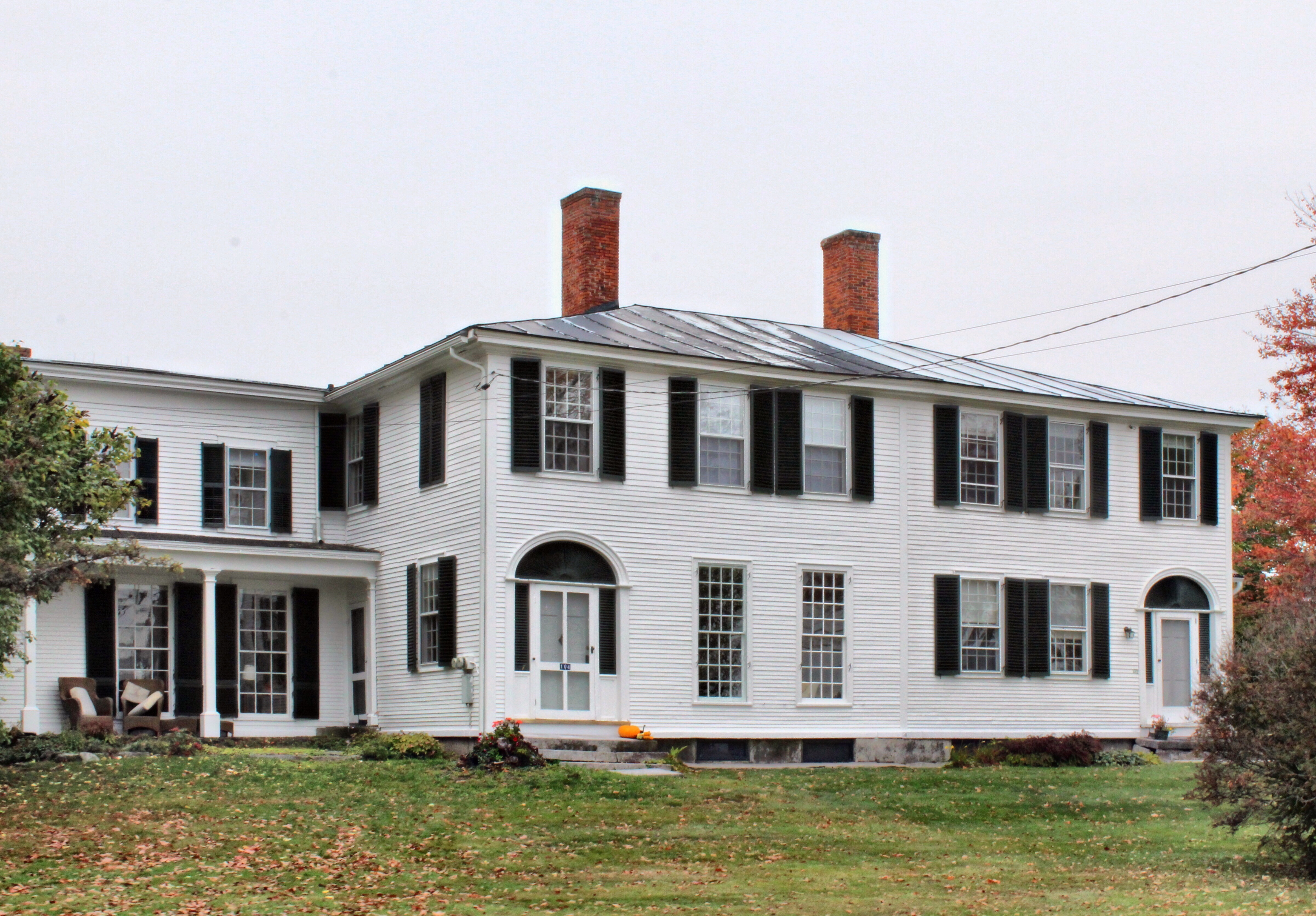
Latham-Kendrick Houses // 1817

This unique double-house was constructed in 1817 for Capt. William Harris Latham and Dr. Thomas Kendrick, brothers-in-law, merchants and partners in a store which stood until it was destroyed by fire about 1845. Latham served as a Captain in the War of 1812, and later was an important benefactor of the nearby Thetford Academy, donating money and building materials for the original construction. Wallpaper from this house depicting the City of Leon was donated by a previous owner, Mrs. Charles Vaughan, to the Currier Gallery in Manchester, NH. The homes are an excellent example of the Federal style with a vertical board at the center of the main house facade demarcating the property line. Blind fan transoms and multi-light double-hung windows add a lot of charm to the historic homes.

Gay Mansion // 1795

In 1795, Ebenezer King bought 26 acres of land on Main Street in Suffield, Connecticut for the development of his own house. He at the time was in the height of his prosperity and was estimated of having a net worth of $100,000. He eventually sold his property in 1811 to William Gay, who was a leading lawyer in Hartford County, and the postmaster of Suffield, actually running the town’s post office out of this home for over 30 years. The home is currently owned by Suffield Academy as the headmaster’s home. It is an excellent example of Federal style architecture and features two Palladian windows!

Thaddeus Leavitt Jr. House // 1800

One of the (many) grand homes on Main Street in Suffield is this Federal style home built in 1800 for a 21-year-old Thaddeus Leavitt. Like his father, Thaddeus was a merchant with a store in Suffield, and was known by the title Colonel, meaning he probably served in the local militia after the Revolutionary War. Immediately after the home was completed, Thaddeus got married and moved into the home with his new wife, Jemima Loomis. They lived happily in their mansion until Thaddeus’ death in 1828 and his wife’s death in 1846. The home was altered in the 1850s with Italianate features including a belvedere and bay windows, which lasted into the 20th century. The home was recently restored back close to original conditions with the removal of the belvedere at the roof.

Colton House // 1806

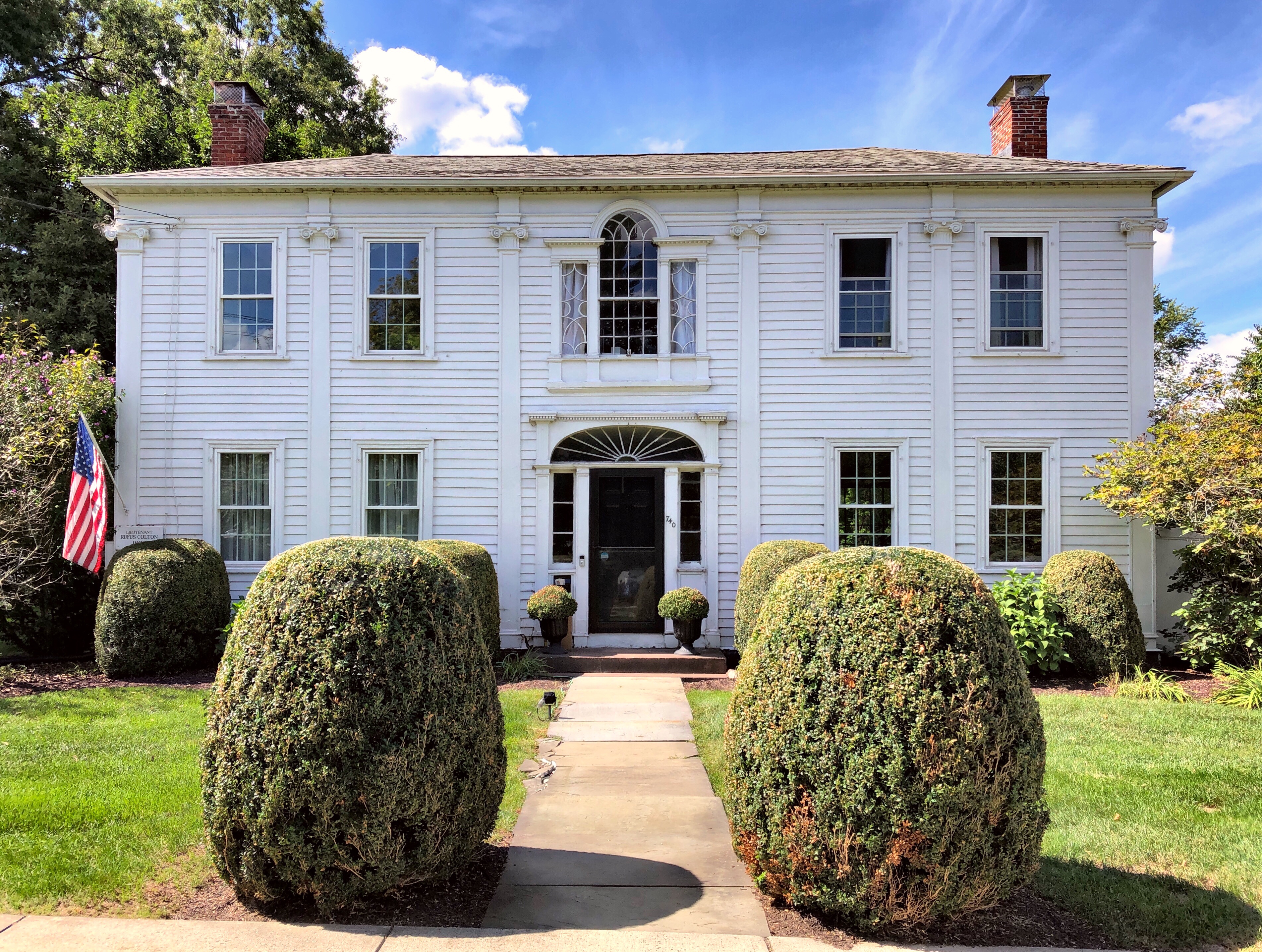
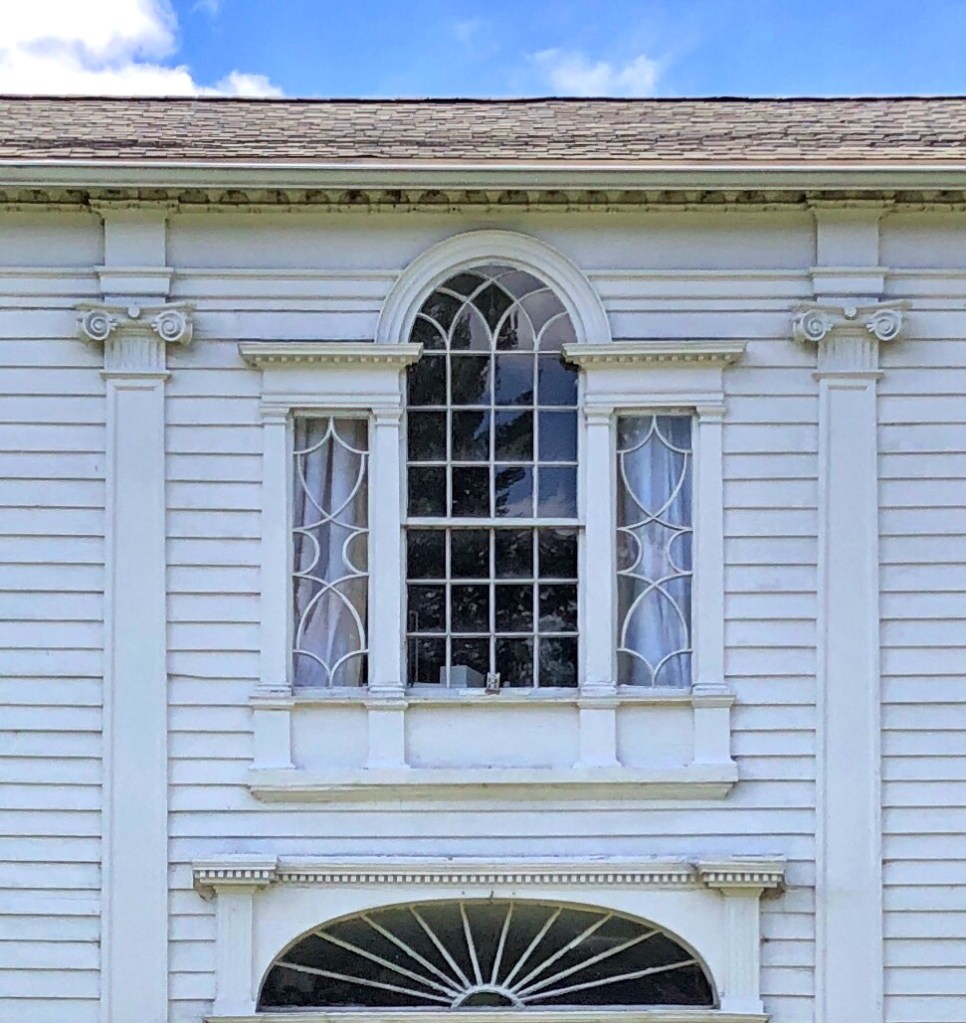
Similar to the Charles Leonard House a block away, the Colton House on Main Street in Agawam remains as a historically and architecturally significant Federal style home in Western MA. The home was built in 1806 for Rufus Colton (1776-1862), a couple years after he married his first wife. The home was likely constructed by a local builder who took inspiration from Asher Benjamin’s early plan books and Captain Leonard’s home nearby. The house was later owned by Martin Luther who operated the home as a tavern for travelers along the route from Hartford to Boston. It was later owned by Isaac Cooley and documented under the Historic American Buildings Survey. Architecturally, the house features a stunning broad entry surround which incorporates a generous elliptical fan-light with leaded glass above a paneled door. Directly over the main entry on the second floor is a Palladian window with the side panels showing the urn and leaf pattern, seen only in high-style Federal homes.

Capt. Charles Leonard House // 1805

This stunning home on Main Street in Agawam, MA, was built in 1805 as a high-style Federal home. The property was developed for Captain Charles Leonard (1764-1814) who purchased twenty-five acres of land on the eastern side of Main Street at the center of town. Leonard was a graduate of Harvard University who later turned to farming. He attained the rank of Captain while serving in the local militia, and was known by that title thereafter. It was in 1805 that Leonard constructed Agawam’s fourth tavern on the western end of his property to serve travelers as the first stop on the Hartford to Boston stage run. He likely hired a local builder who took inspiration from Asher Benjamin’s early plan books. The home was later converted to apartment units until it was purchased and restored by Minerva Davis, a wealthy citizen from town, who then created a board of trustees to operate the building as Agawam’s Community House.

Edgartown Town Hall // 1828

Located on the idyllic Main Street in Edgartown, on Martha’s Vineyard, this historic building stands out for its design. It was built in 1828 as the first meeting house for the Methodists of Edgartown, the former building was shared with the Baptists there, but was quickly outgrown. Ten years after this church was built, the space was already becoming too cramped with the booming population of the town due to the success of the whaling industry here. The Methodists then constructed a larger church (known as the Old Whaling Church nearby and sold this structure to the town as a new Town Hall. After the Town bought it, the first floor was remodeled to accommodate the fire engine and also the Town’s police station. Today, it contains town offices on the ground floor and the former upstairs church
auditorium is now used as a movie theater. The infamous nails on the chalkboard scene in the movie Jaws was filmed in this building!

Nathaniel Lord Mansion // 1812

Thought to be the largest home in Kennebunkport, the Nathaniel Lord Mansion remains one of the most significant and ornate in the region. Captain Nathaniel Lord (1776-1815) was the son of Tobias Lord, a Revolutionary War veteran and later, a shipbuilder in Kennebunk. He followed his father’s footsteps and ran a shipyard, owning many ships and being one of the most prosperous merchants in the area. Kennebunkport was an important shipbuilding center and port of entry until during the War of 1812, when the British blocked the mouth of the Kennebunk River. All ship building and commerce ceased in this area at that time. Consequently, with no shipping being done, and no ships being built, the ship carpenters became idle. Nathaniel Lord commissioned these men to build him a large house and barn upon a piece of land given to his wife, Phoebe Walker, by her father Daniel Walker, who’s home stands to the north. The home was passed down for generations in the female line until the 1970s when it was restored and converted to the gorgeous Nathaniel Lord Inn.

William Jefferds House // 1804

William Jefferds Jr. was born August 30, 1779 in Kennebunk. On October 25, 1802 he married Sarah (Sally) Walker who was born in Arundel on March 4, 1783. Twenty years later, in 1803, Captain Daniel Walker gifted his son-in-law, Captain William Jefferds, Jr., “80 square rods of land, with love and affection” on the lane leading to Walker’s Wharf (he also gifted land to his other son in law, Nathaniel Lord. In 1804 the 2-story, Federal-style building that now houses Captain Jefferds Inn was built as their private home.

Capt. Jefferds was a ship owner and captain in the West Indian trade; he later became a merchant in Kennebunkport. He and Sarah had 11 children, and their family was considered one of the most aristocratic in Kennebunkport. Following Sarah’s death at age 88 in 1871 (her husband had predeceased her in 1851), the household furniture was sold at public auction and the home sold outside of the family.

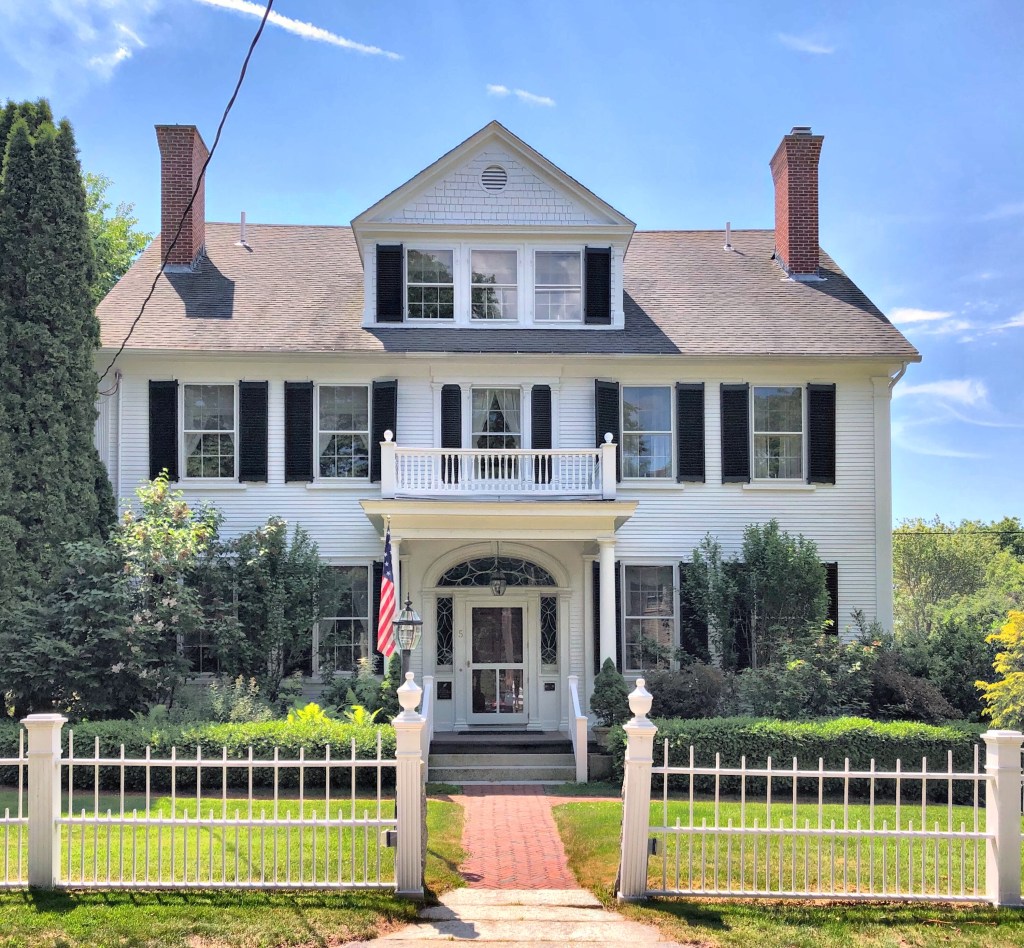
The house was a two-story hipped roof Federal style dwelling, somewhat outdated by the latter half of the 19th century. By the 1880s, the Agnew Family who owned it at the time, had the home remodeled with Colonial Revival detailing, including the portico and large central dormer. The home was eventually converted to an inn, and is known as the Captain Jefferds Inn.

Check the Inn’s website for more images and history!

Louis T. Graves Memorial Library // 1813

What is known today as the public library of Kennebunkport, the Louis T. Graves Memorial Library was not always used for books and learning. Built in 1813 as a branch office of the Kennebunk National Bank, the brick structure was valuable as a local bank for the growing port neighborhood. By 1831, the Kennebunk Bank’s charter was revoked and they sold their branch location to the U.S. Government as a Customs House (the second floor was already partially occupied as a Customs House). By the end of the 19th century, the second floor was leased out to the Kennebunkport Public Library. The Customs District was eliminated in 1913, and by 1920, the building was acquired by Mr. and Mrs. Abbott Graves, who purchased the property at auction for $1,350., the couple lived just a couple blocks away in a rare Prairie style home. In 1921, the Graves family deeded the property to the Library Association on the condition that the Library be named in memory of their deceased son Louis T. Graves who valued books all his life.

Knowles House // c.1820

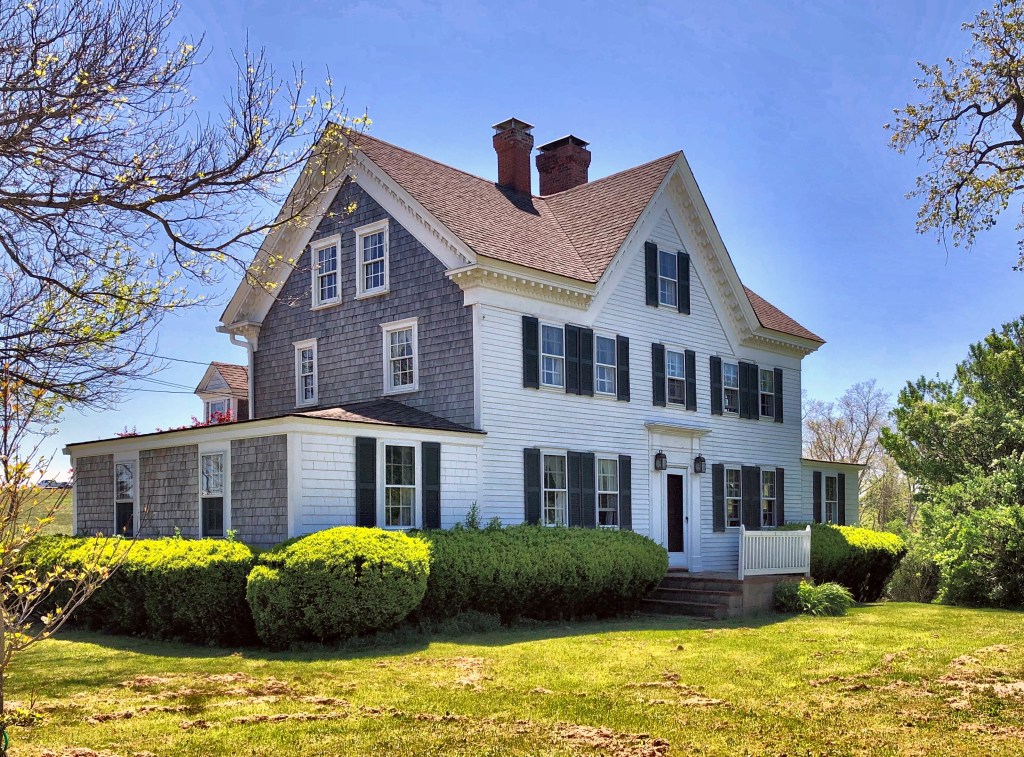
Located just a stones throw from the Penniman House, the c. 1780 Knowles House stands at the historic end point of Fort Hill Road. Accounts differ on its history. Some sources explain the home was built in c.1790 by Seth Knowles (who died in 1787) a prominent citizen of Charlestown, Mass., and one of the original members of the Bunker Hill Monument Association and of its board of directors. From my research, the home appears to have been built for Thomas Knowles, Seth’s son, and was later willed to his son, also named Thomas. Thomas Knowles Jr., was born in 1803, in Eastham, and in early life settled at New Bedford, engaging in the whale fishery industry. Deed research would be required to find out more. The gorgeous Federal home features a large, center cross gable with dentils at the cornice.