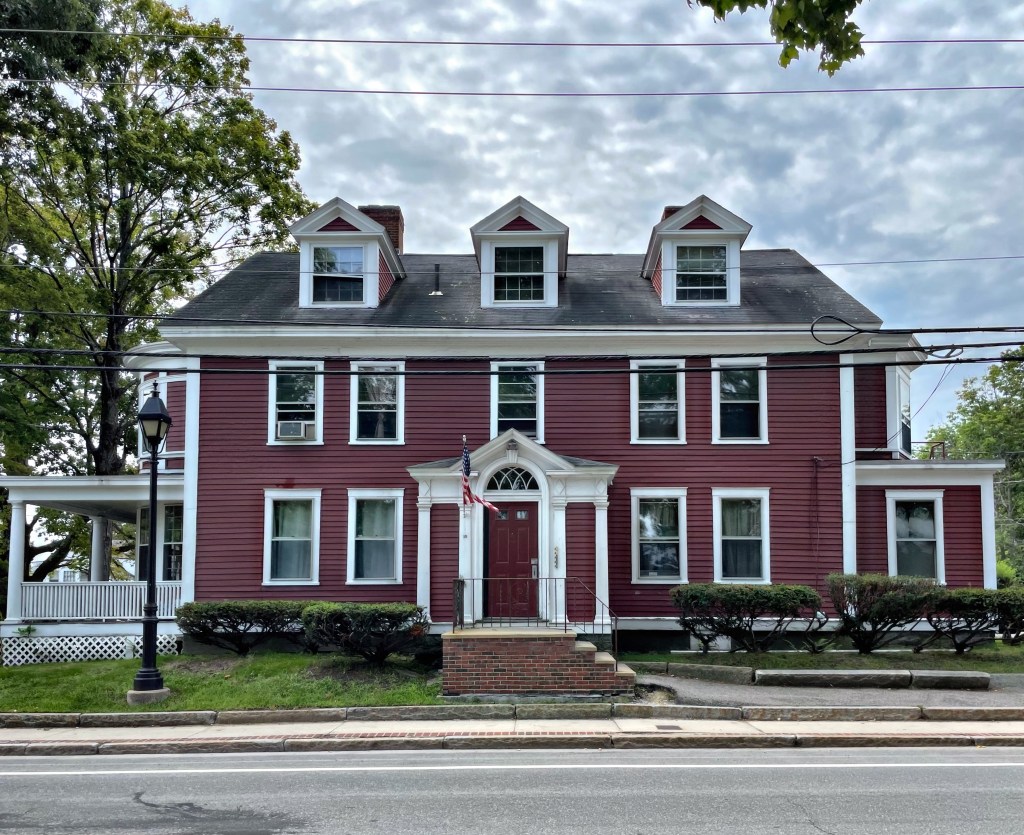
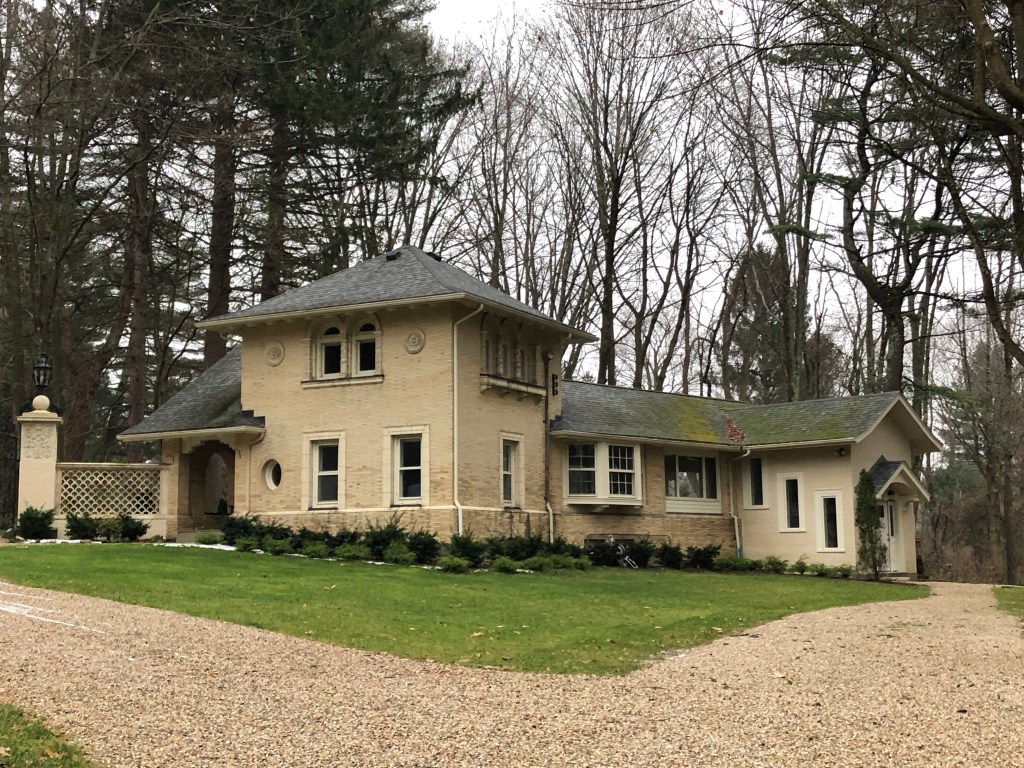
One of the most interesting homes in Durham, NH, sits right on Main Street, and while lacks much of its original grandeur, the house still has a story to tell. When mining engineer, Hamilton Smith met and married Alice Congreve while working in London, the couple envisioned and planned for a sprawling gentleman’s farm in New England to retire to. In 1895, the couple purchased the 1780 Rev. Blydenburgh home on Main Street, a large Federal style mansion. When Alice and Hamilton retired to the Red Tower in 1895, they set about renovating the estate into a jewel of the Gilded Age. They added a three-story tower to the rear of the home, large additions and Colonial Revival alterations, and they purchased large land holdings behind the house for a working farm. On the farmland, they built a carriage house, creamery, and men’s and women’s accessory buildings (a billiards building and tea house, respectively). Hamilton could only enjoy the home for a couple years until his death in 1900. His widow created the family cemetery at the farthest extent of the property and built the stunning Smith Memorial Chapel (last post). In the 1940s, much of the property was sold off and developed for a residential neighborhood for UNH faculty, and the Red Tower mansion was converted to an apartment house for students.
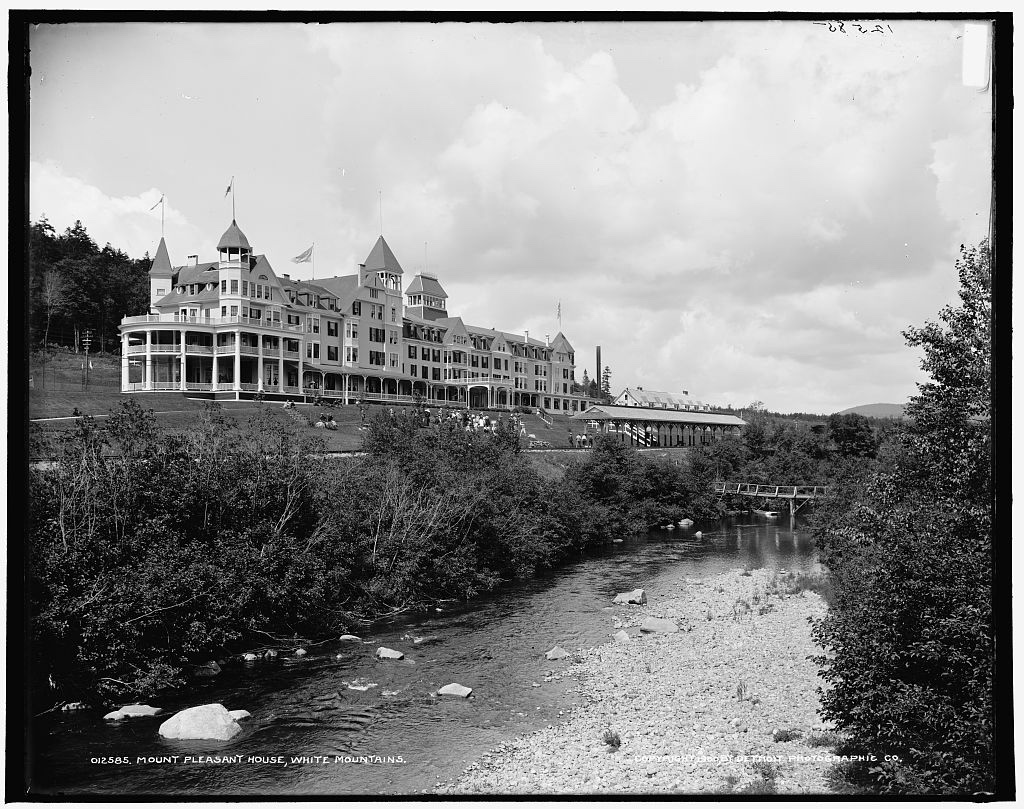
One of the earlier grand hotels in the White Mountains of New Hampshire, was Mount Pleasant House, built in 1875 after the arrival of the railroad through Crawford Notch. The hotel was located on a small hill where the Lodge at Bretton Woods is currently sited, across the street from the iconic Mount Washington Hotel. It was built by lumberman and investor John T.G. Leavitt and opened the following year. It was then a simple, almost box-like structure with only forty rooms, later expanded and “modernized” to accommodate the growing waves of affluent visitors from New York City and Boston every year. In 1881, Leavitt sold the hotel to Oscar Pitman and Joseph Stickney, the latter eventually became sole owner and acquired land across the street to build the Mount Washington Hotel in 1900. Possibly as a practice for his larger endeavor across the street, Stickney hired one of Portland’s leading architects, Francis H. Fasset, to design the additions and alterations. When Stickney died in 1903, just a year after his larger hotel was built, both properties were willed to his wife, Caroline. She ran the company through changing economic conditions and when she died, in 1936, the hotels were left to her nephew, F. Foster Reynolds. Reynolds decided that the Mt. Pleasant was not worth the expense needed to maintain it, and in 1939, ordered the building demolished, replaced decades later with the present building.
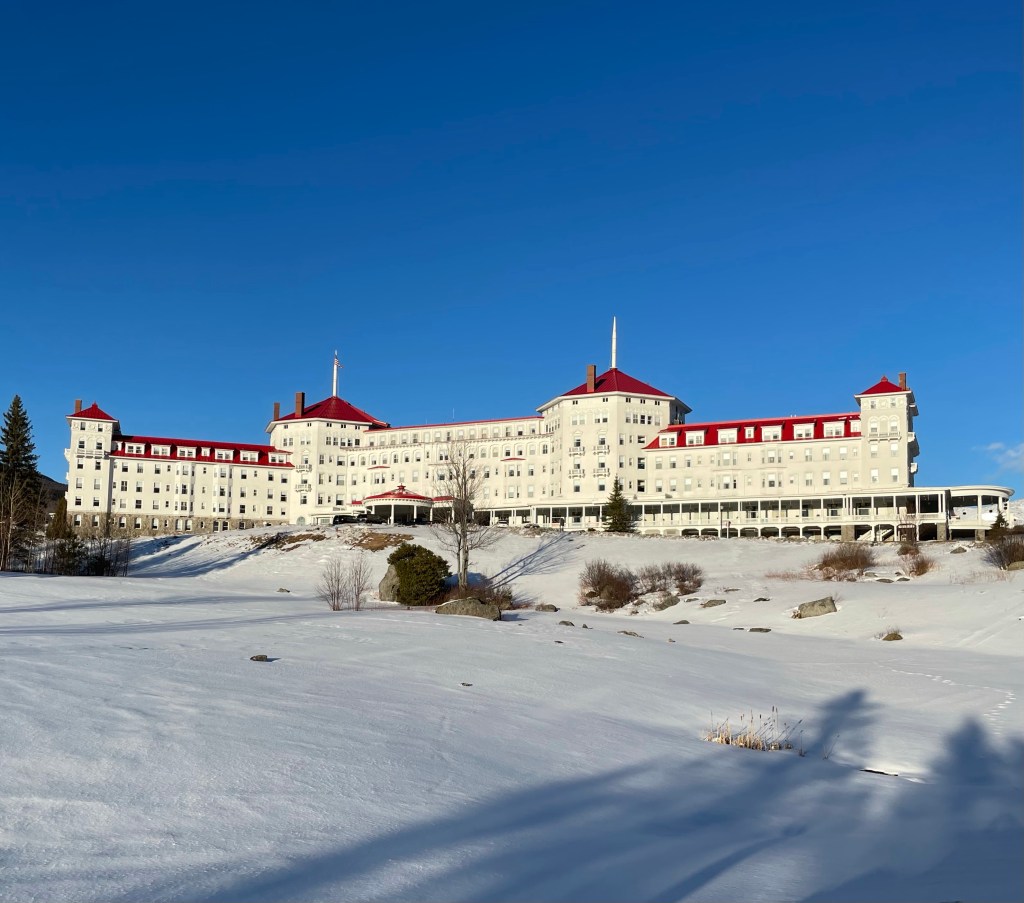
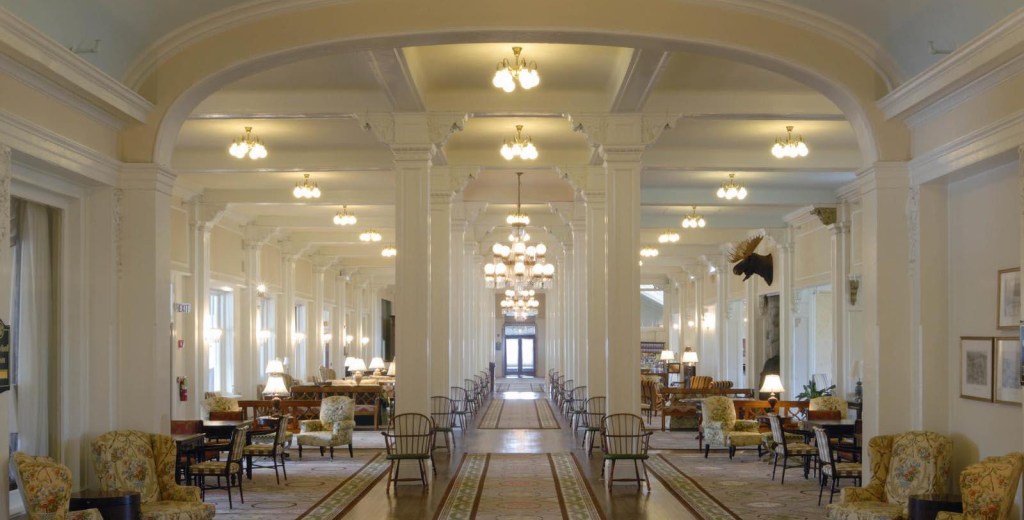
The Omni Mount Washington (originally the Mount Washington Hotel), surrounded by the great White Mountains of New Hampshire, was completed in 1902, at the end of the Gilded Age and the grand hotel era of America. The grand hotel was financed by Joseph Stickney, a native of New Hampshire, who made a fortune before the age of 30 investing in the coal business in Pennsylvania. In 1881, Stickney purchased the Mount Pleasant Hotel, a nearby summer resort and enlarged it, and acquiring a taste for hospitality development in the White Mountains (it was later demolished in the 1930s). He hired architect Charles Alling Gifford to design a new, larger resort across the street which in total, cost him over $50,000,000 in today’s dollars! Ironically, Joseph Stickney, had famously told the press on the opening day: “Look at me, for I am the poor fool who built all this,” as the economy was starting to turn right as the hotel opened. He died one year later in 1903. Nevertheless, up to fifty trains a day unloaded the families of the country’s wealthiest people, mostly from New York City, who stayed here for Summers at a time, leaving behind “the yellow fever and cholera in the cities” for fresh air and open space. The hotel’s design incorporated some of the most cutting-edge innovations of its age, including a steel-frame superstructure, an electrical power plant, and a sophisticated internal heating system. Roughly 250 Italian artisans were brought in to provide artistic touches to the structure by working on its exterior granite and stucco masonry including the two massive octagonal towers, and installing Tiffany stained glass windows.
After Joseph Stickney’s death in 1903, Carolyn his widow, became extremely rich (the couple never had children). Carolyn spent her summers at the hotel for the next decade, a nearby chapel honoring her late husband. The hotel did well in the subsequent decades until the advent of income tax, Prohibition, and the Great Depression, which harmed many large resorts’ profits. In 1936, Mrs. Stickney’s nephew, Foster Reynolds, inherited the hotel, but it closed in 1942 because of World War II. A Boston syndicate bought the extensive property for about $450,000 In 1944. The Bretton Woods monetary conference took place that year, establishing the World Bank and the International Monetary Fund. After subsequent owners, in 2015, the hotel and the Bretton Woods Mountain Resort were purchased by Omni Hotels & Resorts, who have been advocates to the history and preservation of the building and surrounding area, also overseeing the hotel’s inclusion to the illustrious Historic Hotels of America list.
There is so much more I could write about the Omni Mount Washington Resort, from the incredible interior spaces, to Carolyn’s marriage to a French prince, to the supposedly haunted sites… So much history to uncover, so little time!
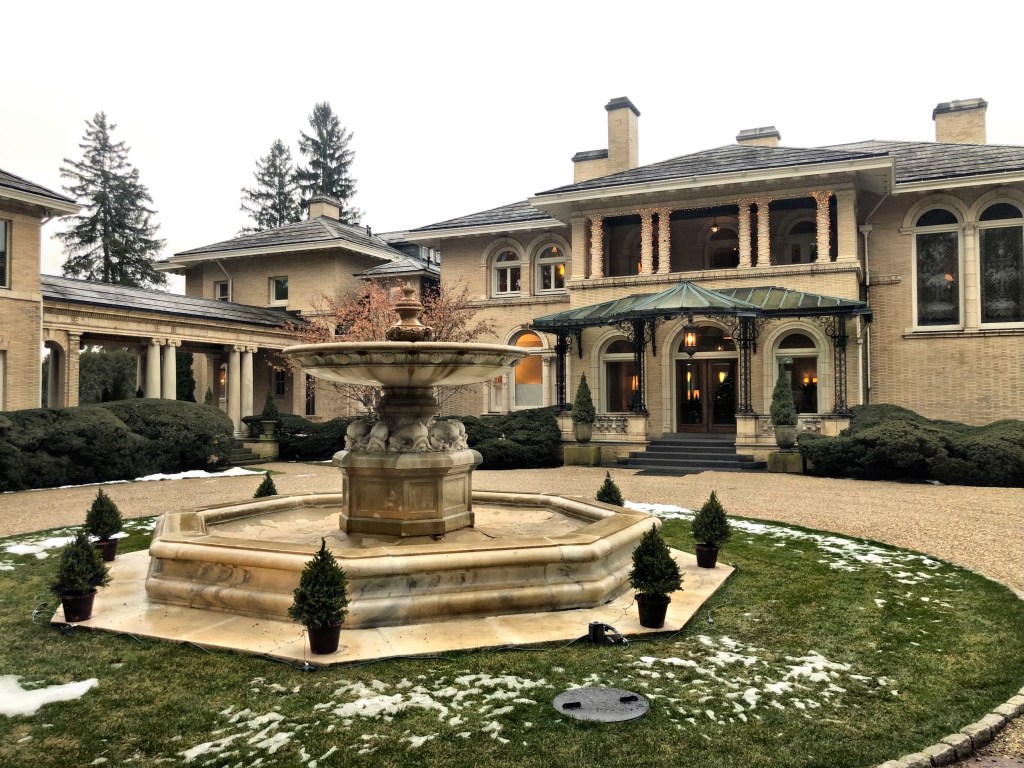
Designed in 1893 by the Boston architectural firm of Peabody and Stearns, Wheatleigh is an early example of Renaissance Revival architecture which became popular for country estates in the early 20th century. The estate was constructed for Henry Harvey Cook, who purchased over 250-acres of forest and lawns overlooking Lake Maheenac for his summer “cottage”. Cook was a New York-based businessman who made his fortune in the railroad and banking businesses, and he wanted a summer house to escape to every year. He named his home “Wheatleigh” as an homage to his family’s ancestral home, Wheatley, Oxfordshire. The mansion is approached by a circular drive that terminates in a formal entrance court partially enclosed by a buff brick wall and evergreen trees, centered on an octagonal marble fountain decorated with a shell and leaf motif. Upon Cook’s death in 1905 Wheatleigh passed to his daughter, Georgie, the Countess de Heredia. Under her ownership the formal garden was opened for evening worshipping services and musical events. Following de Heredia’s death in 1946 the property was divided and changed hands numerous times. In 1976 the mansion and 22 acres were opened as a resort hotel, known as the estates historic name. The Wheatleigh remains one of the most esteemed luxury hotels in the country.
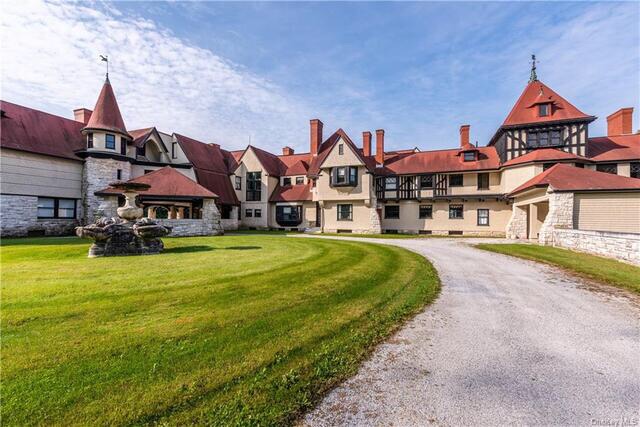
At 55,000 square feet and 106 rooms, the Elm Court mansion retains the title of the largest American Shingle Style home in the United States. The structure was built for William Douglas Sloane and Emily Thorn Vanderbilt (granddaughter of Cornelius Vanderbilt) as their summer “cottage” in the Berkshires. The home straddles the towns of Stockbridge and Lenox and sits on a massive parcel of land, giving the owners space to breathe the clean countryside air. Emily’s brother, George, built The Biltmore in Asheville, North Carolina and her sister, Eliza (Lila), constructed Shelburne Farms in Shelburne, Vermont. The home was constructed in 1886 from plans by the great Peabody & Stearns architects. Shortly after the turn of the century, ca. 1901, the couple commissioned Peabody and Stearns again, to vastly enlarge their original house. The additions used both Shingle Style and Tudor Revival motifs, and the result is a structure highly reminiscent of an English country house. William Sloane died in 1915, and Emily Vanderbilt continued to use the summer cottage, and in 1921, she married a summertime neighbor, Henry White, a career diplomat. While Henry White died in 1927, Emily retained the house and kept the grounds running until her death in 1946. The property’s use evolved into an inn in the late 1940s. During the 1950s, it embraced the public for dinners, overnight accommodations and events. Eventually Elm Court’s doors closed, and for approximately 50 years the mansion succumbed to significant theft and vandalism. The property has been listed for sale numerous times in the past decades, after a renovation by the last owners in the Sloane family. It is now listed for $12,500,000!
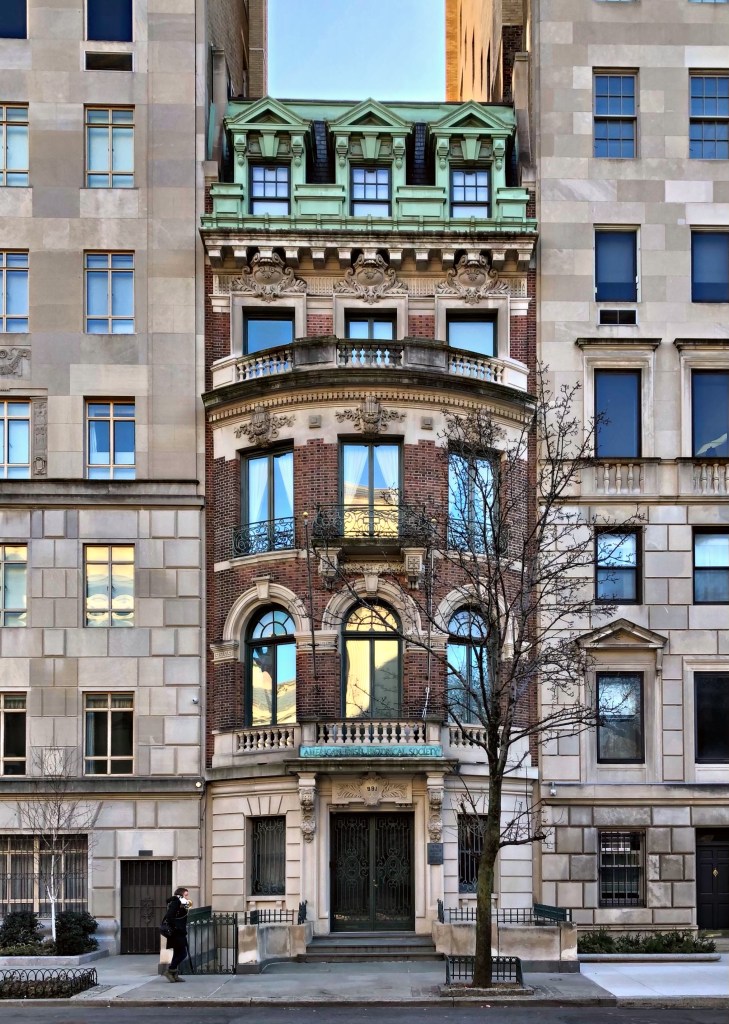
A lasting remnant of the grand homes which once dominated 5th Avenue in Manhattan in the Upper East Side, the Mary King House remains an architecturally and historically significant townhome in New York. Mary Augusta King was the granddaughter of late New York Governor John A. King, and widow of Edward King who had died in September 1875 leaving an estate of around $5 million–in the neighborhood of $113 million today. At the tail end of the Gilded Age of old New York, developers hired architectural firm Turner and Killian to design a new home across from the Met Museum at Central Park, away from the large hotels and towers being built in Midtown. Just before the home was completed, it was purchased by Ms. King for her new residence. She resided there a couple years before her death in 1905. The home was sold a couple more times and was eventually acquired by the American Irish Historical Society in 1939. The AIHS was founded in 1897 to ‘inform the world of the achievements of the Irish in America’, and is today a national center of scholarship and culture holding events and allowing researchers.

 Buildings of New England