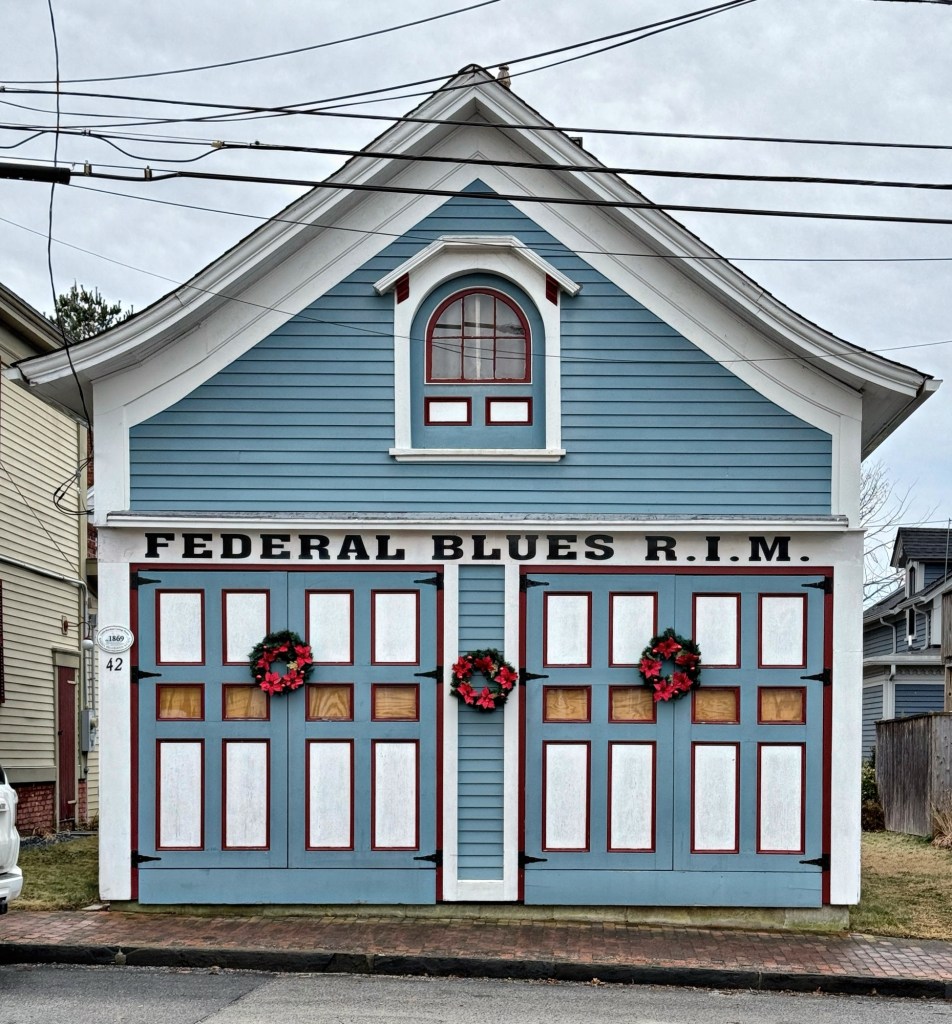
Warren Federal Blues Stable // c.1860

The Warren Federal Blues is an active independent military organization of the Rhode Island militia that was founded in 1798 and today, serves primarily as a ceremonial honor guard and as historic educational organization in Warren, Rhode Island. Members originally served as marines to police navy seamen on the USS General Greene (1799), which was commanded by Christopher Raymond Perry, the father of Oliver Hazard Perry, who also served aboard the ship. The Warren Federal Blues still remain part of the Rhode Island militia but serve in a largely ceremonial and educational role using period muskets and cannon for special events. The organization purchased the historic barn of the Baker-Merchant House on Main Street in about 1990, saving it from demolition for expansion of church parking, and moved the former barn to this site, adjacent to the old Narragansett Engine House, creating a unique composition of diminutive, but spectacular buildings. The former barn, which dates to around 1860, though is likely older, features paired double-leaf doors on the facade, round-arch window in the attic, and a flared roof with cupola centered on the ridge. 

Scott Farm – Pig Barn // 1911

Cows, horses and pigs once dominated the 571-acre landscape of Scott Farm in Dummerston, VT. We have seen where the farmer, cows, and horses lived, so now it’s time to see where the pigs “pigged” out. This barn building was constructed around the time of the horse barn when the farm was owned by Frederick Holbrook II of Boston. The one-and-a-half-story pig barn, like the others, was built into the landscape which would allow for the animals to easily get into the structures. This building was used as the “Cider House” in the 1999 movie Cider House Rules.

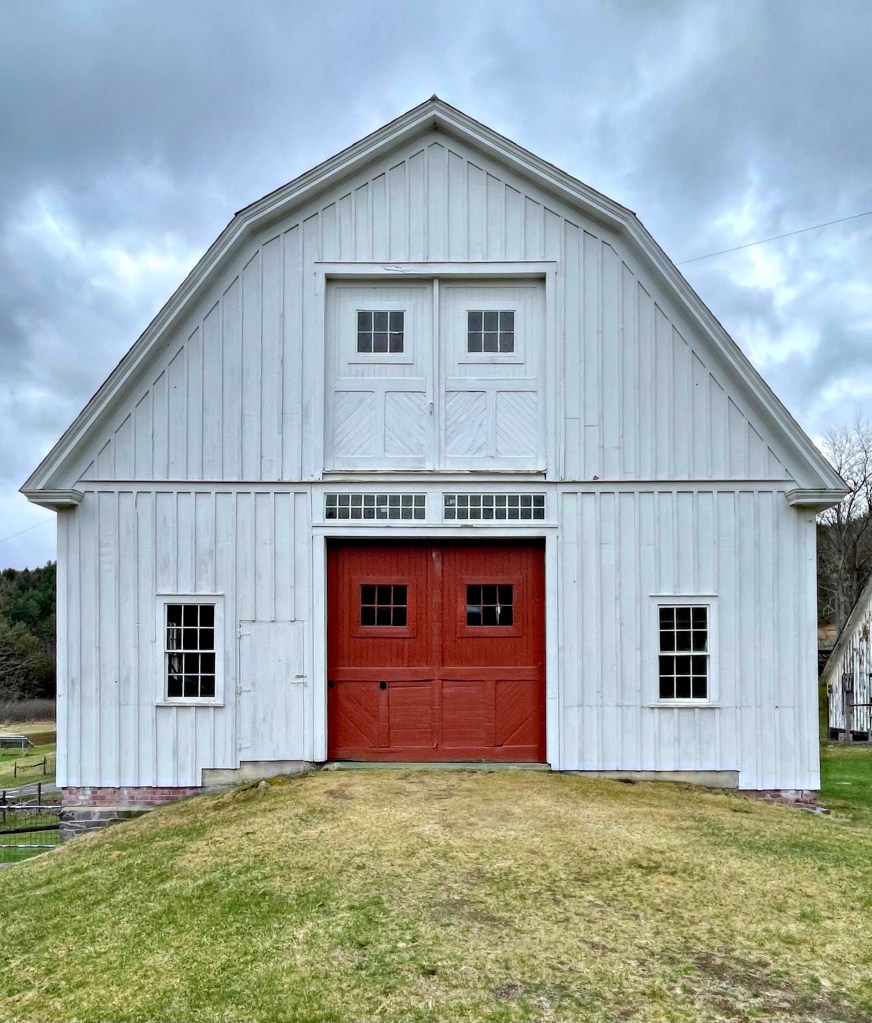
Scott Farm – Horse Barn // c.1910

You saw the cow barn at Scott Farm, now you can see where the horses lived! The Horse Barn at Scott Farm in Dummerston, Vermont is a very photogenic building with its symmetrical facade and bright colors. The barn was built not long after Frederick Holbrook II of Boston acquired most of the farm to add to Naulakha, where he lived. Holbrook used the farm as a gentleman’s farm where he would have laborers managing the grounds and supplying him with the freshest produce and dairy products. Inside, there is a ramp down to the basement which still retains the horse stalls, it’s so charming!

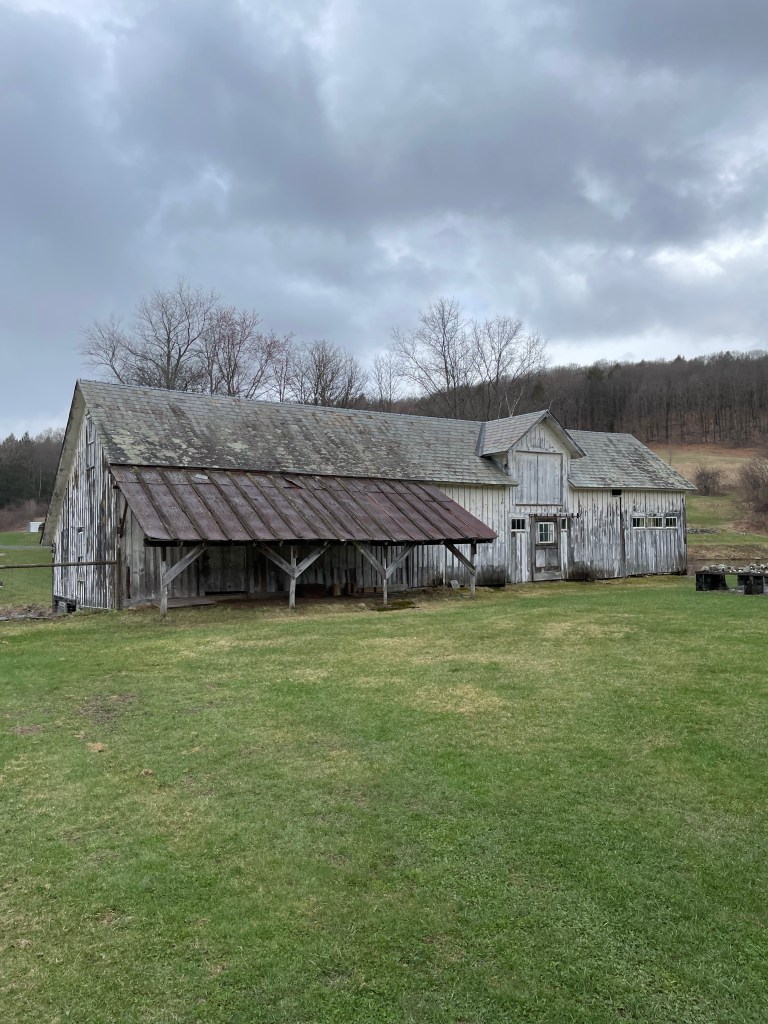
Scott Farm – Cow Barn // 1862

Historic barns really are the most charming buildings, and luckily, Vermont is home to soooo many great examples. The Cow Barn at Scott Farm in Dummerston, VT was built in 1862 and constructed into the slope of the land. The barn has a brick and stone foundation, barn board siding, and a roof sheathed with small dark slate. It is built into the slope of the land and has a single-story shed roof addition (c.1915) off the west facade to give the building a saltbox form, and a single story gable roof milk house addition off the east facade. The rear facade has a more rustic appearance and has a large entrance to the space inside which is occupied by The Stone Trust, with the mission to preserve and advance the art and craft of dry stone walling. The organization holds classes and trainings where people can learn how to build a traditional or modern stone wall and more! The barn (and the rest of the buildings on the Scott Farm property) is owned by the Landmark Trust USA.

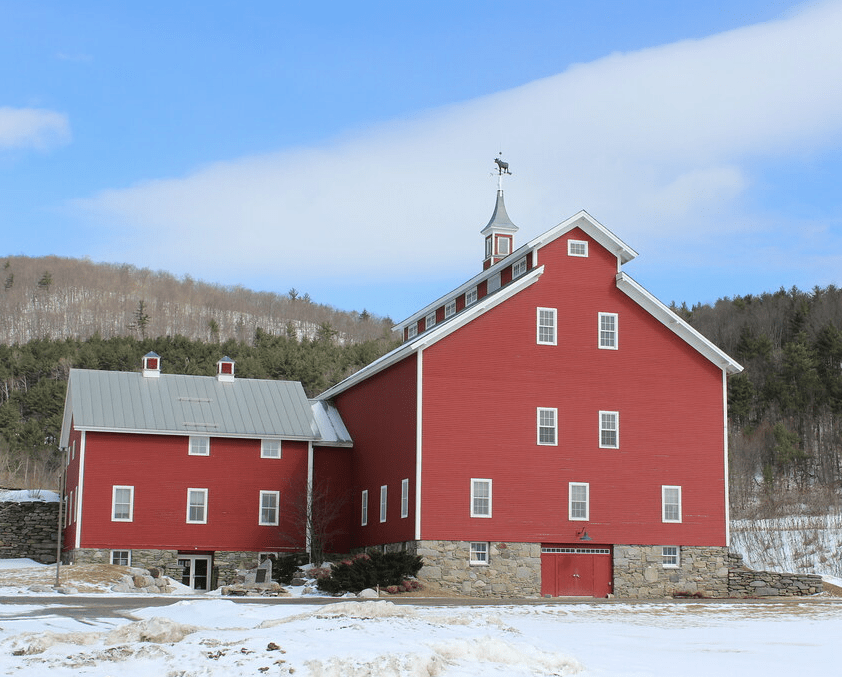
Canterbury Shaker Horse Barn // 1819

This large, shingled horse barn at Canterbury Shaker Village in New Hampshire, was built in 1819 and measures 60 x 40 feet. The massive barn structure showcases the significance of horses and agriculture for the rural community, which lived off the land.