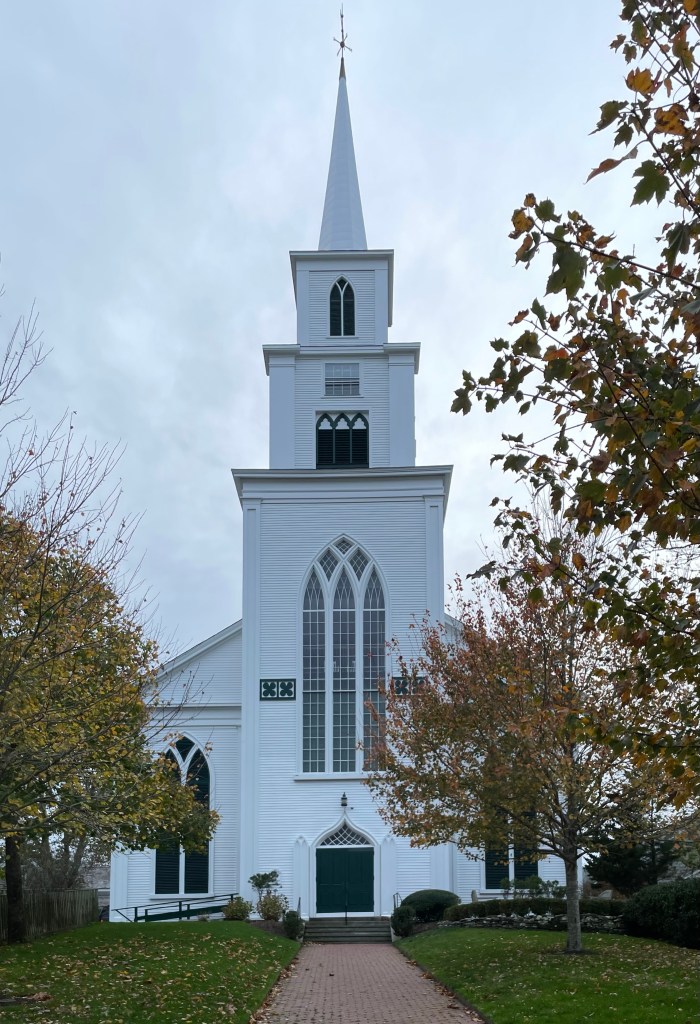
The First Congregational Church is one of Nantucket’s most prominent historic landmarks and is prominently located on a hilltop, being one of the first buildings you’ll see when arriving to the island by ferry. Constructed from a design by Samuel Waldron, a Boston housewright, the present church blends the Greek and Gothic Revival styles elegantly into a single composition. The interior of the church was painted with architectural trompe l’oeil paintings by E.H. Whitaker of Boston in 1852. The steeple was removed in 1849, likely from engineering concerns and high winds on the island. In 1968, the steeple was reconstructed from historic drawings by Philip Graves of Ames & Graves.
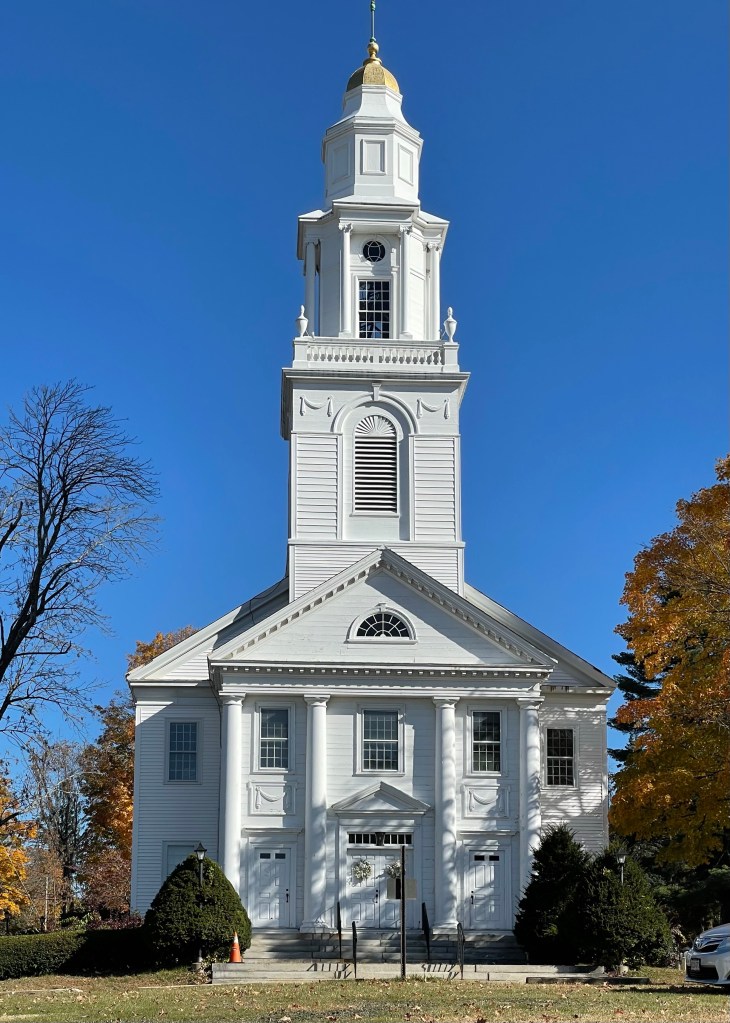
The East Congregational Church in Ware was established in 1826, spurred by the industrial growth and subsequent immigrant population boom in the village of Ware, Massachusetts. The Ware Manufacturing Company, a major player in town, contributed $3,000 to towards the construction of a new congregational church in the village, which was matched by residents. The original church was built in 1826, following plans prepared by Isaac Damon, a noted church architect from Northampton, in the Federal style, popular at the time. In 1925, just a year before its centennial, the church burned to the ground. Plans to rebuild the church formulated immediately. Due to changes to the neighborhood since 1826 (notably the construction of tenement housing adjacent to the church), the decision was made to locate the new church setback from the street. Plans were drawn by Frohman, Robb and Little of Boston for the new building, which was to be Federal Revival, a nod to the former church building. The grounds in front were landscaped by the prominent landscape architect Arthur A. Shurtleff. After WWII, population decline and dwindling membership of some churches in town required a few congregations to consolidate, creating a union or united church here. The United Church of Ware came into being in 1969 when the East Congregational Church, United Church of Christ and the Ware Methodist Church, United Methodist Church joined together and became one federated church with ties to two denominations.
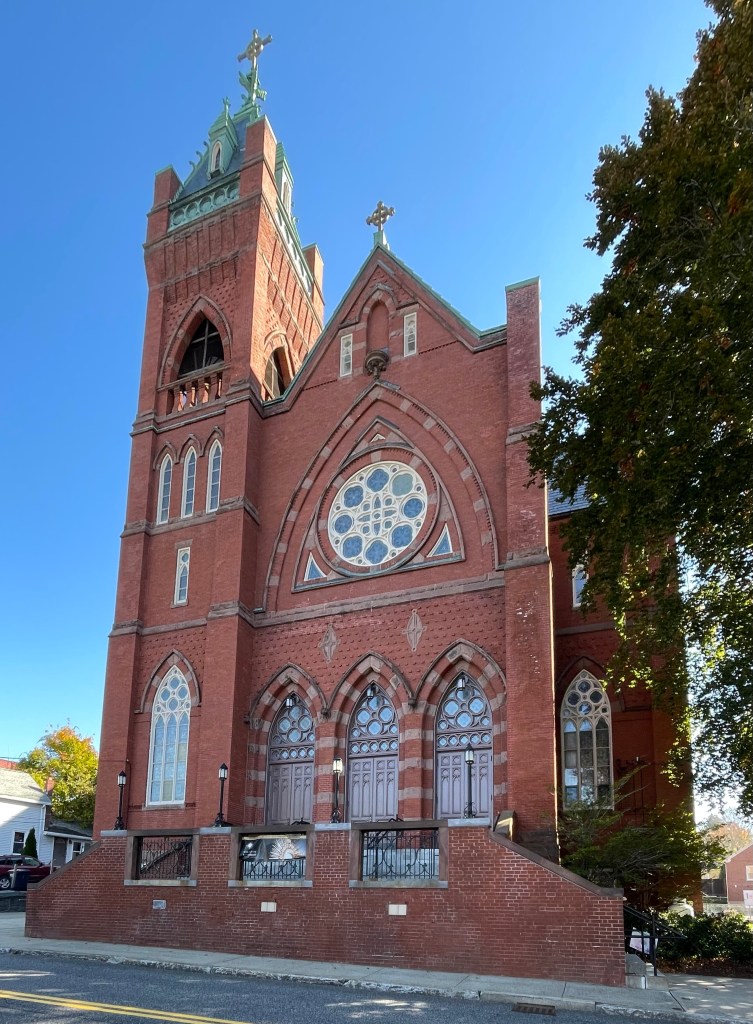
All Saints’ Church in Ware Massachusetts was originally known as St. William’s parish, and was the oldest Roman Catholic Church in the town. Beginning in 1850, regular Catholic services were held in the new industrial village, as large a population of French Canadians moved there for work in the textile mills. A small frame church was built on West Street and a cemetery laid out around it for members of the congregation. As the congregation grew, a larger building was needed. In 1888, work began on the present structure which was to be located in a more central location. The Archdiocese worked with Patrick W. Ford, an architect who designed many Roman Catholic churches built in the eastern part of United States through the latter half of the 19th century. The Victorian Gothic church building remains one of the best examples of the style in central Massachusetts.
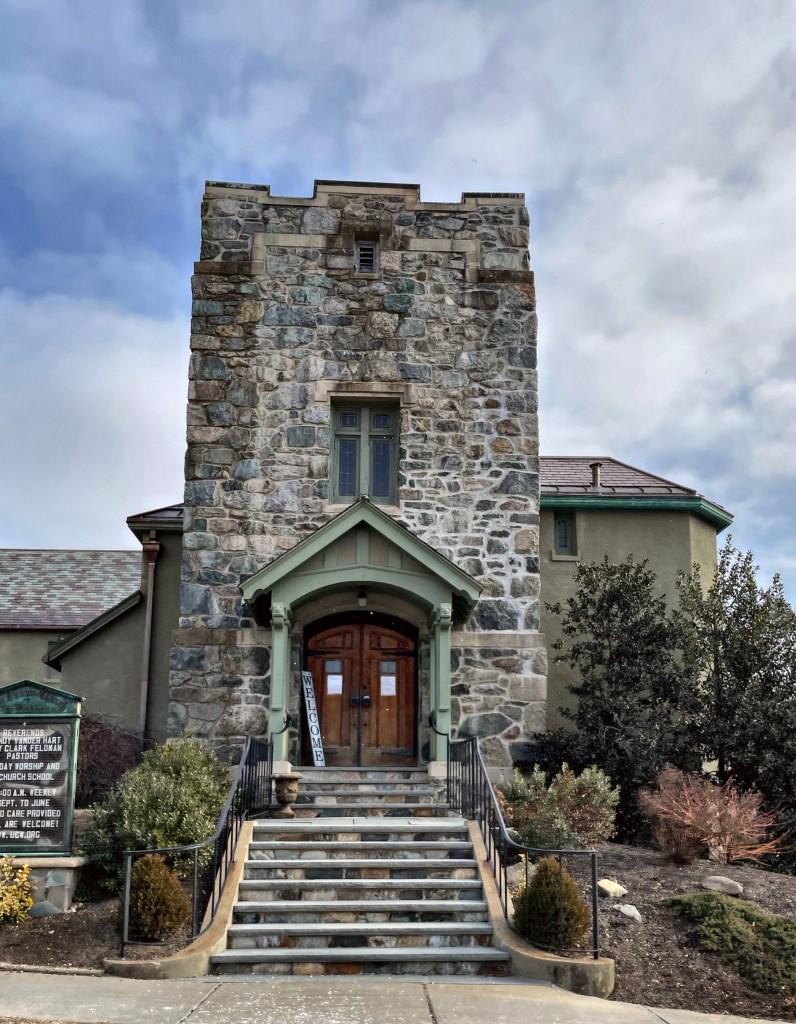
Arguably the most high-style building in the quaint village of Dorset, Vermont is the Congregational Church, which appropriately sits on Church Street. The original congregational church in Dorset was located in nearby Maple Hill Cemetery. When the wood structure burned in 1832, an new wooden church was built on this site. The second wooden building burned in 1907, and then this church was built, but of fireproof construction. Jordan Greene, an architect from New York, designed this Neo Gothic Revival style in the historic district. The church was constructed by the contracting firm of O. W. Norcross, partner in the Norcross-West Marble Company, which donated the building stone from its South Dorset quarry. The design is dominated by a massive square central tower that ascends its facade and is capped by pinnacles. Behind the tower, the gable-roofed church is built of rough-faced Dorset marble laid in patterned coursed ashlar and trimmed with dressed stone. How many other marble churches can you think of?
Early in the 17th century, the Rev. John Lothrop and his followers left England for these shores seeking religious independence. They settled first in Scituate and a few years later came to Barnstable, arriving in 1639. They constructed their first meetinghouse in 1646 on Coggins Pond, about a mile west of this church. Lothrop’s second dwelling in Barnstable is the current Public Library in town (featured previously). In the early 19th century there was considerable theological debate in the “churches of the standing order” in New England. Many churches actually split over this debate, the traditionalists becoming Congregationalists and the liberals becoming Unitarians. The Eastern Parish in town was thus occupied by the Unitarians. In 1836 the original meeting house was removed and a new, larger one was constructed. It was destroyed by fire in 1905, and planning began for a new church. The present edifice was dedicated in 1907, and was designed by architect Guy Lowell, the architect of the Boston Museum of Fine Arts and the New York County Courthouse. His traditional, Classical designs were featured in publications all over the country. This church in the Classical Revival style is one of the finest on Cape Cod.
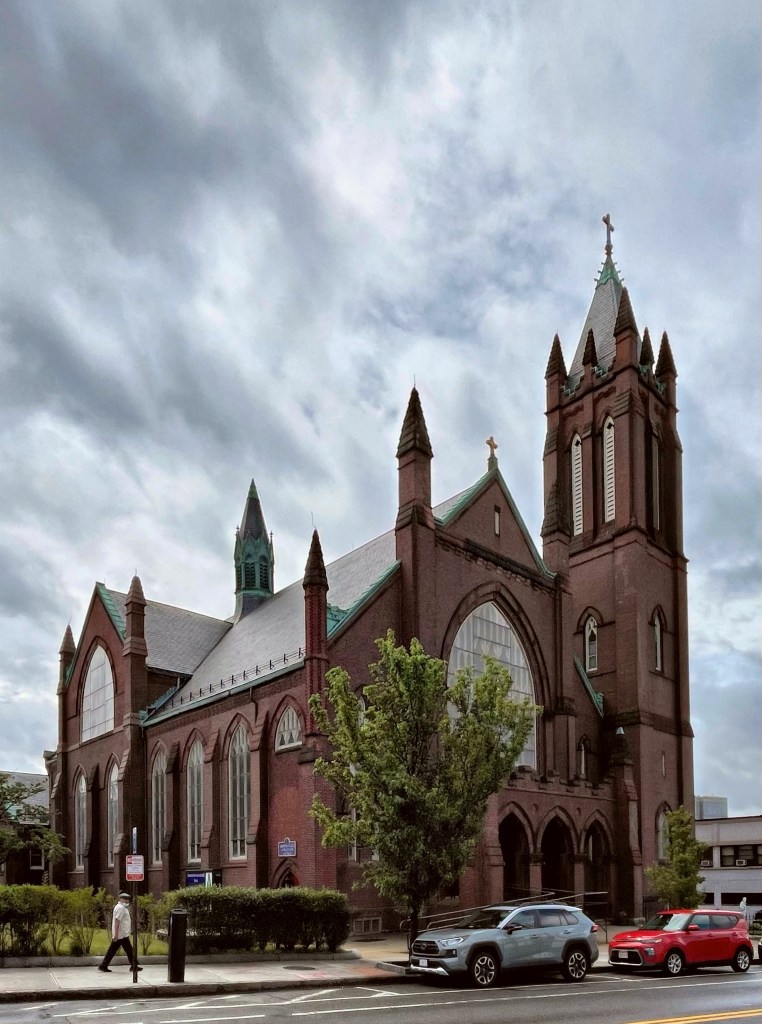
The Immaculate Conception Roman Catholic Church in Everett, Massachusetts, is an imposing Gothic Revival building, that shows how the church spared no expense to build imposing and awe-inspiring edifices all over New England. Constructed of red brick with Longmeadow brownstone trim, the church was designed by preeminent Catholic Church architect Patrick W. Ford and the cornerstone was laid in 1896. Ford was born in Ireland and in 1872, he moved to Boston and opened his own practice. He was widely recognized as an authority on church architecture and his practice focused primarily on designing churches and institutional buildings for the Roman Catholic Church in New England. Ford died suddenly at age 52 in August 1900. Due to a lack of funds, the church was not completed until 1908, so Ford did not see this church completed in his lifetime. The work was completed by architects Reid & McAlpine and is stunning with its square corner tower topped by a pyramidal spire with smaller pinnacles marking the corners of the tower. The projecting entry porch has three, pointed arch openings and is topped by crenellation. The congregation appears pretty active to this day.
The Town of Waterford, Maine was created as the result of a 1774 grant made by the General Court of Massachusetts to the descendants of a company of Massachusetts soldiers involved in a 1690 expedition against the French in Canada, leading to the Battle of Quebec. The land was surveyed in 1774; in spring of 1775, David McWain of Bolton, Massachusetts arrived with his dog at a lot he bought for $40. He cleared land and built a log cabin, returning to Bolton for two winters until he settled permanently at Waterford in spring of 1777. The town grew around agriculture and industry with sawmills built at streams to manufacture the region’s abundant timber into lumber. The town later became more of a resort area in the early 20th century, with urban-dwellers flocking to the area to take in the fresh air and natural scenery.
This church in North Waterford is located in a more rural part of the town, and was constructed in 1860 by a group of local residents from designs by Maine architect Thomas Holt. The Italianate influence is evident from the round-arched windows set in a recessed arch and a bracketed cornice. The steeple looks to be more contemporary and slightly turns, giving it a really interesting presence.
In 1904, residents of the newly established village of Waban in Newton, Mass., began meeting with the hope to establish a non-denominational church there. As the population of the village grew rapidly in the first decade of the 20th century, funding surged and it was determined that a place of worship was necessary. William C. Strong, a Waban resident and well-known horticulturist, donated the land from his large holdings, many of which was already being developed for house lots. The church building, designed by Boston architect James H. Ritchie, had its cornerstone laid in November 1911. Construction followed rapidly and the building was formally dedicated in September, 1912. The building follows the Arts and Crafts movement, especially Ralph Adams Cram’s revival of the English parish church.
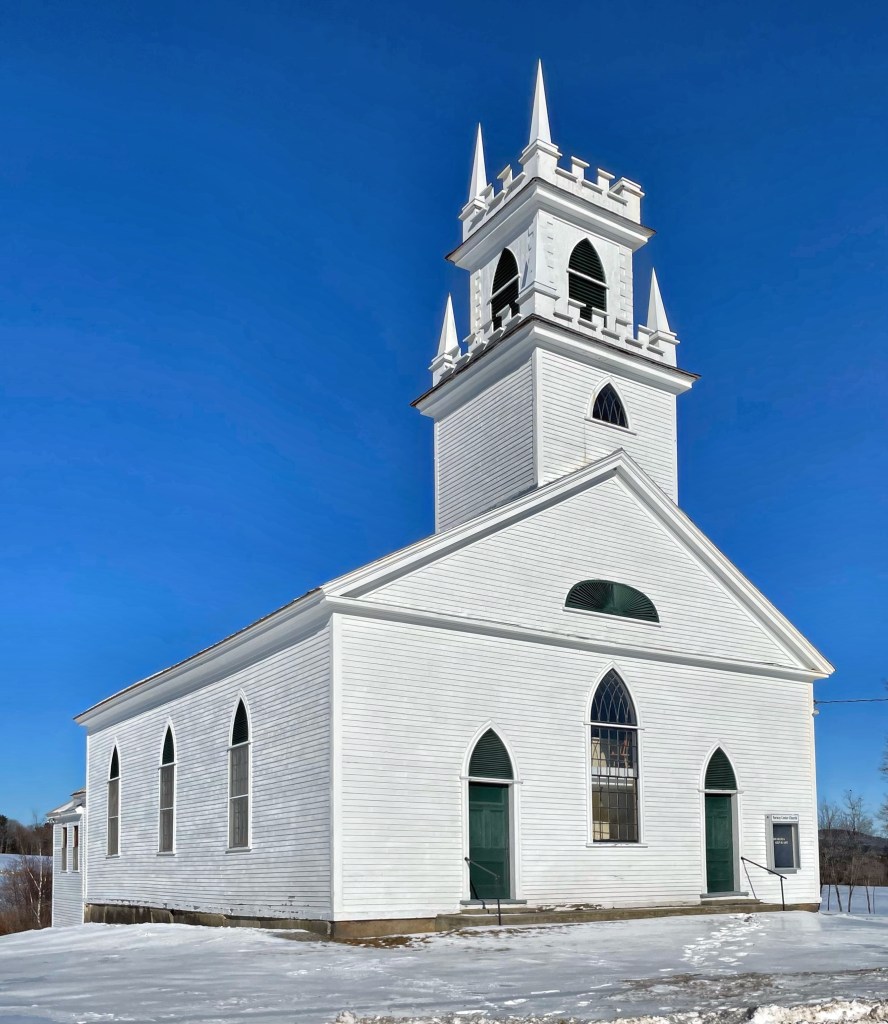
This beautiful, bucolic church in Norway Center was built in 1840 to replace an earlier meeting built in 1808-09 on the site. The present building is Gothic Revival in style with louvered panels making the windows appear lancet in shape and the amazing lancet window centered on the facade. The two-tiered tower is ornamented with crenellation and a wooden spire at each corner (besides one missing). The church features a louvered fan and strong pediment, which are nods to other prominent styles of the early-mid 19th century, Federal and Greek Revival respectively. This church quickly saw membership drop as Norway Village became the population center of town, with Norway Center becoming more agricultural and rural.
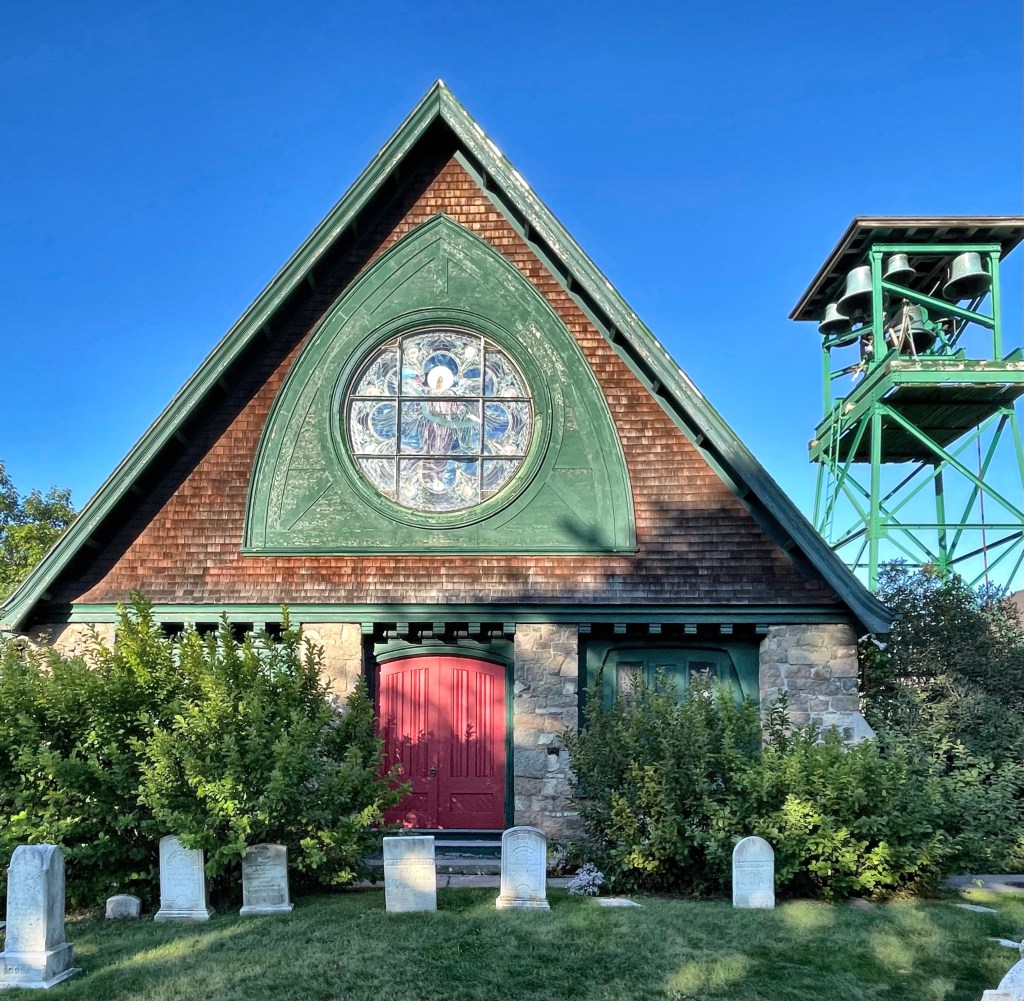
Initially erected in 1877 and enlarged several times thereafter, the St. Saviour’s Episcopal Church in Bar Harbor is an excellent example of ecclesiastical architecture in the state of Maine. The original church building had been erected in 1877-78 at a cost of about $7,000 from designs by the New York architect Charles C. Haight. Within eight years of its construction, space limitations caused the church to undertake a major expansion. Designed by the Boston architectural firm of Rotch and Tilden, this building campaign – carried out in 1885-86 – dramatically changed the church’s appearance by developing a cross shaped plan that made use of the original structure for transepts and added a larger nave, semi-circular apse, and an imposing crossing tower. The numerous building campaigns designed by both prominent and lesser known architects, have produced a rich eclectic architectural legacy that mirrors the development of Bar Harbor.



 Buildings of New England