David Nevins House // c.1746

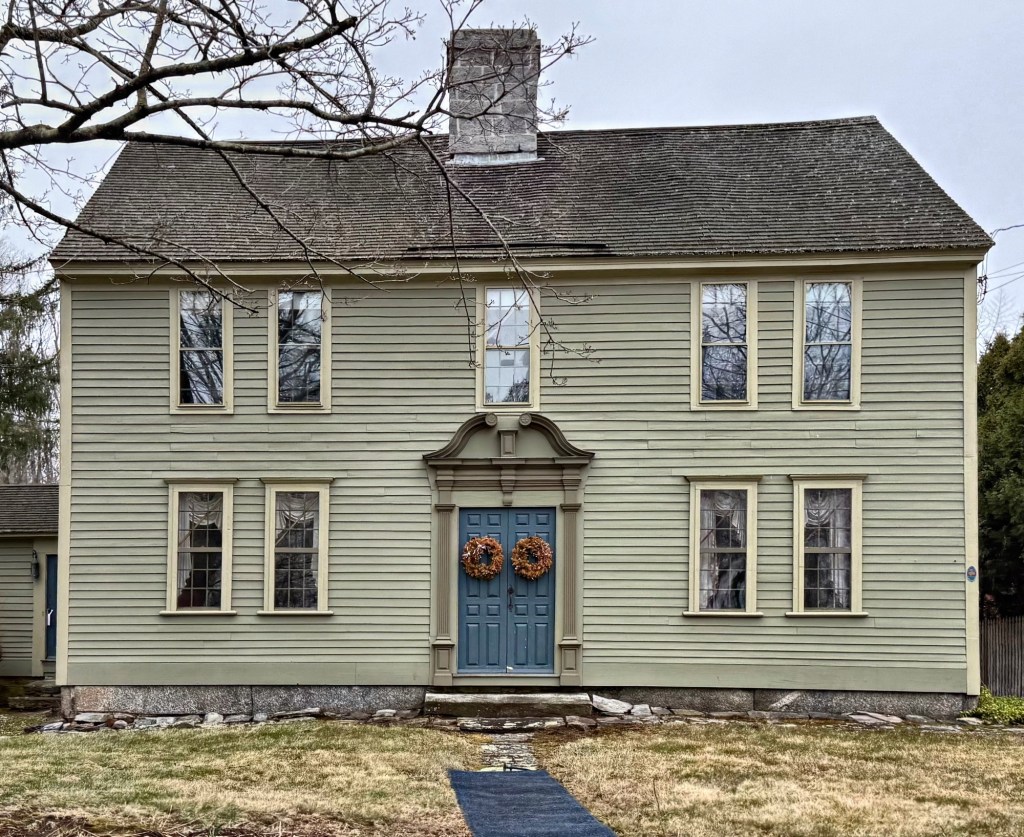
This house across from the Town Green in Canterbury, Connecticut, is believed to have been built by David Nevins, Sr. (1729-1758), a merchant who settled in Canterbury from Nova Scotia, Canada. Nevins tragically died in 1758 when overseeing the reconstruction of a bridge spanning the nearby Quinebaug River. It is said that while standing on a cross-beam, giving directions to the workmen, David Nevins lost his balance and fell into the river and was swept away and drowned. The property remained in the Nevins Family until 1842, upon which, it served as a parsonage for the Congregational Church, just across the street. The clapboard exterior, small-pane sash, center-chimney plan, and five-bay facade of this house give it architectural significance as a representative example of 18th-century Connecticut architecture. The stately Georgian doorway with swan’s neck pediment was installed by a local house restorer based upon physical evidence uncovered during the house’s restoration (and removal of Victorian-era porch) and while may be conjectural, it enhances the already beautiful old home.

Gallup Farm Carriage House // 1906

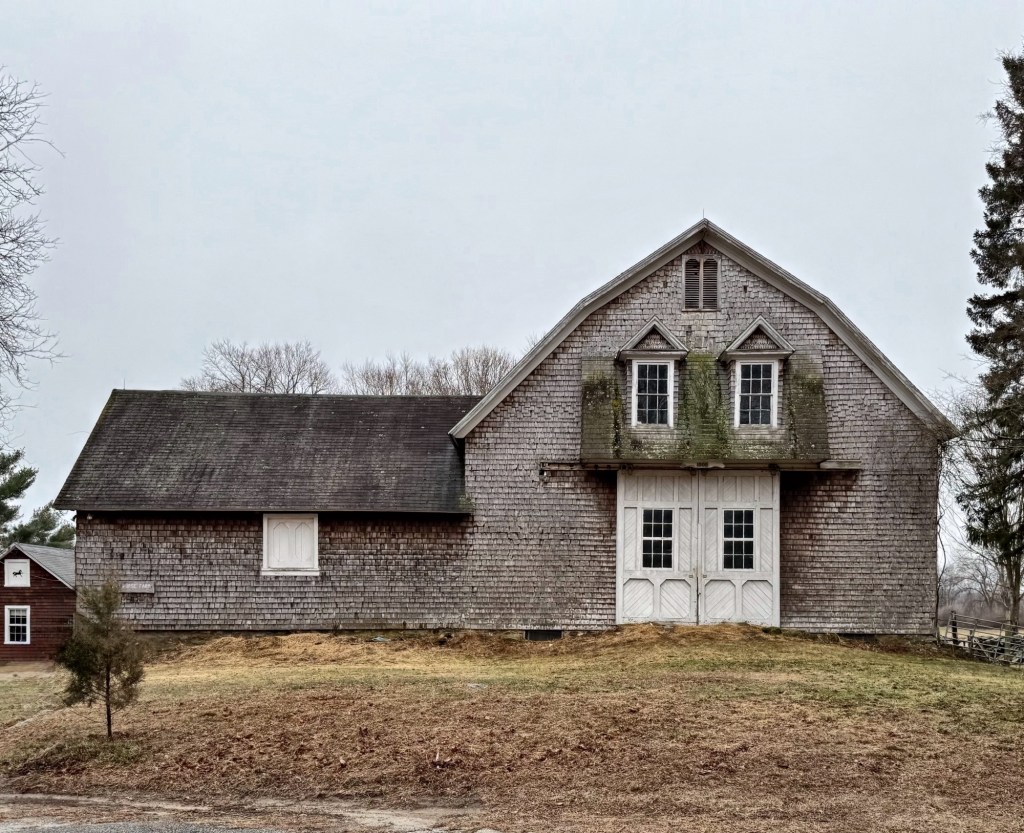
This handsome Shingle style building was constructed in 1906 as a carriage house of a larger farm property in Scotland, Connecticut. The barn is said to have been built for Archie Gallup, who purchased the old Manning farm just west of the town green in Scotland. The 1 1/2-story carriage-house with a gambrel-roof stands out for its principal entry of paneled wooden doors and above, a large, flared hood featuring two pedimented gable-dormers. The entire building is clad with varied shingles to add complexity to the design, catching the attention of all who drive by.

Old Fairfield County Courthouse // 1794

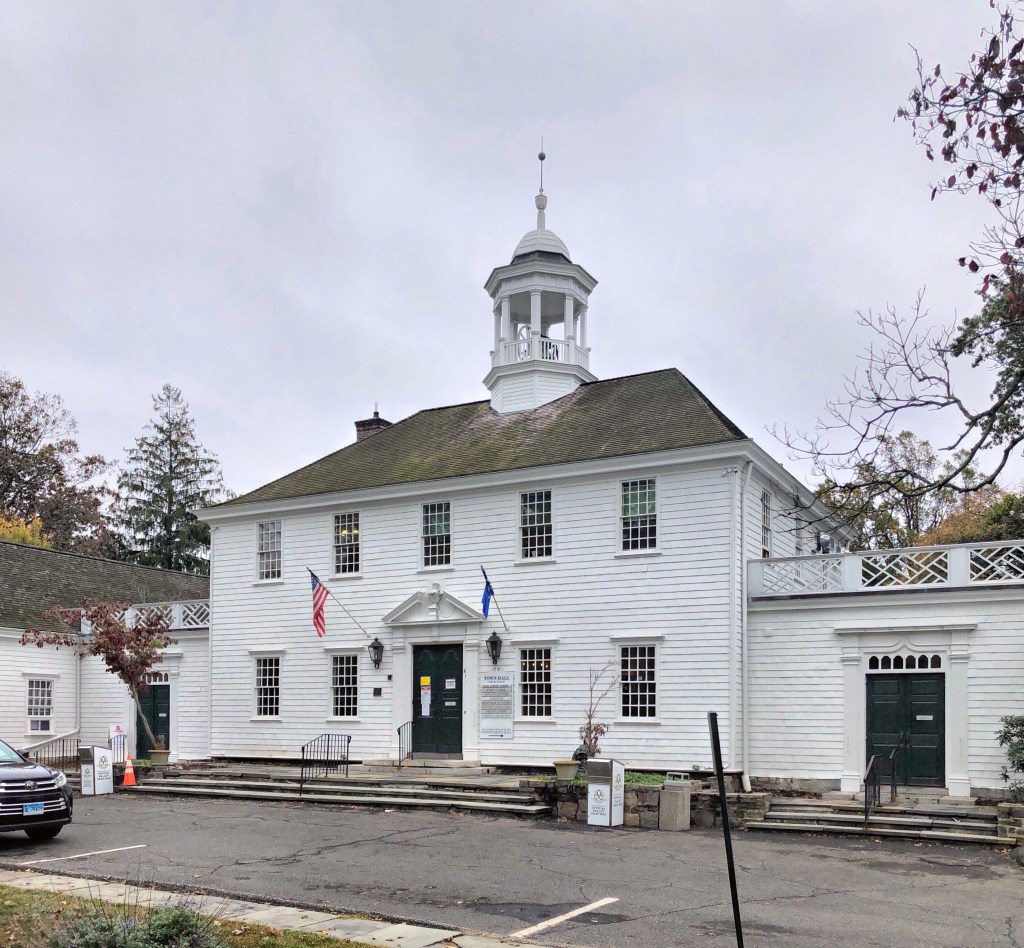
Located at the Fairfield Town Green, the Georgian-style Fairfield County Courthouse stands as a reminder on the town of Fairfield’s Colonial-era history. The first courthouse at the site was built in 1720. After a fire destroyed the first (which housed the jail as well), a second structure was built in 1767. That second courthouse was the center of a thriving, wealthy village with a port just blocks away. In July 1779, the British landed in Fairfield and destroyed much of the town, harming its prosperity for decades to come (though it has clearly recovered since). In 1794, a new courthouse was built, also housing town offices. In 1870, it became solely a town hall (the County Court moved to Bridgeport years before) modified and altered in the Second Empire style to ‘modernize’ the building. As Colonial Revival resurged in popularity in the late 19th and early 20th- centuries, the town sought to bring back the Georgian style Town Hall building, in 1936 hiring architect Cameron Clark, to restore the building.