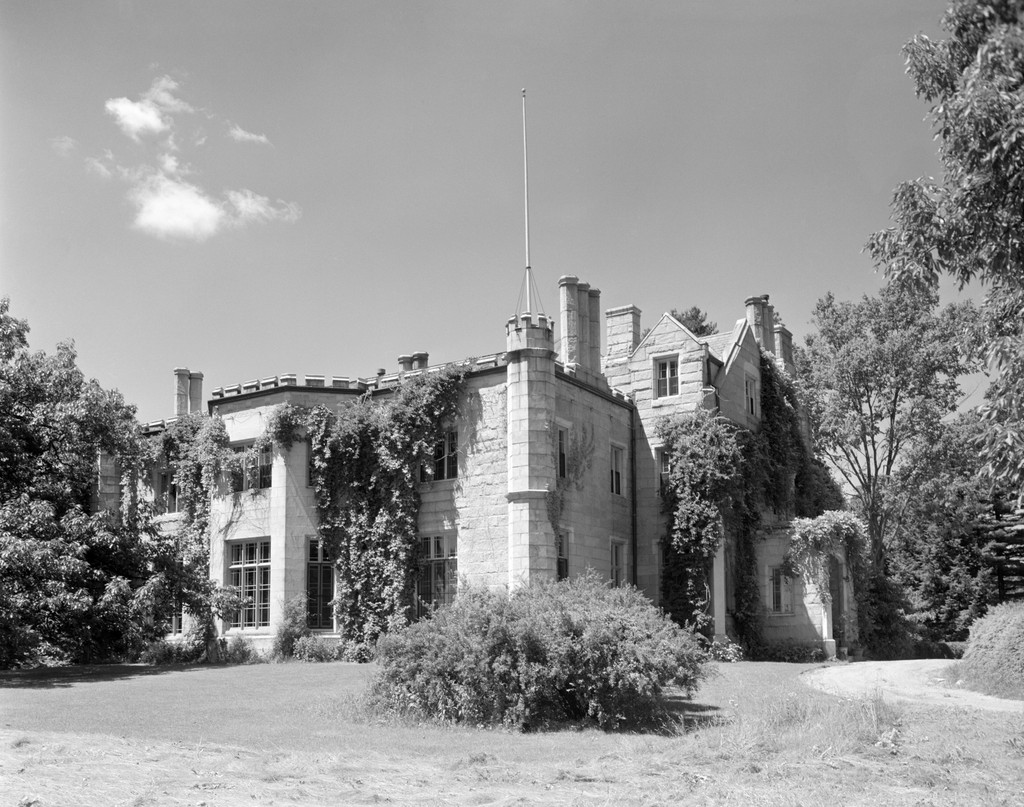
Ingalls Homestead // c.1794

Cyrus Ingalls (1768-1832) moved to the wilderness of Maine from his relative comfort in Andover, MA at the end of the 18th century. When he arrived to Maine (which was part of the Commonwealth of Massachusetts until 1820), he built a grist mill on Moose Brook in what is now known as Denmark, Maine. Not far away, he built his homestead, a modest 1 1/2-story cape house on the newly laid Main Street where he raised his family. In the home, Cyrus had at least two sons, Cyrus Jr., who would inherit the homestead, and Rufus, who later served as Quartermaster General of the Union Army during the Civil War. After Cyrus’ death in 1832, the property was completely overhauled by Cyrus, Jr., who built a massive Greek Revival mansion likely in the 1840s or 50s, incorporating the former homestead as an ell (seen on the right in the image). The homestead remains an extremely significant architectural and historical landmark in this part of Maine, and is located across from the town’s Civil War Monument, possibly bankrolled by the Ingalls Family.
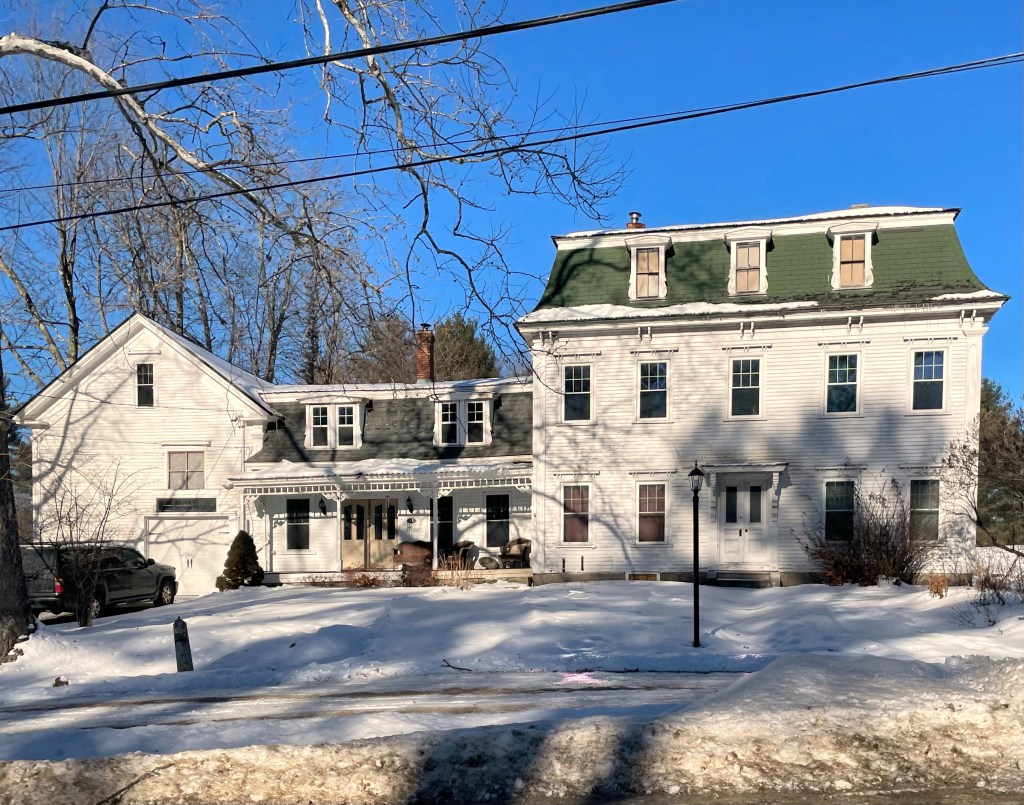
Boothby House // 1870

The Second Empire style did not take off in Maine as it did in other parts of New England (and the U.S. for that matter), so it’s always a treat to spot one driving the backroads of the Pine Tree State! This house in Denmark, Maine, was built around 1870 for E. A. Boothby, who worked as Assistant Engineer of the Maine Central Railroad. The Second Empire style is evident here from the mansard (French style) roof, bracketed eaves, and a hooded double-door entry.

Penobscot County Jail // 1869

Located just off Main Street in Bangor, the Penobscot County Jail building sits far off the street but stands out for its architectural design. The county jail building was designed in 1869 when the previous prison, built in the 1830s, proved inadequate. Designed by Boston architect Gridley J.F. Bryant, (who designed Charlestown’s prison that same year) the jail has somewhat of a dual personality architecturally speaking. The gracious street-facing section is constructed in the Italianate style, and housed the jail keeper and allowed the building to blend into the stylish and handsome neighborhood of downtown Bangor. The building is constructed of warm red brick with stone embellishments. Behind the jail-keeper’s house, the more severely modeled prison is constructed of granite and is more fortress-like, even though it’s much more appealing than modern prisons. The chronically overcrowded jail will likely be repurposed for a new building, but here is to hoping the county preserves this historic building for other uses!

Frost-Burpee House // 1847

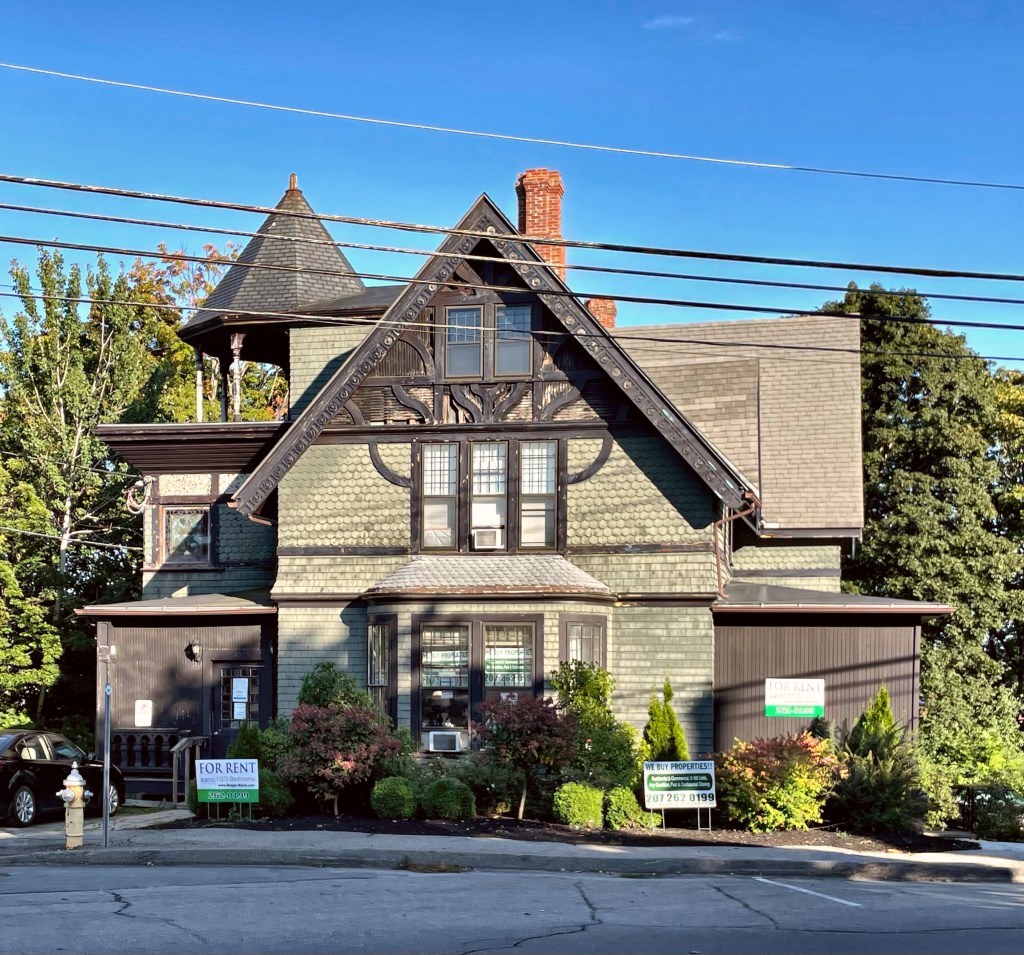
One of the largest homes I found in Bangor, Maine, was this Queen Anne stunner on High Street, just outside Downtown. After doing some research, I learned that the house was built in 1847 for Oliver Frost, a businessman involved in the lumber business. The home was likely Greek Revival in style based on the time period of the home and nearby houses. Frost is probably best known for his 1869 quote “The time may soon arrive when the three great cities of North America — Bangor, New York, and San Francisco — shall be representatives of the wealth, population, intelligence, and enterprise of the eastern, central and western divisions of our country.” He believed that the lucrative timber industry which led Bangor to become known as the “lumber capital of the world.” The city was home to numerous “lumber barons” and the river was often “jam packed with timber and lumber”. Even the nickname “Queen City of the East” evoked the era’s prosperity. Henry David Thoreau remarked, in 1846, that Bangor was “overflowing with the luxuries and refinement of Europe.” After his quote, the city began a period of decline, when the timber industry moved westward to the Great Lakes region and later, the Pacific Northwest. Frost’s home was later purchased by Egerton R Burpee, an engineer who worked in railroads. He hired Boston architect Arthur H. Vinal, to upgrade and enlarge the house in the then fashionable Queen Anne style we see today. The home has since been converted to commercial use with apartments inside.

Joseph C. White House // 1866

Located a short walk from the Stephen King House in Bangor, this stunning Second Empire style house shines just as bright! This house was built in 1866 for Joseph C. White, a dry goods merchant in town. Just years after it was completed, he sold the mansion, possibly due to upkeep. The two-story mansard-roof house is clad in wood siding, scored to resemble stone rustication, a method to make the home appear more expensive. The corner entrance with later enclosed second-floor porch, massive brackets, and scrolled dormers add a lot of Victorian flair to the home. Would you move in here?

Stephen King House // 1854

Stephen King, the world-renowned author of some of the most popular horror novels, was born in Maine, and has used the state as the setting for many of his stories. From blood-soaked Carrie, to the haunted hallways in The Shining, to the evil clown Pennywise in “It”, Stephen King has long been one of the leaders in horror, terrifying millions with his books and film adaptations. Instead of living in a larger metropolitan area, he has long resided in Bangor, Maine, in one of the most visually striking homes in the state. The home was built in 1854 for William Arnold, who operated prosperous livery stables in town. The home is a rare example of an Italianate Villa in the state. While Stephen King now spends most of his time at his home in Florida, his Bangor mansion with its iconic wrought-iron gate ornamented with spiders and webs, bat-winged creatures, and a three-headed reptile are much more fitting of the horror author’s essence.

“Greenlawn” // 1887

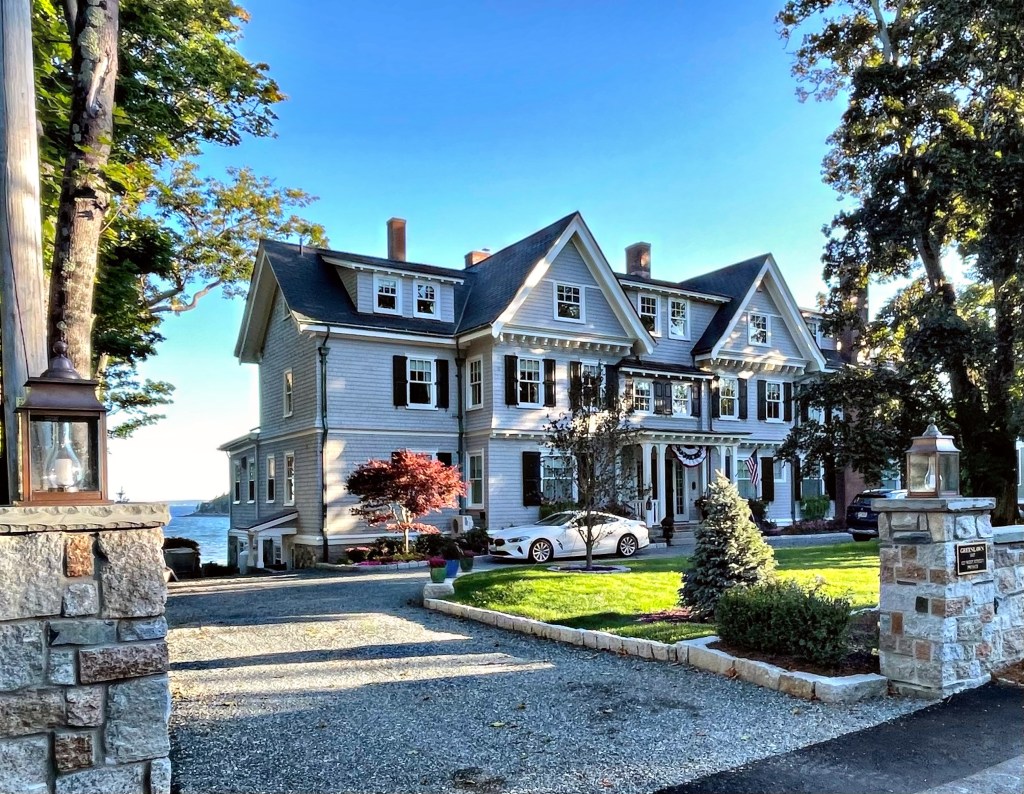
West Street in Bar Harbor was laid out in 1886, and developers laid out house lots on both sides, with larger, more expensive land right on the water. One of the earliest homes built on the street is Greenlawn, constructed in 1887 for William Rice, an industrialist who co-founded Rice & Hutchins, a shoe manufacturing company with main offices in Boston. The architectural firm of Rotch and Tilden, comprised of partners Arthur Rotch and George Thomas Tilden. Both had studied at the Massachusetts Institute of Technology and at École des Beaux-Arts in Paris. Both had worked at the architectural firm of Ware and Van Brunt, and would be best known for their Gilded age mansions in New England. By 1896, the cottage was owned by William L. Green, which is likely when the cottage’s name “Greenlawn” stuck. The house recently sold for $4.25 Million and the interiors are gorgeous!

“La Rochelle” // 1903

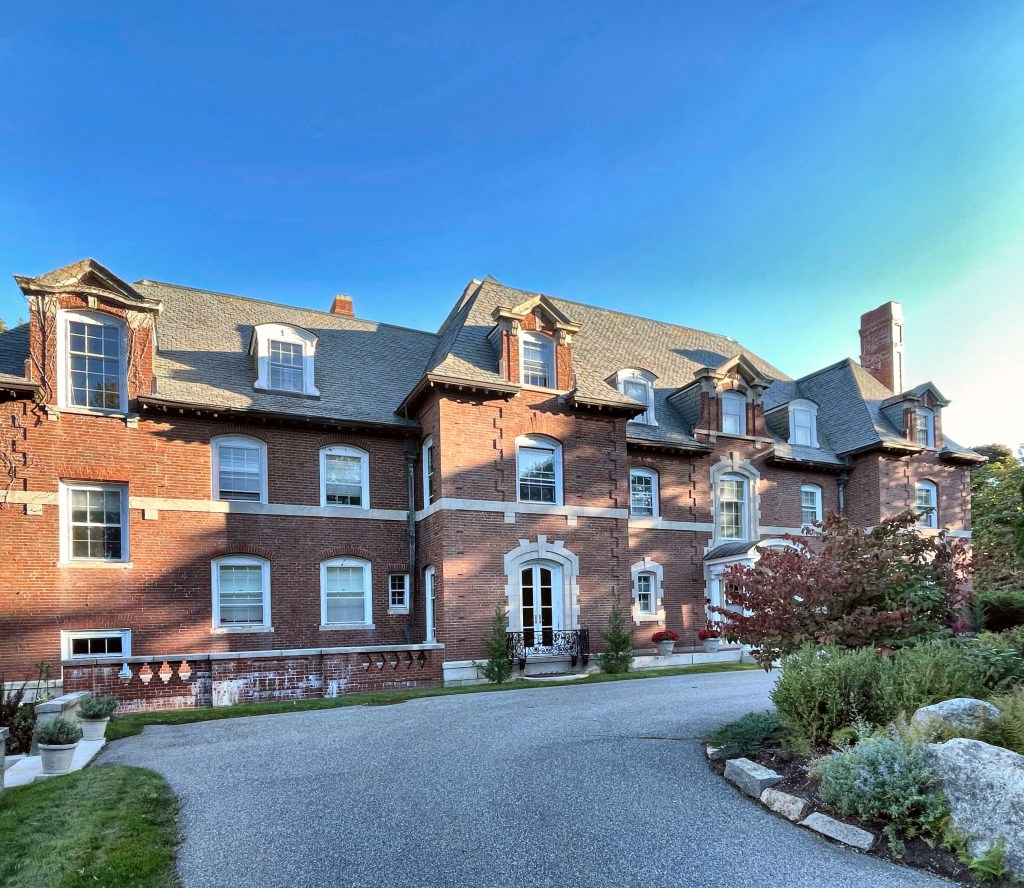
“La Rochelle”, one of the many beautiful summer “cottages” in Bar Harbor, Maine, sits on West Street, a well-preserved stretch of mansions that showcase Gilded Age wealth in the town. The cottage dates back to the 1902-3, when George Sullivan Bowdoin, great-grandson of Alexander Hamilton, and partner at J.P. Morgan, and his wife, Julia Irving Grinnell Bowdoin, a great niece of Washington Irving) commissioned the Boston architectural firm of Andrews, Jacques & Rantoul to design a cottage for them. They hoped to spend their summers away from New York, where they could rub elbows with other wealthy and well-connected summer residents in Bar Harbor. The French Renaissance style cottage, known as La Rochelle, became one of the first Bar Harbor mansions constructed of brick. The forty-one room, 13,000 square foot cottage was built with twelve bedrooms and nine full-bathrooms on two acres of land, which backs up to the Mount Desert Narrows and harbor. The name La Rochelle comes from La Rochelle, a seaport in Nouvelle, Aquitaine, France, where George’s ancestors lived before settling in present-day Maine (later moving to Boston). In the 1940s, Tristram C. Colket of Philadelphia and his wife (the former Ethel Dorrance, daughter of John T. Dorrance, the Campbell’s Soup king) acquired La Rochelle. In 1972, La Rochelle’s owners, the Colket family, donated it to The Maine Seacoast Mission, who then sold it in 2019 to the Bar Harbor Historical Society.

Christ Episcopal Church, Gardiner // 1820

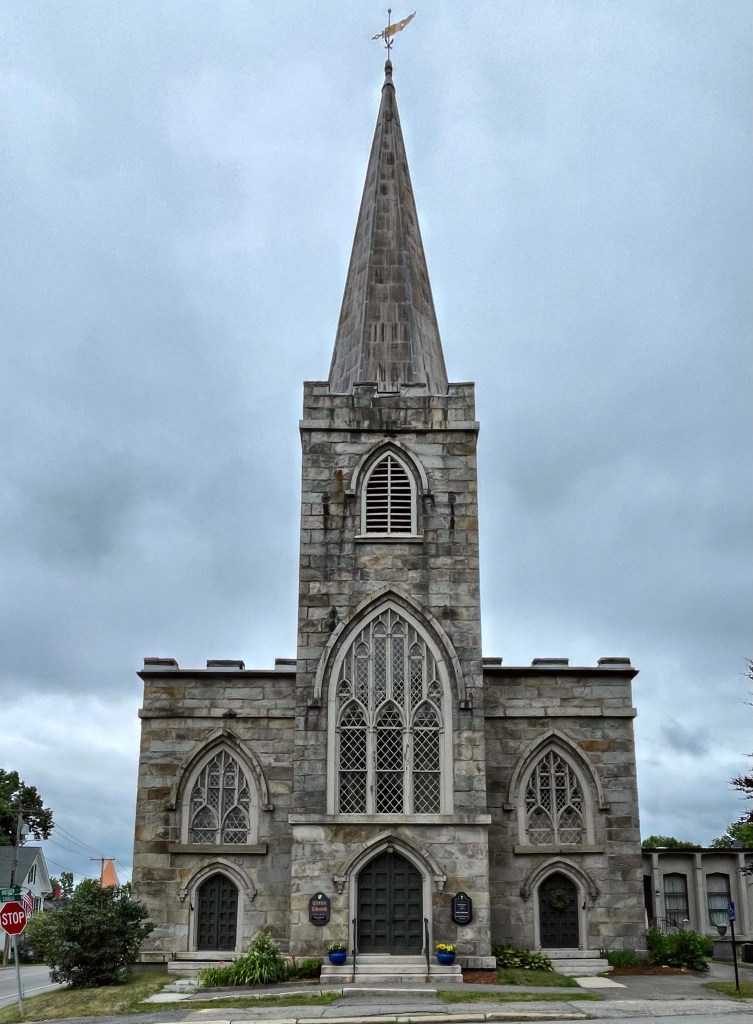
The oldest known example of ecclesiastical Gothic Revival architecture in New England is surprisingly located right in Gardiner, Maine, the Christ Episcopal Church. The Episcopal Church in Gardiner was organized in 1772 by Sylvester Gardiner, a major landowner for whom the city is named as the town’s main church. Two more vernacular buildings were constructed as houses of worship until a new, fireproof structure was desired. Built in 1820, the stone church was designed by the Reverend Samuel Farmer Jarvis, who was likely heavily inspired by the stone churches found in England. The church has massive lancet Gothic windows with tracery, that in the tower considerably larger.

Oaklands // 1835

A massive amount of land on the eastern edge of the Kennebec River was acquired by Sylvester Gardiner in the 18th century, but confiscated by the state during the American Revolutionary War (because Gardiner was a Loyalist who fled). Years later, the land was recovered by Gardiner’s grandson and heir, Robert Hallowell Gardiner. Upon coming to age, Robert Hallowell Gardiner returned to Maine in 1803, after graduating from Harvard, ready to straighten out and manage the holdings willed to him by his late grandfather Dr. Sylvester Gardiner, the founder of Gardiner, Maine. He came with no inclinations or training in business, but his cousin Charles Vaughan in Hallowell helped in steer him on the right course. Starting at the age of 25, Robert Hallowell Gardiner embarked on the task of developing an entire city, Gardiner, but with profit and investment in mind over the next sixty-one years. His business enterprises included: six dams, saw and gristmills, shipyards, foundries, a brick mill, broom making industries, furniture manufacture, paper making and the ice-harvesting business. He married Emma Jane Tudor of Boston (who he likely met during his time at Harvard, in 1805. They soon after built a home for their family and welcomed friends and family to stay there on the massive property. The first Oaklands estate burned in 1834 and the present Gothic Revival mansion on the site was built in 1835-37. Designed by English-born architect Richard Upjohn, Oaklands typifies an English country manor house and features a rectangular hip roof, hooded window moldings, turrets and elaborate stonework. Oaklands is among the first and finest 19th-century rural villas in the State of Maine and is among the most significant in the country. The home remains on over 310-acres of sprawling land which looks out over the Kennebec River, and is owned by the Gardiner family to this day!