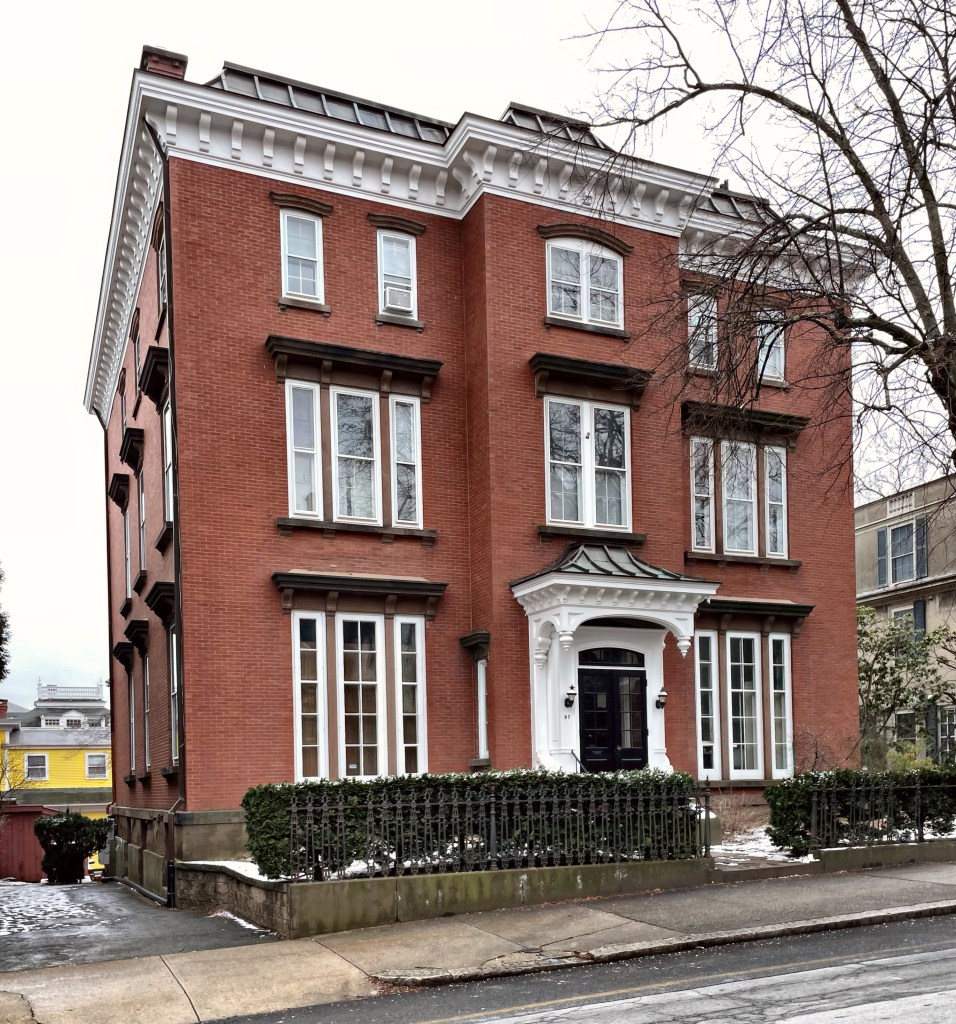
Watson-Knight Mansion // 1854

No town does Italianate architecture quite like Providence! Case in point, the Watson-Knight Mansion, a relatively overlooked example of the style found on Angell Street in College Hill. In 1854, a house lot here was purchased by an elderly Matthew Watson (1786-1857), who possibly lived in half of the house for a few years until his death. Directories also list his son Robert as living in the home in 1854. The three-story brick mansion has a boxy form with symmetrical facade. Brownstone hoods and sills are located at the windows and add depth to the otherwise blank facade. A projecting wooden door hood with hanging pendants covers the large entry. The home remained in the Watson Family until it came under the possession of Robert Brayton Knight (1826-1912) a businessman and mill owner who became the largest individual owner of cotton mills in the world, with upwards of twenty distinct establishments under his personal control. He co-founded what became the Fruit-of-the-Loom brand with his brother in the 1850s. The building has since been divided into apartment/condominiums.
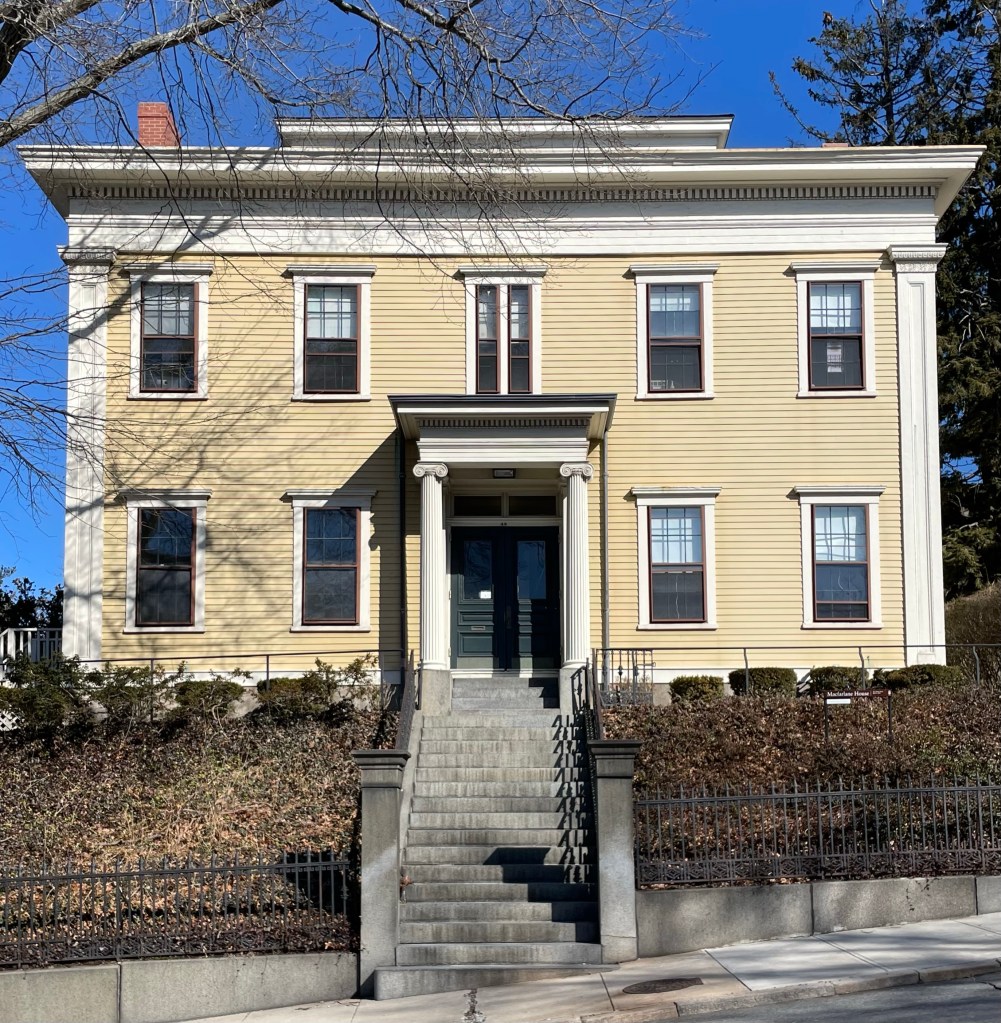
King-MacFarlane House // 1845

William Jones King (1803-1885) was born in Providence, Rhode Island as the eldest son of Elijah and Nancy King. His father Elijah was a master-mariner and a wealthy ship-owner, engaging in trade with the West Indies, likely partaking in the transport and sale of humans like many Rhode Island “merchants” at the time. Elijah was travelling to Martinique in 1815, when the Great Gale of 1815, the largest hurricane on record at the time in New England, intercepted the ships and capsized them. Elijah and his crew died at sea. After his father’s untimely death, which left the family poor, William (as the eldest at just 12 years old) became the sole support of his mother and three younger siblings at the time. William eventually became a clerk at the Union Bank in town, moving up the ranks until he became a cotton merchant. He had this home built a few years after his marriage to Lydia Gilbert. The house is an excellent example of a traditional Greek Revival home in the College Hill section of Providence with corner pilasters and central Ionic portico all sited high on a landscaped terrace behind an iron fence. The house is now owned by Brown University and has been renamed MacFarlane House after Walter Kilgore MacFarlane, Jr., a Brown alumnus in the class of 1923. The house today houses the main office of the Classics Department at Brown University.

Pardon Miller House // 1822

Pardon Miller, a watchmaker and silversmith in Providence had this Federal style home built in 1822 in Providence’s high-value College Hill neighborhood when he was in his 20s. The home and its neighbor were built at the same time, seemingly by the same builder as they share a lot of similarities in design and detailing. The house remained in the Miller Family until 1882, and it is now owned by the Rhode Island School of Design (RISD). The homes on the northern side of Angell Street, like this house, are largely built on a raised foundation with high retaining walls, which showcases the “hill” in College Hill.

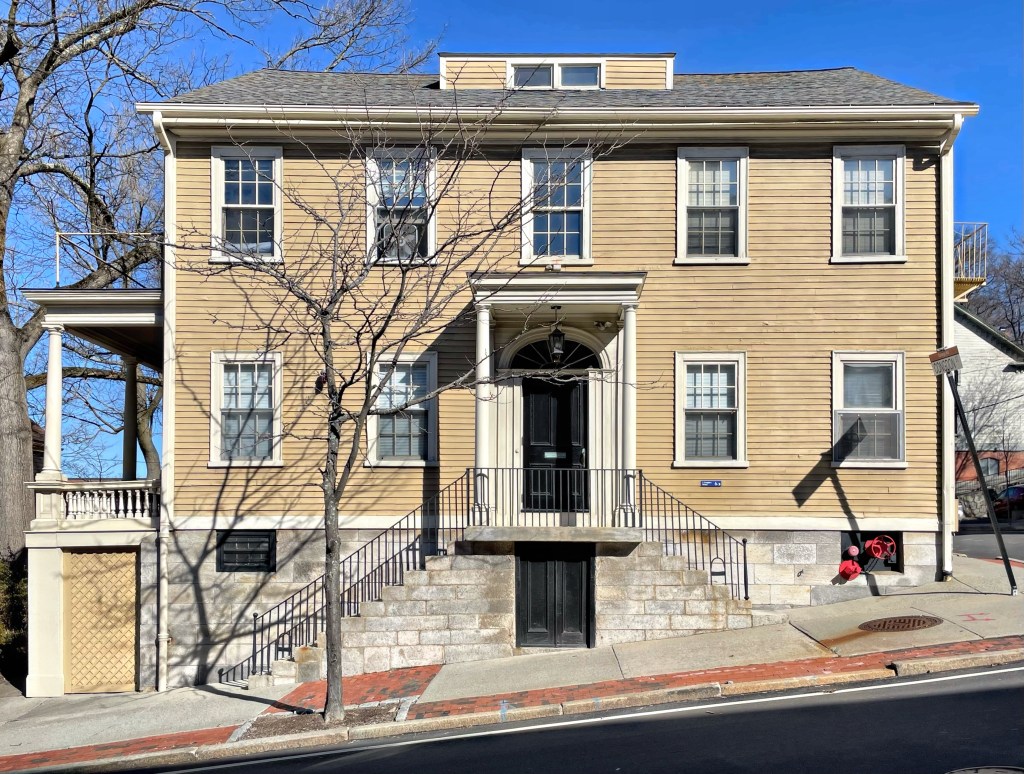
Jonathan Congdon House // 1818

Jonathan Congdon (1763-1862) worked in the hardware and iron business, following his father’s footsteps, eventually taking over the family business. Jonathan married Elizabeth Arnold and had at least nine children together. Two of their sons, Arnold and Welcome, too followed in the family business, as ironworkers and salesmen, with the new firm name, Jonathan Congdon & Sons. The company did well, and Jonathan replaced his c.1787 home on the lot (built at the time of his marriage) with the present structure. He also laid out a street on the side of the property, which was named Congdon Street. The home remained in the Congdon Family until 1937, when it was acquired by the Rhode Island School of Design (RISD).