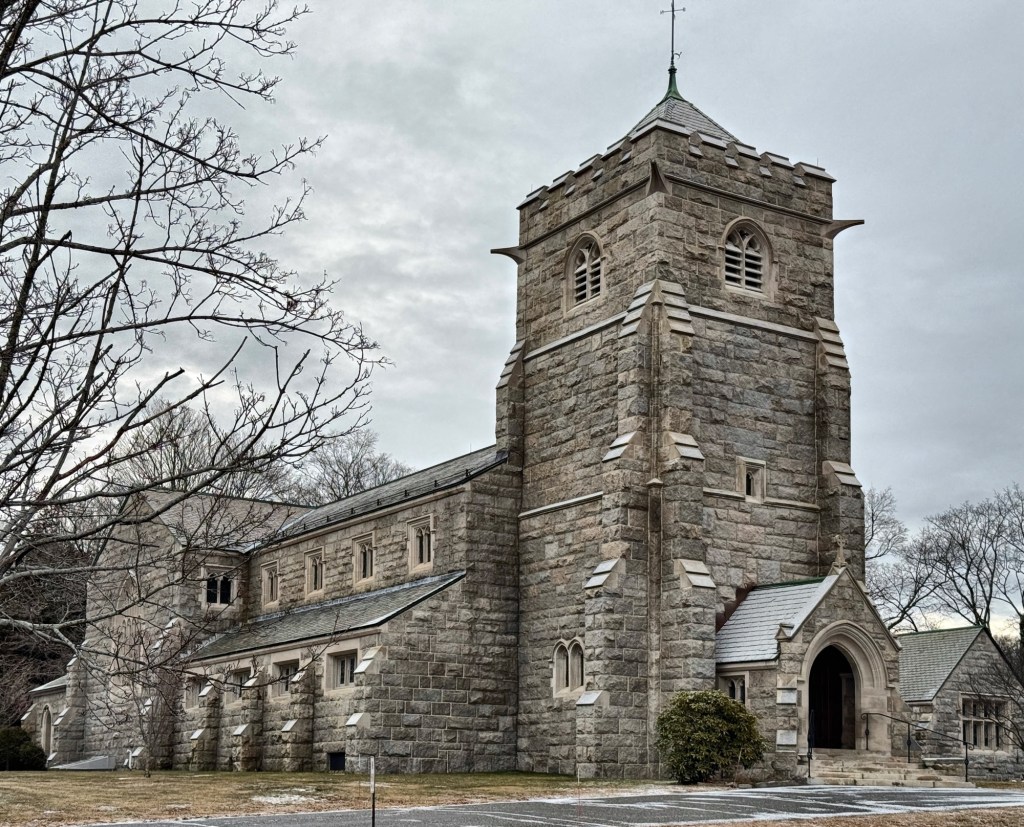
The Hopedale Unitarian Church, also known as the Draper Memorial Church, is located in the former industrial village of Hopedale, Massachusetts, and is one of the finest examples of the Neo-Gothic style in the state. The church was funded by brothers George Albert and Eben S. Draper of the Draper Corporation, the largest employer in town, offering to build the new edifice as a memorial to their parents, George and Hannah Draper. The church replaced an earlier, wood-frame church, built on the site in 1860 by supporters of Adin Ballou, a founder of the Hopedale Community, a utopian community that eventually failed. The Drapers hired Boston architect, Edwin J. Lewis, an active Unitarian who had designed several churches around New England by this time. His plan was “English Gothic of the Perpendicular period” made of Milford granite with Indiana limestone trimmings and a roof of green slate. At the interior, roof trusses were left exposed “as in the old English Parish churches” with oak finishes and flooring and memorial stained glass windows by prominent artists. The church remains a visual and historical landmark for the community with an active congregation who preserve the significant building.
 Buildings of New England