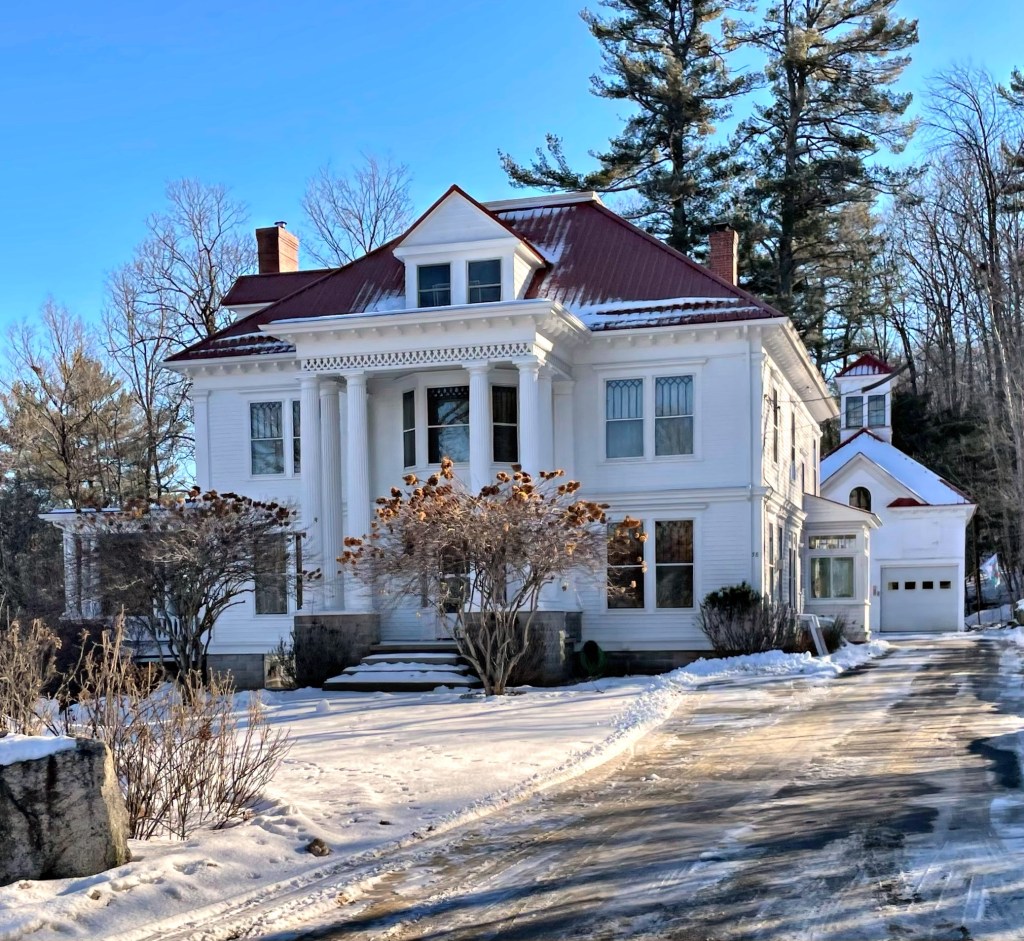
This two-and-a-half story mansion sits on a steep hillside overlooking Downtown Norway, Maine. The home was built in 1908 for Edwin Cummings, who appears to have been a son of Charles B. Cummings, who ran a profitable woodworking and carpentry firm in the village. Charles Cummings was the owner of the Evans-Cummings House (featured previously) and updated it to show off his carpentry skills. The house here is a great example of Neo-Classical architecture with the monumental columns to create a prominent portico. The home retains the original windows which really complete the facade!
The most iconic house in Norway, Maine has to be the Evans-Cummings House (also known locally as the Gingerbread House) on Main Street. The ornate Victorian era home was originally built in 1855 for Richard Evans, who was born in Portland in 1805 and after training as a carpenter, moved to Norway in 1833 for work. He and his wife, Mary Warren Hill, had eight children and they resided in the home until their death. In 1890, Charles B. Cummings bought the house in 1890 and hired local architect John B. Hazen to remodel the house. Hazen added the gingerbread adornments for which the house is now known colloquially. The home attracted a lot of attention in the region, and the later heirs continued that whimsical appeal. When the home was willed to Fred and Cora Cummings, they were said to have kept a stuffed peacock at the top of the stairs, which delighted children when they toured the home. The house eventually became used as storage by the owners of the local Advertiser Democrat newspaper, and its future was threatened. Since 2012, a local group, Friends of the Gingerbread House, have poured tens of thousands of dollars and an equal amount of time restoring the iconic home to her former glory! Preservation is important!
Last up on our tour of Scandinavia (Denmark, Sweden and now Norway) Maine, is Norway. The town of Norway centers around Pennessewasse Lake, which supported native people in the region for thousands of years. It wasn’t until after the American Revolution that European settlers established the town. By 1789, a sawmill and gristmill were established, the first road was built in 1796, and the town of Norway was officially incorporated on March 9, 1797. Before incorporation, the township adopted the name Rustfield, to recognize the contributions of prominent landowner Henry Rust of Salem, Mass and the community once petitioned the Massachusetts General Court to be named Norage, meaning “falls” in the native peoples’ language. Norway won the name, but the origin of the town’s name remains unknown. The town leaned more towards industry than Denmark and Sweden due to the stronger rivers, and its population increased as a result.
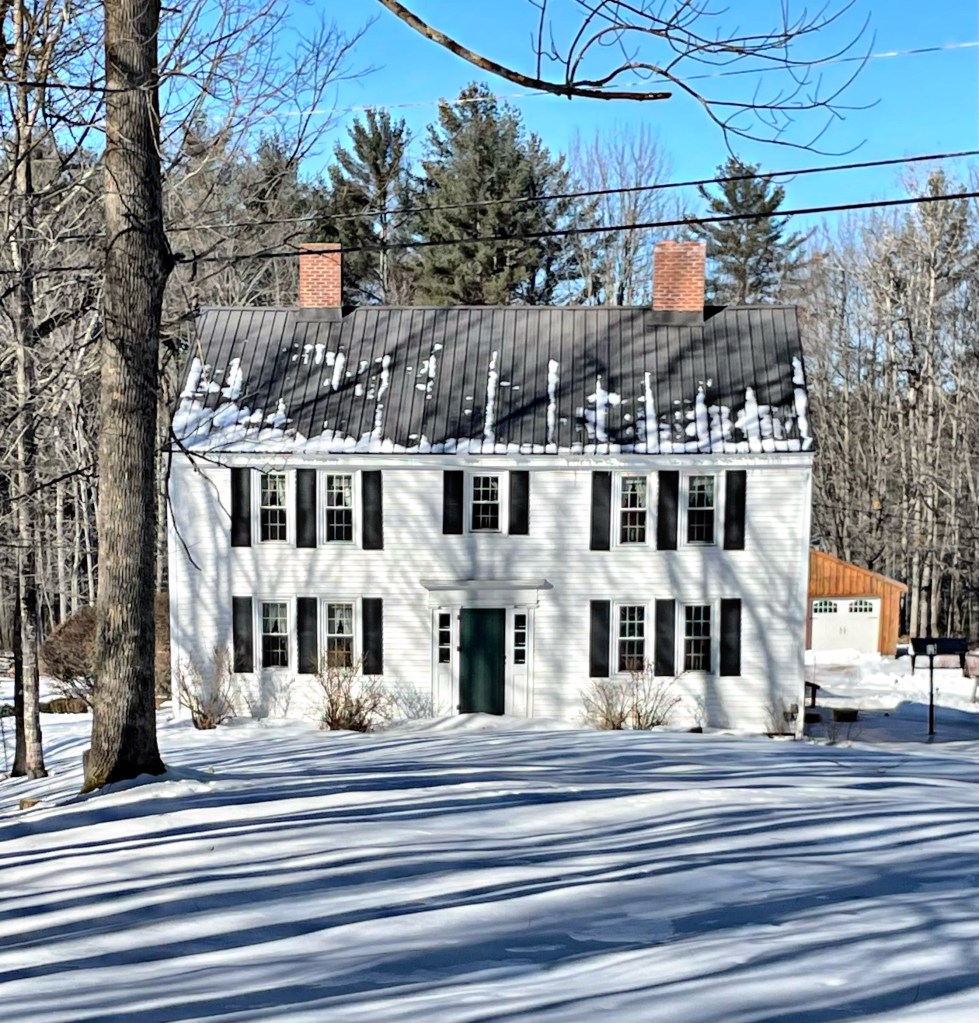
This historic farmhouse sits on the eastern edge of Pennessewasse Lake and is one of the oldest extant homes in town. It was built in 1792 just years after land here was purchased by Nathaniel Bennett in 1790. Nathaniel and Elizabeth Bennett resided in the home until they died, childless. The home was eventually purchased by Don Carlos Seitz, publisher of the New York World, who grew up and was educated in town. Seitz operated the property as a gentleman’s farm, and is responsible for naming the property “Cedarbrook Farm”. His estate sold the property to one of his hired hands in 1927. It remains very well preserved and was listed on the National Register of Historic Places in 1996 as the Nathaniel and Elizabeth Bennett House.
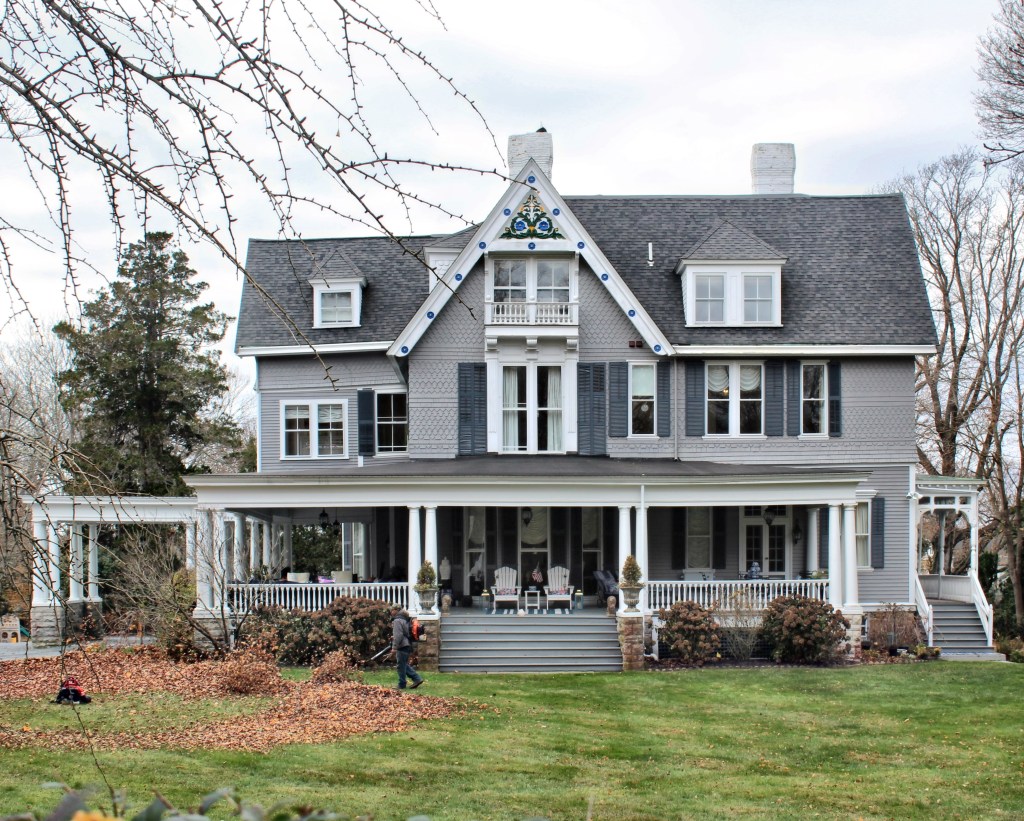
One of the best Queen Anne style summer cottages in Newport is this gem, named Sunnylea. The house was built in 1881 for Charles F. Chickering, who ran the Chickering & Sons Piano Company in Boston. Chickering hired local architect Dudley Newton, who had previously apprenticed under George Champlin Mason, a builder of many Newport summer houses. Sunnylea was the first independent commission that Newton designed with his own firm. The house was later owned by Luther Kountze, a New York banker and his wife Annie. After WWII, the home was converted away from single-family use, and was occupied as a prep school, before being converted to condos late in the 20th century. It recently sold, and wow, the interior is just as beautiful as the exterior!
Beachmound, a unique summer residence in Newport, was built in 1897 by architect Henry Ives Cobb for Benjamin Thaw Sr., (1859-1933) a Pittsburgh banker and philanthropist. The mansion is Neo-Classical in style, taking cues from Classical architecture, specifically Greek Revival, with the monumental columns, pediments, and pilasters. Benjamin Thaw was the half-brother of Harry Kendall Thaw (known for the 1906 murder of architect Stanford White). The murder took over the press as one of the more salacious scandals of the gilded era. Harry Thaw’s wife, the actress/model Evelyn Nesbit was said to have been raped by Stanford White while 16 year old (White was 47). She later married Harry K. Thaw. Thaw shot and killed White, the internationally famous architect, in front of hundreds of witnesses in a theater during a performance in New York. Following two trials, he was acquitted based on the insanity defense, a stint in an asylum from which he escaped, and eventual court-ordered freedom, Thaw was a celebrity. A comical piece of the story is that when Thaw later visited “Mar-a-Lago”, the Post Mansion in Palm Beach, Florida (now best known as Donald Trump’s home), he gasped, “My God, I shot the wrong architect!” Beachmound remains as a stunning, refined summer estate in Newport, and is comprised of condo units.
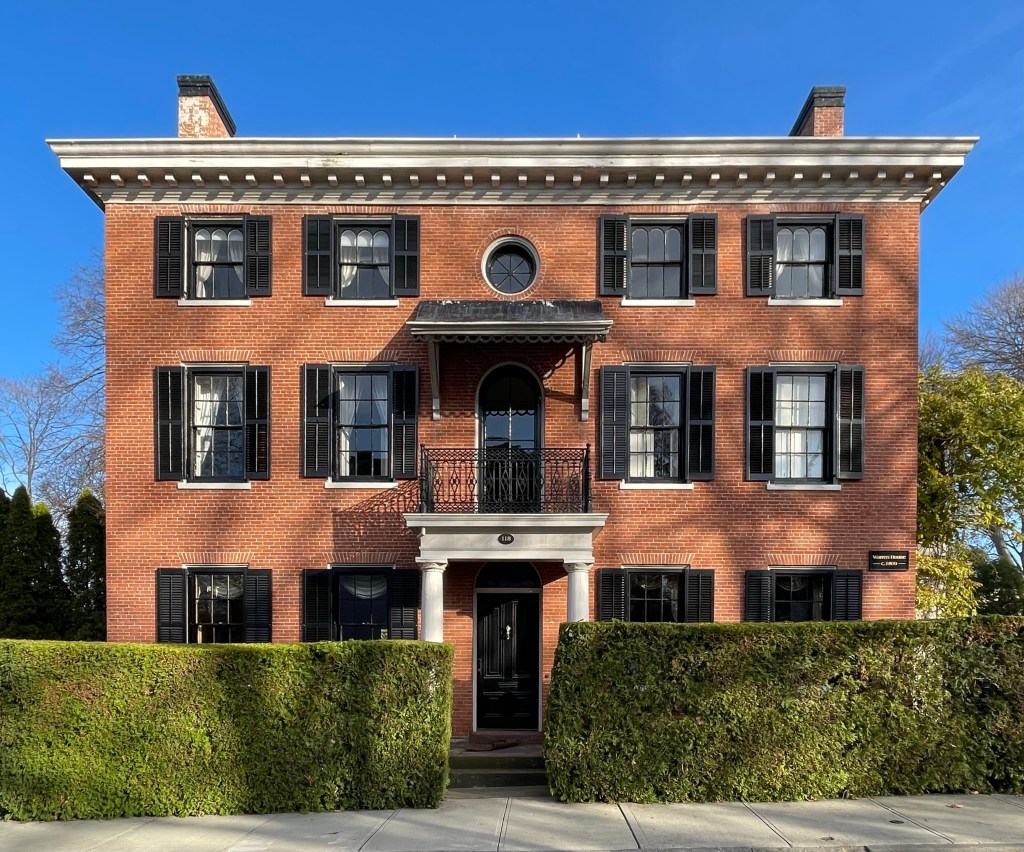
The Lawton-Warren House is one of the few large, brick Federal mansions in Newport, and is located a short walk from the Tillinghast House (last post) and the mysterious Newport Tower in Touro Park. The collapse of maritime trade in Newport following the British occupation was so complete that this house style, prevalent in Providence, is virtually nonexistent here. Robert Lawton was a sea captain and merchant who died at sea in 1818 off the coast of Africa and left the house to his wife, Penelope. After Penelope’s death in 1855, the traditional Federal style home was given Italianate detailing at the second floor. The home was likely painted around this time, which thankfully has been removed. The home was purchased in 1932 by George Henry Warren and his wife Mrs. Katherine Urquhart Warren. Katherine was a preservationist and art collector interested in preserving the Colonial town of Newport. To assist with this endeavor, she convinced the Countess Szycheni, a descendant of the Vanderbilt family and owner of The Breakers, to open The Breakers mansion to the public for tours. It was the start of the Preservation Society of Newport County. She would later be appointed by First Lady, Jacqueline Kennedy, to the committee to restore the White House in 1961. Katherine died in 1976, she willed the home here to the Preservation Society, and it held offices there until 1994. The home was sold to a private owner who restored the home to near original conditions, keeping the Italianate detailing.
This well-kept Federal home in Newport was apparently built pre-Revolution, but it was likely significantly altered in the early 1800s for its namesake, William “Billy” Bottomore. “Billy” was born in Bologna, Italy, and moved to Salem, MA, where he possibly met Michele Felice Cornè, a prolific painter and who is credited in making tomatoes mainstream… seriously. In early 19th century New England tomatoes were thought to be deadly poison. Cornè was accustomed to eating tomatoes in his native land of Italy and would regularly eat them without ill effect and, thus, allayed the fears of the residents of his adopted country. Cornè became friends with Bottomore and they both moved to Newport. Bottomore likely modernized this house with help from his friend and ran a confectionery store in the home.
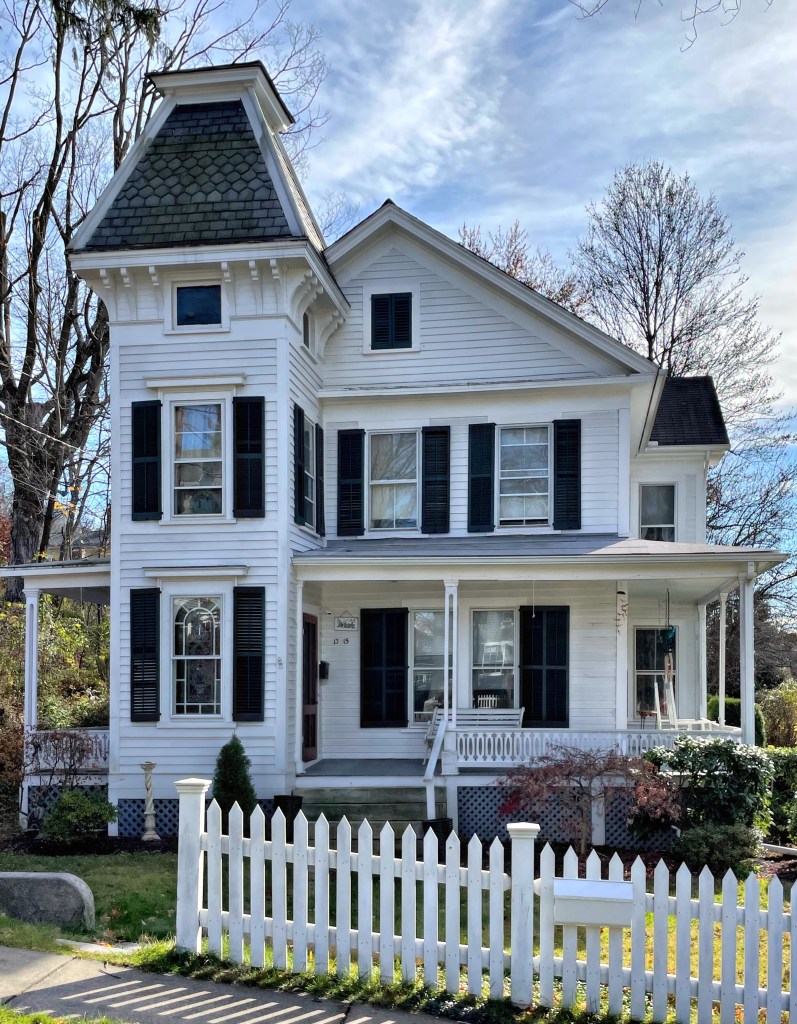
This eclectic house in Collinsville was likely built in the mid-19th century in the Greek Revival style, with its gable roof serving as a pediment. By the end of the 19th century, the prominent corner tower with mansard roof and porch were added to create the oddly pleasing composition we see here today. The home was likely altered by Walter Soudant, who ran a grocery store in the village out of the Valley House (last post). Walter’s daughter, Belle Julie Soudant, was an established singer, who toured Europe before accepting a position as a singing teacher at the Institute of Musical Art in New York, known today as the Juilliard School.
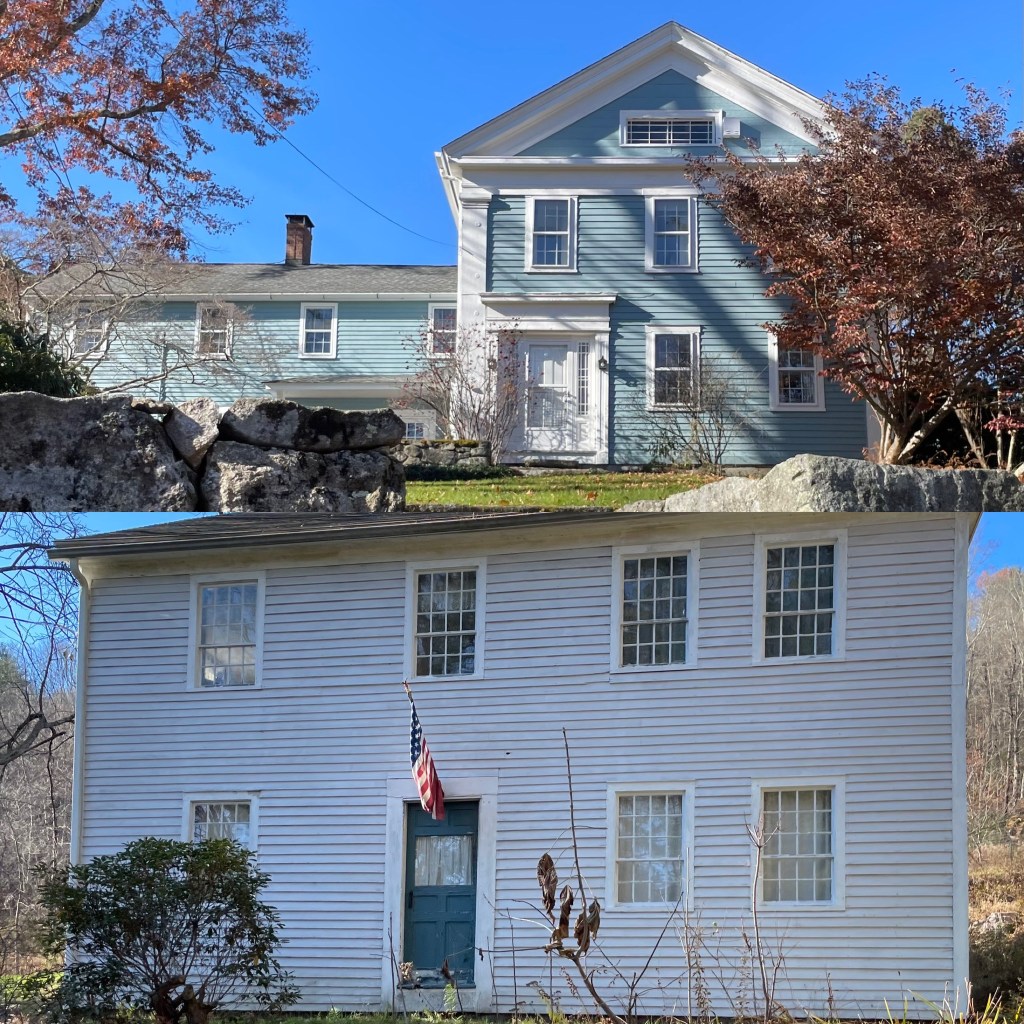
Alson and Sadosa Barbour (sometimes spelled Barber) grew up in North Canton, Connecticut and resided in these two homes, raising families and farming the land. The blue house was built in 1839 for Alson Barbour, who updated his earlier 1814 home which was gifted to him by his father as a wedding gift. The smaller home was outgrown by Alson, Hannah, and their 12 children (all living to adulthood) and he built this stately Greek Revival home on the quiet, meandering road. Not to be outdone by his brother, Sadosa too added onto his earlier home, also a wedding gift from his father. The 1803 house was enlarged in 1840 and given its present appearance, a modest Greek Revival home with a side-gable roof.
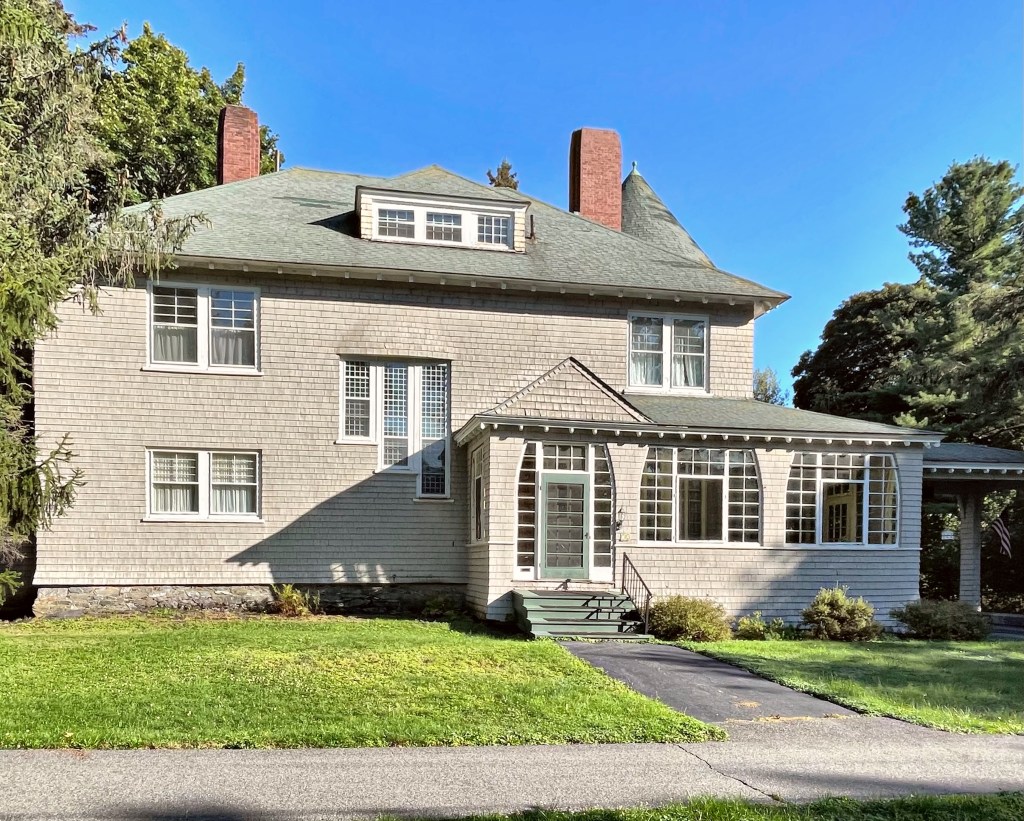
Frederick Parkhurst (1864-1921) was born in the small Maine town of Unity and attended local schools. He moved to New York to attend Columbia Law School, receiving his degree in 1887. Soon after, he was admitted to the Maine bar. Frederick moved back to Maine and joined his father in a leather goods business in Bangor, of which he later became president. He served on the Bangor City Council and later in the Maine House and State Senate. With his wealth and connections, he purchased a large house lot on West Broadway, then the most exclusive street in town, and hired local architect Wilfred Mansur, to design a Shingle style home for his family. During World War I he led the Liberty Loan effort and in 1920, was elected Governor with the largest margin in Maine history, moving to the State Capitol, Augusta soon after. Parkhurst served less than a month when he died on January 31, 1921.



 Buildings of New England