Located just east of downtown Bristol, the Dennis Doran House stands as an excellent example of the Queen Anne style of architecture for a middle-class residence. The home was built in 1891 by Dennis Doran as his personal house. He worked as a carpenter and cabinet maker, and showcased his wood-working skills on this home. The asymmetrical facade, dominated by an octagonal corner tower, capped by a steep conical roof stands out, but is complemented by a complex hipped roof broken up by various jerkin-head and gable dormers at two tiers. The home is also clad in shingles of varied shapes to provide a complex texture.
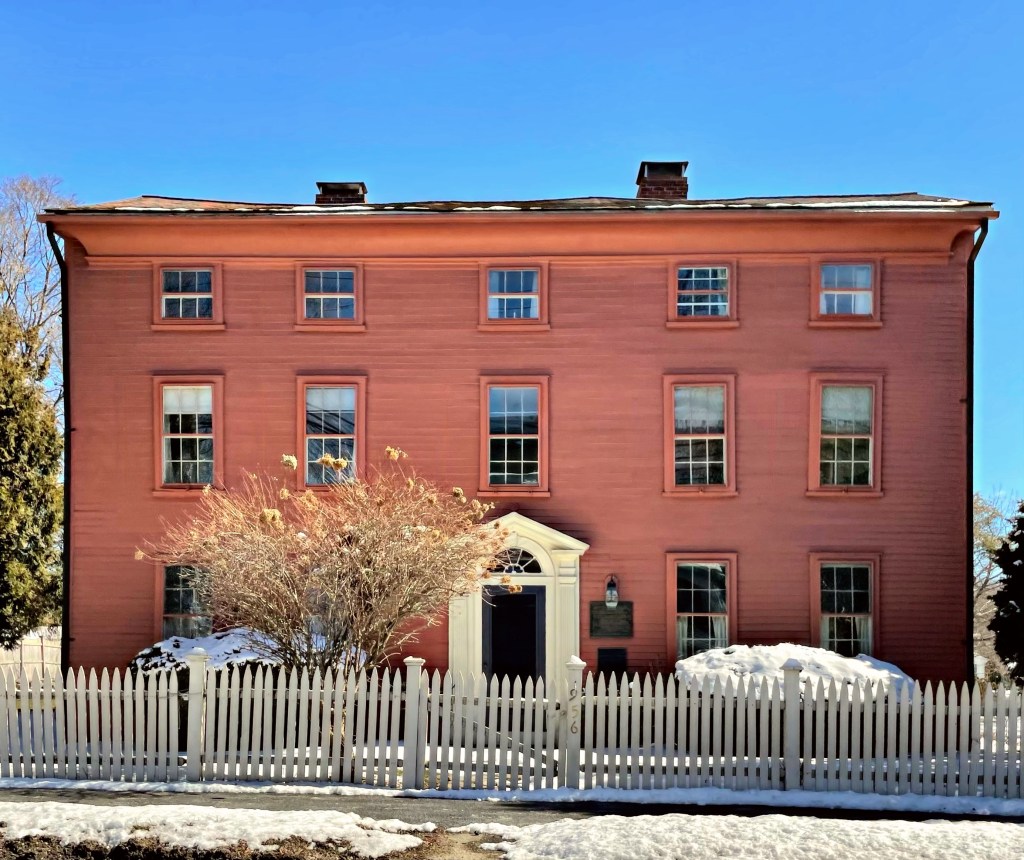
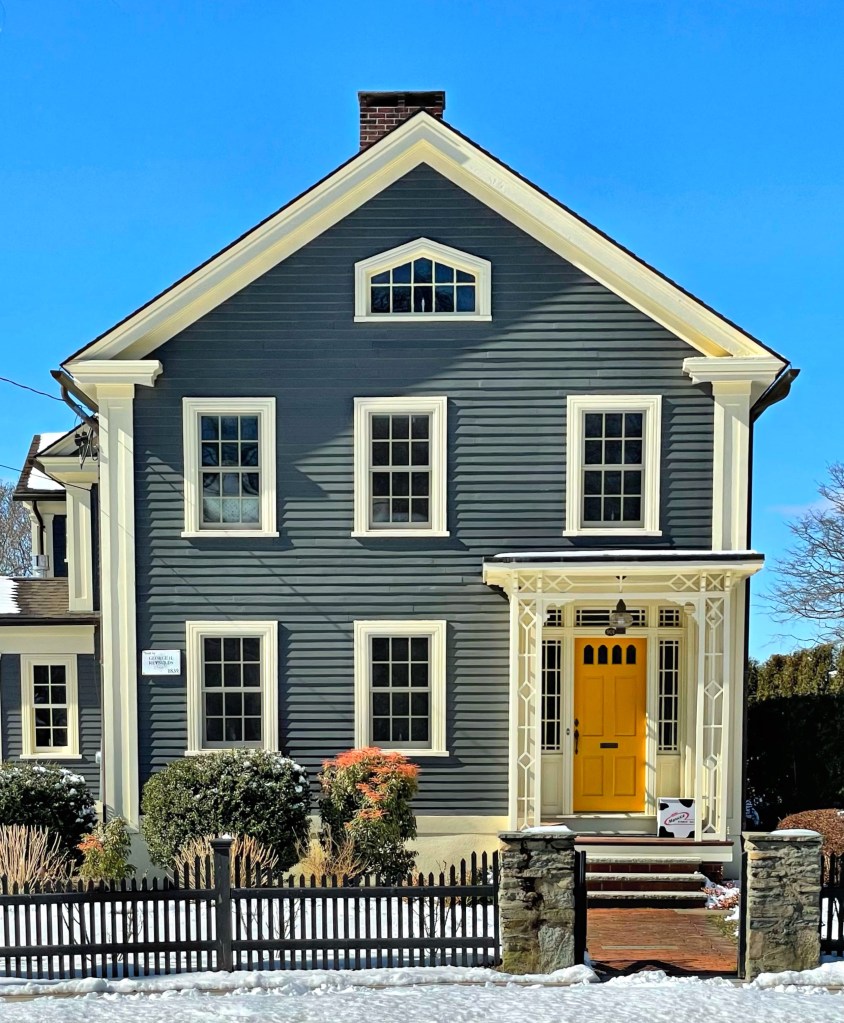
This three-story wood-frame house is one of the oldest buildings in Bristol and the oldest known three-story building in Rhode Island. The home was built by Joseph Reynolds (1679-1759), a patriarch in the Reynolds Family, who later built the Reynolds-DeWolf House I featured previously. The house is five bays wide and three deep with the roof extending lower to the rear, giving the house a classic New England saltbox appearance. Joseph built this house, and also operated a tannery and gristmill on his land. The home is nationally significant as during the ownership of the house by his son Joseph II, Marquis de Lafayette occupied the north parlor chamber. Lafayette was a general in the Continental Army and was responsible for the defense of Bristol and Warren from September 7 to 23, 1778 during failed military operations to drive the British from occupied Newport. The home was added onto and altered in 1790 to give it the current design, with Federal detailing. The home remained in the Reynolds Family until 1930.
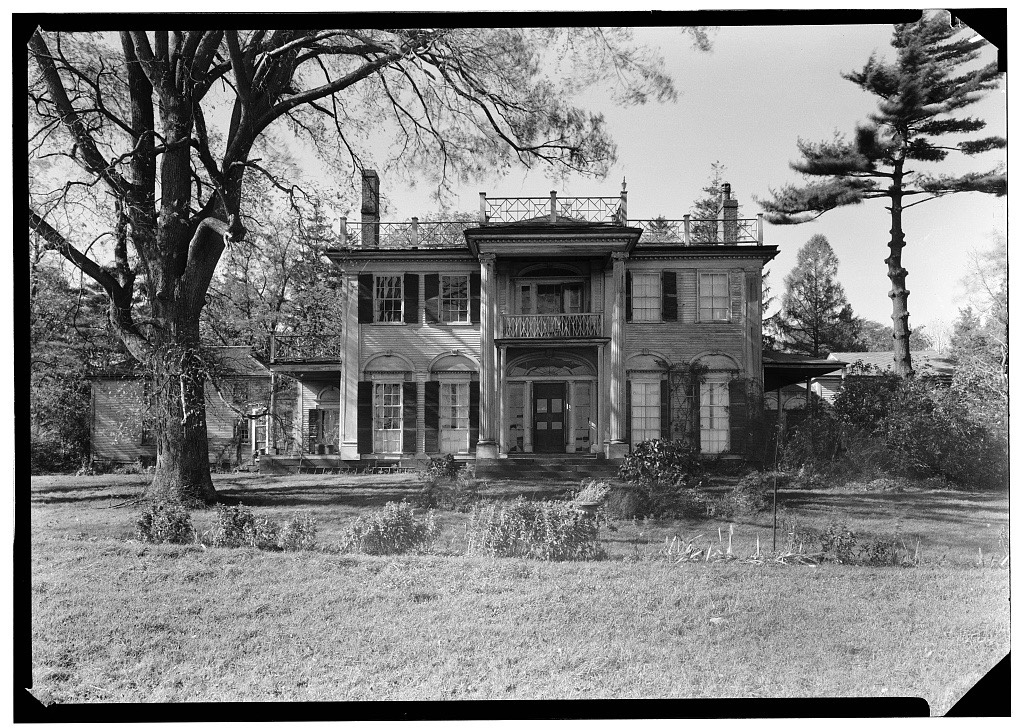
Formerly located on the Poppasquash Peninsula in Bristol, Rhode Island, the William DeWolfe House, also known as Hey Bonnie Hall, was constructed in 1808 for William DeWolf (1762-1829) and his wife Charlotte Finney (1764-1829). William DeWolf was a member of the infamous DeWolf Family of Rhode Island, which is believed to have transported tens of thousands of enslaved people to the United States and Caribbean before the African slave trade was banned in Rhode Island. The Ocean State played a leading role in the transatlantic slave trade. Not only did Rhode Islanders have slaves—they had more per capita than any other New England state. The beauty of Hey Bonnie Hall, and its melodic name hid the dirty money with which it was built. With his extreme wealth, William hired Providence architect Russell Warren to construct the home in a high form of the Federal style. Eventually, the home was willed to Anna DeWolf, who married Nathaniel Russell Middleton, from a slave-owning family in Charleston, South Carolina (birds of a feather…). It was Anna Middleton who gave the house its curious name of “Hey Bonnie Hall”. When she was younger, she used to sing an old Scottish song called “Hey The Bonny Breast Knots” over and over again to delight her grandfather, William, the first owner of this home. After Anna’s death, the home was willed to her two unmarried daughters. The Great Atlantic Hurricane of 1944 proved fatal for the grand estate, when the front portico was ripped off the home and flew away. The damage was deemed too expensive to repair and the home was demolished that year.
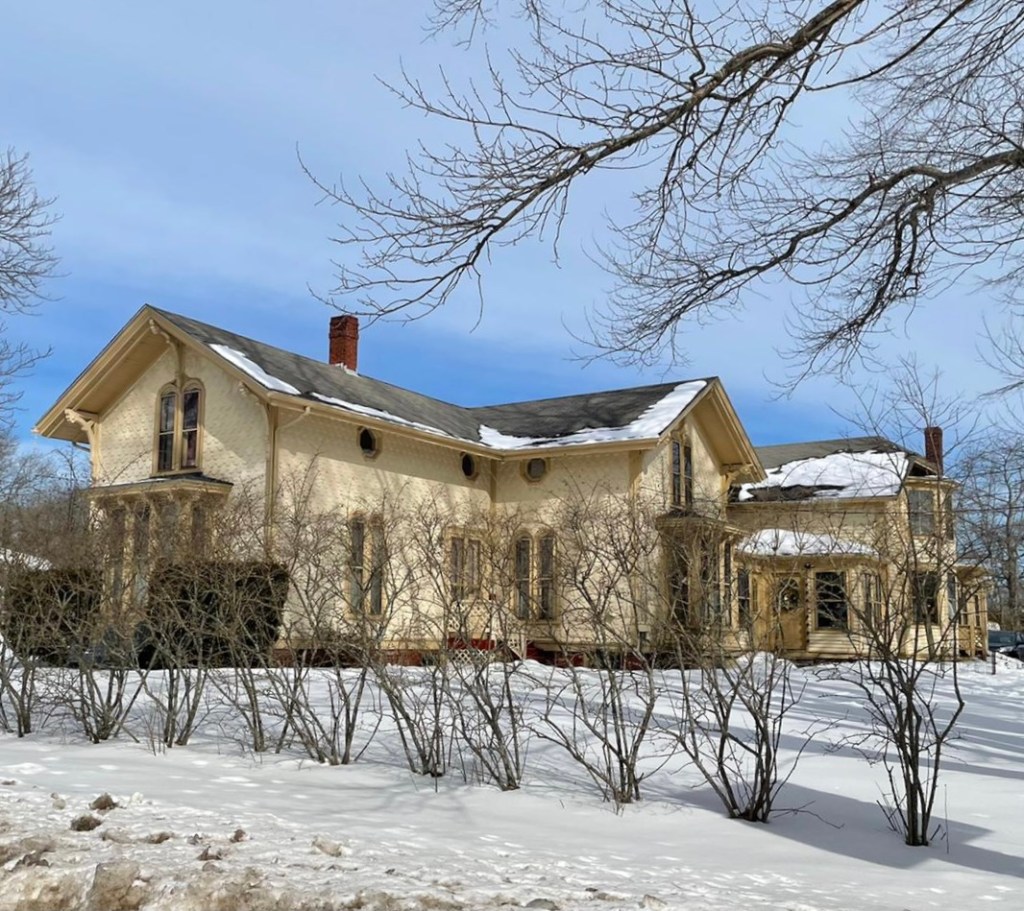
This charming home in Cape Elizabeth, Maine looks to have been built after the American Civil War, as an interesting Italianate cottage. The home is clad with scalloped shingle siding which works well with the paired round headed windows facing the street. The deep overhanging eaves are supported by brackets. Running under the eaves on the sides are octagonal windows, a very unique detail. The home is located at the center of town, away from the summer cottages which sprouted up along the rocky coastline in town starting around this time. It was converted into condominium units sometime in the late 20th century.
Set back from tree-lined Main Street in Suffield, the Phelps-Hatheway House is but one of many handsome eighteenth and nineteenth century homes in the town. The house began construction sometime between 1732-1762 as a modest gable-roof Georgian home built by Abraham Burbank. In 1788, the home was purchased by Oliver Phelps. at the beginning of the Revolutionary War, Phelps joined the Continental Army and fought in the Battle of Lexington. He left service in 1777 and, relying on his experience as a merchant, became Massachusetts Superintendent of Purchases of Army Supplies, a Deputy Commissary of the Continental Army. He was introduced to Robert Morris, the great financier of Revolutionary times. He supplied troops and received commendation from George Washington for his efforts. After the war ended, he became a prominent businessman and was elected to the Massachusetts Senate in 1785 and served on the Governor’s council in 1786 (Suffield was still a part of Massachusetts at this point).
Upon returning, Phelps hired architect Asher Benjamin (when he was in his early 20s!) to redesign the home into a gambrel roof mansion and construct numerous additions to make the house a suitable home for a wealthy, sophisticated man such as himself. Phelps was a principal in the Phelps and Gorham Purchase of six million acres of land in upstate New York, making him one of the nation’s largest landowners. Phelps lived here until 1802, when he moved to Canandaigua, New York, to more closely oversee the development and sale of his holdings. Phelps or his heirs sold the house, which was purchased by Asahel Hatheway and it remained in the Hatheway family for a century. It is now owned by Connecticut Landmarks and operates as a house museum.
This Italianate mansion was built around 1850 for Byron Loomis (1831-1896) possibly as a gift from his father Neland. Neland Loomis was the brother of John Loomis, and was part of the wealthy tobacco farming family who later packaged, rolled, and shipped tobacco from Suffield all over the country. The home is a large Italianate mansion is in the symmetrical form and covered with flush board siding. The low sloped roof with broad overhanging eaves is topped with a large belvedere. The home is somewhat difficult to photograph due to large bushes in front.
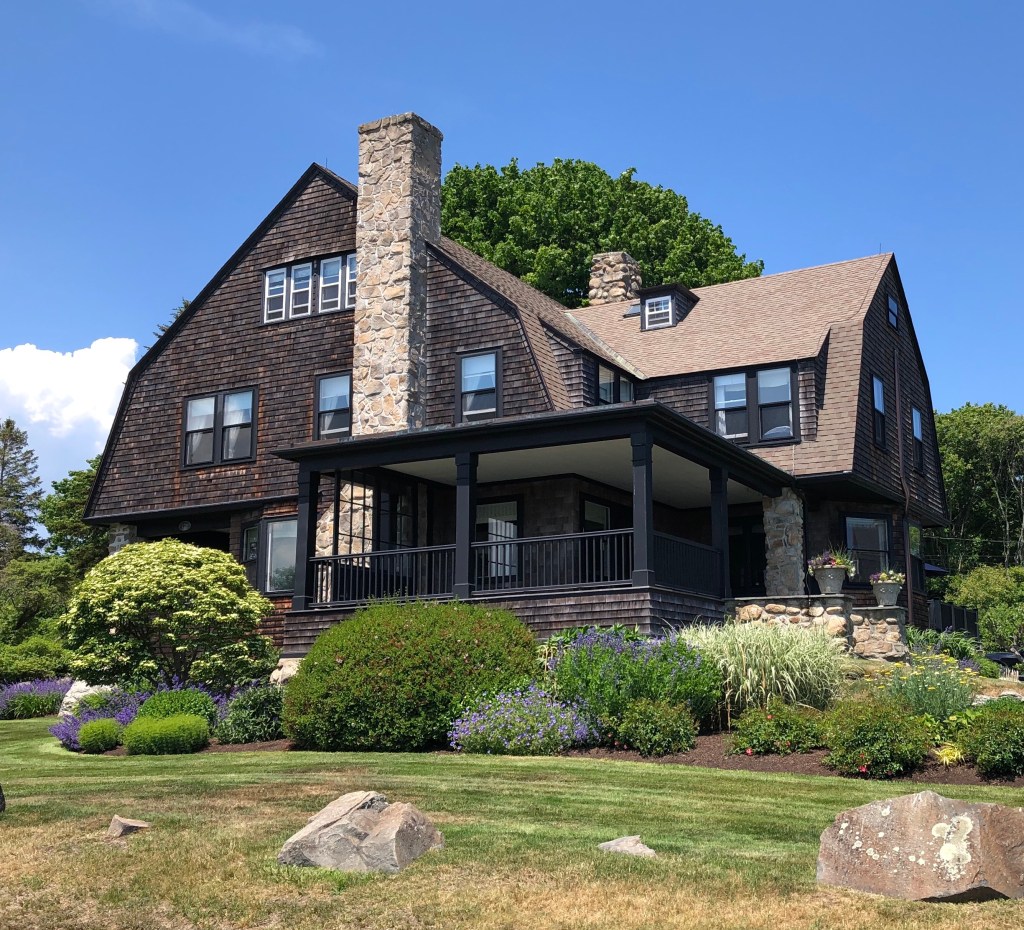
One of the larger Shingle style homes in Kennebunkport, Inglesea Cottage, was designed in 1889, possibly by Henry Paston Clark, who designed or worked on many homes and buildings in the summer colony. The original owner, Dr. George Frederick Brooks, a doctor based out of New York, who spent his childhood on the coast of Maine, and decided to spend his elderly summers there. By 1903, the home was purchased by Ms. Lucy Fay (1864-1937) of Fitchburg, MA, who hired Henry P. Clark, to add the cross gambrel addition to enlarge the home. Lucy Fay was the daughter of the the wealthy industrialist George Flagg Fay and his wife, Emily Upton, and upon their deaths, inherited their fortune (her sister died at just seven years old, making her an only child). The home remains in impeccable shape and is a head-turner everytime I drive down the coast.
Located just a stones throw from the Penniman House, the c. 1780 Knowles House stands at the historic end point of Fort Hill Road. Accounts differ on its history. Some sources explain the home was built in c.1790 by Seth Knowles (who died in 1787) a prominent citizen of Charlestown, Mass., and one of the original members of the Bunker Hill Monument Association and of its board of directors. From my research, the home appears to have been built for Thomas Knowles, Seth’s son, and was later willed to his son, also named Thomas. Thomas Knowles Jr., was born in 1803, in Eastham, and in early life settled at New Bedford, engaging in the whale fishery industry. Deed research would be required to find out more. The gorgeous Federal home features a large, center cross gable with dentils at the cornice.