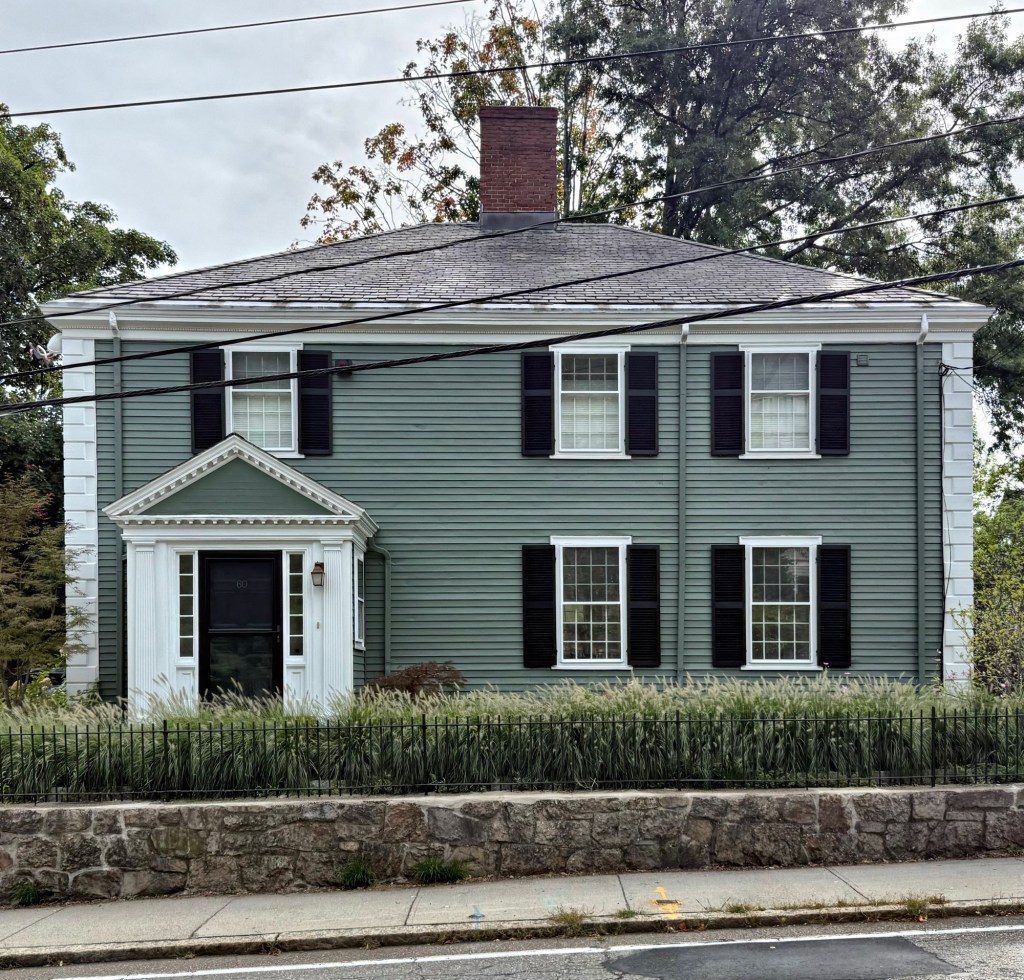
Built in 1928 as an accurate reproduction of an 18th-century residence the Codman-Gillet House at 60 High Street in Brookline is significant architecturally in the Colonial Revival style but also as a preserved house by the architectural firm of Howe, Manny and Almy. Lois Lilley Howe and Eleanor Manning were among the first women graduates of the M.I.T. School of Architecture, and the firm was joined in 1926 by Mary Almy. Their firm was the first all-woman architecture practice in Boston and the second in the U.S. Howe was the first woman elected a Fellow of the American Institute of Architects. The house was built for William Coombs Codman, a trustee of various real estate trusts, and was likely rented or sold for investment. The first long-time owner/occupants of the residence were Mr. and Mrs. Fernand Gillet and who both taught at the New England Conservatory of Music. Fernand was the principal oboist of the Boston Symphony Orchestra from 1925 to 1946. The Codman-Gillet House features many traditional Colonial Revival elements including: the corner quoining, window trim, a pedimented projecting entrance, and hipped roof with large central chimney.
 Buildings of New England