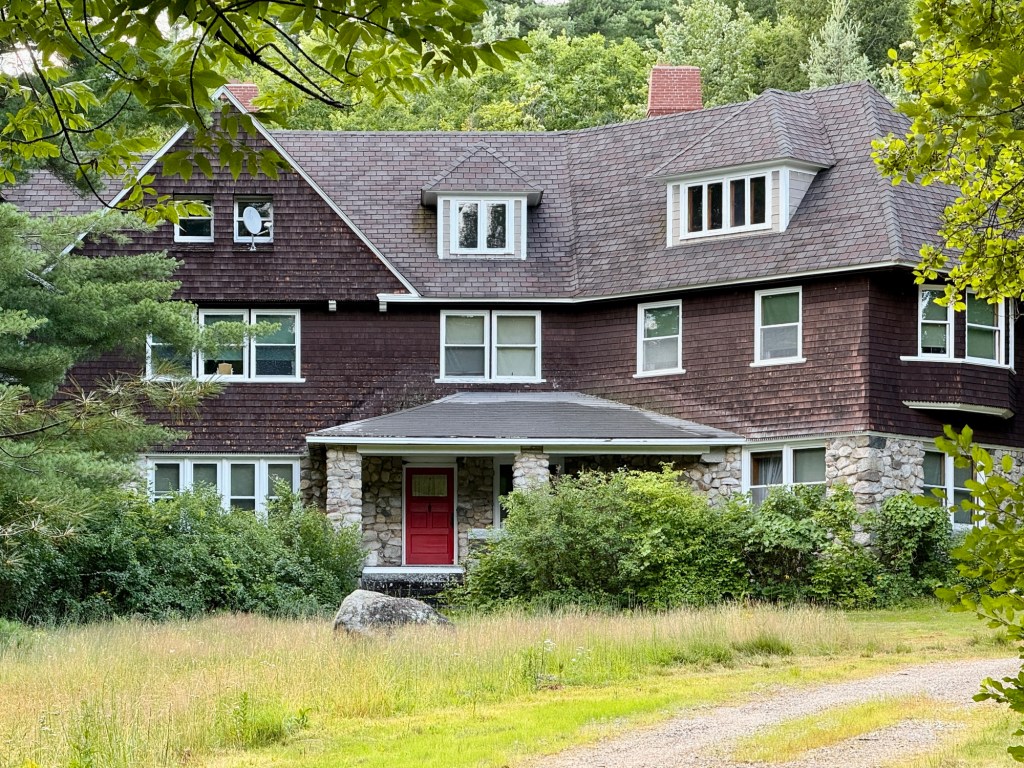
Cairncroft Cottage // 1892

Set into the trees in Chocorua in Tamworth, Cairncroft stands as one of the many stately “cottages” built in the late 19th and early 20th centuries for city-dwellers to escape the hot summers for the fresh air and views of the White Mountains of New Hampshire. This cottage was built for Emil Christian Hammer (1823-1894), who migrated to the
United States from Denmark in 1840, where he became a prominent businessman in several Boston business, including Waltham Manufacturing Company. In the mid-1880s, he founded the United States Watch Company in Waltham, one of the most important such companies in the country. From his success and connections, Emil was appointed by President Abraham Lincoln as Danish consul in 1864. Emil purchased the land here in 1886 and built a barn and ice house before having his home and nearby stone cairn built on the grounds; the latter is likely what gave the property its name. Cairncroft was designed by Boston architect, Edwin James Lewis, Jr., an expert at Arts and Crafts and Shingle style designs. After Emil’s death, just two years after his cottage was completed, the property passed to his wife, Martha. Her daughter, Cynthia Hollis and also an accomplished artist, inherited it later and eventually passed it to her husband, John Charles State Andrew, professor of theology at Harvard and Boston
University.

Chadwick Cottage // 1891

One of the many summer cottages tucked away in the trees in the Chocorua Colony in Tamworth, New Hampshire, the Chadwick Cottage was built in 1890 for prominent gynecologist, Dr. James Read Chadwick (1844-1905). Dr. Chadwick was introduced to Chocorua during his summer visits to the White Mountains, where he and his family stayed at local hotels as early as 1876. He purchased seventeen acres of forest nearby Chocorua Lake in 1890 on which he erected this house and its outbuildings the following year. The design of the buildings is attributed to Boston architect, Clarence Howard Walker, who was affiliated with the Boston Society of Arts and Crafts and designed this rustic cottage to fit within the forest, enhancing the landscape surrounding it. Dr. James Chadwick was a professor at Harvard Medical School and a pioneer nationally in the field of gynecology, where he played a key role in organizing the American Gynecological Society. In 1905, while vacationing at his Tamworth cottage, Dr. Chadwick died following a fall from a piazza roof. The Chadwick Cottage was sold a year later to Lillian and William G. Farlow, a world-renowned authority on fungi and other non-flowering plants, likely a friend of the late Dr. Chadwick. The cottage and its associated out buildings are lovingly preserved over a century later and exemplify the best of summer cottages in New Hampshire.

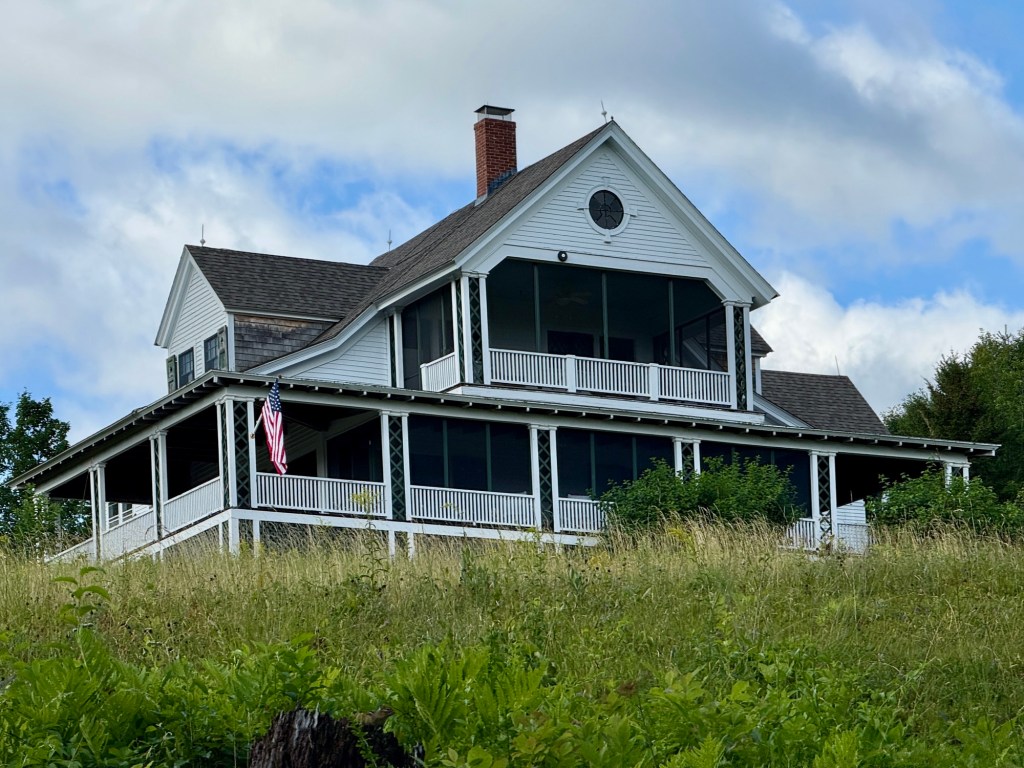
Intermont Estate – President Grover Cleveland Summer House // c.1905

Tucked into the hills of Tamworth, New Hampshire, Intermont was the beloved summer home of President Grover Cleveland and his wife Frances as a respite from the stress and pollution of ordinary life. The Clevelands purchased the property, which built from two farms joined together, in 1905 at a time when Tamworth and the Chocorua area of the White Mountains were rapidly developing into a summer enclave. The old farmhouse was modified and converted into this stately summer cottage, fitting for a President. Architecturally, Intermont reflects the early 20th century rustic movement with a white clapboard exterior, cross-gabled rooflines, and wraparound porches on three sides, opening onto sweeping mountain views. Cleveland spent his final summers here fishing, hunting, and writing before his death in 1908. The property remains one of the finest summer residences in New Hampshire and is lovingly preserved inside and out.

Sweezy Summer House // 1916

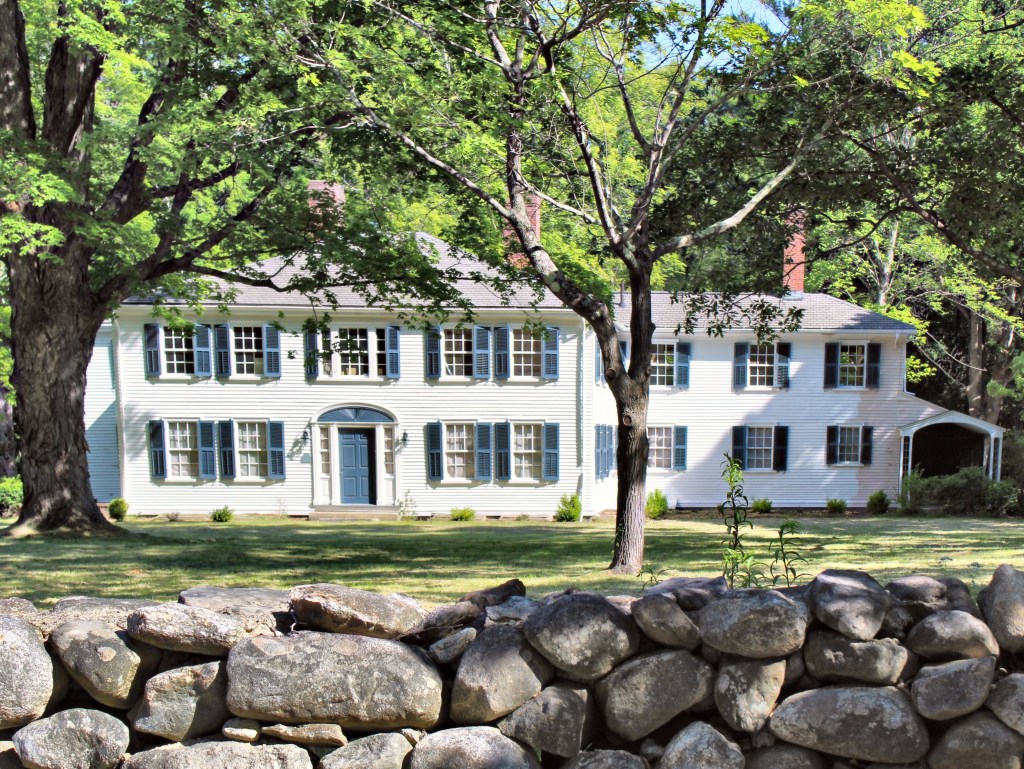
Wilton, New Hampshire has a hidden enclave of high-style summer “cottages” built for wealthy residents in the early 20th century. The last of these examples I will feature is the Sweezy House, located in Wilton Center. The Federal Revival style mansion was built for Everett and Caroline Sweezy, summer residents who split their time between New Hampshire and New York. Mr. Sweezy was a banker for the Riverhead Savings Bank which was located on Long Island, which too was a summer destination. The couple hired the firm of Howe and Manning, led by female architects Lois Lilley Howe and Eleanor Manning, to design the home. The house is set back far from the street behind a rustic stone wall. The property remained in the Sweezy Family for four generations.