The Whitney Hotel // 2019

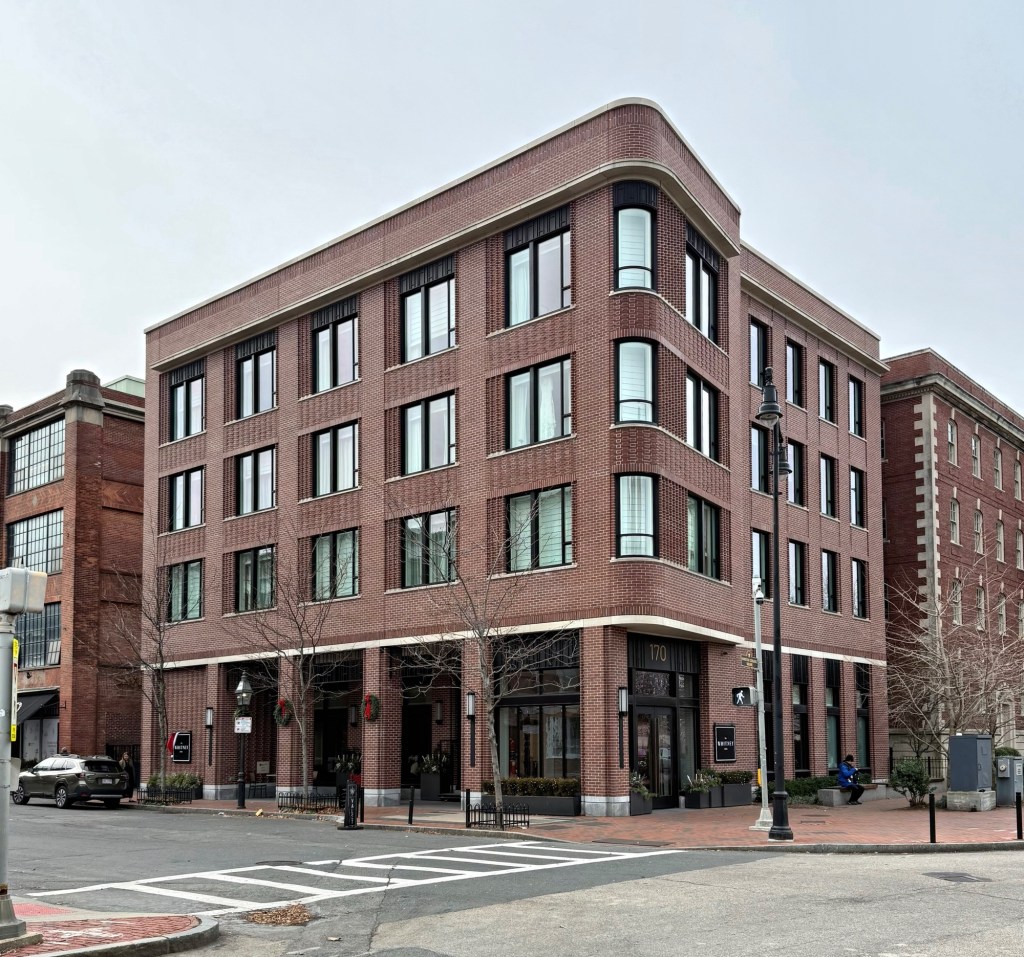
The Whitney Hotel on the iconic Charles Street in Beacon Hill, represents the best of contextual infill construction and good design. Completed in 2019, the hotel was built on an open lot adjacent to the 1909 Eye and Ear Infirmary Nurse’s Residence that sold in 2016. Developers hired Boston architectural design firm of Hacin to construct the new structure as an addition to the 1909 building. As the building is located within the Historic Beacon Hill District, a local commission closely reviewed plans to ensure the new building would blend old and new on the site, while being its own landmark on the prominent corner lot. The scale, massing, materials and rhythm of windows ties the 2019 contemporary wing with the 1909 building, while the brick layering styles, window types and unique rounded corner read clearly contemporary. The hotel is named after Henry Melville Whitney (1839-1923) a Boston politician and businessman who founded the West End Street Railway Company, which preceded the Metropolitan Transit Authority and today’s MBTA. The Whitney Hotel serves as an important visual anchor and entrance into Beacon Hill, enlivening the street and neighborhood through high-quality design.
Eye and Ear Infirmary Nurse’s Residence // 1909

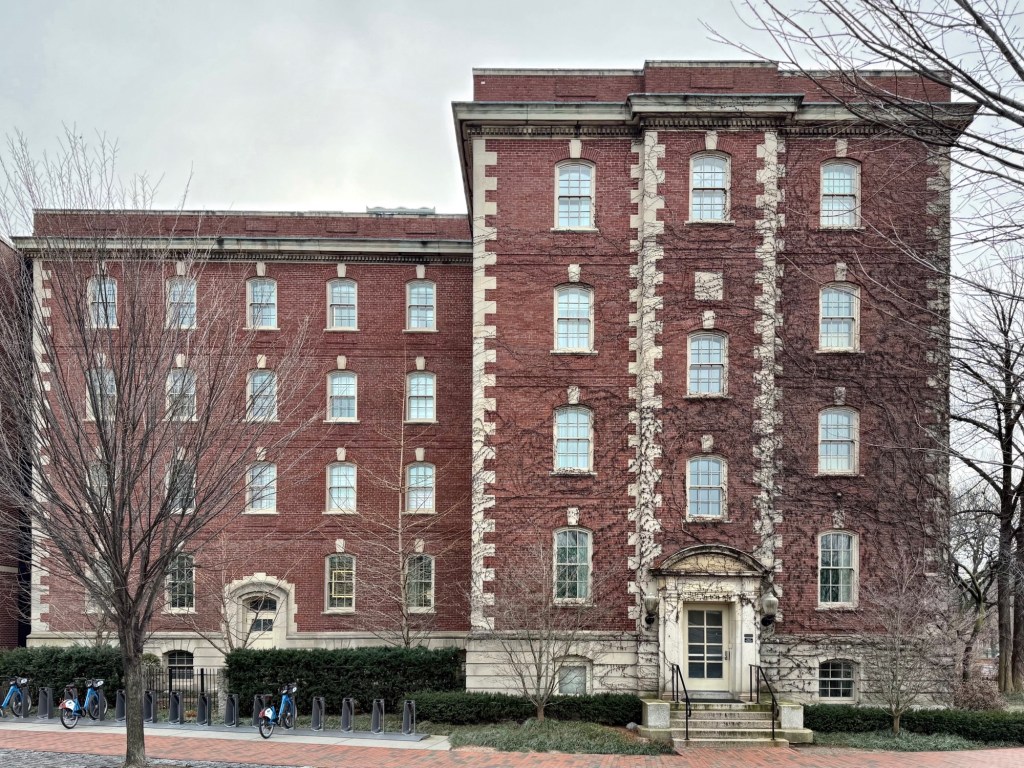
The Massachusetts Charitable Eye and Ear Infirmary (now Massachusetts Eye and Ear) began in 1824 by doctors, Edward Reynolds and John Jeffries II as a free weekly clinic they operated out of a rented room in Boston’s Scollay Square. At the time, Boston was an immigration destination for laborers arriving from Europe, among whom occupational injuries were common, but affordable medical care was scarce. With an increasing population and increasing medical needs, the clinic expanded rapidly. In 1849, a new clinic was built on Charles Street, just south of the West Boston Bridge (now Longfellow Bridge) from plans by Edward C. Cabot. As demand grew in the late 19th and early 20th centuries, the hospital sought expansion and built a new facility farther north on Charles Street, closer to Massachusetts General Hospital. The 1849 building was deemed excess and demolished, soon to be replaced by the current building on the site, the Nurse’s Dormitory. Built in 1909, this handsome, four-story brick and stone structure was designed by the office of Page and Frothingham in the Colonial Revival style, which contributes to the architectural character of Beacon Hill. The building provided much-needed residential space for nurses and other staff people who worked at the new Eye and Ear Infirmary a few blocks away. The building was later converted into an inn, the John Jeffries House (after one of the founders of the infirmary) until 2016, when the site closed and was converted into a wing of the new Whitney Hotel by Hacin Architects!

Tilia Jamaica Plain // 2020

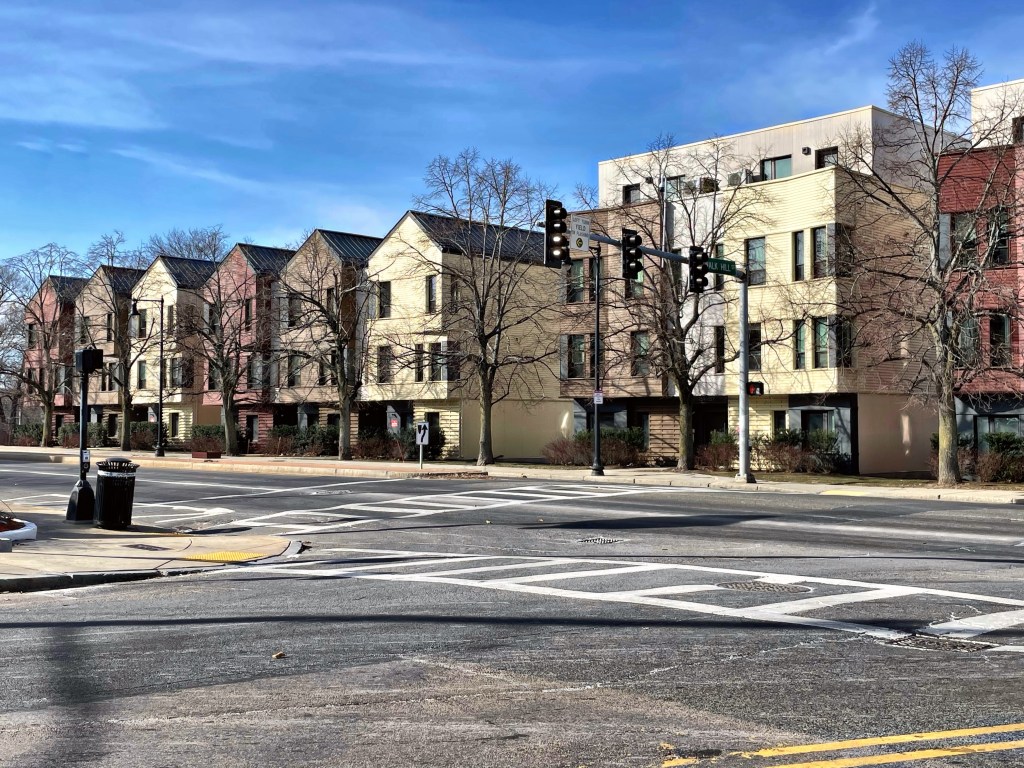
As many of you likely agree with me, most contemporary architecture and buildings in Boston (and in many U.S. cities) is bland and mundane, but there are some projects that really stand out for creative and contextual designs. Tilia in Jamaica Plain is one of the latter! When the Massachusetts Bay Transportation Authority (MBTA) began accepting bids for the development of an undeveloped linear parcel along Washington Street just south of the Forest Hills T-stop, developers jumped at the opportunity. Urbanica Inc., a local design/development group had the winning proposal which consists of approximately 110‐120 residential units in buildings of varied density ranging from a larger apartment building to more human-scaled townhouses. Led by architect Stephen Chung with Kamran Zahedi as developer, the design for the townhouses specifically is a contemporary nod to the triple-decker form we see so much in the surrounding area. The varied color and recessed sections provide a lot of depth and character to the development along the streetwall.

One Greenway // 2015

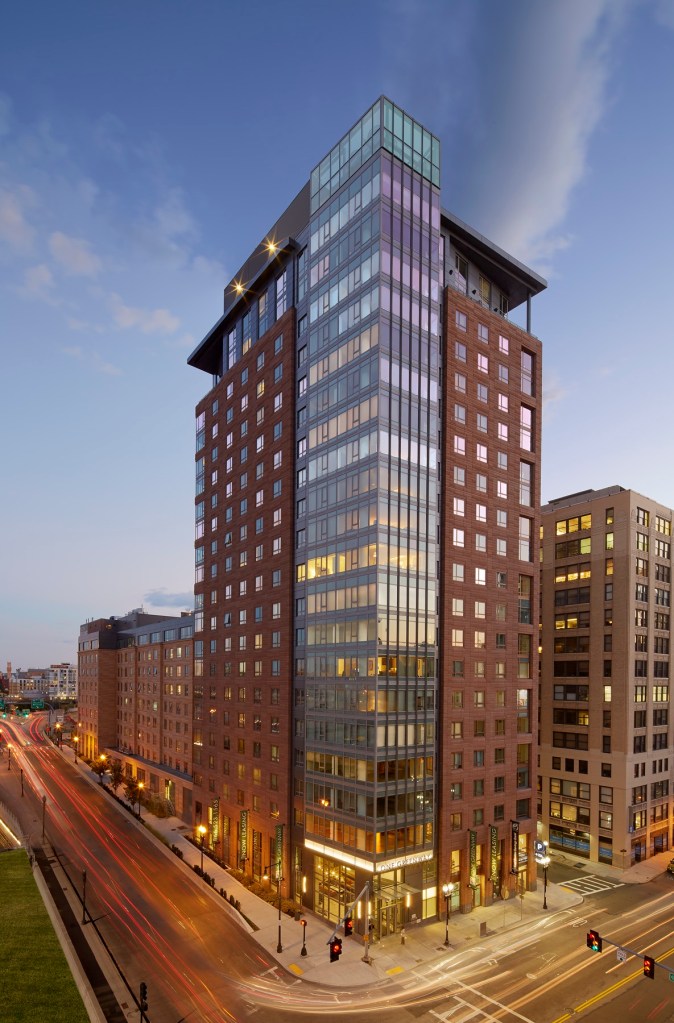
Replacing a vacant lot bordering I-93 at Kneeland Street, the One Greenway development provides much needed housing and design as one of the gateways into the Chinatown neighborhood of Boston. A result of community engagement, One Greenway is one of the largest new affordable housing projects in recent memory. The project restores the urban fabric that was lost half a century ago to the construction of major highways, which cut through the community and provides much-needed affordable housing in one of the nation’s oldest and largest immigrant communities. When the elevated highway was moved underground and the Rose Kennedy Greenway was laid out, parcels adjacent were available for reuse, and this was one of the last to be redeveloped. The building mixes 217 market-rate apartments and 95 affordable apartments, to create a mixed-income development, hopefully the future, as to not segregate affordable housing to less-desirable parts of cities. Designed by the firm Stantec, the building creates a solid street wall at the corner, and provides amazing open space at the rear in the form of a well-designed park designed by Crosby, Schlessinger, and Smallridge. The use of beige terracotta panels makes the large building more inviting, compared to the cold and sterile new apartment buildings going up all over the city and region.