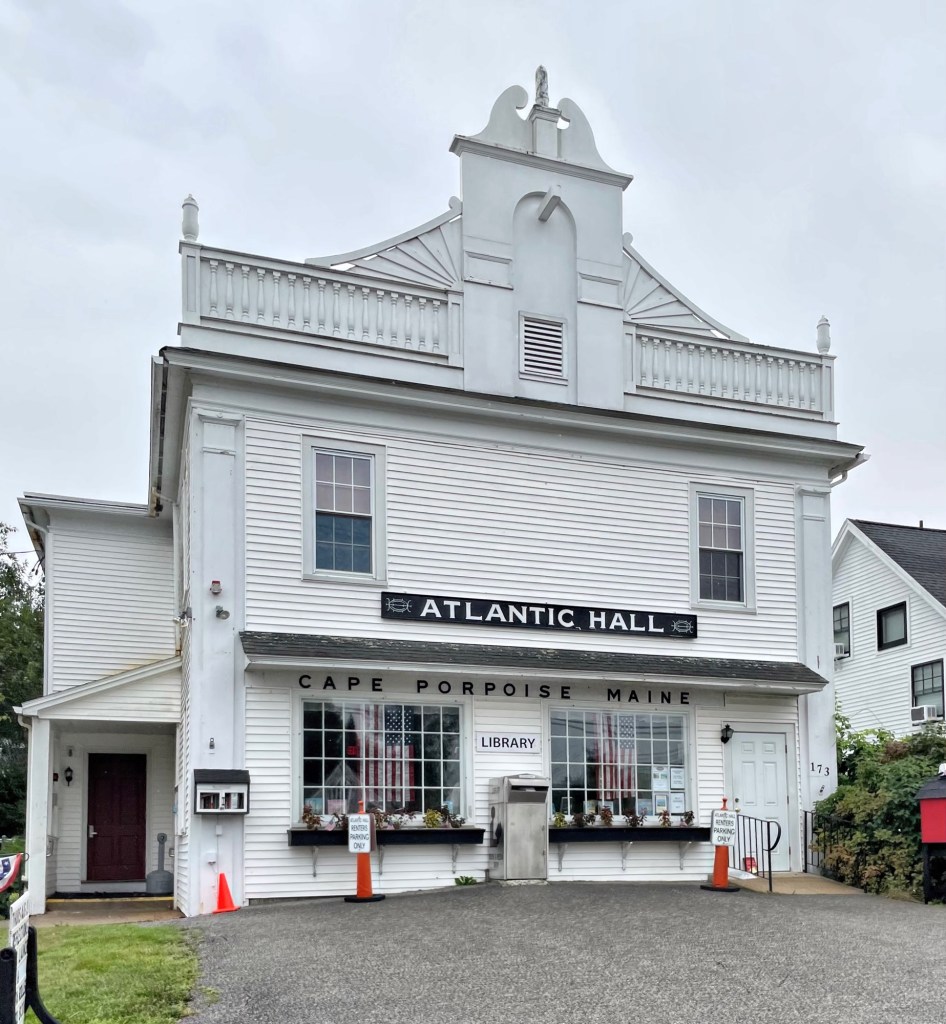
Atlantic Hall // 1920

Atlantic Hall is one of the most iconic buildings in the well-visited town of Kennebunkport, Maine. The landmark structure was completed in 1920 as a volunteer fire station, by the Atlantic Hose Company. The volunteer fire-fighting company was founded in April 1906, and different members kept different parts of fire fighting equipment in each of their barns without a consolidated station. With the advent of the automobile, the community raised funds and purchased a Chevrolet hose truck, but had no station to put it. Without having the town pitch in money, residents (both permanent and summer “rusticators”) donated funds and a central location in Cape Porpoise was selected as a site for the new station. Construction started on a modest building in 1914, but was halted during WWI. After the war, local resident, Marion Goodall Marland hired the well known firm of Kilham, Hopkins and Greeley to furnish updated designs for the station, in a more elaborate version of the Colonial Revival style, fitting for the charming town. The building opened in 1920 with an engine room at the first floor and a meeting hall on the second floor. It was in 1958 that the Atlantic Hose Company outgrew its station at Atlantic Hall, and a new fire house was built across the street. Atlantic Hall was renovated for library and event use and has remained a significant piece of Cape Porpoise ever since!
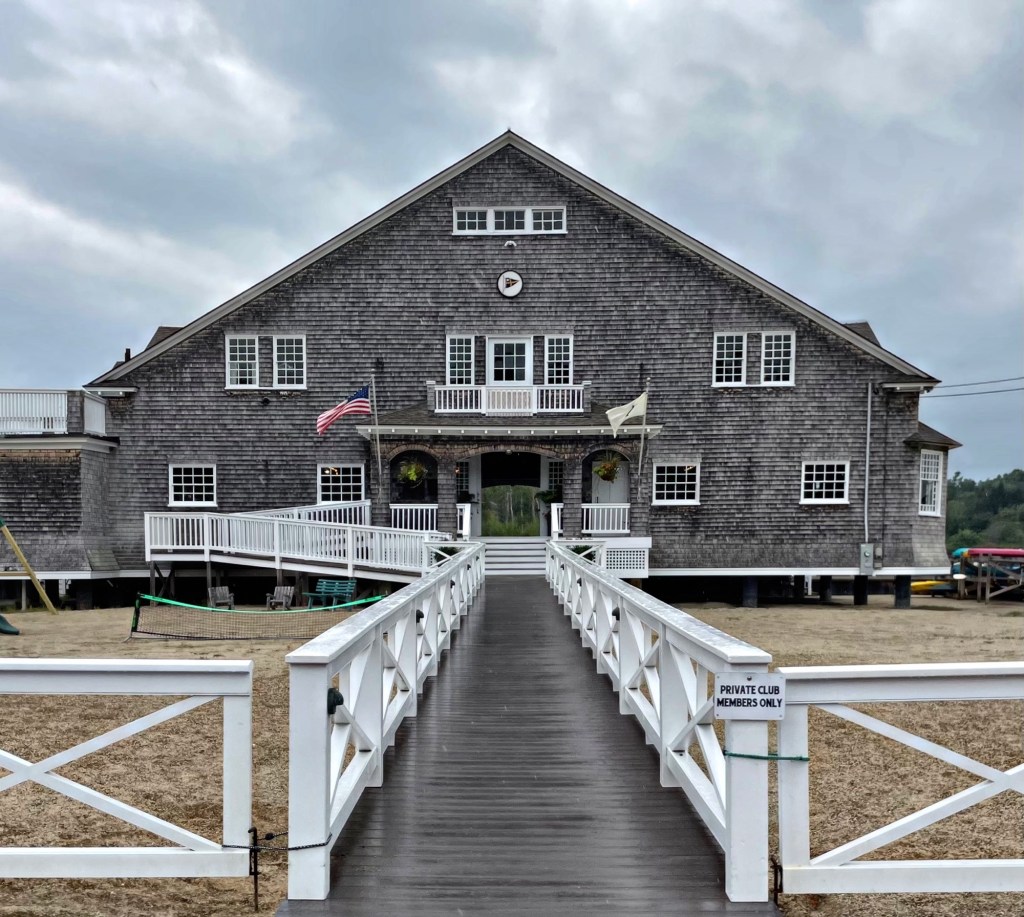
Kennebunk River Clubhouse // 1889

A canoe club formed by John B. McMaster, Prosper L. Senat and Henry E. Woods in the early 1880’s grew to a large “Lobster Club” by 1888. In 1889, the club decided to build this Shingle style boat house and the organization changed their name to the ‘Kennebunk River Club’ and hired Lowell, Massachusetts architect, Frederick W. Stickney to design a new boathouse. It opened in August 1890. The club grew quickly as Kennebunkport continued to become a premier summer destination with wealthy residents building summer “cottages” in town. In the building, canoes were built and hired out to club members by members of the Penobscot tribe who came to Kennebunkport from Old Town each summer working here. The clubhouse is one of the finest Shingle style recreational buildings in New England.

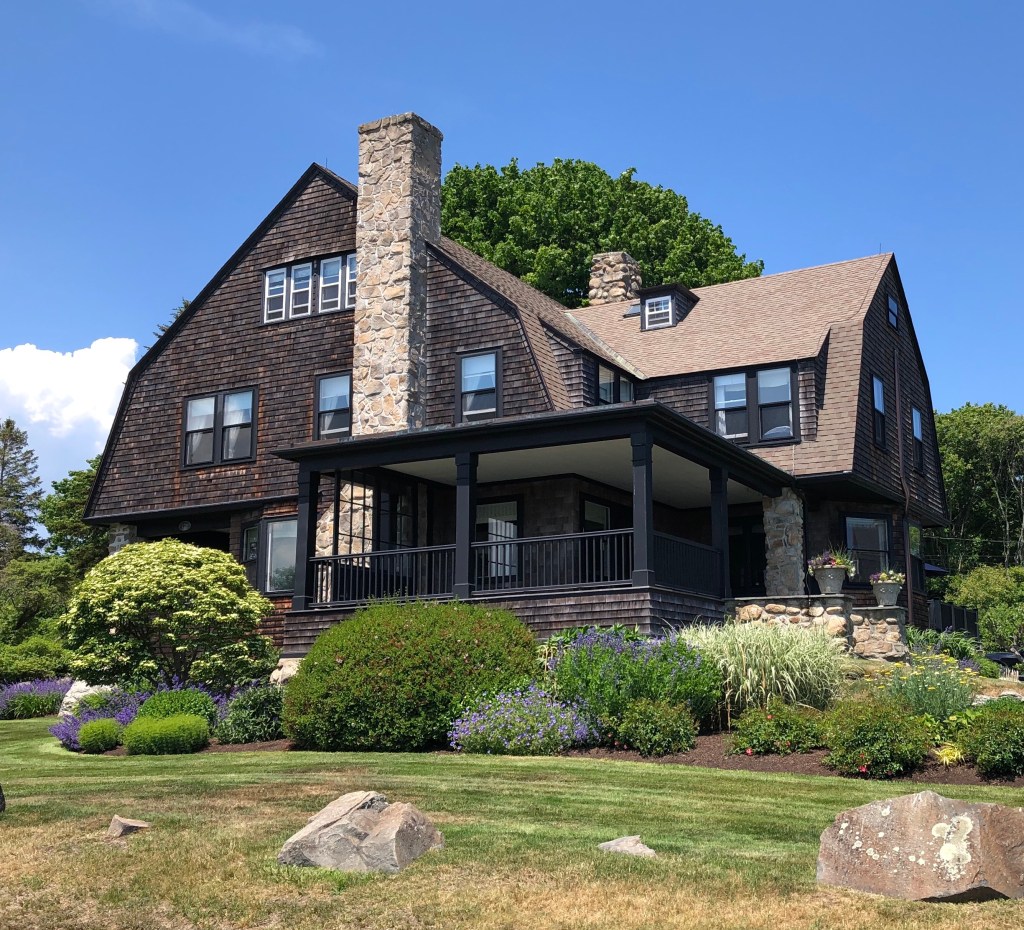
Point O’ View Cottage // 1892

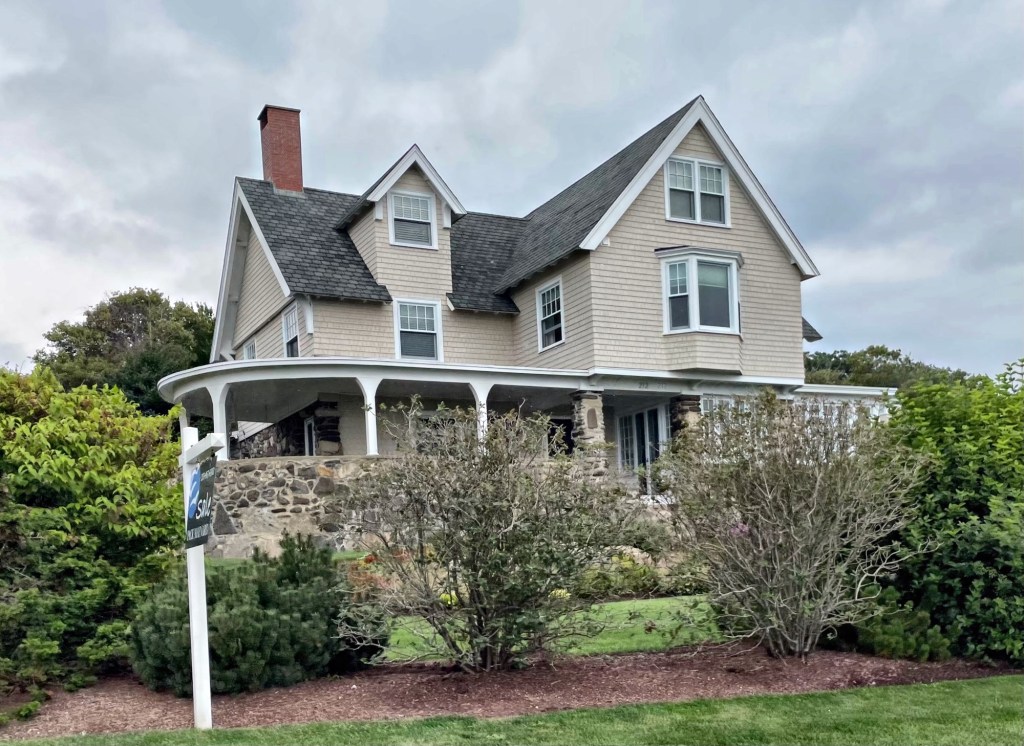
The Point O’ View Cottage in Kennebunkport sits on a large lawn on the rugged Maine coast, with sweeping views of the Atlantic Ocean. Built in 1892 by Burleigh S. Thompson as a rental property (he rented it for $1,500 for the summer) the nine-bedroom “cottage” was designed in a Tudoresque version of the Queen Anne architectural style and originally named Fort Bradford. The cottage (like others built for Mr. Thompson) was designed by Henry Paston Clark, THE architect for the Cape Arundel Summer Colony in the 1890s, who also designed St. Ann’s Episcopal Church and other cottages nearby. The cottage was renovated more in keeping with the Shingle style and was entirely clad in cedar shingles, but it retains its perfect, rustic stone foundation and rounded porch. It is now known as Point O’ View Cottage. What a view it has!

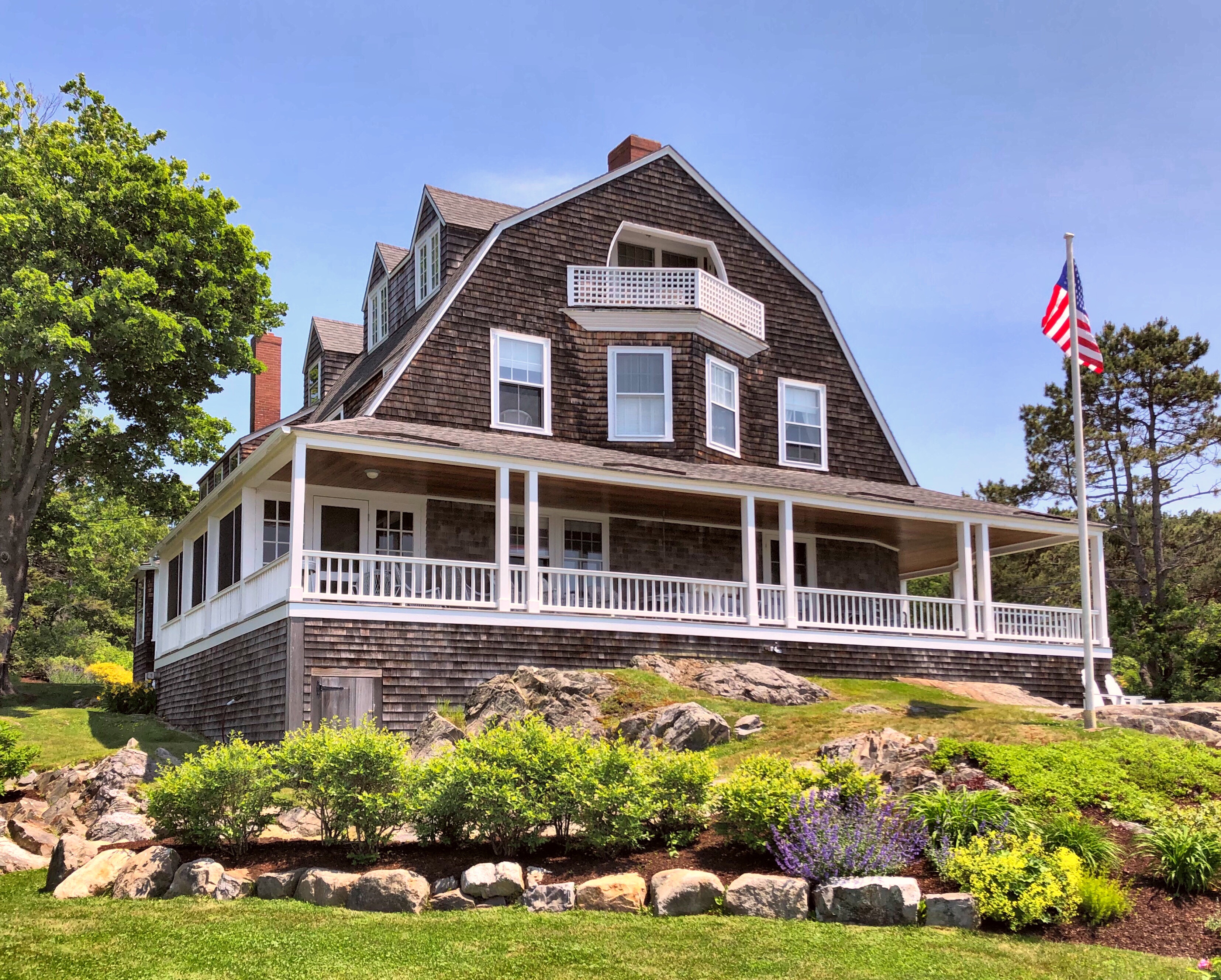
Pine Haven Cottage // 1902

Pine Haven Cottage sits on a rise overlooking the Atlantic Ocean in the Cape Arundel summer colony in Kennebunkport, Maine. Built in 1902 for Thomas Brodhead Van Buren, Jr., a silk importer in Manhattan as a summer home, the cottage was designed by Henry Paston Clark and his partner, John W. Russell in an eclectic example of the Shingle style with gable roofs, vergeboards, stone foundation, and a prominent porch that has since been enclosed.

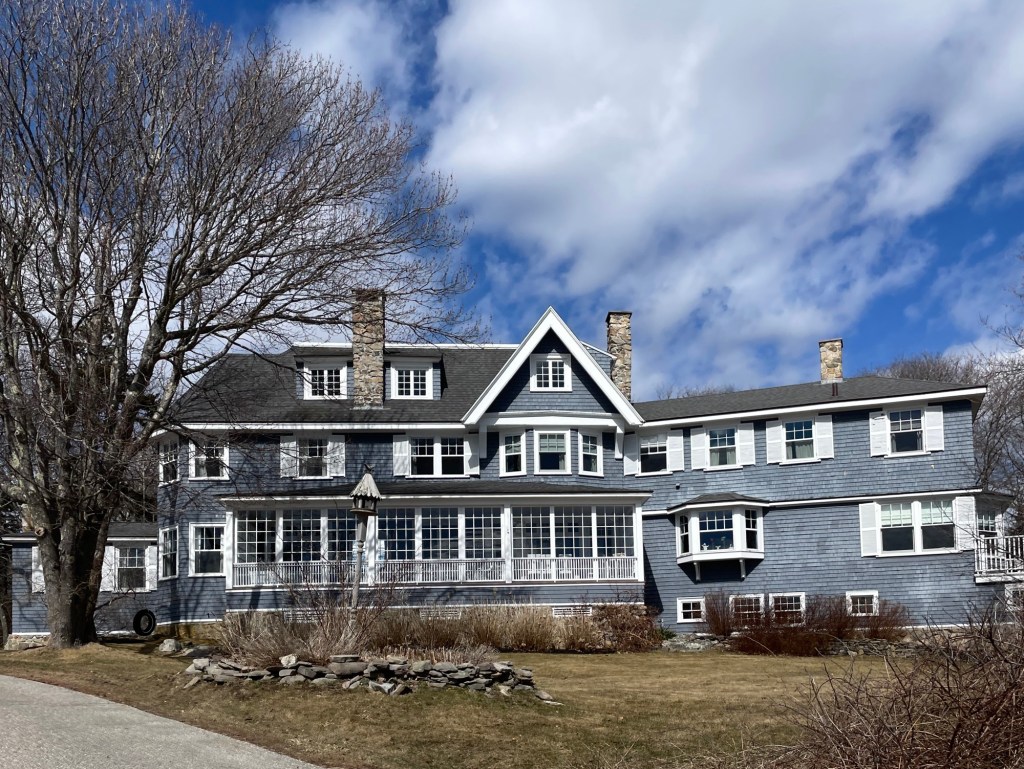
Inglesea Cottage // 1889

One of the larger Shingle style homes in Kennebunkport, Inglesea Cottage, was designed in 1889, possibly by Henry Paston Clark, who designed or worked on many homes and buildings in the summer colony. The original owner, Dr. George Frederick Brooks, a doctor based out of New York, who spent his childhood on the coast of Maine, and decided to spend his elderly summers there. By 1903, the home was purchased by Ms. Lucy Fay (1864-1937) of Fitchburg, MA, who hired Henry P. Clark, to add the cross gambrel addition to enlarge the home. Lucy Fay was the daughter of the the wealthy industrialist George Flagg Fay and his wife, Emily Upton, and upon their deaths, inherited their fortune (her sister died at just seven years old, making her an only child). The home remains in impeccable shape and is a head-turner everytime I drive down the coast.

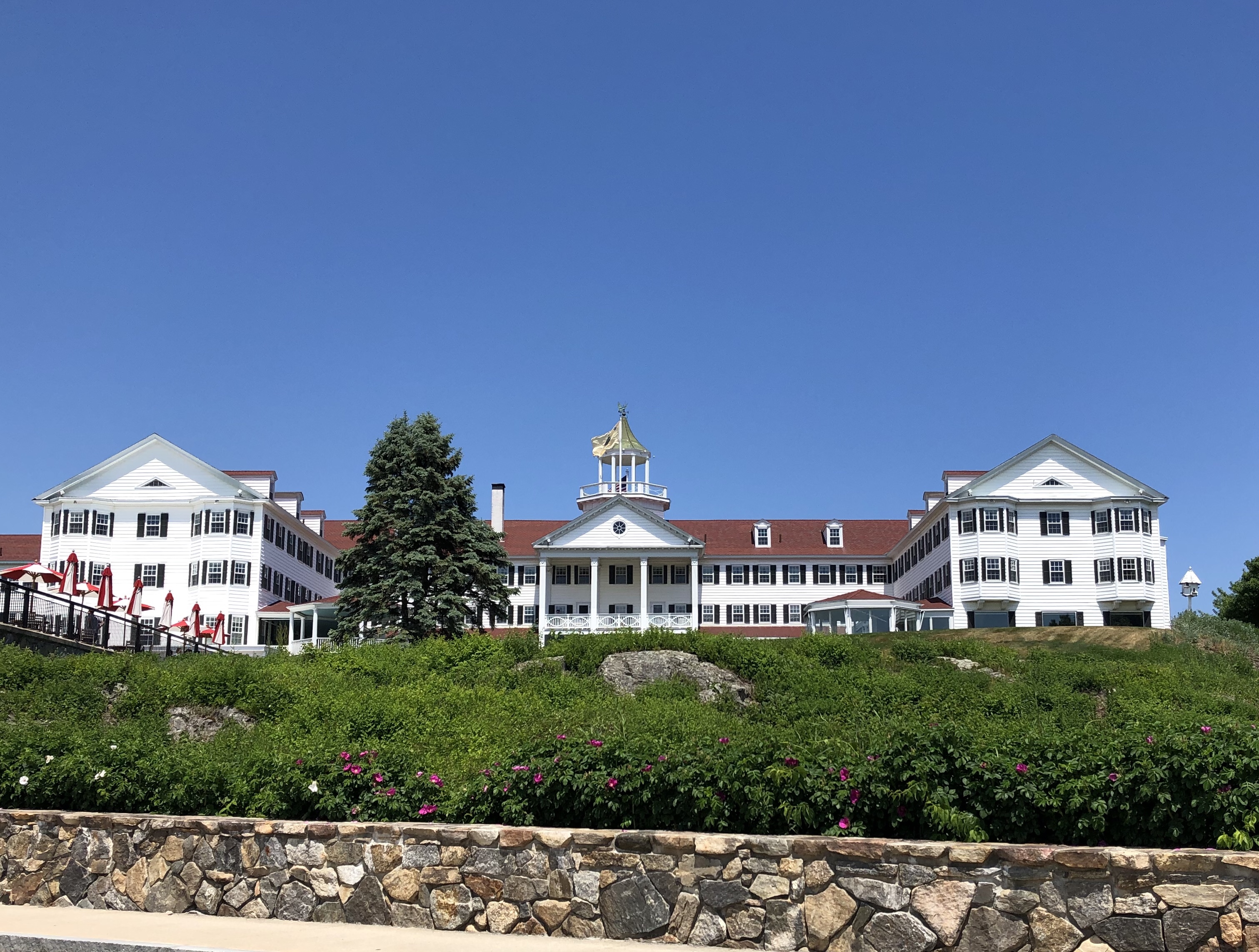
Colony Hotel // 1914

One of the larger hotels in Kennebunkport, the Colonial Revival Colony Hotel, built in 1914, provides historic charm with views of the Kennebunk River and Atlantic Ocean. Owner Ruel W. Norton had the new hotel built on the site of the Ocean Bluff Hotel (1873, burned 1898), to attract summer people, many of which stayed for months at a time. The Colony was originally called Breakwater Court until 1947, when George Boughton purchased Breakwater Court and changed the name to The Colony Hotel to complement their Florida property, The Colony Hotel in Delray Beach Florida. The hotel was designed by John Calvin Stevens, who lived in Maine and designed an estimated 1000+ buildings in the state, many of which in the Shingle or Colonial Revival styles.

Rock Ledge Cottage // 1887

One of the jewels of the Cape Arundel summer cottages in Kennebunkport is the Rock Ledge Cottage, sited prominently on a hill overlooking the Atlantic. Rock Ledge was a cottage built in 1887 for Elon Dunbar Lockwood (1836-1891) of Philadelphia. Lockwood was a merchant who started a dry goods business with his brother, forming W. E. & E. W. Lockwood. Elon became a highly respected businessman in Philadelphia and later became a member of the Committee of Fifty, a group formed to devise measures for the 1876 Centennial Exposition in Philadelphia which would showcase the city for the first ever World’s Exposition in the United States. Elon’s wife Elizabeth died in 1884, and a couple years later, he had this summer cottage built, where he would apparently entertain, giving him the designation as a womanizer until his death in 1891 at the age of 54. The cottage was designed by William Ralph Emerson, one of the busiest architects in New England at the time, with commissions all over the region, including many summer cottages in Maine.

Nonantum Resort // 1884

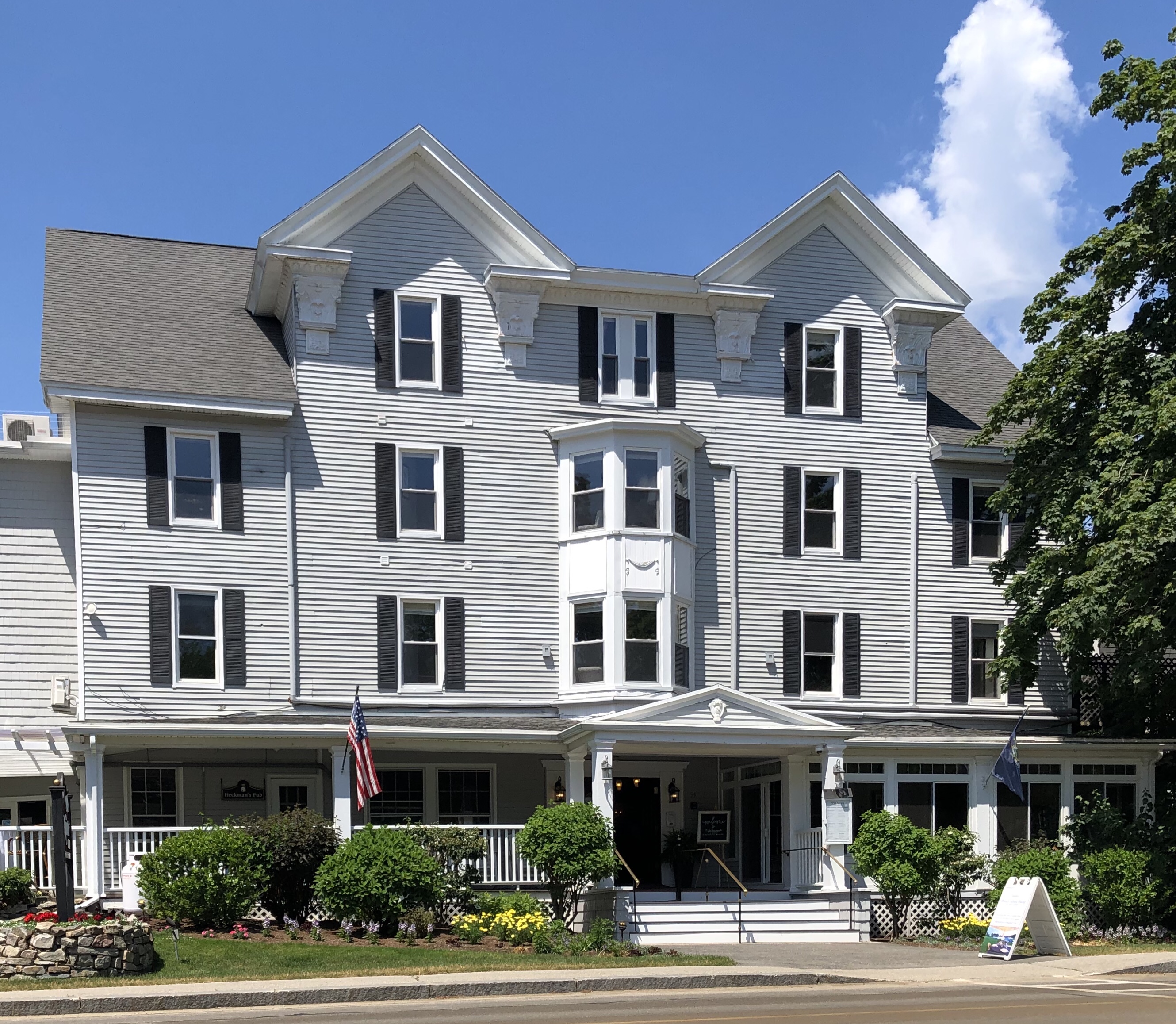
In the late 1800s, many coastal New England communities – including Kennebunkport – became summer resort towns and colonies for upper and middle class families. To accommodate families, who would arrive to these small towns by the train-load, many wealthy citizens constructed luxury hotels which offered longer term stays compared to what we think of hotels today.

The Nonantum Resort in Kennebunkport was named from a Native American word meaning ‘blessing’ or ‘prayer’, but has become synonymous with ‘family’, the word was chosen as the building was believed to have been constructed on land where Native Americans traded with early settlers. Opened on the Fourth of July in 1884, the hotel was constructed for Captain Henry Heckman, the original owner. The building was a fairly modest, late Italianate design until alterations and additions in the 1890s added a Colonial Revival motif, with pilasters capped with Corinthian capitals and cartouches; however, many features have been removed.

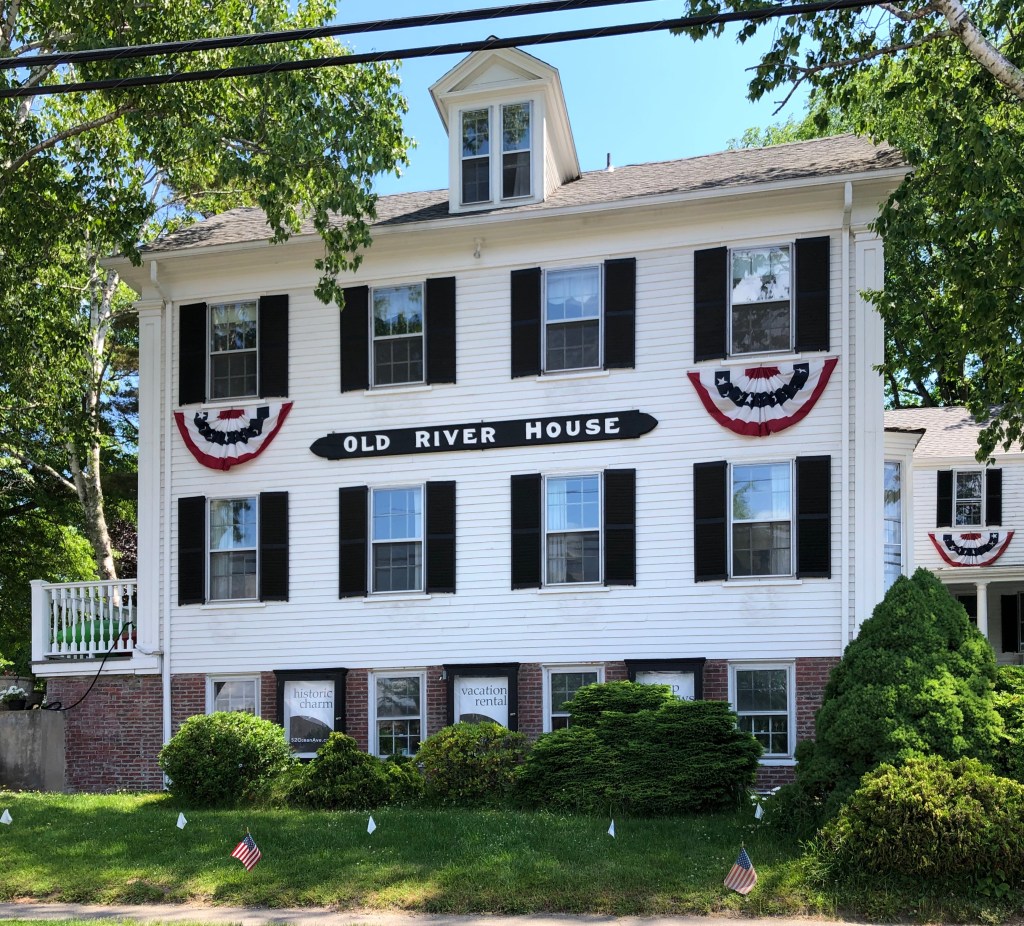
Thomas Maling House // 1848

This Greek Revival home was built around 1848 for Thomas Maling, a rigger (person who installs the system of ropes and chains for a ships mast and sails). The home is built upon a raised brick foundation, likely to elevate it from the rising and receding nature of the Kennebunk River just across the street. By the 1890s, the home was converted to an inn, known as the Maling’s Inn, after the original owner. Today, the inn is known as the Old River House. On the lot, the old rigging loft remains and has been converted on the inside as additional rooms.

Louis T. Graves Memorial Library // 1813

What is known today as the public library of Kennebunkport, the Louis T. Graves Memorial Library was not always used for books and learning. Built in 1813 as a branch office of the Kennebunk National Bank, the brick structure was valuable as a local bank for the growing port neighborhood. By 1831, the Kennebunk Bank’s charter was revoked and they sold their branch location to the U.S. Government as a Customs House (the second floor was already partially occupied as a Customs House). By the end of the 19th century, the second floor was leased out to the Kennebunkport Public Library. The Customs District was eliminated in 1913, and by 1920, the building was acquired by Mr. and Mrs. Abbott Graves, who purchased the property at auction for $1,350., the couple lived just a couple blocks away in a rare Prairie style home. In 1921, the Graves family deeded the property to the Library Association on the condition that the Library be named in memory of their deceased son Louis T. Graves who valued books all his life.