Israel Snow House // c.1850

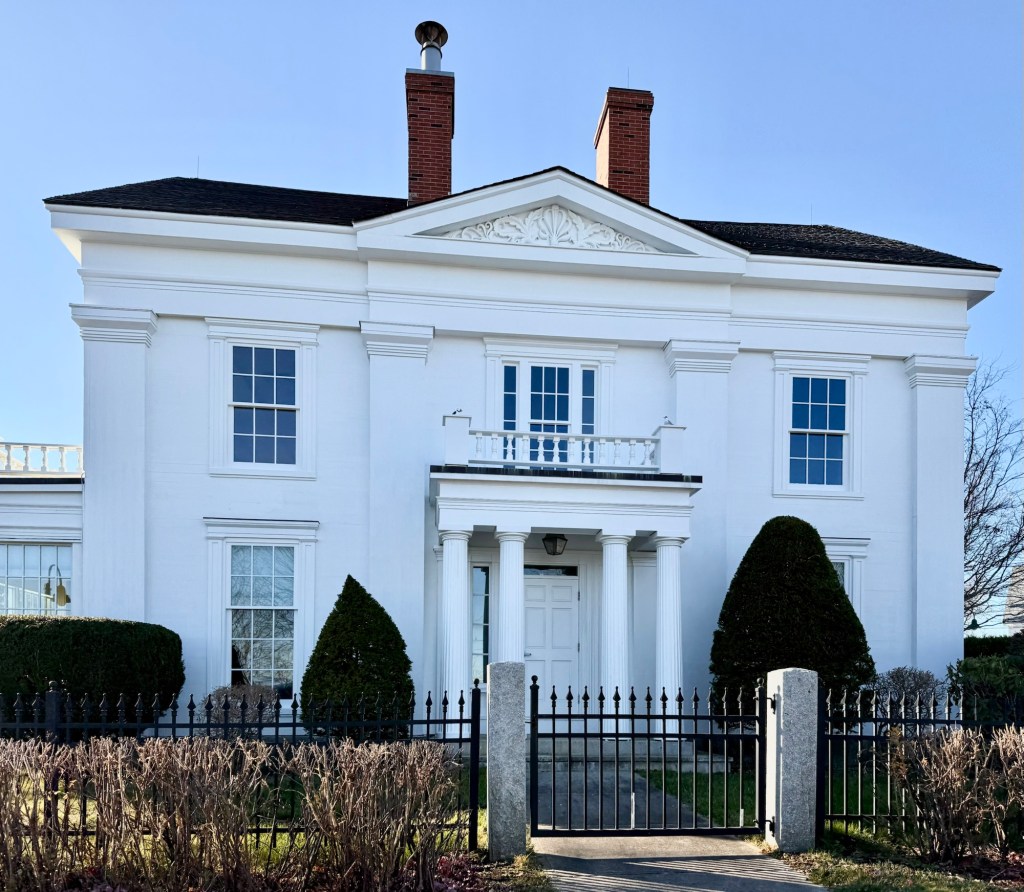
The Israel Snow House stands at 9 Water Street in the South End of Rockland, Maine, and it is one of the region’s finest examples of late Greek Revival architecture. The residence was built for Captain Israel Snow (1801-1875), a mariner and captain of several vessels, including the schooner Maria (1829), the brig Snow (1835-36), the brig Lucy Ann (1842), and the Barque Star (1848). In 1850, he and his wife Lucy moved from Thomaston to Rockland, and he would build this stately mansion where they raised seven children. Some records put the construction of this house at 1861, but that seems very late for such an example of this style. In 1863, he founded Snow’s Point Shipyard on Mechanic Street in the South End. Rockland was the fourth largest seaport in the United States in terms of production and commerce at the time, and Snow’s shipyard was a large part of that production. This residence is now offices to the U.S. Fish and Wildlife Service’s Maine Coastal Islands National Wildlife Refuge Complex.
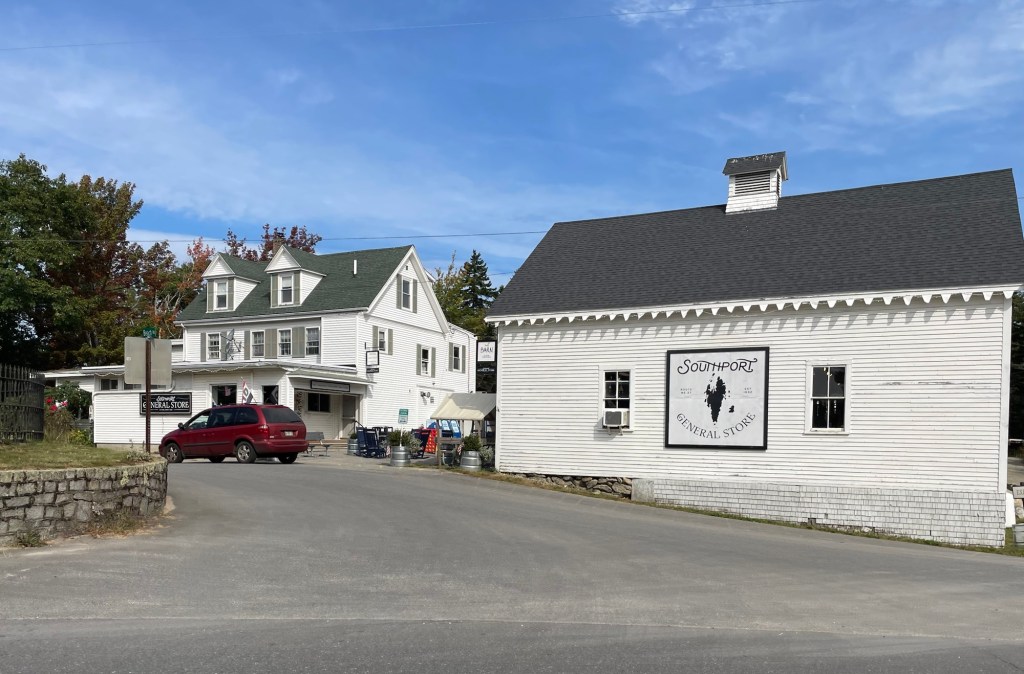
Southport General Store and Barn // 1895

In 1882, Edward Everett Pinkham, known as Everett, opened a new store in one side of his house on Hendrick Hill in the island community of Southport, Maine. The store was known for years as E. E. Pinkham and Son. Everett soon built a proper store adjacent to his house. He served the Town of Southport in many capacities: Postmaster, Town Clerk (1887-1905) Treasurer (1883), and Selectman (1888-1893). Sadly, on May 21, 1895, the store and house burned along with all of the old town records inside. The community helped Everett rebuild the present general store before the busy summer season. Edward’s son “Charlie”, would take over the business and the building has served as the town’s social center ever since. Year-round and summer residents bump into eachother at the store, catch up, and share local news, like every general store should be! Sadly, in so many communities, the “general store” has been replaced by big box retailers or convenience stores, removing the sense of community or place, so these businesses are more important than ever!

Sprucewold Lodge // 1927

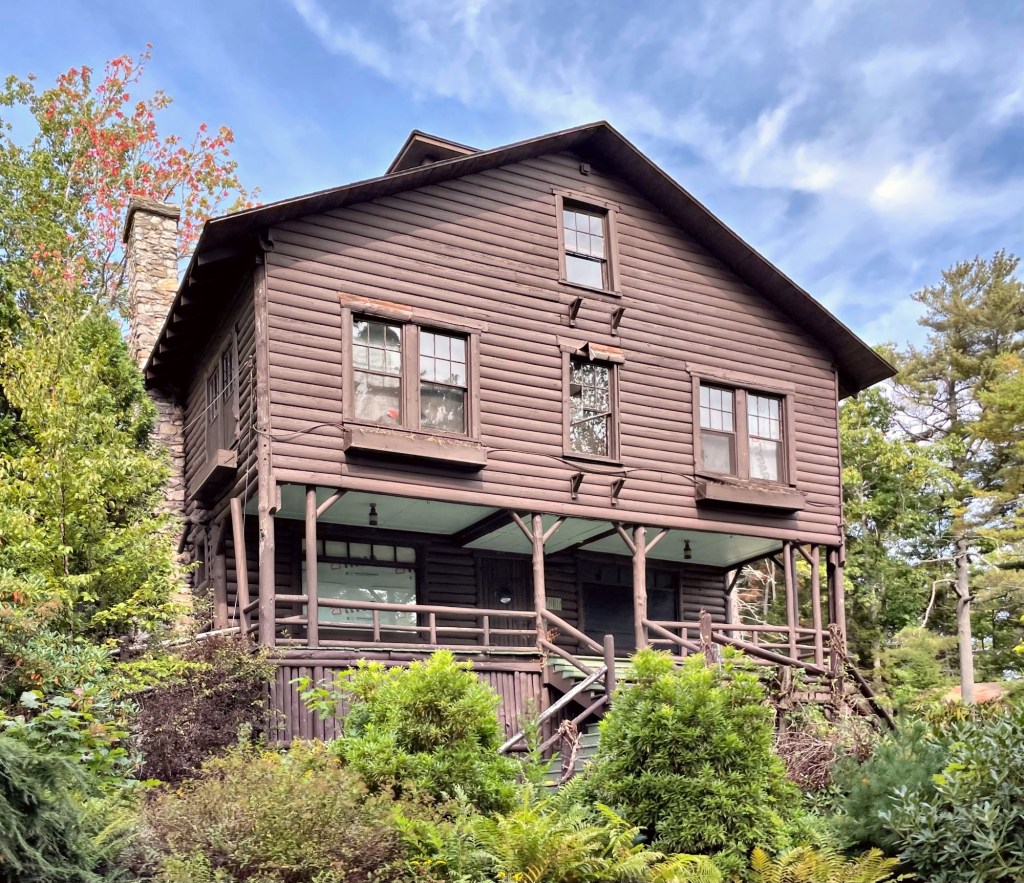
Sprucewold Lodge, nestled in the picturesque coastal town of Boothbay Harbor, Maine, boasts a rich history that dates back to the early 20th century. Established in 1911 by a group of visionary investors and rusticators, the lodge was designed as a summer retreat for families seeking solace in nature. Like the Spruce Point Inn, the building was developed with modest means, but quickly expanded and grew as the unique and rugged site on Spruce Point drew flocks of visitors every year. Its unique blend of craftsman and Adirondack style architecture and stunning natural surroundings quickly made it a popular destination. The investors hired Portland architect John P. Thomas to design a grand log hotel. The hotel was advertised as the largest log cabin in the world until it burned down just years later in 1930. A 31-room annex, this building, was added in 1927 and assisted to serve the over 60 rental cabins, tennis courts, a swimming pool, recreation hall, and a thirty-car garage. When the original Sprucewold Lodge burned down, this building became the new lodge, and it has remained so nearly 100 years later. This enclave of rustic log cabins on Spruce Point is very evocative of the early days of Maine, and it is easy to see why the state garnered the nickname, Vacationland.

Kewaydin Cottage // 1900

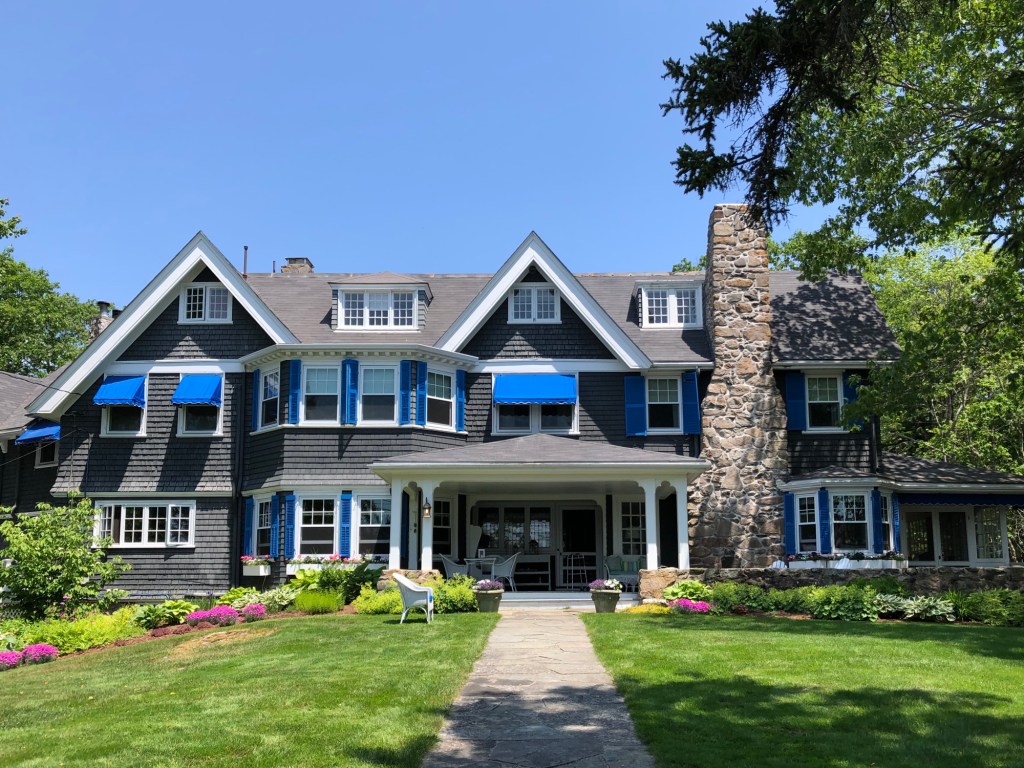
Every good summer cottage needs a name, and this charmer in the Cape Arundel Summer Colony of Kennebunkport, Maine, is no exception! This is “Kewaydin” a massive summer home built for Eben Caldwell Stanwood Jr. (1856-1906) a merchant and later banker of Boston, Massachusetts. Stanwood hired the Boston firm of Chapman & Frazer to design the cottage, which blends Shingle style and Queen Anne elements in a rustic composition that has such great curb appeal! The use of cedar shingles and rubblestone chimneys, paired with the vergeboards and complex roofline with dormers, makes this one of the gems of Kennebunkport!

Rockport Spite House // 1806

The story of “spite houses” are always so interesting!

Photo courtesy of Carolyn’s Shade Gardens

This large Federal style home in Rockport is a rare extant example of a spite house in Maine. The story goes… James McCobb, an Irish immigrant, arrived in what is now Phippsburg in 1731. Living in a log cabin with his Irish-born wife, Beatrice, he raised a large family of 10 children, among whom was Thomas McCobb (1778-1815), who became a sea captain. In 1774, James built a handsome Federal period house for his second wife, Hannah Nichols, with whom he had three children (twin daughters, and a second son, also named Thomas). He married a third time in 1782 to Mary Langdon Storer Hill, who had a son, Mark Langdon Hill, from a previous marriage, who ended up marrying one of McCobb’s daughters, one of the twins, who was a half-sister to Thomas. While Captain Thomas McCobb was away at sea, the Hills, which included Thomas’ half-sister/wife of Mark Langdon Hill, broke his father’s will and took the homestead for themselves. When Captain Thomas McCobb returned from his voyage and discovered what had happened, he vowed to build the most beautiful house in Maine and one that would dwarf the one he had been deprived of. The house was promptly dubbed “The Spite House”.

This house was built in 1806. Ironically, Captain Thomas apparently never married and left no descendants, as a result, when he died in 1815 in Boston, the house was given over to the Hill family. The house had fallen into disrepair and was purchased in 1925 by Donald Dodge of Philadelphia, who moved the house, to save it from demolition, over 85 miles by boat from Phippsburg to Rockport. He also transported a 1796 house from South Harpswell to be used in the construction of the wings that were subsequently added onto the Spite House. The property now sits on Beauchamp Point, not visible from the street, in a desirable enclave of summer residences, with sweeping views of the Atlantic Ocean.

Photo courtesy of Camden Public Library

Enos E. Ingraham Store // c.1880

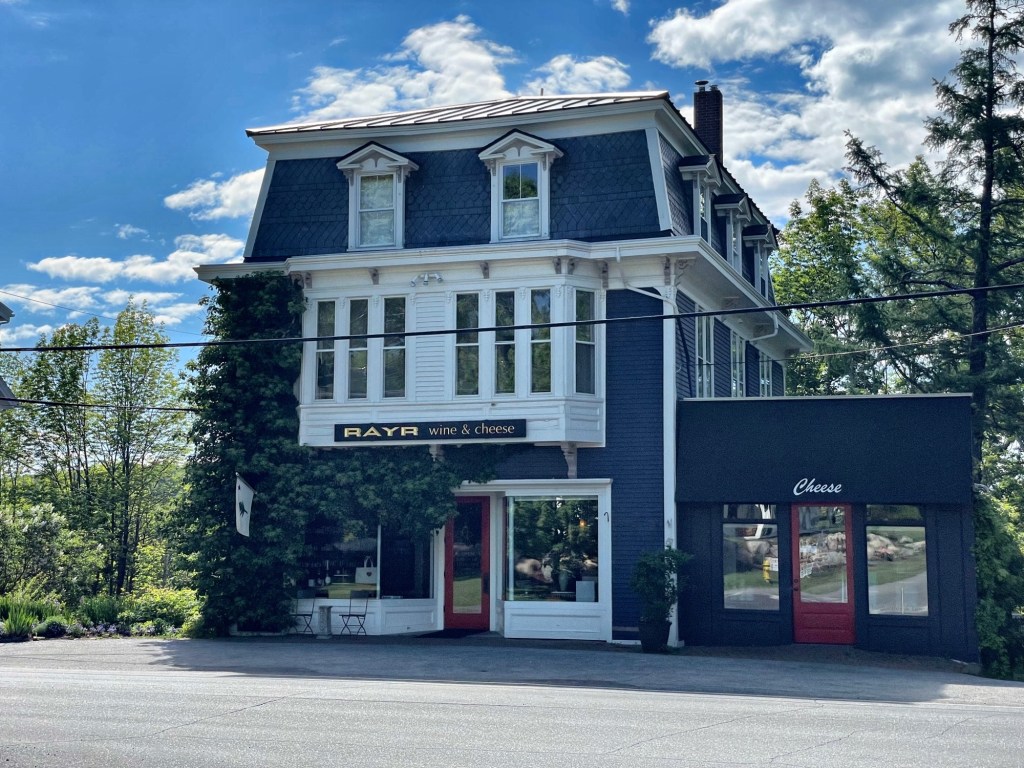
This perfect historic commercial building sits on Pascal Avenue in Rockport, Maine, in a section of the village more-so dominated by residences than larger commercial blocks. That may be the reason for the Enos E. Ingraham Store having a certain small-scale and residential quality. The block was built sometime after 1875 and has been known as the Enos E. Ingraham Store, after the longtime owner of the same name. The Ingraham Store is Second Empire in style with the prototypical mansard roof, bracketed cornice, and projecting bay window.

Rockport Lime Kilns // c.1800

During the 19th Century, Rockport, Maine, (then named Goose River as a village in Camden) was a major supplier of lime to East Coast markets. These kilns near the harbor converted limestone rock supplied by 15 local quarries into lime used to make mortar & finish plaster. The burned lime was packed into wooden casks and shipped by schooner to cities all down the coast. In 1817, three hundred casks of lime from Rockport were sent to Washington, D.C. for use in the rebuilding of the United States Capitol, which had been damaged by the British during the War of 1812. In 1852, the citizens of Goose River voted to change their village’s name to Rockport for its rocky terrain. In 1891, Rockport split off from Camden, taking its industry and lucrative harbor with it. A disastrous fire destroyed many of the lime kilns here in 1907, which occurred about the time that cement began to replace lime in building construction. After a few years the kilns were shuttered and remained here as fossils of industry ever since. Local residents in the 1970s gathered together and advocated for the preservation of these significant local structures and gathered funds to stabilize the kilns.

McCrea Cottage // 1891

In 1891, Laura Denby McCrea, a wealthy widow based Philadelphia, sought to maintain her social standing all year by building a summer cottage on Grindstone Neck, a summer colony in Winter Harbor, Maine. She was one of the first to build a cottage here, and she hired renowned architect Wilson Eyre to furnish plans for the rustic home. The Shingle style house is dominated by its massive gambrel roof and was historically clad entirely with wood shingles (asphalt shingles have since replaced cedar at the roof).

Far From The Wolf Cottage // 1891 & 1902

John Godfrey Moore (1847-1899) was born in Steuben, Maine, a small town just east of Mount Desert Island, the son of a ship captain. He moved to New York City at 18 and would become was a wildly successful businessman, financier and Wall Street stock market promoter during the Gilded Age. He gained fame by successfully suing the United States government in 1893, to stop the new income tax Act from coming into effect, delaying it by 20 years. Oh how the rich stay rich… He purchased a 2,000-plus acre estate on the Schoodic Peninsula and formed the Gouldsboro Land Improvement Company, which sought to develop the peninsula into a summer colony that would rival Bar Harbor. As part of this, Moore was a huge reason for Winter Harbor separating from Gouldsboro, to lower his and his neighbors’ property taxes. He built a cottage here in 1891 and named it “Far From The Wolf” a cheeky reference to its comfortable distance from Wall Street. He died unexpectedly in 1899. His second wife Louise and daughters Ruth and Faith did not share his aspirations for Winter Harbor, and their visits to the area became less frequent. A large portion of his land on the Schoodic Peninsula became a part of Acadia National Park. His property in Winter Harbor was sold, expanded in 1902, and renamed “Ingleside” by Frank B. Noyes, a publisher and later founder of the Associated Press. The home was for a time operated as an inn, and was recently sold for $1 Million at auction. What a steal!

Ridgway Cottage // c.1891

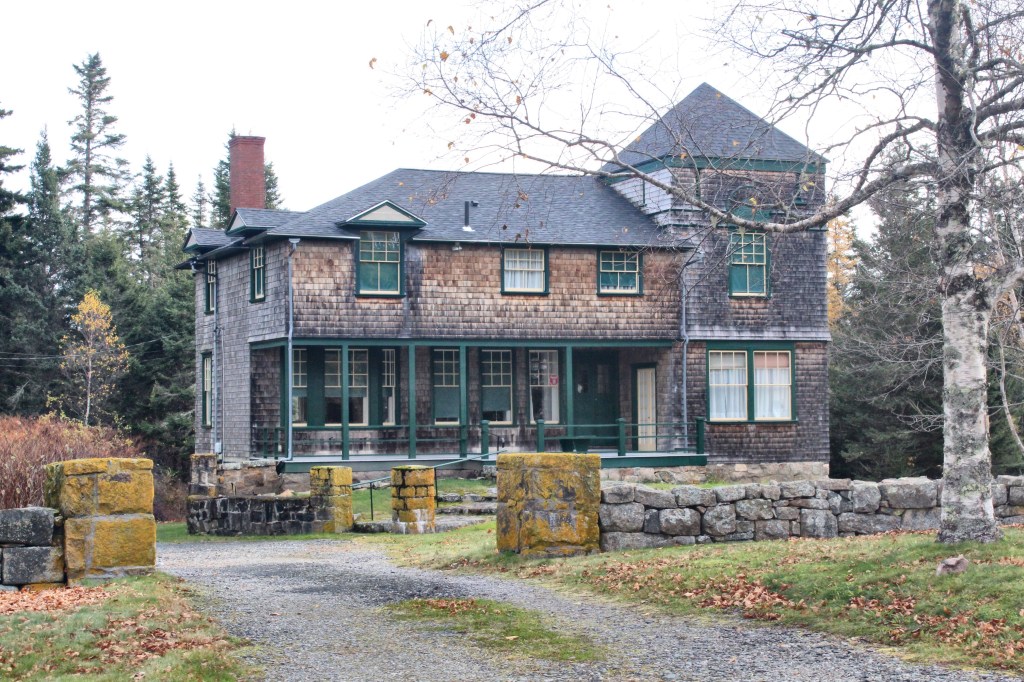
One of my (many) favorite cottages in the Grindstone Neck summer colony of Winter Harbor, Maine, is this pleasing shingled home, built in 1891 for John Jacob Ridgway. Ridgway lived in Philadelphia and worked as an attorney and president of a real estate investment company after sometime as serving as Philadelphia’s Sheriff. For his summer retirement home, he hired the colony’s staff architect, Lindley Johnson (a name I have been repeating on here a lot lately). The Shingle style cottage has a recessed porch, square corner tower with pyramidal roof, and dormers that project over the eaves. I love to see these old rustic cottages with weathered wood siding and deep green trim!