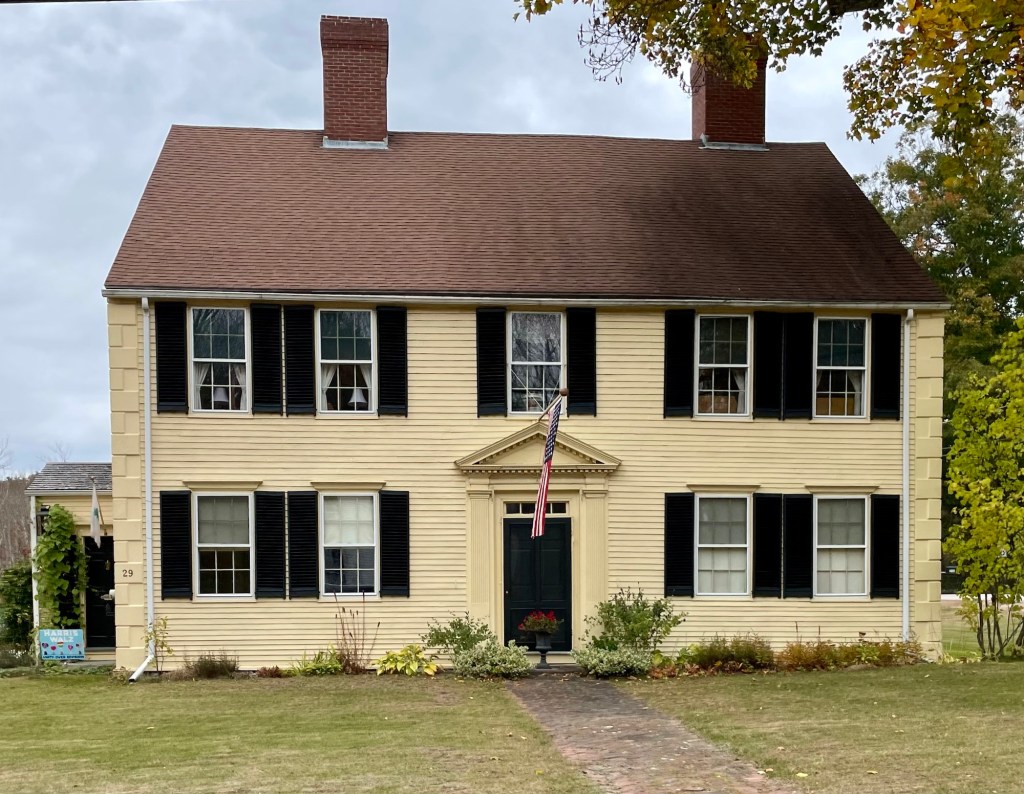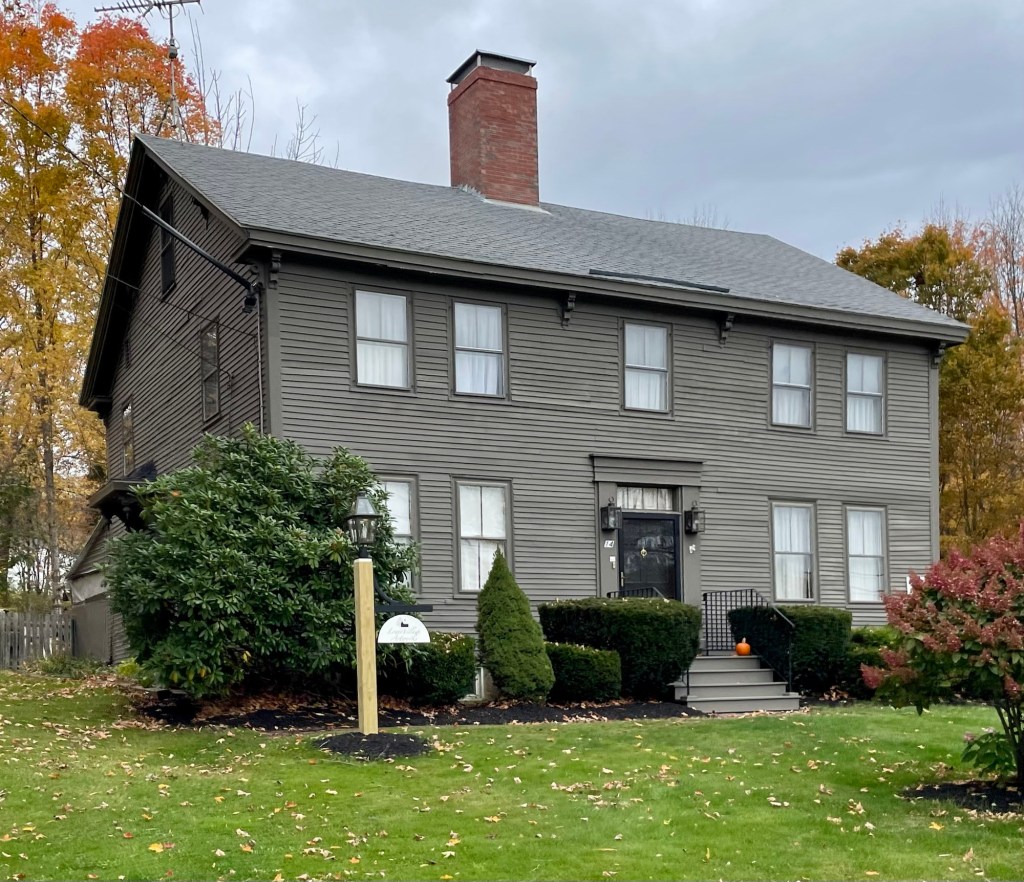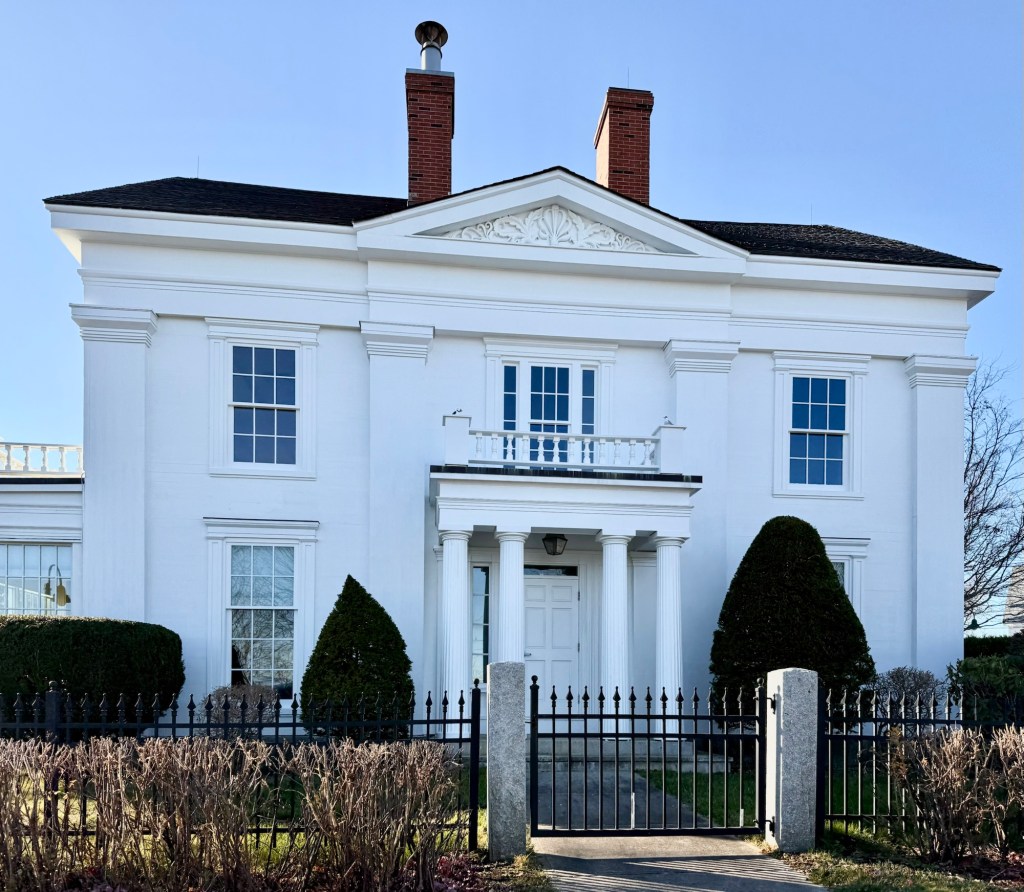
Israel Snow House // c.1850

The Israel Snow House stands at 9 Water Street in the South End of Rockland, Maine, and it is one of the region’s finest examples of late Greek Revival architecture. The residence was built for Captain Israel Snow (1801-1875), a mariner and captain of several vessels, including the schooner Maria (1829), the brig Snow (1835-36), the brig Lucy Ann (1842), and the Barque Star (1848). In 1850, he and his wife Lucy moved from Thomaston to Rockland, and he would build this stately mansion where they raised seven children. Some records put the construction of this house at 1861, but that seems very late for such an example of this style. In 1863, he founded Snow’s Point Shipyard on Mechanic Street in the South End. Rockland was the fourth largest seaport in the United States in terms of production and commerce at the time, and Snow’s shipyard was a large part of that production. This residence is now offices to the U.S. Fish and Wildlife Service’s Maine Coastal Islands National Wildlife Refuge Complex.
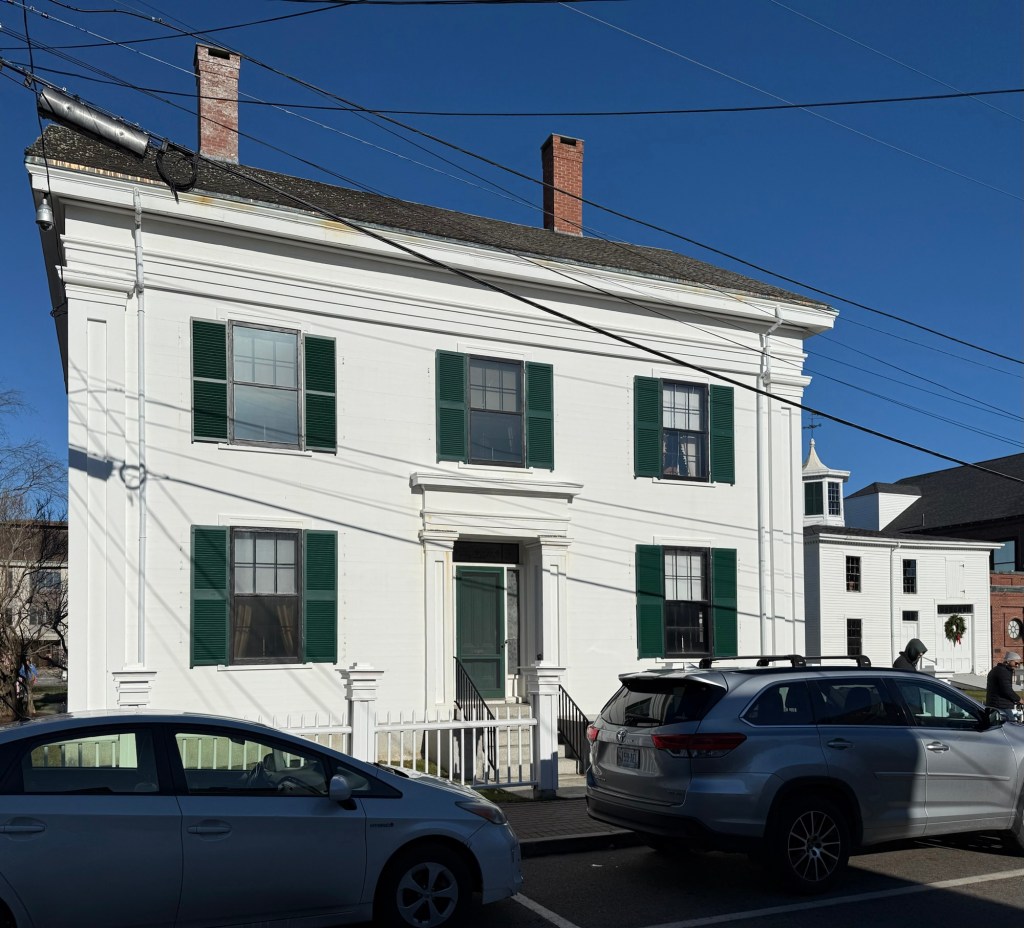
Farnsworth Homestead // 1850

The Farnsworth Homestead is located on Elm Street in Downtown Rockland, Maine, and is an excellent example of a mid-19th century residence in the Greek Revival style. The home was built in 1850 for Rockland businessman William Alden Farnsworth, who gained his income from lime-rock quarries and the Rockland Water Company. Mr. Farnsworth was a leading businessman who helped establish Rockland as the number four port in the United States, largely exporting lime for masonry construction all down the east coast. After William died in 1873, the property was inherited by his heirs, the last of which, Lucy Farnsworth, lived here until her own death in 1935. The 96-year-old Lucy Farnsworth died in the home and in her will, bequeathed the family property and ample funds to establish the Farnsworth Art Museum, and included preservation of the family homestead as a mid-19th century house museum, which it remains to this day. The Greek Revival style house with its flushboard siding and bold pilasters, was recently restored by the museum, along with the carriage house which stands to its east.

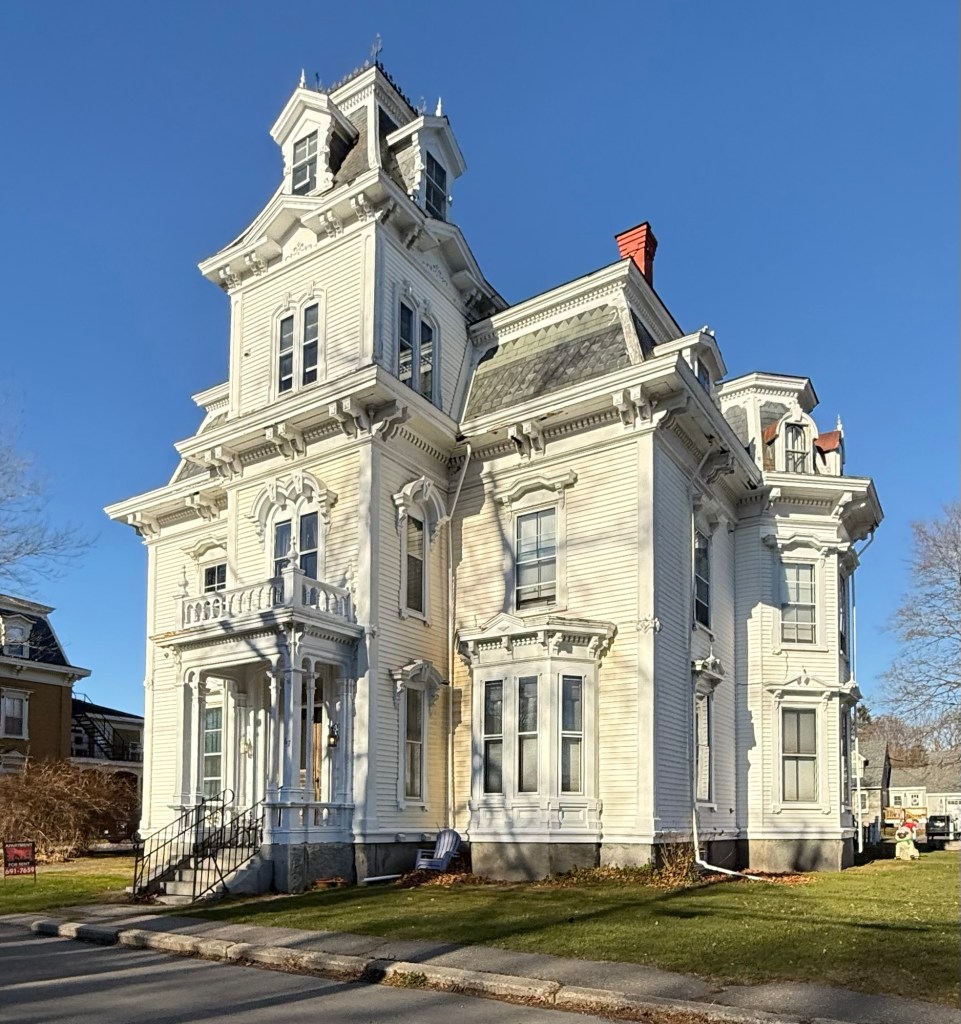
Captain Albert F. Ames Mansion // 1874

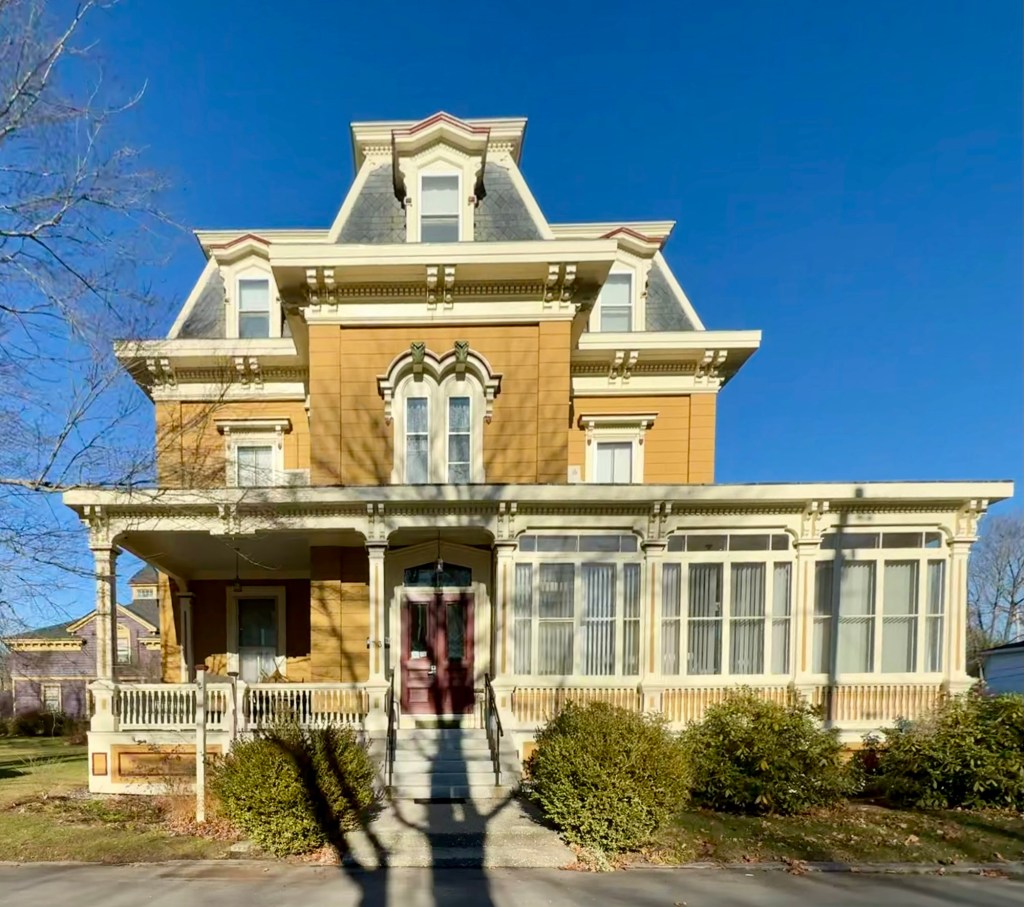
Located next door to the William H. Glover House on Talbot Avenue in Rockland, Maine, this equally impressive Second Empire style Victorian residence stands as one of the finest in town. The abode was built in 1874 for Captain Albert Franklin Ames (1831-1887) by the architectural firm of Kimball & Coombs of Maine. Albert F. Ames was a sea captain and merchant who would later own many ships to distribute his manufacturing of lime casks which were sold and transported all down the east coast to build American cities. The stately home would later be the subject of one of artist Edward Hopper‘s paintings in Rockland, titled, “Talbot House” after a later owner.

William H. Glover House // 1873

William Hurd Glover (1834-1910) was a prominent lumber dealer and builder in Rockland, Maine, and would built this house as his residence on Talbot Avenue. Mr. Glover hired architect Charles F. Douglas, to furnish the plans for the Second Empire style mansion. While covered in vinyl siding, the handsome residence features a slate mansard roof, central tower, delicate projecting portico over the entrance, and decorative window hoods and brackets. The house is one of the best examples of the style in Maine, even with the later siding.

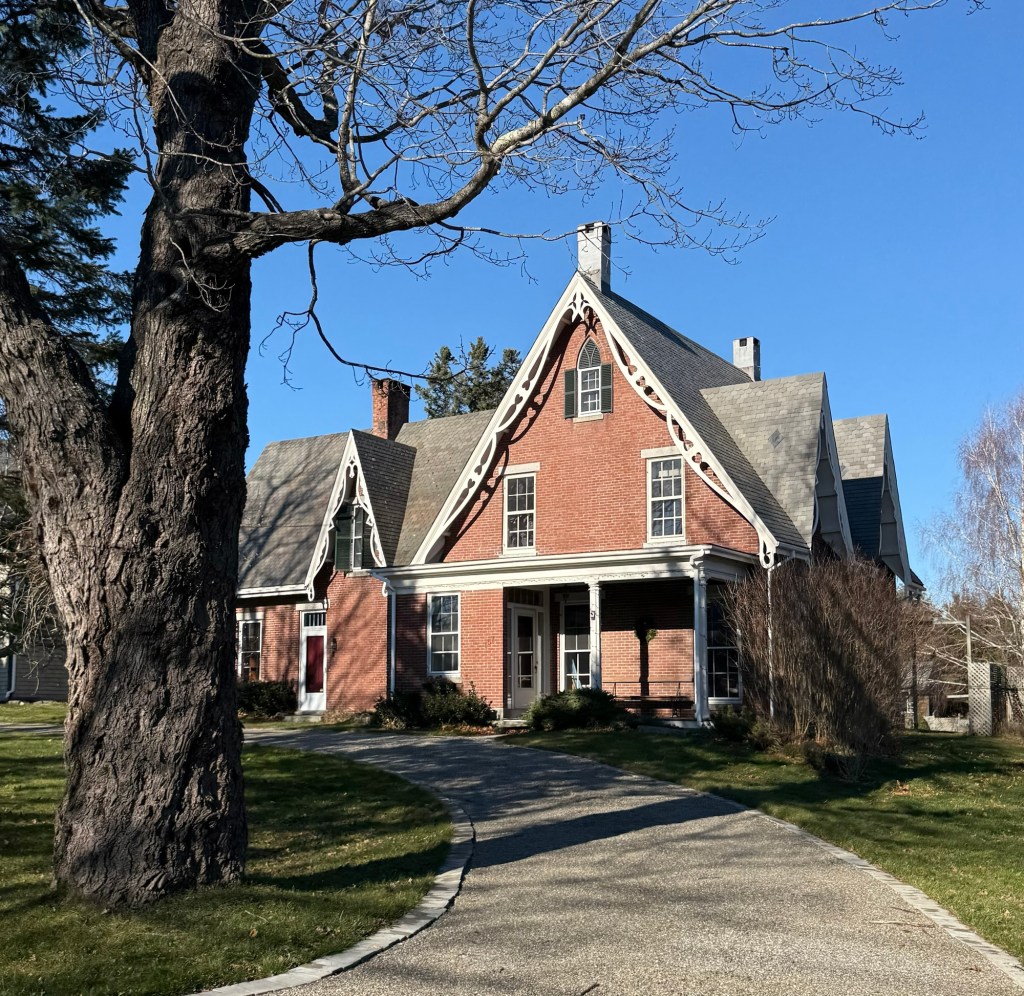
Gen. Davis Tillson House //1853

The General Davis Tillson House was built in 1853 and is one of the best examples of a high-style Gothic Revival residence in the Mid-Coast region of Maine. Located on Talbot Avenue in Rockland, Maine, the house was first owned by General Davis Tillson (1830-1895), a prominent local businessman who owned lime manufacturing facilities and the town’s main wharf before enlisting for service in the American Civil War. Tillson had attended the United States Military Academy at West Point (1845-1851) but did not graduate due to an injury which forced the amputation of one of his legs. During the Civil War, Davis Tillson fought with distinction at the Battles of Cedar Mountain and Second Bull Run. Promoted up to Lieutenant Colonel, then Brigadier General, US Volunteers on March 21, 1863, he later served as Chief of Artillery, and commanded defensive fortifications in the siege of Knoxville before the conclusion of the war. Afterwhich, General Tillson was selected to serve as Director of Freedmen’s Bureau in Georgia and Tennessee. The Bureau was established in 1865 by Congress to help millions of former Black slaves and poor whites in the South in the aftermath of the Civil War. The Freedmen’s Bureau provided food, housing and medical aid, established schools and offered legal assistance. It also attempted to settle former slaves on land confiscated or abandoned during the war. After two years in Tennessee, Tillson would return to Rockland to his home and spend the rest of his life in Maine from this home. The General Tillson House is notable for the use of brick and the steeply pitched gable roof with jigsawn bargeboards.

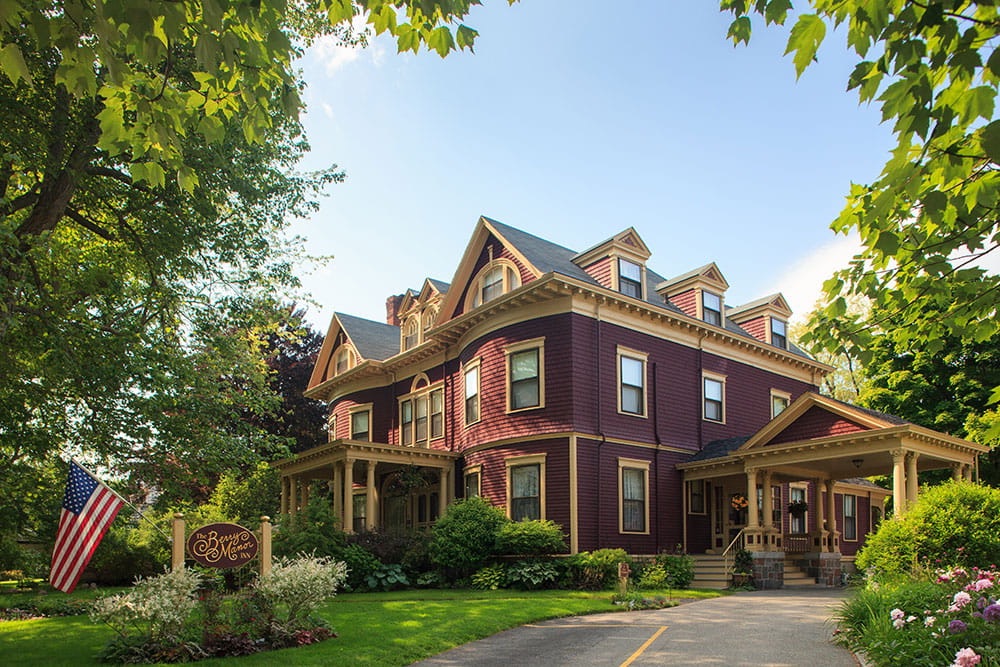
Charles Berry House // 1899

Photo courtesy of Berry Manor Inn

The Charles Berry House is located at 81 Talbot Avenue in Rockland, Maine, and it is one of the town’s finest examples of a residence built in the Colonial Revival style. The house was built for Charles Howard Berry (1849-1909), a businessman who operated a stage route, livery stables, and later entered the hotel business. He would hire Portland-based architect, Austin Pease, to furnish the plans for the house and adjacent carriage house. The residence features a symmetrical façade with front porch and porte-cochere, Palladian window over the entrance, bowed front, and ornate dormers at the roof. The entire property is lovingly maintained and preserved and is now home to the Berry Manor Inn, an up-scale bed & breakfast that maintains the old charm of Rockland, while providing high-class finishes.

Hiram Ricker House // 1893

The Hiram Ricker House sits in the Poland Springs Historic District of Poland, Maine, and was built as the personal residence of its namesake, who developed this formerly sleepy town into a destination in the 19th and 20th centuries. Hiram Ricker (1809-1893), the son of Wentworth Ricker and Mary Pottle, helped turn his father’s country inn in Poland into a popular late 19th century resort, bringing in droves of tourists to take in fresh air and the healing natural spring water. He and his wife, Janette (Bolster) Ricker had six children, all but one of which helped run the resort. This Queen Anne style residence was designed by Lewiston architect, George M. Coombs, and is set back down a long drive overlooking the resort grounds. Sadly, Hiram Ricker died the same year his residence was built, but the home was occupied by the Ricker Family for years after, notably by Hiram’s son, Hiram Weston Ricker. It is covered in later siding, but the trim details are preserved and typical of high-end Victorian homes of this period in Maine.

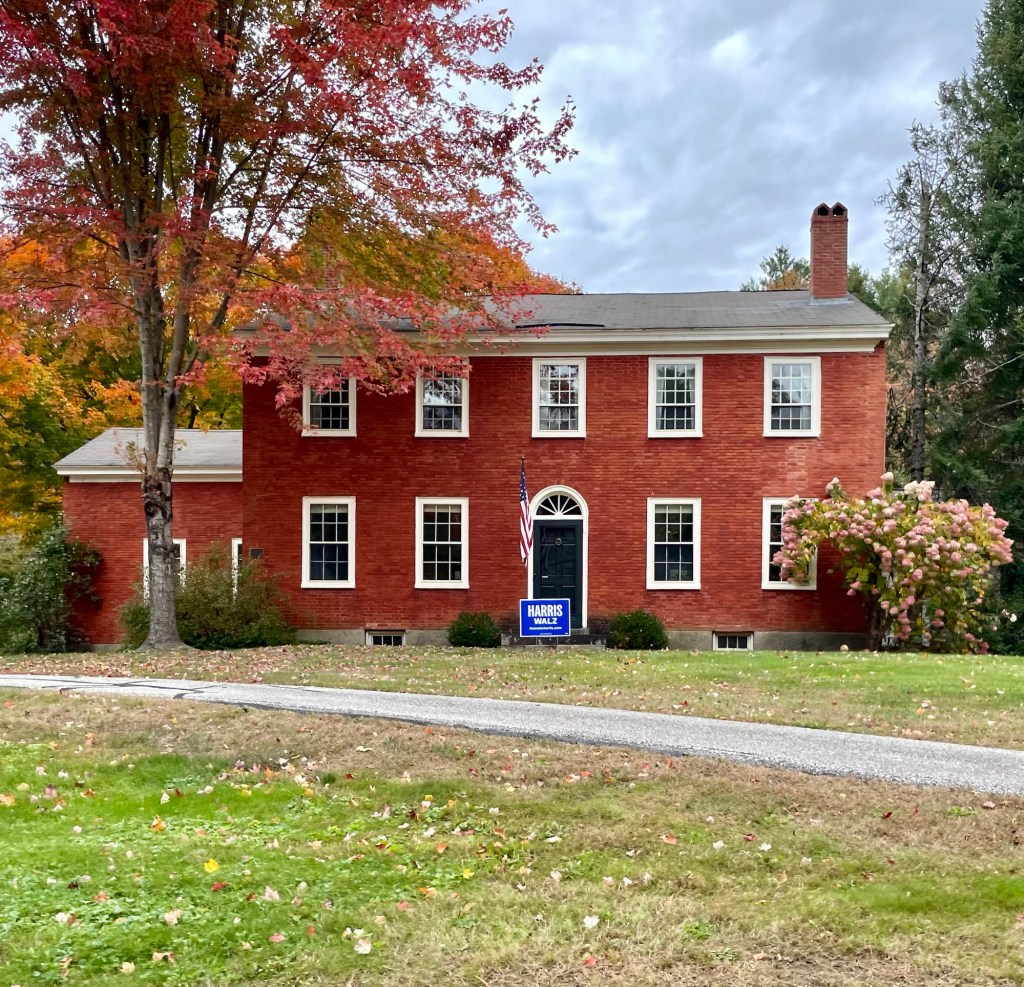
Jacob Randall House // c.1796

The Jacob Randall House on Lawrence Road in Pownal, Maine was built about 1796 and is a fine example of Federal period architecture executed in brick in the town. Built for Jacob Randall (1771-1829) a native of Weymouth, Massachusetts, who purchased over 100 acres of land in town, and had this house built sometime after. His property spanned the nearby Chandler River, upon which he established a sawmill and gristmill. When Pownal was incorporated in 1808, Randall was one of its first town selectmen, a seat he held nearly continuously until his death in 1836. The house is five bays wide, with its entrance in the central bay, recessed with a fanlight.

Rev. Samuel Foxcroft House // 1765

Built in 1765 for Rev. Samuel Foxcroft (1734-1807), this grand two and a half story house was the first major frame dwelling in New Gloucester, Maine. Its large scale and such fine mid-18th century architectural features as the triangular doorway pediment  and quoins at the corners make this a house befitting  the community’s first minister. Born in Boston in 1735, Foxcroft was the son of the Rev. Thomas Foxcroft, pastor of the First Church of Boston from 1717 to 1769. The younger Foxcroft graduated from Harvard in 1754 and answered the call of the New Gloucester Congregationalists ten years later, a brand new town in the wilderness of Maine. He was ordained in the blockhouse, a defensive structure from attacking native peoples, in January of 1765 and continued his ministry in the town until 1793, having the first purpose-built meetinghouse completed in 1773. The last years of his life were spent in poor health and he died at his home in 1807 at the age of 72.

Whitman-Fessenden-Coombs House // c.1800

This important Federal-period house sits in the middle of New Gloucester village in Maine, and dates to the early 19th century with mid-19th century alterations. The original owner was Obediah Whitman, who sold the house soon after to General Samuel Fessenden (1784-1869) lived here while practicing law in New Gloucester. He was an avid abolitionist who served as a congressman and in 1828, he declined the presidency of Dartmouth College. The General’s son, William Pitt Fessenden, resided there from ages three to fourteen. William later became a U.S. Senator and Lincoln’s Secretary of the Treasury. The third notable owner was artist, Delbert Dana “D.D.” Coombs, who used the second floor for his studio for some years. The update from the mid-19th century of the modest bracketed eaves and two-over-one windows showcases how later owners can update a home without diminishing the original design.