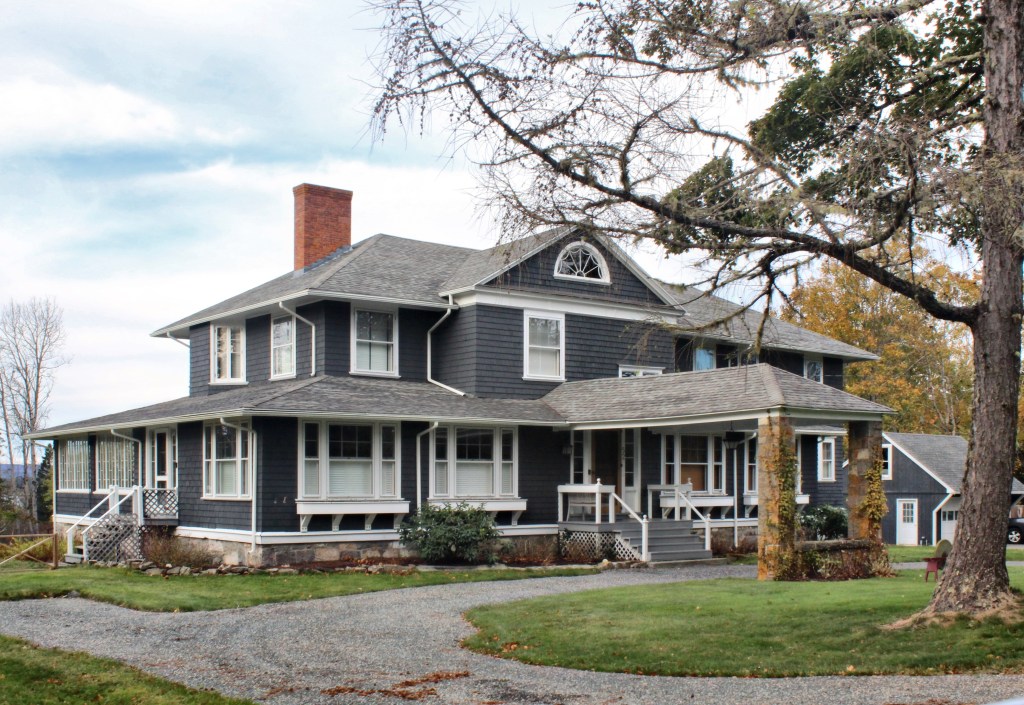
Nathaniel C. Allen House // 1793

The Nathaniel C. Allen House is a two-story Federal style residence located in New Gloucester, Maine. The house was built in 1793 by Shubael Marsh, a local builder (and father of Shubael Jr. (1797–1867), who moved to Texas with Stephen F. Austin) and sold to Nathaniel Coit Allen, an early settler in New Gloucester, who served as a General during the American Revolution. The property was purchased by Col. James Madison Thompson, then owner of the Glen House, an early White Mountains hotel in New Hampshire, who renovated the home by replacing the central chimney with two narrow ones and raised the ceilings and introduced Victorian interior woodwork. A subsequent owner added large Colonial Revival porches on the front and side entrances along with a new entry. The house showcases the changing tastes from Federal style to Victorian back to traditional tastes.
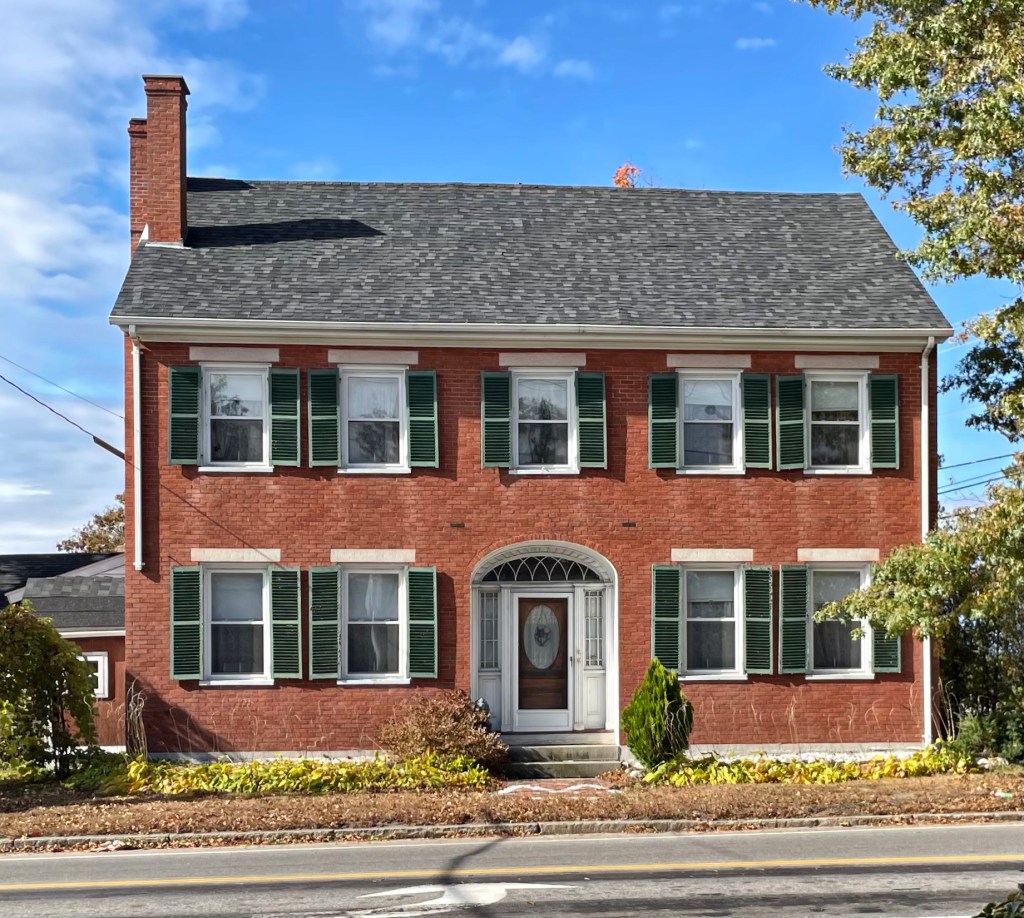
Morrill House // c.1830

This stunning brick Federal style home sits in the center of Gray Village in Maine. The house dates to the early 19th century and was long-owned by members of the Morrill Family, seemingly first by William C. Morrill and remaining in the family for generations. The residence is a high-style example of the Federal style with recessed elliptical entrance with fanlight transom and sidelights with a Victorian-era front door. The house was likely built by a local mason or housewright who employed the designs of a Federal style plan book for the architectural detailing at the entry.

Samuel Perley House // c.1784

Built around 1784 for Reverend Samuel Perley, this Federal style home is one of the finest in the town of Gray, Maine. Samuel Perley (1742-1830) was educated at Harvard College and while there, met and befriended John Adams, who would later become the second President of the United States. The two maintained a lifelong friendship. Perley came to Gray in 1784 as a pastor of Gray’s first church. He likely had this house built at the time or purchased an existing house and updated it and the house is said to have Moses Eaton stencilling inside. At one point, Rev. Perley and his wife lived on one side of the house while his son Isaac, his wife, and their twelve children lived on the other.

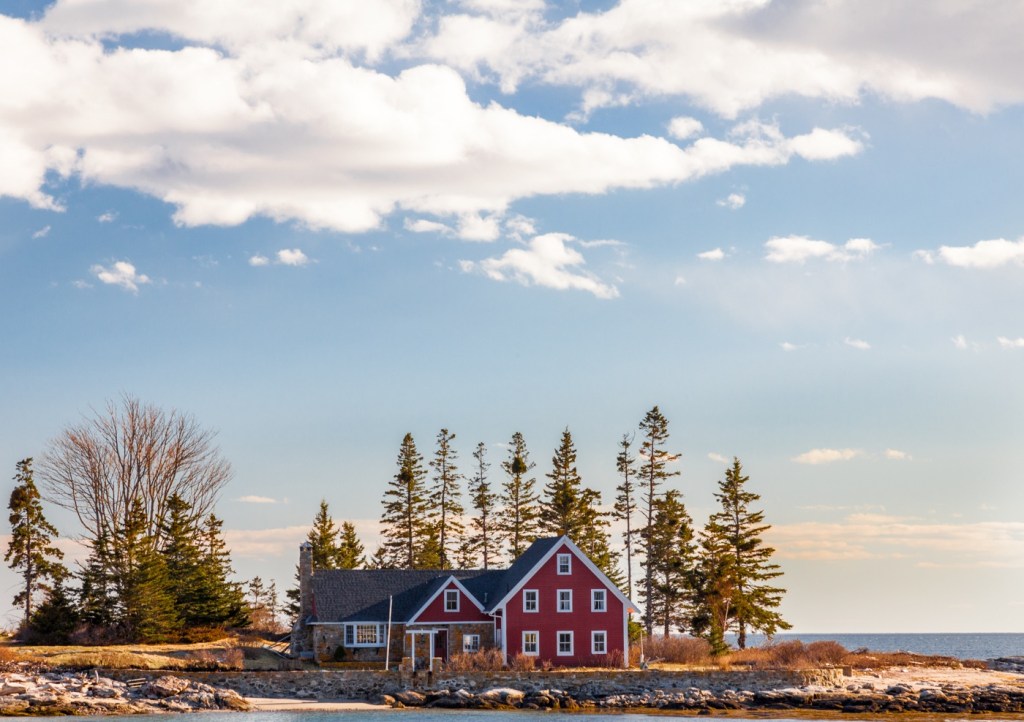
Margaret Hamilton House – Witch’s House // 1852

Photo by Paul VanDerWerf

This house sits alone on Cape Island off the southern tip of Southport, Maine and has been known as the “Witch’s House” for decades. The island was purchased by actress Margaret Hamilton and her son, Hamilton “Ham” Meserve in 1961. The 20-acre island is about 900 feet from the mainland and includes this adapted farmhouse, originally built in 1852. Margaret Hamilton, best-known for her role as the Wicked Witch of the West in the 1939 movie, The Wizard of Oz, spent her summers in this house until her death in 1985. The island to this day is lovingly referred to as the Witch’s Island, a nod to a great actress and woman, Margaret Hamilton.

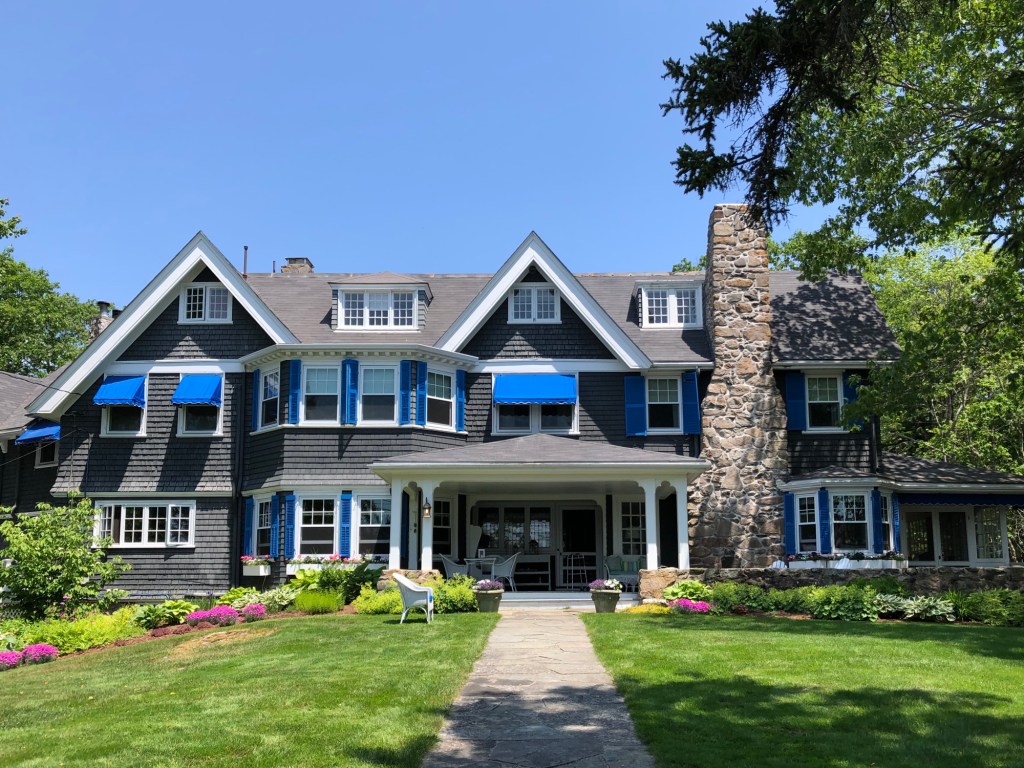
Kewaydin Cottage // 1900

Every good summer cottage needs a name, and this charmer in the Cape Arundel Summer Colony of Kennebunkport, Maine, is no exception! This is “Kewaydin” a massive summer home built for Eben Caldwell Stanwood Jr. (1856-1906) a merchant and later banker of Boston, Massachusetts. Stanwood hired the Boston firm of Chapman & Frazer to design the cottage, which blends Shingle style and Queen Anne elements in a rustic composition that has such great curb appeal! The use of cedar shingles and rubblestone chimneys, paired with the vergeboards and complex roofline with dormers, makes this one of the gems of Kennebunkport!

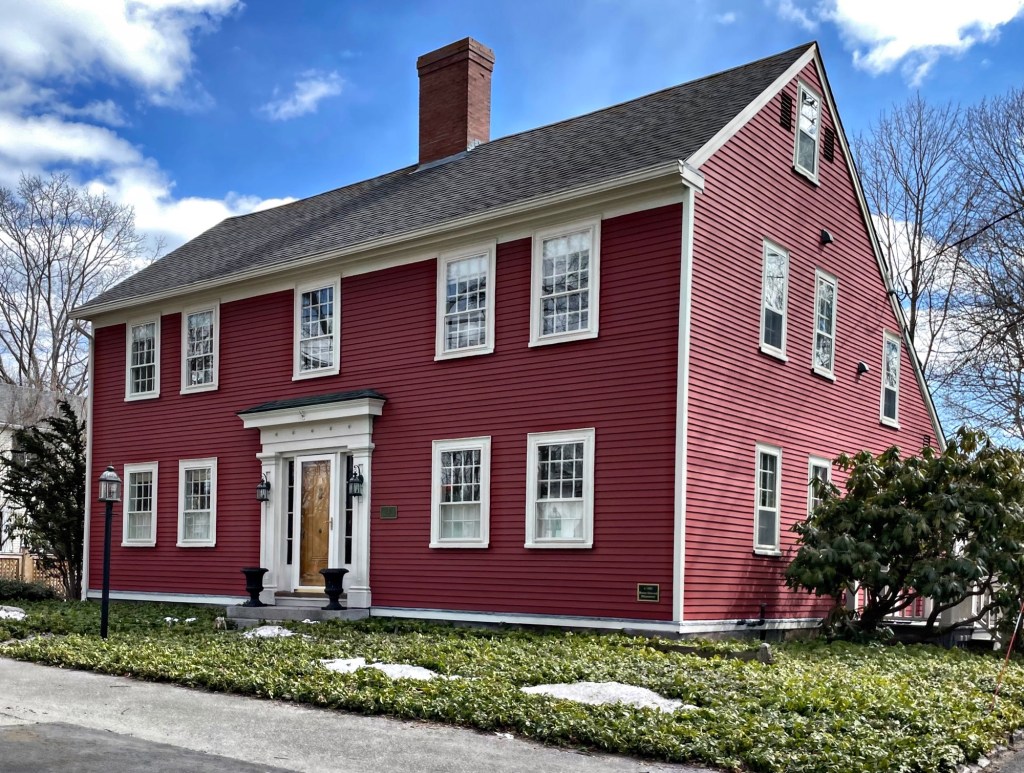
Moses Howard House // c.1794

This charming Federal style saltbox house was built around the turn of the 19th century for Moses Howard, a “shipmaster” who moved to Kennebunkport from Cohasset, Massachusetts in 1793. The house here is clapboard with a symmetrical facade and central chimney. A saltbox roof extends off the rear of the house. Moses Howard did not stay in Kennebunkport for long as he moved to Portland by 1812. The house was lovingly maintained for the next 200+years.

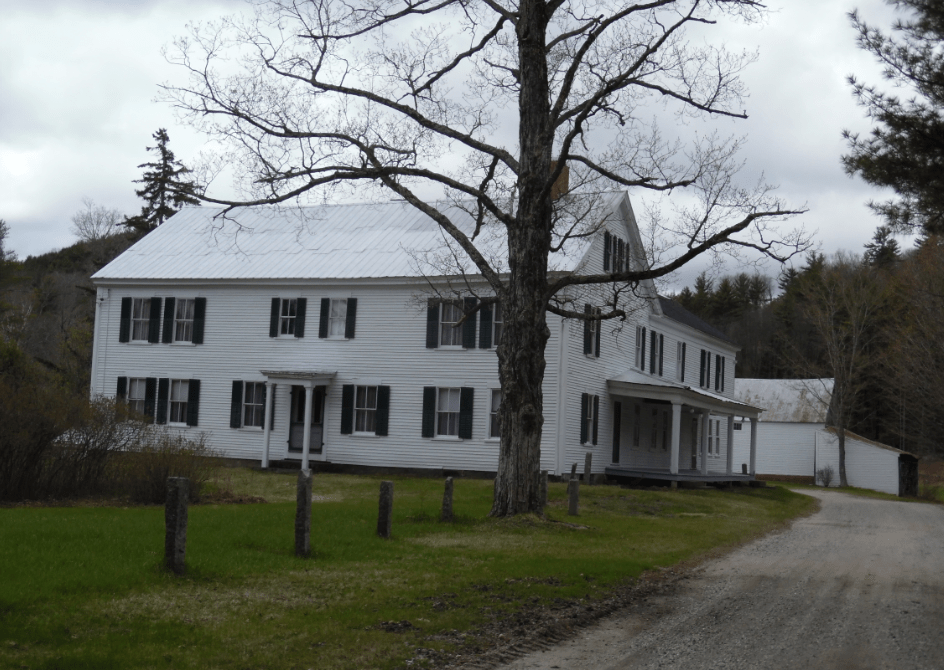
Wadsworth Hall // 1800

Wadsworth Hall is a significant and hidden estate house located in rural Hiram, Maine. The house was built in 1800 for Peleg Wadsworth (1748-1829), an officer during the American Revolutionary War and a Congressman from Massachusetts representing the District of Maine. He was also grandfather of noted American poet Henry Wadsworth Longfellow. General Wadsworth’s primary residence, now known as the Wadsworth-Longfellow House in Portland, Maine, was built in 1785–86. Following the war, Wadsworth was granted 7,800 acres of land by the state in 1790 for his war service, the land was located here in Hiram. General Wadsworth would build this large Federal period home. After, he gave his Portland home to his daughter Zilpah and her husband Stephen Longfellow, parents of the poet Henry W. Longfellow. Wadsworth, in his role as a leading citizen in Hiram, opened his house for meetings and town functions, and even used the large hall for militia drills during bad weather.

Jefferson Willow Grange Hall // c.1901

Grange Halls have long been vitally important buildings in agricultural towns all over New England and are becoming threatened due to shifting development patterns and dwindling membership. The National Grange of the Order of Patrons of Husbandry was established in 1867 to advance methods of agriculture, as well as to promote the social and economic needs of farmers in the United States. Communities all over built grange halls where farmers and residents could meet and discuss prices, trade, and share tips for larger crop yields. The Willow Grange Hall in Jefferson, Maine was built in 1901 and is a vernacular building which remains a community meeting hall to this day.

Far From The Wolf Cottage // 1891 & 1902

John Godfrey Moore (1847-1899) was born in Steuben, Maine, a small town just east of Mount Desert Island, the son of a ship captain. He moved to New York City at 18 and would become was a wildly successful businessman, financier and Wall Street stock market promoter during the Gilded Age. He gained fame by successfully suing the United States government in 1893, to stop the new income tax Act from coming into effect, delaying it by 20 years. Oh how the rich stay rich… He purchased a 2,000-plus acre estate on the Schoodic Peninsula and formed the Gouldsboro Land Improvement Company, which sought to develop the peninsula into a summer colony that would rival Bar Harbor. As part of this, Moore was a huge reason for Winter Harbor separating from Gouldsboro, to lower his and his neighbors’ property taxes. He built a cottage here in 1891 and named it “Far From The Wolf” a cheeky reference to its comfortable distance from Wall Street. He died unexpectedly in 1899. His second wife Louise and daughters Ruth and Faith did not share his aspirations for Winter Harbor, and their visits to the area became less frequent. A large portion of his land on the Schoodic Peninsula became a part of Acadia National Park. His property in Winter Harbor was sold, expanded in 1902, and renamed “Ingleside” by Frank B. Noyes, a publisher and later founder of the Associated Press. The home was for a time operated as an inn, and was recently sold for $1 Million at auction. What a steal!

Thompson Cottage // c.1892

Who doesn’t love a good porte-cochere? In case you don’t know what they are, a porte-cochere is a covered porch-like structure at an entrance to a building where either a horse and carriage (historically) or car (today) can pass under to provide arriving and departing occupants protection from the elements. They are normally found on larger residences and institutional building where the wealthy frequent. The Thompson Cottage on Grindstone Neck in Winter Harbor was built around 1892 for James B. Thompson from Philadelphia. The original cottage was largely updated after Thompson’s death in 1915, the property was owned by Annie Cannell Trotter, who summered at another house in the colony with her husband Nathan Trotter, until his death.