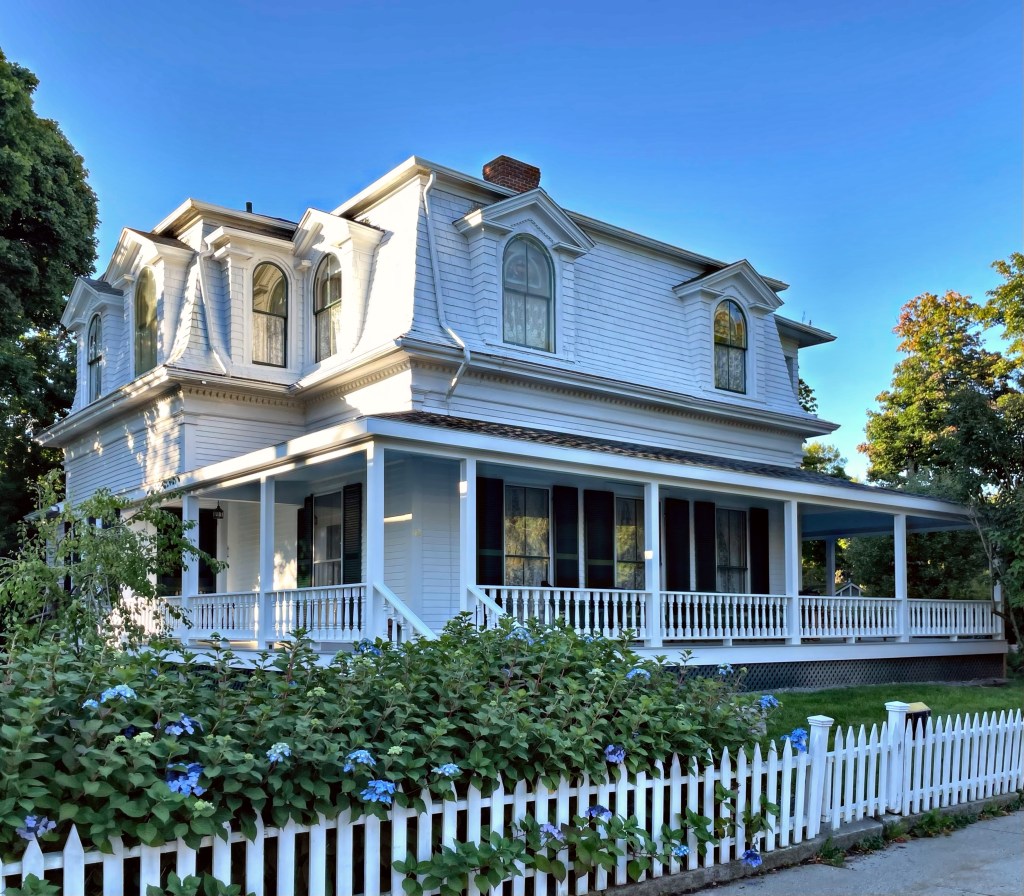
The Villa – Sigourney House // 1864

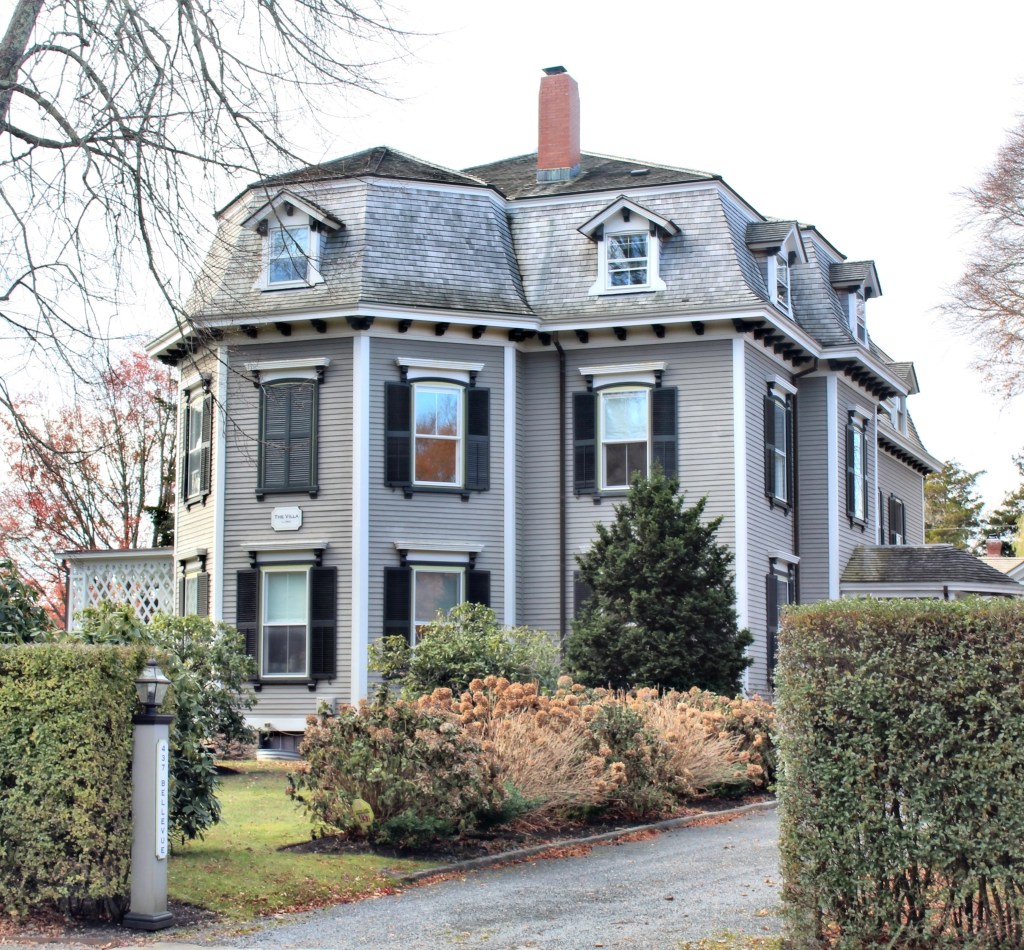
Margaret Barker Sigourney was the wife of Boston lawyer Henry Sigourney (1783–1849). In 1864, just as the Civil War was coming to a close, Sigourney purchased a piece of land on Bellevue Avenue in Newport soon after the time that Newport had been rediscovered as a tourist destination for the elite class. Sigourney wanted to make a splash as a single woman summering in Newport, so she hired local architect George Champlin Mason to design her cottage in the fashionable Second Empire style. The refined facade is more academic, while the rear and side facades exhibit porches with delicate bargeboards and trim. Sigourney spent summers at her cottage with her only son until 1873 when he and his family perished and were lost at sea aboard the Ville du Havre, when it collided in the Atlantic with another ship, killing a total of 226 aboard the ships, many of which drowned and their bodies never recovered. Alone, Margaret Sigourney continued to spend her summers in Newport until her own death in 1885.

Valley House // 1868

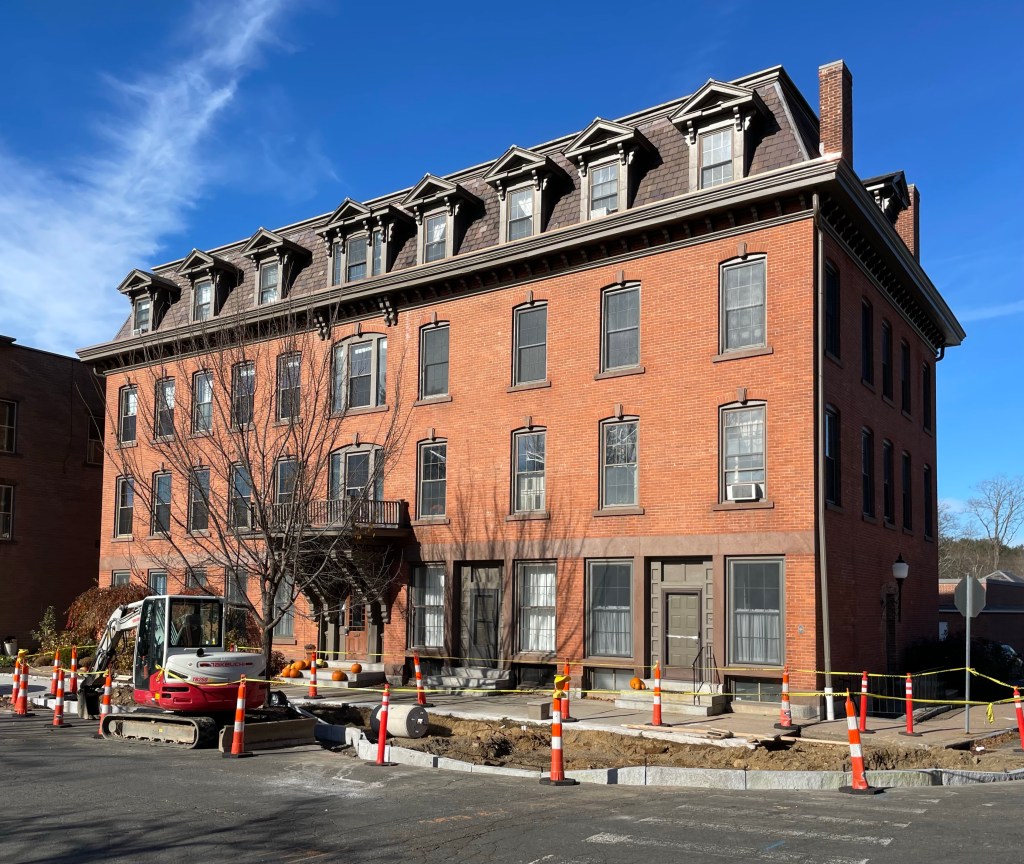
This massive Second Empire structure on Main Street in Collinsville, CT, was built in 1868 by the Collins Company, the major industry in town as housing and stores. In the 19th and early 20th centuries, large industrial employers often provided affordable housing for workers in close proximity to factories to incentivize the long days and difficult working conditions. The Valley House was known as a hotel, but was essentially an apartment hotel, where workers and visitors could reside in a room without a set lease or contract. At the ground floor, retail shops would provide goods and services to residents of the building and the greater village. Today, the rooms have been converted to condominiums.

North Village Fire Station // 1888

After sharing the old Central Fire Station building in Lancaster (last post), I couldn’t help myself but to share another mini-mansard fire station constructed in town! Located in North Village, this station was built in 1888, and provided fire service to the more rural part of town. The wood-frame structure features a central tower which may have been used originally as a hose-drying tower. In the 1940s, the building was occupied by volunteers of the Ground Observer Corps, an American civil defense organization. The building’s tower provided unobstructed views of airspace where one could keep their eyes open for invading German aircraft. After the War, the Town of Lancaster sold the building, which then converted to a private residence. Sadly, a fire in 2015, damaged much of the interior of the building, but she survives!

Lancaster National Bank – Central Fire Station // 1836

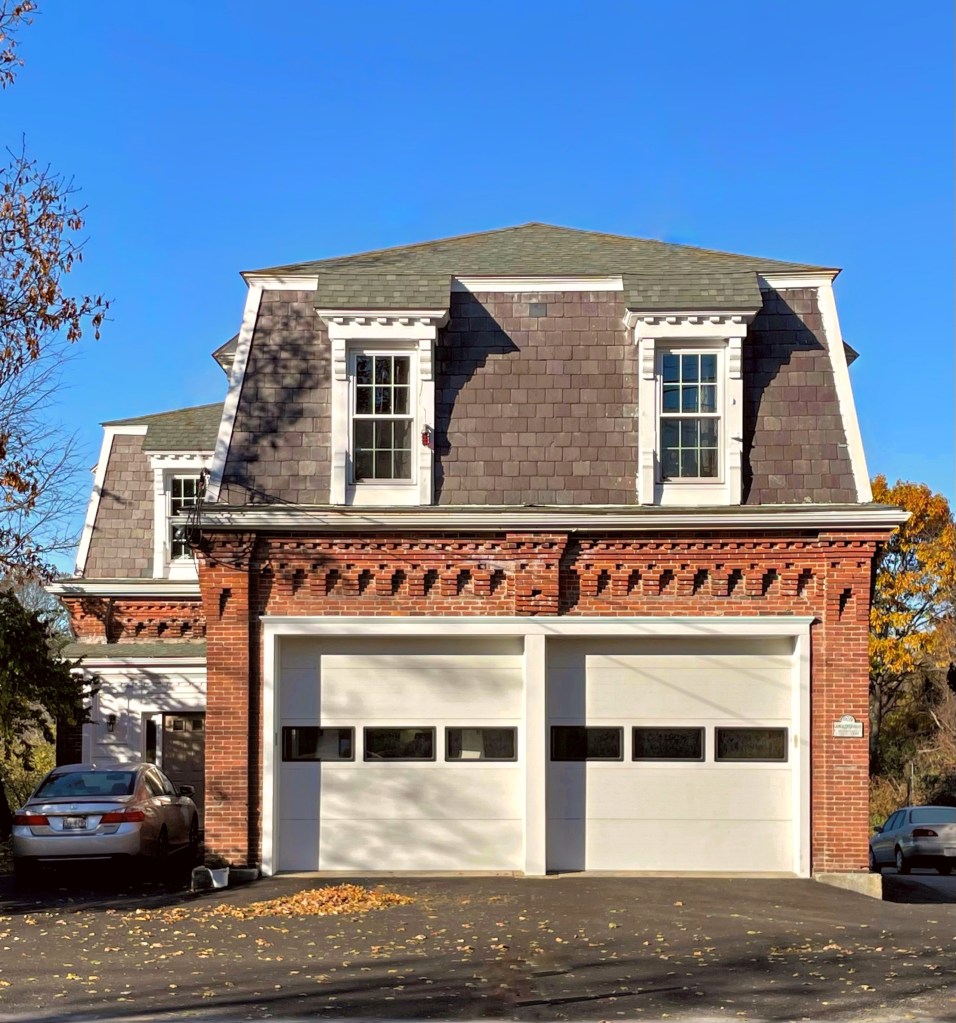
Located on sleepy Main Street in Lancaster, Massachusetts, this cute mini-mansard building caught my eye immediately, and I had to take a picture! The building was constructed in 1836 for the Lancaster National Bank. The brick building was just one story with storefront windows and a central entrance, and was the only bank in the small town. When the neighboring town of Clinton saw a large increase in population due to industrial growth, the Lancaster National Bank decided to relocate to be closer to a larger clientele. They sold this building to the Town of Lancaster in 1882 and moved out. Within a year, the town added the mansard roof to the building, being careful to preserve the original cornice (now where the brick meets the roof), and converted the building to a fire station with double doors. The Central Fire Station was in operation here until 1967 when a new building was built nearby, with doors large enough to easily house modern engines. The building was then used as storage and offices for the Lancaster Water Department. Sadly, the replacement fire station doors really diminish the appeal of the building.

“The Kedge” // 1871

Built for an A. Veazie, this mini-mansard cottage stands out as the oldest home on Bar Harbor Maine’s beautiful West Street. The 1871 Second Empire style home was located elsewhere in the village, but moved to the current site in 1886 by new summer resident, William Sterling. The cottage was modified in 1916 by Maine Architect Fred Savage for William and his family. The stunning windows inset into the mansard roof are especially noteworthy.

Captain Nathaniel Stone House // 1872

The Captain Nathaniel Stone House in Farmingdale, Maine was constructed in 1872 on a small plot of land overlooking the Kennebec River. The charming home was constructed by Nathaniel Stone (1797-1884), a retired ship chandler,(a dealer in supplies or equipment for ships) who moved back to his hometown after making his fortune in Boston. He lived here with his wife, Martha, and his adopted son, Uriah, in this fashionable Second Empire style. Nathaniel died in 1884, outliving his wife by two years. The property was willed to his adopted son Uriah, who quickly sold the home on account of him seeing ghosts inside, he refused to live there because of it. The home was acquired by William Ring, a businessman who owned real estate in nearby Gardiner, Maine. Between 1886 and 1912 he and his family resided at the former Stone House, but by the turn of the Twentieth-century he grew increasingly in debt, and on several occasions he borrowed against his property to meet his obligations. Before the home went up for auction in 1912, a massive fire broke out in the home, destroying all the interior woodwork, and William perished inside. Although significantly damaged, it was largely rebuilt to its original appearance by its eventual buyer and has been an architectural landmark on the Kennebec River ever since. Now that I think of it, maybe Uriah Stone could see the future and saw William Ring as a ghost!

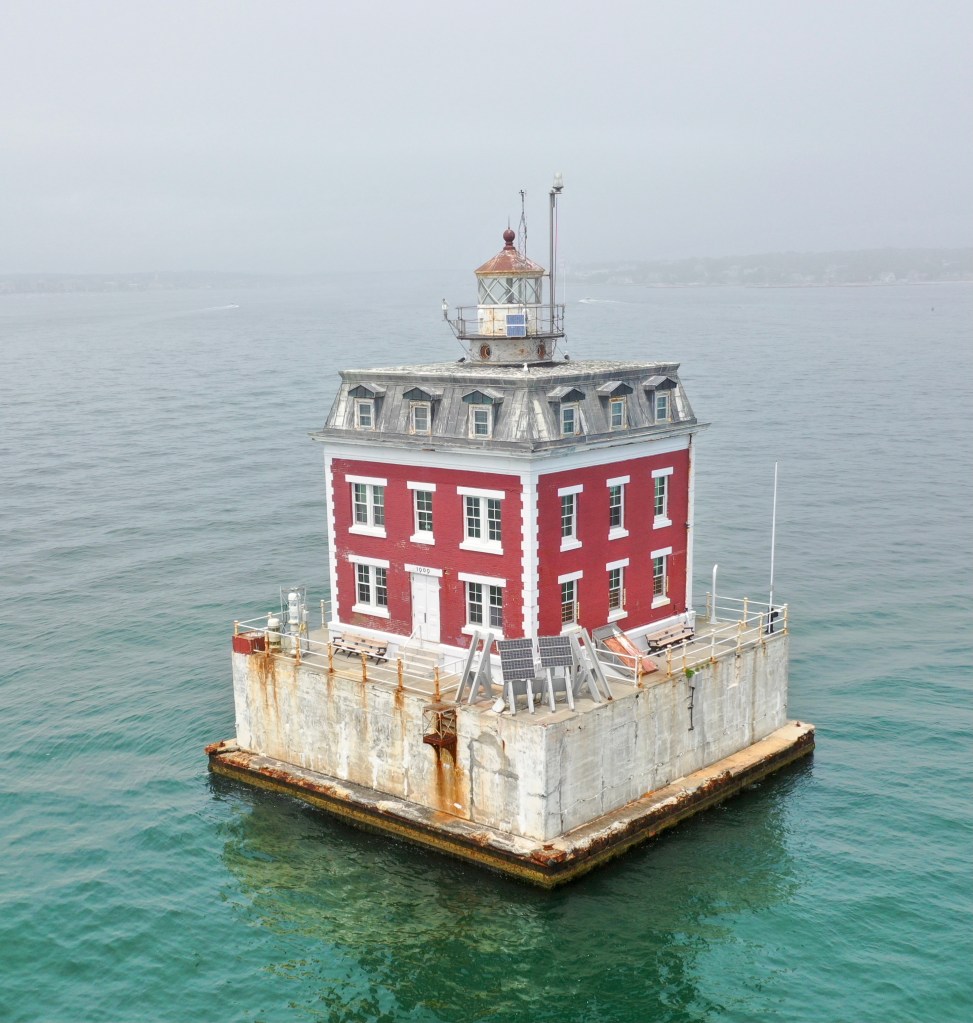
New London Ledge Lighthouse // 1909

Set way off the coast of Connecticut at the eastern end of Long Island Sound, sits this stunning lighthouse which appears more as a Second Empire style home than a lighthouse! By the early 1900s, New London, with its protected harbor at the mouth of the Thames River, had made the transition from whaling center to industrial city. New London Ledge Light was built because New London Harbor Light wasn’t sufficient to direct vessels around the dangerous ledges at the entrance to the harbor. The New London Ledge Lighthouse was completed in 1909, built by the Hamilton R. Douglas Company of New London and is an architectural antique as its Second Empire style is about 50 years past the time the style was popular in American architecture. The lighthouse reportedly owes its distinctive French Second Empire style to the influence of the wealthy home owners on the local coast, who wanted a structure in keeping with the elegance of their own homes. Sadly, many of the large homes near the shore in the area were destroyed in the Great Hurricane of September 21, 1938. Coast Guard crews lived at the light until it was fully automated in 1987. The lighthouse today is owned and operated as a museum by the New London Maritime Society.

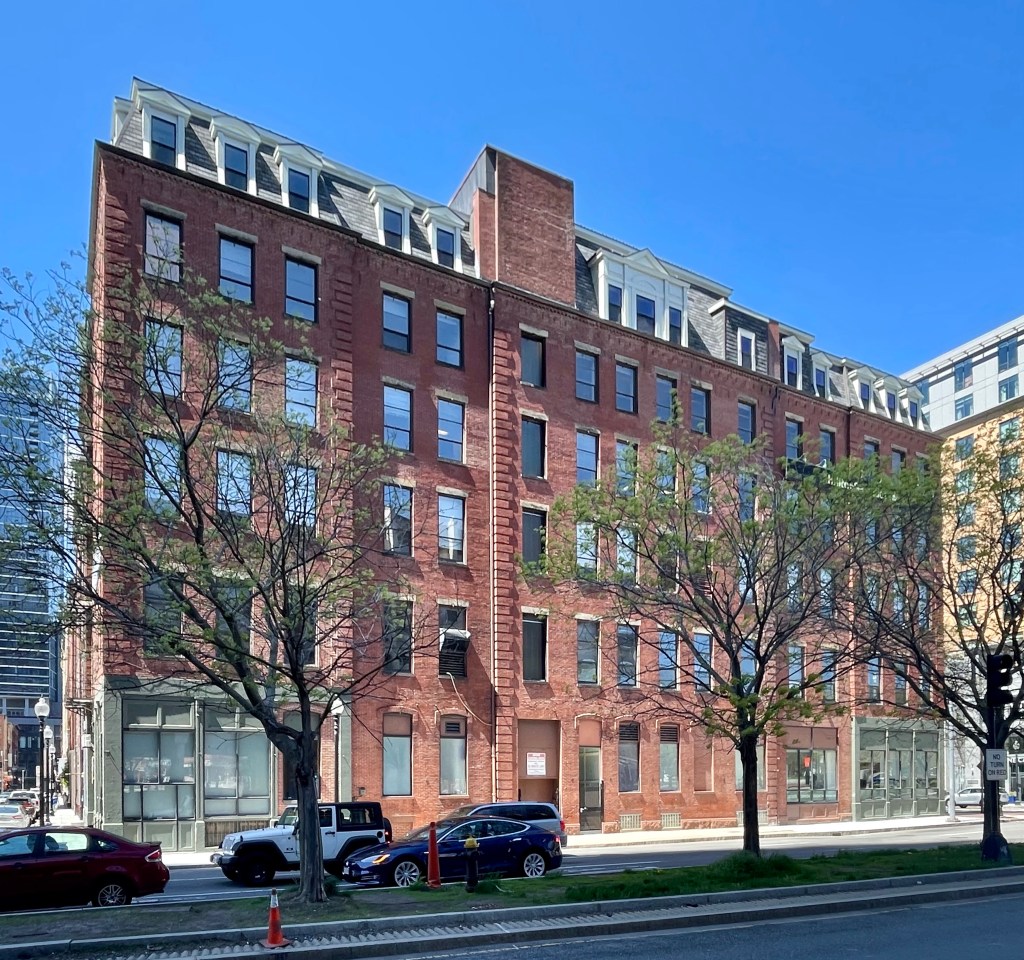
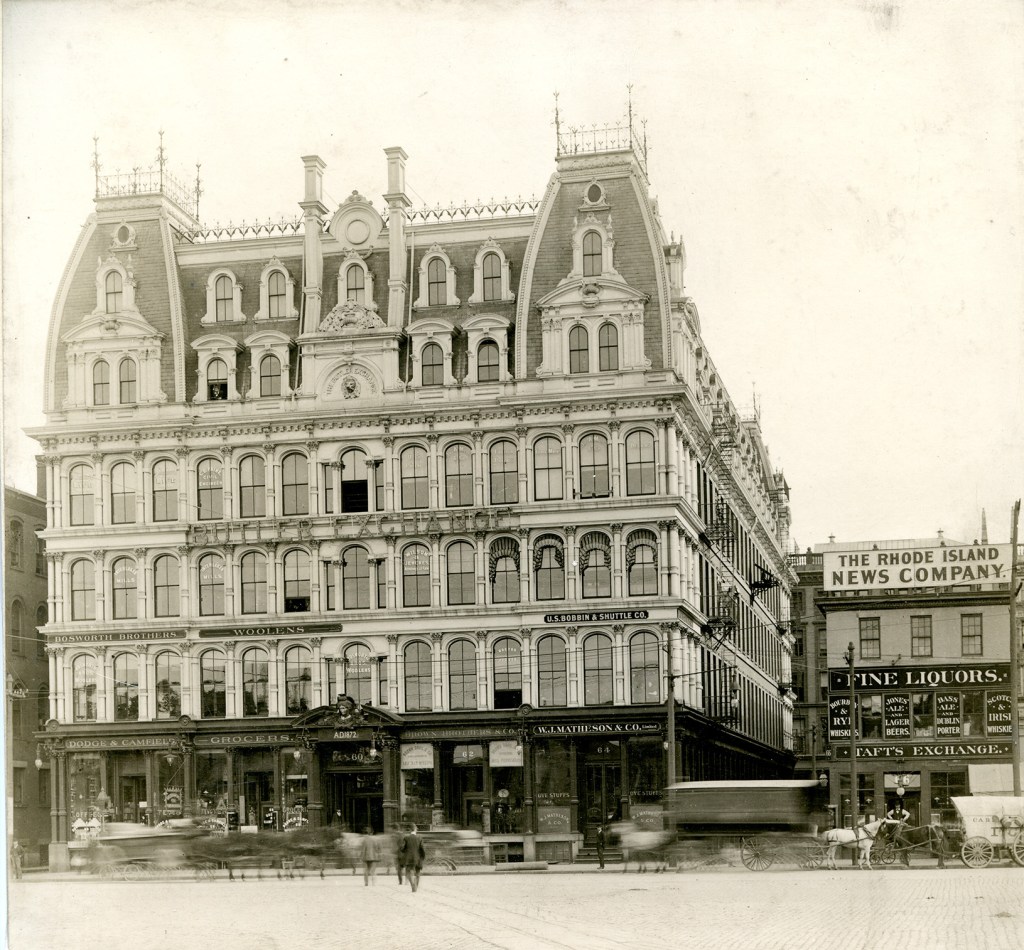
Paine’s Furniture Factory // 1871

Founded in 1835, Paine’s Furniture Company was at one time the largest furniture manufacturer and dealer in New England and had a nationwide business. The company was founded by Leonard Baker Shearer, who was joined in business in 1845 by John S. Paine, his son-in-law. Upon the death of Shearer in 1864, the name of the firm was changed to Paine’s Furniture Company. The company occupied a couple wooden and metal buildings on this site in the Bulfinch Triangle until a fire destroyed the complex. The growing firm took this opportunity to hire one of the most successful architect Gridley J. F. Bryant who worked with a colleague, Louis P. Rogers, to design the fire-proof building. The Second Empire style building with mansard roof was split into three sections with the rear two rented out to other companies, while Paine’s occupied the south-facing (main) facade. When Paine’s moved to their new building in the Back Bay, they sold this building and later alterations severely diminished the original design of the building. The current hodgepodge of alterations creates a mess of what was once an undeniable architectural landmark.

Jones & Wetherbee Houses // 1873

In 1873 Elnathan Jones, Jr.(1829-1904) purchased house plans from a friend in Groton, adapted the plans, and built these two houses, in Acton. One home for himself, and one for his business partner Jonathan Wetherbee (1832 1926). Also near these two houses is the Tuttle House (featured last), in a different style. All three of these men were family by marriage, and ran businesses in the village of South Acton. The Jones and Wetherbee houses were built as sister houses, identical; but over the years, the Jones House has seen some unsympathetic alterations which diminish its architectural significance. The Wetherbee House (yellow) retains its original detailing and corner, towered mansard roof.

John Brown Herreshoff House // c.1870

John Brown Herreshoff, a fully-blind ship-builder, and later Founder and President of the Herreshoff Manufacturing Company in Bristol, built this house at the head of Burnside Street, overlooking his boat works (no pun intended). The home sits next to the stunning Codman Place mansion, featured previously, and takes architectural cues from its neighbor. The home is reported to have been built by J.B. Herreshoff, who despite being completely blind, developed his other senses to a high degree to overcome the handicap of sightlessness, and became renowned for his design skills in his ships. The home has a mansard roof with a central projecting entrance bay, capped with a steeply pitched roof, and a barrel-vaulted dormer and ocular window inset. While the house is now condo units, it retains its architectural integrity at the exterior.