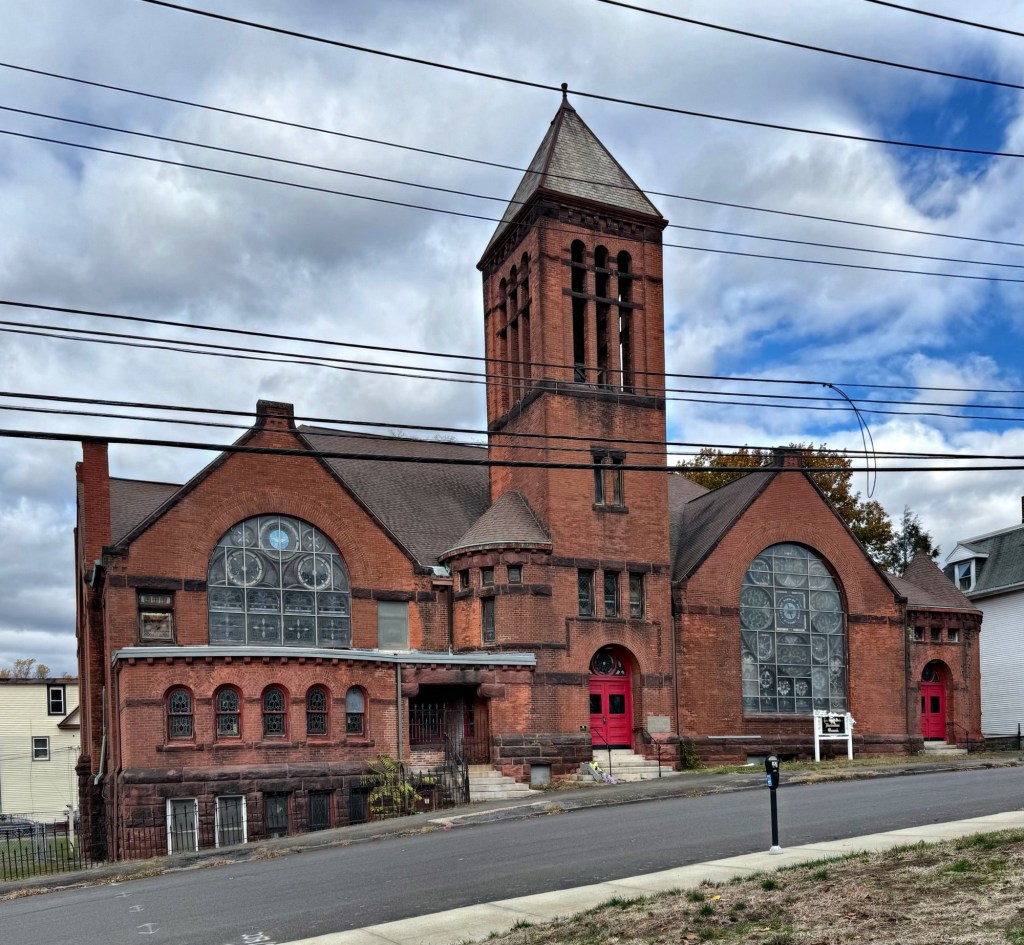
Derby United Methodist Church // 1894

The former Derby United Methodist Church (now the Ghana United Methodist Church) is located at the northern edge of the Town Green in Derby, Connecticut, and is a great example of a ecclesiastical building constructed in the Romanesque Revival style. Its large round arches, tall square tower, and heavy detailing in brick and brownstone place it in the Romanesque Revival mode, all with stained glass throughout. The church was built in 1894 and dedicated in early 1895. The stately church building was designed by George Washington Kramer (1847-1938), an architect who designed many Methodist churches in the midwest and east coast.

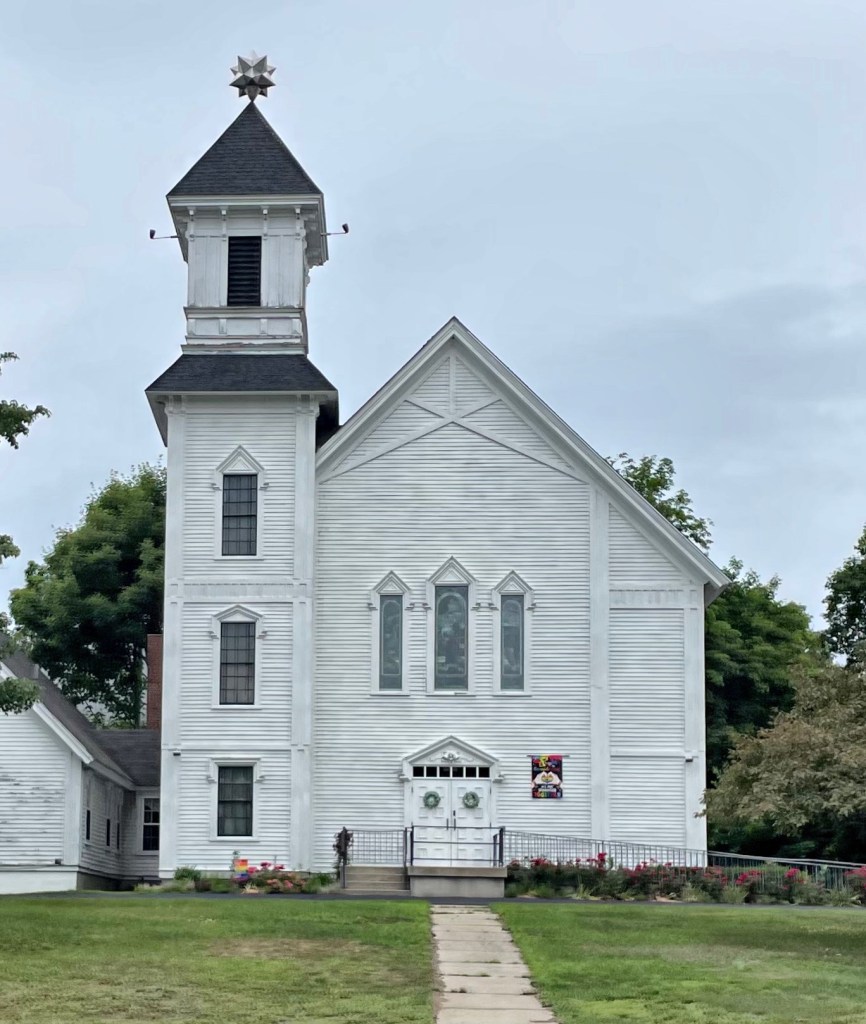
Riverside Methodist Church, Porter // 1883

The focal point of the riverside village of Kezar Falls in Porter, Maine, is this large frame church building with prominent siting and grand proportions. This is the Riverside Methodist Church, built in 1883 in the Stick/Eastlake style by Portland architect Charles H. Kimball. The first Methodist services held in the town of Porter were in 1833, when a church was formed in the small town. Soon after 1839, a gable-roofed meetinghouse with tall lancet windows was erected near where the present church stands. The original church still stands, but in a much-altered form and was used as a local fire station. The church remains owned by local Methodists and is well-preserved.

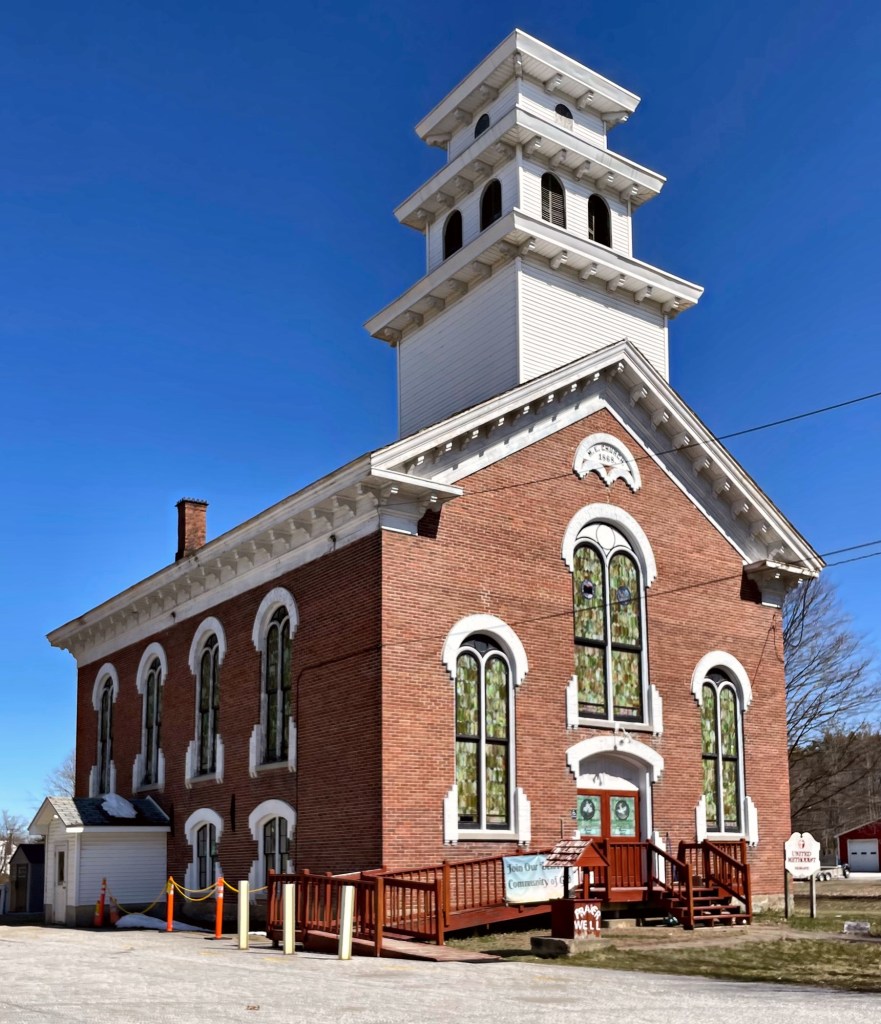
Highgate Union Methodist Church // 1868

The Highgate Union Methodist Church in Highgate, Vermont was built in 1868 and is a high-style example of the Italianate architecture style in a relatively quiet part of the state. Built of brick, the church’s form is typical for small Vermont churches in the third quarter of the nineteenth century. Here, however, the builders were conscious of Italianate fashion, and they applied its round and segmental arches, corbels, and brackets, painted in a lighter color, with consistency and to remarkable effect.

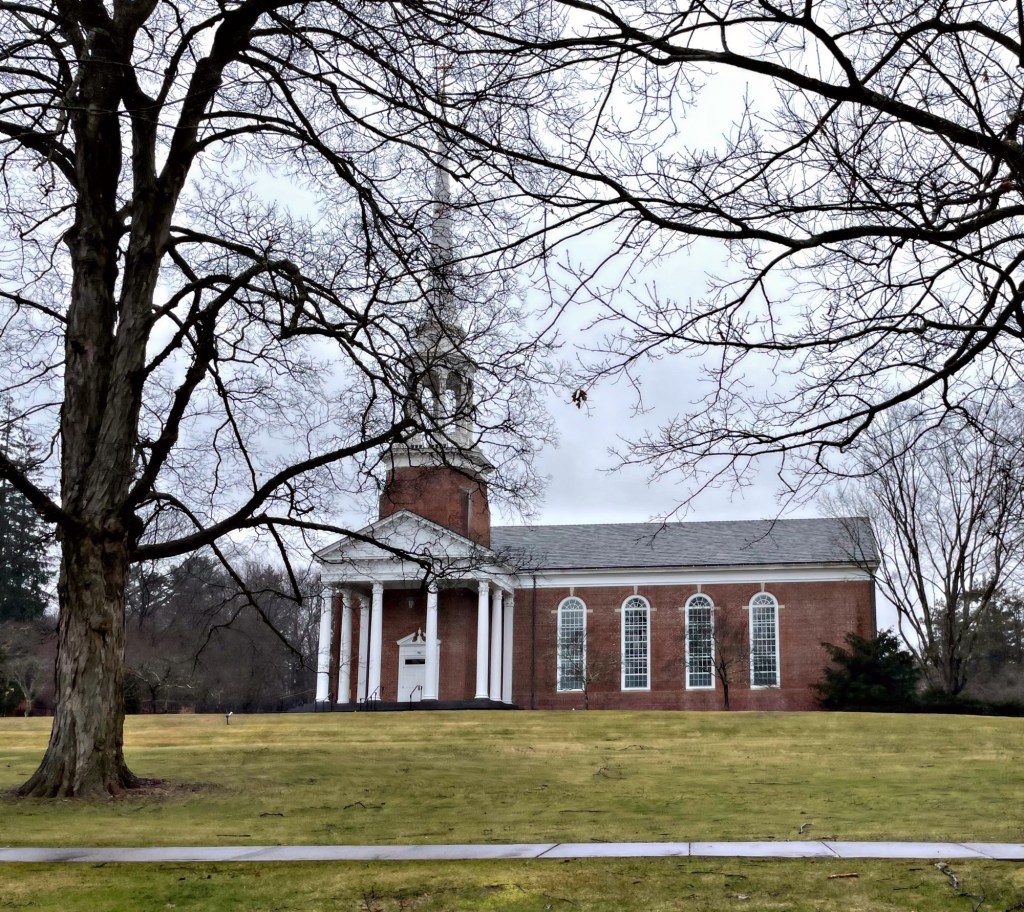
Jesse Lee Memorial Church // 1965

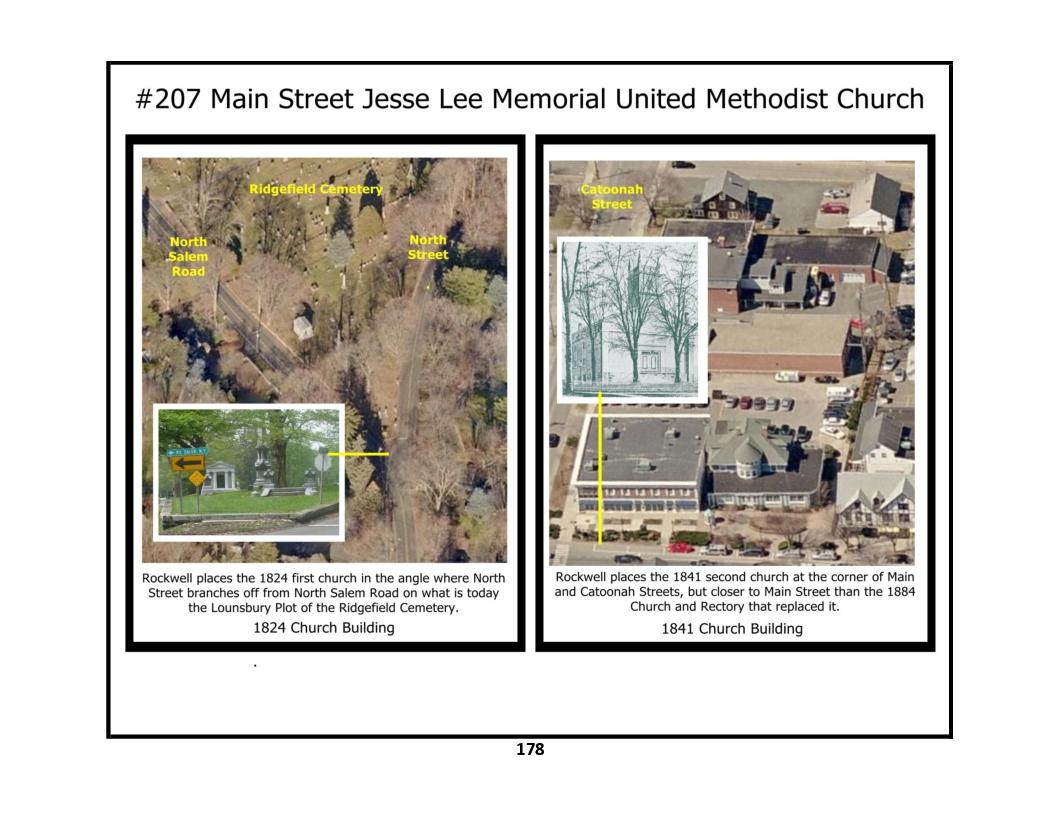
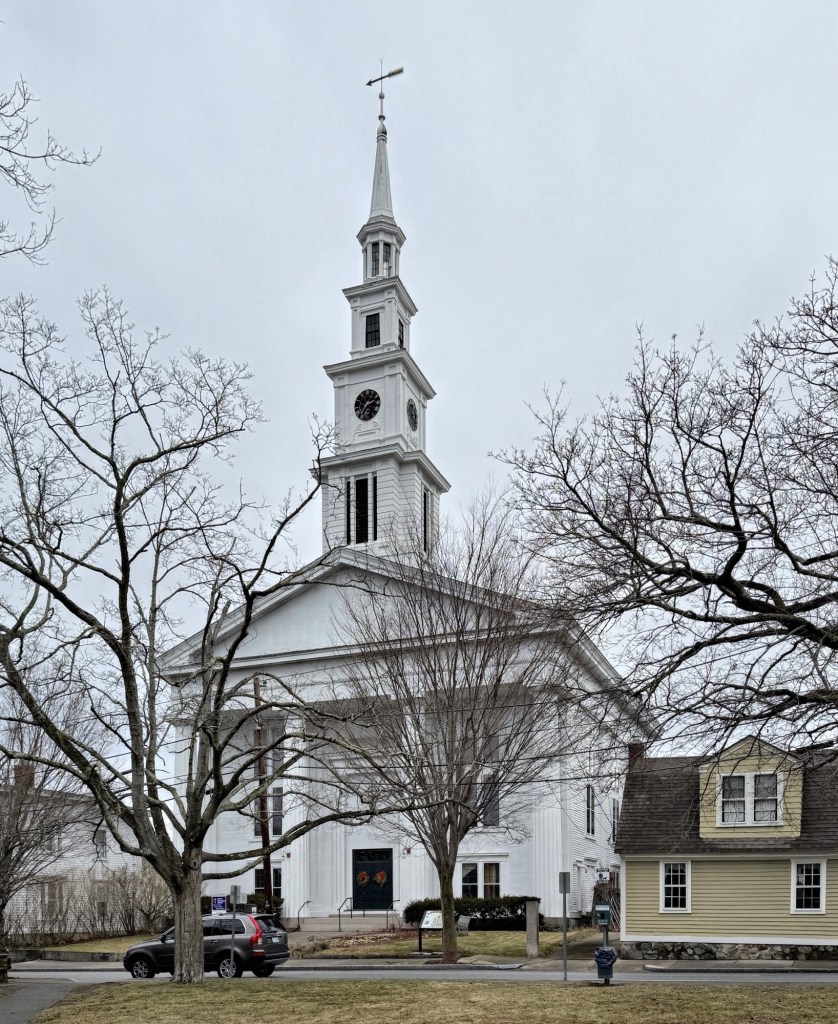
Believe it or not, this church in Ridgefield Center was built in 1965! To know its full history, we have to go back to 1787, when the Methodist Episcopal Church had its beginnings in Ridgefield, the third in New England. Its first meeting was held – just 21 years after Methodism had been introduced into the U.S. from England. In 1789 Jesse Lee, a native of Virginia, was sent north as a circuit rider. His third sermon in Connecticut was preached at the Independent Schoolhouse on Main Street in Ridgefield. In the 1840s, a second meetinghouse in town was built, and the congregation grew. A third church and rectory were built on Main Street in 1884. When a large Main Street estate was available for a new, stately building, the congregation jumped at the opportunity, and hired ecclesiastical architect Harold Wagoner to design a refined, Colonial Revival style church, which was built in 1965. Executed in brick, the church has great verticality, created by the colossal columns supporting its pedimented portico and the spire that rises over an open belfry to a height of 149 feet. Set back from the street, the church still has a commanding presence.

South Britain Methodist Episcopal Church // 1839

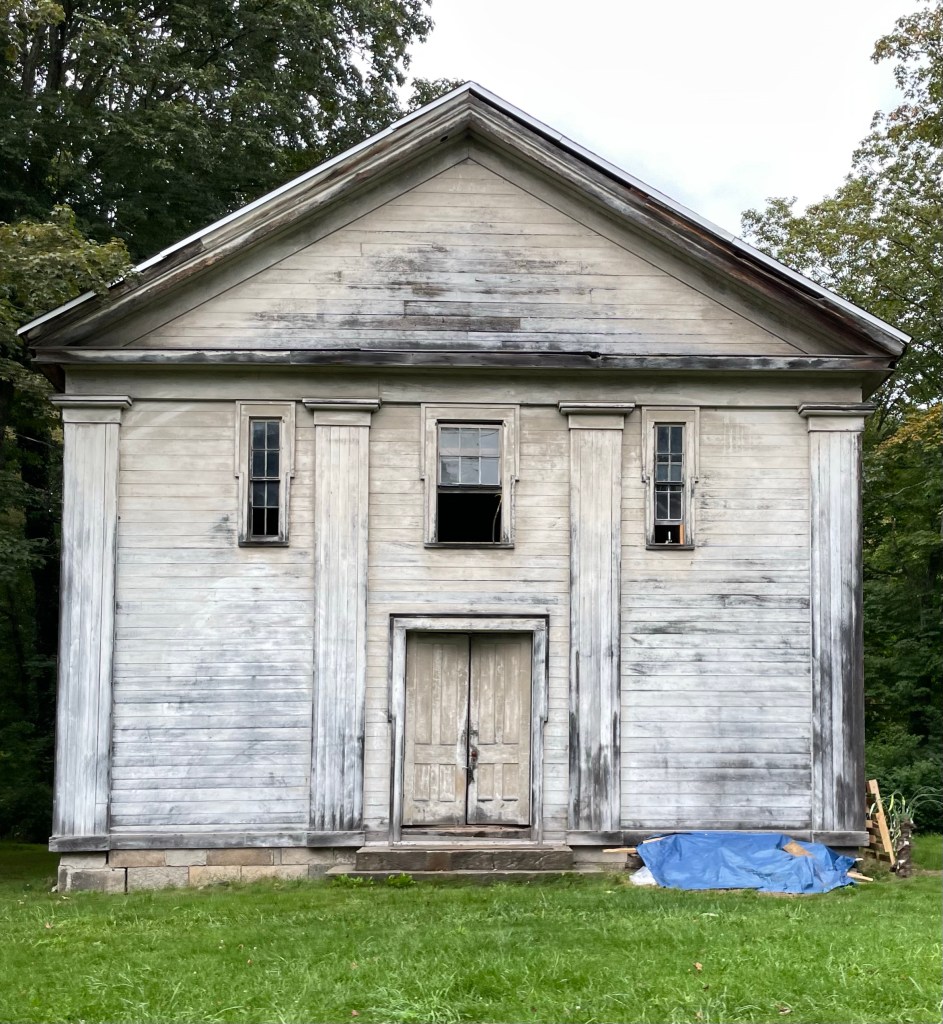
Constructed in 1839 by the Methodist Society of South Britain, Connecticut, this dilapidated old church has classic Greek Revival features including a flush sided facade divided into bays by Doric pilasters, a central double-leaf four-panel door, and high narrow windows. The church sits in the South Britain National Register District, which sadly does not provide any tangible protections for the building, which has been decaying for years. The square belfry was removed (or collapsed) a couple years ago and I would imagine there is some water damage from openings in the roof. What would you like to see this old church converted into?

Whitingham Community Church // 1862

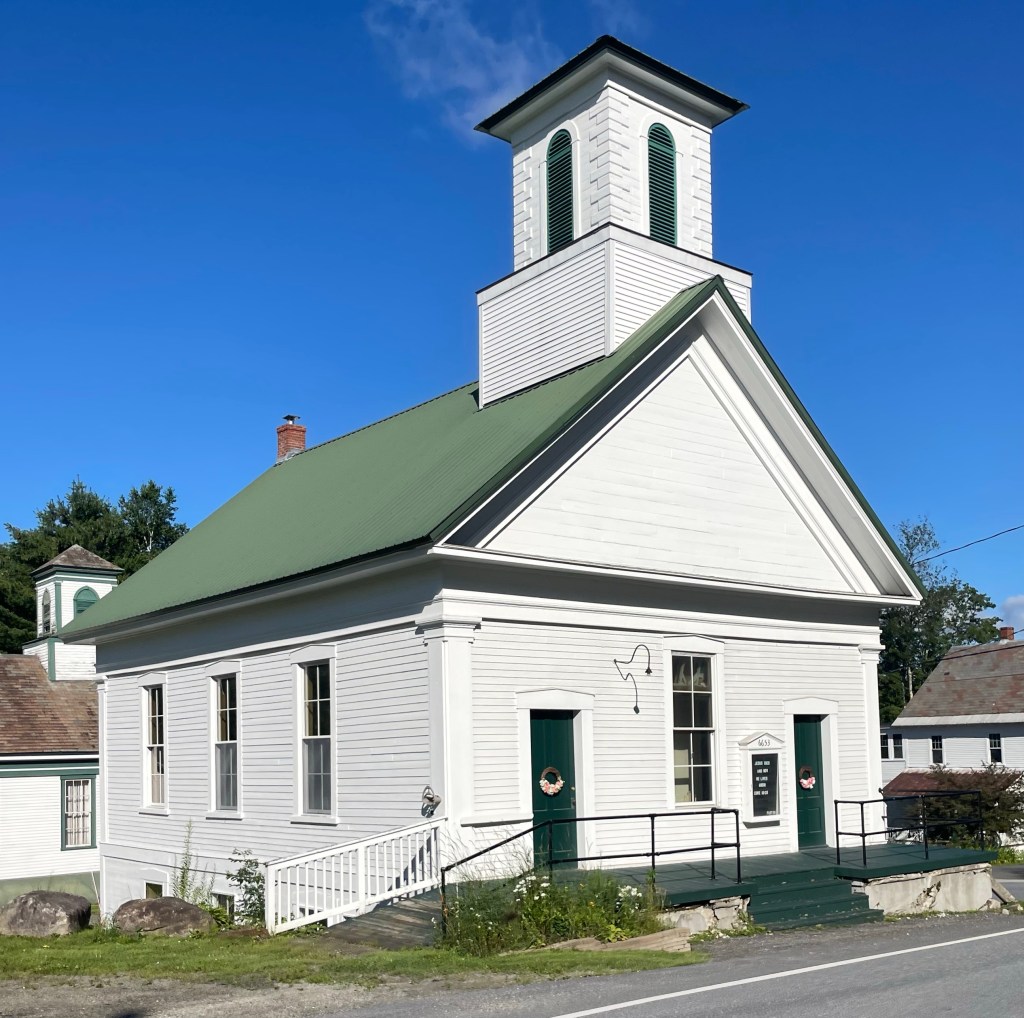
This simple, Greek Revival, frame church has a prominent pediment, corner pilasters, and two part steeple. It is built into a steep bank at the side of the road as it curves and descends into Whitingham Village, making it one of the most visible buildings in town. This church was originally built in 1862 by the Methodists who moved their congregation from their old and deteriorated church in the original Whitingham settlement on Town Hill. By the 1870s, the Methodist congregation was in decline. The Baptist congregation started holding meeting at this church regularly in Sadawga Village in 1879 and then purchased it. They made repairs and alterations in 1881. In historic photographs c. 1890- 1920s, the church’s steeple had third and fourth sections consisting of a narrow octagonal section topped by a small bell shaped dome. By the 1940s photographs show these had been removed. The building now serves as the Whitingham Community Church. My friends who tag along with me on visits throughout New England always say that every town has at least one old, white church. They aren’t wrong!

Former Noank Methodist Church // 1902

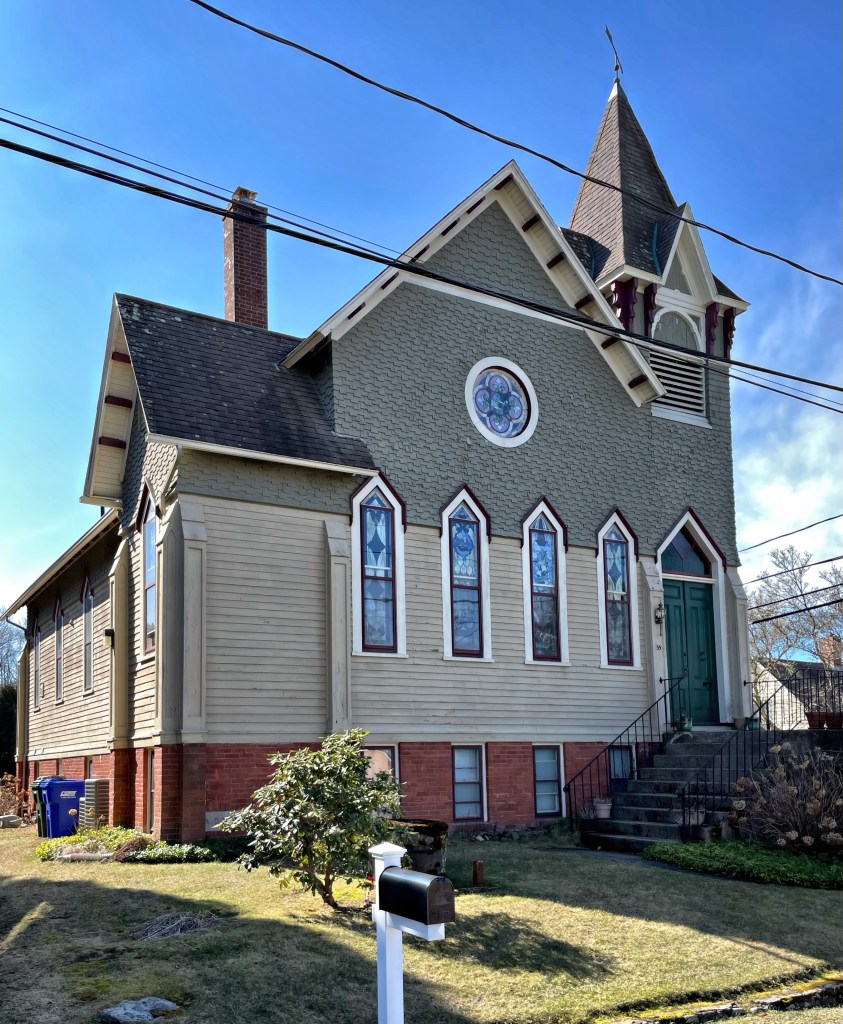
Adaptive reuse of old buildings always makes me so happy to see! Besides the obvious benefit of preserving an old building which contributes to the history and character of an area, there are clear environmental benefits to renovating older buildings for new uses when older uses are no longer viable. In 1902, the village of Noank was bustling with workers in the shipyards, many of whom attended or hoped to attend religious services close to home rather than travelling to adjacent towns. As a result, the local Methodist church-goers had this building constructed. Architecturally, the building is a hodge-podge of styles with interesting lancet windows as a nod to the Gothic style, shingle and clapboard siding which reads Queen Anne. The Noank Methodist Church merged with the Groton Methodist Church to form Christ United Methodist Church, which moved to a new building in 1972. The former church was converted into a residence. Preservation wins!

Versailles United Methodist Church // 1876

After the Civil War, the Village of Versailles’ Congregational Church was seeing less attendance and its deathknell was a fire which destroyed the building in 1870. That next year, a vote was taken by members of the Congregational Church as to a preference for their denomination. A majority voted for Methodist Episcopal and asked the New England Conference to appoint a Pastor for the new church. Funds were gathered and this church was opened in 1876, in the Italianate and Victorian Gothic styles. The building sits upon a raised brick foundation with small windows on the facade. In 1887, the Versailles church was linked with Baltic and Greenville (Norwich) the following year.

Old Ogunquit Methodist Church // c.1880

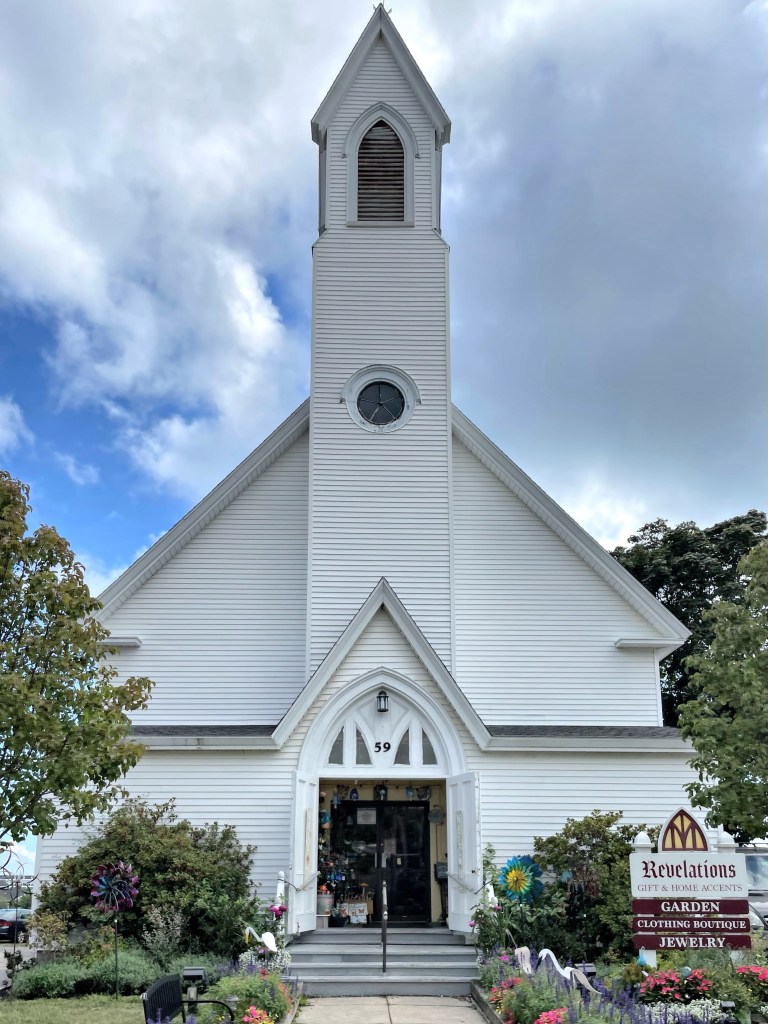
Ogunquit, which means “beautiful place by the sea” in the indigenous Abenaki language, was first a village within Wells, which was settled in 1641. Ogunquit grew as a fishing village with shipbuilding on quiet tidal waters protected within smaller alcoves. By the late 19th and early 20th centuries, the village was discovered by artists, who flocked to the area for the natural scenery and bucolic coastal scenes perfect for painting. At this time, summer residents came to the sleepy village en masse, facilitating the construction of summer resort hotels and commercial buildings. Ogunquit seceded from Wells in 1980, and has been one of the most visited villages in Maine. Ogunquit has been a destination for LGBT tourists and businesses, adding to the rich culture there. This church building, shows the history of the town well. It was constructed as the village’s Methodist Church after 1872 in a vernacular Gothic style with lancet windows and entry. The church merged with the nearby Wells Methodist Church in the 1970s and later moved to a new church building between the two towns. The former Ogunquit Methodist church was purchased and converted to a gift shop, frequented by locals and tourists alike.