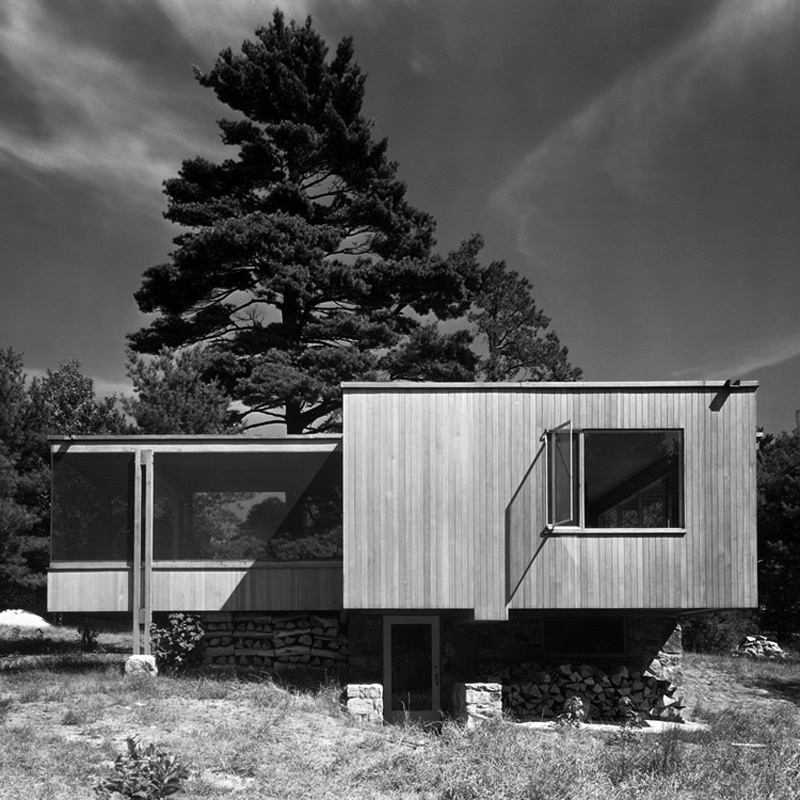
Chamberlain Cottage // 1940

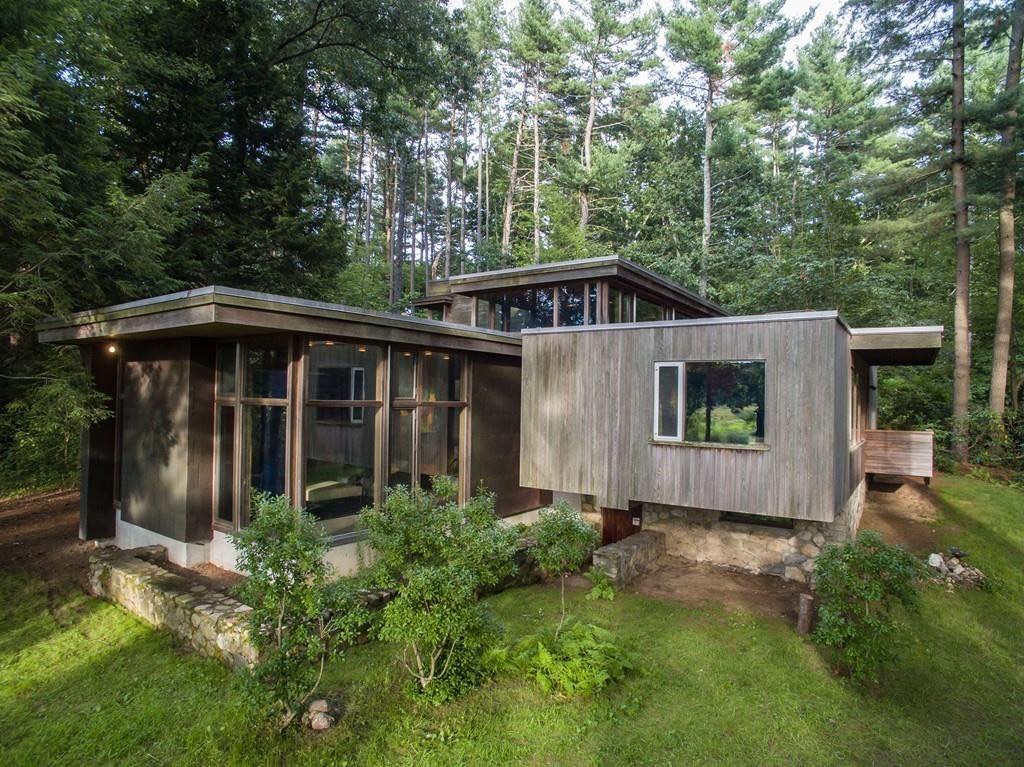
Nestled into the forests of Wayland, Massachusetts, one of the most significant examples of early Modernist architecture, the Chamberlain Cottage, represents the European Bauhaus style adapted to the American landscape and New England vernacular. Designed in 1940 and completed in 1941, the house was commissioned by Harvard Economics professor, Henry Chamberlain and his wife, Margareth, as a weekend retreat from Cambridge. Professor Chamberlain commissioned Marcel Breuer and his mentor, Walter Gropius, then Dean of the Harvard Graduate School of Design, to design a home with a specific request for a screened porch similar to Gropius’ residence in nearby Lincoln. For the Chamberlain Cottage, the design responds to the uneven terrain and the potential for river flooding by two distinct parts: a grounded stone base and a cantilevered wooden volume above. The lower stone level functioned as a foundation while providing storage for a canoe and housing a fireplace that extends vertically through the structure; with the upper wooden volume containing living spaces. Despite its compact size for weekend visits, the upper level is well planned and includes a living space, kitchen, a single bedroom, and the porch. Due to its small scale and siting, the one-bedroom cottage was not easily adaptable for modern living. After falling into disrepair in the 1980s and ’90s, the home was purchased by architects Sidney R. Bowen and Angela Watson, who expanded the structure over the course of a decade to its current size of 3,742 square feet. It has been occupied and lovingly maintained by later owners. It remains a private residence.
Forest House // 1975

Photo courtesy of Bohlin Cywinski Jackson

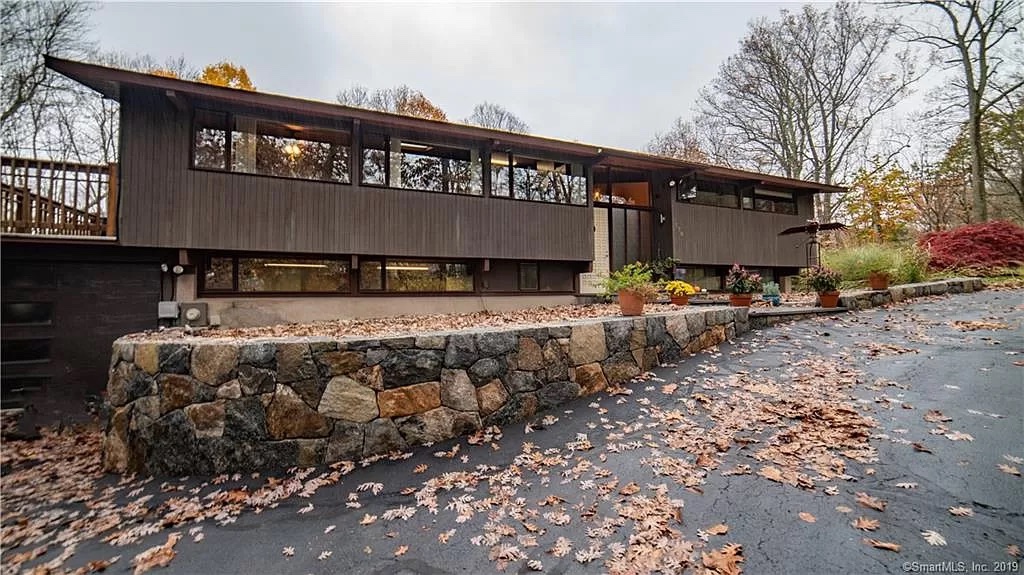
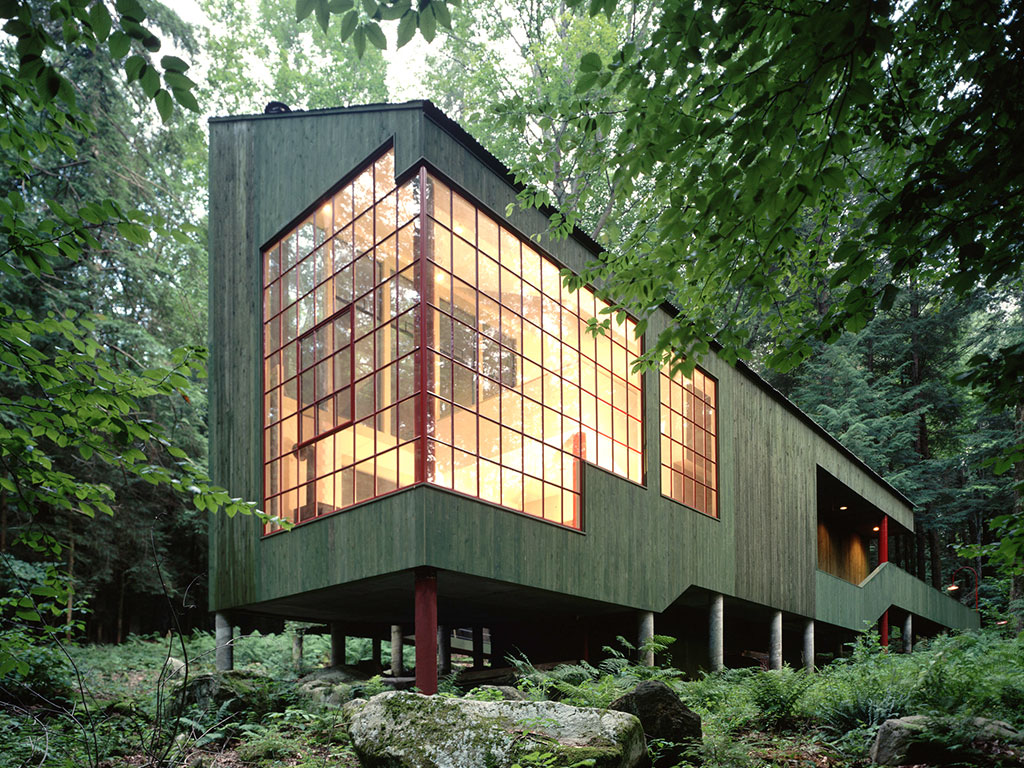
While Cornwall, Connecticut is known for its 19th century architecture, there are some amazing Mid-Century Modern houses hidden away on forested lots there. This is the Eric and Anne Bohlin House (aka Forest House) designed by architect Peter Bohlin of Bohlin Cywinski Jackson for his parents as a summer retreat. The residence was completed in 1975 and sited between dense evergreens and bright deciduous woodland in a sparsely developed part of town. Camouflaged among the trees, the green-stained exterior hovers above a boulder-strewn landscape, resting on concrete piers, with large windows to take advantage of the glorious forest views. This is a great example of high-quality, site-specific house designs, which are becoming a rarity in recent years.

Dublin Hill Deck House // 1974

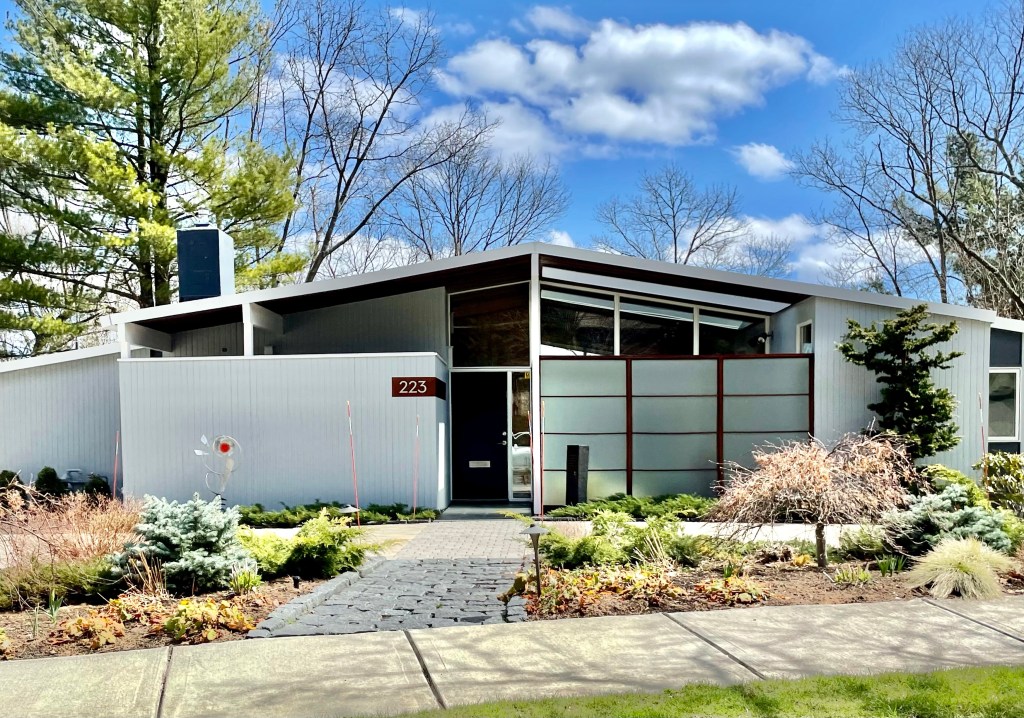
I don’t share Mid-Century buildings on here enough, mostly due to the fact that so many of the houses of the period are secluded down winding driveways and surrounded by trees! This stunning house is located in Southbury, Connecticut, and is a great example of a Deck House. The Deck House was a housing type developed by architect Carl Koch. According to At Home With Tomorrow, he began his lifelong mission to create “the good, the beautiful, and the inexpensive” in housing while at Harvard under the guidance of Walter Gropius, who is famous for the development of the Modernist Movement in architecture. After the war, he turned his focus on the housing shortage, a symptom of the Great Depression, WWII, and returning Veterans with growing families and VA mortgage loan offers. His solution was for an affordable house of pre-fabricated parts to cut costs and provide streamlined construction. In 1953, his Techbuilt house was launched, after a decade of research. William Berkes and Robert Brownell had worked with Koch at Techbuilt after graduate school, but wanted to create a design of their own. They left Techbuilt in 1959 and founded Deck House, using the same principles. The exposed Douglas fir beams, wood panel ceilings and mahogany trim and window casements are what give the deck house a lot of its signature aesthetic. A wall of glazing, open floor plan with sloping roof rafters extending beyond the walls and a low placement in seemingly untouched nature are further elements that have endeared these houses to the modern homeowner.

Wolfers House // 1947

In 1947, world-famous German-born architect Walter Gropius and his architectural group, The Architects Collaborative (TAC) were commissioned to design a simple summer house for his friends Arnold Wolfers, a noted political scientist, and his wife, Doris, whose father was president of the Swiss Parliament. The site was a wild bluff on the end of Naskeag Point in Brooklin, Maine, with broad views of Blue Hill Bay and Mount Desert Island in the distance. The Wolfers’ wanted a house that was not a typical shingled house, provided sweeping views of the natural scenery, and also fit within its surroundings. Gropius nailed it with this house. As originally built, the house was comprised of a main block with large living room, kitchen, laundry room, service hall, and bathroom. A breezeway connected the house to a wing of three bedrooms along a long corridor. Walls of glass frame the waterfront side to take advantage of the views, while the street-facing facade has less glazing to provide additional privacy. After Doris Wolfers’s death in 1987, the house was purchased by an investment banker and his wife and it was listed for just the third time in over 75 years, and has maintained its architectural integrity the entire time.

Castle House // 1964

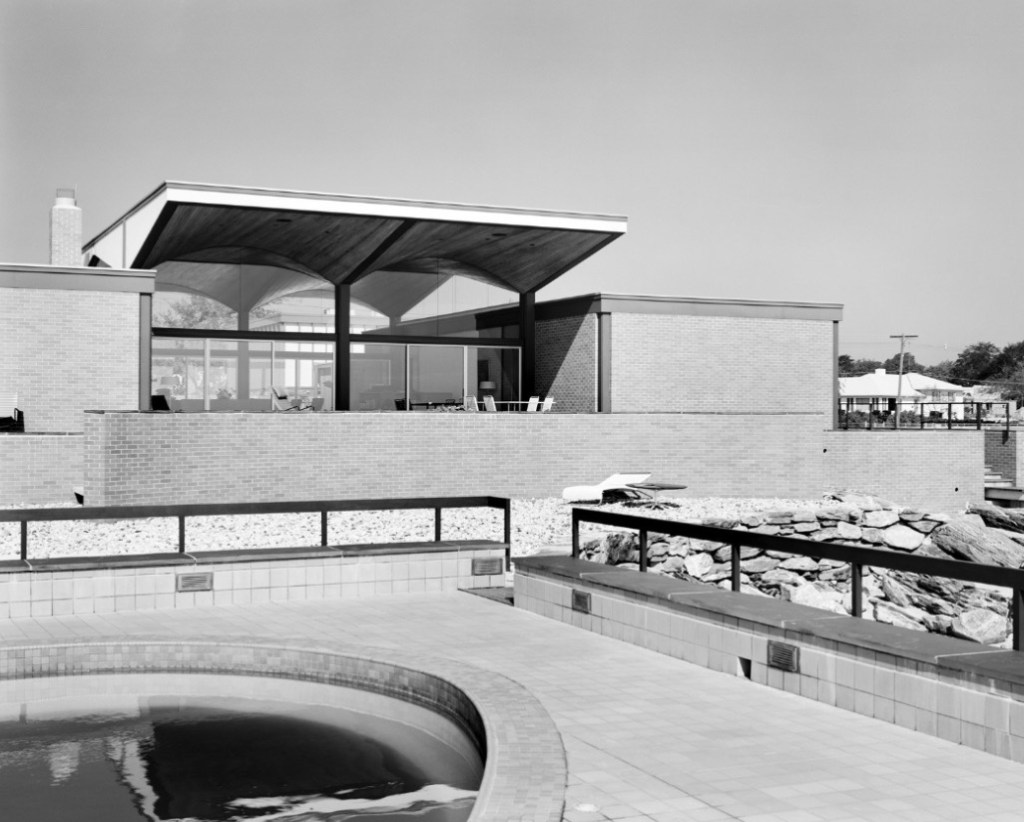
Perched atop the rocky coast of New London, CT, and seemingly at the base of the iconic New London Harbor Light, the “Castle House” stands as one of the most significant examples of 1960s residential design in a state known for such homes. The Castle House was completed in 1964 from plans by German-born American architect Ulrich Franzen (1921-2012), who attended Harvard’s Graduate School of Design after his service in WWII. After graduating, Franzen worked under I.M. Pei, until he formed his own firm, Ulrich Franzen & Associates, in 1955. The home’s signature element is its dramatic free-floating glass living room pavilion with cantilevered paraboloid vaults and flanking service wings, with a jaw-dropping cypress butterfly ceiling. Additionally, the oval pool sits over the harbor water and provides the best possible views of the 1801 lighthouse towering above. The house was recently updated by SchappacherWhite, a design firm who are known for their thoughtful Mid-Century Modern house preservation projects.

George Kaplan House // 1946

The George Kaplan House, erected in 1946, is an excellent and exceptionally well preserved example of the International Style in the Boston area. The home is located on a suburban road in Oak Hill, Newton, and displays characteristics such as strong geometric forms, a flat roof, banded windows interspersed with expanses of blank walls and absence of ornament. The Kaplan House was designed by Walter Gropius‘ firm ‘The Architect’s Collaborative’ (TAC) of Cambridge, which was founded just one year prior, and this home was their first completed project. The home was built for George and Ethel Kaplan, a young couple who moved here from Brookline. Kaplan worked in design himself and manufactured shoe fabrics.

Baldpate Road House // 1959

Occupying the highest elevation (315 feet) in Newton, Massachusetts Baldpate Hill and its residential development encompasses perhaps the largest concentration of architect-designed custom homes from the 1940-1960 period
in the city. Newton realtor Arnold Hartmann purchased large land holdings in the minimally developed Oak Hill village, developed some land into the Newton Country Club and other areas for suburban neighborhoods. He laid out building lots on Baldpate Hill from 1926 to the late 1950s, and many of the homes were built after WWII. One of the later homes built is this house, built in 1959 from plans by the architectural firm of Hoover & Hill of Cambridge. The home features a low-slung roof with the home in a Ranch form, yet extends to two stories as the hill drops off at the rear of the home. A small garden is located in the front yard, and terraced yard is located at the rear.

Potter House // 1949

Cape Elizabeth is full of amazing late-19th and early-20th century summer cottages, but one of the best examples of early International-style architecture can also be found here! This house was designed by Marcel Breuer, one of the most famous architects working in the International Style in the mid- 20th century. The house plays on the traditionally New England vocabulary, but Breuer, a proponent of the Bauhaus Movement, turned it on its head. The house appears to emerge from its ‘ancient’ fieldstone foundation towards the street and levitates over the hilly landscape, supported by light columns. The house originally was painted a shade of white, common in the International style, but a later owner preferred the natural wood finish. The home is one of the most significant examples of the style in New England, and an uncommon example in Maine.

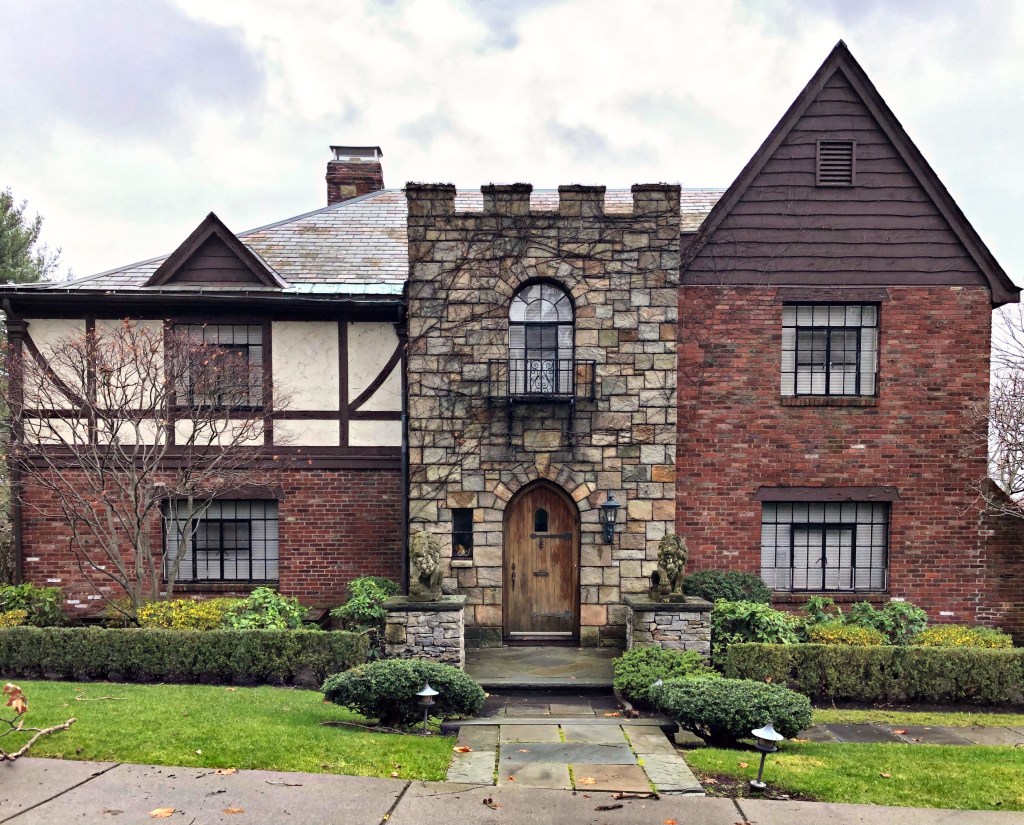
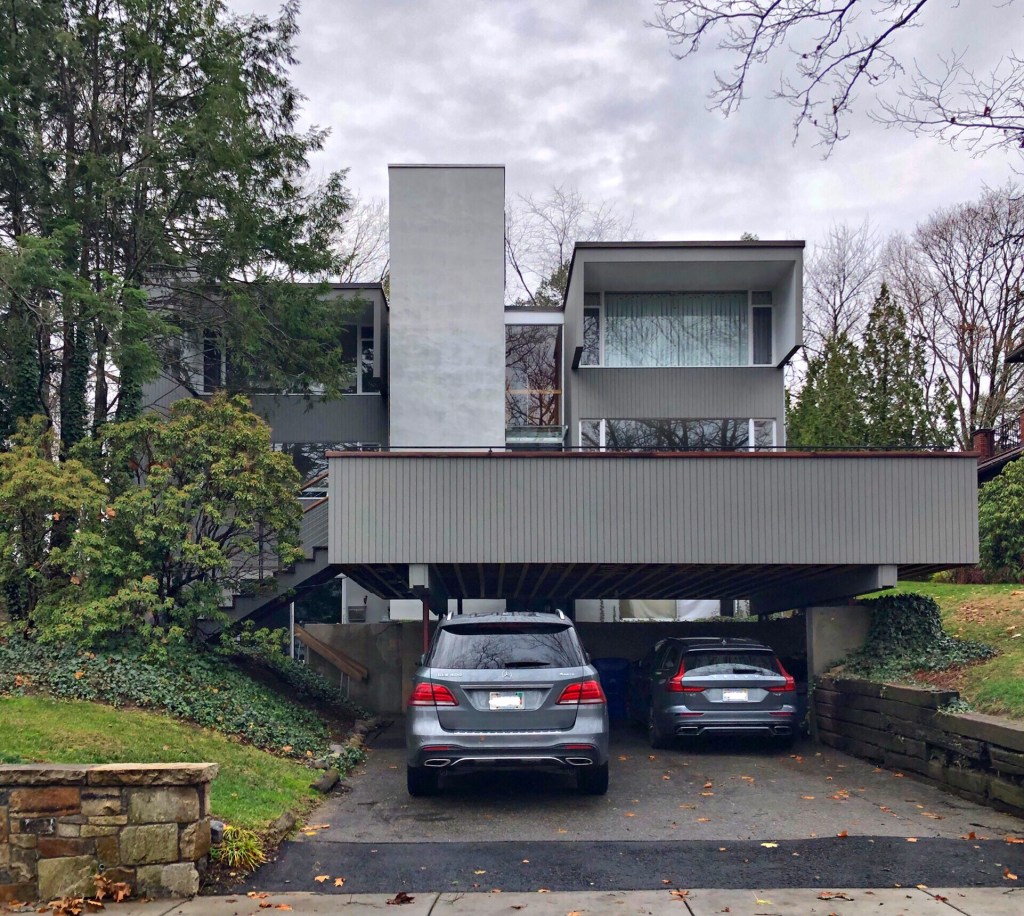
Pastan Houses // 1936 & 1963

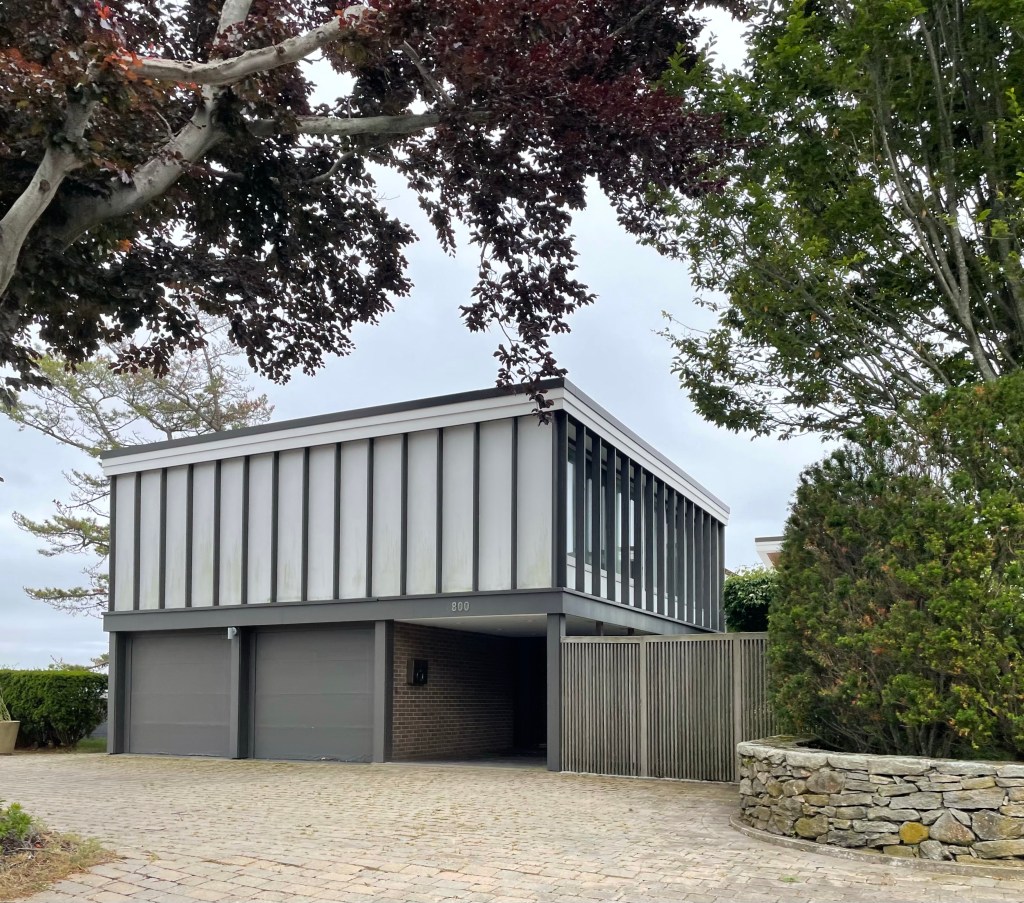
Located across the street from each other in Brookline, the Pastan Houses are an excellent example of how architectural tastes can change from one generation to another. The William Pastan House was constructed in 1936, and is Tudor Revival in style. The home has a projecting square entry tower with castellated roofline and interesting mixture of materials and textures. The first owner, William Pastan raised his family in the home, attending the synagogue a couple blocks away. By 1963, Pastan’s son, Harvey became a successful engineer and built a home near his parents for his own family, though in a very different aesthetic. The Modern home features boxy forms, prominent covered parking spaces, and expanses of glass.

Which house would you prefer, William’s (1936) or Harvey’s (1963)?

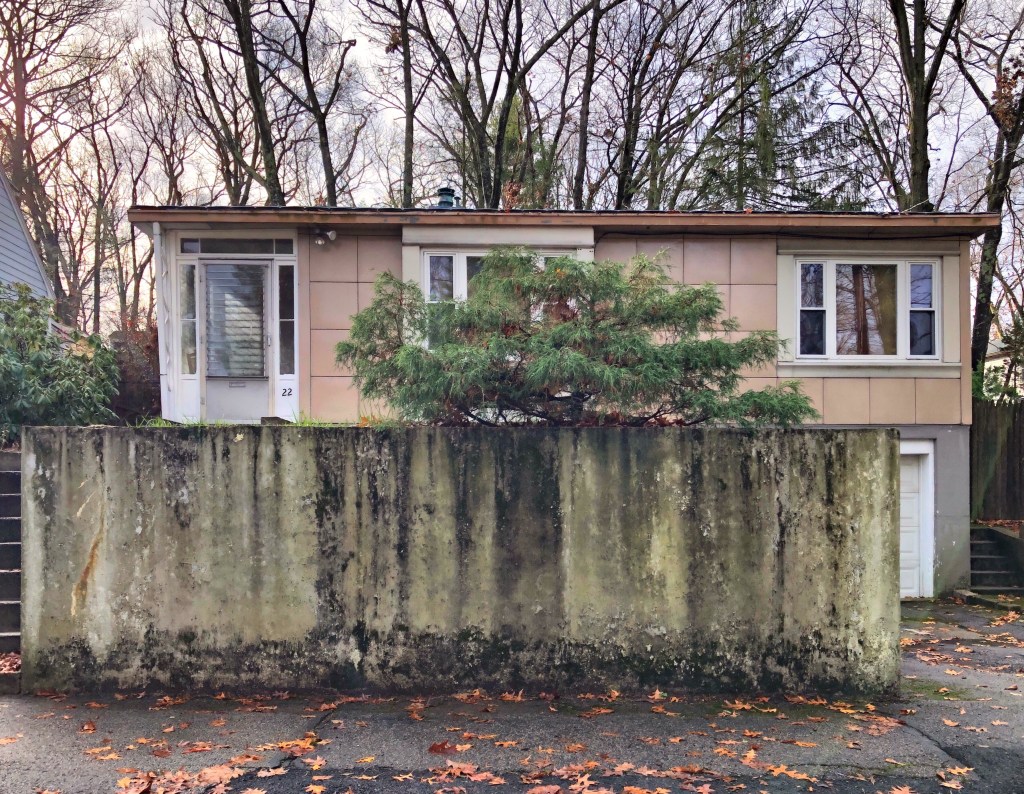
Jennings House // 1949

Tucked away on an un-assuming side street in South Brookline, you will find this oddly fascinating home. Without architectural history knowledge, you may think it is just a normal 1940s house, but it’s actually a Lustron House! Between 1948 and 1950, the Lustron Corp. built prefabricated metal homes across the U.S. as part of an effort to combat the housing shortage for returning soldiers post–World War II. Despite these futuristic homes being considered low-maintenance and highly durable, only about 2,500 were constructed, as the structures were seen as too costly and complex to manufacture and assemble. The homes came in just three models and came in four available colors: “Surf Blue,” “Dove Gray,” “Maize Yellow,” and “Desert Tan”. The home is covered in porcelain enamel metal panels set into a steel frame which can be replaced when damaged. At the interior, the homes had metal-paneled interior walls with mostly pocket-doors for space saving. This home in Brookline was built for Edmond and Helen Jennings, in the Westchester model in the Desert Tan color. The only major alteration is the enclosure of the porch, but it retains a high degree of integrity from when it was assembled in 1949.

What do you think of this iconic 1940s home and style?