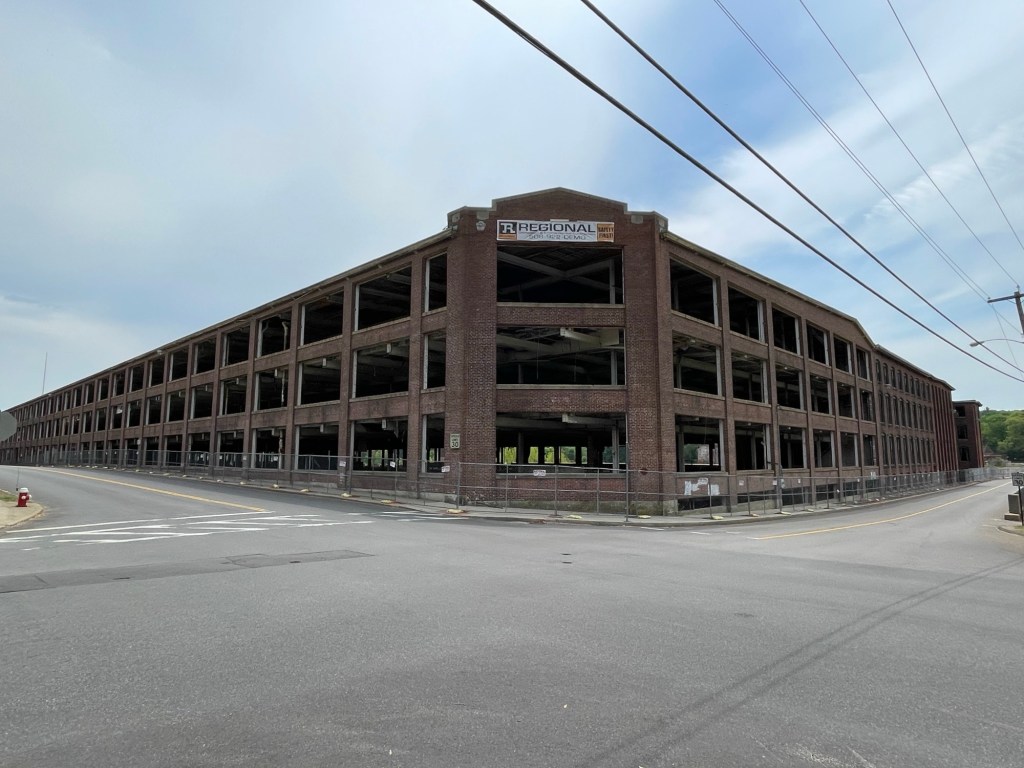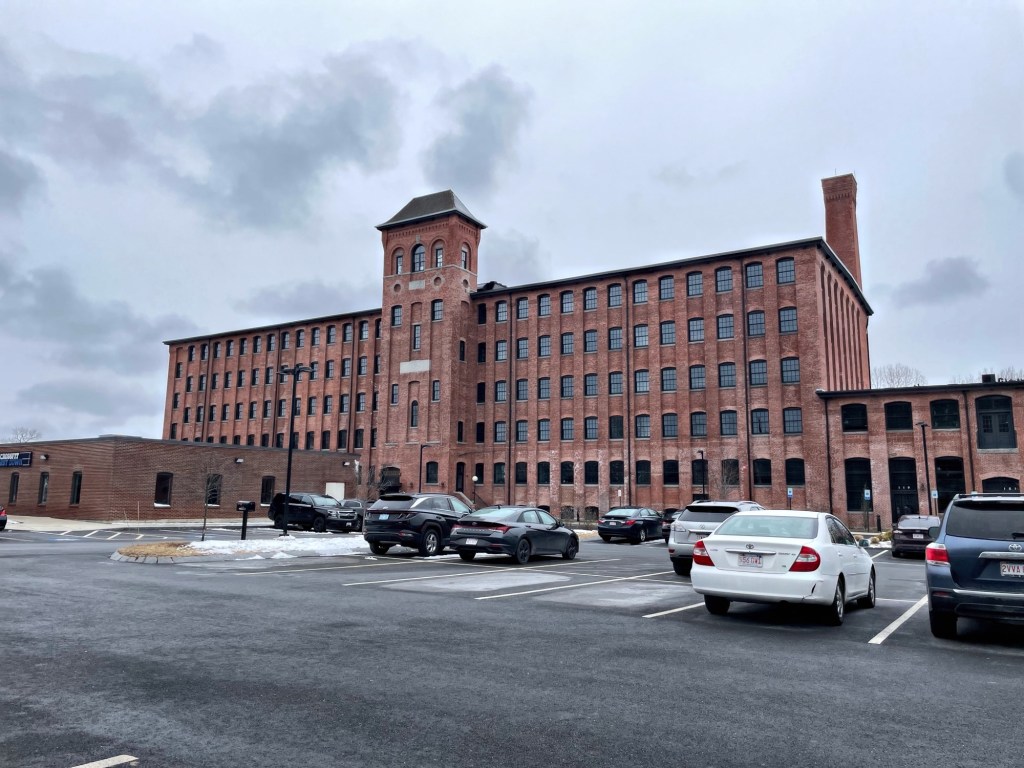
Sayles Mill // 1882-2023

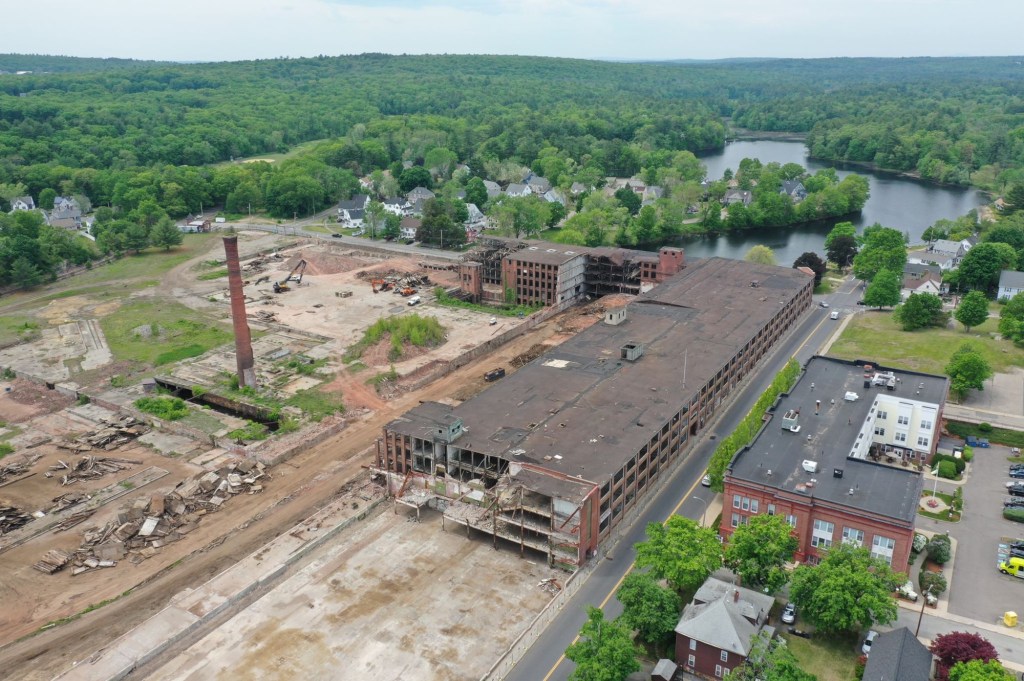
Dayville, a mill village in the town of Killingly, Connecticut, is typical of many similar 19th century villages in the region. Dayville was named after John Day (1756-1838) a Revolutionary War veteran who later owned the water privileges on the Five Mile River. With the opening of the Norwich and Worcester Railroad in 1830, Dayville became a stop along the route and also became a hub for freight transport for other manufacturing villages along the river. In 1858, brothers Harris (1817-1893) and Sabin Lorenzo Sayles (1827-1891) from Rhode Island, purchased a mill site in Dayville and established a woolen manufacturing company. Harris retired in 1879 and Sabin continued the business as the Sabin L. Sayles Company. Sabin had a modern brick mill building constructed here in 1882-1883 which employed 250 people in production of woolen broadcloth. After Sabin’s death, the company was sold and modified numerous times, eventually becoming a metal products plant and later was left vacant. In the 2010s, funding and plans were begun to redevelop the old mill, but that was abandoned after a massive fire in 2023 destroyed the building, leaving just the six-story tower intact.

Photo courtesy of Journeysthrumylens

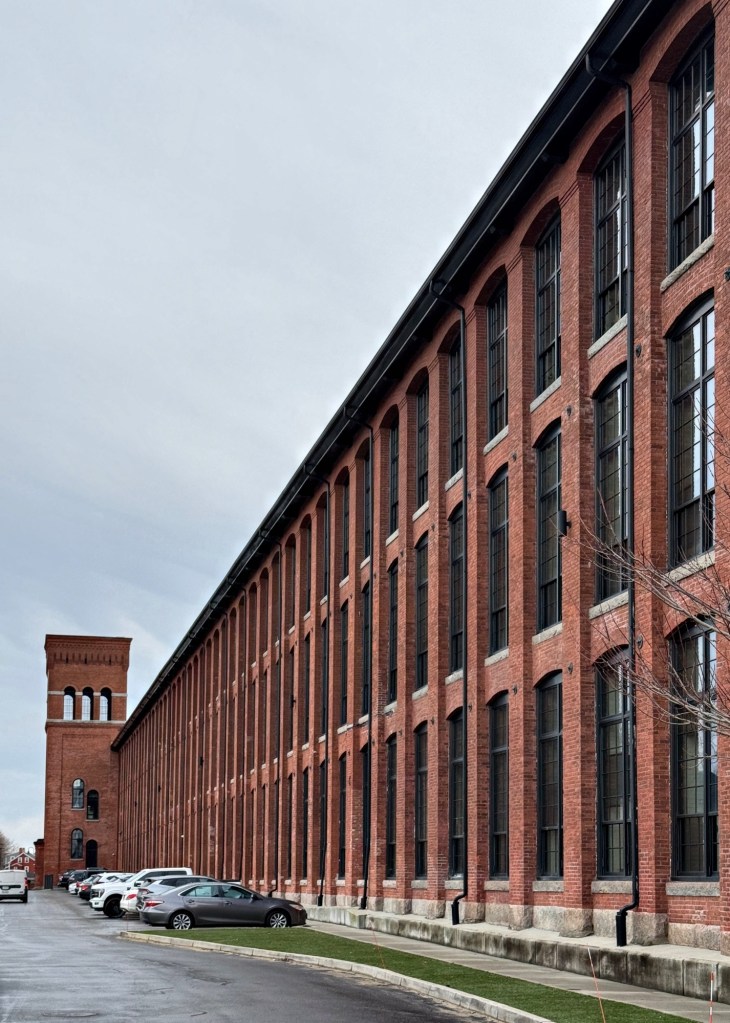
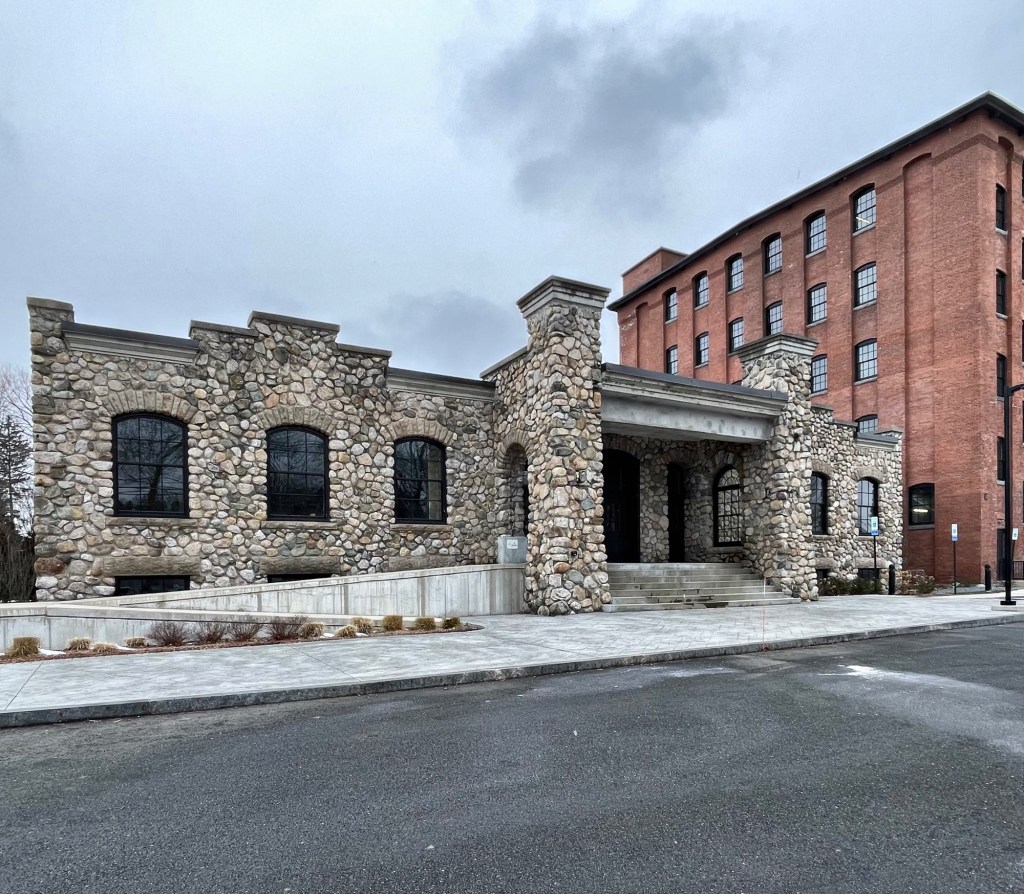
Lowney Chocolate Factory // 1903

The Lowney Chocolate Factory is a historic industrial complex in Mansfield, Massachusetts and was established there after town officials took advantage of rail access provided by the Boston and Providence Railroad and enticed businesses to establish themselves in Mansfield. The Walter M. Lowney Company was a chocolate and candy business founded in Boston in the early 1880s by Walter M. Lowney, who started his business by manufacturing chocolate bonbons. The company built offices and factories in Boston, Montreal and here in Mansfield, where they would ship out boxed sweets to stores all over the country. The Mansfield factory was designed by the architectural and engineering firm of Dean & Main in 1903. The firm was
comprised of partners Francis W. Dean and Charles T. Main, who had offices in Boston and specialized in mill design and engineering from 1893 to 1907, originally designing Lowney’s Boston factory in the North End. A later fieldstone addition was added in 1910 and housed the company’s office and shipping facilities. After Walter Lowney died in 1921, the Walter M. Lowney Company continued to operate under the ownership of Lowney’s wife. In the 1930s the factory property was wholly purchased by the Rexall Drug Company, who renamed the Lowney company, United Chocolate Refiners. The Mansfield factory was later owned by Nabisco to make chocolate for oreo cookies for a number of years until it again changed hands. The factory had been largely empty since 2010 until it was recently converted to mixed-income housing (the best kind of redevelopment)! Who doesn’t love a happy ending?

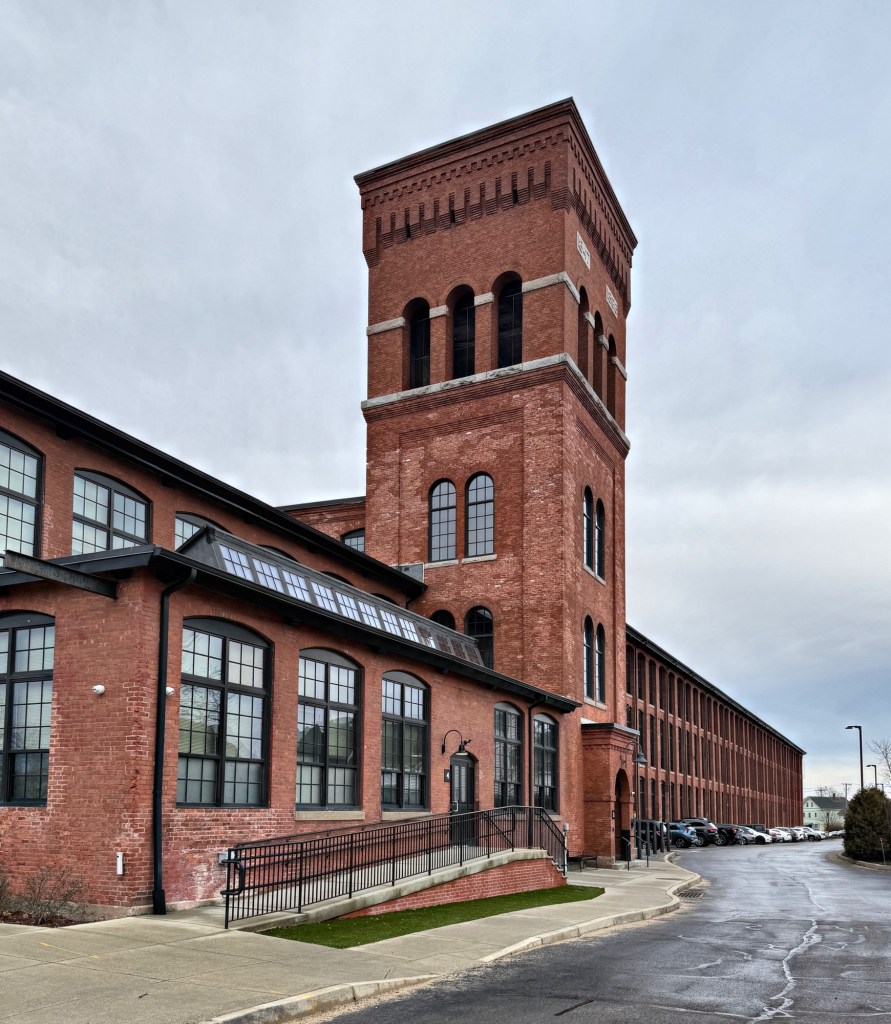
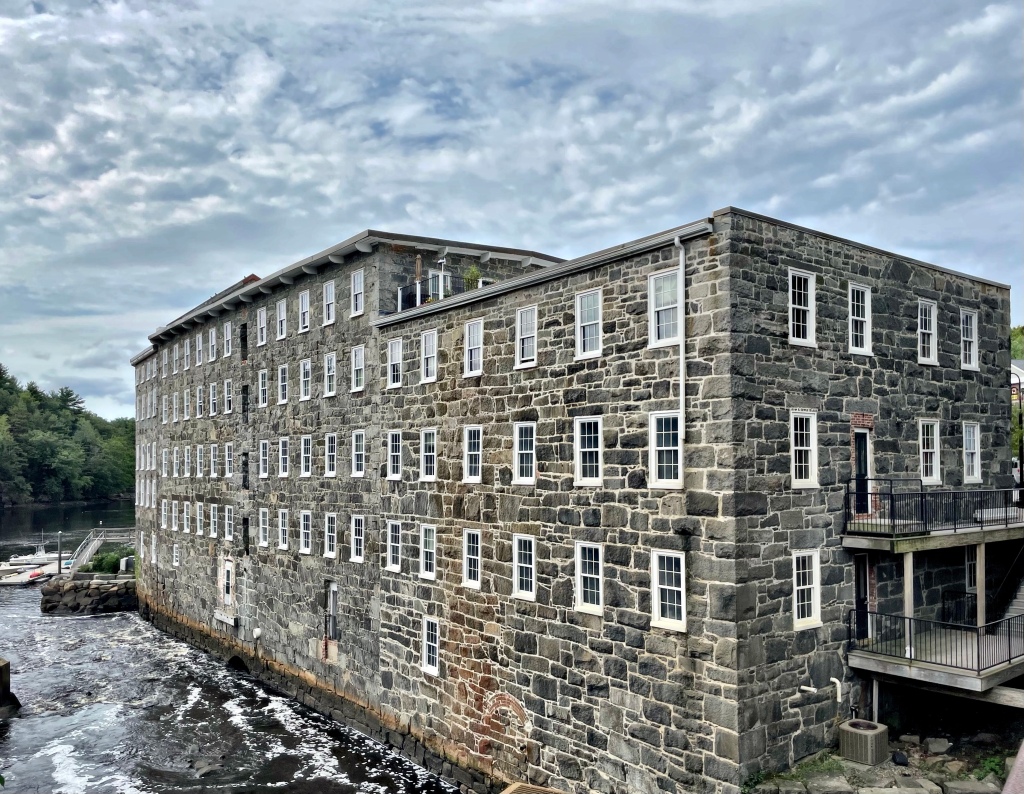
Otis Company Mill #1 // 1845

This five-story granite mill building was one of the major catalysts for the 19th century population surge in Ware, Massachusetts. As New England’s fledgling textile industry of the era played a vanguard role in transforming the U.S. into an industrial nation, the significance of this type of mill can hardly be understated. The Otis Mill #1 in Ware is one of the last remaining granite textile mills of this early period in central/western Massachusetts. The mill was built in 1845 for the Otis Company, which initially manufactured woven cotton fabric, but later branched out into stockings, woolen shirts and drawers underwear. The company was Ware’s largest employer for about 100 years! The company prospered thru WWI employing over 2,500 people. During the 1920’s the business began a decline due to the southern state’s mills and lack of modernization. In the mid 30’s the Otis Co sold its property to the citizens of Ware, which they formed Ware Industries, Inc to continue the major employer in the town. Due to this Ware came to be known nation-wide as “The Town That Can’t Be Licked.” The mill is now home to local small businesses as a sort of incubator, providing jobs to local residents!

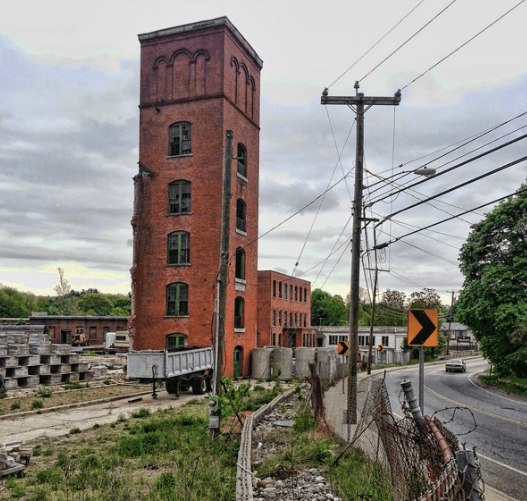
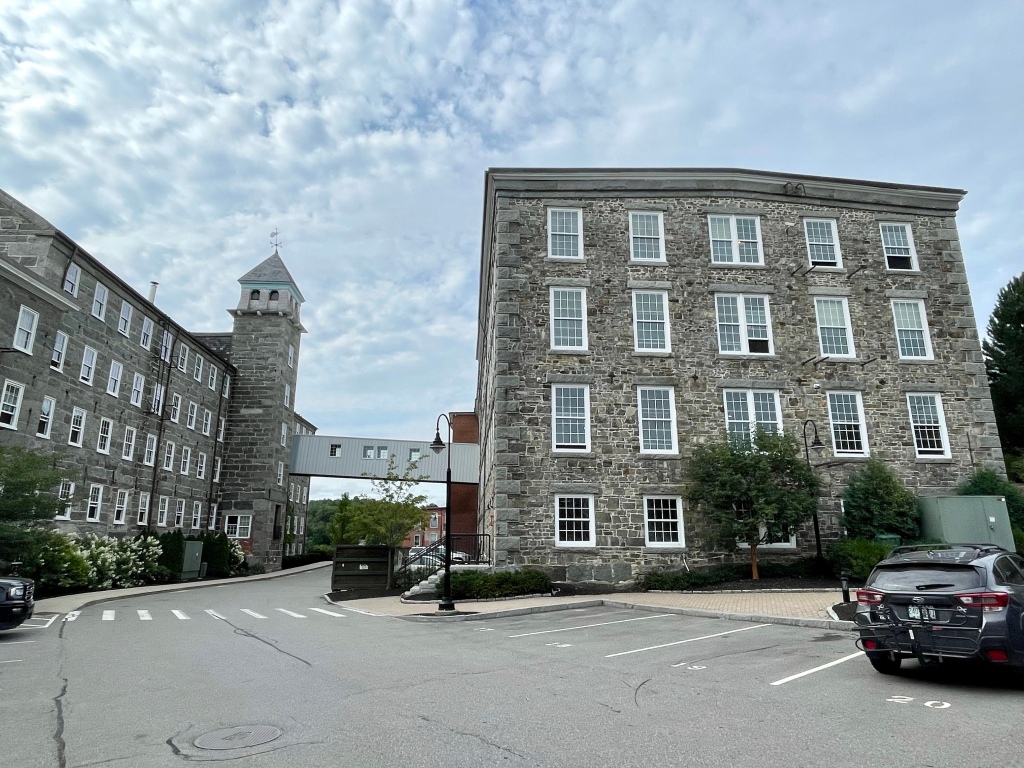
Newmarket Manufacturing Company Complex // 1823+

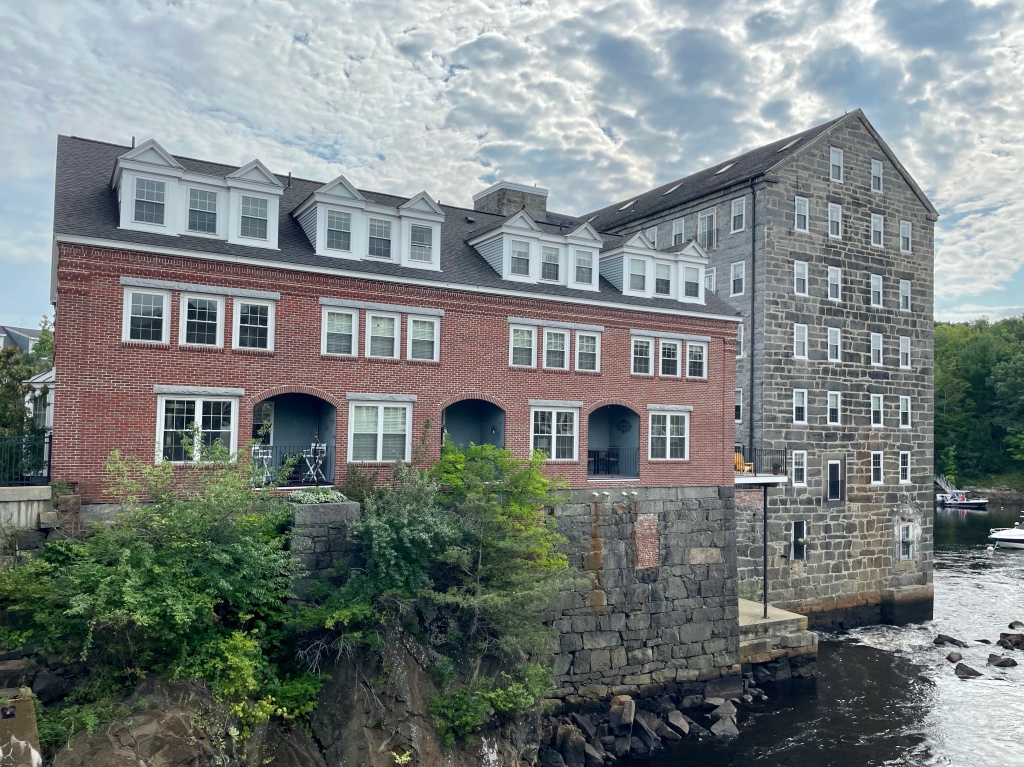
In 1823, the Newmarket Manufacturing Company built its first mill along the Lamprey River, dominating the waterfront and the economy of Newmarket, New Hampshire. Harnessing water power at the base of the falls, the cotton textile manufacturing community grew to include seven textile mills, with factory buildings, a machine shop, office, storage buildings, and corporate boarding houses; totaling some 140 buildings in all. During its peak production, 700 employees made up to 300,000 yards of cotton products each week, and 2.7 million yards of silk cloth each year. The mills operated continuously at this site until 1929 when a dispute between mill owners and workers erupted leading to their closure. Between 2010 and 2012, eight large mill buildings within the Newmarket Manufacturing Company property underwent a conversion to mixed use, including residential, retail, and office units, thanks to Historic Preservation Tax Credits, and many professionals who worked together with the vision to see such a large project through. Today, the complex is a excellent case-study on the power of adaptive reuse and historic preservation.

Bailey’s Mills // 1837

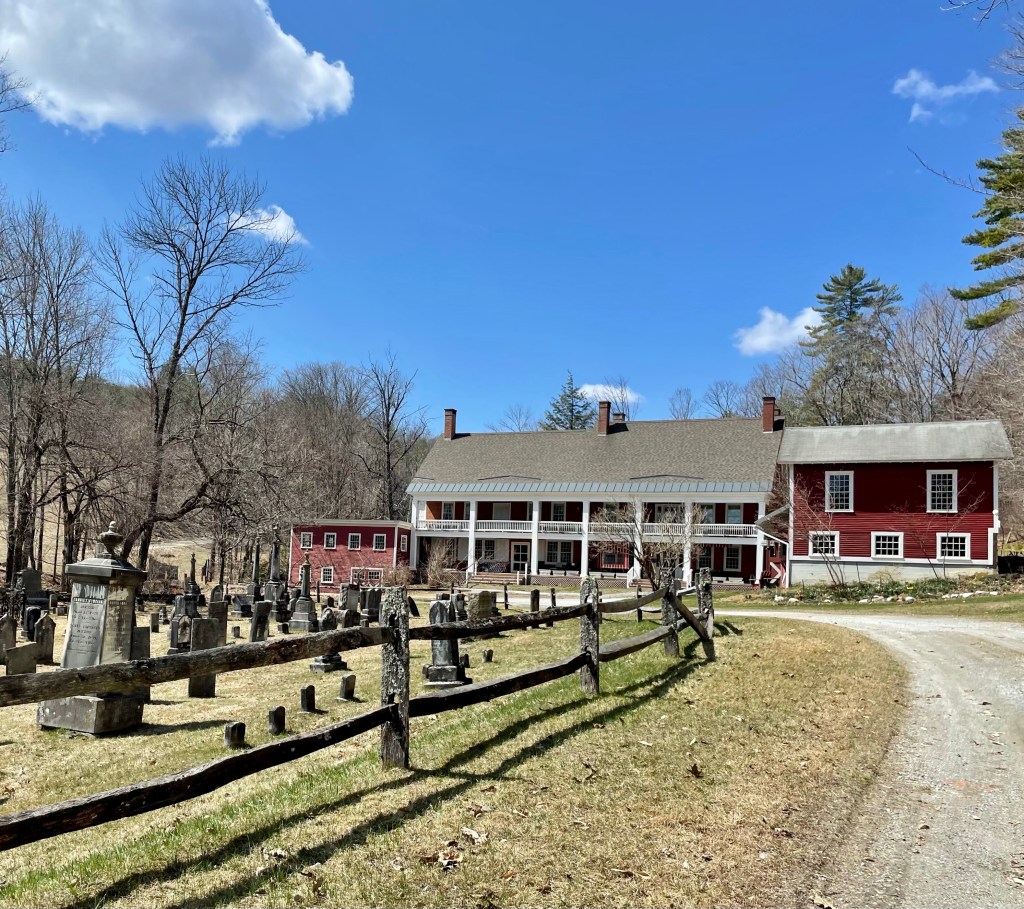
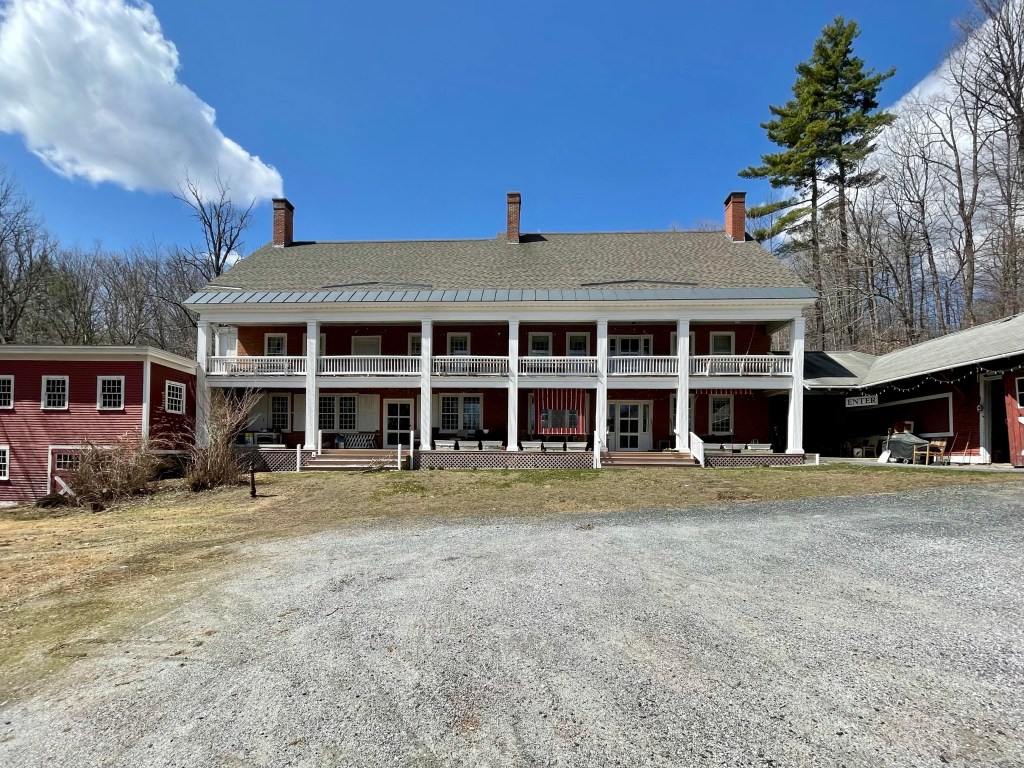
Driving down the dirt roads of rural Vermont with no cell phone service can be a great way to explore, so imagine my delight when i drove past this stunning old building tucked behind a historic cemetery! The building was erected in 1835-1837 by Levi Bailey, a local entrepreneur and mill owner who, in 1794, in partnership with a George Betterley, purchased the mill site and proceeded to build a dam, for later development. Legend says, in 1808, he required the good will of David Hapgood, his next door neighbor, so he could buy more land in front of his proposed mill. But, in fact, Levi had so irritated Hapgood somehow, that he instead donated the coveted acre to the Town of Reading for use as a town cemetery, ensuring that Bailey could never control it. Thus a “spite” cemetery was laid out, the only one I am aware of! Underterred, Bailey erected over the next two decades the series of buildings to manufacture goods, the buildings we see today. Bailey’s Mills in Reading, Vermont, is actually three connected, 2 1/2-story, brick, Greek Revival style buildings with several attached wood frame appendages added over time. He lived in the building and a store was run out of the building for locals. The building is now home to the Bailey Mills Bed & Breakfast.