Methodist Camp Meeting Association Office // 1859

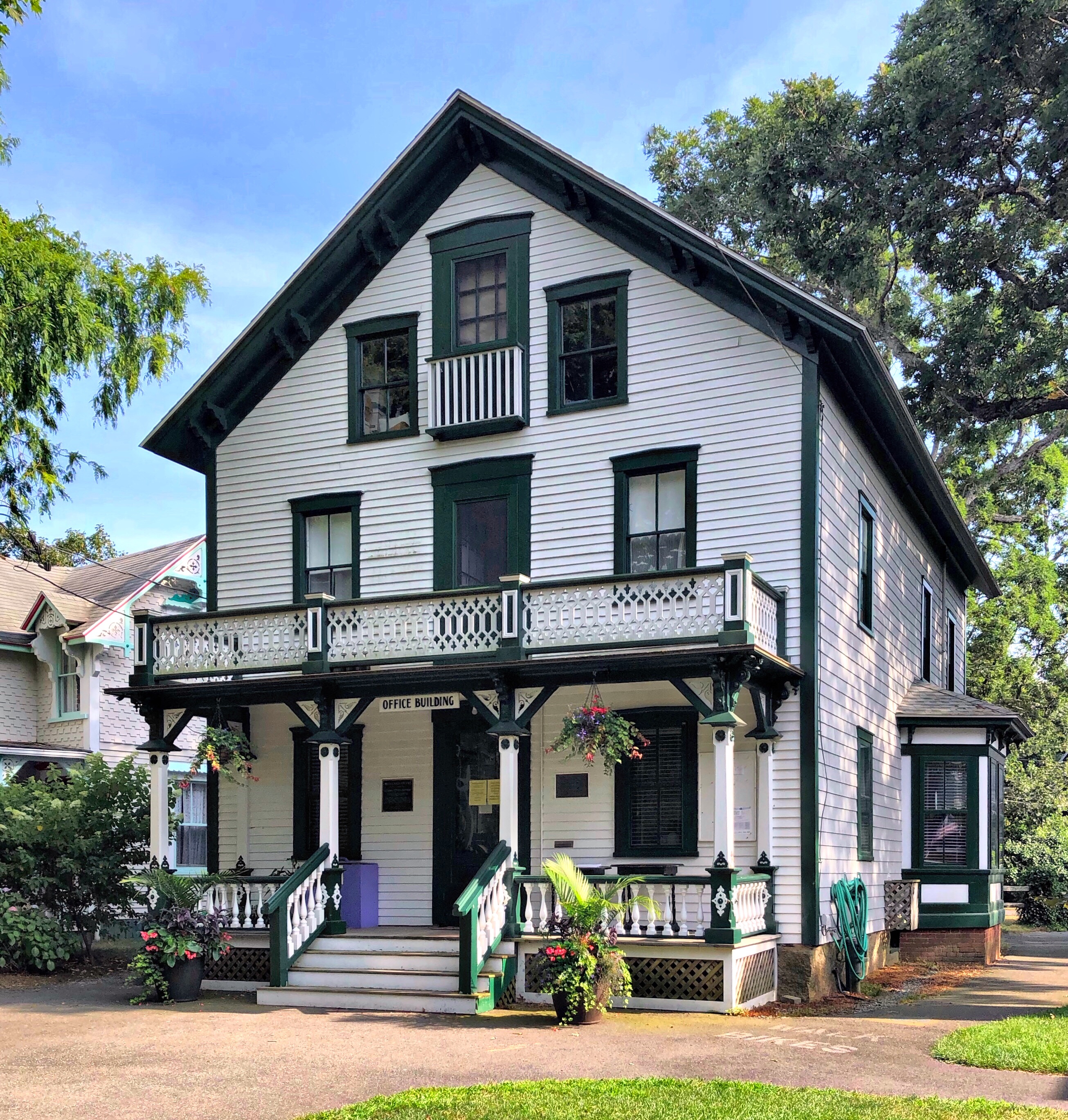
Located at the center of the Wesleyan Grove, – the Martha’s Vineyard Camp Meeting Association – this Italianate building has long served as a hub of the active summer community. The building was constructed in 1859, before any cottages were built in the newly formed summer colony. The office building was not only the headquarters for the Camp Meeting Association, it also served as a storage space for the baggage of the many who stayed in tents, many who didn’t have the means to purchase or rent a cottage. The building even was home to the associations’ post office. It now houses the Association director’s offices and contains the lease holders records back to 1864, a great way to learn about the diverse groups of people who visited and worshiped in this camp.

Yankee Publishing Building // 1874

One of my favorite commercial buildings in Downtown Boston is the former Yankee Publishing Building on Union Street, for its architecture and the fact its surrounded by some great pubs! The building was constructed in 1874 for Cyrus Carpenter (1821-1893), a prominent manufacturer and dealer of furnaces and stoves in Boston. He owned the building, but ended up leasing the space to a competing furnace company, Walker & Pratt Manufacturing Company. Carpenter owned the building until his unexpected death in 1893 when he was run over by a Back Bay horse car, when it was conveyed to his wife until her death. The building was later purchased by the long-time tenants who continued to sell furnaces and other goods out of the store with offices above.

The business by which the building is currently known is Yankee Publishing. It is an independent family-owned business that was founded in 1935 and based out of Dublin, New Hampshire. It publishes Yankee Magazine ten times a year (the magazine has a paid circulation of 500,000; subscribers primarily residing in the Northeast) as numerous travel guides and other publications in print and online to guide locals and tourists of New England alike.

William Jefferds House // 1804

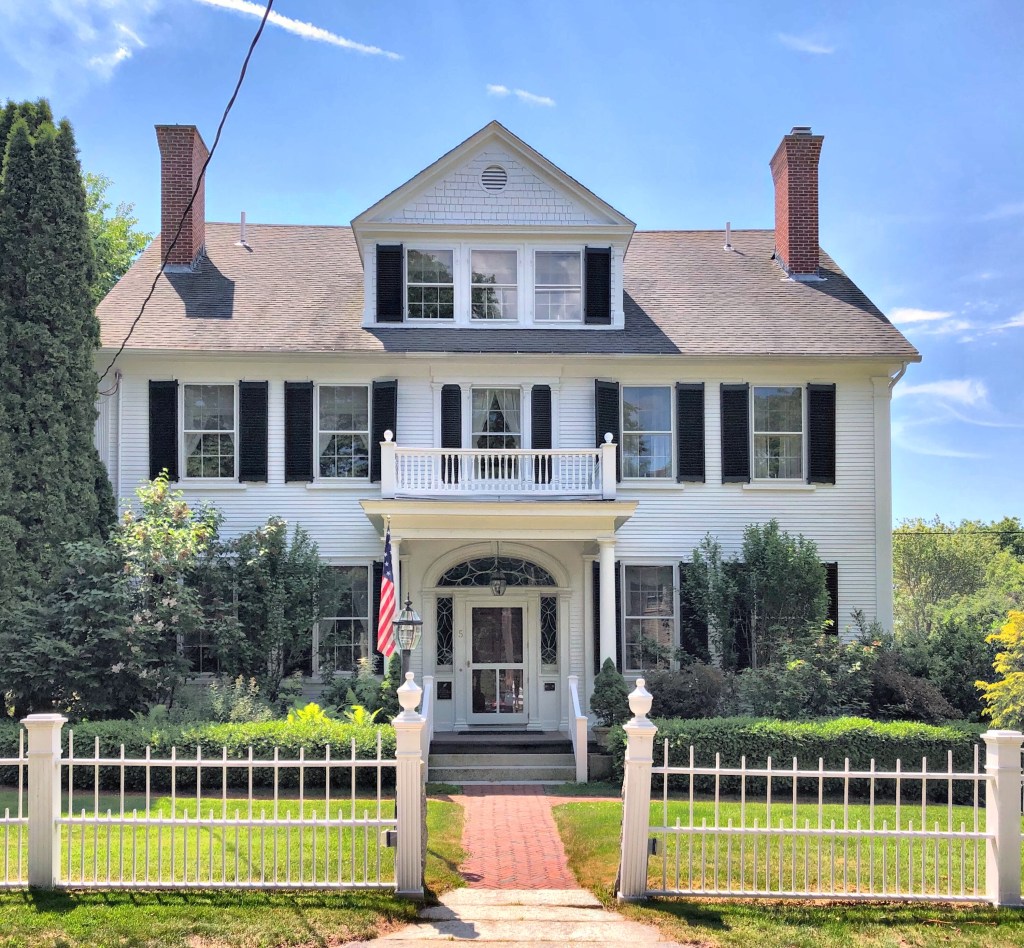
William Jefferds Jr. was born August 30, 1779 in Kennebunk. On October 25, 1802 he married Sarah (Sally) Walker who was born in Arundel on March 4, 1783. Twenty years later, in 1803, Captain Daniel Walker gifted his son-in-law, Captain William Jefferds, Jr., “80 square rods of land, with love and affection” on the lane leading to Walker’s Wharf (he also gifted land to his other son in law, Nathaniel Lord. In 1804 the 2-story, Federal-style building that now houses Captain Jefferds Inn was built as their private home.

Capt. Jefferds was a ship owner and captain in the West Indian trade; he later became a merchant in Kennebunkport. He and Sarah had 11 children, and their family was considered one of the most aristocratic in Kennebunkport. Following Sarah’s death at age 88 in 1871 (her husband had predeceased her in 1851), the household furniture was sold at public auction and the home sold outside of the family.

The house was a two-story hipped roof Federal style dwelling, somewhat outdated by the latter half of the 19th century. By the 1880s, the Agnew Family who owned it at the time, had the home remodeled with Colonial Revival detailing, including the portico and large central dormer. The home was eventually converted to an inn, and is known as the Captain Jefferds Inn.

Check the Inn’s website for more images and history!

Captain George Nowell House // 1854

Captain George W. Nowell and his wife, Frances, the daughter of the wealthy Capt. William Jefferds, built this elegant Italianate style home in 1854 that stands on Temple Street, next door to the Kennebunkport Post Office. George was a sea captain, following in his father’s footsteps and also invested in several of the ships he sailed, but had the fiscal foresight to insure his interests against loss. His prized ship was named “Tropic” and she was launched in 1855, less than a year after his house was built. On a cold December day in 1862, Nowell, captaining The Tropic left Philadelphia with a cargo of coal for the Pacific Mail Steamship Company in San Francisco. She and her crew of 20 were never heard from again. George was not yet 40 when he perished. His youngest son, Frank, never met his father and was only 8 years-old when his mother passed in 1872. Shipbuilder David Clark bought their Temple Street home and George’s brother took his children to live in Bangor.

The captain’s reputation as a prudent and charitable man was recognized by Victoria, Queen of England. She awarded Capt. George W. Nowell, of the ship Tropic, an engraved spyglass in testimony of his humanity in rescuing her subjects, the crew of the Village Belle, of Nova Scotia. The telescope and a certificate, signed by the Queen, have been proudly protected by the Kennebunkport Historical Society.

The family home features bold corner quoins, bracketed door and window hoods, and paired rounded arch windows at the top floor.

Jacob Wirth Building // 1844

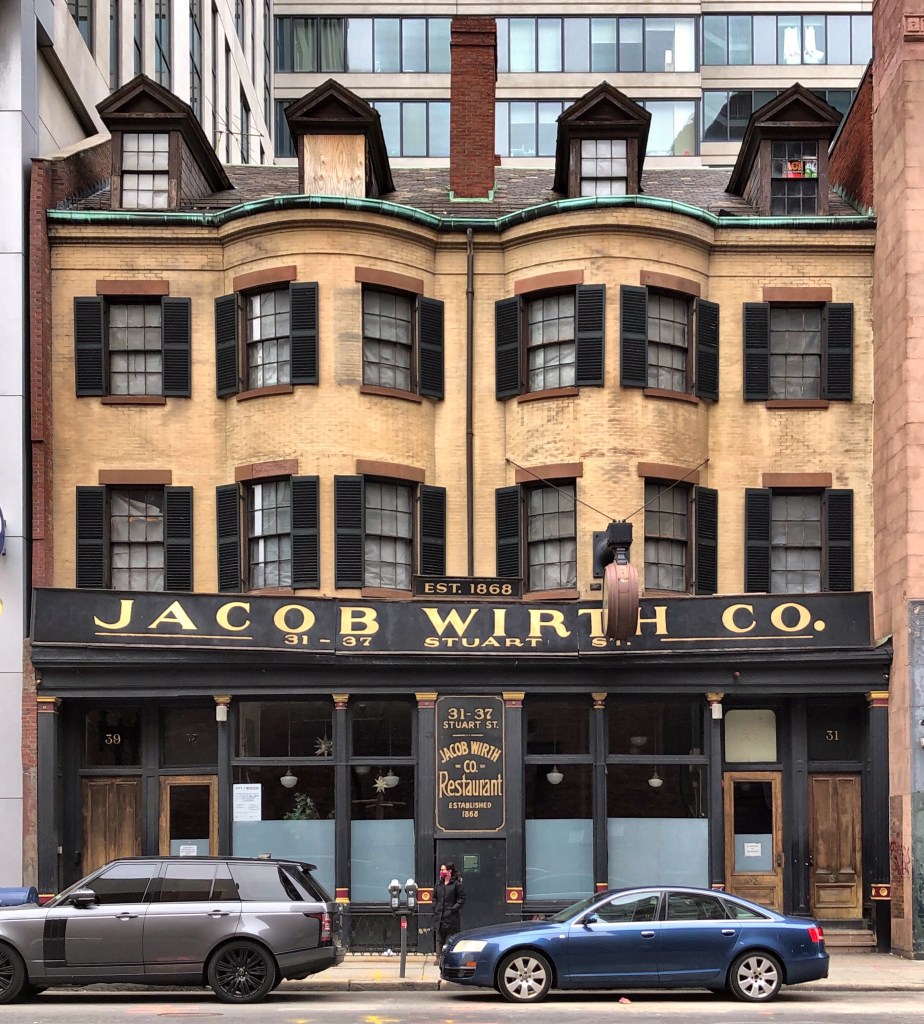
Comprising twin bowfront Greek Revival rowhouses, the Jacob Wirth Restaurant buildings on Stuart Street are scarce survivors of a century of urban change in an area in which the building type once abounded. Built by developer housewrights quite active in the area, the twin houses were soon sold to “gentlemen” for rental purposes. Jacob Wirth, a German emigrated to Boston from Bingen, Germany, and began work as a baker before getting into the restaurant business. Wirth bought the left building seen here in 1878 as his dwelling above and ran his authentic German restaurant below. Due to the success of the restaurant, he purchased the adjacent home in 1889 and constructed the storefront that now unites them. Jacob Wirth ran the restaurant until his death in 1892, which was then managed by his son, Jacob Wirth Jr., who also managed it until his death in 1965! In 2018, Jacob Wirth’s, the second oldest continuously operated restaurant in Boston, closed its doors following a fire. The future is somewhat uncertain for the space, but as it is landmarked, there are protections (even at the interior) of the building.

Did you get a chance to eat at Jacob Wirth’s before it closed?

Reuben Nickerson House // c.1835

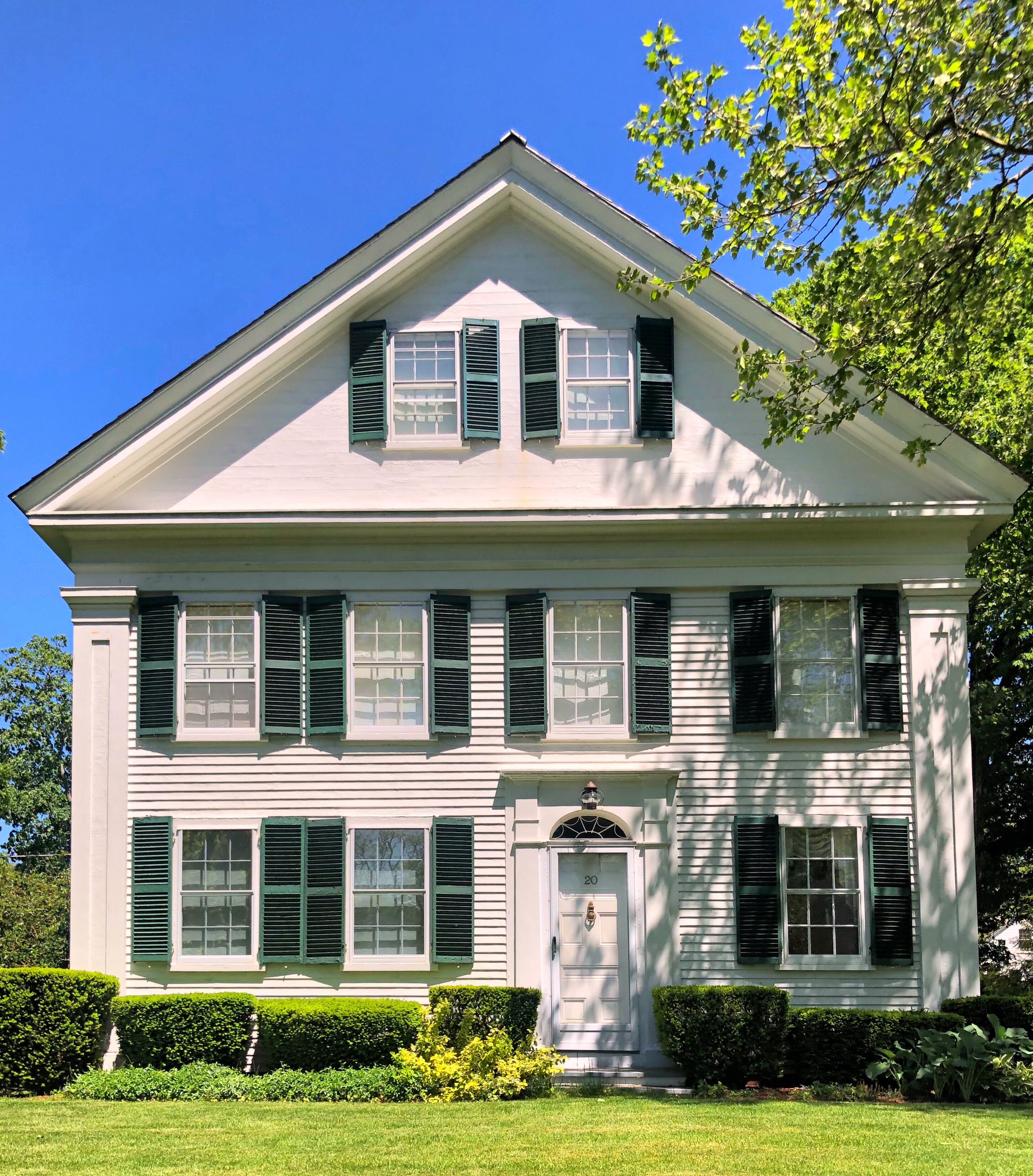
The gorgeous Reuben Nickerson House on Bridge Road in Eastham is an excellent example of a transitional Greek Revival home with hold-over features of the Federal style. Reuben Nickerson was born in 1814 on Cape Cod and worked as a farmer and saltmaker, he later served as a senator, school committee member, and representative. He was married twice; first to Elizabeth Doane who died in 1849, and he remarried Elizabeth’s sister Sarah Doane just a year later. By the 20th century, the home was operated by descendants of Reuben as a funeral home and residence. After WWII, the home was a bed and breakfast and has since been reverted to a single family home. Detail on the home includes: wide, paneled pilasters, boxed, molded cornice, a pedimented gable, a 2-part wide frieze, and a fanlight at the entrance.

Knowles House // c.1820

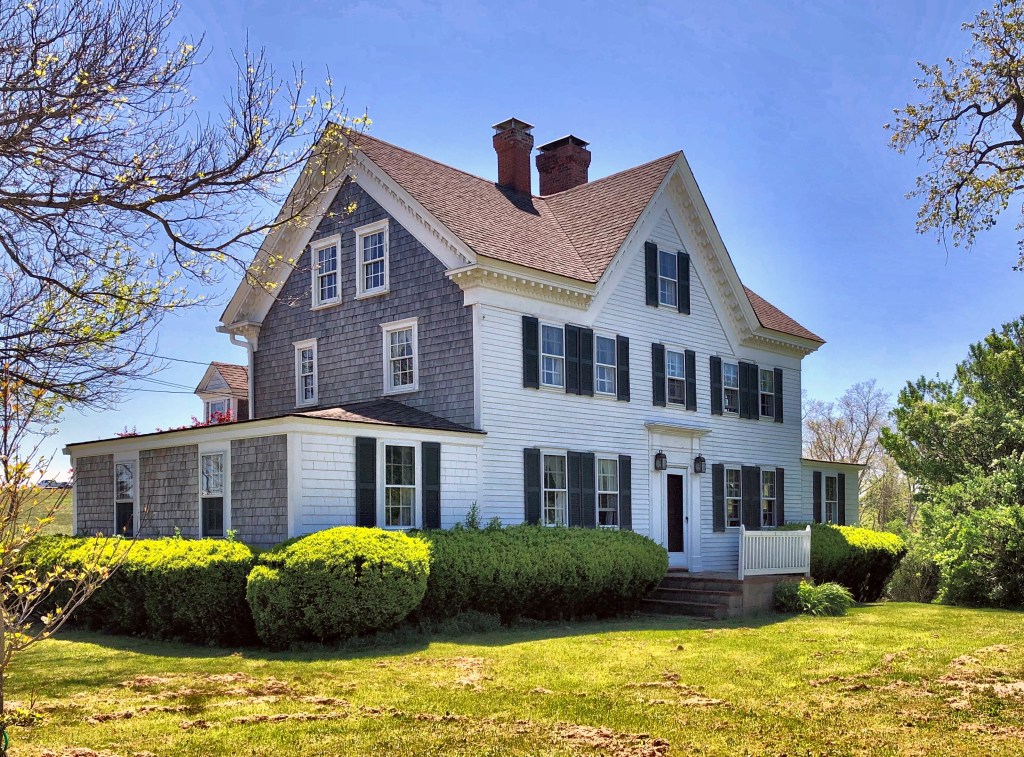
Located just a stones throw from the Penniman House, the c. 1780 Knowles House stands at the historic end point of Fort Hill Road. Accounts differ on its history. Some sources explain the home was built in c.1790 by Seth Knowles (who died in 1787) a prominent citizen of Charlestown, Mass., and one of the original members of the Bunker Hill Monument Association and of its board of directors. From my research, the home appears to have been built for Thomas Knowles, Seth’s son, and was later willed to his son, also named Thomas. Thomas Knowles Jr., was born in 1803, in Eastham, and in early life settled at New Bedford, engaging in the whale fishery industry. Deed research would be required to find out more. The gorgeous Federal home features a large, center cross gable with dentils at the cornice.