First Parish Church of Ashby // 1809

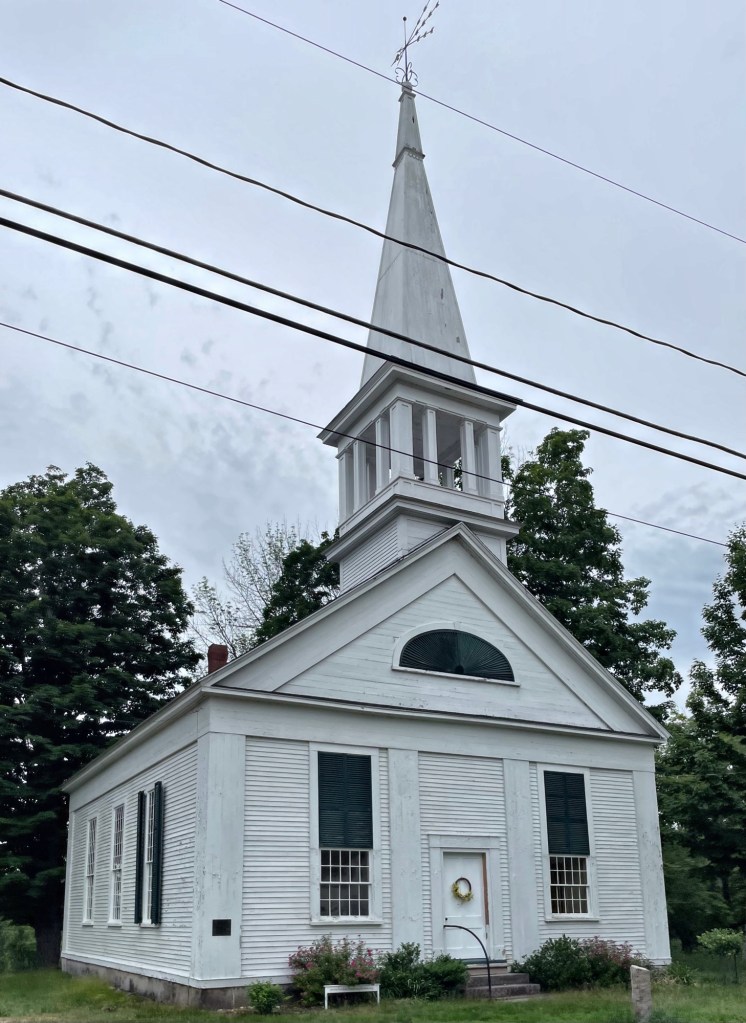
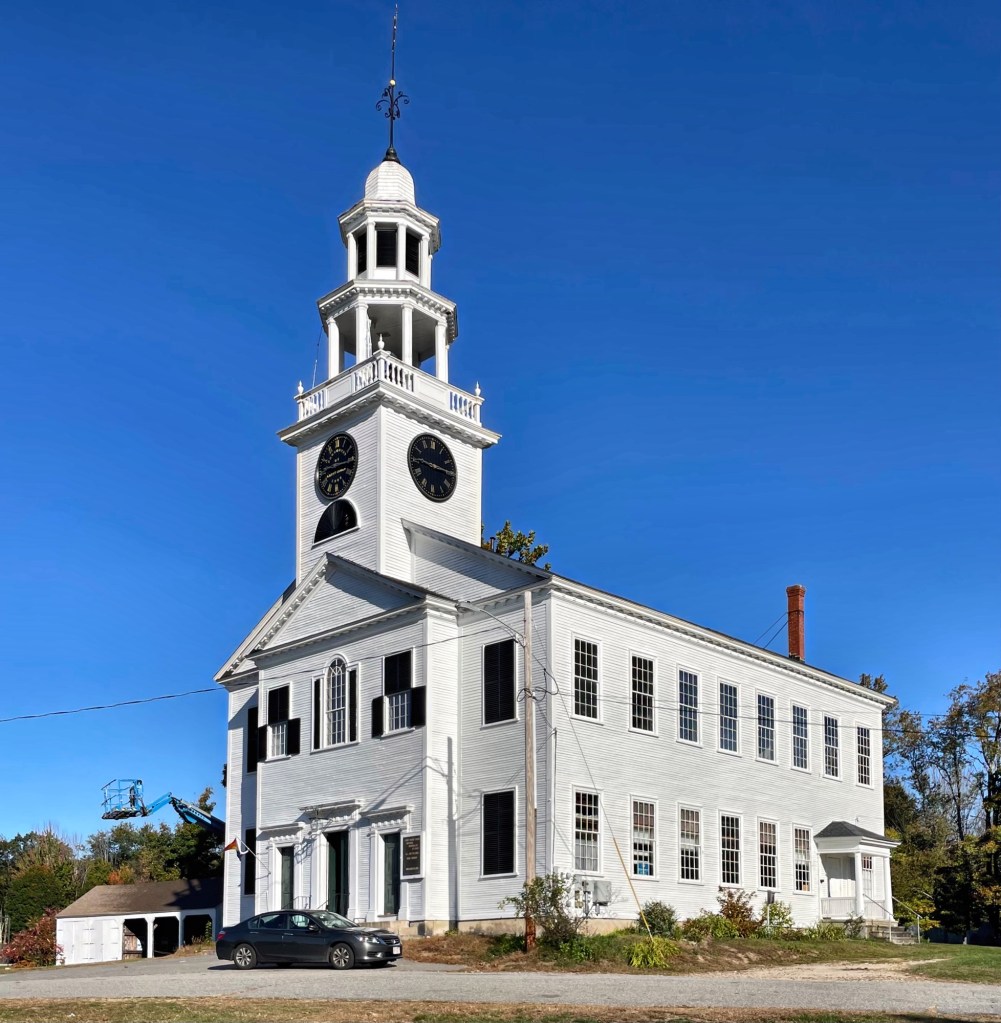
Welcome to Ashby, Massachusetts; a rural and historic town that was first settled in 1676 but due to the continued threat of native hostilities, permanent European settlement in the town did not occur until about 1750. The town incorporated in 1767 and was reputedly named for the abundance and quality of white ash trees found in the area by early settlers. Today, the town has just over 3,000 residents. At the center of the town village, the First Parish Church of Ashby stands as a significant Federal-period meetinghouse, and an integral piece of the town’s history. The present building was constructed in 1809, replacing an earlier structure from 1771. Carpenters for the building were Joseph Kendall and Darius Wellington of Ashby, who utilized plans from Asher Benjamin’s American architectural pattern book of 1797. Facing the town common, the church is a two-story gable front building with a three-stage tower including an octagonal open belfry rising from the pedimented front pavilion.
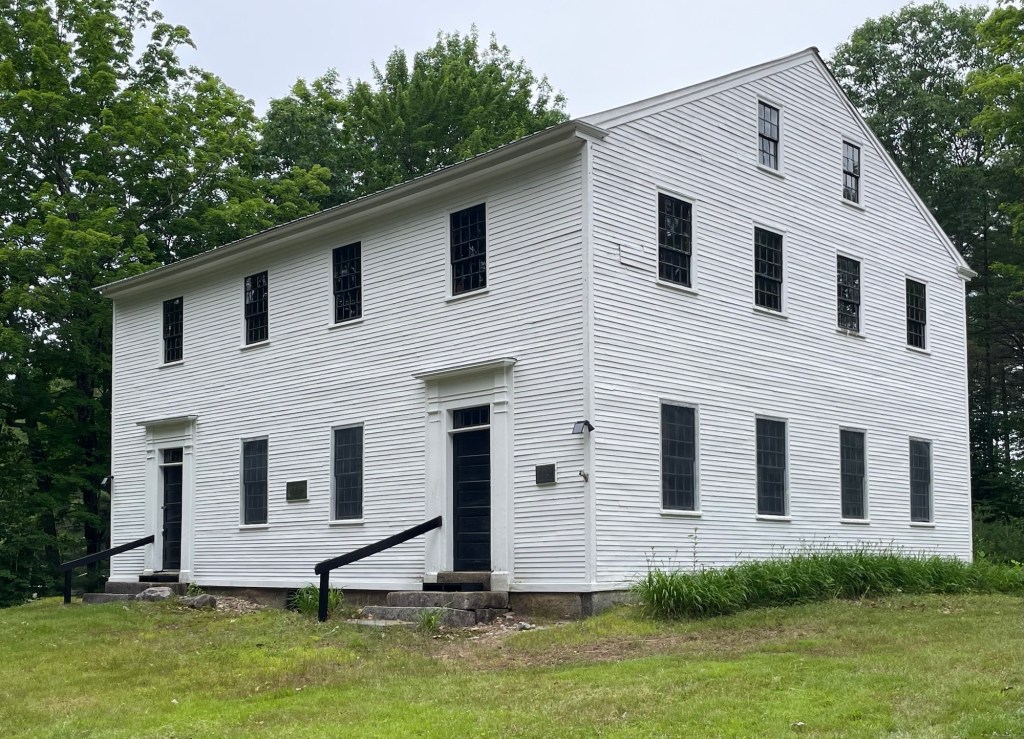
Walpole Meetinghouse // 1772

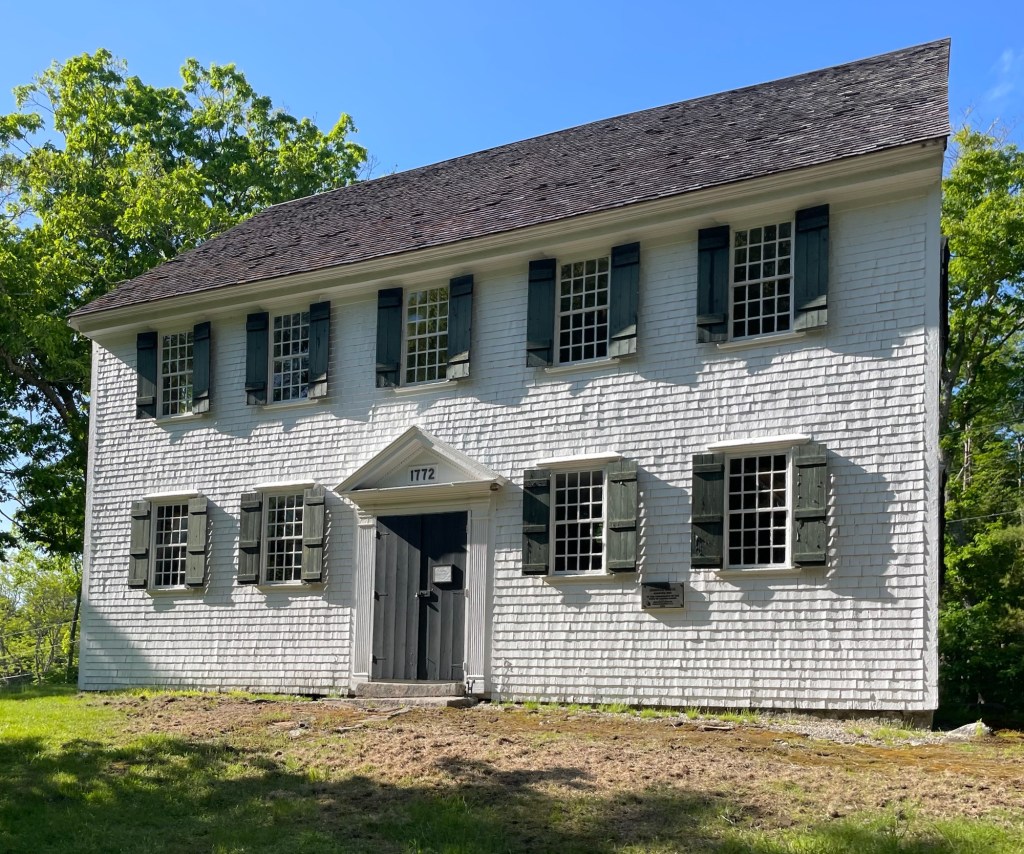
The Old Walpole Meetinghouse is a rare extant example of a Colonial meetinghouse in New England. The building is located in South Bristol, Maine, in the village of Walpole, and was constructed in 1772. The Walpole Meetinghouse is a little-altered example of a late colonial church in Maine (and one of the oldest actively used churches in the state.) The building originally housed a predominantly Presbyterian congregation of Scottish immigrants, but as the presbytery was based far away in Boston (Maine at this point was still a part of the Commonwealth of Massachusetts) the congregation eventually became Congregationalist. The Georgian-style building is clad in wood shingles, originally stained painted a brownish yellow to blend in with the birch leaves as to camouflage it among the trees. The building was painted white in the 20th century. It is one of a few extant meetinghouses in New England that utilized shingle siding instead of the quintessential New England clapboards. It is said that these are still the original shingles. Inside, the doors all enter the single main chamber, where the ground floor is dominated by a series of box pews and the elevated pulpit is sited at the north wall. It is maintained by the South Bristol Historical Society, and is still used occasionally for summer services.

Old Porter Meetinghouse // 1818

Welcome to Porter, Maine! The town is located on the Maine/New Hampshire border and was first called Portersfield Plantation. Porter was incorporated in 1807 and named after its first proprietor, Dr. Aaron Porter (1752-1837). The Porter Meetinghouse was built beginning in 1818 and it is said that it was not completely finished until 1824. The original congregation was a Freewill Baptist organization led by Reverend Jeremiah Bullock, and were known locally as “Bullockites“. The structure housed the Baptists and town meetings as needed. The plain vernacular, meetinghouse is typical of many early meetinghouses of the period in rural New England. The inside retains its original character with its space as a single large chamber with a gallery above on three sides. The walls are plaster, much of it original, with trowel marks visible. The main floor is populated with original box pews and a replica pulpit. The structure is a rare survivor!

Old Effingham Meetinghouse // c.1800

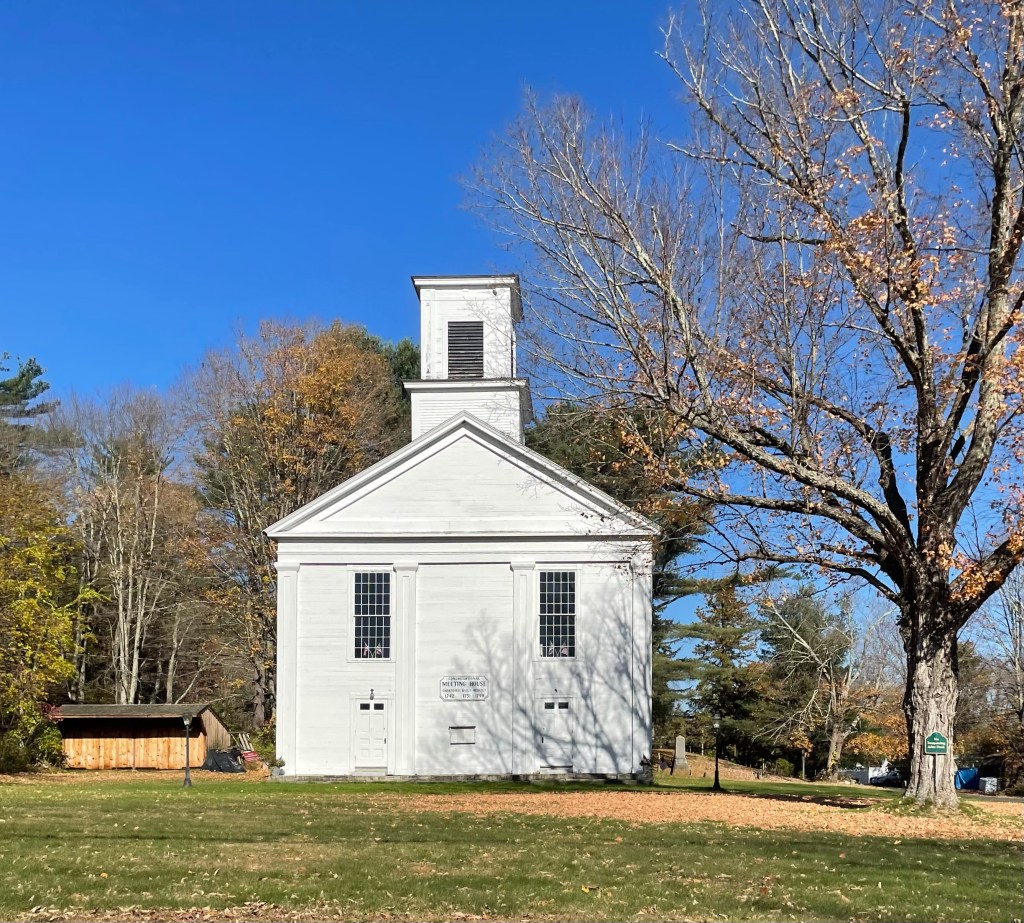
The location of the Effingham meetinghouse in New Hampshire was a controversial question in the 1790’s, with the villages of Lord’s Hill and Drake’s Corner both vying for the town’s most important public building. After several votes and repeals of votes, the Town’s voters in 1798, chose a committee of hopefully disinterested men from other towns and instructed them to settle on the location. The committee recommended Lord’s Hill, and in June, the Town voted to accept that location. The contract for the meetinghouse was awarded to Isaac Lord, a local landowner and operator of a tavern and store, who promptly erected the building the same year. In its original form, the building had the traditional meetinghouse plan, with its main entry in the long southeast side and a belfry at the northeast end. In 1845, the meetinghouse, by then the property of the Congregational Church, was thoroughly remodeled in the Greek Revival style, what we see preserved today.

Ware Center Meeting House // 1799

Ware was settled in the 1717 and incorporated in 1775. Its town center was laid out in 1760, on land belonging to one of its early large landowners. The first colonial meeting house was built in that year, near the geographic center of the town, and the road network developed around access to this area from the corners of the town. The Ware Center Meeting House was built in 1799 to replace a previous structure. The Meeting House has served as the first town meeting hall, the parish home of the First Church of Ware and the first school. As the town’s population boomed in the eastern part of town when factories and mills were built along the Ware River. To compete with the growing industrial village, the Ware Center residents sought to “keep up with the Jones'” and renovated the meeting house in 1843 in the Greek Revival style. However the growth of Ware had by passed the old Ware Center and population and in 1847, a new Town Hall was completed on the Main St. closer to industry and the new population center. The building remained as a church, but in 1928, the church ceased having winter services due to the reduced membership, and from that time on services have been held sporadically. The building remains a significant piece of Ware’s history from a sleepy rural town to industrial powerhouse.