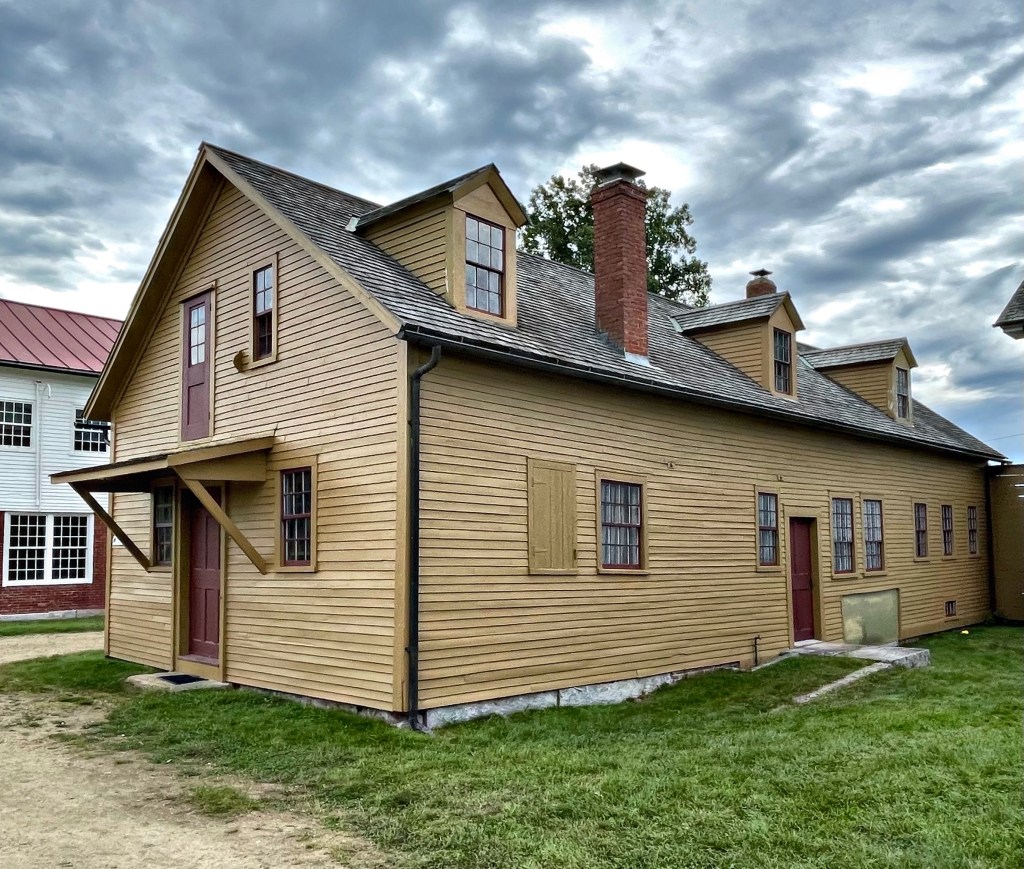
When Benjamin Whitcher donated his farm for the beginnings of a utopian Shaker community, the land and buildings became the catalyst for the next 200 years of Shaker life in the community. It is known that Benjamin Whitcher constructed his farmhouse sometime between 1775 and 1782. With the arrival of the first Shakers in 1783, Whitcher allowed families to reside on the farmland, with the 1790 Census counting 35 people on the Whitcher property. This structure was one of the original structures on the old Whitcher Farm, and is possibly the oldest extant building in the Shaker village today. The building was moved to its present location in 1841 and was used for distilling sarsaparilla syrup for medicinal purposes by members of the community.
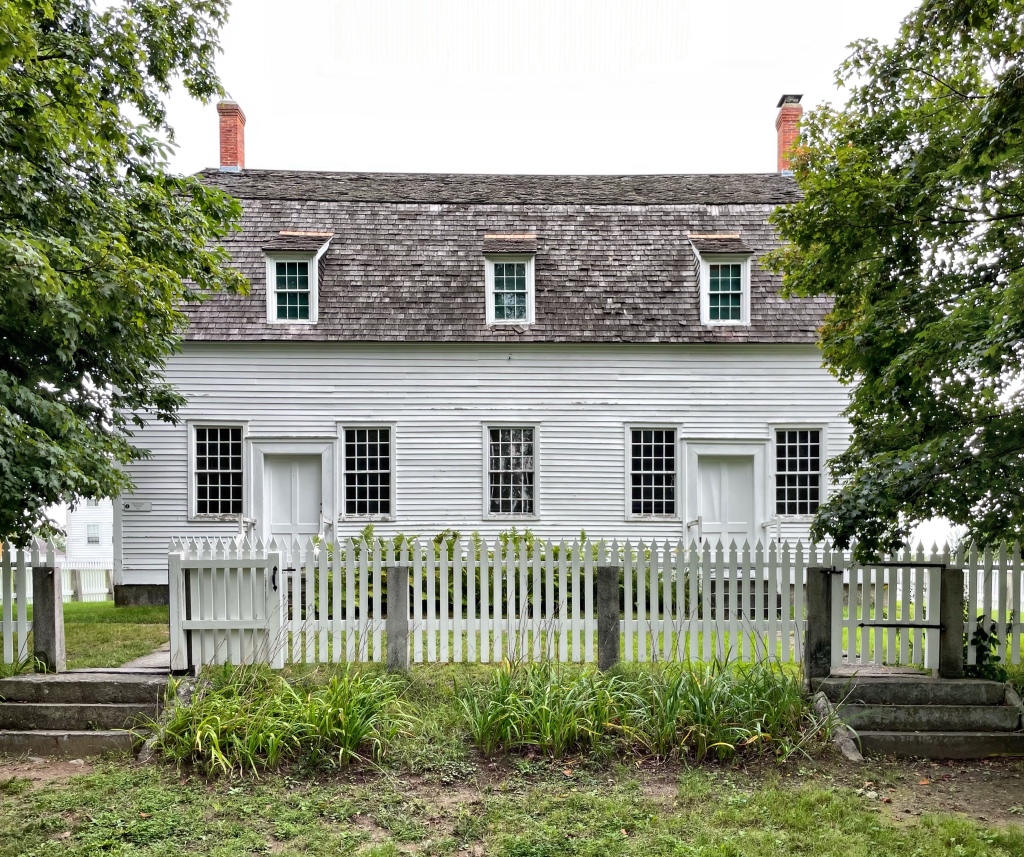
The second oldest purpose-built building in the Canterbury Shaker Village (after the 1792 Meeting House), is the dwelling house, constructed in 1793. The T-shaped structure was expanded numerous times and contains 56 rooms. The structure is the largest in the village and is notable for the large domed cupola, housing a Paul Revere bell. The first floor contained the village butcher shop, bakery, communal kitchen and dining room. For many years the second floor consisted of four bedrooms, two for elders and two for the sisters and the brethren. The third floor is also devoted to dwelling rooms. The Dwelling House was the residence of Canterbury’s last remaining Shaker sister, Ethel Hudson, who died in September 1992, the 200th anniversary year of the founding of the Canterbury Shaker community.
The Canterbury Shaker Village was one of two Shaker communities existing in present-day New Hampshire (the other being Enfield Shaker Village, featured previously on here). In 1782 Israel Chauncey and Ebeneezer Cooley from the Mount Lebanon village of Shakers traveled to Canterbury and converted several prominent figures of the community by convincing some of the Christian farmers that the Shaker way was what they had been seeking. Among those converted to the Shakers, the Whitcher, Wiggin and Sanborn families, donated land to house the Canterbury Village community of Shakers and the Canterbury Village was founded in 1792, led by Father Job Bishop. The village expanded over time, and in 1803 there were 159 members in three families. Nearly fifty years later in 1850, the site contained 3,000 acres with a community of 300 housed in 100 buildings!
The first building of the Canterbury Village was the Meeting House. The Gambrel roofed building was constructed by members in reverent silence and supervised by Moses Johnson (1752-1842) who served as master builder of seven Shaker meetinghouses all over the Northeast. Inside, there were two stairways, one for men and one for women, located in the northwest and southwest corners of the building, each easily accessed by separate entrances, which led brothers and sisters from the first floor meeting room to the second story sleeping lofts.
In 1992, Canterbury Shaker Village closed, leaving only Sabbathday Lake Shaker Village open as a functioning community. There are apparently only two active Shakers left in the country, both at Sabbathday Lake in Maine. Many other villages like Canterbury, have been converted to museums, which give historians and the general public a great insight into how these places have functioned.
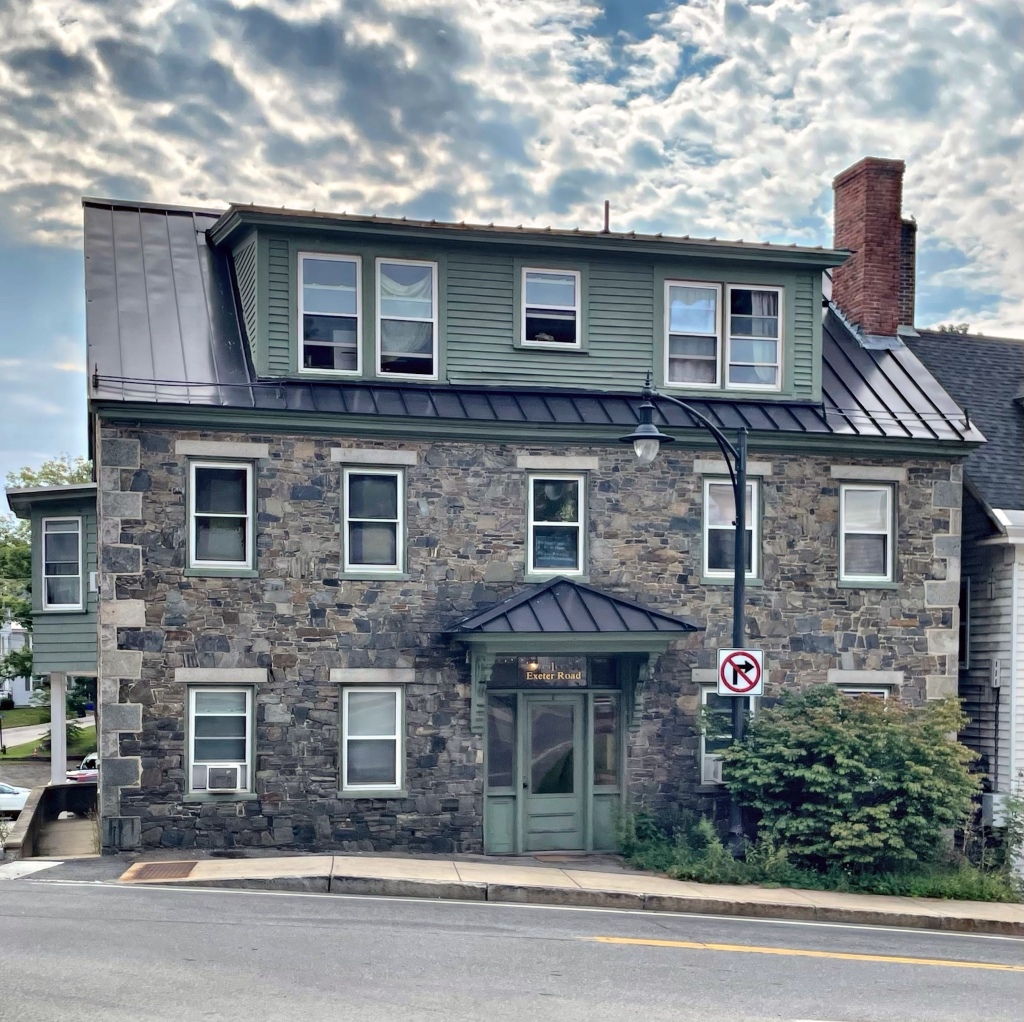
Benjamin Mathes built this stone home around 1835 for his family, of the same stone he used to build a storeacross the street. The Federal/Greek Revival building has amazing granite quoins (stone blocks at the corners) and lintels (blocks above the windows). Even though there are later alterations, including the bracketed door hood and massive central dormer at the roof, the home remains one of the most visually stunning buildings in town.
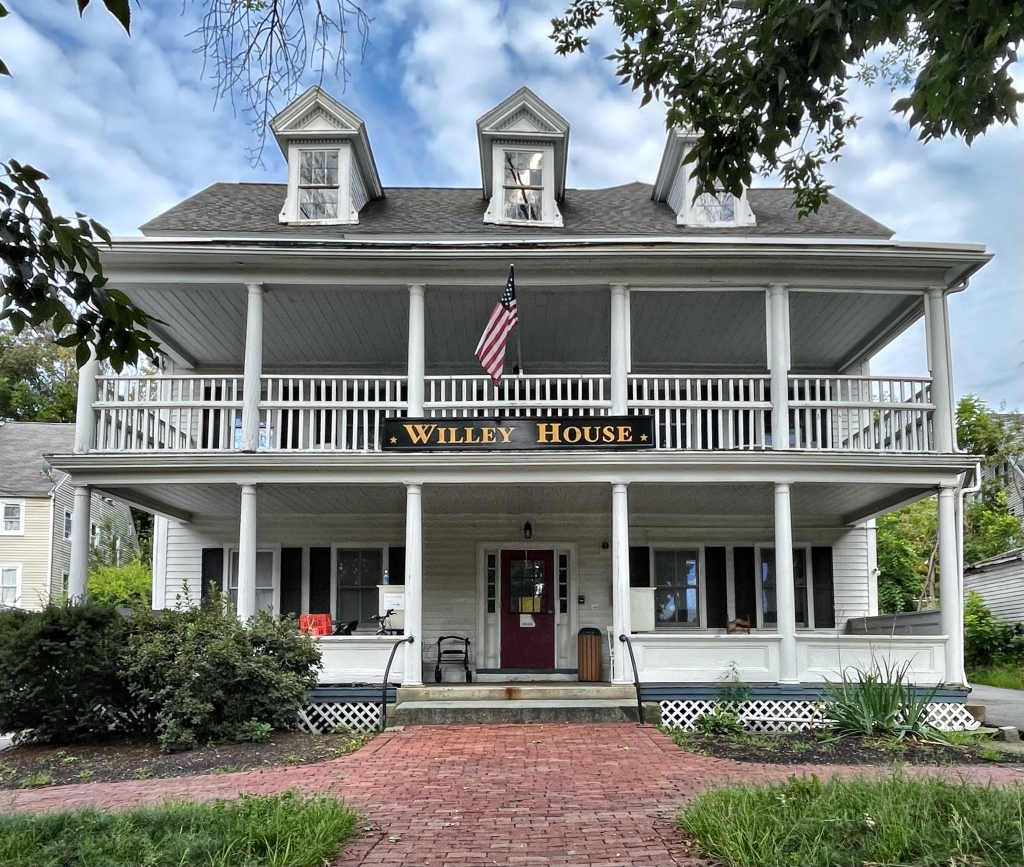
Originally an old tavern/inn, this wood-frame building in Newmarket, NH, was built for a member of the Rundlett Family who settled in town from nearby Portsmouth. The old building was known as Rundlett’s Tavern for a number of years, later renamed the Washington House, and eventually Silver’s Hotel by 1870. Under owner Joseph B. Silver, the Federal style building was updated with Victorian-era flair, marketing to visitors of town who had business with the Newmarket Manufacturing Company across the street. After Silver died in 1898, the building was purchased by George H. Willey and renamed the Willey Hotel/Willey House. He oversaw renovations in the 1920s to give it the Colonial Revival appearance we see today. The building is now apartments.
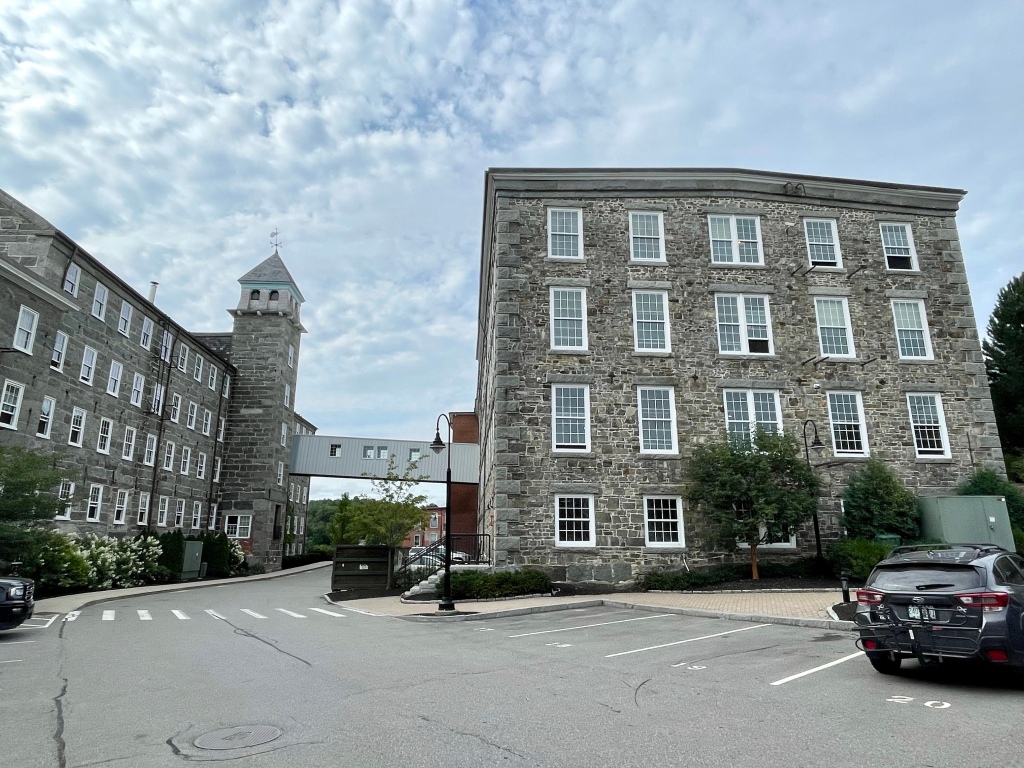
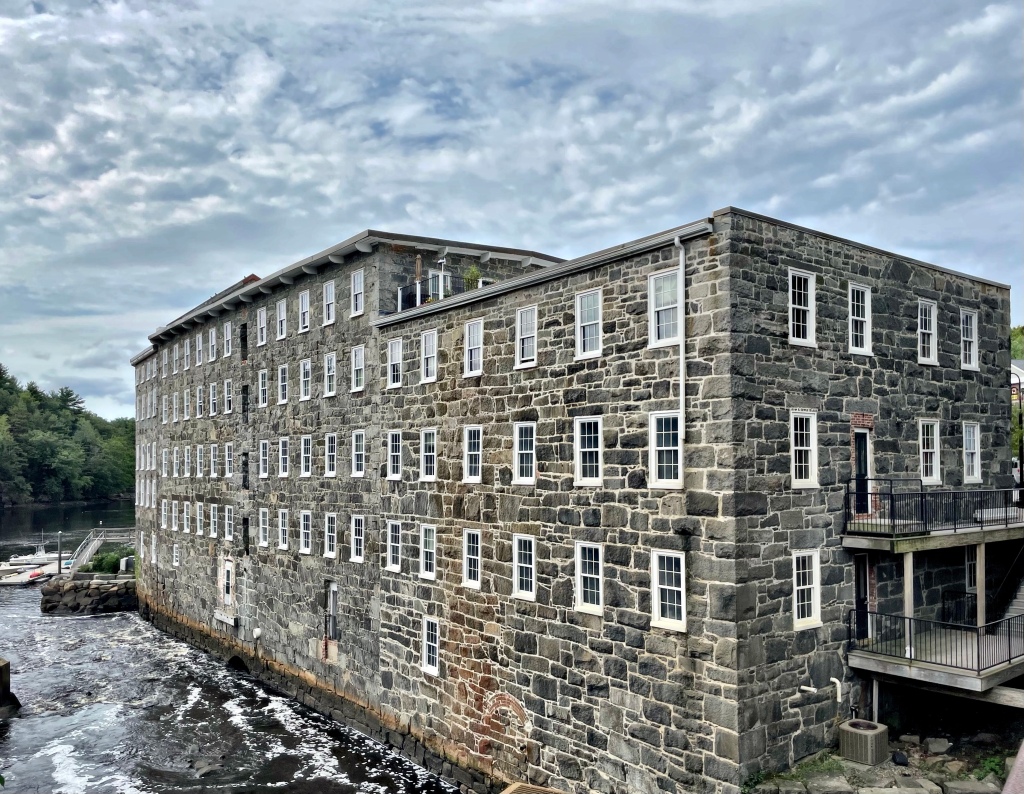
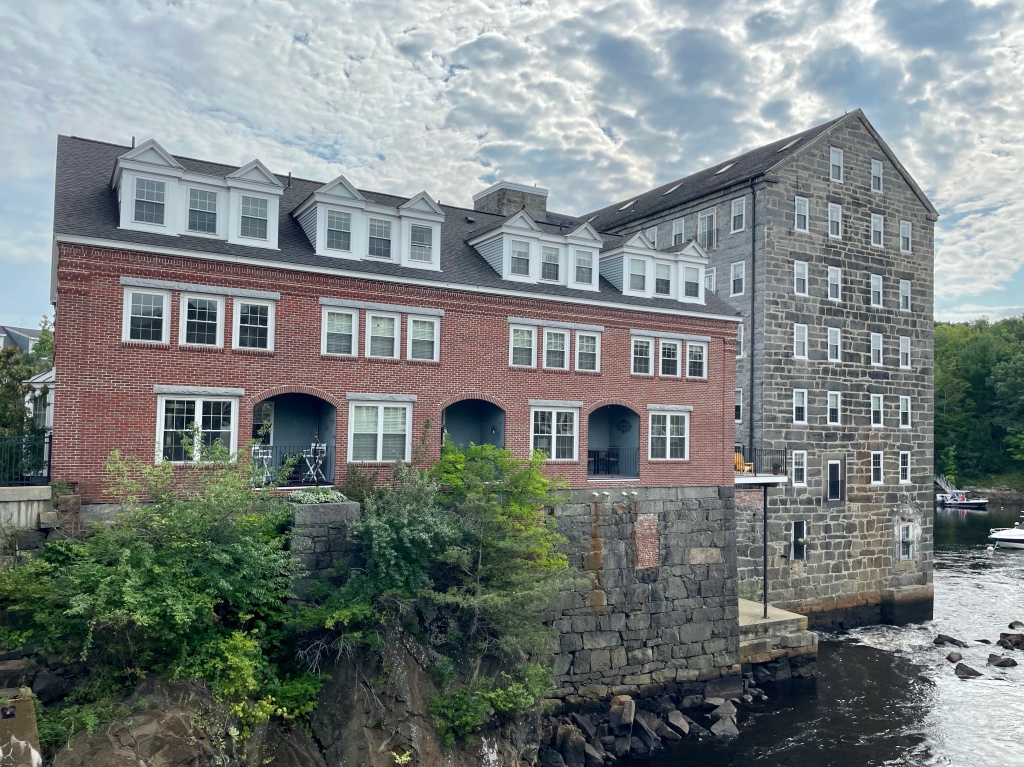
In 1823, the Newmarket Manufacturing Company built its first mill along the Lamprey River, dominating the waterfront and the economy of Newmarket, New Hampshire. Harnessing water power at the base of the falls, the cotton textile manufacturing community grew to include seven textile mills, with factory buildings, a machine shop, office, storage buildings, and corporate boarding houses; totaling some 140 buildings in all. During its peak production, 700 employees made up to 300,000 yards of cotton products each week, and 2.7 million yards of silk cloth each year. The mills operated continuously at this site until 1929 when a dispute between mill owners and workers erupted leading to their closure. Between 2010 and 2012, eight large mill buildings within the Newmarket Manufacturing Company property underwent a conversion to mixed use, including residential, retail, and office units, thanks to Historic Preservation Tax Credits, and many professionals who worked together with the vision to see such a large project through. Today, the complex is a excellent case-study on the power of adaptive reuse and historic preservation.
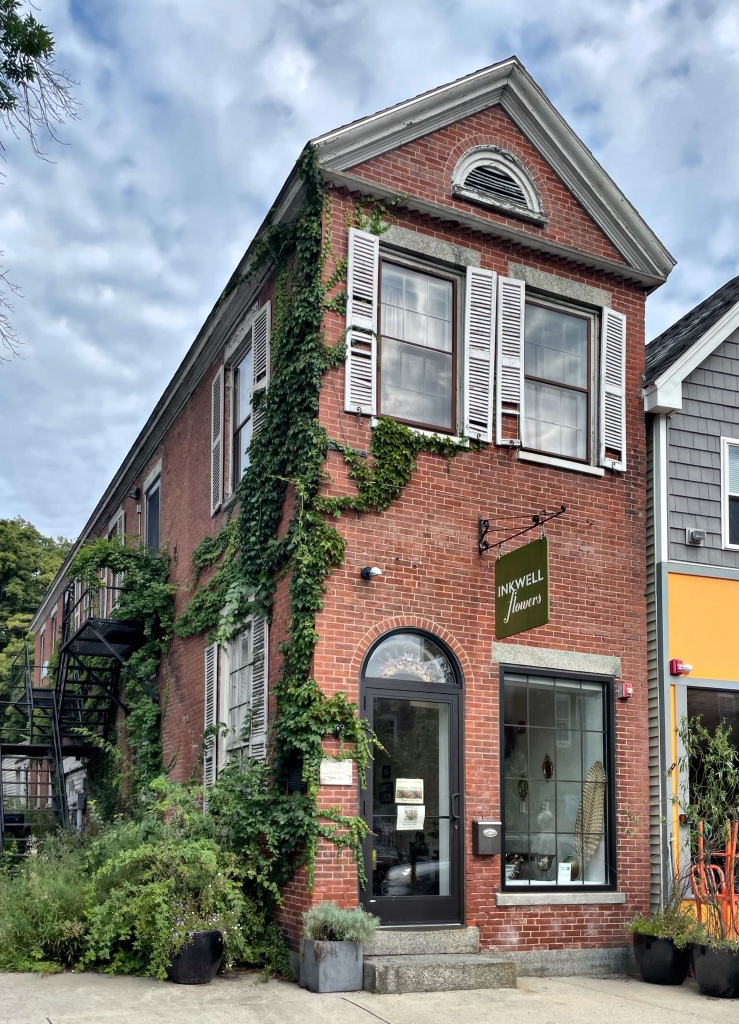
Arguably the cutest little store in Newmarket is the Murray Store, right on the town’s vibrant Main Street. The brick building is one of the earliest such structures on the street and is a great example of a narrow Federal style building with a lunette in the gable end. The structure was built before 1830 and was occupied by a Ms. Charlotte Murray as a millinery (women’s hat store). Main Street USA! What is your favorite Main Street in New England?
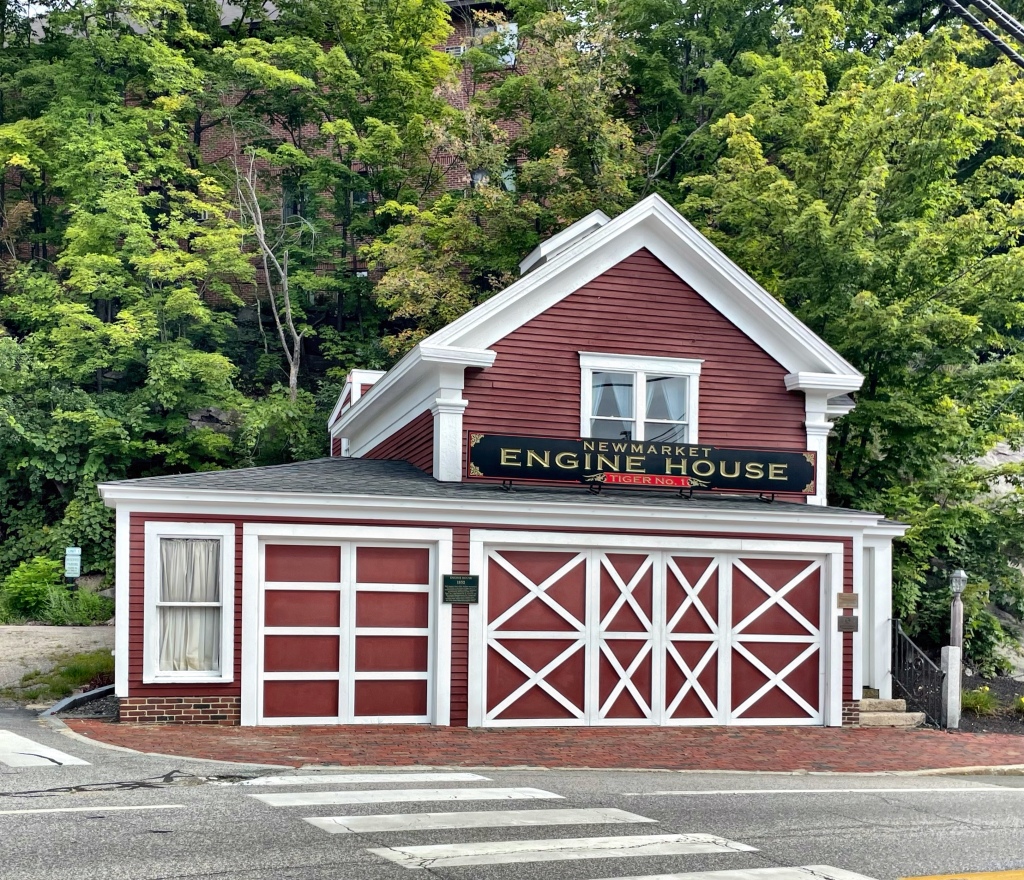
In 1852, the Newmarket Manufacturing Company, who operated a massive mill complex along the Lamprey River in Newmarket, realized the need of adequate fire service to protect their investments and goods. They leased land on Main Street to the town and funded a new fire station, providing engines as well that could be pulled by horse to fires in town. The old station is a surviving landmark in town and retains much of its architectural integrity.
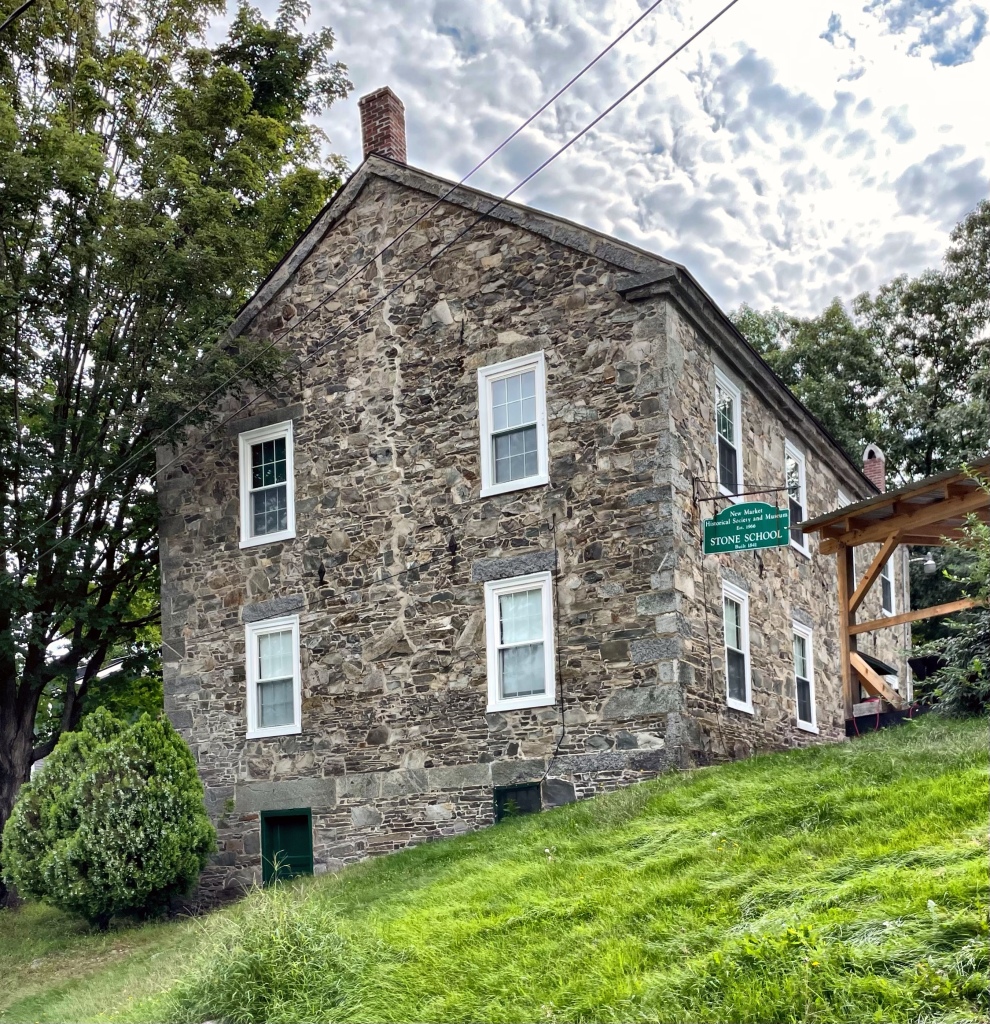
Perched high on a hill, next to the Stone Church (featured previously), the old Stone School in Newmarket is one of a handful of iconic stone buildings in the town. Built in 1841, its stonework executed by William and Robert Channel, local farmers and stonemasons, who likely got their skill from building stone walls on farms. The building was used continuously as a school until 1966, when it was given to the Newmarket Historical Society, which now operates it as a local history museum.
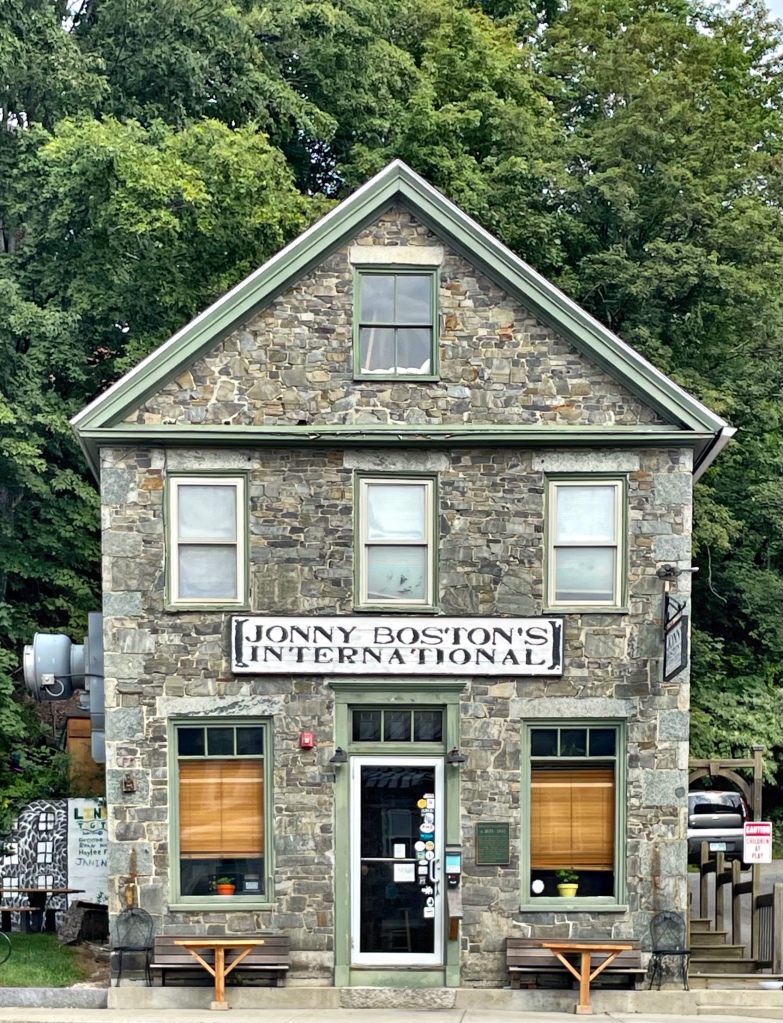
Next door to the Mathes Block (previously featured) this stone commercial building is one of many such buildings that make Newmarket so beautiful and unique. Stone was harvested from the shores of the Lamprey River nearby and the beautiful coloring made them perfect for buildings in town. This building was constructed in the 1830s for Benjamin Mathes, a developer and businessman in town. The structure was occupied by the town post office in the early years, and now houses a restaurant.

 Buildings of New England