The Stephen and Maria Mansfield House is located at 70 Concord Street in Nashua, New Hampshire, and is one of many stunning old houses along the largely residential street. The dwelling was built in 1888 for Stephen Willard Mansfield, a shoe dealer in Nashua, and his wife, Maria. The Mansfield House is a great example of a more modestly sized Queen Anne style house, which is typified by the asymmetrical plan, varied siding types, and intricate carvings and turned posts. This house is dominated by a two-story rounded bay which is capped by a conical roof. She could definitely use a good paint job but it’s a really sturdy old home built from old-growth lumber. She’s here to stay!
The Abraham Wendell House on Pleasant Street in Portsmouth, New Hampshire, is a three-story, five-bay, masonry Federal-style residence with symmetrical facade. The building has a slate hip roof with overhanging eaves, a dentilled cornice, and tall brick chimneys. The facade has a wood-paneled entrance door with elliptical entablature, Corinthian pilasters, and a fanlight above. The home was built around 1815 for Abraham Wendell (1785-1865) a ship’s chandler and hardware merchant. Along with his brothers, Jacob and Isaac, established cotton mills in Dover. Although they lost money on the early mill attempts, they became wealthy importer of foreign goods into the ports of Portsmouth. The house remains a highly significant example of early 19th century residential architecture built for wealthy merchants.
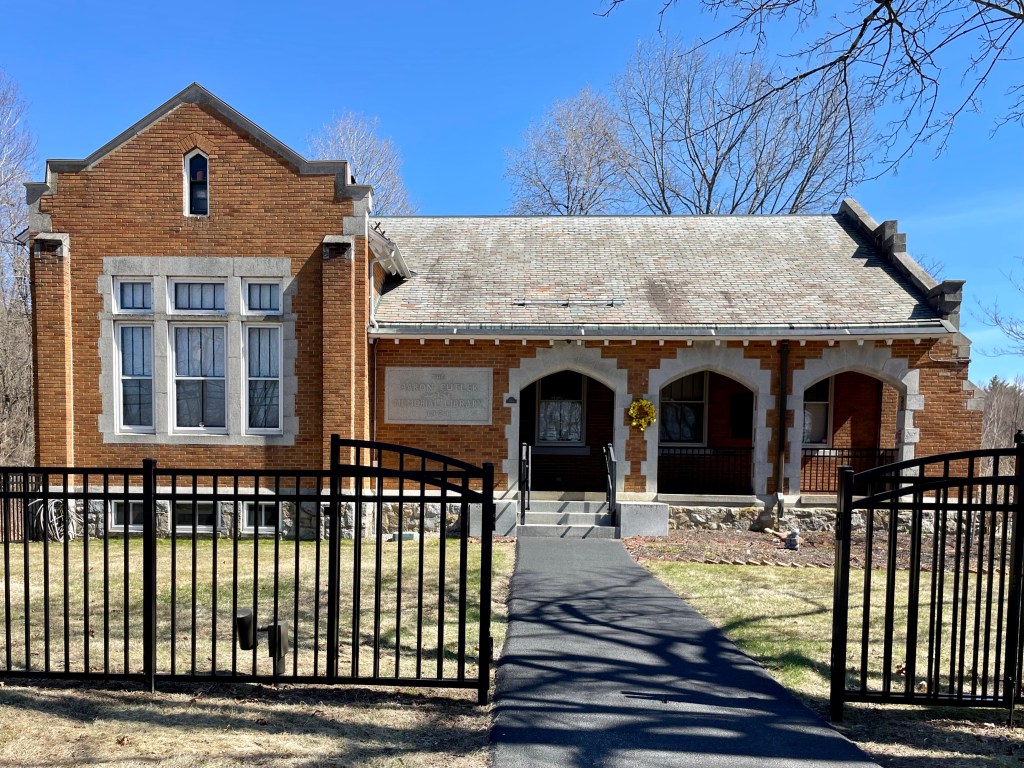
In his 1917 will, Aaron Cutler of Hudson, N.H. left his estate to family and friends with his remaining estate to be bequeathed “for the purpose of the erection, furnishing and maintenance of a Public Library, upon the express condition that the citizens of said town give land upon which to erect the same. Said land to be located within one-quarter of a mile of the town hall. Said Library to be of brick and slate. And to be known as “The Aaron Cutler Memorial Library.” His town of Hudson recently erected a memorial library, so he sought to fund a library in an adjacent municipality. Land was donated in Litchfield for a new library there and architect William M. Butterfield furnished plans for the building. The library was completed in 1924 and exhibits Tudor/English Revival design, unique for the town.
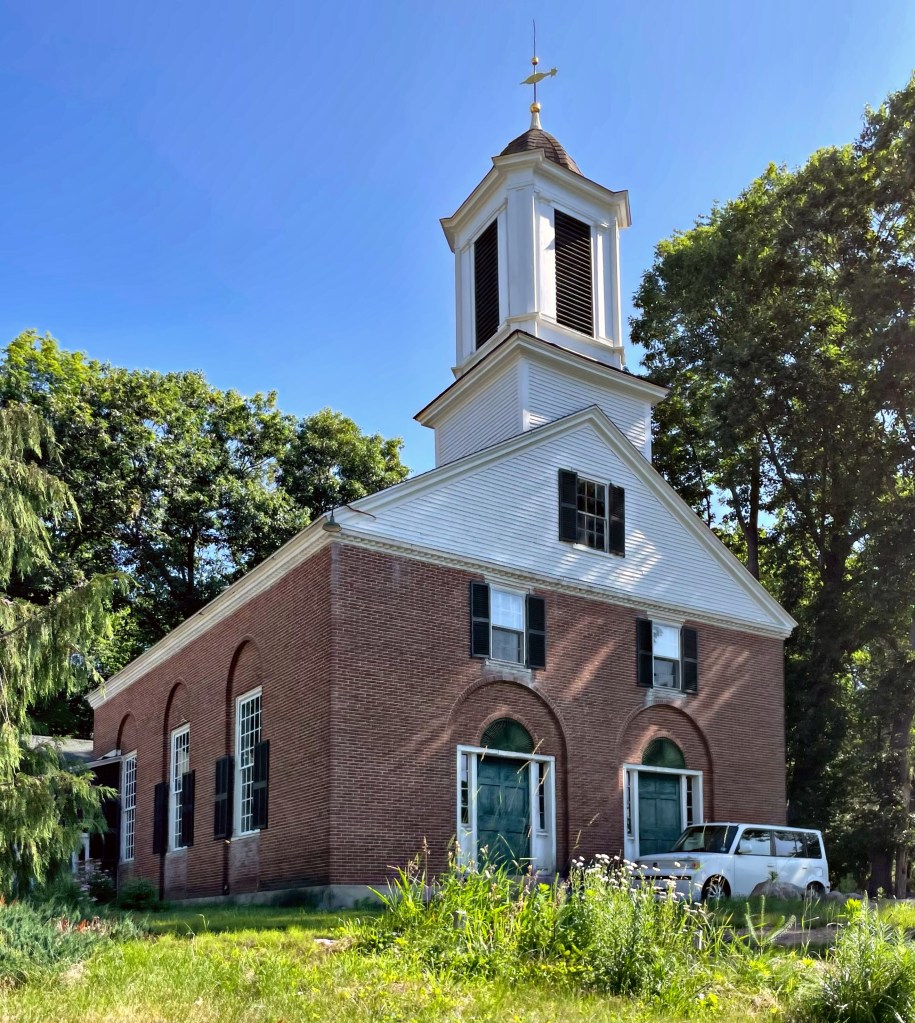
Located next to the Blanchard House, the old Wilton Center Baptist Church stands as one of the only brick buildings in Wilton Center, New Hampshire. Baptists in town originally met and worshipped in nearby Mason, NH, but eventually began services in town. By the 1820s, a new edifice was needed, and the members pooled resources, largely from wealthier members for funding for a new church. The Federal style brick church is stunning with its recessed arched panels surrounding the windows and doors, and its steeple. The building has been converted to residential use.
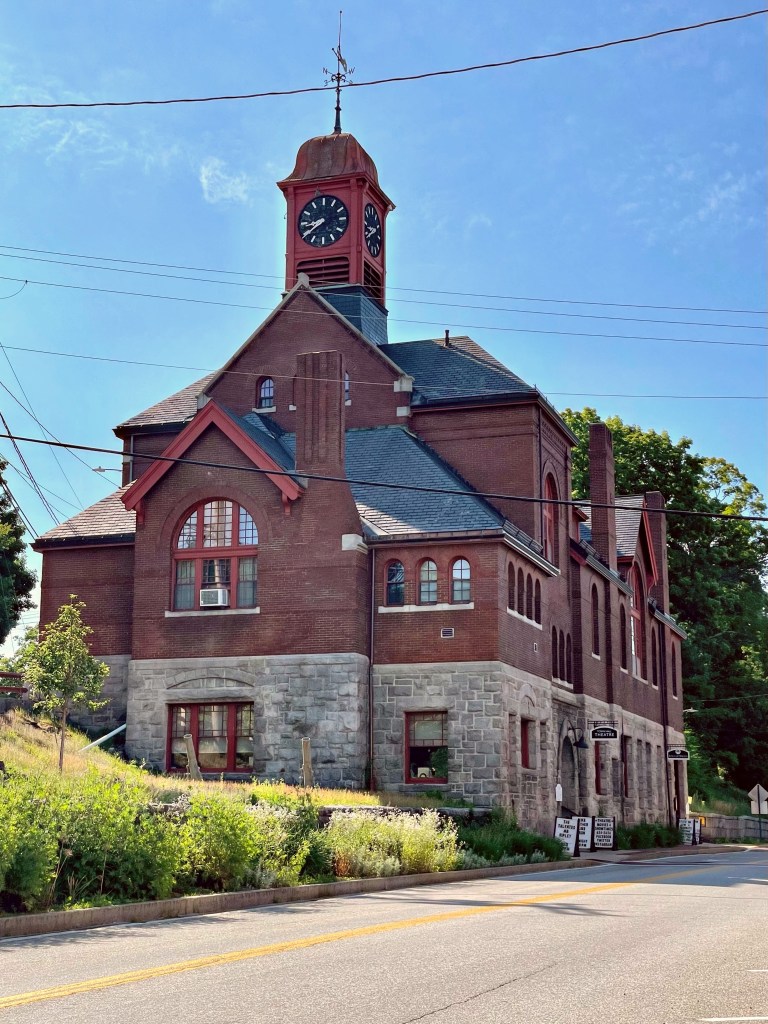
Welcome to Wilton, New Hampshire! With a population less than 4,000, the tiny New England town sure packs a lot of old buildings into its borders. The town was first part of a township chartered as “Salem-Canada” in 1735, by Colonial Governor Jonathan Belcher of Massachusetts, which then claimed this area. The land here was granted to soldiers from Salem, Massachusetts, who had served in 1690 under Sir William Phips in the war against Canada. “Salem-Canada” was one of the towns on the state’s border intended to provide protection against attack from native tribes. In 1762, residents of the town petitioned New Hampshire Governor Benning Wentworth to incorporate the town as Wilton, likely named after Wilton, England. The town prospered as a sleepy farming town, largely concentrated around Wilton Center. By the 1860s, the village of East Wilton developed around the Souhegan River, with mills and businesses centered there. The town decided to relocate their town hall “closer to the action”. Land was acquired on a triangular piece of land in the center of the village, which was recently cleared by the destruction of Whiting House, a hotel that formerly occupied the site. The architectural firm of Merrill & Cutler of Lowell, MA, were hired to design the building, which blends Richardsonian Romanesque and Queen Anne styles perfectly on the difficult site, opening in 1885. Silent movies were first shown in the auditorium in 1912 and by the 1930s, the auditorium was used most often as a movie theater. A large part of the building has since been occupied as a theater for the community.
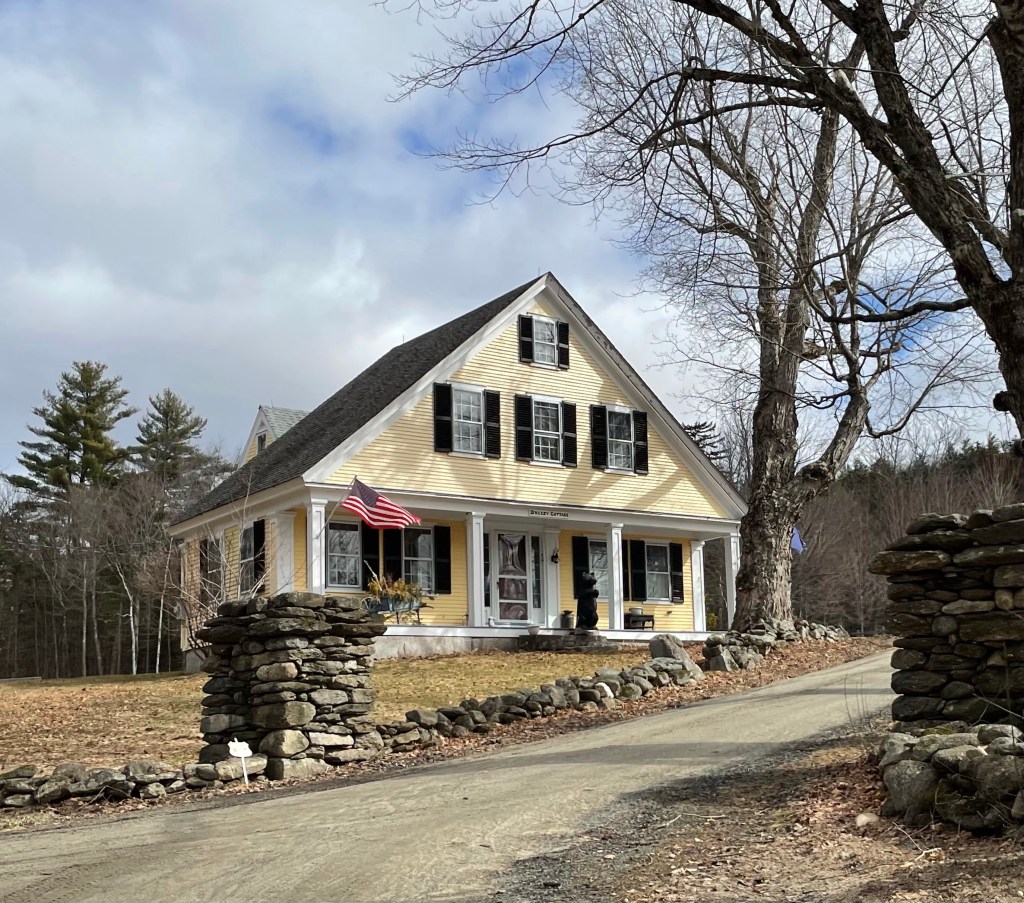
On the backroads of the rural town of Wilmot, NH, I stumbled upon this perfect Greek Revival cottage tucked away on a dirt road. The home was built in 1840 by Col. Samuel Thompson, likely operated as a farm. The property was purchased by the Tewksbury Family decades later, who likely gave the home its name “Breezy Cottage”, after an older colonial home nearby, and subsequently the name of the street in which it is sited. The Greek Revival home is symmetrical with a wide, gabled roof and upper floors overhanging the recessed front porch. The home features bold corner and entry pilasters.


 Buildings of New England