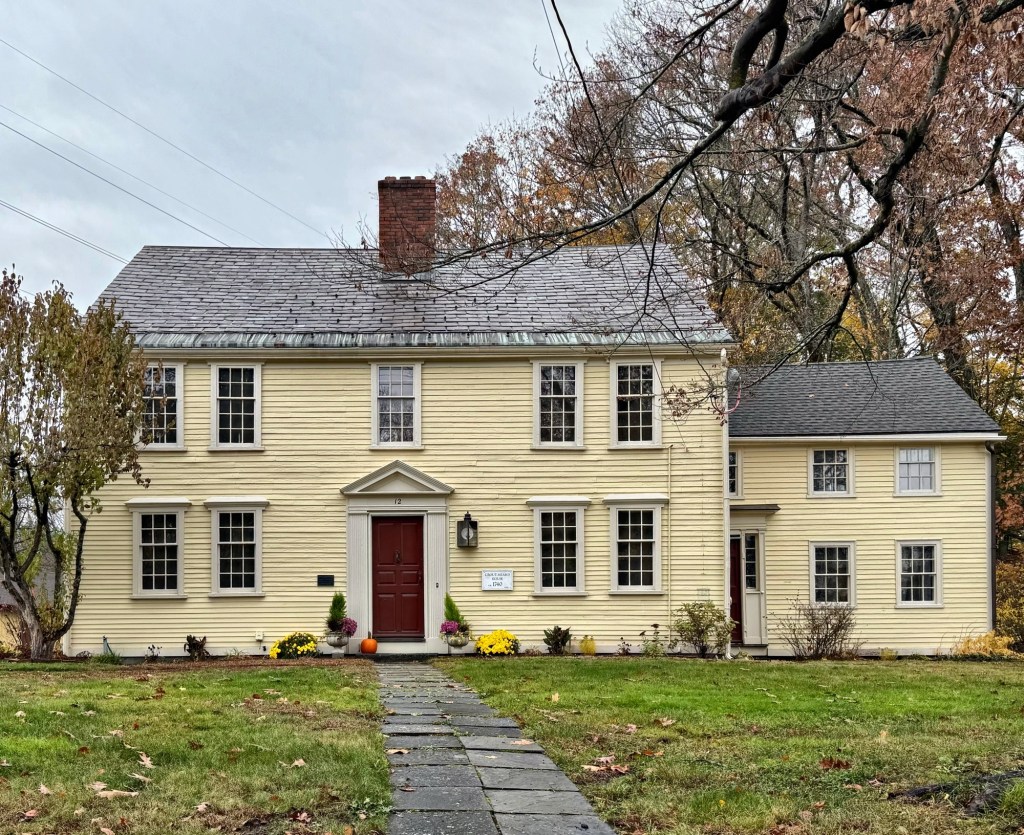
Grout-Heard House // c.1743

The Grout-Heard House on Cochituate Road in Wayland, Massachusetts, is one of the oldest extant residences in the community and architecturally significant as it shows the evolution of architectural tastes throughout the centuries. The house was built around 1743 for Jonathan Grout (1701-1748), a grandson of an original settler in the area, by the time of his marriage to Hannah Heard in 1743. Early records suggest that the house was originally just one bay deep and two-stories tall with a central entry. The property was sold in 1744 to Richard Heard, Jonathan’s brother in-law. In 1787, Silas Grout (1755-1820), a blacksmith, purchased the house and likely added rooms on the rear of the house. In 1822, Silas’ descendants added the side ell and the residence became a double-house in the mid-19th century. The house was moved from the site to make room for the 1870s Town Hall, and the rounded two-story side bay was added. After the Town Hall was razed in the 1950s, the Grout-Heard house was moved back to its original site in 1962. Since that date the Grout-Heard House has been the offices, research center, artifact repository and house museum of the Wayland Historical Society, who added a two-story Modern addition at the rear.
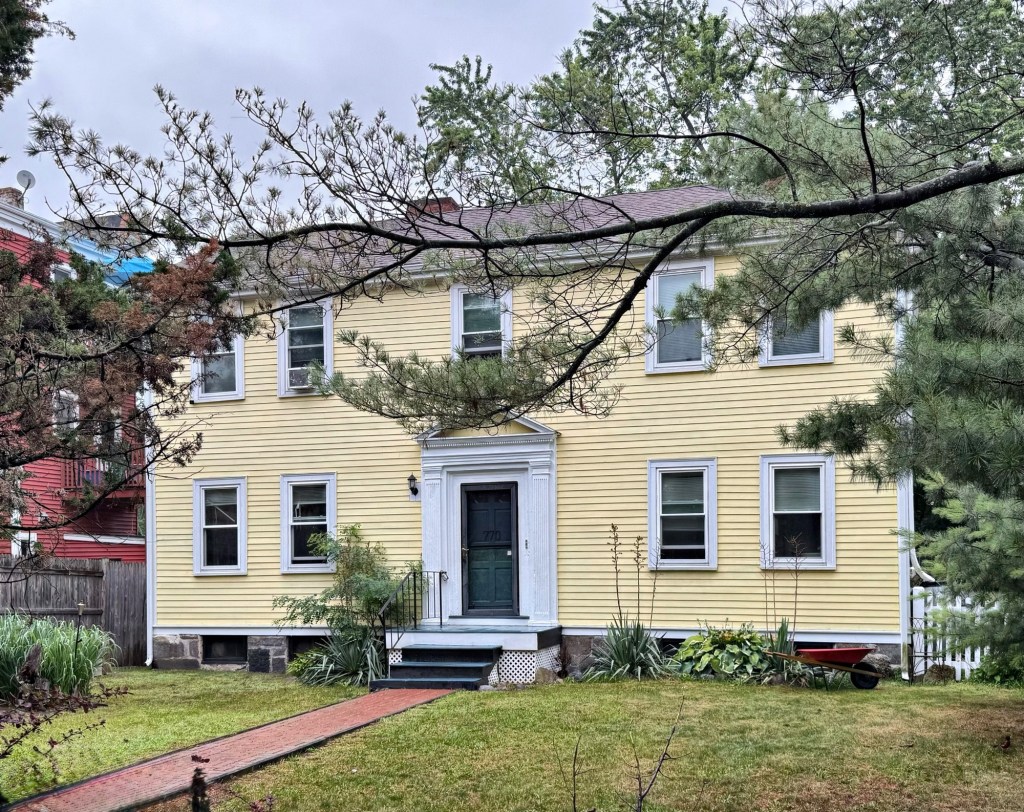
Joseph Royall House // c.1770

This is one of the oldest buildings in Boston! The Joseph Royall House is located at 770 Washington Street in the Ashmont section of Dorchester, set back from the street and passed by thousands who likely do not know its history and significance. The house dates to around 1770 and was built by Joseph Royall, of the infamous Royall Family of Cambridge, Medford, and Antigua, who made much of their money through sugar plantations in the Caribbean and enslaved Africans. Joseph was a nephew of Isaac Royal Jr., the patriarch of the family who resided at what is now the Royall House and Slave Quarters in Medford. Upon the outbreak of the American Revolution, the Tory Royalls were forced to flee for protection, Joseph would move to England. Isaac’s daughter (and Joseph’s cousin), Penelope Royall Vassall had her Cambridge home confiscated as a Tory property during the Revolution, causing her to flee to Antigua. When she returned to Boston after the war she was a widow and lived in poverty. Her cousin, Joseph, would sell her this Dorchester estate in 1782 nearly for free, allowing her to sell the property for money to survive in Boston. The house would remain here for another two-and-a-quarter centuries, as Ashmont grew around it. One-story stores were built in the front yard, completely obscuring the Georgian residence until later owners, Bob and Vicki Rugo, restored the house and demolished the stores in front, preserving this house for centuries to come. While the house is one of the oldest in Boston, it is not a landmark or listed on the National Register of Historic Places.

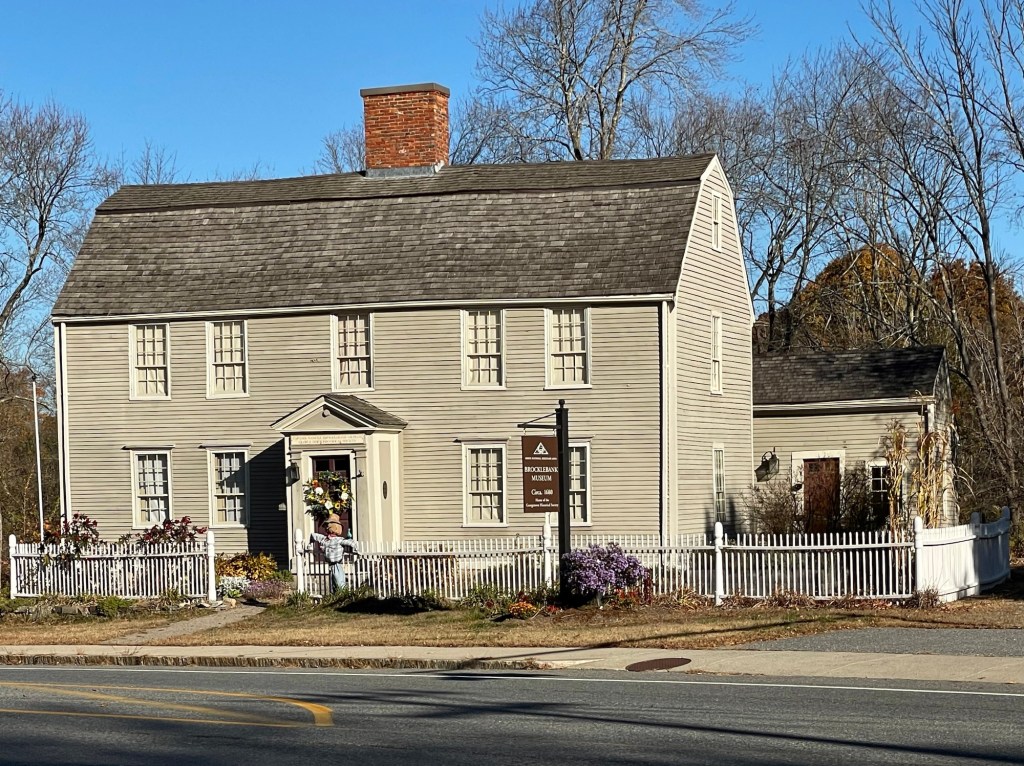
Brocklebank-Nelson-Beecher House // c.1661

The Brocklebank-Nelson-Beecher House is a First Period structure in Georgetown, Massachusetts, believed to have been built in the 1660s. The land on which the house stands was granted in 1661 to Samuel Brocklebank (1628-1676) , a surveyor who, with his widowed mother and brother, left England and were among the first settlers of Rowley in 1639. It was built by Lieut. Samuel Brocklebank who also owned a farm of 72 acres on the site. Lieut. Brocklebank was appointed captain in a militia and was killed with his entire company in Sudbury in 1676 during a raid by Native people during the period of the King Philip’s War. Samuel’s wife remarried and moved to Newbury, and his son, Samuel Jr., resided in the family home which remained in the Brocklebank family until 1754. The house became a tavern by owner Solomon Nelson, who purchased the property in 1765 and made substantial additions and renovations to the house in its current Georgian style. In 1858 the house was bought by Rev Charles Beecher, brother of Harriet Beecher Stowe and Henry Ward Beecher. An ardent abolitionist, he was the pastor of the town’s Old South Congregational Church. Today, the Brocklebank-Nelson-Beecher House is owned by the Georgetown Historical Society, who maintain and showcase the town’s rich history from this important early residence.  

Homan-Devereaux House // 1764

In 1764, Joseph Homan, a wealthy merchant, built this house on a lot that was formerly a “mowing field” in Marblehead, Massachusetts. The Georgian style home is of a more elaborate design, showcasing Mr. Homan’s wealth at the time. His wealth was not all acquired ethically, however. Joseph Homan was engaged in international trade, and enslaved Africans at his Marblehead home. In the Boston Daily Newsletters in September 1770, Homan posted a notice that Jack, one of his enslaved humans escaped. It read: “At Night, a Negro Man, named Jack, about 6 feet high, near 50 years of age, speaks bad English, and Born in Martinico [Martinique]; had on when he went away, a blue Coat with Mohair Buttons, a blue Jacket with black Glass Buttons, blue Breeches with white metal Buttons, and a red worsted Cap, but may have changed his Cloaths [sic], as he had more at Beverly.-Whoever shall take up said Negro, and deliver him to Mr. Brown, Deputy-Sheriff, in Salem, shall have Two Dollars Reward, and all necessary Charges paid them. All Masters of Vessels, and others, are cautioned against carrying said Negro off, as they would avoid the Penalty of the Law.” Homan would later sell the property to Elbridge Gerry, who served as the fifth vice president of the United States under President James Madison, and who Gerrymandering is named after. Gerry gifted the house to his sister Elizabeth, who married Burrell Devereaux a year later. Burrell was a sea captain that later was a privateer.

Jethro Coffin House // 1686

Here it is… The oldest house in Nantucket! The Jethro Coffin House dates to 1686, and when it was built, Nantucket’s English population totaled several hundred, and the native Wampanoag outnumbered them by at least three to one. The home was built seemingly as a wedding gift from twenty-three-year-old Jethro Coffin (1663–1727) to his new sixteen-year-old wife Mary Gardner (1670–1767). The marriage merged two of the old Nantucket families and was built on Gardner family land out of lumber transported to the island from Exeter, New Hampshire, where Jethro’s father, Peter Coffin, owned timberland and a saw mill. The First Period house has small windows of small panes of glass as the material was shipped from England at high cost. The large central chimney would heat the entire home on cold winter nights. Mary and Jethro sold their Nantucket dwelling to Nathaniel Paddack in 1708 and moved to Mendon, Massachusetts, when Jethro inherited property there. By the late nineteenth century, the house was abandoned (for some time it was used as a barn) and had fallen into disrepair. A Coffin family reunion held on the island in 1881 renewed interest in the property and off-island members of the family bought the old Coffin House. The Nantucket Historical Association acquired the house in 1923, and four years later, Historic New England), commenced an extensive reconstruction in an attempt to return the house to its historic appearance. It remains a location of pride for residents and visitors to the island to this day.