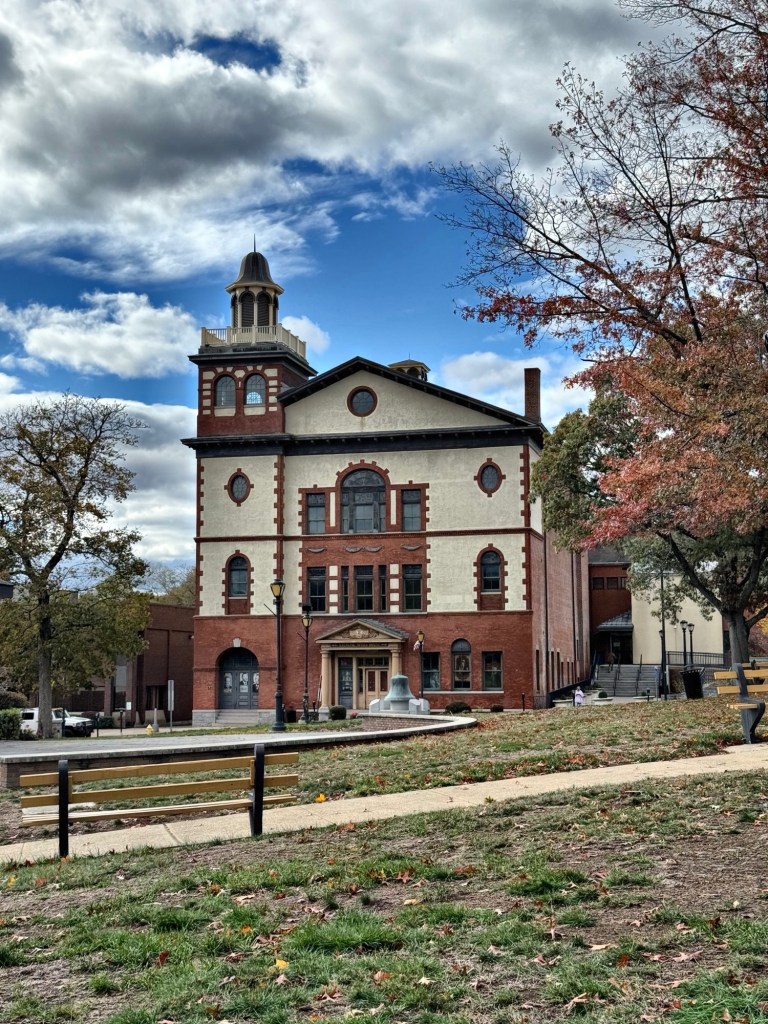
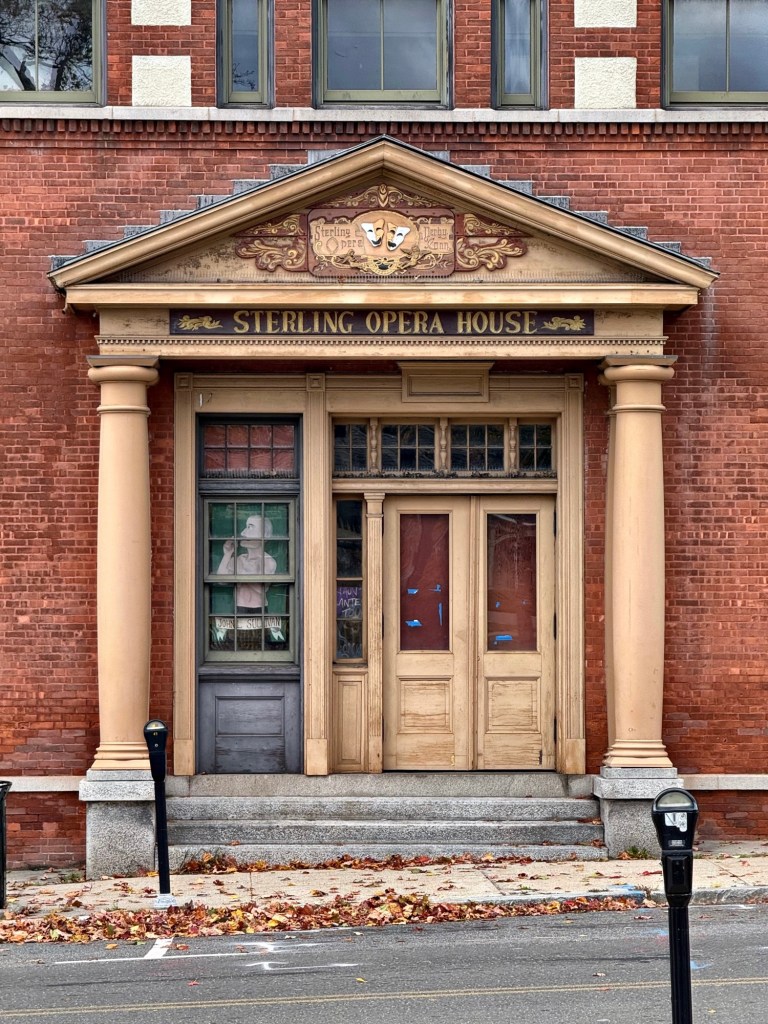
Sterling Opera House // 1889

The Sterling Opera House in Derby, Connecticut, is a landmark performing arts venue and civic center in the state and significant as a rare and well-preserved building constructed in the Italian Renaissance Revival style. Built in 1889, the building is named for Charles A. Sterling, founder the former Derby-based Sterling Piano Company, who paid for much of the costs of construction and design for the building. For his namesake building, Charles Sterling hired architect H. Edwards Ficken, who also  assisted with the designs for the famous Carnegie Hall in Manhattan, New York, to furnish plans for the unique building. The Opera House was built to serve both political and entertainment needs for the community, with the lower two levels and the basement serving as City Hall offices and the police station from when it opened up until 1965. The auditorium was used for hundreds of shows and live musical performances in its day, with many world-famous performers such as Harry Houdini and Red Skelton taking the stage at the Sterling. Shows were held up until 1945 when the curtain closed for the last time. In the past decades the building has been largely vacant and kept alive by grants and a dream by the city to preserve this significant landmark, possibly for reincorporation as the City Hall. 
Stonington Opera House // 1912

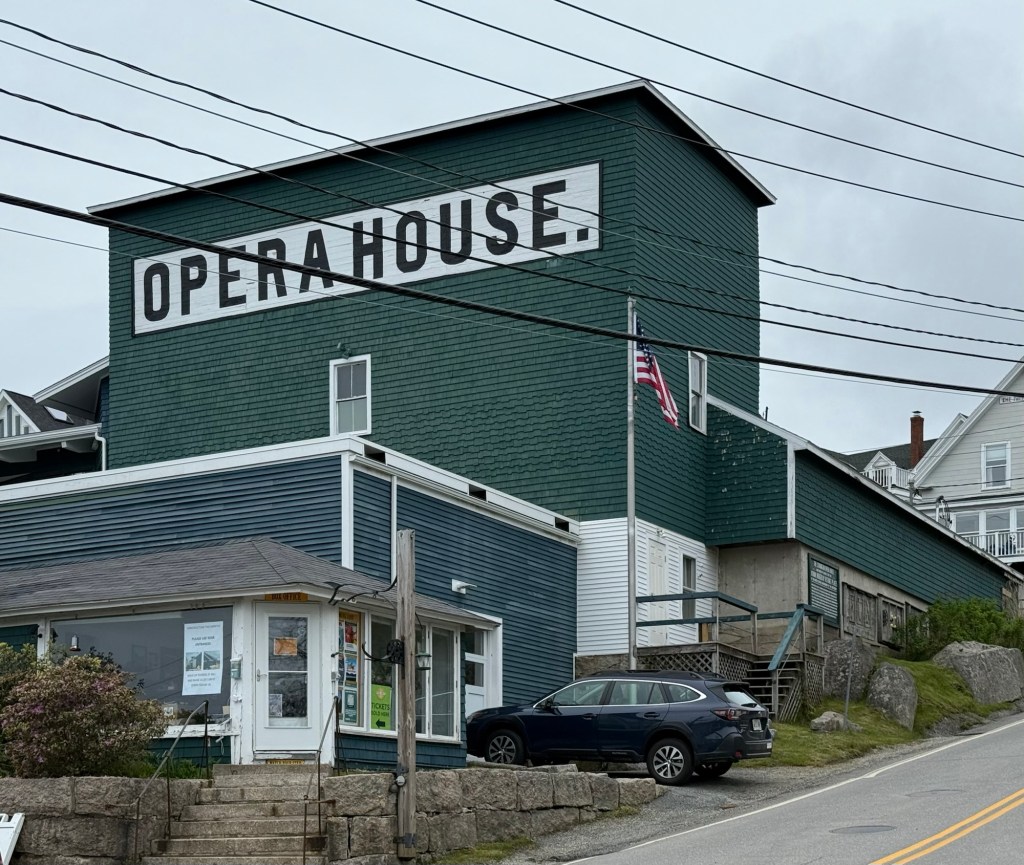
The Stonington Opera House in Stonington, Maine, is a historic early 20th century community center and theater in a vernacular style. The theater was built in 1912, on the site of an earlier hall built in 1886, that seated more than 1,000 people and hosted national touring shows that arrive via steamboat from Rockland. The original theater was destroyed by fire in 1910 and was soon-after rebuilt. It continued the practice of the earlier facility, hosting theatrical productions, lectures, and community events. Its floor was covered with removable folding chairs, so that the space could be used for dances and other social events. It was fitted for screening films around 1918, which came to dominate its uses in the mid-20th century. Unlike other early theaters, which were generally incorporated into municipal buildings, this one was specifically built as a profit-making venture, and was designed to accommodate elaborate theatrical productions, and is probably the oldest of this type in the state. After being vacated for much of the later half of the 20th century, the Stonington Opera House was restored and reopened by Opera House Arts, a local nonprofit, in 2000, and is once again used primarily for film screenings and theatrical productions.

Boothbay Harbor Opera House // 1894

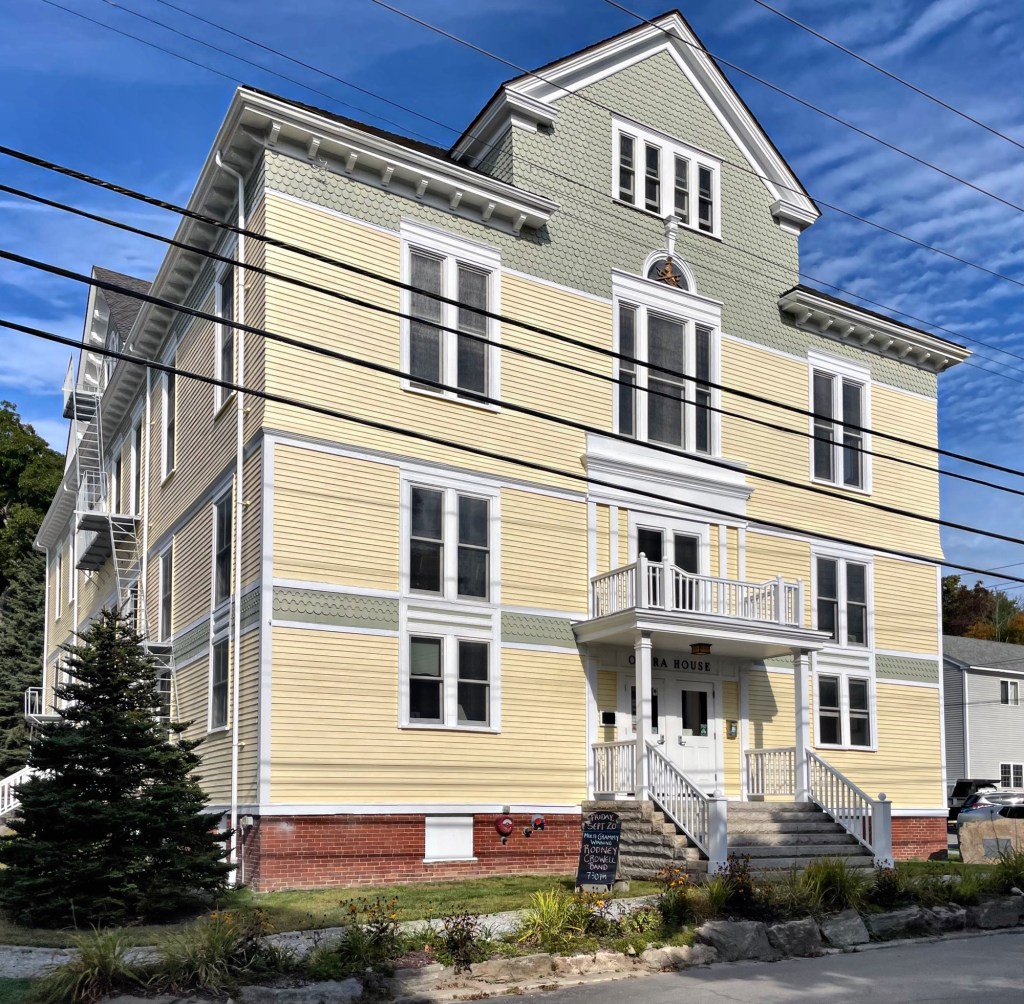
Historic meeting halls can be found in nearly every town and city in Maine. The Boothbay Harbor Opera House was built in 1894 to a design by the prominent Portland architectural firm of Francis H. Fassett and his son, Edward F. Fassett. The wood-frame building was built as a multi-functional space by the local Knights of Pythias Lodge who hired local shipwrights, who constructed the building in just 70 days. The Queen Anne style building was converted to a local opera house and has been a cultural institution for the region ever-since!

Rockport Opera House // 1891

Built in 1891, the historic Rockport Opera House is located in the heart of Rockport Village overlooking picturesque mid-coast Maine harbor. The Opera House here was actually first built as a multi-purpose Town Hall and library by a F. E. Gilkey, possibly a local builder. Over the years, the Colonial Revival style building has also served as a town meeting space, theater, concert hall, and Y.M.C.A., complete with a basketball court and bowling alley. In the 1970s, the building had deteriorated such that the Town considered selling it or tearing it down. The women of the Rockport Garden Club led the effort to save and restore the building. An outpouring of local support and a grant from the Maine Commission of the Arts and Humanities enabled the building to be revitalized as the Rockport Opera House. The significant structure continues to host the annual town meeting and regularly hosts town committee and other public meetings.  It is also the home venue of the Bay Chamber Concerts, as well as other musical events, theater performances, wedding receptions, conferences, and other private functions. Preservation at its finest!

Norway Opera House // 1894

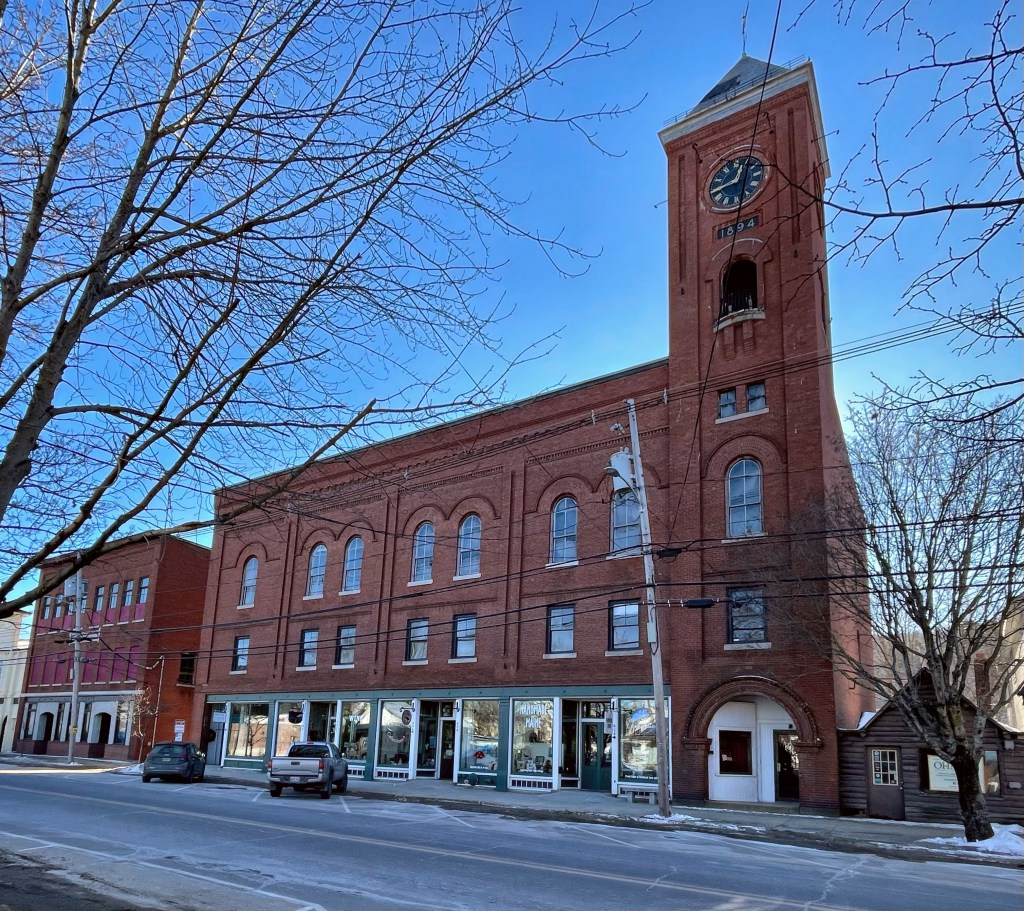
The most substantial building on Norway’s Main Street is this hefty brick commercial block with its prominent corner clock tower. The structure was designed by Maine architect Edwin E. Lewis and built in 1894 as the Opera House with stores along the ground floor. The building was constructed immediately after a large fire destroyed much of the downtown village area of Norway, and was built in such a way to show the strength and resolve of the town, leading the way for a larger re-building effort by the local business community. The Romanesque Revival building features lovely arched windows and brick detailing. The building has seen better days, but a local group has been working tirelessly to restore this beauty to her former glory! The group is presently soliciting donations to restore the roof and rear wall, to keep the building standing for future generations.

Newport Opera House // 1886

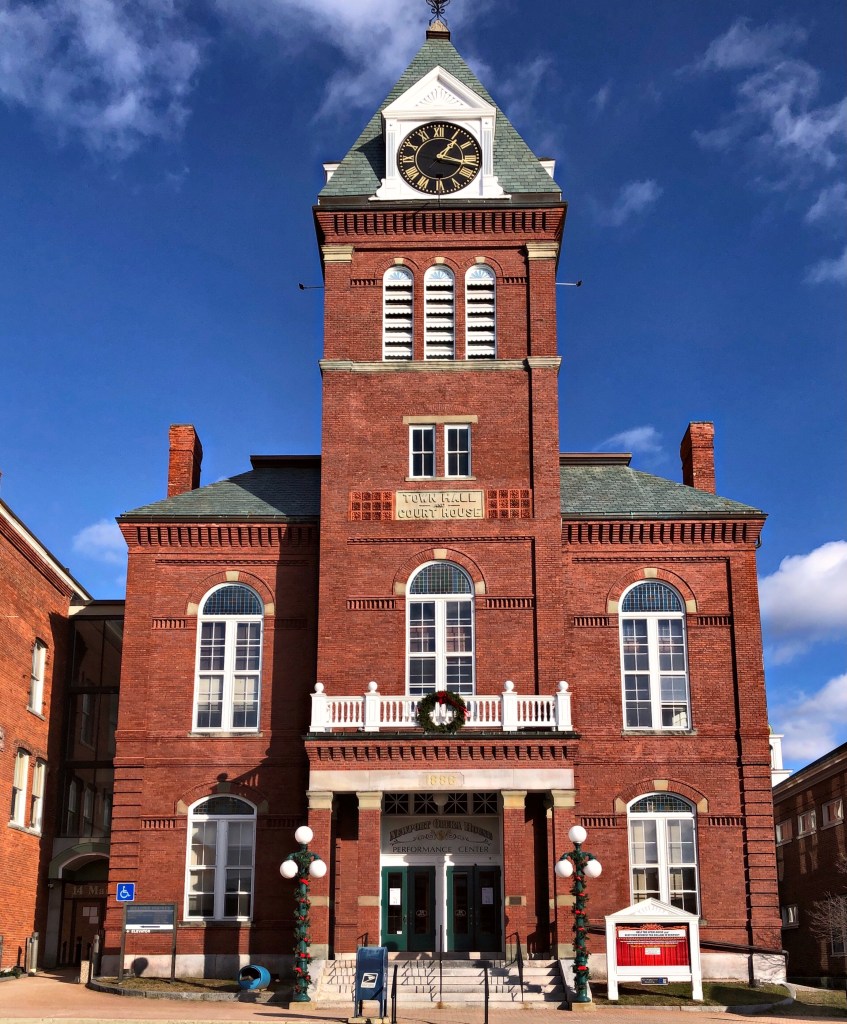
The architectural focal-point on Main Street in Newport, NH is the Newport Opera House, with its solid massing and prominent central tower. The town was growing after the American Civil War and its position as County Seat solidified that growth. A new large civic building was erected in 1872 which housed a new courthouse and town hall. A fire destroyed much of the buildings on Main Street in 1885, and destroyed the courthouse and town hall building. As a response to the loss of the building, a fire-proof structure was erected from designs by Hiram Beckwith, a regionally prominent architect from Claremont. The structure featured space for the county, town, and even an opera house! The jewel of the new building was the Opera House located on the second floor that housed a stage considered the largest north of Boston. The Newport Opera House soon became the center of entertainment in Sullivan County and patrons came from far away to enjoy the large variety of programs presented. The large hall played host to dances, boxing matches, weddings, political rallies, plays, school graduations and more! After a period of severe decline, a group of artists and residents of town worked together to restore the building and use the space as a performance center. It remains one of the finest buildings in this part of the state.