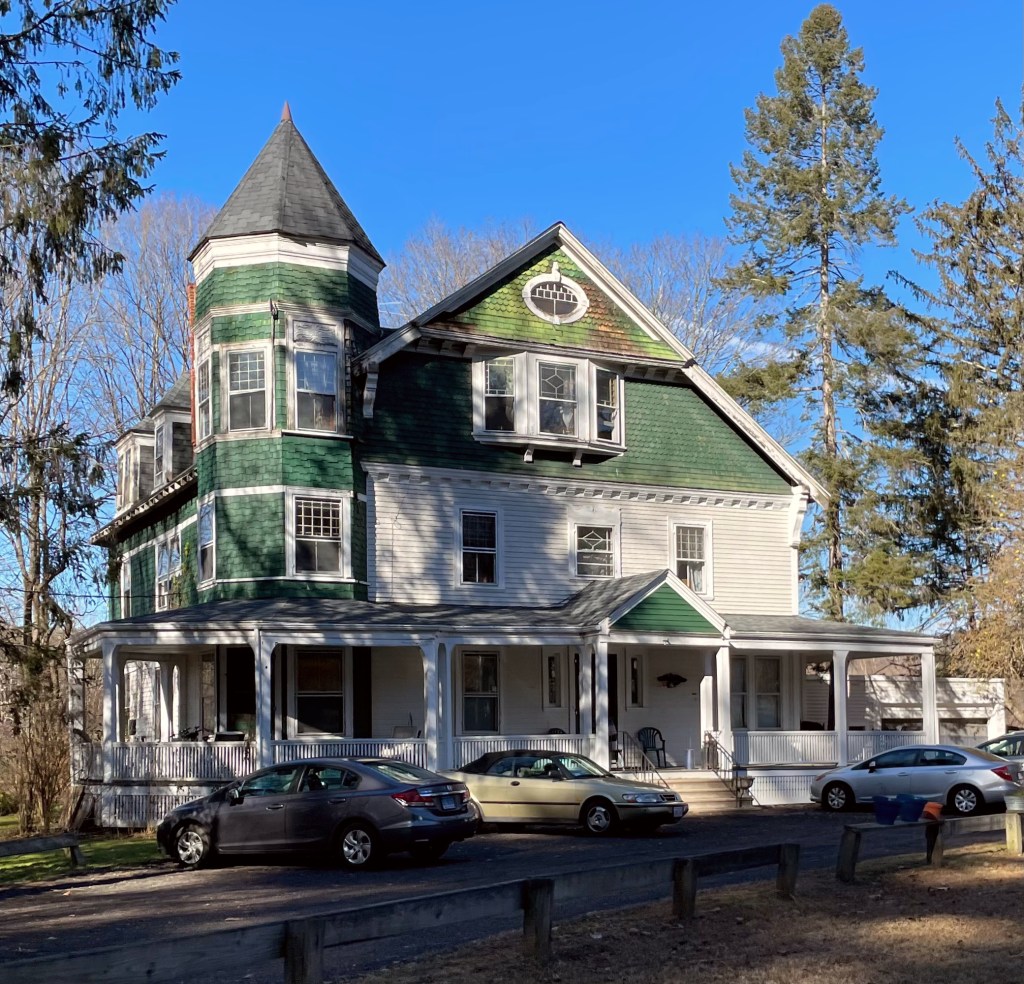
Benjamin Case House // 1888

This large Queen Anne Victorian house in Canton Center was built for Benjamin Franklin Case (1861-1931), a banker and businessman who incorporated the town creamery. He made his fortune harnessing the rural character of the village, creating the Canton Creamery, where farmers could package and sell their dairy products to the rapidly growing communities nearby. Case was credited as bringing the telephone to town, with his office in his home serving as a switchboard room. He is also known as the first person in town to own an automobile. After his death, the property was used by his daughter Ruby as a vacation house. After WWII, she realized it was too much house for her to upkeep, and she converted the single family home into apartments.

Smith-Miller House // 1893

Located on stunning West Broadway in Bangor, Maine, the Smith-Miller House stands out as a beautiful blending of the Shingle and Queen Anne styles. Built in 1893 from the designs of Connecticut architectural firm Cook, Hapgood, and Company, the home was featured in The American Architect and Building News journal for its design success. The home is clad with continuous cedar shingle siding, with a prominent corner tower, wrap-around porch, and porte-cochere, all together provide complexity and intrigue on the street of large homes. What do you think of this home?

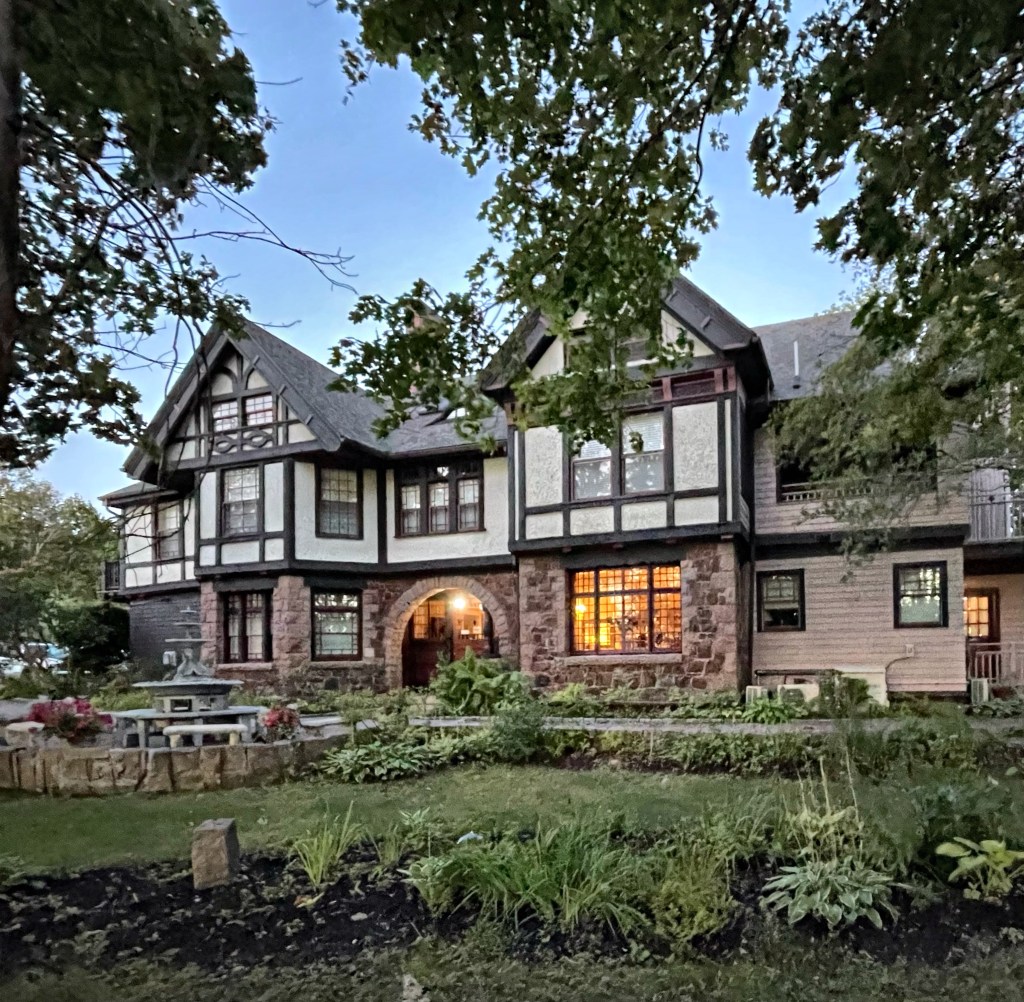
Ullikana // 1885

One of the earlier summer cottages in Bar Harbor is Ullikana, a Queen Anne style cottage, verging on Tudor Revival style. The cottage was built in 1885 for Alpheus Hardy (1815-1887) a trader in Boston. Hardy gained his wealth in shipping. He got his start by buying a small and fast ship that could make the voyage to the Mediterranean and back so quickly that he and his other investors captured much of the fruit importing business. His company would grow to have over 15 ships going as far as China. Hardy hired the Boston architectural firm of Cummings & Sears to design a new summer cottage in Bar Harbor, Maine, an ever-growing rival to Newport. He could only enjoy the cottage for two years, when in 1887, while cutting coupons, he dropped the scissors, the sharp points piercing his leg. Blood poisoning followed and death resulted. The summer cottage was owned by his family as a rental cottage for a number of years until it was purchased by the Maine Central Railroad, and rented to the recently widowed Princess Miguel de Bragança of Portugal, the former Anita Rhinelander Stewart. The cottage is now an inn.

Rice-Petersen House // c.1890

Built in the 1890s by Dr. A.W. Rice, the ground floor of this Queen Anne style house served as the physician’s office, and he lived with his family in the upper floors. The home stands out as a fairly uncommon example of the Queen Anne style in Marion, a town dominated by Shingle style homes in that period. An enterprising Danish immigrant named Viggo V. Petersen, purchased the home and adjacent carriage house in 1921 and opened an ice cream parlor in it. When Viggo V. died in 1941, his son, Viggo C., attempted to carry on, until wartime cream shortages and rationing forced him to close for the duration of the conflict. Thereafter, Petersen’s ice cream resumed production and remained a Marion fixture until its final closing in the 1970s. The home is now occupied by two offices, and the former carriage house is home to the Mary Celeste Wine and Whiskey Library, a fun place that educates about wine and whiskey, offering tastings and events.

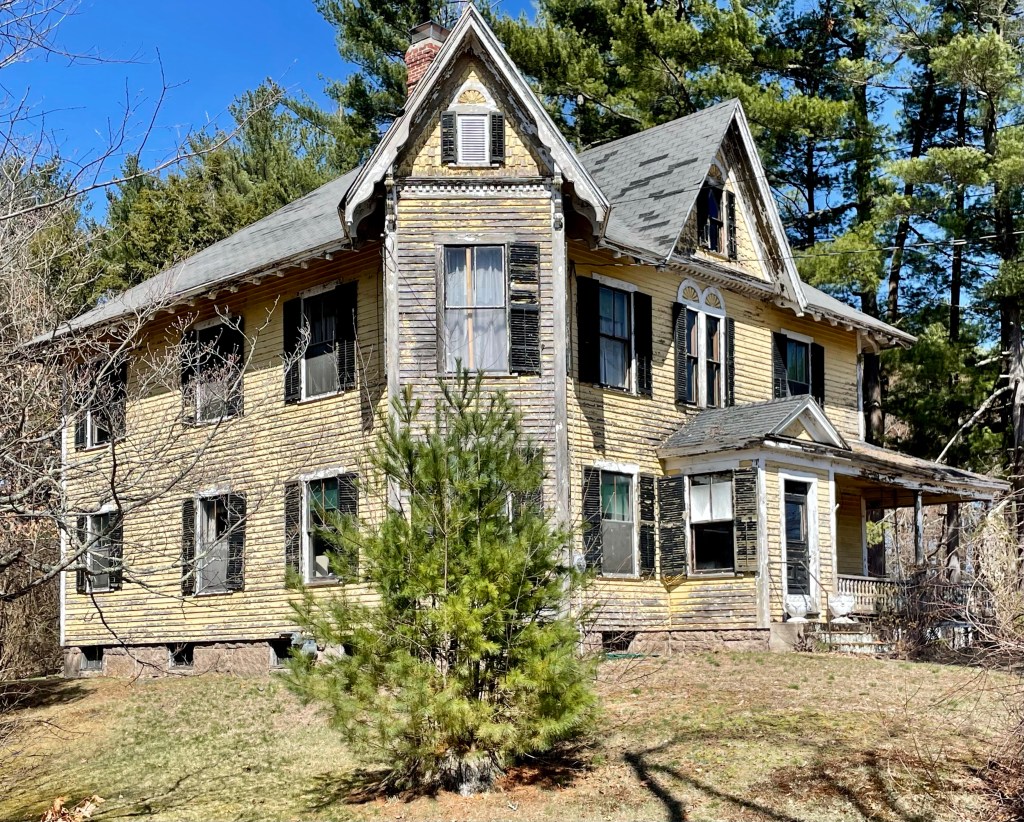
Hiram P. Dinsmore House // 1894

In 1894, Hiram P. Dinsmore, a clerk at the nearby Tewksbury Almshouse, purchased land not too far from his work to build a home for his family. The well-designed late-Victorian home features a wrap-around porch, a corner tower, twin sunburst or flower motifs, and the use of shingle and clapboard siding, all hallmarks of the Queen Anne style. After Hiram’s death, his wife and children lived in the home, and it was later willed to his daughter Beatrice and her husband, both of whom worked at the Tewksbury Almshouse (since renamed Tewksbury Hospital). The home has seen some deterioration with large sections of siding completely open to the elements unobscured by paint and a sagging porch roof. Hope to see this beauty restored.

Dennis Doran House // 1891

Located just east of downtown Bristol, the Dennis Doran House stands as an excellent example of the Queen Anne style of architecture for a middle-class residence. The home was built in 1891 by Dennis Doran as his personal house. He worked as a carpenter and cabinet maker, and showcased his wood-working skills on this home. The asymmetrical facade, dominated by an octagonal corner tower, capped by a steep conical roof stands out, but is complemented by a complex hipped roof broken up by various jerkin-head and gable dormers at two tiers. The home is also clad in shingles of varied shapes to provide a complex texture.

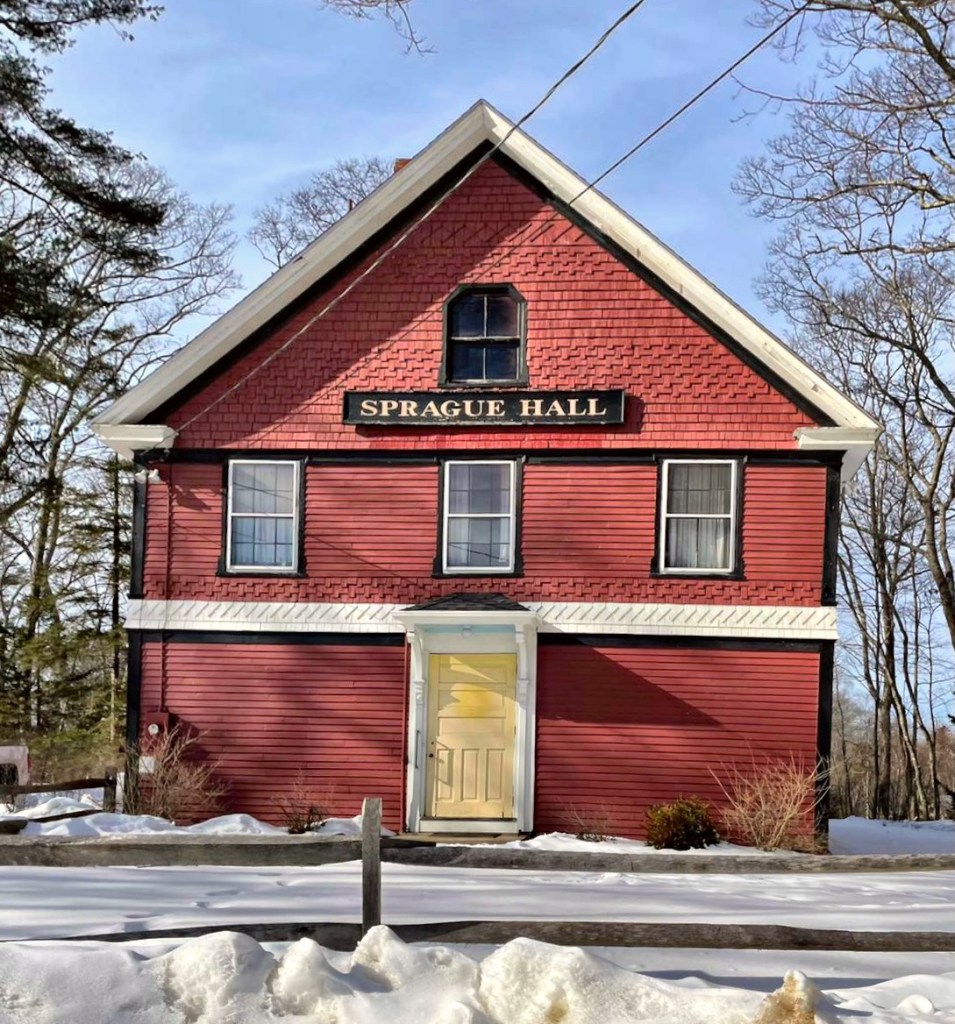
Sprague Hall // 1889

Built in 1889, this interesting structure is located away from the rocky coastline of Cape Elizabeth, a lasting remnant of the agricultural history of the town. The building was constructed as the Cape Elizabeth Grange Hall. The National Grange of the Order of Patrons of Husbandry, is a social organization in the United States that encourages families to band together to promote the economic and political well-being of the community and agriculture. The Grange organization, as it is often known as, had grange halls all over the country, where farming community members would gather to discuss issues and challenges that needed addressing. The building echos late 19th century architectural styles, blending multiple to create an elegant composition, wrapped in wood clapboard and shingle siding. In 1916, the hall was purchased by P. W. Sprague from the Cape Elizabeth Grangers to insure its use and upkeep – and it is still the home of the Patrons of Husbandry, Cape Elizabeth Grange #242.

Hollis Town Hall // 1886

Constructed in 1886, the Hollis Town Hall in New Hampshire is a distinctive example of Queen Anne civic architecture showcasing an asymmetrical design and a variety of forms, textures and materials. The building was designed from plans by Manchester-based architect William Butterfield. As originally constructed the building was painted in dark tints to harmonize with the roof which was covered with shingles and painted dark red. In 1902, the clocks were added atop the tower with a clock designed by George M. Stevens of Boston. Sadly, the buildings’ original polychromatic paint scheme which highlighted the architectural details was updated with a solid white color.

John Hoyt Perry House // c.1875

John Hoyt Perry was born in Southport in 1848, and graduated at Yale in 1870. He received his professional education at Columbia Law School and was admitted to the bar in Bridgeport, CT in 1872. He had an active law career in Connecticut, later working as a judge. He served Southport in the House of Representatives throughout much of the end of the 19th century. In 1913 he was elected to the Connecticut Senate and served as the minority leader. He served as counsel for the United States in arbitration proceedings with Chile in 1902, and as counsel for the town of Fairfield. This home in Southport was constructed for him, likely around 1875 after he accepted his position as a head attorney at a major firm nearby. The home can be classified as a blending of Stick style and Queen Anne Victorian design with the asymmetrical form, tower, large porch with projecting porte-cochere, shingle siding, and bargeboards.

Whitman House // 1881

Built in 1881 for William Henry Whitman, this stunning Victorian house remains one of the better-preserved in the town of North Adams. William Whitman was a successful shoe manufacturer in town that lived modestly until his late 40s when he had this home built. The brick home is trimmed with freestone and features a very prominent three-story corner tower with conical roof. The house is a blending of the Stick and Queen Anne styles, under the umbrella of the ‘Victorian’ classification.