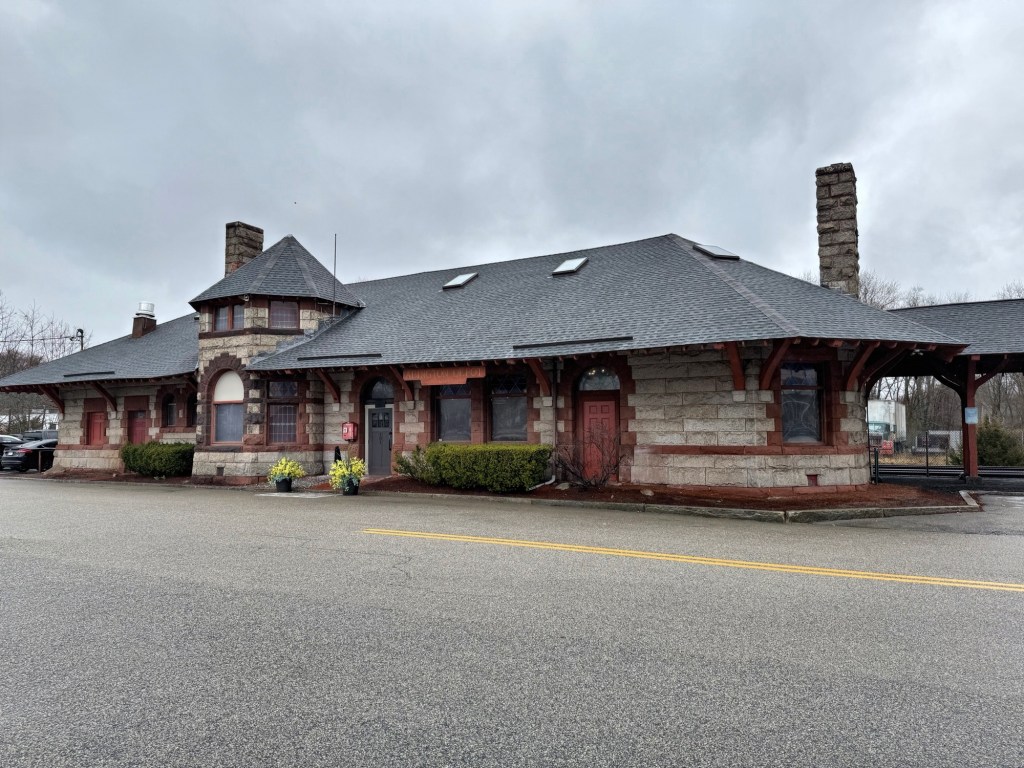
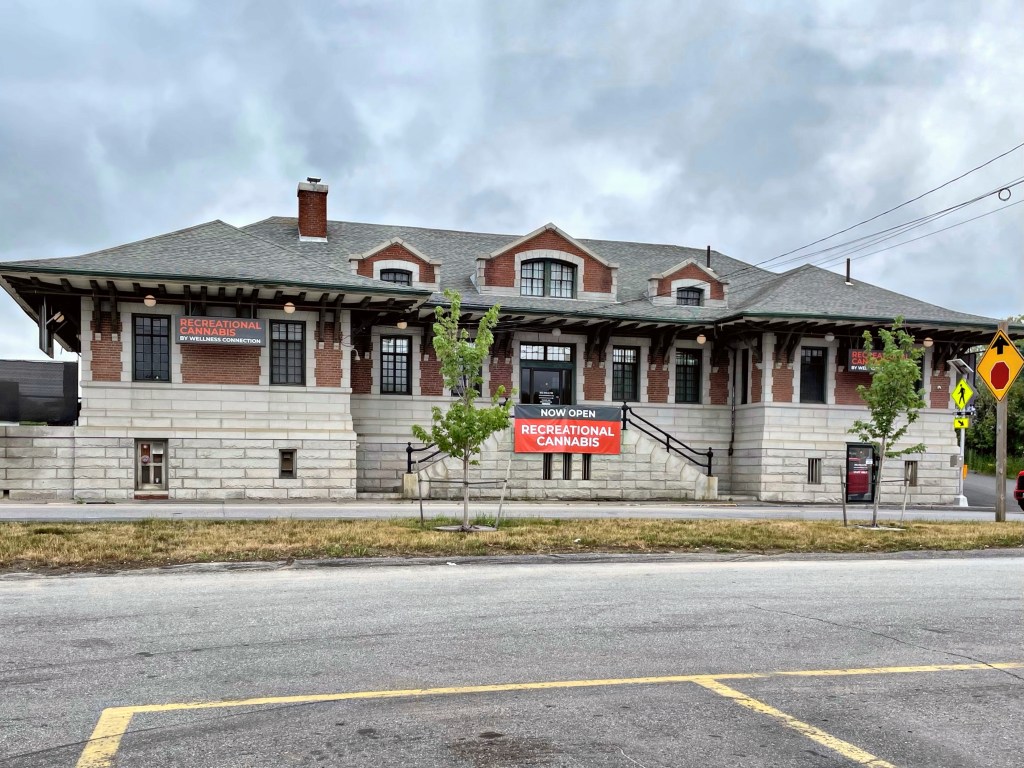
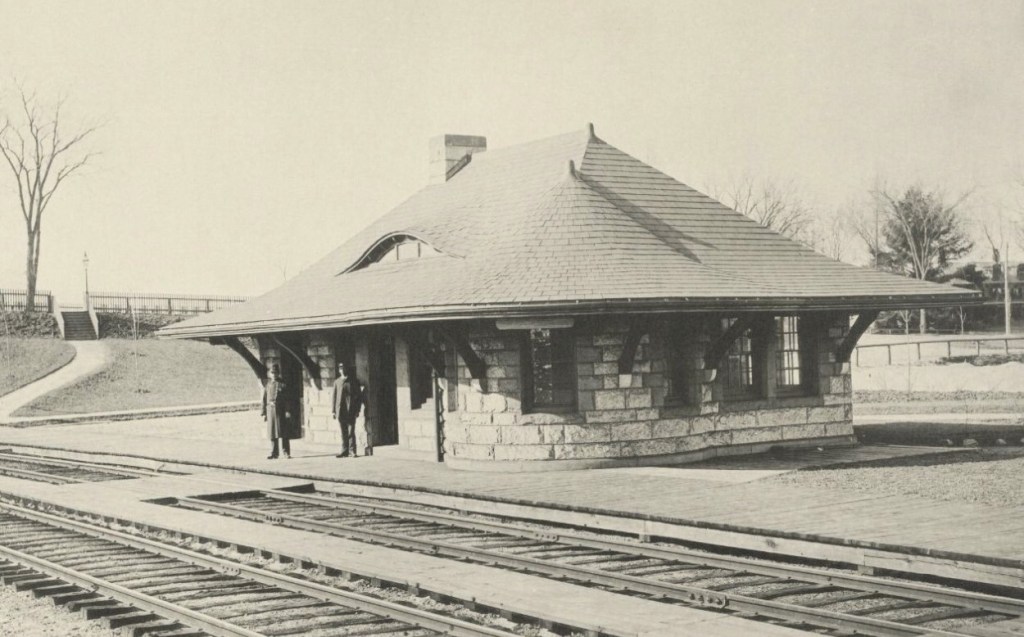
The North Abington Depot was built in 1894 from plans by notable architect Bradford Lee Gilbert in the Richardsonian Romanesque style, a design that typified many regional train stations following Henry Hobson Richardson’s commission by the Boston and Lowell Railroad. Construction on the depot began soon after the “North Abington Riot”, in which railroad laborers and local townspeople fought over the town’s right to allow a grade-level streetcar crossing over the train tracks. The railroad executives filed an injunction before the state supreme court, and Justice Marcus Perrin Knowlton, at a hearing, dismissed the bill, saying that since the Selectmen had acted within their right as representatives of the townspeople who owned the public highway, the Supreme Court had no reason to become involved. This decision was disputed by the railroad’s attorney, who advised them that this decision was not binding, which ultimately would be deemed incorrect. On August 15, 1893, fifteen local men (many of whom were sworn in as special police for the occasion) with the aid of fire hoses, withstood the onslaughts of more than 200 railroad laborers, armed wit h picks, shovels, and paving stones. After many were injured, the brawl ended. In the aftermath, the full bench of five Justices of the Massachusetts Supreme Court upheld the validity of the position taken by a single Justice, saying that any one member was in position to adequately interpret the law. This decision still stands and is quoted in similar cases in the field of jurisprudence. This depot was completed in 1894 by the New York, New Haven and Hartford Railroad as a peace offering following the North Abington train riot and a visual reminder that no corporation, no matter how powerful, is superior to the right of the people and the laws of the land.



 Buildings of New England

